
Can Mold Cause Fatigue? How Mold Exposure May Make You Feel Tired
Mold exposure may contribute to fatigue in some people, especially when it triggers allergy symptoms, sinus congestion, coughing, wheezing, headaches, or poor sleep. Fatigue by itself, however, is not specific enough to prove that mold is the cause.
The more useful question is not simply whether mold can make you tired. It is whether your fatigue appears alongside other indoor air quality clues, such as musty odors, visible mold, damp rooms, recent water damage, worsening symptoms at home, or improvement when you spend time away from the house. If those patterns are present, mold may be one piece of a larger indoor moisture and air quality problem.
This guide explains when fatigue is more likely to fit a mold-related pattern, when another cause may be more likely, and how to check the home for moisture or mold clues without using fatigue as a stand-alone diagnosis. For a broader overview of how mold affects indoor air, see this guide to mold exposure and indoor air quality.
Can Mold Cause Fatigue?
Mold exposure can contribute to fatigue in some situations, but usually not in a simple one-cause, one-symptom way. Mold is more commonly associated with allergy-like symptoms, irritation, and breathing-related complaints. When those symptoms continue for days or weeks, they can leave a person feeling tired, foggy, run-down, or less rested than normal.
For example, a person who reacts to mold may develop nasal congestion, postnasal drip, coughing, sinus pressure, or wheezing. Those symptoms can interfere with sleep, make breathing feel more difficult, and create a constant low-level strain on the body. Over time, that can feel like fatigue.
This is why fatigue should be treated as a supporting clue, not a stand-alone mold diagnosis. Mold becomes more worth investigating when tiredness appears with congestion, coughing, headaches, musty odors, dampness, visible mold, or symptoms that worsen in certain rooms. Mold becomes less obvious when fatigue is the only symptom and there is no indoor pattern.
How Mold Exposure May Make You Feel Tired
Mold-related fatigue usually makes the most sense when you look at the symptoms around it. The tiredness may come from disrupted sleep, irritated airways, ongoing congestion, headaches, or the general burden of allergy symptoms. Understanding those pathways helps keep the article grounded and avoids the mistake of blaming every case of fatigue on mold.
That distinction matters because major public health guidance most clearly connects indoor mold with allergic, irritant, and asthma-related symptoms, rather than presenting fatigue as a primary mold-specific symptom. For more context, see the EPA mold and health guidance.
Allergy symptoms can wear you down
Many people think of allergies as sneezing, itchy eyes, or a runny nose, but allergies can also leave you feeling drained. When your body is reacting to airborne particles, including mold spores in sensitive individuals, the result may be more than a mild nuisance. Constant nasal irritation, throat irritation, eye watering, and sinus pressure can make ordinary daily activity feel harder.
That tired feeling is often not dramatic at first. A homeowner may simply notice that they wake up feeling unrefreshed, feel slower during the day, or need more rest than usual. If the fatigue comes with sneezing, congestion, coughing, or itchy eyes, mold allergy or another indoor allergen becomes more plausible than fatigue by itself.
This is also where timing matters. If you feel worse after sleeping in a certain bedroom, spending time in a damp basement, running an HVAC system, or cleaning a musty room, the pattern deserves attention. If symptoms improve when you leave the house for a day or two, that does not prove mold is the cause, but it does suggest your indoor environment may be contributing.
Sinus congestion can disrupt sleep
Sinus and nasal symptoms are one of the most realistic ways mold exposure may contribute to fatigue. When your nose is blocked, your sleep can become lighter and less restful. You may breathe through your mouth, wake up with a dry throat, toss and turn more often, or feel pressure around your face and forehead.
Even if you spend enough hours in bed, poor-quality sleep can leave you feeling tired the next day. That is why a person may say, “I slept all night, but I still feel exhausted.” If that pattern happens along with a musty bedroom, damp carpet, a history of roof or wall leaks, or visible mold around windows or vents, the home environment should be inspected.
Sinus-related fatigue can also overlap with headaches. If you are dealing with tiredness and recurring head pressure at the same time, it may help to read more about mold-related headaches and how they can appear with indoor air quality problems.
Coughing and breathing irritation can drain your energy
Fatigue can also develop when mold exposure irritates the throat, airways, or lungs. A mild cough may not seem serious at first, but repeated coughing can interrupt sleep, make breathing feel less comfortable, and leave you feeling worn down during the day.
This is especially important for people who already have asthma, allergies, chronic respiratory conditions, or a history of sensitivity to indoor air problems. In those cases, mold may not simply cause a stuffy nose. It may worsen wheezing, chest tightness, coughing, or shortness of breath. When breathing feels harder than normal, even ordinary tasks can feel more tiring.
If fatigue appears together with coughing, wheezing, chest tightness, or recurring respiratory symptoms, the issue deserves more caution than fatigue alone. You can learn more about that symptom pattern in this guide to breathing problems linked to mold exposure.
Headaches can make fatigue feel worse
Headaches and fatigue often overlap. A person with sinus pressure, eye irritation, or poor sleep may feel both tired and uncomfortable at the same time. Mold exposure may contribute to this pattern when it triggers congestion, sinus irritation, or allergy symptoms that make the head feel heavy or pressured.
That does not mean every headache and every tired day points to mold. Stress, dehydration, illness, poor sleep habits, eye strain, medication effects, and many medical conditions can also cause fatigue and headaches. The mold connection becomes more plausible when headaches and tiredness happen alongside indoor clues such as musty odors, visible mold, damp materials, or symptoms that worsen in certain rooms.
When Fatigue Is More Likely to Be Mold-Related
Fatigue is more likely to be connected to mold when it appears as part of a larger pattern. The strongest clues usually combine symptoms in the body with evidence in the home. One clue alone may not prove much, but several clues together can make a mold or moisture problem worth investigating.
Your symptoms are worse at home
One of the most important patterns is whether your fatigue gets worse after time indoors. If you feel relatively normal away from home but become tired, congested, headachy, or irritated after several hours inside, the indoor environment may be contributing.
This pattern can be especially noticeable after sleeping in a certain bedroom, sitting in a basement family room, working in a room with a musty smell, or running an HVAC system that may be moving airborne particles through the home. The pattern is not proof by itself, but it gives you a practical reason to inspect the spaces where symptoms seem strongest.
You notice a musty smell or visible mold
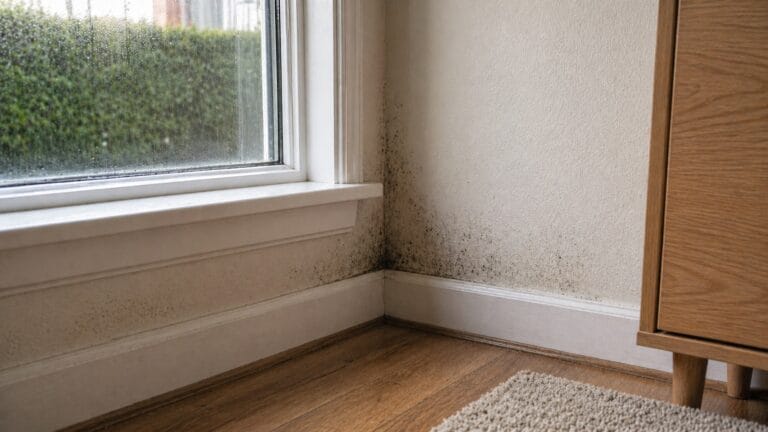
A musty odor is one of the most common household clues that hidden moisture or mold may be present. Mold does not always appear as obvious black or green patches on a wall. It may be behind trim, inside cabinets, under flooring, around windows, in HVAC components, in crawl spaces, or behind materials that were previously wet.
If fatigue appears along with a persistent musty smell, do not ignore the odor just because you cannot see mold. Odor by itself does not diagnose a health problem, but it does suggest the home may have a moisture issue that should be located and corrected.
Your fatigue appears with allergy or breathing symptoms
Fatigue is more suspicious when it appears with symptoms that are more commonly associated with mold exposure, such as sneezing, nasal congestion, itchy eyes, coughing, wheezing, throat irritation, or sinus pressure. In that case, tiredness may be the result of poor sleep, irritated airways, or the general burden of allergy-like symptoms.
If fatigue is the only symptom, mold becomes harder to identify as the cause. If fatigue is part of a cluster of indoor-air symptoms, it is more reasonable to look at mold exposure as one possible contributor. For a broader symptom overview, see this guide to common symptoms of mold exposure in homes.
The home has had leaks, dampness, or high humidity
Mold needs moisture to grow. That means fatigue concerns become more relevant when the home also has a history of water damage, plumbing leaks, roof leaks, basement dampness, crawl space moisture, bathroom humidity, condensation, or indoor humidity that stays too high.
A home does not need to flood to develop a mold problem. Slow leaks, hidden condensation, damp wall cavities, wet insulation, and poor ventilation can all create mold-friendly conditions. Fatigue becomes more relevant to a home inspection when those moisture clues are present.
When Fatigue Is Not Enough to Blame on Mold
Fatigue is one of the least specific symptoms a person can have. It can come from poor sleep, stress, dehydration, infection, anemia, thyroid problems, medication side effects, depression, chronic illness, nutritional issues, sleep apnea, overwork, or many other causes. Because of that, it is not wise to assume mold is responsible simply because you feel tired.
The safest approach is to separate health evaluation from home investigation. If your fatigue is persistent, severe, unexplained, worsening, or interfering with normal life, talk with a healthcare professional. This is especially important if fatigue appears with shortness of breath, chest pain, fainting, fever, neurological symptoms, unexplained weight loss, or sudden worsening.
At the same time, you can still inspect your home for moisture problems if there are reasonable clues. Medical evaluation and home inspection are not opposites. A doctor can help evaluate your health, while a moisture or mold inspection can help determine whether your indoor environment has a problem that needs correction.
The key is not to use mold as a shortcut explanation for every symptom. Mold may be part of the picture, but fatigue should be considered in context.
If the concern is long-lasting or recurring fatigue rather than occasional tiredness, keep that distinction clear; chronic fatigue symptoms need a broader health evaluation and should not be treated as proof of mold exposure by themselves.
Other Symptoms That Often Appear With Mold-Related Fatigue
Some symptoms that may appear alongside fatigue include:
- Stuffy or runny nose
- Sneezing
- Postnasal drip
- Itchy, watery, or burning eyes
- Coughing
- Wheezing
- Throat irritation
- Sinus pressure
- Headaches
- Skin irritation or rashes
- Asthma flare-ups in sensitive people
The more these symptoms line up with time spent in the home, the more useful the pattern becomes. For example, fatigue that appears with congestion every morning after sleeping in a musty bedroom is more suspicious than fatigue that happens randomly with no indoor pattern.
It is also important to compare symptoms across the household. If several people feel worse in the same home, room, basement, bathroom, or HVAC zone, that can point toward a shared indoor air or moisture problem. If only one person has fatigue with no other mold-related symptoms, the cause may be harder to connect to the home.
If you are trying to decide whether your symptoms fit a broader indoor mold pattern, it may help to compare your situation with this guide on how to tell whether mold may be making you sick.
How to Check Whether Your Home May Be Contributing
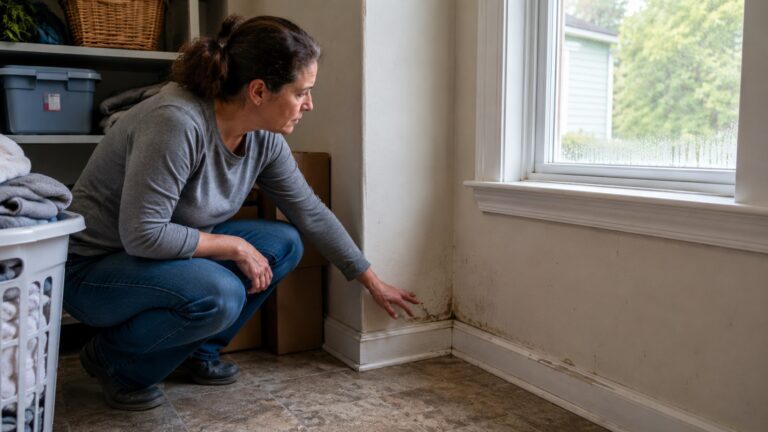
If fatigue appears with mold-like symptoms or indoor air concerns, start by looking for moisture. Mold problems are almost always moisture problems first, so finding leaks, dampness, or high humidity is more useful than guessing from symptoms alone.
Look for musty odors
A musty smell can be one of the earliest clues that moisture is trapped somewhere. Check rooms where the air feels stale, damp, or earthy. Pay attention to closets, bathrooms, basements, crawl space access points, laundry rooms, HVAC areas, and rooms that have had leaks in the past.
Check for visible mold or staining
Visible mold may appear as black, green, gray, brown, or white patches. It may look fuzzy, powdery, smeared, speckled, or stain-like. Common locations include bathroom ceilings, window frames, basement walls, drywall near leaks, air vents, cabinet interiors, and areas behind furniture placed against exterior walls.
Water stains are also important. A ceiling stain, swollen baseboard, bubbling paint, warped flooring, or soft drywall may point to moisture even before mold is obvious. If the material has stayed damp long enough, mold risk increases.
Review recent leaks or water damage
Think back over the last few weeks or months. Mold concerns often follow events such as a roof leak, plumbing leak, overflowing appliance, basement seepage, wet carpet, damp drywall, or repeated condensation. Even if the visible water was cleaned up, hidden materials may have stayed damp.
This is especially true when water reached wall cavities, subfloors, insulation, cabinets, or baseboards. Surface drying does not always mean the structure behind the surface dried properly.
Measure indoor humidity
Use a hygrometer to compare humidity in bedrooms, bathrooms, basements, laundry rooms, crawl-space-adjacent rooms, and other damp areas. Humidity readings are not a medical test, but rooms that stay humid for long periods can support mold growth and deserve closer inspection.
Inspect high-risk areas
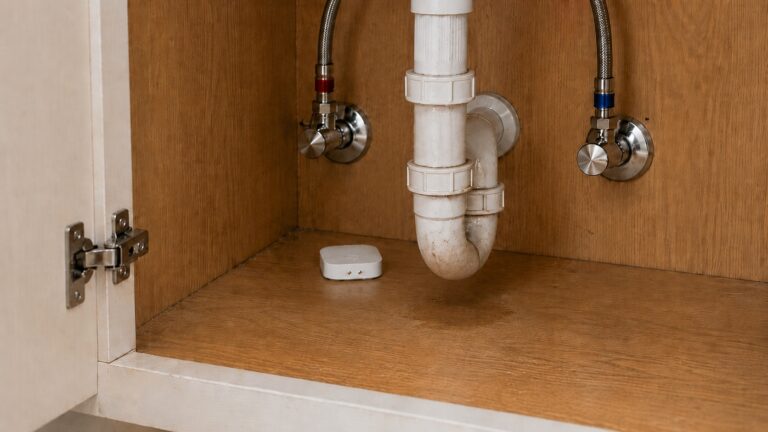
Focus first on places where moisture commonly hides:
- Under sinks and around plumbing fixtures
- Behind toilets and bathroom vanities
- Near windows and exterior doors
- Behind baseboards and lower wall trim
- Under flooring near appliances
- Basements and crawl spaces
- Attics below roof leaks or condensation areas
- HVAC drain pans, coils, ducts, and vents
If you find moisture, stains, odors, or recurring dampness in these areas, the home may need a more detailed inspection. For a broader moisture-control framework, see this guide on how to find and fix moisture problems in your home.
When to Call a Doctor or Mold Professional
Health symptoms and building problems can overlap, but they are not handled by the same professional.
When to talk to a healthcare professional
Talk with a healthcare professional if your fatigue is severe, persistent, unexplained, worsening, or interfering with daily life. You should also seek medical advice if fatigue appears with shortness of breath, chest pain, fainting, fever, neurological symptoms, rapid worsening, unexplained weight loss, or symptoms that concern you.
This is especially important for children, older adults, people with asthma, people with chronic lung conditions, and people with weakened immune systems. Mold exposure may be one environmental factor, but a healthcare professional can help evaluate whether something else is contributing to the fatigue.
When to call a mold or moisture professional
Call a mold or moisture professional when the home itself shows signs of a problem that goes beyond simple surface cleaning. This includes large mold areas, strong musty odors, hidden leaks, mold that keeps returning, damp wall cavities, wet insulation, recurring basement moisture, crawl space moisture, or HVAC moisture issues.
A professional inspection may also make sense when symptoms seem strongly tied to the home but you cannot find the source. In that situation, the goal is not to diagnose your health. The goal is to locate moisture, identify mold-prone materials, and correct the building conditions that allow mold to grow.
How to Reduce Possible Mold-Related Triggers at Home
If the home shows moisture or mold clues, focus on the building conditions first. Fix leaks, stop water intrusion, dry damp materials thoroughly, improve ventilation, and keep humidity under control. Removing visible mold without correcting the moisture source can allow the same problem to return.
Be careful with testing. A mold test kit may help evaluate the home environment, but it cannot diagnose the cause of fatigue. Use test results alongside odors, visible staining, moisture readings, leak history, and professional guidance when needed. If you are unsure whether testing makes sense, see this guide on whether you should test your home after mold exposure symptoms.
Avoid disturbing large mold areas, hidden mold, HVAC contamination, sewage-related moisture, flood-damaged materials, or moldy porous materials without proper containment. Scrubbing, sanding, or tearing out moldy materials can spread spores and dust through the home, especially if someone already has asthma, breathing symptoms, or strong reactions indoors.
FAQs About Mold Causing Fatigue
Can mold in your house make you tired?
Mold in a house may contribute to tiredness in some people, especially if it triggers allergies, sinus congestion, coughing, wheezing, headaches, or poor sleep. However, fatigue alone does not prove that mold is the cause. Look for patterns such as symptoms that worsen at home, improve away from the home, or appear with musty odors, dampness, or visible mold.
Can mold allergies cause fatigue?
Yes, mold allergies may contribute to fatigue. Allergy symptoms can interfere with sleep, breathing comfort, sinus pressure, and overall energy. If tiredness appears with sneezing, congestion, itchy eyes, coughing, or sinus symptoms, mold allergy or another indoor allergen may be worth considering.
Can black mold cause fatigue?
Black-colored mold should not be ignored, but mold color does not prove what symptoms it will cause. Fatigue is more meaningful when it appears with allergy, sinus, breathing, headache, sleep, or indoor moisture clues. Any indoor mold growth should be handled by finding the moisture source, removing mold safely, and getting medical advice when symptoms are persistent or concerning.
How do I know if fatigue is from mold?
You cannot know from fatigue alone. Mold becomes a more reasonable explanation when fatigue appears with allergy or breathing symptoms, worsens in certain rooms, improves when you leave the home, or lines up with musty odors, visible mold, water damage, damp materials, or high humidity. Persistent or unexplained fatigue should still be discussed with a healthcare professional.
Can mold make you sleepy?
Mold does not usually make a person sleepy in a direct, sedating way. Instead, mold-related allergy or irritation symptoms may disrupt sleep or make the body feel run-down. Nasal congestion, coughing, sinus pressure, and headaches can all make sleep less restful, which may leave you feeling sleepy during the day.
Should I test my home if I feel tired all the time?
Testing your home is usually not necessary for fatigue alone. It becomes more reasonable if fatigue appears with musty odors, visible mold, water damage, high humidity, recurring allergy symptoms, breathing irritation, or symptoms that seem worse indoors. Mold testing can help evaluate the home, but it cannot diagnose the cause of your fatigue.
Key Takeaways
- Mold may contribute to fatigue, but fatigue alone does not prove mold exposure is the cause.
- Fatigue is more likely to be mold-related when it appears with congestion, coughing, wheezing, headaches, sinus pressure, or poor sleep.
- Musty odors, visible mold, water damage, damp rooms, and high humidity make the home environment more suspicious.
- Persistent, severe, unexplained, or worsening fatigue should be discussed with a healthcare professional.
- The best home response is to find the moisture source, dry affected materials, improve ventilation, and remove mold safely.
Conclusion
Mold may contribute to fatigue when it triggers allergy symptoms, sinus congestion, coughing, breathing irritation, headaches, or poor sleep. The strongest clue is not tiredness by itself, but tiredness that appears with other symptoms and indoor mold or moisture evidence. If fatigue is persistent, severe, unexplained, or worsening, talk with a healthcare professional while also checking the home for real moisture clues such as musty odors, damp materials, visible mold, leaks, or high humidity.

One Comment
Comments are closed.