How to Inspect Crawl Space Joists for Moisture Damage
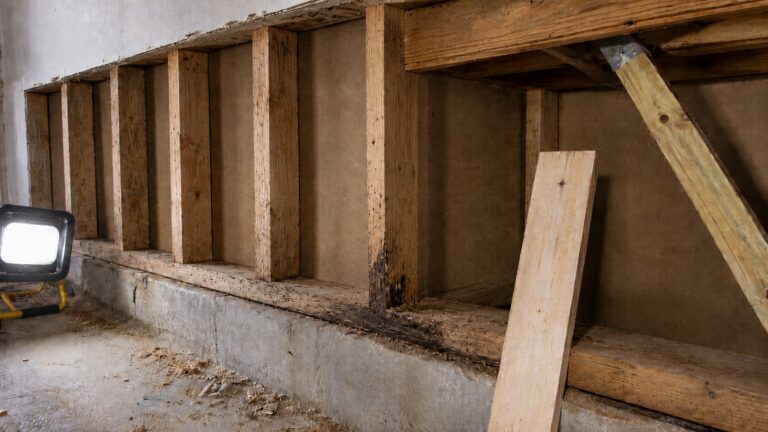
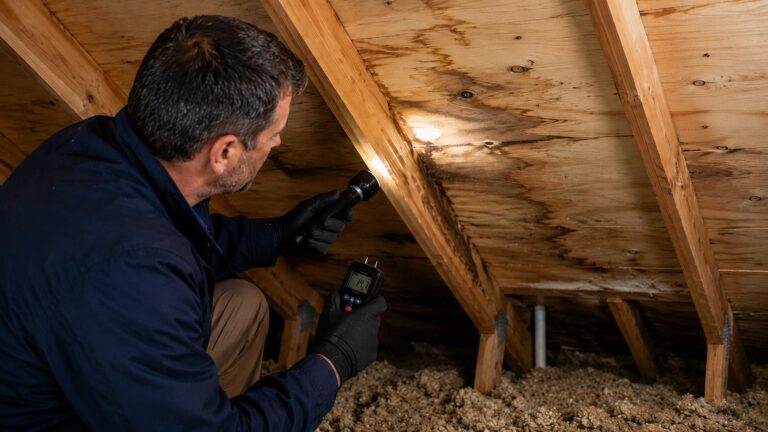
To inspect crawl space joists for moisture damage, look for staining, mold, rusted fasteners, soft wood, sagging, cracks, and damp areas near plumbing, rim joists, insulation, and wet soil. Use a bright light, protective gear, and a screwdriver or probe to check whether the wood is still firm.
This inspection is different from simply noticing symptoms inside the home. If you are still deciding whether the crawl space needs inspection, start with Signs of Moisture Damage in Crawl Space Joists. If you are ready to look underneath the floor system, the steps below show what to check and when to stop.
Quick Crawl Space Joist Inspection Checklist
- Inspect only if the crawl space is dry, accessible, and free of obvious hazards.
- Use a bright flashlight or headlamp and look along the length of each joist.
- Check joist bottoms, joist tops, beam connections, rim joists, and areas near plumbing.
- Look for dark staining, mold, rusted fasteners, soft wood, sagging, cracks, and wet insulation.
- Stop inspecting if wood is crumbling, joists are sagging, water is standing, or electrical hazards are present.
Why Joist Inspection Matters
Crawl space joists carry the floor system above them. Moisture damage in these members can show up as soft wood, mold, rusted fasteners, sagging floors, or loose structural connections. A careful inspection helps separate minor surface staining from damage that may need testing, drying, repair, or professional evaluation.
For the broader structural warning signs that can appear outside the crawl space, see Signs of Structural Moisture Problems.
Safety Steps Before Inspecting Crawl Spaces
Before entering a crawl space, check for standing water, electrical hazards, sharp debris, rodents, strong mold odors, and unstable access. Do not enter if the space appears unsafe.
Wear Proper Protective Equipment
Protective gear reduces exposure to hazards such as mold spores, dust, and sharp debris.
Recommended safety equipment includes:
- Work gloves
- N95 respirator or better, especially if dust or mold is present
- Protective clothing
- Knee pads
- Safety glasses
Use Adequate Lighting
Use lighting that lets you see along the length of each joist, not just straight ahead. Side lighting makes stains, surface texture changes, sagging insulation, and cracks easier to see.
Lighting recommendations include:
- Bright LED flashlight
- Backup light source
- Hands-free headlamp for detailed inspection
Check for Entry Hazards Before Entering
Look for:
- Standing water near entry points
- Electrical hazards
- Sharp debris or exposed nails
- Rodent activity
If any of these hazards are present, correct them before entering or have the crawl space inspected professionally.
Tools Useful During Crawl Space Joist Inspection
You do not need specialized equipment for a first inspection, but a bright flashlight or headlamp, protective gear, a probe, and an optional moisture meter make the findings more reliable.
Probe or Screwdriver
A screwdriver or probe helps test whether the joist surface is still firm. Press gently in suspicious areas instead of gouging the wood. Solid wood should resist pressure; soft, spongy, or crumbly wood suggests decay or long-term moisture exposure.
Moisture Meter (Optional but Helpful)
A moisture meter can help confirm whether suspicious joists are still damp, but this article focuses on inspection rather than detailed moisture testing.
Detailed moisture detection methods are explained in How to Detect Moisture in Crawl Space Framing, which outlines proper testing techniques.
Step-by-Step Crawl Space Joist Inspection Process
Inspect the crawl space in a consistent order: scan the whole area first, then check individual joists, fasteners, plumbing areas, rim joists, insulation, and any damp soil zones. This keeps you from missing damage in tight or shadowed areas.
Step 1 — Begin With a General Visual Scan
Start by visually scanning the crawl space from the entry point. This first step helps identify obvious warning signs before moving closer to individual joists.
Look for broad indicators such as:
- Dark staining on wood surfaces
- Visible mold growth
- Wet or sagging insulation
- Standing water on the ground
- Areas that appear unusually damp
If visible moisture symptoms are present, they often match patterns explained in Signs of Moisture in Crawl Spaces, which outlines common crawl space moisture indicators.
Step 2 — Inspect Individual Joists Carefully
After completing the general scan, move closer to individual joists for detailed inspection.
Examine each joist along its full length, paying attention to:
- Bottom edges of joists
- Areas near fasteners
- Points where joists connect to beams
- Locations near insulation
The bottom edge of each joist is especially important because it is exposed to crawl space air and soil moisture. Also compare one joist to the next; a single darker, softer, or more stained joist often points to a localized leak or wet insulation problem.
Step 3 — Check for Discoloration and Mold
Discoloration and mold are common visual indicators of moisture exposure.
Look for:
- Gray, black, or dark stains
- White or powdery mold growth
- Green or fuzzy mold patches
- Uneven color changes along wood grain
Mold or staining does not always prove that a joist has lost strength, but it does show that moisture has been present. For the conditions that allow mold to develop on structural wood, see Why Crawl Space Wood Framing Develops Mold.
Do not judge severity by color alone. Old mineral staining, dirt, or past moisture marks may remain after the wood has dried. Fresh dampness, softness, spreading mold, rusted fasteners, or repeated staining in the same area are more concerning than color by itself.
Step 4 — Test Wood Firmness
Physical testing helps determine whether moisture has weakened wood fibers.
Using a screwdriver or probe tool, gently press against wood surfaces.
Watch for:
- Wood that dents easily
- Spongy or soft surfaces
- Material that crumbles under pressure
- Reduced resistance compared to dry wood
Firm wood is a good sign, but compare suspicious areas with nearby dry joists before deciding. Wood that feels noticeably softer, breaks apart, or accepts the probe much more easily than surrounding joists should be treated as possible decay.
Step 5 — Inspect Fasteners and Metal Components
Metal fasteners often show moisture damage earlier than wood.
Check:
- Nails
- Screws
- Joist hangers
- Metal brackets
Signs of moisture exposure include:
- Rust formation
- Metal corrosion
- Dark staining near fasteners
- Loose connections
Rusting fasteners suggest long-term humidity exposure even when wood damage is not yet obvious.
Step 6 — Examine Areas Near Plumbing
Plumbing systems are frequent sources of hidden moisture.
Inspect areas near pipes for:
- Water stains
- Active leaks
- Condensation buildup
- Damp surrounding wood
Step 7 — Photograph and Mark Problem Areas
Take clear photos of stained, soft, moldy, or wet areas before leaving the crawl space. If it is safe, note the location by nearby plumbing, vents, beams, or foundation walls so you can compare the same area later or show it to a contractor.
Areas That Require Special Attention During Inspection
Inspect every accessible joist, but spend extra time in areas where water, humid air, insulation, or exterior leakage are most likely to affect the wood.
Rim Joists Along Exterior Walls
Rim joists are located along the outer edge of crawl spaces and are exposed to both indoor and outdoor moisture conditions.
These areas are vulnerable to:
- Outdoor humidity infiltration
- Foundation moisture entry
- Condensation formation
Careful inspection of rim joists helps identify moisture entering from outside the structure.
Joist Tops and Subfloor Contact Areas
The top edge of a joist can hide moisture where it meets the subfloor. Look for dark lines, staining, swollen subfloor edges, or rusted fasteners along the joist-to-subfloor connection. These clues may point to moisture coming from above, such as a plumbing leak, appliance leak, or wet flooring system.
Joist Ends, Beams, and Girder Connections
Moisture damage often appears where joists rest on beams, girders, sill plates, or foundation supports. Check joist ends for dark staining, compression, splitting, softness, rusted hardware, or gaps where wood no longer sits tightly against its support.
Joists Near Crawl Space Entrances
Joists near crawl space doors or access panels may show moisture from outside air, rain splash, poor sealing, or wet soil near the entry.
Look for:
- Damp wood surfaces
- Visible staining
- Signs of water intrusion
These locations often reveal early warning signs of crawl space moisture problems.
Joists Located Above Wet Soil Areas
Moist soil increases humidity levels beneath joists, raising the risk of moisture absorption.
Inspect joists located directly above:
- Standing water
- Wet soil patches
- Poorly drained areas
Ground moisture exposure remains one of the most common causes of structural damage beneath homes.
How to Classify Crawl Space Joist Moisture Damage
Not all moisture damage carries the same level of risk. Some findings indicate minor conditions that can be corrected easily, while others signal structural problems requiring immediate attention. Classifying damage severity helps determine the appropriate response.
Minor Moisture Damage Indicators
Minor damage usually develops during early moisture exposure. At this stage, structural strength typically remains intact, and corrective action can often prevent further deterioration.
Minor damage indicators include:
- Light staining on joist surfaces
- Small isolated mold patches
- Dry wood with slight discoloration
- No visible structural movement
- Minimal or no odor development
Minor damage usually indicates early moisture exposure rather than advanced structural failure.
Preventive strategies described in How to Prevent Structural Moisture in Crawl Spaces help reduce the likelihood of minor damage progressing into more serious conditions.
Moderate Moisture Damage Indicators
Moderate damage indicates that moisture exposure has continued long enough to begin affecting wood strength.
Moderate damage indicators include:
- Surface wood softening
- Rusting fasteners
- Warped or slightly twisted joists
- Larger mold growth areas
- Localized musty odors
Moderate damage requires attention to prevent structural weakening.
If moderate damage is detected, additional moisture testing methods described in How to Detect Moisture in Crawl Space Framing help confirm moisture levels and identify hidden moisture sources.
Severe Moisture Damage Indicators
Severe damage indicates that structural integrity may already be compromised. These conditions require immediate attention and often involve professional repair.
Severe damage indicators include:
- Rotting or crumbling wood
- Large cracks or splits along joists
- Visible sagging or bending
- Extensive mold coverage
- Loose or detached fasteners
Severe damage suggests long-term moisture exposure that has weakened structural components.
Do not continue probing, pushing, or crawling against damaged joists if wood is crumbling, sagging, or separating from fasteners. At that point, the inspection should shift from homeowner observation to professional structural evaluation.
When severe symptoms appear, understanding the full scope of structural risk becomes critical. Related warning signs are described in Signs of Structural Moisture Problems, which explains how damage spreads through structural systems.
How to Check Hidden Areas for Moisture Damage
Some joist damage hides behind insulation, ductwork, stored debris, or tight framing corners. These areas deserve a closer look after the main joist inspection is complete.
Inspect Behind Insulation
Insulation traps moisture against wood and often hides visible damage.
Carefully examine insulation for:
- Wet or heavy material
- Detached insulation sections
- Mold growth on insulation surfaces
- Water stains or discoloration
If insulation appears damp, moldy, or contaminated, avoid tearing it out during a basic inspection. Pull back only small accessible areas if it is safe to do so, then inspect the nearby wood for staining, softness, or mold.
Check Tight Corners and Enclosed Spaces
Tight spaces often restrict airflow and allow moisture to remain trapped.
These areas include:
- Corners near foundation walls
- Spaces between structural supports
- Areas beneath ductwork
- Locations around plumbing lines
Moisture tends to accumulate in these confined spaces, making them high-risk inspection zones.
Look Beneath Stored Items or Debris
Stored materials inside crawl spaces create shaded areas where moisture remains trapped.
Check beneath:
- Stored construction materials
- Wood debris
- Cardboard boxes
- Old insulation piles
Removing debris improves visibility and reduces hidden moisture traps.
When to Stop Inspecting and Call a Professional
Some crawl space findings require professional assistance rather than continued homeowner inspection. Recognizing these situations helps prevent injury and avoids worsening structural damage.
Large Areas of Rot or Structural Damage
If rot appears across multiple joists or structural supports, professional evaluation is recommended.
These conditions often involve:
- Extensive wood decay
- Structural movement
- Load-bearing damage
- Safety risks during inspection
Professional repair may be necessary to restore structural integrity.
Standing Water or Flooding Conditions
Water accumulation inside crawl spaces increases the risk of electrical hazards and structural damage.
If standing water is present:
- Avoid entering the crawl space
- Address drainage issues first
- Contact professionals if water persists
Standing water significantly increases moisture exposure and may also create electrical or contamination hazards. Do not crawl through water to inspect joists.
Strong Mold Odors or Large Mold Coverage
Heavy mold growth may pose health risks and indicate long-term moisture exposure.
Professional remediation is recommended when:
- Mold covers large areas
- Strong odors persist
- Respiratory symptoms occur during inspection
Large mold colonies require careful handling to prevent further contamination.
Frequently Asked Questions About Inspecting Crawl Space Joists
When Is the Best Time to Inspect Crawl Space Joists?
The best time to inspect crawl space joists is during a dry period, after heavy rain, and after any plumbing leak above the crawl space. A dry-period inspection shows baseline conditions, while a post-rain or post-leak inspection helps reveal active moisture paths.
What Does Rot Look Like in Crawl Space Joists?
Rotting wood often appears darker than surrounding material and may feel soft or crumbly when touched. In advanced cases, wood fibers break apart easily or appear shredded.
Rot may also produce musty odors and visible mold growth, especially in areas exposed to long-term moisture.
Can I Inspect Crawl Space Joists Myself?
Many homeowners can perform a basic visual inspection if the crawl space is dry, accessible, and free of obvious hazards. Do not enter if there is standing water, exposed wiring, strong mold odor, animal activity, unstable framing, or very limited clearance. In those cases, professional inspection is safer.
How Do I Know if Crawl Space Damage Is Serious?
Damage becomes serious when structural strength is affected. Warning signs include:
-Soft or crumbling wood
-Large cracks in joists
-Sagging floors above
-Extensive mold coverage
-Loose structural connections
These symptoms indicate advanced moisture damage and require prompt attention.
What Tools Are Needed for Crawl Space Inspection?
Basic tools include a bright flashlight or headlamp, gloves, safety glasses, protective clothing, an N95 respirator, and a screwdriver or probe for gently checking wood firmness. A moisture meter is helpful if you want to confirm whether suspicious joists are still damp, but detailed testing belongs in a separate moisture-checking step.
When Should Professionals Inspect Crawl Spaces?
Professional inspection is recommended when:
-Structural damage appears extensive
-Standing water is present
-Mold covers large areas
-Inspection hazards are present
-Repeated moisture problems occur
Professional evaluations provide detailed assessments and repair recommendations.
What to Do After Inspecting Crawl Space Joists
If the joists are dry, firm, and free of staining, mold, rusted fasteners, or movement, document the condition and inspect again at least once a year, after heavy rain, and after plumbing leaks. If you find soft wood, active moisture, widespread mold, sagging, loose connections, or joists pulling away from supports, stop the inspection and arrange professional evaluation.
If the damage appears minor but moisture conditions are present, use How to Prevent Structural Moisture in Crawl Spaces as the next step for reducing the conditions that allow joist damage to return.