Signs of Structural Moisture Problems
Structural moisture problems begin when water or repeated dampness reaches the parts of a home that support the structure: subfloors, joists, beams, posts, sill plates, rim joists, wall framing, crawl space framing, and other hidden wood members.
A stain or musty smell does not always mean the structure is damaged. The concern rises when moisture signs appear with softness, sagging, movement, decay, mold on framing, or damage in load-bearing areas. That is when a surface moisture issue may have reached the structural wood system.
This guide explains the main warning signs, where structural moisture damage usually appears, and when the problem needs more than simple drying. For the broader repair hub, see Structural Moisture Problems in Homes: Causes, Risks, and Repair Guide. For the full sitewide moisture system, start with how to find, fix, and prevent moisture problems in homes.
What Are Structural Moisture Problems?
A structural moisture problem is different from a surface moisture problem. Surface moisture affects visible materials like paint, trim, flooring, drywall, or cabinet finishes. Structural moisture affects the materials that help hold the home together or support weight.
Common structural materials affected by moisture include:
- Subfloor panels under finished flooring
- Floor joists below floors
- Crawl space beams and girders
- Wood posts and supports
- Sill plates and rim joists
- Wall studs and bottom plates
- Roof framing, rafters, and sheathing
- Load-bearing wood around openings or support points
The main concern is not that wood got wet once. Many wood materials can handle brief exposure if they dry quickly and completely. The bigger problem is repeated wetting, long-term dampness, trapped moisture, high humidity, or hidden leaks that keep the wood above safe drying conditions for too long.
When structural wood stays damp, it can swell, stain, soften, grow mold, lose fastener grip, develop rot, or begin to deform. The warning signs often appear slowly, which is why structural moisture problems can be missed until flooring moves, joists sag, crawl space wood deteriorates, or load-bearing areas show visible damage.
How Structural Moisture Problems Differ From Cosmetic Water Damage
Cosmetic water damage affects surfaces. Structural moisture damage affects strength, support, or stability.
For example, a water stain on drywall may be ugly but not structurally serious by itself. A swollen baseboard may show that moisture reached the lower wall, but it does not prove that framing is damaged. Cupped flooring may be a surface flooring issue, a subfloor issue, or a sign that moisture is rising from below.
Structural concern increases when moisture signs appear with movement, softness, sagging, cracking, deformation, wood decay, or repeated moisture return. The pattern matters more than one isolated symptom.
Repeated wetting and drying can also cause materials to move in cycles. Floorboards may separate, trim may pull away, gaps may open, and surfaces may shift after each moisture event. These repeated changes matter more than a single old stain because they suggest the material is still reacting to moisture.
A home may have cosmetic water damage if you see:
- Paint bubbling on a wall surface
- Minor staining on trim
- Discoloration from an old leak that has been corrected
- Surface mildew in a humid room
- Flooring finish damage without softness or movement
A home may have structural moisture damage if you notice:
- Soft, spongy, or flexing floors
- Subfloor swelling or separation
- Floor joists that are dark, soft, cracked, sagging, or fungal-covered
- Wood beams or posts showing rot, compression, or deformation
- Load-bearing areas that have moisture staining plus movement or decay
- Crawl space framing that stays damp, moldy, or weakened
- Structural changes after flooding or long-term leaks
The Main Signs of Structural Moisture Problems
Structural moisture problems usually show a pattern, not just one clue. A soft floor, stained joist, musty crawl space, or cracked finish matters more when it appears near a leak, repeated dampness, visible wood decay, or structural movement.
Soft, Spongy, or Uneven Floors
A soft or spongy floor is one of the most common warning signs that moisture may have reached the subfloor or floor framing. The floor may feel weak underfoot, dip slightly when walked on, or flex more in one area than the surrounding floor.
This does not always mean the joists are damaged. The issue may be limited to the finished flooring, underlayment, or subfloor panel. But if the softness appears near a bathroom, kitchen, laundry room, exterior door, plumbing fixture, crawl space, or previous leak area, moisture should be considered as a possible cause.
Subfloor moisture problems often show up as:
- Soft spots under finished flooring
- Flooring that feels loose or hollow
- Swollen seams in wood or laminate flooring
- Persistent cupping, buckling, or lifting
- Dark staining near floor edges or lower walls
- A musty smell near the floor
If the warning signs seem centered in the subfloor rather than the visible flooring surface, use the detailed guide on signs of water damage in subfloors.
Sagging or Bouncy Floor Sections
Sagging or bouncy floors can point to deeper structural moisture problems, especially when they appear with crawl space dampness, joist staining, wood rot, or long-term leaks. A floor that feels slightly uneven may come from age, framing layout, settlement, or installation issues. But when sagging develops near known water exposure, the framing below the floor should be checked.
Moisture can weaken floor framing when joists remain damp, begin to rot, or lose stiffness. In crawl spaces, this often happens when ground moisture, poor drainage, plumbing leaks, or high humidity keep joists exposed to damp conditions for long periods.
Possible joist-related warning signs include:
- A floor that feels springy or bouncy in one area
- Visible sagging between supports
- Cracks opening in nearby trim or wall finishes
- Darkened or stained joists below the problem area
- Wood that looks soft, split, crushed, or fungal-covered
- Musty odors coming from below the floor
If floor movement appears connected to damaged joists, read the guide on signs of rotting floor joists. If the issue is specifically below a crawl space, the guide on signs of moisture damage in crawl space joists is the better next step.
Darkened, Stained, or Damp Structural Wood
Dark staining on structural wood means the area has a moisture history, but staining alone does not prove the wood has lost strength. Old stains may remain after a leak has been repaired. The concern increases when staining appears with dampness, softness, fungal growth, cracking, sagging, or repeated wetting.
In crawl spaces, basements, attics, and under-floor areas, structural wood may darken when moisture repeatedly contacts the surface. This can happen from plumbing leaks, roof leaks, exterior wall leaks, condensation, crawl space humidity, or standing water below the home.
Watch for staining patterns that appear:
- Below bathrooms, kitchens, or laundry rooms
- Near plumbing penetrations
- Along rim joists or sill plates
- Under exterior walls or doors
- Below roof leak paths
- Around crawl space beams, joists, or posts
Stained wood should be evaluated in context. Dry, hard, old-stained wood may not be urgent. Damp, soft, moldy, or decaying wood needs closer inspection.
Musty Odors Near Floors, Crawl Spaces, or Structural Cavities
A musty odor does not automatically mean structural damage, but it often means moisture is present somewhere that is not drying well. When the odor is strongest near floors, crawl space access points, lower walls, or enclosed structural areas, the source may be below the finished surface.
Musty smells near structural wood may come from:
- Damp crawl space soil
- Wet subfloor panels
- Mold growth on wood surfaces
- Moist insulation near framing
- Hidden leaks around plumbing
- Moisture trapped behind lower walls
- Rotting wood or organic debris in damp cavities
The odor itself does not identify the exact problem. It should be treated as a clue that moisture may be trapped somewhere nearby. If the smell is coming from a crawl space, the framing, joists, insulation, ground vapor barrier, and drainage conditions should be checked.
Visible Mold or Fungal Growth on Structural Wood
Mold on structural wood is a moisture warning sign, but it is not the same thing as rot. Mold grows on the surface when conditions stay damp enough. Rot breaks down the wood itself.
That difference matters. A joist with light surface mold may still be firm. A joist with rot may feel soft, crumbly, cracked, compressed, or weakened. Mold tells you moisture has been present; softness or decay tells you the wood may be losing strength.
Possible warning signs include:
- Black, gray, green, or white growth on crawl space wood
- Fuzzy or powdery surface growth on joists
- Musty odors below floors
- Condensation or dampness near the same area
- Recurring growth after cleaning
- Wood that is also soft, punky, or deteriorated
If the main issue is visible growth on crawl space framing, use the guide on signs of mold growth on crawl space wood. This article treats mold as one warning sign of moisture, not as a full mold cleanup topic.
Soft, Punky, Cracked, or Crumbling Wood
Wood that feels soft, punky, crumbly, or hollow is more concerning than wood that is only stained. Structural wood should generally feel firm. If a joist, beam, post, sill plate, or subfloor edge can be easily indented, broken apart, or scraped away, moisture may have contributed to decay.
Rot usually develops when wood stays damp long enough for decay organisms to break it down. This is more likely in hidden or poorly ventilated areas where leaks, ground moisture, condensation, or crawl space humidity are not corrected. For the decay timeline and conditions that allow rot to progress, read how wood rot develops after water damage.
Warning signs of possible structural wood rot include:
- Wood that breaks apart easily
- Soft areas near stains or moisture marks
- Cracking, splitting, or checking with dampness
- Wood that looks shrunken, sunken, or distorted
- Fungal growth along with softness
- Joists, beams, or posts losing their original shape
For a deeper breakdown of decay indicators, read signs of structural wood rot.
Cracks, Movement, or Sticking Doors After Moisture Exposure
Structural moisture problems can sometimes show up as movement in nearby finishes. Doors may begin sticking. Trim gaps may open. Floors may slope. Cracks may appear in drywall or along corners. These signs do not always come from moisture, but they deserve attention when they appear after flooding, long-term leaks, crawl space moisture, or visible structural wood deterioration.
Moisture-related movement can happen when wood swells, subfloors deform, joists lose stiffness, supports shift, or load-bearing members are weakened. In some cases, the visible symptom appears inside the living space while the actual damage is below the floor, inside the wall, or in the crawl space.
Movement is more concerning when it appears with:
- A known leak or flood event
- Soft or sagging floors
- Visible crawl space damage
- Rot or decay in beams, posts, or joists
- New cracks near doors, floors, or wall openings
- Sticking doors or windows that were not previously a problem
If movement appears after flooding, use the guide on signs of structural damage after flooding. Flood exposure creates a different risk level because water may affect multiple structural areas at once.
Wall or ceiling movement is also more concerning than simple staining. Bowed wall surfaces, ceiling sagging, widening gaps, or visible misalignment can suggest that moisture has affected framing, roof structure, or support points rather than only the surface finish.
Where Structural Moisture Damage Usually Appears
Structural moisture damage usually appears where water can reach wood and stay hidden: below floors, inside crawl spaces, near plumbing, around exterior openings, under roof leak paths, or along lower wall and rim-joist areas.
The visible stain or soft spot is often only the clue. The more important question is what is happening below, behind, or around it.
Subfloors Under Finished Flooring
Subfloors are one of the first structural layers affected when water reaches below finished flooring. A subfloor may be damaged by plumbing leaks, appliance leaks, toilet leaks, shower leaks, exterior door leaks, crawl space humidity, or flooding.
The finished floor may show cupping, buckling, lifting, loose seams, or soft spots. But the real concern is whether the subfloor panel below has swollen, separated, softened, or lost its ability to support the flooring above it.
Subfloor moisture problems are common below:
- Bathrooms
- Kitchens
- Laundry rooms
- Water heaters
- Exterior doors
- Sliding doors
- Crawl space areas with high humidity
- Rooms affected by flooding
If the floor feels soft, uneven, or weak in one area, the finished flooring may not be the only material affected. The guide on signs of water damage in subfloors explains the subfloor-specific warning signs in more detail.
Floor Joists and Crawl Space Framing
Floor joists carry the floor system. When moisture reaches them repeatedly, the problem becomes more serious than stained flooring or damp trim. Joists can be affected by leaks from above, moisture from below, poor crawl space drainage, condensation, high humidity, or wet insulation held against the wood.
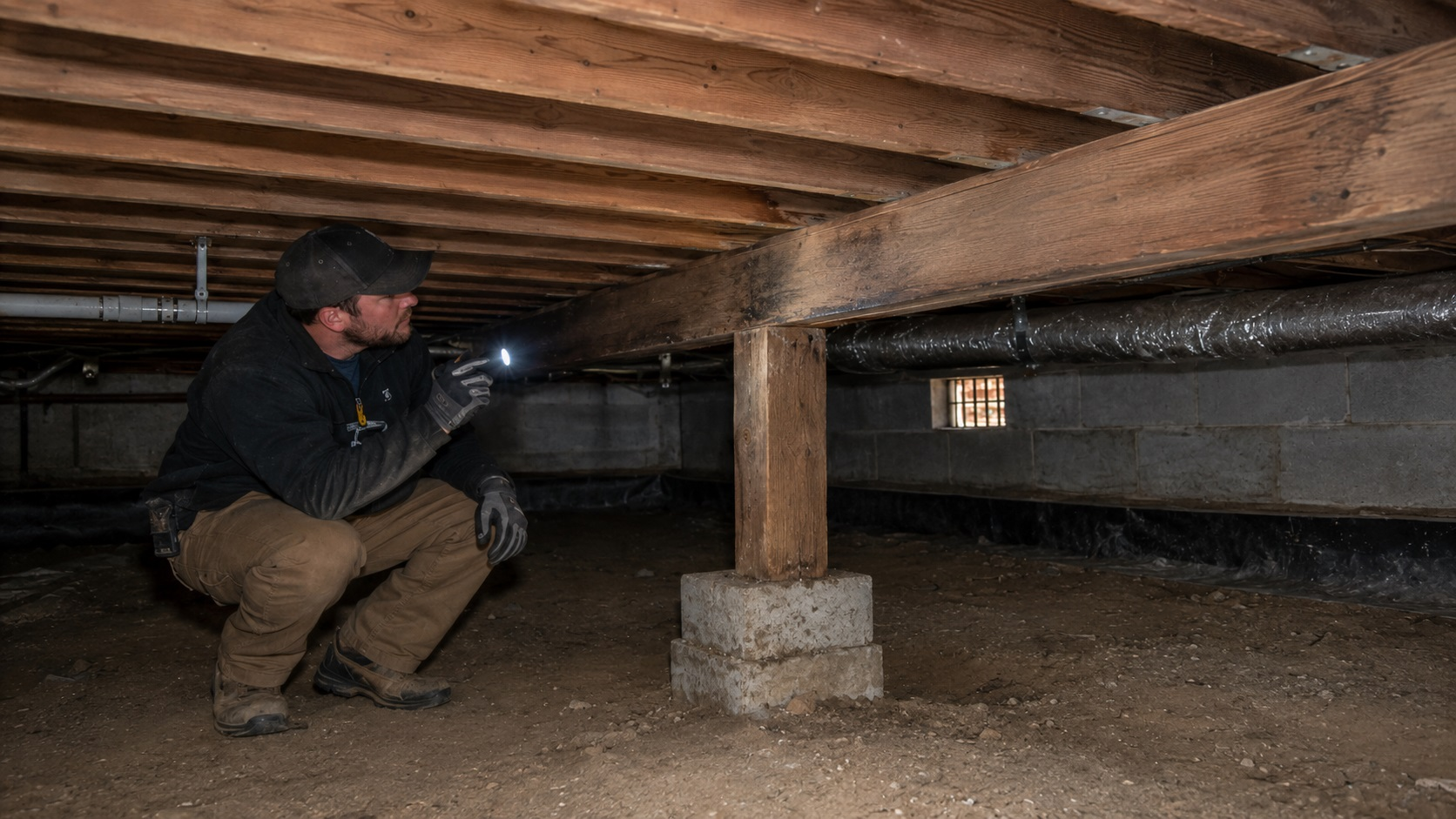
Moisture-damaged joists may show dark staining, fungal growth, splitting, soft areas, sagging, or visible distortion. In a crawl space, the damage may stay hidden until the floor above starts to feel bouncy, uneven, or weak.
Crawl space joists are especially vulnerable because they sit between the living area above and ground moisture below. If the crawl space is damp, poorly drained, poorly sealed, or humid for long periods, the joists and beams may absorb moisture repeatedly.
If the problem appears to involve crawl space joists specifically, use the guide on signs of moisture damage in crawl space joists.
Beams, Posts, and Load-Bearing Wood
Moisture damage becomes more serious when it affects beams, posts, girders, sill plates, or other load-bearing wood. These members are not just surfaces. They help transfer weight through the structure.
Warning signs around load-bearing wood may include:
- Soft or decayed support posts
- Crushing at the bottom of posts
- Rot at beam ends
- Dark staining around structural connections
- Visible sagging near a beam or support line
- Cracks or deformation near damp structural members
- Fasteners or connectors pulling loose from damaged wood
Load-bearing damage is not a good area for guesswork. If a support member appears soft, crushed, rotted, or deformed, the safest next step is professional evaluation. For more detail, read signs of load-bearing wood damage.
Rim Joists, Sill Plates, and Lower Wall Framing
Rim joists and sill plates sit near the outside edge of the floor system. They can be affected by exterior water intrusion, foundation moisture, crawl space humidity, poor flashing, plumbing penetrations, or moisture entering near siding, doors, windows, or decks.
These areas matter because they often connect the floor system to the foundation or wall system. Damage may not be obvious from inside the room. A lower wall may show staining, baseboard swelling, or musty odor while the deeper issue is at the rim joist, sill plate, or lower framing behind it.
Warning signs may include:
- Moisture staining along the edge of the floor system
- Soft wood near exterior walls
- Musty odors near lower walls
- Recurring moisture at the floor-wall joint
- Rot near sill plates or rim joists
- Insect activity around damp structural wood
If the moisture appears to be entering through exterior wall materials, the broader source may fit the guide on how exterior walls allow moisture into homes.
Wall Framing Around Plumbing, Windows, and Doors
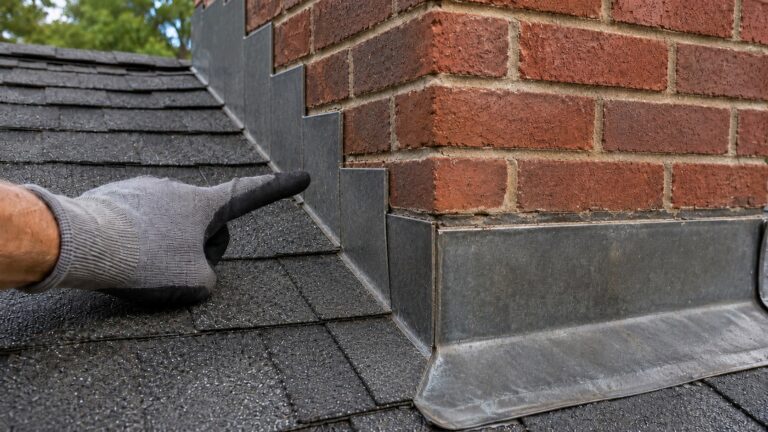
Wall framing can be affected when water enters around plumbing fixtures, windows, doors, tubs, showers, exterior walls, or roof-to-wall connections. The visible surface may show stains, swollen trim, cracked paint, or mold, but the structural concern is whether moisture has reached studs, bottom plates, headers, or framing around openings.
Window and door openings are common risk areas because they interrupt the wall system. If flashing, seals, drainage paths, or exterior finishes fail, water can enter around the opening and stay hidden in the surrounding framing.
Plumbing walls are also high-risk areas because small leaks can wet framing repeatedly before the problem is visible. A slow supply leak, drain leak, tub leak, shower valve leak, or appliance leak can reach wood behind finished surfaces.
If the moisture pattern is tied to plumbing, see how plumbing leaks cause structural damage. If the damage is centered around openings, see how windows and doors cause hidden moisture problems.
Roof Framing, Rafters, and Sheathing
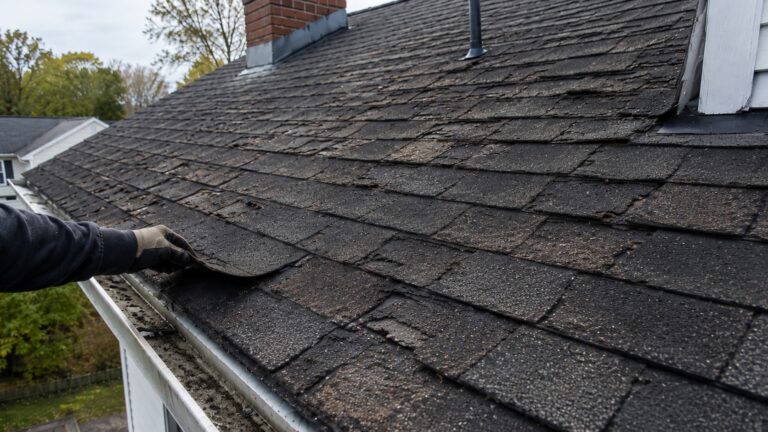
Roof leaks can affect structural wood in attics before the living space shows obvious damage. Rafters, trusses, roof sheathing, ceiling framing, and attic insulation may absorb moisture from slow roof leaks, flashing failures, condensation, ice dams, or ventilation problems.
Possible warning signs include:
- Dark staining on roof sheathing
- Damp insulation below a roof leak path
- Mold or fungal growth on attic wood
- Soft or deteriorated roof decking
- Ceiling stains below the affected framing
- Musty attic odors
Roof-origin structural moisture should be separated from floor-system moisture. The source, materials, and repair path are different. If the issue appears tied to roof aging, flashing, or roof material failure, read common roofing material failures.
How Moisture Weakens Structural Wood
Moisture does not usually ruin structural wood instantly. The danger comes from repeated exposure, slow drying, trapped moisture, and conditions that allow deterioration to continue. A brief leak that is stopped and dried quickly may leave little structural damage. A smaller leak that continues for months can cause much more serious damage. For a deeper explanation of framing deterioration, read how moisture weakens structural framing.
Repeated Wetting and Slow Drying
Wood becomes more vulnerable when it is wetted repeatedly and cannot dry fully between events. This can happen in crawl spaces with high humidity, under floors near plumbing leaks, around exterior wall leaks, below roof leaks, or after flooding where hidden areas were never dried completely.
The longer wood stays damp, the more likely it is to develop staining, mold growth, swelling, fastener weakening, or decay. Slow drying is especially common where wood is covered by flooring, insulation, wall materials, vapor-impermeable layers, or enclosed cavities.
Swelling, Warping, and Loss of Shape
Wood and wood-based panels can swell when they absorb moisture. Subfloor panels may expand at the seams, floor sheathing may lift, and wood members may change shape. When swelling dries unevenly, the material may not return perfectly to its original condition.
Structural concern increases when swelling leads to floor movement, separation, fastener loosening, or deformation in a load-bearing area. A swollen trim board is usually a finish problem. A swollen, soft, or separating subfloor panel is more serious because it affects support below the finished floor.
Fastener and Connection Problems
Structural wood depends not only on the wood itself, but also on the connections between parts. Nails, screws, hangers, plates, brackets, and other connectors help transfer loads through the structure. When surrounding wood softens or deteriorates, those connections may lose strength.
Moisture may also contribute to corrosion on metal connectors, especially in damp crawl spaces or areas exposed to repeated wetting. Corroded hardware alone does not prove structural failure, but corrosion plus wet wood, rot, sagging, or movement deserves closer attention.
Mold, Rot, and Structural Decay Are Not the Same Thing
Mold and rot are often confused, but they are not the same issue. Mold grows on surfaces when moisture conditions allow it. Rot breaks down the wood itself. A wood member can have surface mold without being structurally rotten. A wood member can also be rotten even if mold is not the most obvious visible sign.
The difference matters because cleanup, drying, and structural repair are different decisions. Surface growth may require moisture correction and cleanup. Rot may require structural evaluation, repair, or replacement depending on severity and location.
Why Load-Bearing Location Matters
The same amount of moisture damage can mean different things depending on where it occurs. Damage to a piece of non-structural trim is usually less serious than damage to a joist, beam, post, sill plate, or load-bearing wall member.
Load-bearing wood deserves more caution because it helps support weight. If that wood becomes soft, crushed, rotted, cracked, or deformed, the issue should not be treated as a simple cosmetic repair. The source of moisture must be corrected, but the damaged member may also need evaluation for strength and stability.
Floor Joist and Crawl Space Structural Warning Signs
Floor joists and crawl space framing are central to many structural moisture problems because they support the floor above but often stay out of sight. By the time the living space feels soft, bouncy, or uneven, the moisture below may have been present for a while.
When Sagging or Bounce Points to Joist Trouble
A bouncy floor does not always mean joists are rotten. Some floors bounce because of long spans, framing design, age, or normal movement. But bounce becomes more concerning when it appears with moisture history, crawl space dampness, stains, mold, or visible joist deterioration.
Joist-related moisture damage may appear as:
- Dark stains on joists below a soft floor
- Cracking or splitting near wet areas
- Fungal growth on joist surfaces
- Soft or punky wood along the joist edge
- Sagging between supports
- Moist insulation touching the joists
- Repeated condensation or dampness in the crawl space
If floor movement and visible joist deterioration appear together, read signs of rotting floor joists.
Crawl Space Moisture Can Affect the Floor Above
A damp crawl space is not only a crawl space problem. Moisture below the home can affect joists, beams, subfloors, insulation, ductwork, and indoor air. Ground moisture, standing water, poor drainage, missing vapor barriers, plumbing leaks, and high humidity can all keep wood damp.
Common crawl space structural warning signs include:
- Musty odors coming through the floor
- Wet or fallen insulation
- Darkened joists or beams
- Mold growth on wood
- Soft or deteriorated joist edges
- Rusting fasteners or connectors
- Floor softness above the damp area
If the main symptoms are in the crawl space joists, use signs of moisture damage in crawl space joists. If the crawl space shows repeated odor, damp framing, wet insulation, or floor symptoms over time, read signs of long-term crawl space moisture damage.
When Crawl Space Framing Needs Moisture Detection
Visual signs are useful, but they do not always show whether structural wood is currently wet. Stains can remain after old leaks. Surface mold can remain after moisture has been reduced. A moisture meter, careful inspection, and comparison of affected and unaffected areas may help clarify whether wood is still damp.
Detection is especially important when:
- The crawl space smells musty
- Joists look stained but the source is unclear
- Insulation is wet or sagging
- Floors above feel soft or uneven
- Water has entered the crawl space repeatedly
- Repairs are planned and the wood must be checked first
For framing-wide moisture testing, read how to detect moisture in crawl space framing. For a joist-specific inspection process, read how to inspect crawl space joists for moisture damage.
Structural Wood Rot and Load-Bearing Damage
Structural wood rot is one of the clearest signs that moisture has affected more than the surface. Rot develops when wood stays damp long enough for decay to break down the material. This can happen in subfloors, joists, beams, posts, sill plates, rim joists, roof framing, or wall framing.
The important issue is not only whether wood looks bad. The important issue is whether the wood is still firm, properly shaped, and able to perform its structural role.
Signs Wood May Be Losing Strength
Wood that is only stained may still be firm. Wood that is decayed often changes texture, shape, or strength. The more physical deterioration you see, the more carefully the area should be evaluated.
Possible signs of structural wood rot include:
- Wood that feels soft, punky, or crumbly
- Wood that breaks apart when lightly probed
- Cracking, splitting, or checking near damp areas
- Sections that look sunken, shrunken, or distorted
- Fungal growth combined with softness
- Beam ends or joist ends that appear deteriorated
- Posts that show crushing, decay, or loss of shape at the base
- Fasteners or connectors that no longer hold firmly in the wood
Structural wood rot is more likely in areas that stay wet repeatedly: crawl spaces with high humidity, framing below plumbing leaks, wood near exterior wall leaks, roof framing below slow leaks, and subfloors under repeated spills or appliance leaks.
Why Load-Bearing Wood Needs More Caution
Load-bearing wood is different from trim, finish flooring, or non-structural material. Joists, beams, posts, headers, sill plates, and other supporting members help carry weight. If those parts are damaged by moisture, the issue should not be treated as a simple cosmetic repair.
Warning signs involving load-bearing wood may include:
- Sagging near a beam or support line
- Posts that are soft, cracked, leaning, or crushed
- Rot at beam ends or bearing points
- Joists pulling away from supports
- Cracks or movement near structural openings
- Floors that slope toward a damaged support area
- Visible decay in wood that appears to carry weight
If moisture damage affects a load-bearing member, the water source and the structural condition both matter. Drying the area is not enough if the member has already lost strength or changed shape.
When to Stop DIY Inspection
Do not probe, cut, remove, or disturb structural wood if it appears load-bearing, severely softened, crushed, sagging, or actively supporting a floor, wall, beam, post, roof section, or opening. Stop the inspection and get professional help before removing material.
Homeowners can often identify moisture clues, but structural judgment has limits. If a member supports weight, shows rot, is visibly deformed, or sits below a sagging floor, guessing is risky.
Stop relying on visual inspection alone when you see:
- Severe sagging or floor movement
- Rot in beams, posts, or load-bearing framing
- Crushed or leaning supports
- Large areas of softened structural wood
- Damage after flooding
- Repeated water exposure near structural supports
- Cracks or movement that appear after moisture exposure
In these situations, a qualified contractor, structural specialist, engineer, or restoration professional may be needed to evaluate the source of moisture, the condition of the wood, and the safest repair path. If you are trying to decide whether damaged wood can be saved or must be replaced, read whether to repair or replace structural wood affected by moisture.
Mold on Structural Wood: Warning Sign or Structural Failure?
Mold on structural wood should not be ignored, but it should also not be misunderstood. Mold means moisture conditions have supported growth. It does not automatically mean the wood has lost structural strength.
This distinction helps prevent two mistakes. The first mistake is dismissing mold as only cosmetic when it points to ongoing moisture. The second mistake is assuming every moldy joist or beam is rotten and unsafe. The real concern depends on moisture source, wood condition, extent of growth, drying conditions, and whether the wood is still firm.
Why Mold Means Moisture Is Present
Mold growth on wood usually means the area has had enough moisture to support surface growth. In crawl spaces, this often happens because of ground moisture, poor drainage, high humidity, wet insulation, condensation, or plumbing leaks.
Mold may appear as:
- Dark speckling on joists
- Gray, white, green, or black patches on framing
- Fuzzy or powdery growth on wood surfaces
- Growth near damp insulation
- Growth around rim joists, beams, or crawl space supports
- Musty odors below floors
The key question is whether the moisture source is still active. If the underlying moisture problem remains, mold may return even after cleaning.
Why Mold Does Not Always Mean Rot
Mold grows on surfaces. Rot breaks down wood. A joist can have surface mold and still be firm. Another joist may have little visible mold but still be softened or decayed from long-term wetting.
To avoid confusion, separate these observations:
- Surface growth: points to moisture conditions that allowed mold.
- Softness: suggests the wood itself may be deteriorating.
- Cracking or deformation: may suggest movement, shrinkage, stress, or decay.
- Sagging: may indicate structural weakness or framing movement.
- Recurring dampness: means the moisture source has not been controlled.
If you see mold on crawl space framing, the next step is not only cleaning. The moisture source, humidity level, drainage, insulation condition, and wood firmness should also be checked.
When Crawl Space Mold Needs Closer Inspection
Mold on crawl space wood needs closer inspection when it appears with dampness, softness, sagging, wet insulation, standing water, or a musty smell inside the home.
Closer inspection is especially important when:
- The mold appears on floor joists or beams
- The floor above feels soft or bouncy
- The crawl space has standing water or wet soil
- Insulation is sagging or wet
- The wood feels soft or crumbly
- The growth returns after cleaning
- Moisture readings remain elevated
For mold-specific warning signs in this area, read signs of mold growth on crawl space wood.
Structural Warning Signs After Flooding
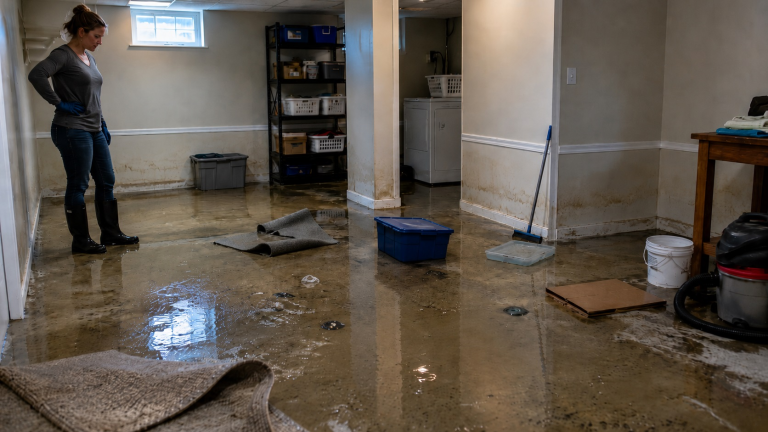
Flooding creates a higher-risk structural moisture event because it can wet several systems at once: finished floors, subfloors, joists, wall framing, insulation, crawl space supports, fasteners, and lower wall plates.
After flooding, the surface may dry before hidden structural materials do. Floors, crawl space framing, wall cavities, and insulation should be checked before new finishes cover the area again.
Why Flooding Creates a Different Risk Level
Flooding can expose wood to a large amount of water in a short time. If drying is delayed or incomplete, moisture may remain trapped in structural assemblies. Floodwater can also carry debris and contaminants, which may complicate cleanup and drying decisions.
Structural concerns after flooding are more likely when:
- Water stood inside the home for hours or days
- Floodwater entered the crawl space
- Subfloors or wall cavities stayed wet
- Insulation remained saturated
- Floors began to sag, lift, or separate
- Doors or windows began sticking after the event
- Cracks or movement appeared after water exposure
The longer water remains in contact with structural materials, the more important full drying and inspection become.
Movement, Deformation, and Instability After Flood Exposure
Some post-flood signs point to possible structural movement rather than simple moisture staining. These signs should be treated more seriously because they may involve support, alignment, or load transfer.
Watch for:
- New floor slopes or dips
- Walls that appear out of alignment
- Doors that no longer close properly
- Windows that bind or shift
- Cracks that appear after the flood
- Separating trim or baseboards
- Subfloors that feel weak or spongy
- Beams, posts, or joists that look distorted
These signs do not prove severe structural failure by themselves, but they do justify a more careful inspection. Flood-related structural changes should not be covered with new finishes until the underlying materials are evaluated.
When Professional Inspection Is Needed After Flooding
Professional inspection is wise when flooding affects structural wood, crawl spaces, load-bearing areas, or large sections of flooring. A professional can evaluate whether the materials are dry, whether the source has been controlled, and whether structural members have been weakened.
Professional help is especially important if you see:
- Sagging floors after flooding
- Soft subfloors across a wide area
- Visible rot or deterioration in framing
- Movement in walls, doors, or windows
- Wet insulation against structural wood
- Standing water in the crawl space
- Load-bearing supports exposed to floodwater
For the full flood-specific checklist, read signs of structural damage after flooding.
Common Moisture Sources Behind Structural Damage
Structural symptoms are only part of the problem. The source has to be found too. If the leak, humidity, drainage issue, or water entry point continues, drying or repairing the damaged wood may not last.
Moisture can reach structural wood from above, below, outside, or inside the assembly. The same symptom may point to different causes depending on where it appears.
Plumbing Leaks
Plumbing leaks are one of the most common sources of structural moisture damage inside homes. A slow leak under a sink, behind a shower valve, below a toilet, near a washing machine, or around a water heater can wet subfloors and framing repeatedly before the damage is obvious.
Plumbing-related structural warning signs may include:
- Soft flooring near fixtures
- Musty odors under cabinets or near bathrooms
- Staining below plumbing lines
- Subfloor swelling near appliances
- Joist staining below a kitchen, bathroom, or laundry room
- Recurring dampness after surface cleanup
Crawl Space Moisture
Crawl space moisture can affect structural wood from below. Damp soil, standing water, poor drainage, missing vapor barriers, blocked vents, high humidity, and plumbing leaks can all create damp conditions around joists, beams, posts, and subfloors.
Because crawl spaces are hidden, damage can develop before homeowners notice it. The first interior clues may be musty odors, soft floors, cold floors, high indoor humidity, or recurring mold.
Crawl space moisture should be taken seriously when it affects the floor structure. Joists, beams, posts, and subfloor panels need dry conditions to remain stable long term.
Exterior Wall and Siding Leaks
Water can enter through siding failures, gaps, flashing problems, wall penetrations, cracked materials, or poor drainage around exterior assemblies. Once water gets behind exterior materials, it may wet sheathing, studs, rim joists, sill plates, or lower wall framing.
Exterior wall leaks may show up inside as stains, swollen trim, musty odors, soft lower walls, or moisture near floor edges. If the source is not corrected, the same structural area may keep getting wet.
Roof Leaks
Roof leaks can affect attic framing, roof sheathing, rafters, ceiling joists, and wall cavities. Slow roof leaks often leave stains on insulation or sheathing before they create obvious ceiling damage.
Roof-related structural moisture may appear as dark roof decking, wet attic insulation, mold on roof framing, soft sheathing, or stains below rafters and ceiling framing.
Window and Door Openings
Windows and doors interrupt the wall system, which makes them common moisture entry points. Failed flashing, worn seals, poor drainage, exterior gaps, or repeated wind-driven rain can allow water to reach the rough opening and surrounding framing.
Warning signs may include staining around trim, swelling near sills, musty odors near openings, soft lower framing, or recurring moisture after rain.
Flooding and Standing Water
Flooding and standing water create a higher-risk moisture event because they can wet several structural areas at the same time. Water may reach finished floors, subfloors, wall cavities, insulation, crawl space framing, beams, posts, and lower wall plates.
Even after visible water is removed, moisture can remain trapped inside assemblies. This is why post-flood structural warning signs should be taken seriously, especially if floors feel different, doors begin sticking, or crawl space framing stays damp.
After a flood or major water event, hidden structural materials may still need drying, inspection, or repair even when surfaces look dry.
How to Confirm Whether Moisture Has Reached Structural Wood
Visible warning signs can point toward structural moisture damage, but confirmation usually means checking the area below or behind the surface clue. A stain, odor, or soft spot is only the starting point.
Try to answer four practical questions:
- where the moisture came from
- which structural materials were exposed
- whether they are still wet
- whether they have lost firmness, shape, or stability.
This is only a high-level inspection framework. Load-bearing damage, sagging, rot, flood exposure, or major movement should be evaluated by someone qualified to judge structural safety.
Start With the Moisture Pattern
The location of the symptom often gives the first clue. Moisture near a toilet, tub, dishwasher, sink, or washing machine may point to plumbing. Moisture near an exterior wall, door, window, or rim joist may point to exterior water entry. Moisture below the floor may point to crawl space conditions, flooding, or a leak from above.
Look for patterns such as:
- Damage that gets worse after rain
- Soft flooring near plumbing fixtures
- Musty odors from a crawl space
- Staining below a roof or attic leak path
- Moisture along exterior wall edges
- Repeated dampness in the same area after repairs
- Wood that stays damp even when visible surfaces dry
Structural moisture problems are easier to understand when the source and the affected material are considered together. A soft floor after a dishwasher leak is different from a sagging floor over a chronically damp crawl space.
Check Whether the Surface Clue Matches a Structural Area
Some moisture signs are only surface-level. Others sit directly above or beside structural wood. The concern increases when a symptom lines up with subfloors, joists, beams, posts, sill plates, rim joists, wall studs, or roof framing.
Examples include:
- A soft floor directly above a crawl space joist bay
- Staining along a wall where the sill plate or rim joist sits
- A ceiling stain below attic framing
- Flooring movement near a plumbing fixture
- Musty odors near a crawl space access point
- Cracks or movement near a load-bearing wall
If the visible problem sits near structural wood, the area should be checked before new finishes are installed. Replacing flooring, trim, or drywall without checking the structure can hide the problem and allow moisture to continue.
Use Moisture Readings as Clues, Not the Whole Diagnosis
Moisture meters can help identify damp materials, but readings need context. A meter reading can show that wood is wetter than nearby unaffected wood, but it does not automatically tell you whether the wood is structurally damaged.
A moisture meter reading should be compared with nearby dry materials of the same type. One elevated reading matters more when it matches visible staining, softness, odor, swelling, or a known water path.
Use moisture readings to help answer:
- Is the wood currently damp?
- Is the suspect area wetter than surrounding areas?
- Does the moisture pattern match the visible damage?
- Is the area drying over time?
- Does moisture return after rain, plumbing use, or humid weather?
High readings should lead to source tracing and drying, not guesswork. A stained but dry joist may be an old leak. A damp joist with softness, mold, or sagging is a more serious concern.
Inspect Below Floors When Symptoms Point Downward
When the warning signs involve soft floors, sagging, bounce, musty odors, or recurring floor damage, the area below the floor should be checked if accessible. This may mean looking inside a basement, crawl space, unfinished ceiling, or access opening.
Look for:
- Dark or wet subfloor panels
- Stained joists below the affected floor
- Wet insulation
- Condensation on framing
- Mold or fungal growth on wood
- Soft joist edges or beam ends
- Water lines, drain lines, or appliance leaks above the area
- Standing water or damp soil below the structure
If the area is a crawl space and you need a more specific inspection process, use how to inspect crawl space joists for moisture damage.
Compare Affected and Unaffected Areas
Comparison helps prevent overreacting to normal material variation or missing a localized problem. Check the suspect area against a similar dry area nearby. Healthy wood usually feels firm, keeps its shape, and does not show active dampness, fungal growth, or crumbling texture.
Compare:
- Color
- Texture
- Firmness
- Moisture level
- Shape
- Odor
- Nearby staining or leaks
A small color difference may not matter. A difference in softness, dampness, deformation, or structural movement matters much more.
Know When Confirmation Requires a Professional
Damage that is spreading quickly should be treated as a higher-priority warning sign. Cracks that widen, floors that sag more noticeably, walls that move, or new damage appearing near an already wet area can indicate that the moisture source is still active or that weakened materials are continuing to shift.
Call for help when you see:
- Sagging floors that are getting worse
- Soft or rotted beams, posts, or joists
- Cracks or movement after water exposure
- Flooding that reached structural areas
- Moisture damage near load-bearing supports
- Large areas of crawl space framing affected by moisture
- Floors that feel unsafe to walk on
Homeowners can often recognize warning signs. But deciding whether a structural member is still strong enough is different from noticing moisture damage. That decision may require a contractor, structural specialist, engineer, or restoration professional.
What to Do When You Suspect Structural Moisture Damage
When structural moisture damage is possible, do not start with cosmetic repairs. First, find the source, check what materials were affected, dry the area correctly, and decide whether any structural wood has been weakened.
Stop or Identify the Water Source First
Structural repairs will not last if the water source continues. Before focusing on cosmetic repairs, identify whether the moisture is coming from plumbing, roof leaks, exterior walls, windows, doors, crawl space humidity, flooding, condensation, or poor drainage.
Common source checks include:
- Run plumbing fixtures and check below them
- Inspect around toilets, tubs, showers, sinks, and appliances
- Look for roof or attic leak paths after rain
- Check exterior walls and openings for water entry
- Inspect the crawl space for damp soil, standing water, or wet insulation
- Look for recurring moisture after weather changes
If the water source is not corrected, new flooring, drywall, trim, or structural repairs may fail again.
Do Not Cover Damp Structural Areas
Covering damp structural materials can trap moisture and hide continued deterioration. This is especially important with subfloors, wall cavities, crawl space framing, and areas that will be covered by new flooring or insulation.
Avoid rushing to:
- Install new flooring over a damp subfloor
- Close wall cavities before framing is dry
- Replace insulation against damp wood
- Paint over stained surfaces without checking the source
- Seal a crawl space problem without addressing drainage or moisture
Drying and verification should come before covering the area again.
Document the Symptoms Before Repairs
Documentation helps you track whether the problem is spreading and gives contractors better information. Take photos before removing materials or making repairs. Note where the symptoms appear, when they get worse, and what nearby moisture sources exist.
Useful notes include:
- Where the soft floor, stain, odor, or sagging appears
- Whether it changes after rain or plumbing use
- Whether there was a flood, leak, or appliance failure
- What materials were wet
- Whether the area dried or stayed damp
- Whether the same problem returned after cleanup
This helps separate one-time water exposure from ongoing structural moisture problems.
Check Adjacent Systems
Moisture often travels farther than the first visible stain. A leak under a bathroom may affect the subfloor, joists, ceiling below, nearby wall framing, and insulation. A crawl space moisture problem may affect joists, beams, ductwork, insulation, and indoor air.
When checking structural moisture, look at nearby systems:
- Flooring above the damaged area
- Subfloor below the flooring
- Joists and beams below the subfloor
- Wall framing next to the leak path
- Insulation touching damp wood
- Plumbing, roof, or exterior sources nearby
- Crawl space drainage and humidity conditions
The visible damage may be only one part of the moisture path.
Get Professional Help for Load-Bearing Damage
Professional help is especially important when moisture affects load-bearing wood. This includes beams, joists, posts, headers, sill plates, wall framing that carries load, or structural supports in crawl spaces and basements.
Do not rely on surface appearance alone if the wood is soft, crushed, rotted, sagging, or deformed. A professional can help determine whether the wood only needs drying and source correction or whether repair, reinforcement, or replacement is needed.
Structural repairs should address both the moisture source and the damaged member. Fixing one without the other leaves the home vulnerable to repeated problems.
If you are still trying to locate where moisture is hiding, start with how to find hidden moisture in different areas of your home. If the same damage keeps coming back after repairs, use how to prevent recurring moisture damage to think through the larger prevention pattern.
Frequently Asked Questions
Can moisture damage make a floor unsafe?
Yes, moisture damage can make a floor unsafe if it affects the subfloor, joists, beams, or supports enough to weaken them. A soft spot in flooring does not automatically mean the floor is unsafe, but sagging, bounce, rot, widespread softness, or damage to load-bearing wood should be inspected carefully.
Does mold on joists mean the joists are rotten?
No. Mold on joists means moisture conditions supported surface growth, but it does not automatically mean the joists are rotten. Rot is a deterioration of the wood itself. If the joists are also soft, crumbly, cracked, sagging, or deformed, the concern is much greater.
Can a subfloor be damaged even if the flooring looks dry?
Yes. Finished flooring can dry on the surface while the subfloor below remains damp or damaged. This is especially possible after plumbing leaks, appliance leaks, toilet leaks, flooding, or crawl space moisture. Softness, movement, odor, or recurring buckling can suggest that the problem is below the visible floor.
When should I call a contractor for structural moisture problems?
Call a contractor or qualified professional when moisture affects beams, joists, posts, load-bearing walls, crawl space supports, or large areas of subflooring. You should also get help if floors sag, wood is soft or rotted, cracks appear after water exposure, or flooding has reached structural materials.
Are sagging floors always caused by water damage?
No. Sagging floors can come from framing design, age, settlement, undersized joists, foundation movement, or moisture damage. Moisture becomes more likely when sagging appears near leaks, crawl space dampness, rot, mold, wet insulation, flooding, or visible wood deterioration.
Can crawl space humidity damage structural wood?
Yes. Long-term crawl space humidity can keep joists, beams, subfloors, and supports damp enough to encourage mold, staining, fastener corrosion, and wood decay. The risk increases when humidity combines with poor drainage, missing vapor barriers, wet insulation, or standing water.
What is the difference between subfloor damage and joist damage?
Subfloor damage affects the panels directly under finished flooring. Joist damage affects the framing members that support the subfloor. A soft floor may begin with subfloor damage, but sagging, bounce, visible joist rot, or crawl space framing deterioration may point to a deeper structural issue.
Key Takeaways
- Structural moisture problems affect support systems such as subfloors, joists, beams, posts, framing, and load-bearing wood.
- Soft wood, sagging floors, bowed surfaces, widening cracks, and visible movement matter more than surface staining alone.
- Mold on structural wood means moisture is present, but it does not automatically mean the wood is rotten.
- Repeated wetting and slow drying can make structural damage worse over time, especially in hidden framing, subfloors, joists, and crawl space wood.
- Professional inspection is important when moisture affects load-bearing wood, flood-damaged areas, sagging floors, or visibly deformed structural members.
Conclusion
Structural moisture problems are serious because they involve the wood systems that support floors, walls, framing, and load paths. The first clues are often ordinary-looking: a soft floor, a stained joist, a musty crawl space, a damp subfloor, or a small patch of mold on wood.
The pattern matters. A stain may only show past moisture. A stain with dampness, softness, decay, sagging, or movement deserves closer inspection.
When structural wood may be involved, do not stop at surface repairs. Find the water source, check the hidden materials, dry the area properly, and get professional help when beams, joists, posts, load-bearing framing, flood damage, or widespread rot may be involved.