Signs of Structural Wood Rot
Structural wood rot is more serious than ordinary staining, old water marks, or surface mold. It means moisture has started to break down the wood itself, weakening the fibers that help framing, joists, beams, sill plates, rafters, or subfloors carry weight. In some homes, the first clue is a dark stain in a crawl space. In others, it may be a soft floor, a musty odor, or wood that crumbles when lightly probed.
The difficult part is that structural wood rot is not always obvious from appearance alone. Some rotten wood looks dark and damaged, but some affected framing may still look fairly normal on the surface while the inside has lost strength. That is why homeowners need to look at the full pattern: moisture history, texture, softness, shape changes, floor movement, and where the damaged wood is located.
If you are seeing broader signs of structural moisture problems, wood rot should be treated as an escalation clue rather than a cosmetic issue. A surface stain may only show that water was present at some point. Structural wood rot suggests the moisture was present long enough, often enough, or deeply enough to affect the material.
The strongest signs of structural wood rot are soft or punky wood, crumbling edges, deep cracking with dampness, wood that no longer holds fasteners, sagging or bouncy floors, musty odors near framing, and damage at joists, beams, sill plates, posts, rafters, or other load-bearing areas.
What Structural Wood Rot Means
Structural wood rot happens when wood remains wet or repeatedly damp long enough for decay organisms to break down the wood fibers. In a house, this matters most when the affected wood is part of the structure, such as floor joists, beams, wall studs, sill plates, rim joists, subfloor panels, posts, roof rafters, or roof sheathing.
Not every piece of stained wood is rotten. Wood can darken from old leaks, tannins, dirt, fastener staining, or temporary wetting. Rot becomes more likely when discoloration appears with softness, crumbling, deformation, cracking, compression, sagging, or a loss of strength. In other words, the key question is not only “What color is the wood?” but “Has the wood changed physically?”
Structural wood rot is also different from mold. Mold usually grows on the surface of damp materials, while rot damages the wood itself. Mold can warn that moisture is present, but soft, crumbly, compressed, or fastener-weakened wood is a stronger sign that the material may have lost strength.
This is why the location of the rot matters so much. A small rotten section of non-structural trim is different from rot at the end of a floor joist, under a bearing wall, at a sill plate, around a beam pocket, or near a roof rafter connection. The same visible damage can carry very different levels of risk depending on what the wood supports.
Early Signs of Structural Wood Rot
Early structural wood rot is easy to miss because it may look like ordinary moisture staining at first. The wood may still be mostly intact, but the conditions around it suggest a decay problem is developing. These early clues are especially important in crawl spaces, basements, wall cavities, roof framing, and areas near repeated leaks.
Persistent Dampness Around Framing
Wood that stays damp is one of the clearest warning signs. A single leak that was dried quickly may leave a stain without causing serious decay. Repeated dampness is different. If joists, beams, sill plates, rim joists, or subfloor edges feel damp during inspections or repeatedly show moisture after rain, plumbing use, or seasonal humidity changes, the area deserves closer attention.
Persistent dampness is common in crawl spaces with poor drainage, basements with water intrusion, roof areas with ventilation or leak problems, and framing near plumbing fixtures. If the moisture source is still active, wood rot can continue to progress even if the visible surface does not look dramatically worse from week to week.
Dark Staining With Softness
Dark staining by itself is not proof of structural wood rot. Many wood members show old water marks long after the original leak has been fixed. The concern rises when dark staining appears together with softness, swelling, surface breakdown, or wood that feels weaker than nearby dry framing.
Compare suspicious wood to similar wood in the same area. A joist that is stained but hard may simply show evidence of past moisture. A joist that is stained, soft, compressed, or crumbly is more concerning. The combination of color change and texture change is much more meaningful than color alone.
Musty Odors Near Structural Wood
A musty odor near framing can point to hidden moisture, mold, decay, or damp insulation. Odor alone does not prove structural rot, but it is a useful clue when it appears near crawl space joists, basement sill plates, wet subfloors, wall framing, or roof sheathing.
If the odor gets stronger after rain, during humid weather, or when the HVAC system runs, the problem may involve ongoing moisture movement. This is where the issue connects to broader structural moisture problems in homes, because rot usually cannot be controlled until the moisture source is understood.
Surface Breakdown or Flaking
Early rot may show up as surface roughness, flaking, small crumbly areas, or wood fibers that no longer feel firm. In some cases, the outer layer may peel away in small pieces. In other cases, the surface may look dull, swollen, or slightly sunken compared with surrounding wood.
This kind of surface change is especially important when it appears near framing connections, joist ends, beam pockets, sill plates, or places where water can sit. Wood does not need to be falling apart completely before rot becomes structurally relevant.
Visible Wood Changes That Suggest Rot
As structural wood rot progresses, the wood usually changes in ways that go beyond staining. Loss of hardness, texture changes, unusual cracking, crumbling edges, or compression under pressure are more useful clues than color alone because they suggest the wood material itself may be breaking down.
Soft or Punky Wood
Soft, punky wood is one of the strongest signs of rot. Healthy structural wood should resist light pressure. If a screwdriver, awl, or similar probe sinks into the wood easily, or if the surface feels spongy instead of firm, decay may be present.
Homeowners should be careful with this test. Light probing can help reveal suspicious softness, but aggressive digging, cutting, prying, or removing material from structural members is not a safe inspection method. If the wood is part of a joist, beam, sill plate, post, rafter, roof sheathing area, or load-bearing wall, softness should be treated as a reason for professional evaluation rather than a DIY repair invitation.
Crumbling Edges
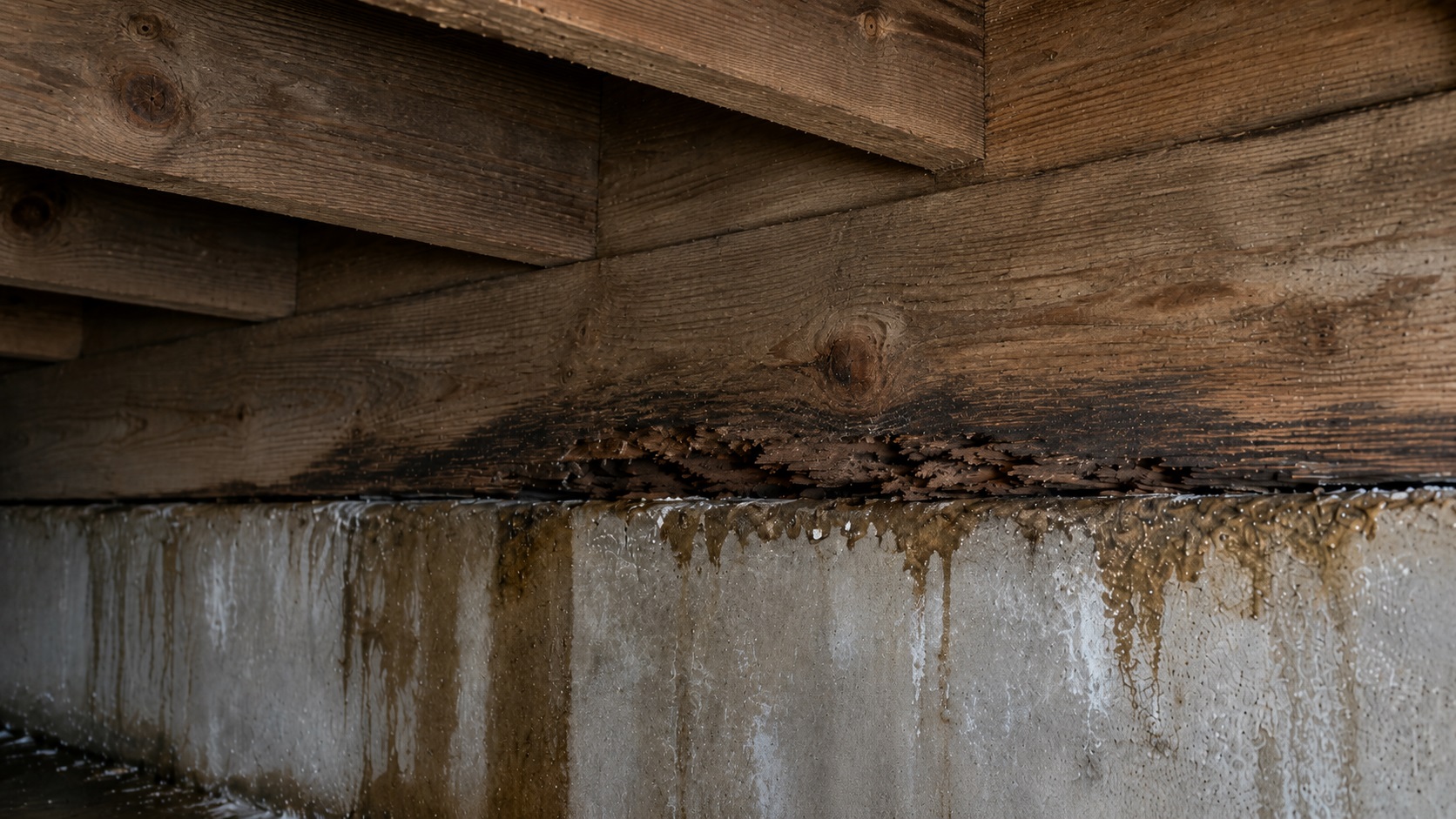
Rotten wood may crumble instead of splintering. Edges may break off in small chunks, especially near the bottom of a member, around fasteners, or at the end of a joist or beam. This is different from normal surface roughness. Crumbling suggests the wood fibers have lost cohesion.
This sign matters most when it appears in areas that carry weight or connect to other structural parts. For example, crumbling at a joist end, rim joist, sill plate, or beam pocket can be more serious than surface damage on an exposed, non-structural board.
Cracking, Checking, or Blocky Breakage
Some rotten wood develops deep cracks, checking, or blocky breakage patterns. The wood may look fractured into small sections or break apart in chunks. While normal wood can develop cracks as it dries and ages, rot-related cracking is more concerning when the wood is also soft, brittle, damp, or misshapen.
Cracking should be evaluated in context. A dry, old beam with surface checking may still be structurally sound. A damp beam with deep cracking, softness, and compression marks may be showing signs of decay-related weakening.
Stringy or Fibrous Texture
Some decayed wood becomes fibrous, stringy, or shredded-looking. Instead of breaking cleanly, the wood may pull apart in strands. This can appear around framing that has stayed damp for a long time, especially in enclosed spaces with poor airflow.
Rotten wood can be brown, gray, blackened, pale, or fibrous depending on the decay pattern and moisture history. Texture and strength changes matter more than the exact color category.
Structural Warning Signs Around Rotten Wood
Structural wood rot becomes more serious when the damage is no longer limited to the surface of the wood. If nearby floors, walls, doors, fasteners, or framing connections begin to move, the wood may already be losing strength. These symptoms do not prove exactly how much structural capacity has been lost, but they are strong warning signs that the damage should not be ignored.
Sagging or Uneven Floors
Sagging floors are one of the most important warning signs of possible structural wood rot. If a floor slopes, dips, feels uneven, or appears lower in one area than it used to, the framing below may be weakened. This can happen when rot affects joists, beams, posts, sill plates, or subfloor panels.
A small dip does not automatically mean the framing is rotten. Some homes have old settlement, framing deflection, or installation issues. The concern rises when sagging appears near a known moisture problem, crawl space dampness, plumbing leak, appliance leak, basement moisture, or roof leak. When movement and moisture appear together, the issue should be treated as structural until proven otherwise.
If the symptom is concentrated in floor framing, compare it with the more specific warning signs in signs of rotting floor joists. Joist damage can create bounce, dips, squeaks, soft walking areas, and visible deterioration from below.
Bouncy or Soft Walking Areas
A floor that feels unusually springy, bouncy, or soft underfoot may indicate that the wood below is no longer as stiff as it should be. This can happen when subfloor panels have softened, joists have decayed, or framing connections have loosened from moisture damage.
The key is change over time. A floor that has always had some bounce may reflect span, framing layout, or older construction. A floor that becomes softer after a leak, flood, crawl space moisture issue, or repeated dampness is more concerning, especially near bathrooms, kitchens, laundry rooms, exterior doors, and crawl space access points.
Gaps Near Trim, Walls, or Floor Edges
Structural wood rot can sometimes show up indirectly through movement in nearby finishes. Gaps may open between baseboards and floors, walls and trim, door frames and flooring, or cabinets and surrounding surfaces. These gaps occur because the wood below or behind the finished surface has shifted, compressed, swollen, or weakened.
Gaps alone are not proof of rot. Seasonal movement, settling, and normal building movement can also create small separations. The warning sign is a pattern: new gaps plus moisture staining, musty odor, soft flooring, damp framing, or visible wood breakdown. When multiple symptoms appear together, the chance of a structural moisture problem increases.
Loose Fasteners or Weak Connections
Rotten wood often loses its ability to hold nails, screws, hangers, brackets, and other fasteners. If fasteners pull loose, joist hangers separate, screws no longer bite, or wood around a connector crumbles, the problem may be more than cosmetic.
This is especially serious near structural connections. Joist ends, beam pockets, sill plates, rim joists, roof rafters, ledger boards, posts, and bearing points depend on sound wood. If decay weakens the connection area, the member may not transfer loads properly even if most of the wood still looks intact.
Doors or Windows That Suddenly Stick Near Moisture Damage
Doors and windows can stick for many reasons, including humidity, paint buildup, settlement, and hardware problems. But if a door or window begins sticking near an area with known rot, moisture staining, or soft framing, it may indicate movement in the surrounding structure.
This is most relevant around exterior doors, window openings, wall framing, sill plates, and subfloors. Wood rot near openings can allow slight shifts in the frame, which can change how doors and windows fit. Not every sticking door points to structural rot, but sudden changes near moisture damage are a reason to inspect further.
Common Places Structural Wood Rot Appears
Structural wood rot usually appears where wood and moisture meet repeatedly. Some areas are vulnerable because they are hidden. Others are vulnerable because they sit near exterior water entry points, plumbing systems, roof leaks, damp soil, or poor ventilation. Knowing where rot commonly appears helps homeowners inspect more logically instead of only looking at the most visible surfaces.
Crawl Space Joists and Beams
Crawl spaces are one of the most common places to find structural wood rot because they often combine soil moisture, limited airflow, condensation, plumbing leaks, and poor drainage. Floor joists, beams, posts, girder ends, and subfloor undersides can all be affected.
Warning signs include dark joists, damp beams, musty odor, soft wood, fungal growth, sagging floors above, and wood that crumbles near bearing points. Crawl space rot can remain hidden for a long time because the living area above may look normal until the framing begins to weaken.
Sill Plates and Rim Joists
Sill plates and rim joists are vulnerable because they sit near the transition between the foundation and the framed structure. Water intrusion, exterior drainage problems, flashing defects, condensation, insect activity, and crawl space humidity can all affect these areas.
Rot in sill plates or rim joists deserves careful attention because these members often help transfer loads from the house framing into the foundation. Even a localized rotten area can matter if it occurs at a bearing point, near a beam, or below a load-bearing wall.
Subfloor Edges and Wet Floor Systems
Subfloor damage often begins near leaks from bathrooms, kitchens, laundry rooms, dishwashers, water heaters, refrigerators, exterior doors, or plumbing lines. Early symptoms may appear as soft flooring, swelling, odors, cupping, loose flooring, or stains from below.
If the damage appears to be concentrated in the floor system, it may help to compare the symptoms with water damage in subfloors. Subfloor damage can sometimes be repaired locally, but when rot spreads into joists, beams, or bearing areas, the concern becomes more structural.
Wall Framing Near Plumbing or Exterior Leaks
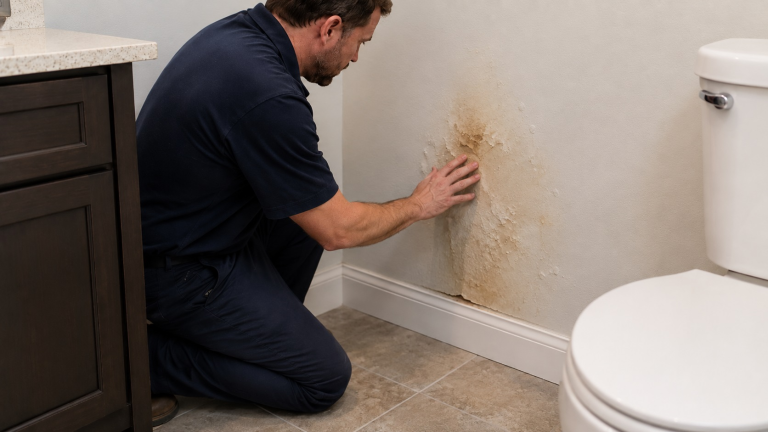
Wall studs, bottom plates, and sheathing can rot when leaks continue behind finished surfaces. This is common near bathrooms, kitchens, laundry rooms, windows, exterior doors, siding failures, and roof-to-wall intersections. Because wall framing is hidden, the first visible signs may appear as soft drywall, baseboard swelling, musty odor, paint failure, or trim movement.
Rot near bottom plates is especially important because water often collects at the lower part of wall cavities. If the bottom plate, nearby studs, or sheathing are soft or crumbling, surface repairs alone will not solve the structural issue.
Roof Rafters, Sheathing, and Attic Framing
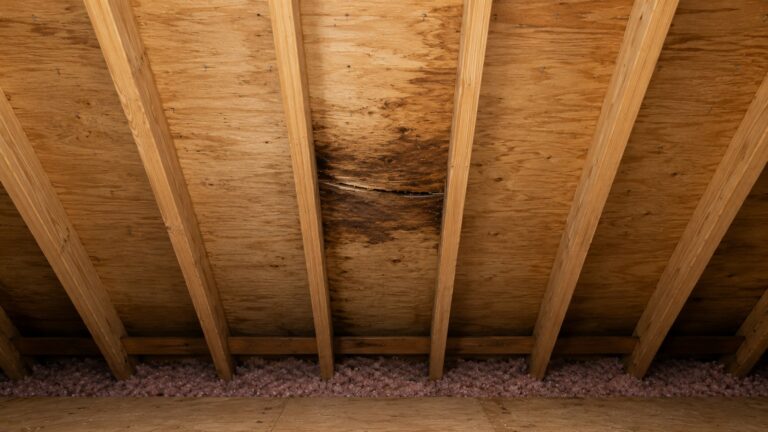
Roof framing can rot from roof leaks, condensation, poor attic ventilation, flashing failures, or wet insulation. Warning signs include dark roof sheathing, soft rafter edges, staining around nails, musty attic odors, sagging roof areas, or wood that flakes apart near leak paths.
Attic and roof rot can be difficult to evaluate safely because damaged areas may be overhead, hidden by insulation, or located near roof load paths. Homeowners should avoid stepping on questionable framing, ceiling drywall, or roof sheathing and should seek professional evaluation when roof framing appears soft, sagging, or structurally changed.
How to Tell Wood Rot Apart From Mold, Staining, and Aging
Many homeowners first notice structural wood rot because the wood looks dark, dirty, stained, or moldy. Appearance matters, but it can also mislead. The safest way to think about the difference is this: staining changes how wood looks, mold grows on the surface, aging changes appearance over time, but rot changes the wood’s physical condition.
Wood Rot Versus Water Staining
Water staining often leaves dark marks, rings, streaks, or discoloration. The wood may still be hard, dry, and structurally sound after the source has been fixed. Staining becomes more concerning when it appears with softness, swelling, crumbling, compression, cracking, or ongoing moisture.
For example, an old stain on a joist under a repaired leak may not be urgent if the joist is dry and firm. A similar stain on a damp, soft joist that crumbles at the edge is a very different situation. The difference is not the stain alone; it is the material behavior behind the stain.
Wood Rot Versus Mold on Wood
Mold can grow on damp wood surfaces without deeply weakening the wood. It may look black, green, gray, white, or fuzzy depending on the conditions. Rot, however, means the wood itself is decaying. The two can appear together because both are moisture-related, but they are not the same problem.
This distinction matters because cleaning surface mold does not restore rotten structural wood. If wood is soft, punky, crumbly, compressed, or losing fastener strength, the issue has moved beyond surface growth. That is when the homeowner should think in terms of structural moisture damage, not just cleaning.
Wood Rot Versus Normal Aging
Older wood may look dark, dry, rough, or checked without being rotten. Age alone does not mean the wood has failed. Many older framing members remain strong for decades when they stay dry and well supported.
Rot is more likely when age-related appearance is combined with moisture exposure and physical deterioration. A dry, hard, rough joist may simply be old. A damp, soft, crumbling joist near a repeated leak is a structural warning sign.
Signs the Rot May Be Hidden or Spreading
Structural wood rot is not always limited to the first visible stain. Moisture can move through subfloors, framing connections, insulation, finished flooring, and wall cavities before the full damage is visible. Hidden rot is more likely when water enters slowly or repeatedly from a plumbing drip, roof leak, crawl space moisture problem, window leak, or other source that keeps feeding the same area.
Soft Floors Above Hidden Framing
A soft floor can be one of the first signs that rot is affecting framing or subfloor material below the finished surface. The floor may feel weak underfoot, dip slightly when walked on, squeak more than usual, or feel different from nearby areas.
This is common near bathrooms, kitchens, laundry rooms, water heaters, exterior doors, and crawl spaces. Those areas often combine water exposure with wood framing, which makes them more vulnerable to hidden decay. If the surface floor feels soft and there has been moisture below it, the damage may extend beyond the visible flooring.
Repeated Leaks in the Same Area
Repeated leaks are a major warning sign because structural wood often tolerates brief wetting better than chronic wetting. A joist, bottom plate, sill plate, or subfloor edge that gets wet again and again may begin to decay even if each individual leak seems minor.
This matters around appliance leaks, plumbing fixtures, roof penetrations, windows, doors, and foundation edges. If the same area has been repaired more than once but moisture keeps returning, the wood behind or below the visible surface should be evaluated for deeper damage.
Musty Odor That Does Not Go Away
A persistent musty odor can indicate trapped moisture, mold, wet insulation, or decay in hidden wood. Odor is not proof of rot by itself, but it becomes more meaningful when it is strongest near floors, crawl spaces, wall cavities, basement framing, or attic framing.
If the smell returns after cleaning, gets worse during damp weather, or appears near a known leak path, the issue may involve hidden moisture rather than surface dirt. This is where a broader guide to structural moisture problems in homes can help connect the odor to possible framing, flooring, roof, or foundation-related causes.
Damp or Compressed Insulation Near Wood Members
Insulation can hide structural rot and hold moisture against wood. In crawl spaces, walls, floors, and attics, damp insulation may keep framing wet longer than expected. If insulation is sagging, stained, musty, or compressed near structural wood, the framing behind it may need closer inspection.
This is especially important around rim joists, floor cavities, roof sheathing, exterior walls, and plumbing chases. Homeowners should not assume the wood is safe just because insulation is covering the area. Hidden rot may not be visible until the surrounding material is removed by someone who can safely inspect the structure.
Insect Activity Near Soft or Damp Wood
Some insects are attracted to damp, softened, or decaying wood. Insect activity does not automatically prove structural rot, but it can be a supporting clue when it appears near moisture damage. Look for damaged wood fibers, small piles of debris, tunnels, hollow-sounding areas, or insect activity concentrated around damp framing.
The most important point is the combination of clues. Insects plus dry, hard wood may point to a pest issue. Insects plus damp, soft, crumbling framing can indicate a more serious moisture and decay problem that needs professional evaluation.
Damage Appearing in More Than One Framing Member
Rot affecting one isolated board may be localized. Rot affecting several nearby joists, studs, plates, rafters, or subfloor sections suggests the moisture problem may be broader. Multiple damaged members often mean the source has spread, the area has stayed damp for a long time, or moisture is being trapped across a larger section.
This pattern matters because structural systems work together. A single small area may be repairable. Several weakened members in the same zone can affect load distribution, floor stiffness, wall alignment, or roof support. That does not mean the house is unsafe, but it does mean the damage should not be treated as a surface issue.
Why Moisture History Matters More Than Appearance Alone
The history of moisture exposure is one of the most important clues when judging whether structural wood rot may be present. Wood that was briefly wet and dried quickly may only show staining. Wood that stayed wet, was repeatedly damp, or remained enclosed with poor airflow is much more likely to develop decay.
For a fuller explanation of the decay timeline, see how wood rot develops after water damage.
The moisture pattern often tells more than the most dramatic stain. A small dark area near an active leak may be more concerning than a larger old stain in a dry, stable area because active moisture can keep decay conditions in place.
Past Water Damage Can Leave Permanent Weakness
Drying wood is important, but drying does not rebuild wood fibers that have already decayed. If rot has softened, crushed, or broken down the wood, the member may remain weakened even after the area feels dry.
A dry surface does not automatically mean the structure is safe. Stained but firm wood may remain serviceable after drying, but wood that has become soft, punky, compressed, or crumbly may still be weakened even when it no longer feels wet.
Active Moisture Can Keep the Damage Moving
If a moisture source is still present, rot may continue to worsen. Active roof leaks, plumbing leaks, condensation, crawl space humidity, drainage failures, or wet insulation can keep structural wood in a risky moisture range. Even if the damage looks minor now, continued moisture can turn early decay into a larger structural problem.
This is why articles about how moisture weakens structural framing matter within the same cluster. Rot is not only a surface condition. It is part of a larger moisture-and-material behavior pattern that affects how wood performs over time.
Dry Surfaces Can Hide Damp Cores or Covered Damage
Wood can look dry at the surface while moisture remains deeper in the assembly or behind adjacent materials. Finished flooring, vapor barriers, insulation, wall coverings, and subfloor layers can slow drying or hide damage. In these cases, surface appearance may underestimate the problem.
This does not mean homeowners should tear open structures casually. It means hidden damage should be suspected when visible symptoms appear with a history of repeated moisture, soft floors, musty odor, or ongoing dampness. Moisture meters, inspection openings, and professional evaluation may be needed when the risk is structural.
When Structural Wood Rot Needs Professional Evaluation
Some minor surface issues can be monitored after the moisture source is fixed. Structural wood rot is different when it affects members that support floors, walls, roofs, or loads. If you are not sure what the wood supports, it is safer to treat the area as potentially structural until a qualified professional evaluates it.
Rot in Joists, Beams, Posts, or Sill Plates
Rot in floor joists, beams, posts, sill plates, rim joists, or bearing areas should not be treated as a cosmetic problem. These members help carry or transfer weight. Even localized decay can matter if it occurs near the end of a joist, under a wall, around a post base, or at a connection point.
Professional evaluation is especially important if the wood is soft, compressed, split, crumbling, or no longer holding fasteners properly. These signs suggest the problem may involve strength loss, not just discoloration.
Sagging, Movement, or Floor Changes
If suspected wood rot appears together with sagging floors, soft walking areas, sloping, wall cracks, shifting doors, or visible movement, the situation has moved beyond simple observation. Movement means the structure may already be responding to the damage.
This does not always mean an emergency, but it does mean the area should be evaluated before finishes are replaced, flooring is covered, or cosmetic repairs hide the symptoms. A contractor, structural repair specialist, or structural engineer may be needed depending on the severity and location.
Rot Near Load-Bearing Areas
Rot near load-bearing walls, beams, posts, foundation edges, roof supports, or major framing connections requires more caution than rot in isolated non-structural wood. Load-bearing areas are not always obvious to homeowners, especially inside walls, crawl spaces, and attics.
If there are signs that the damaged wood may be carrying weight, compare the situation with signs of load-bearing wood damage. That topic focuses more specifically on stress, support, and stability warnings, while this article stays focused on identifying rot symptoms.
Large or Spreading Areas of Damage
A small area of surface staining may be simple to monitor after the moisture source is corrected. Large or spreading areas of softness, crumbling, or decay are different. Widespread damage can indicate a long-term moisture problem and may affect multiple structural members.
Spreading rot is also a sign that the source may not be fully corrected. If new areas keep appearing, the problem may involve drainage, ventilation, condensation, hidden leaks, or trapped moisture rather than one isolated event.
What Not to Do When You Suspect Structural Wood Rot
Structural wood rot should not be hidden, sealed over, or treated like a surface blemish. The biggest mistake homeowners make is trying to make the damaged area look better before understanding whether the wood has lost strength or whether the moisture source is still active.
Do Not Paint or Seal Over Rotten Wood
Paint, primer, caulk, foam, or sealant can hide the symptoms of wood rot, but they do not restore strength. If wood is soft, punky, crumbly, or compressed, coating the surface may only trap moisture and make the damage harder to inspect later.
Sealing may be useful in some repair systems after damaged material is corrected and the moisture source is controlled, but it should not be the first response to suspected structural decay. If the wood has already deteriorated, the priority is evaluation, not concealment.
Do Not Assume Cleaning Mold Fixes Rot
Surface mold cleaning does not repair rotten wood. Mold and rot can appear in the same damp area, but they are different problems. Mold may be cleaned from certain surfaces under the right conditions, while rot means the wood itself has changed.
If a homeowner cleans mold from a joist, sill plate, or framing member but the wood remains soft or crumbly, the structural problem is still there. This is why it is important to separate mold appearance from wood strength. Cleaning may improve the surface, but it does not reverse decay.
Do Not Cover Damaged Framing With New Materials
Installing new flooring, insulation, drywall, paneling, or trim over suspected rotten wood can hide a problem that still needs attention. This is especially risky when the wood is part of a floor system, wall base, crawl space structure, or roof framing.
Covering the area may make the home look repaired while moisture continues behind the surface. It can also make future inspection more expensive because the new material may need to be removed again to access the damaged wood.
Do Not Cut or Remove Structural Wood Without Evaluation
Homeowners should not cut, notch, pry apart, or remove structural wood unless they know what the member supports and how the load will be carried during repair. Joists, beams, posts, sill plates, rafters, and studs can all be part of a load path.
Even damaged wood may still be carrying some load. Removing it without temporary support or proper repair planning can make the structure less stable. If the affected member appears structural, professional evaluation is the safer path.
Do Not Ignore the Moisture Source
Structural wood rot is usually a symptom of a moisture problem. If the leak, damp crawl space, roof issue, drainage failure, condensation problem, or plumbing source is not fixed, the damage can continue even after cosmetic repairs.
This is why rot should be approached as both a material problem and a moisture-control problem. The damaged wood may need repair, but the source of wetting must also be corrected or the same area may fail again.
How Homeowners Can Document Suspected Structural Wood Rot
Before calling a professional, homeowners can document what they are seeing without disturbing the structure. Good documentation helps a contractor, inspector, or structural specialist understand whether the issue appears isolated, active, or connected to a larger moisture pattern.
- Take clear photos of the damaged wood from several angles.
- Photograph nearby leaks, stains, damp insulation, flooring changes, or exterior water entry points.
- Note whether the area feels damp, soft, musty, or crumbly.
- Compare the suspect area with nearby dry framing of the same type, if it is safe to view, so differences in hardness, color, shape, and fastener holding are easier to explain.
- Record when the symptoms appear worse, such as after rain, plumbing use, or humid weather.
- Mark whether the damage is near a bathroom, kitchen, crawl space, roof leak, window, door, or foundation edge.
- Avoid removing structural material just to get a better view.
A moisture meter can help identify whether wood is currently damp, but it cannot prove that a structural member is safe. Moisture readings are one piece of information. Strength, location, load path, connection quality, fastener holding, and decay depth still matter.
FAQ About Signs of Structural Wood Rot
Does dark wood always mean structural rot?
No. Dark wood can come from old water staining, age, dirt, tannins, fasteners, or past leaks. Dark staining becomes more concerning when the wood is also soft, crumbly, swollen, compressed, cracked, or damp. The most important clue is not color alone, but whether the wood has physically weakened.
Is mold on wood the same as wood rot?
No. Mold is usually surface growth on damp material. Wood rot is decay of the wood itself. Mold can be a warning sign that moisture conditions exist, but it does not automatically mean the wood has lost structural strength. If the wood is soft, punky, crumbly, or deformed, the concern moves beyond surface mold.
Can rotten wood become safe again after drying?
Drying can stop the moisture condition that allowed decay to continue, but it does not restore wood fibers that have already broken down. Stained but firm wood may remain serviceable after drying. Rotten wood that has softened, crumbled, compressed, or lost fastener strength may still be structurally weakened after it dries.
When should I call a professional for suspected structural wood rot?
Call a professional when suspected rot affects joists, beams, posts, sill plates, rim joists, rafters, roof sheathing, load-bearing walls, or any area showing sagging, movement, soft floors, loose fasteners, or spreading damage. Professional evaluation is also wise if you are unsure what the damaged wood supports.
Can a moisture meter confirm structural wood rot?
No. A moisture meter can show whether wood is currently damp, and light probing can reveal obvious softness, but neither test confirms remaining load capacity. Moisture readings help identify risk areas; they do not determine whether a joist, beam, sill plate, rafter, or post is structurally safe.
What to Do Next if You Suspect Structural Wood Rot
Structural wood rot is more than a stain or surface blemish. It is a warning that moisture may have damaged the wood’s strength, texture, or shape. The most important signs include soft or punky wood, crumbling edges, unusual cracking, sagging floors, loose fasteners, musty odors near framing, and damage near structural connections.
The safest approach is to look at the full pattern. A dry stain on hard wood may only show past moisture. Soft, crumbling, or compressed wood near an active moisture source is much more serious.
If the damage affects joists, beams, sill plates, rim joists, posts, rafters, or load-bearing areas, it should be evaluated before the area is covered, painted, or repaired cosmetically. Take photos, note where moisture may be entering, and avoid disturbing structural members until the damaged area has been evaluated.
Structural wood rot usually points to two connected problems: damaged material and the moisture source that allowed it to happen. Both need attention. Fixing only the surface appearance may hide the issue, but understanding the signs early can help prevent deeper structural damage and better prepare the home for proper repair.