Signs of Load-Bearing Wood Damage
Load-bearing wood damage is more serious than ordinary staining, surface wear, or minor cosmetic defects because the damaged wood may help support floors, walls, roofs, openings, or other parts of the home. When joists, beams, posts, sill plates, headers, rafters, or load-bearing wall framing are weakened, the issue can affect how weight moves through the house.
This does not mean every cracked board or dark stain is an emergency. Wood can look old, stained, or checked without being unsafe. The risk increases when visible damage appears in a support area, especially if there are signs of sagging, movement, compression, loose connections, or recurring moisture. A damaged piece of trim is very different from a damaged beam end, post base, joist connection, or sill plate.
If you are already seeing broader signs of structural moisture problems, load-bearing wood damage should be treated as an escalation warning. The goal is not to diagnose structural capacity by appearance alone. The goal is to recognize when the pattern of damage is serious enough to require closer evaluation before the area is covered, painted, repaired cosmetically, or disturbed.
What Load-Bearing Wood Damage Means
Load-bearing wood is wood that helps support or transfer weight. In a home, weight moves from the roof, walls, floors, furniture, occupants, and building materials down through framing members and eventually into the foundation. When wood in that path is damaged, the concern is not just surface appearance. The concern is whether the member still has the strength, shape, connection, and bearing support it needs to do its job.
Examples of load-bearing wood can include floor joists, beams, girders, posts, wall studs in support walls, sill plates, rim joists, roof rafters, headers over openings, and subfloor sections that help distribute loads. Some of these members are easy to see in a crawl space, basement, or attic. Others are hidden behind drywall, flooring, insulation, siding, or ceiling finishes.
Load-bearing damage may come from moisture, rot, insects, overloading, poor repairs, structural movement, or long-term stress. The key question is not simply, “Is this wood damaged?” A better question is, “Is this damaged wood supporting something?” If the answer might be yes, the situation deserves more caution.
How to Recognize Wood That May Be Load-Bearing
Homeowners often cannot confirm load-bearing status just by looking at one board. A wall, beam, joist, or post may be part of a hidden load path behind finishes. When there is uncertainty, damaged framing should be evaluated before it is cut, removed, jacked, or covered.
Beams and Girders
Beams and girders are major horizontal support members. They often run below floor joists, across crawl spaces, through basements, or under load-bearing walls. In some homes, they are made from solid wood, built-up lumber, engineered lumber, or large timbers.
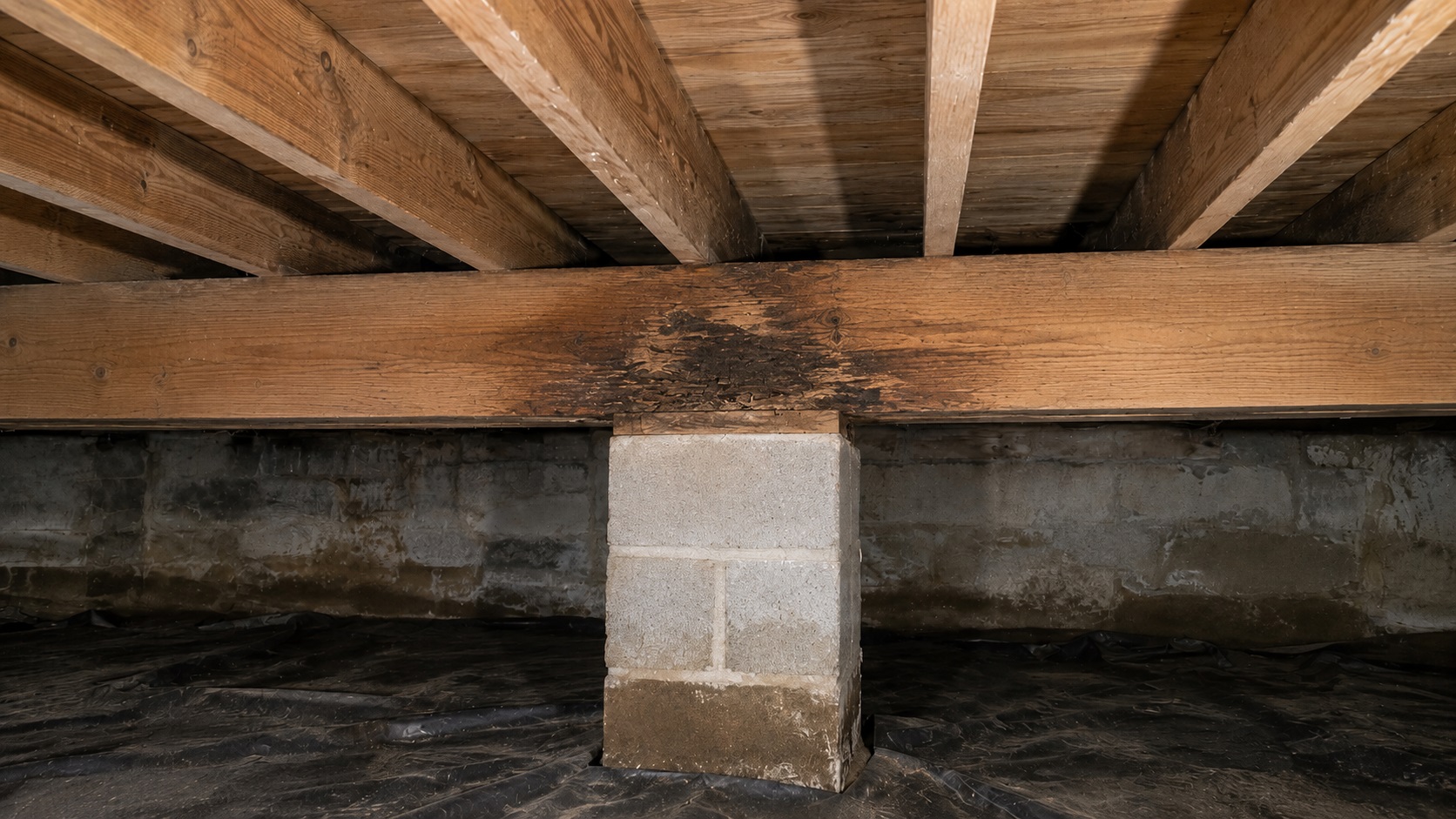
Damage to a beam is more concerning than damage to a non-structural board because a beam may support many joists or a large section of the house. Warning signs include sagging, splitting, crushing at the ends, rotation, separation from posts, moisture damage near bearing points, or wood that is soft where the beam rests on a support.
Posts and Columns
Posts and columns transfer weight from beams or upper framing down to the foundation, footings, slab, or crawl space supports. A post may look small compared with the area it supports, but it can carry a significant load.
Damage at the base or top of a post is especially important. Look for crushing, leaning, cracking, rot, insect damage, loose connections, settling at the bottom, or a gap between the post and the beam above. A post that no longer bears tightly against the beam may indicate movement, shrinkage, poor support, or structural shifting.
Floor Joists and Joist Ends
Floor joists support the floor system. They may rest on beams, foundation walls, sill plates, or hangers. Damage to a joist is most concerning near the ends, near notches or holes, around plumbing penetrations, or where the joist connects to a beam or rim joist.
Joist damage may show up as floor bounce, dips, squeaks, soft flooring, cracks near the ceiling below, or visible deterioration from a crawl space or basement. When joists are affected by moisture or decay, compare the situation with more specific rotting floor joist signs. If the joist damage appears severe or widespread, the next decision may involve when floor joists must be replaced.
Sill Plates and Rim Joists
Sill plates and rim joists are located around the edges of the floor framing where the house meets the foundation or exterior wall system. They can be vulnerable to moisture from crawl spaces, foundation edges, siding leaks, exterior flashing failures, and poor drainage.
These members matter because they help connect the framed structure to the foundation and support floor framing at the perimeter. Damage in this area may appear as soft wood, crumbling edges, loose anchor areas, gaps, insect activity, or movement near exterior walls. Even localized damage can be important if it occurs under a bearing wall or near a joist connection.
Load-Bearing Wall Framing
Some wall studs carry loads from above. Others mainly divide spaces. Homeowners may not be able to tell the difference without understanding the framing layout. A wall that runs perpendicular to floor joists, supports another wall above, sits above a beam, or continues through multiple levels may be more likely to be load-bearing, but these clues are not a substitute for professional verification.
Damage to load-bearing wall framing can appear near bottom plates, studs, headers, or areas around plumbing leaks and exterior openings. Warning signs include wall movement, diagonal cracking, soft or rotten bottom plates, sticking doors, gaps near trim, or floors sagging near the wall line.
Headers Over Windows and Doors
Headers are structural members above windows, doors, and other openings. They help transfer weight around the opening. Because openings interrupt the normal wall framing, damage around headers can matter more than damage in ordinary trim.
Warning signs near headers include sagging above the opening, cracks running from window or door corners, sticking doors or windows, water damage above the opening, exterior leaks, or rot in the framing around the opening. These symptoms are especially concerning when they appear after repeated window, door, siding, or roof leaks.
Roof Rafters and Roof Support Framing
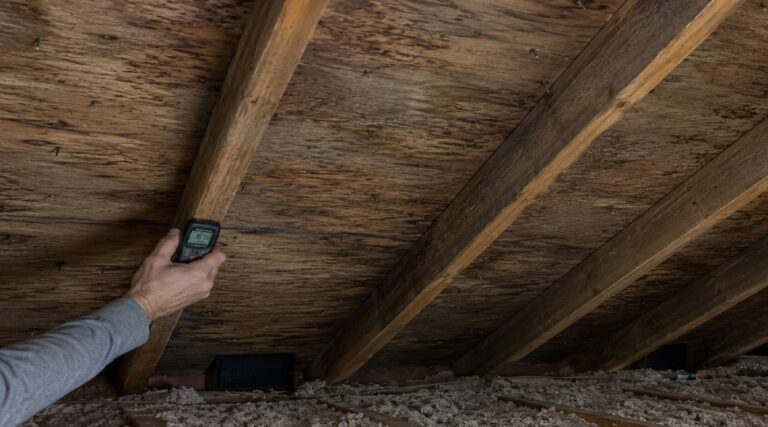
Roof rafters, ceiling joists, ridge supports, purlins, collar ties, and related attic framing can all be part of the roof support system. Damage in roof framing may come from roof leaks, condensation, poor attic ventilation, flashing failures, or wet insulation.
Warning signs include sagging roof areas, cracked rafters, dark or soft sheathing, separated connections, water staining near supports, bowed framing, or ceiling cracks below. Do not walk on questionable roof sheathing, ceiling joists, or attic framing if there is visible sagging, softness, or water damage.
Visible Signs of Load-Bearing Wood Damage
Visible damage becomes more important when it appears at a support point, connection, beam, post, joist end, sill plate, or wall base. The same crack or stain may be minor in one location and serious in another. The following signs are strongest when they appear in wood that carries, connects, or transfers weight.
During a visual check, focus first on where wood rests on another support, where members connect, and where moisture has repeatedly reached the same area.
Crushed Wood at Bearing Points
Crushing at a bearing point is one of the clearest signs of possible load-bearing wood damage. A bearing point is where one structural member rests on another support, such as a beam on a post, a joist on a sill plate, or a rafter on a wall plate. These areas carry concentrated force.
Look for wood fibers that appear compressed, flattened, split, crushed, or indented where the member rests. If the support area is also damp, rotten, or crumbling, the concern is higher. Crushed bearing areas can indicate that the wood is no longer distributing weight properly.
Deep Splits or Cracks Through Important Areas
Some wood checking is normal, especially in large timbers. Surface cracks that have been stable for years may not mean failure. Deeper splits are more concerning when they run through a critical area, widen over time, appear near a support point, or combine with sagging, rotation, or moisture damage.
A beam with shallow surface checking is different from a beam that is splitting near its end, twisting away from its support, or cracking through a section that carries a load. The pattern and location of the crack matter more than the presence of a crack by itself.
Bowing, Twisting, or Rotation
Load-bearing wood should generally stay aligned with the members it supports. If a beam, joist, post, or rafter is bowing, twisting, rolling, or rotating out of position, the issue may involve more than surface damage. Movement can change how loads transfer through the structure.
This is especially concerning when the movement appears near a connection, support point, or area with moisture damage. For example, a joist that twists away from a beam, a post that leans under a girder, or a beam that rotates at its end may indicate weakening, poor support, fastener failure, or long-term stress.
Soft, Rotten, or Crumbling Support Wood
Soft or crumbling wood is always more serious when it appears in a support zone. A rotten section of trim may be mostly cosmetic, but rotten wood at a beam end, post base, sill plate, rim joist, joist end, or header can affect the structure.
This is where load-bearing damage overlaps with signs of structural wood rot. Rot is the decay of the wood itself. Load-bearing damage is about whether that decayed wood is part of the support system. A small area of decay can matter if it occurs where weight is concentrated.
Loose Fasteners, Hangers, or Connectors
Fasteners and connectors help structural members stay in position. If nails, screws, hangers, brackets, straps, or plates are pulling loose, rusting heavily, separating, or no longer holding firmly, the wood around them may be weakened or moving.
This is especially important around joist hangers, beam connections, post caps, ledger connections, rafter ties, and sill plate attachments. Loose connectors can mean the member is shifting, the fastener has corroded, the wood has softened, or the connection was never properly supported. Whatever the cause, separation at a structural connection should not be hidden behind new finishes.
Damaged Post Bases
Post bases are vulnerable because they sit close to slabs, crawl space soil, footings, moisture, and sometimes poor drainage. Damage at the bottom of a post can include rot, crushing, splitting, insect activity, rusted brackets, settlement, or direct contact with damp concrete or soil.
A post can still appear upright while the base is weakening. Warning signs include a post sinking into softened wood, a gap above the post, a crushed shim stack, tilted support, or a post base that crumbles when touched. Because posts transfer weight, base damage should be treated as a support concern.
Joist Ends Pulling Away From Supports
Joist ends should remain properly supported by beams, hangers, rim joists, or bearing surfaces. If joists are pulling away, hanging unevenly, separating from hangers, splitting at the end, or no longer resting fully on a support, the floor system may not be transferring load correctly.
This can happen from moisture damage, rot, poor installation, movement, fastener failure, or wood shrinkage. It is especially concerning when paired with floor sagging, bounce, or cracking finishes above. Joist separation is not simply a visual defect; it can indicate a connection problem in the floor structure.
Structural Movement Signs Around Damaged Wood
Load-bearing wood damage often shows up indirectly. A beam, post, joist, or wall member may be hidden, but the house may still reveal movement through floors, walls, ceilings, doors, windows, and trim. These symptoms are especially important when they appear near known water damage, wood rot, foundation moisture, crawl space problems, or roof leaks.
Sagging or Dipping Floors
A sagging or dipping floor is one of the clearest homeowner-facing signs of possible load-bearing wood damage. The floor may slope toward one area, dip near a wall, feel lower in the center of a room, or show a visible change from one side to another.
Sagging can come from several causes, including undersized framing, settlement, long spans, poor support, or moisture-damaged wood. It becomes more concerning when it appears near damaged joists, beams, sill plates, crawl space supports, or subfloor areas affected by water. When sagging appears after leaks or flooding, it may also be useful to review how to evaluate structural safety after water damage.
Bouncy or Springy Floor Sections
Some floor bounce can be normal, especially in older homes or long-span framing. A floor that suddenly feels springier, softer, or less stable than before is more concerning. A localized bounce near a bathroom, kitchen, laundry room, crawl space, or exterior wall may point to weakened support below.
Pay attention to whether the bounce is new, getting worse, or concentrated over a known moisture area. A floor that flexes more over time may be telling you that joists, subfloor panels, beams, or connections are losing stiffness.
Wall Cracks Near Openings or Support Lines
Drywall cracks are common and are not always structural. Hairline cracks can come from normal seasonal movement, minor settlement, or finish shrinkage. Load-bearing concern rises when cracks are diagonal, widening, recurring after repair, or located near doors, windows, ceilings, or wall lines above damaged framing.
Cracks near openings matter because door and window corners are stress points. If a header, wall stud, sill plate, or supporting floor member shifts, the finished surface may crack before the structural member is visible. Cracks combined with sticking doors, sloping floors, or known wood damage deserve closer attention.
Doors or Windows That Suddenly Stick
Doors and windows can stick because of humidity, paint, hardware, or seasonal swelling. However, sudden sticking near damaged wood can indicate movement in the framing around the opening or in the floor below.
This is more concerning when a door no longer latches, a window binds in the frame, gaps appear uneven, or the problem develops along with floor sagging or wall cracks. These symptoms do not prove load-bearing damage, but they can reveal that the structure around the opening is shifting.
Gaps Between Trim, Floors, Walls, or Supports
New gaps can indicate movement, shrinkage, compression, or settling. Look for gaps between baseboards and floors, beams and posts, joists and supports, trim and walls, or sill plates and adjacent framing. A gap near a structural support is more important than a small cosmetic separation in trim.
The pattern matters. A single small gap may be seasonal movement. Gaps that grow, appear near damaged framing, or occur with sagging and cracking are stronger warning signs. If a beam is no longer sitting fully on a post or a joist is no longer bearing properly, the support condition should be evaluated before repairs cover the area.
Uneven Ceiling Lines or Roofline Changes
Ceiling or roofline changes may point to movement in framing above. A ceiling may bow, crack, or show uneven lines if joists, rafters, beams, or roof supports are damaged. A roofline may sag if roof framing has weakened from moisture, rot, overloading, or long-term structural stress.
Roof and ceiling symptoms should be handled carefully because damaged framing may be hidden and difficult to inspect safely. Avoid walking on questionable roof sheathing, ceiling joists, or attic framing if there is visible sagging, softness, or water damage.
High-Risk Areas Where Load-Bearing Wood Damage Appears
Load-bearing wood damage is most common where structural wood is exposed to moisture, concentrated weight, or hidden conditions. These areas deserve extra attention because damage can develop slowly before the homeowner sees obvious movement inside the living space.
Crawl Spaces
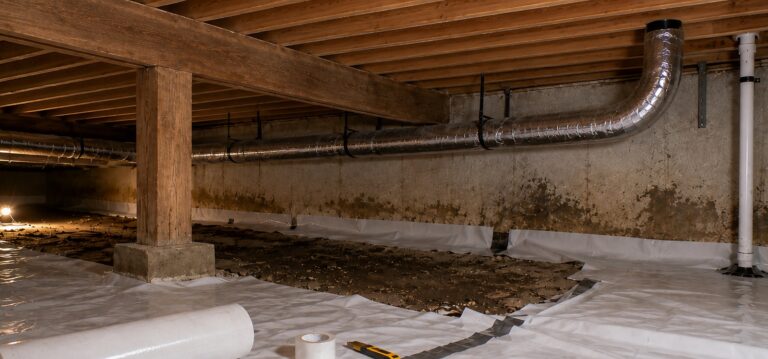
Crawl spaces are high-risk because they often contain floor joists, beams, girders, posts, sill plates, and rim joists. These are important support members, and they may be exposed to ground moisture, plumbing leaks, condensation, poor ventilation, drainage problems, and insect activity.
Warning signs include sagging floors above, damp joists, soft beams, leaning posts, rusted connectors, wet insulation, and musty odors. Crawl space damage often connects to broader structural moisture problems in homes, especially when damp conditions have been present for a long time.
Basements and Foundation Transitions
Basement framing and foundation transitions are important because wood often meets masonry, concrete, moisture, and support loads in these areas. Sill plates, rim joists, beams, stair framing, and support posts may all be present near foundation walls.
Look for rot or compression where wood sits on or near masonry, where beams enter pockets, where posts meet slabs, or where floor framing rests near damp foundation areas. Moisture at these transitions can quietly damage wood that is helping transfer loads to the foundation.
Under Bathrooms, Kitchens, and Laundry Rooms
Bathrooms, kitchens, and laundry rooms are high-risk areas because they combine plumbing, appliances, fixtures, flooring, and structural wood. Slow leaks from toilets, tubs, showers, sinks, dishwashers, refrigerators, washing machines, and water supply lines can soak subfloors and framing before the damage is visible from above.
Load-bearing concern rises when soft flooring, sagging, stained joists, damaged subfloor edges, or musty odors appear under these rooms. A small leak may start as a surface flooring issue, but repeated wetting can eventually affect joists, beams, wall plates, or other framing below.
If the main concern is the subfloor itself, use the separate guide on when subfloors must be replaced after water damage instead of treating this page as a subfloor replacement guide.
Around Exterior Doors and Windows
Exterior doors and windows are common leak points. Water can enter around failed flashing, deteriorated caulk, damaged thresholds, siding gaps, or poor drainage at the opening. Over time, this moisture can affect headers, jack studs, king studs, bottom plates, subfloor edges, and rim joists.
Warning signs include sticking doors, uneven gaps, soft flooring near the opening, cracked trim, swollen framing, musty odor, or visible rot at the base of the wall. Damage around openings deserves caution because some of the framing around doors and windows helps transfer weight around the opening.
Roof Leak Areas
Roof leaks can damage rafters, roof sheathing, ceiling joists, attic framing, wall plates, and structural connections. In some cases, the first sign is a ceiling stain. In more serious cases, homeowners may see sagging roof areas, dark or soft roof sheathing, cracked rafters, wet insulation, or framing that has shifted near the leak path.
Roof-related load-bearing damage can be difficult to evaluate safely. If the roof deck feels soft, rafters are cracked, or ceiling lines appear uneven, avoid walking on questionable framing and get the area inspected before attempting repairs from inside the attic.
Beam Pockets and Post Bases
Beam pockets and post bases are high-risk because they concentrate loads and can trap moisture. A beam pocket may hold the end of a wood beam in or near masonry. A post base may sit near concrete, crawl space soil, a footing, or a damp slab. These locations can stay damp longer than exposed framing.
Warning signs include crushed wood fibers, rot at the end of the beam, gaps between the post and beam, leaning posts, settling at the base, rusted hardware, or wood that crumbles near the support. Damage in these areas should be treated seriously because the affected wood may be part of the main load-transfer path.
How Load-Bearing Damage Differs From Ordinary Wood Rot
Wood rot and load-bearing wood damage can overlap, but they are not the same issue. Rot describes decay in the wood material. Load-bearing damage describes a support concern. The risk depends on what the damaged wood does in the structure.
A rotten piece of trim may be mostly cosmetic, although the moisture source still needs correction. A smaller soft spot at a beam end, joist end, post base, sill plate, header, or bearing wall can be more serious because that wood may help carry or transfer weight.
That is why location matters more than appearance alone. A large stain in non-structural wood may be less urgent than a small crushed or rotten area where a joist, beam, post, or wall framing member bears on a support.
Signs the Damage May Be Getting Worse
Load-bearing wood damage often becomes more concerning when symptoms change over time. A stable old stain or crack may be less urgent than a new, widening, or spreading pattern. Homeowners should pay attention to whether the damage is static, improving after moisture control, or actively worsening.
A simple way to track change is to photograph the area, mark the date, note nearby moisture conditions, and recheck whether cracks, gaps, sagging, or softness are spreading.
Increasing Sag or Slope
If a floor, ceiling, beam, or roofline appears to sag more over time, the support system may be weakening or shifting. Even small changes matter when they are progressive. A sag that grows after rain, flooding, plumbing leaks, or crawl space moisture suggests the underlying cause may still be active.
Progressive sag should not be corrected cosmetically without understanding the structure below. Covering the symptom with new flooring, trim, drywall, or ceiling material may hide the problem while the support issue continues.
More Bounce or Movement Underfoot
A floor that becomes increasingly bouncy or soft can indicate that joists, subfloors, beams, or connections are losing stiffness. This is especially concerning when the bounce is localized over a damp crawl space, around a bathroom, near a laundry room, or above visible framing damage.
Changes underfoot are useful because homeowners often notice them before they see the framing below. If the floor feels different than it did before, especially after water exposure, the support system should be inspected.
Widening Cracks or New Gaps
Cracks and gaps that widen over time are more concerning than stable hairline cracks. Watch for diagonal cracks near doors and windows, trim gaps that keep growing, baseboards pulling away from floors, or gaps between beams and posts.
These symptoms can point to movement, compression, or shifting. They are not proof of load-bearing failure, but they are strong clues that damaged wood may be affecting the surrounding structure.
More Than One Member Showing Damage
When damage spreads across multiple joists, beams, posts, studs, rafters, or sill plate sections, the concern increases. Multiple damaged members may indicate a larger moisture problem, repeated loading stress, poor support, or a system-wide issue rather than one isolated board.
Multiple damaged members also reduce the margin for error. Structural systems share loads. If several members in the same area are weakened, the remaining framing may be carrying more than intended.
Recurring Moisture Near Support Wood
Moisture that keeps returning near load-bearing wood is a major warning sign. Even if the wood is not severely damaged yet, repeated wetting can weaken the material and connections over time. Recurring moisture is common near crawl spaces, roof leaks, exterior openings, plumbing lines, basements, and foundation transitions.
If damage worsens after each wet season, storm, plumbing use, or condensation cycle, the source has not been fully controlled. Structural repairs are less reliable when the moisture problem remains active.
When to Call a Professional Immediately
Some wood damage can be documented and monitored after the moisture source is corrected. Load-bearing wood damage is different when there are signs of movement, crushed supports, damaged posts, sagging, spreading cracks, or uncertainty about what the wood supports. In those cases, professional evaluation is the safer next step.
Call if There Is Sagging, Movement, or Sudden Change
Sagging floors, shifting walls, sudden door or window misalignment, ceiling movement, roofline changes, or new structural gaps should be evaluated promptly. Movement means the issue may already be affecting the way loads are carried through the home.
Visible movement near damaged wood is beyond a cosmetic repair decision.
Call if Beams, Posts, Joists, or Sill Plates Are Damaged
Damage in beams, posts, joists, sill plates, rim joists, rafters, or headers should be taken seriously because these members may support floors, walls, roofs, or openings. Softness, crushing, splitting, separation, or rot in these areas should not be covered or repaired casually.
If the issue appears to involve repair decisions, review when structural framing must be repaired. This page focuses on recognizing warning signs, not planning the repair.
Call if Multiple Members Are Affected
One damaged area may be localized. Several damaged members in the same area suggest a broader problem. If multiple joists, posts, rafters, studs, or beam sections show rot, cracking, softening, movement, or connection failure, the issue needs more than a surface inspection.
A professional can help determine whether the damage is isolated, whether the moisture source is still active, and whether temporary support, repair, replacement, or engineering review may be needed.
Call if You Are Unsure What the Damaged Wood Supports
Homeowners often cannot tell which wood members are structural and which are not. A board may look ordinary but still be part of a load path. A wall may look like a simple partition but still support framing above. A beam, post, header, joist, sill plate, or rafter may transfer more weight than expected.
If you are unsure what the damaged wood supports, do not cut, remove, jack, or cover it. A contractor, structural repair specialist, or structural engineer can help determine whether the damage is cosmetic, localized, or part of a larger support problem.
What Homeowners Should Not Do
Load-bearing wood damage should not be treated like a cosmetic blemish. The biggest risk is hiding or disturbing damaged support wood before the structure has been properly evaluated. Even damaged wood may still be carrying weight, so careless removal or repair can create new problems.
Do Not Cut or Remove Structural Wood
Never cut, notch, drill, pry apart, or remove wood that may be supporting floors, walls, roofs, beams, posts, or openings unless the structure has been properly evaluated. A damaged member may still be carrying load. Removing it without proper support can shift weight into surrounding framing.
This is especially important for joists, beams, posts, sill plates, rafters, headers, and load-bearing wall framing. If the wood looks damaged but you are unsure what it supports, stop and get help before disturbing it.
Do Not Jack Up a Sagging Floor Without Guidance
Jacking a sagging floor may sound simple, but it can cause damage if done incorrectly. Lifting too quickly, lifting the wrong point, or lifting without understanding the load path can crack finishes, damage plumbing, shift walls, stress connections, or worsen structural problems.
A sagging floor is a symptom. Before trying to lift it, the cause needs to be understood. The issue may involve joists, beams, posts, sill plates, subfloor damage, foundation movement, moisture decay, or a combination of problems.
Do Not Cover the Symptoms With New Finishes
New flooring, drywall, trim, paneling, insulation, or paint can hide the warning signs of load-bearing wood damage. Covering the area may make the room look better while the structural problem continues behind the surface.
This is especially risky when the damage is near a floor system, wall base, exterior opening, crawl space, basement beam, or attic framing. If there are signs of movement or support damage, the structure should be evaluated before cosmetic repairs are made.
Do Not Assume Dry Wood Is Safe
Dry wood is better than wet wood, but drying does not automatically restore strength. If wood has already split, crushed, decayed, softened, or lost fastener holding power, it may remain weakened after drying.
This is a common misunderstanding after leaks are repaired. The moisture source may be gone, but the damage left behind may still matter, especially if it is in a support member or connection point.
Do Not Ignore Recurring Moisture Near Support Wood
Recurring moisture near load-bearing wood should always be taken seriously. Water that keeps reaching joists, beams, posts, sill plates, rafters, or wall framing can gradually weaken wood and connections. Even if the damage looks minor today, repeated wetting can make the problem worse over time.
The safest approach is to correct the moisture source and evaluate the wood condition before closing the area back up. Repairing only the visible finish while moisture continues can lead to repeated damage.
FAQ About Signs of Load-Bearing Wood Damage
How can I tell if damaged wood is load-bearing?
You can look for clues, but you may not be able to confirm it by appearance alone. Wood is more likely to be load-bearing if it is a beam, post, floor joist, sill plate, rim joist, roof rafter, header, or part of a wall that supports framing above. Damage near a foundation, beam, post, floor system, roof support, or opening should be treated carefully until it is evaluated.
Does wood rot always mean load-bearing damage?
No. Wood rot means the wood material is decaying. Load-bearing damage depends on whether that decayed wood supports or transfers weight. Rot in decorative trim may be less structurally serious than rot at a beam end, joist connection, post base, sill plate, header, or bearing wall.
Are sagging floors a sign of load-bearing wood damage?
They can be. Sagging floors may come from weakened joists, beams, posts, sill plates, subfloor support, foundation movement, or other structural issues. Sagging is more concerning when it appears near water damage, wood rot, crawl space moisture, cracked framing, or loose connections.
Can a damaged beam still be supporting weight?
Yes. A damaged beam may still be carrying weight, even if it is cracked, soft, sagging, or partially deteriorated. That is one reason damaged beams should not be cut, removed, or disturbed without proper evaluation. The fact that a member is damaged does not mean it is no longer part of the load path.
Is a small soft spot in a beam or joist serious?
It can be serious if the soft spot is near a bearing point, joist end, hanger, post, beam pocket, sill plate, or other support connection. Small damage matters more when it appears where weight is concentrated or where one member transfers load into another.
Should I jack up a sagging floor myself?
No. A sagging floor can involve joists, beams, posts, sill plates, foundation supports, or moisture-damaged framing. Jacking without understanding the structure can shift loads, crack finishes, damage connections, or create new stress points.
When should a structural engineer inspect wood damage?
A structural engineer may be needed when damage affects major beams, posts, load-bearing walls, multiple framing members, roof supports, bearing points, or any area with sagging, movement, widening cracks, or unclear load paths. A contractor may handle many repairs, but engineering input is valuable when the structural role of the damaged wood is uncertain or the damage appears significant.
What to Do if the Damaged Wood May Be Supporting the Home
Load-bearing wood damage is serious because the issue is not only what the wood looks like. The real concern is whether the damaged wood supports floors, walls, roofs, openings, or other structural loads. Stains, cracks, and old-looking wood are not always emergencies, but damage in beams, posts, joists, sill plates, headers, rafters, and bearing points deserves much more caution.
The strongest warning signs include sagging floors, bouncy sections, crushed bearing areas, split beams, leaning posts, loose connectors, widening cracks, sticking doors, and gaps near support points. These symptoms are especially important when they appear near moisture damage, rot, crawl space dampness, roof leaks, plumbing leaks, or foundation transitions.
If damaged wood may be load-bearing, do not cover it, cut it, jack it, or repair it cosmetically before understanding what it supports. Document the symptoms, correct any active moisture source, and get professional evaluation when there is movement, compression, decay, or uncertainty about the load path.