Signs of Rotting Floor Joists
Rotting floor joists are a serious moisture problem because joists help support the floor system. Unlike surface flooring damage, joist rot affects the framing below the subfloor. When joists weaken, the floor above may sag, bounce, slope, crack nearby finishes, or feel unsafe underfoot.
Joist rot usually develops from repeated or prolonged moisture, not from a single brief damp moment. Crawl space humidity, plumbing leaks, bathroom leaks, exterior water intrusion, standing water, wet insulation, or flood exposure can keep wood damp long enough for decay to begin. Once wood fibers soften or crumble, drying alone may stop additional moisture damage, but it does not restore lost strength.
This article focuses on symptoms of rotting floor joists, not structural repair instructions. If you are seeing broader moisture-related warning signs throughout the home, start with signs of structural moisture problems. If the problem appears below the floor system, the warning signs below can help you decide when the joists need professional evaluation.
Why Rotting Floor Joists Are a Serious Moisture Problem
Floor joists are structural members. They support the subfloor, finished flooring, furniture, fixtures, and normal loads from people walking through the home. When moisture damages joists, the issue can move beyond staining or odor and become a question of floor strength.
Not every damp or dark joist is rotten. Wood can be stained from age, dirt, old leaks, pressure treatment, or previous moisture exposure. Rot becomes more concerning when darkened wood is also soft, crumbly, damp, moldy, split, compressed, or connected to an active moisture source.
Understanding the difference between surface moisture, subfloor damage, and joist rot matters. A wet subfloor can make the floor feel soft. A rotting joist can allow the floor system to sag, bounce, or lose support. Severe water exposure can affect both layers at the same time.
Joists are different from the subfloor
The subfloor is the panel or board layer directly beneath finished flooring. It may be plywood, OSB, plank boards, or another structural floor layer. Joists are the framing members below that subfloor. They span between beams, walls, or supports and carry the load of the floor system.
This distinction is important because the symptoms can overlap. A soft spot near a toilet or dishwasher may be caused by damaged subflooring. A wider sag, bounce, or dip may point to joists or supports below the subfloor. If you need the subfloor-specific warning signs, see signs of water damage in subfloors.
Rot usually means moisture has been present too long
Wood joists do not usually rot from a brief splash that dries quickly. Decay is more likely when the wood stays damp repeatedly or remains in a humid environment for long periods. A crawl space with standing water, wet soil, poor drainage, missing vapor barrier, or damp insulation can expose joists to moisture month after month.
Plumbing leaks can also create the same problem in a localized area. A slow toilet leak, shower drain leak, tub overflow problem, dishwasher leak, or water line drip can keep one joist bay damp long enough for wood deterioration to begin. Because these leaks are often hidden, the first sign may be floor movement above or visible damage below.
Structural symptoms matter more than cosmetic stains
A dark stain on a joist should be inspected, but it does not automatically mean the joist is failing. Structural symptoms are more serious. These include sagging floors, bouncy movement, soft or crumbling wood, joist ends deteriorating near supports, or metal connectors rusting where the wood is damp.
If the floor feels unstable, avoid using the area until it is evaluated. Do not test the floor by jumping, bouncing, or repeatedly walking over a weak section. Joist rot is not something to cover with new flooring, leveling compound, or cosmetic repairs.
The moisture source must be fixed before repairs can last
Even when joists can be repaired or reinforced, the repair will not last if the moisture source remains active. A sistered joist, new blocking, or replacement section can fail again if the crawl space stays wet or the plumbing leak continues.
For a larger view of how moisture moves through a home and why structural wood stays vulnerable when water sources are not corrected, see how to find, fix, and prevent moisture problems in homes.
Sagging or Sloping Floors Above the Joists
Sagging or sloping floors are among the most important warning signs of possible joist damage. A sag may appear as a dip in one room, a low area between supports, or a floor that slopes toward a wall, beam, bathroom, or crawl space section. When sagging appears after moisture exposure, joist rot or support damage should be considered.
Some older homes have uneven floors from age, settlement, or original framing conditions. The concern is greater when the sag is new, worsening, localized near a moisture source, or paired with visible damage below the floor.
A sagging floor may mean the joist is losing strength
Joists are designed to carry loads across a span. When moisture weakens wood fibers, the joist may deflect more than it should. That can show up as a dip, slope, or weak-feeling area above. If the damage is near the end of the joist, the floor may sag where the joist bears on a beam, sill plate, or foundation edge.
Sagging can also occur when the joist itself is not the only damaged part. The subfloor, beam, sill plate, joist hanger, or support post may also be affected. This is why sagging floors need more than a surface-level flooring repair.
Look for sagging near bathrooms, kitchens, and crawl spaces
Moisture-related joist sagging often appears near rooms with repeated water exposure. Bathrooms are high-risk because toilet leaks, tub leaks, shower leaks, and drain leaks can wet the same framing area repeatedly. Kitchens and laundry rooms are also common because appliance leaks and plumbing connections can stay hidden under cabinets or flooring.
Floors above damp crawl spaces can sag when joists are exposed to long-term humidity or direct moisture from below. If the crawl space smells musty, has standing water, or has wet insulation touching the framing, sagging above that area deserves closer attention.
Sagging floors should not be ignored or covered
New flooring, floor leveling compound, or carpet can hide the symptom without fixing the support problem. If the floor is sagging because joists are weakened, cosmetic work may fail and the structural issue may continue getting worse.
Call for professional evaluation if the sag is noticeable, spreading, paired with cracks or gaps, located near structural supports, or connected to a known moisture source. If the floor feels unsafe, avoid walking on that section until it is inspected.
Bouncy, Springy, or Weak Floor Movement
A bouncy or springy floor can be another sign of possible floor joist trouble. When joists are weakened by moisture, they may flex more than they should under normal weight. The floor may feel springy, loose, or unstable compared with nearby areas.
A bouncy floor does not always mean the joists are rotten. It can also come from long joist spans, undersized framing, poor support, loose subflooring, old construction, or previous repairs. The concern increases when the bounce is new, worsening, localized, or connected to a known moisture problem.
New bounce after water exposure is a warning sign
If a floor starts bouncing after a leak, flood, plumbing problem, or crawl space moisture issue, the floor framing should be checked. Moisture can weaken wood, loosen fasteners, and affect the way the floor system transfers load.
Pay attention to where the movement happens. A bouncy area near a bathroom, kitchen, laundry room, water heater, or exterior door is more suspicious than a floor that has always had mild flex across an older span.
Bounce plus other symptoms is more serious
Bounce becomes more concerning when it appears with other signs of moisture damage, such as musty odor, stained joists, rusty fasteners, wet insulation, visible fungal growth, or soft wood below the floor. One symptom alone may not prove joist rot, but several symptoms together create a stronger warning pattern.
Do not test a suspicious floor by jumping or bouncing on it. If the movement feels unsafe or has changed suddenly, avoid the area and call a professional.
Dark, Soft, or Crumbling Wood in the Crawl Space or Basement
Visible wood deterioration below the floor is one of the clearest signs that joists may be affected by moisture. If you can see the joists from a crawl space, basement, garage, or unfinished ceiling, look for changes in wood color, texture, and firmness.
Only inspect from a safe location. Do not enter crawl spaces with standing water, sewage, electrical hazards, heavy mold growth, pests, poor access, or unstable framing. If the space is unsafe, use a qualified inspector or contractor instead of trying to reach the joists yourself.
Dark staining can show moisture history
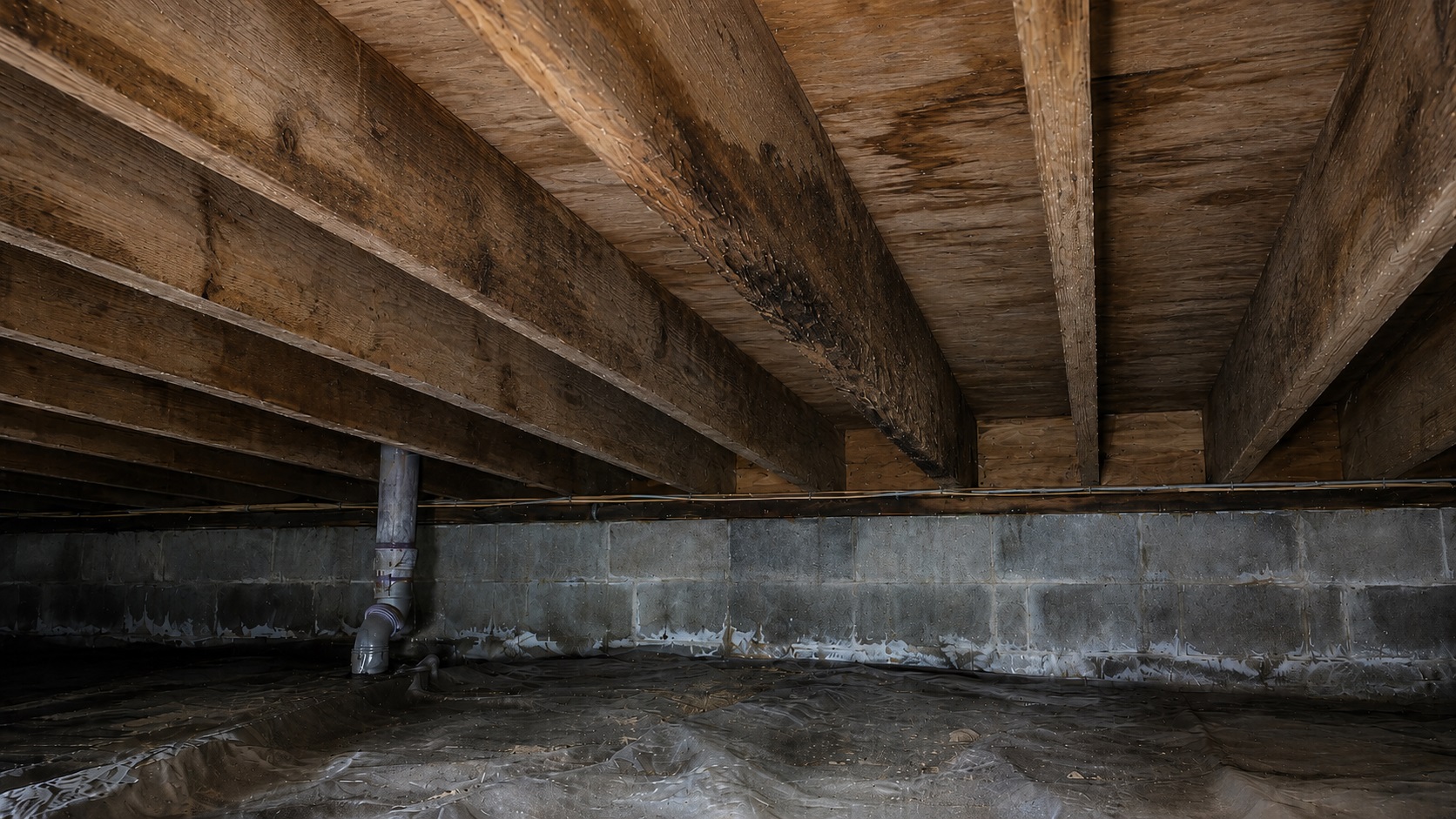
Dark joists may indicate previous moisture exposure, but staining alone does not prove active rot. Wood can darken from dirt, age, treatment, old leaks, or tannin staining. The question is whether the dark wood is also damp, soft, moldy, cracked, or crumbling.
A simple pattern check helps: isolated dry staining is less urgent than dark staining that follows a plumbing line, appears at joist ends, sits below a bathroom fixture, or continues across several joist bays.
Dark staining should be taken more seriously when it appears below bathrooms, kitchens, laundry rooms, water heaters, exterior doors, or areas with known flooding. Staining near joist ends, beams, sill plates, or plumbing penetrations can also suggest a moisture path that needs investigation.
Soft wood is more concerning than discoloration
Softness is a stronger warning sign than color alone. A joist that looks dark but remains hard and dry may not be actively decayed. A joist that feels soft, crushed, or punky is much more concerning.
Homeowners should not aggressively dig into structural wood. However, visible softness, crushing, missing wood fibers, or material that breaks apart easily is a reason to call a professional. A qualified inspector can evaluate whether the wood has lost strength and whether repair or reinforcement is needed.
Crumbling, flaking, or broken wood fibers are serious signs
Advanced moisture damage can cause wood fibers to break down. The joist may flake, crumble, split, or show areas that look compressed or eaten away. In some cases, the wood may have a blocky or cracked appearance. Insect activity may also appear near damp or decaying wood.
Crumbling joist material is not a cosmetic issue. If a joist is visibly deteriorated, the floor system may need structural evaluation before normal use continues.
Musty Odors and Visible Fungal Growth on Joists
A musty smell in a crawl space or basement can indicate moisture conditions that support biological growth and wood deterioration. Odor alone does not prove joist rot, but it is an important clue when paired with damp wood, staining, or floor movement above.
Visible mold-like or fungal growth on joists also points to a moisture problem. Surface growth is not always the same as structural decay, but both depend on damp conditions. The source of moisture should be identified and corrected before the joists are closed, sealed, or repaired.
Odor often reveals a damp crawl space environment
Joist rot often begins in environments where wood stays damp repeatedly. A crawl space that smells musty may have bare soil moisture, standing water, poor drainage, missing vapor barrier coverage, or high humidity. Even if one joist does not look severely damaged yet, the conditions may be present for future decay.
If the odor is strongest below bathrooms, kitchens, or laundry areas, check for plumbing leaks above. If the odor is widespread throughout the crawl space, the problem may be overall crawl space moisture rather than one isolated leak. For moisture-focused crawl space framing checks, see how to detect moisture in crawl space framing.
Visible growth means moisture has been present
Fungal or mold-like growth on joists means the wood surface has been exposed to damp conditions long enough for growth to appear. This does not automatically tell you whether the joist has lost structural strength, but it does mean the moisture source needs attention.
Do not treat visible growth as only a cleaning problem. If the wood is also soft, crumbling, or sagging, the issue may involve structural decay. If the growth is widespread or the space is unsafe, professional evaluation is the better path.
Rusty Fasteners, Joist Hangers, or Metal Connectors
Rust on fasteners or metal connectors can be a clue that moisture has been present around the floor framing. Joist hangers, nails, screws, straps, and metal brackets are not supposed to stay damp for long periods. Corrosion near joists often means the area has experienced repeated moisture exposure.
Rust does not prove the joist is rotten, but it can point to the conditions that lead to rot. It can also affect the strength of metal connections if corrosion is severe.
Connector corrosion is most concerning near supports
Pay close attention to rust near beams, foundation walls, rim joists, sill plates, and joist ends. These are important bearing and connection areas. Moisture damage at the end of a joist can be more serious than minor staining in the middle of a span because the joist relies on its support points to carry load.
If joist hangers are heavily rusted, pulling away, bent, or attached to soft wood, the area needs professional evaluation. Replacing or reinforcing structural connections is not a casual DIY project.
Rust plus damp wood creates a stronger warning pattern
Rusty fasteners are more concerning when the surrounding wood is also dark, wet, soft, moldy, or crumbly. Together, these signs suggest that moisture has affected both the wood and the hardware. If floor movement is also present above, the risk is higher.
Take photos of rusty connectors and surrounding wood so a contractor or inspector can see the conditions clearly.
Wet Insulation or Damp Crawl Space Conditions Around Joists
Wet insulation and damp crawl space conditions are major warning signs around floor joists. Even if the joists do not look severely damaged yet, moisture held against framing can create the conditions that lead to rot over time.
Insulation below floors can hide joist damage. It may hold moisture against wood, block airflow, and make it harder to see stains, mold-like growth, or soft areas. If insulation is sagging, wet, dirty, or pulling away from the subfloor, the floor framing above it should be inspected.
Wet insulation can keep joists damp
Wet insulation is not just an insulation problem. When it touches joists or subflooring, it can keep wood damp long after the original leak or flood, especially in crawl spaces, basements, and floor cavities below bathrooms or kitchens.
Watch for insulation that looks compressed, dark, sagging, moldy, or water-stained. If the insulation is wet and the joists above it are dark or musty, the floor framing may have been exposed to moisture long enough to need evaluation.
Standing water or damp soil increases joist rot risk
Crawl spaces with standing water, wet soil, or poor drainage can expose joists to moisture repeatedly. Even if water does not touch the joists directly, damp air can keep wood moisture levels elevated. Over time, that environment can support wood decay, fungal growth, and fastener corrosion.
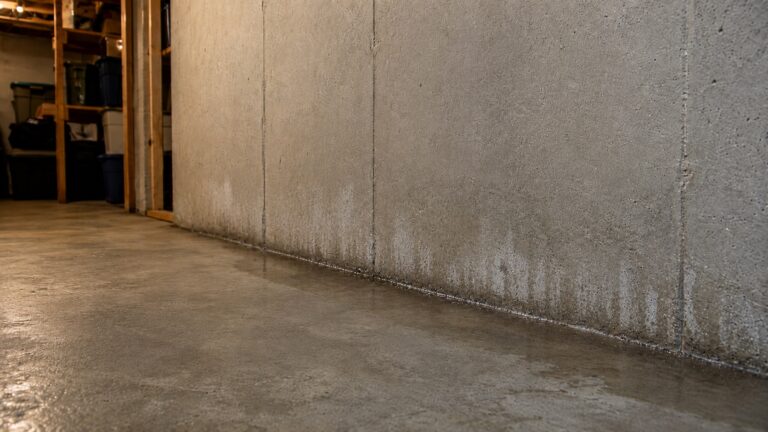
Look for signs such as puddles, muddy soil, fallen insulation, condensation on pipes, musty odor, damp foundation walls, or a missing or damaged vapor barrier. These are not joist rot symptoms by themselves, but they show that the surrounding environment may be keeping floor framing wet.
Crawl space moisture can affect the whole floor system
Joist rot is often part of a larger crawl space moisture problem. Damp soil, poor drainage, failed vapor barriers, and high humidity can affect joists, beams, subflooring, insulation, and metal connectors together.
If the symptoms are specific to framing in a crawl space, see signs of moisture damage in crawl space joists. This article stays focused on rotting floor joists throughout the home, while that guide goes deeper into crawl-space-specific warning patterns.
Cracks, Gaps, or Sticking Doors Caused by Floor Movement
Rotting floor joists can sometimes create symptoms above the floor that do not look like moisture damage at first. When a floor begins to sag or move, nearby finishes may shift. This can create cracks, gaps, and alignment problems in the room above.
These signs do not always prove joist rot. Homes can settle, finishes can crack, and doors can stick for many reasons. But when these changes appear near a sagging, bouncy, or moisture-damaged floor, the floor framing should be considered as a possible cause.
Gaps at baseboards or trim
If a floor sinks or slopes, gaps may open between the floor and baseboards. Trim may separate from the wall or appear uneven along the floor line. These gaps are more concerning when they appear suddenly or worsen after a known water problem.
Look for nearby clues such as soft flooring, musty odor, staining, or visible crawl space moisture. A trim gap alone may be cosmetic, but a trim gap paired with floor movement can point to structural shifting below.
Cracks in nearby drywall or finishes
Floor movement can contribute to cracks in nearby drywall, plaster, tile, or trim. Cracks may appear near doorways, corners, or walls close to the sagging floor area. If moisture-damaged joists are allowing the floor to move, nearby finishes may show stress.
Do not assume every drywall crack means joist rot. Instead, look at the pattern. Cracks paired with floor slope, bounce, crawl space staining, or damp framing deserve closer inspection.
Doors that stick or swing differently
Sticking doors can happen when framing shifts, humidity changes, or floors move. If a door begins sticking near an area with sagging floors or suspected joist damage, the floor system may be contributing to the misalignment.
This is especially important if the problem is new and appears near a bathroom, kitchen, laundry room, crawl space, or exterior wall where moisture exposure is likely.
Common Moisture Sources That Rot Floor Joists
Floor joists rot when the wood stays damp long enough for decay conditions to develop. The moisture source may be above the floor, below the floor, or at the perimeter of the home. Finding that source is essential because repairs will not last if the framing remains wet.
Crawl space humidity and standing water
Crawl spaces are one of the most common environments for joist rot. Bare soil, poor grading, foundation water entry, blocked drainage, failed vapor barriers, and high humidity can keep the underside of the floor damp for long periods.
In these cases, the joists may not be damaged by one dramatic leak. Instead, they are exposed to repeated damp conditions over months or years. Musty odor, damp insulation, rusty fasteners, and widespread staining are common clues.
Bathroom leaks
Bathrooms are high-risk areas because water sources are concentrated in a small space. Toilets can leak around the flange. Tubs and showers can leak at drains, overflow assemblies, supply lines, or failed caulk and grout. Vanities can hide slow supply or drain leaks.
Joist rot below bathrooms often appears near toilet openings, tub drains, shower drains, or wall-floor joints. A rocking toilet, soft bathroom floor, or stained framing below the bathroom should be investigated quickly.
Kitchen and laundry leaks
Kitchen and laundry leaks can also reach joists. Dishwashers, refrigerator water lines, sink drains, washing machine hoses, and utility sinks can leak slowly enough to wet the subfloor and framing before anyone notices.
When floor movement appears near a dishwasher, sink cabinet, washer, or water line, check below the area if possible. A small leak above can create localized joist damage below.
Exterior water intrusion
Water can reach joists from the exterior through door thresholds, wall leaks, siding failures, flashing problems, foundation moisture, or rim joist leaks. Joist ends and perimeter framing are especially vulnerable because they sit near exterior walls and support points.
Warning signs include staining near exterior walls, damp rim joists, rot near joist ends, rusty connectors, and floor slope near the perimeter of the home.
Flooding and repeated water exposure
Flooding can wet joists directly or create prolonged humidity below the floor. Basement flooding, crawl space standing water, stormwater intrusion, and burst plumbing lines can all expose joists to moisture. If the framing is not dried properly, decay risk increases over time.
For active water events or flood-related structural moisture, see when to call water damage restoration services. Floodwater, contaminated water, and widespread structural wetting usually require more than casual DIY drying.
How Joist Rot Differs From Subfloor Water Damage
Joist rot and subfloor water damage are closely related, but they affect different parts of the floor system. Understanding the difference helps you describe the problem accurately and choose the right next step.
Subfloor damage affects the layer under the finished floor
The subfloor is the layer directly below the finished flooring. When it is water damaged, you may notice soft spots, swollen seams, raised edges, loose flooring, musty odor, or stains around fixtures. These symptoms are covered more fully in signs of water damage in subfloors.
Subfloor damage is serious, but it does not always mean the joists are rotten. If the moisture was caught early and did not reach the framing below, the issue may remain limited to the subfloor and finished flooring.
Joist rot affects the structural support below the subfloor
Joists carry the floor load across the span. When joists rot, the symptoms can include sagging, bouncing, sloping, wider floor movement, visible soft wood below, rusty connections, and damage near supports. Joist rot is usually a deeper structural concern than isolated subfloor swelling.
The two problems can occur together. A long-term bathroom leak, crawl space moisture issue, or flood can damage the finished flooring, subfloor, and joists in the same area. The important point is that joist symptoms should be evaluated as structural framing concerns, not just flooring problems.
When Rotting Floor Joists Need Professional Evaluation
Rotting floor joists should be professionally evaluated when the symptoms suggest structural movement, active moisture, or loss of wood strength. Joists are not finish materials. They help carry the floor system, so repair decisions need to account for load, span, moisture source, and the condition of nearby framing.
Do not try to jack, shore, sister, cut, or replace joists without qualified guidance. Those repairs can affect the way loads move through the home. The safer homeowner role is to recognize the warning signs, avoid unsafe areas, stop obvious water sources when possible, and call the right professional before damage worsens.
Call a professional if the floor is sagging or unstable
Sagging, sloping, dipping, or unstable floors are the clearest reasons to get help. If the floor feels unsafe, avoid walking on that section. Do not test it by bouncing or adding weight. A sagging floor may involve joists, beams, posts, sill plates, subflooring, or multiple parts of the floor system.
Professional evaluation is especially important when sagging appears near bathrooms, kitchens, laundry rooms, water heaters, crawl spaces, foundation walls, stairs, posts, beams, or load-bearing walls.
Call a professional if joist wood is soft, crushed, or crumbling
Soft or crumbling joist wood is more serious than staining. If the wood fibers break apart, crush easily, flake, or appear structurally weakened, the joist may no longer be reliable. Drying the area may stop ongoing moisture exposure, but it will not restore wood that has already lost strength.
A contractor, structural repair specialist, or qualified inspector can determine whether the joist can be reinforced, repaired, or replaced. For broader decision-making around structural wood, see whether to repair or replace structural wood affected by moisture.
Call a professional if moisture is still active
Joist repairs should not happen while the area is still wet. If the crawl space has standing water, the plumbing leak is ongoing, insulation is wet, or moisture readings remain elevated, the source must be corrected before structural repair is closed up.
Active moisture can make even good repairs fail. New wood, sistered joists, new fasteners, or added supports can be damaged again if the underlying water problem remains. If you need a broader structural safety framework after water exposure, see how to evaluate structural safety after water damage.
Call a professional if the crawl space is unsafe to enter
Do not enter a crawl space with standing water, sewage, electrical hazards, heavy mold growth, pests, unstable framing, poor clearance, or unsafe access. A joist inspection is not worth risking injury or exposure. A professional can inspect the area with proper equipment and determine whether moisture, rot, or structural repair is involved.
If the next step is a more detailed inspection of crawl space framing, see how to inspect crawl space joists for moisture damage. That guide walks through the inspection process in more detail, while this article stays focused on recognizing joist rot symptoms.
FAQs About Signs of Rotting Floor Joists
What do rotting floor joists look like?
Rotting floor joists may look dark, stained, cracked, soft, crumbly, compressed, or covered with fungal growth. In more serious cases, the joist may sag, split, pull away from connectors, or show damage near beams, sill plates, or foundation walls. Dark staining alone does not prove rot, but dark wood that is also soft or damp is more concerning.
Does a bouncy floor mean the joists are rotten?
Not always. Bouncy floors can come from long spans, old framing, loose subflooring, poor support, or normal flex in some floor systems. Joist rot becomes more likely when the bounce is new, worsening, localized near moisture, or paired with soft wood, musty odor, sagging, staining, or damp crawl space conditions.
Can floor joists rot from a leaking toilet?
Yes. A leaking toilet can rot subflooring and floor joists if water reaches the framing repeatedly or remains hidden around the toilet flange. A rocking toilet, soft bathroom floor, musty odor, or stained framing below the bathroom should be investigated quickly.
Is joist rot dangerous?
Joist rot can be dangerous when it weakens the framing that supports the floor. Minor staining may not be a structural emergency, but sagging, bouncy movement, soft wood, crumbling joists, damaged connectors, or floor instability should be professionally evaluated.
Can rotted floor joists be repaired?
Many rotted joist problems can be repaired, reinforced, or partially replaced, but the correct repair depends on the location, span, load, moisture source, and severity of decay. The moisture source must be corrected first, and structural repairs should be handled by a qualified professional rather than covered with new flooring.
How do I know if joist rot is active?
Joist rot may still be active if the wood is damp, the crawl space smells musty, moisture readings remain high, there is visible fungal growth, wet insulation is touching the framing, or the water source has not been fixed. Old dry staining may show past moisture, but active dampness and softness are stronger warning signs.
Should I enter a crawl space to check joists?
Only enter a crawl space if it is safe, dry, accessible, and free of obvious hazards. Do not enter if there is standing water, sewage, electrical risk, heavy mold, pests, unstable framing, or poor access. If conditions are unsafe, hire a professional to inspect the joists.
Signs That Point Most Strongly to Joist Rot
- Floor joists are structural framing members, so rot can affect floor strength and safety.
- Joist rot usually develops from repeated or prolonged moisture, not one brief damp event.
- Sagging, sloping, bouncy, or weak floor movement can indicate joist trouble when moisture is involved.
- Dark staining alone does not prove rot, but dark wood that is soft, damp, crumbly, or musty is a serious warning sign.
- Rusty joist hangers, wet insulation, and damp crawl space conditions can point to long-term moisture exposure.
- Bathroom leaks, crawl space humidity, plumbing leaks, exterior water intrusion, and flooding are common joist rot sources.
- Joist rot is different from subfloor water damage, though both can happen together.
- Do not attempt structural joist repairs without qualified guidance.
What to Do If You Suspect Rotting Floor Joists
Not every stain, bounce, or musty smell proves joist rot. But when those signs appear with moisture history, active dampness, soft wood, or floor movement, the issue should be evaluated before it becomes worse.
The safest path is to stop the moisture source, avoid unstable areas, document visible damage, and bring in a qualified professional when joists may be soft, sagging, or structurally compromised.