How to Evaluate Structural Safety After Water Damage
Water damage becomes a structural safety concern when it reaches the parts of a home that carry weight, hold shape, or transfer loads. Stains and finish swelling may be cosmetic, but soft subfloors, sagging ceilings, cracked joists, weakened beams, leaning posts, wet sill plates, or damaged rafters can affect whether an area is safe to use.
Evaluating structural safety after water damage does not mean designing your own repair. It means checking for warning signs that tell you whether the area is safe to enter, whether the damage appears limited to finishes, or whether a qualified professional should inspect the structure before anyone walks on it, opens it, dries it, or repairs it.
Start with safety before cleanup. Avoid sagging ceilings, unstable floors, standing water near electrical systems, contaminated floodwater, and any area that appears to have shifted. Then evaluate whether the water affected structural materials, how long they stayed wet, and whether the damaged area has changed in shape, firmness, or support.
This guide focuses on structural evaluation after water damage. For a broader overview of how moisture affects a home over time, see Structural Moisture Problems in Homes: Causes, Risks, and Repair Guide. For whole-home moisture prevention and long-term control, see How to Find, Fix, and Prevent Moisture Problems in Homes.
What Structural Safety Means After Water Damage
Structural safety is about whether the parts of the home that carry weight, transfer loads, or keep the building stable are still performing as intended. In a typical home, those parts may include floor joists, subfloors, beams, posts, wall studs, headers, roof rafters, trusses, ceiling joists, sill plates, rim joists, foundation walls, and load-bearing wall assemblies.
Water damage becomes a structural concern when moisture changes the strength, shape, position, support, or connection of those components. A brown ceiling stain may only show that water passed through the area. A sagging ceiling, cracked framing member, soft subfloor, leaning post, or swollen load-bearing area suggests a different level of concern.
The most important question is not simply, “Did this area get wet?” The better question is, “Did the water affect something that supports weight or keeps the home stable?”
For example, a small stain on painted drywall may be a finish problem if the leak was corrected quickly and the wall is dry and firm. A soft floor around a toilet, a dipping section of subfloor near a washing machine, or a sagging ceiling below a roof leak may involve deeper material damage. A wet crawl space with dark, softened joists or deteriorated beams is more serious because the damage may affect the floor system itself.
Structural safety also depends on duration. A single short-term leak that is found quickly may not cause structural weakening if materials are dried properly and remain firm. Long-term moisture exposure, repeated leaks, or damp framing that stays wet can lead to swelling, decay, fastener problems, mold growth, and loss of strength. If you want the deeper mechanics behind this process, the related article How Moisture Weakens Structural Framing explains how moisture affects wood framing over time.
Structural safety is not based on appearance alone. A floor may look normal but feel spongy, a ceiling may show only a small stain before it sags, and a crawl space may hide joist or sill plate damage below a room that still looks usable. Evaluate visible signs, physical changes, moisture history, and the location of the affected materials together.
Check Immediate Safety Before Inspecting the Damage
Before inspecting water damage, decide whether the area is safe to enter. Do not walk through or disturb an area simply because the water has stopped moving. From a safe location, look for sagging ceilings, dipping floors, shifted walls, wet electrical devices, standing water, sewage contamination, or signs that the structure has moved.
If any of those hazards are present, stop the normal inspection and limit access until the immediate risk is addressed.
Do Not Enter Areas With Sagging Ceilings, Unstable Floors, or Electrical Hazards
A sagging ceiling after water damage can be dangerous because wet drywall, wet insulation, or soaked ceiling materials may release suddenly. The stain itself may not be the danger. The danger is the weight of trapped water and softened material above the ceiling surface.
Unstable floors are another major warning sign. If flooring feels soft, spongy, bouncy, uneven, or unusually flexible after water damage, avoid walking across the damaged area. The surface flooring may be hiding a weakened subfloor, deteriorated underlayment, or joist damage below. A floor that feels different after a leak should not be treated like a cosmetic issue until the layers underneath are checked.
Electrical hazards also change the evaluation. If water reached outlets, switches, breaker panels, wiring, appliances, HVAC equipment, or extension cords, do not use the affected electrical components. Structural evaluation should wait until the area is electrically safe. Water damage often involves overlapping risks, and electrical safety comes before opening walls, entering flooded spaces, or using drying equipment.
Look for Movement Before Walking Through Damaged Spaces
Before stepping into a damaged room, look for signs that parts of the home have moved. This includes new gaps between trim and walls, cracks that appeared after the water event, doors that suddenly rub or will not close, windows that bind, floors that slope more than before, or walls that appear bowed or separated.
Movement matters because structural materials are supposed to hold their shape. Water can cause swelling, softening, decay, or shifting, especially when it affects wood framing, subfloor panels, foundation-adjacent components, or ceiling assemblies. A stain tells you water was present. Movement tells you something may have changed physically.
Pay attention to changes that appeared after the water event. An old hairline crack that has been stable for years is different from a fresh crack that appeared after flooding, a roof leak, or a plumbing failure. A door that has always stuck seasonally is different from a door that suddenly will not close after water damaged the surrounding floor or wall.
Stop Inspection if the Damage Appears Structural
Homeowners can safely observe and document many visible warning signs, but there is a point where inspection should stop. If you see a cracked beam, sagging floor, leaning post, separated structural connection, heavily rotted framing, collapsed ceiling area, or foundation-adjacent damage, do not keep probing, removing materials, or walking on the area.
The same applies if water damage affects a load-bearing area. Load-bearing walls, beams, posts, joists, rafters, and headers should not be cut, removed, jacked, braced, or repaired without qualified evaluation. If you suspect a load-bearing component is damaged, the next step is professional inspection, not DIY exploration. For more specific warning signs involving structural members, see Signs of Load-Bearing Wood Damage.
If the water damage followed a flood, storm, foundation problem, or major roof leak, also compare what you are seeing with broader flood-related warning signs. The article Signs of Structural Damage After Flooding focuses specifically on post-flood symptoms, while this article focuses on evaluating safety after any water damage source.
How to Tell Cosmetic Damage From Structural Risk
One of the hardest parts of evaluating water damage is separating cosmetic damage from structural risk. A home can look worse than it is when finishes are stained, swollen, or discolored. It can also look better than it is when structural damage is hidden behind flooring, drywall, insulation, or trim.
A useful way to evaluate the damage is to look at three levels: surface evidence, material weakness, and structural change.
Staining and Surface Swelling
Staining is usually the first visible sign of water damage. It may appear on ceilings, drywall, baseboards, flooring, cabinets, or trim. Staining tells you water reached the material, but it does not automatically prove structural damage.
Surface swelling is more concerning than staining because it means the material absorbed moisture. Swollen baseboards, bubbling paint, peeling drywall tape, cupped flooring, or warped trim may still be mostly finish-level damage, but these symptoms suggest the water was not just on the surface. It entered materials and may have reached hidden layers.
At this stage, the key questions are:
- Was the water source corrected?
- How long was the area wet?
- Does the material feel firm or soft?
- Is the swelling limited to finishes, or does the floor, wall, or ceiling shape seem changed?
- Is there a musty odor, recurring dampness, or visible mold?
If the area is stained but firm, dry, and stable, it may be a lower-risk issue that still needs monitoring. If the stain is paired with softness, sagging, cracking, spreading discoloration, or recurring moisture, it deserves closer evaluation.
Softness, Sagging, and Deflection
Softness is a stronger warning sign than staining. When materials soften after water damage, they may have lost stiffness or begun to break down. This is especially important with subfloors, sheathing, trim, drywall, and wood framing.
Floors should not feel spongy, springy, or unstable after a water event. If a section of flooring dips under weight, flexes more than nearby areas, or feels soft around a toilet, bathtub, dishwasher, washing machine, refrigerator, exterior door, or basement entry, the damage may extend below the surface. For floor-specific replacement decisions, see When Subfloors Must Be Replaced After Water Damage.
Sagging is even more serious. A sagging ceiling, sagging floor, or sagging roof area means the material is no longer holding its normal shape. Sagging can happen when materials absorb water weight, lose stiffness, or separate from their supports. Any active sagging should be treated as a safety concern until evaluated.
Deflection is the amount a structural element bends under load. Homeowners do not need to measure deflection like an engineer, but they should notice changes. A floor that suddenly feels bouncy, a ceiling line that looks lower, or a beam that appears bowed after water exposure should not be ignored.
Cracking, Separation, and Shape Changes
Cracking after water damage can be minor or serious depending on where it appears and whether it is new, spreading, or connected to movement. A small paint crack in a water-stained ceiling is different from a wide crack that follows a sagging area. A hairline drywall crack is different from a crack that appears near a beam pocket, foundation wall, stair opening, or load-bearing wall.
Separation is also important. Look for gaps where walls meet ceilings, trim pulls away from walls, cabinets separate from walls, flooring pulls away from baseboards, or framing connections appear loose. Separation suggests that materials may have swollen, shifted, dried unevenly, or moved under load.
Shape changes are among the strongest signs that water damage may be more than cosmetic. Floors should not dip or crown suddenly. Ceilings should not bulge downward. Walls should not bow, lean, or ripple after water exposure. Door frames and window frames should not shift out of square. When water damage changes the shape of a building component, the risk level rises.
This does not mean every crack is an emergency. Homes settle, finishes age, and small cracks can appear for many reasons. The concern is the combination of water exposure and new movement. If cracking, separation, or shape changes appear after a leak, flood, or long-term moisture problem, evaluate the area more cautiously and avoid assuming it is only cosmetic.
How to Evaluate Floors After Water Damage
Floors deserve special attention because they carry people, furniture, appliances, cabinets, tubs, and interior walls. A water-damaged floor can look normal on top while the subfloor, underlayment, joists, or fasteners underneath are weakened.
Do not jump or press aggressively on a questionable floor. Compare the damaged area with nearby dry areas only if the surface feels stable, and stop if you notice unusual softness, bounce, sagging, cracking, or movement.
Soft Spots and Spongy Flooring
A soft spot is one of the clearest reasons to inspect deeper. Soft flooring after water damage often means the water reached the layers below the finish surface. Depending on the floor type, that could mean wet underlayment, swollen subfloor panels, decayed wood, loosened fasteners, or moisture trapped between layers.
Soft spots are especially common near water sources. Check carefully around toilets, bathtubs, showers, washing machines, dishwashers, refrigerators with water lines, kitchen sinks, bathroom vanities, exterior doors, sliding doors, basement entries, and areas below roof leaks. These locations often hide slow leaks long before the floor feels unsafe.
A small soft spot may not mean the whole floor system is failing. But it does mean the damage should not be judged by the surface material alone. Vinyl, laminate, tile, carpet, and hardwood can hide subfloor deterioration. A floor covering may remain in place while the layer underneath has swollen, delaminated, or lost strength.
If a soft area grows, returns after drying, or feels unstable under normal walking weight, limit access until the floor is inspected. If the floor feels like it could give way, do not test it further. That is no longer a simple homeowner inspection.
Subfloor Swelling and Delamination
Subflooring is one of the most important materials to evaluate after water damage. It sits below the finished floor and helps distribute loads across the floor framing. When subfloor panels absorb water, they may swell at seams, lift at edges, separate into layers, or lose their fastening strength.
Subfloor swelling may show up as ridges under vinyl, uneven seams under laminate, loose tiles, raised edges in hardwood, or a lumpy feeling under carpet. Delamination may appear as flaking, separation, crumbly layers, or a panel that no longer feels solid when stepped on.
Some subfloor materials tolerate short-term moisture better than others, but no subfloor should remain wet for long. Repeated wetting can cause swelling, partial drying, renewed swelling, loosened fasteners, and gradual loss of stability.
Subfloor damage becomes more serious when it appears near load-bearing walls, stair openings, appliances, bathroom fixtures, or long spans between joists. In those locations, the subfloor is not just a surface layer. It contributes to the stability and stiffness of the floor system.
When Floor Damage May Be Unsafe
Floor damage should be treated as a safety concern when the floor feels unstable, dips noticeably, bounces more than surrounding areas, sags along a line, cracks through tile or grout after water exposure, or moves when someone walks nearby. These symptoms suggest the problem may involve the floor system, not just the finish.
Be especially cautious if water damage occurred from below. Crawl space moisture, basement flooding, plumbing leaks under floors, and long-term dampness around joists can weaken the structure while the visible flooring above looks acceptable. If joists, beams, or posts below the floor are wet, dark, soft, cracked, or deteriorated, the floor should be evaluated professionally.
Another warning sign is a floor that changes after drying. If a wet floor dries but remains soft, uneven, cracked, or bouncy, drying did not restore the material to a reliable condition. Dry does not automatically mean safe.
For a broader list of warning signs that moisture is affecting structure throughout the home, see Signs of Structural Moisture Problems. That article focuses on recognizing serious symptoms; this article focuses on evaluating safety and deciding what to do next.
How to Evaluate Walls, Ceilings, and Framing
Walls and ceilings can hide water damage because the visible surface is often only the outer layer. Drywall, paint, plaster, trim, cabinets, and insulation may conceal wet framing, damaged sheathing, or saturated cavities. A stain may be the first clue, but the safety concern depends on what is behind or above the visible surface.
When evaluating walls and ceilings, look for both surface damage and structural clues. Surface damage includes stains, bubbling paint, peeling tape, soft drywall, swelling trim, or musty odor. Structural clues include sagging, spreading cracks, wall movement, ceiling bulges, shifted openings, or damaged framing.
Ceiling Stains Versus Ceiling Sagging
A ceiling stain means water reached the ceiling surface. The source may be a roof leak, plumbing leak, bathroom leak, HVAC condensation problem, or water from an upper floor. The stain itself may not be structural, but it should never be dismissed until the source is known and the area above the ceiling has been considered.
Ceiling sagging is different. When a ceiling bows downward, feels soft, bulges, drips from multiple points, or appears heavy with trapped water, treat it as a safety hazard. Wet drywall can release suddenly, and wet insulation above the ceiling can add significant weight. Do not stand under a sagging ceiling to inspect it closely.
Also look for cracks around the stained area. A stain with no sagging may be a lower-risk material problem. A stain with cracking, tape separation, bulging, or a dipped ceiling plane raises concern. If the ceiling shape changed after the leak, the safest choice is to keep people away from the area until it is evaluated.
Wall Movement, Cracking, and Wet Framing
Walls can be difficult to judge because drywall often hides the framing. Still, certain clues suggest that water damage may have moved beyond the surface. Watch for drywall that is soft at the lower edge, baseboards pulling away, cracks forming near doors or windows, walls that appear bowed, or trim that no longer lines up.
Lower wall damage is common after flooding, appliance leaks, plumbing leaks, and exterior water intrusion. Water may wick upward into drywall, insulation, studs, and base plates. Even after the surface dries, trapped moisture can remain behind finishes or inside wall cavities.
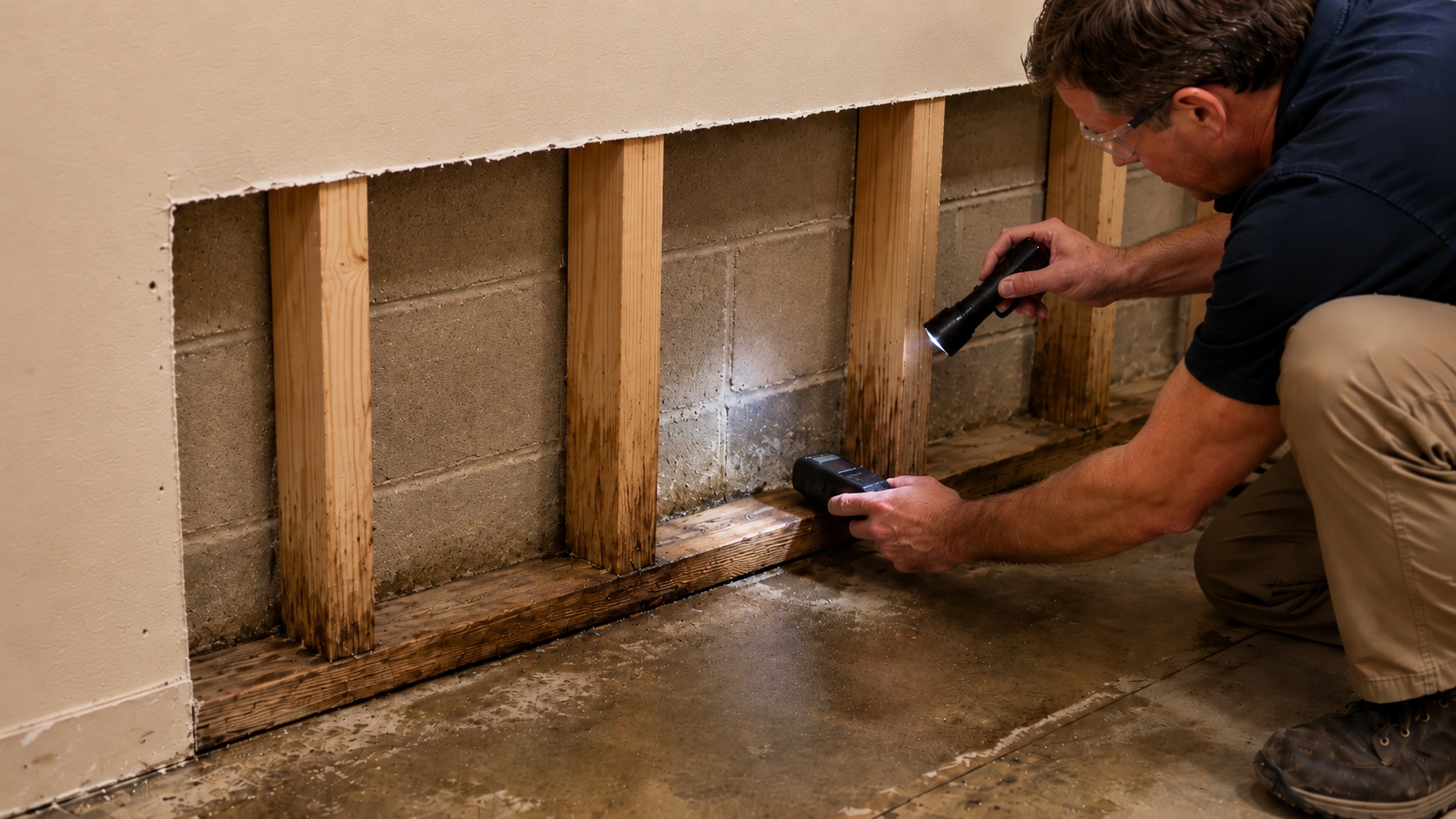
Wet framing is a bigger concern than wet drywall. Drywall can often be removed and replaced. Framing must still be strong, properly connected, and able to carry load. If exposed studs, plates, headers, or sheathing are dark, soft, cracked, punky, or visibly decayed, the area should be inspected before being closed back up.
If the issue appears to involve decay rather than short-term wetting, the related guide Signs of Structural Wood Rot explains the specific indicators of rot in wood members.
Load-Bearing Areas That Need Extra Caution
Not every wall carries the same structural importance. Some interior walls are partition walls. Others support floors, ceilings, roof loads, beams, or openings above them. Homeowners do not always know which walls are load-bearing, so any water damage involving major framing should be treated cautiously until the wall’s role is understood.
Extra caution is needed when water damage appears near beams, posts, stair openings, large door or window openings, basement support walls, garage headers, roof framing, exterior walls, or walls that run perpendicular to floor joists. These locations are more likely to affect load paths.
Load-bearing damage is not limited to obvious broken wood. Swelling, decay, crushed bearing points, loose fasteners, wet sill plates, or deteriorated connections can matter because structural safety depends on how pieces transfer weight together. If water damage affects a beam pocket, post base, joist end, header, or sill plate, get professional evaluation before repairing finishes.
How to Evaluate Basements, Crawl Spaces, and Foundation-Adjacent Areas
Basements and crawl spaces are especially important after water damage because they often contain the parts of the home that support the floor system above. A finished room may look acceptable while the framing below it is damp, weakened, or beginning to decay. For that reason, structural evaluation should not stop at the visible living space.
Only inspect basements and crawl spaces when they are safe to enter. Do not enter a flooded crawl space, a space with standing water near electrical equipment, an area with sewage contamination, or a space where the floor above appears unstable. If access is limited, visibility is poor, or structural members look damaged, document what you can from a safe location and call a professional.
Joists, Beams, Posts, and Sill Plates
In basements and crawl spaces, look for damage to joists, beams, posts, sill plates, rim joists, and subflooring from below. These components help carry the weight of the house and transfer loads to the foundation or supports. Moisture damage in these areas can be more serious than water stains on finished surfaces.
Floor joists should look straight, firm, and properly supported. Warning signs include dark staining paired with softness, visible fungal growth, cracking, splitting, sagging, crushed ends, or joists pulling away from hangers or beams. A joist that is only discolored may need drying and monitoring, but a joist that is soft, cracked, or misshapen needs closer evaluation.
Beams and posts deserve even more caution because they often carry concentrated loads. Look for posts sitting in damp soil, wood posts with rotted bases, beams with softened sections, leaning supports, crushed bearing areas, or metal connectors that appear corroded or loose. If a post or beam has shifted, do not try to straighten, jack, cut, or brace it yourself.
Sill plates and rim joists are common moisture trouble spots because they sit close to foundation walls, crawl space air, exterior water entry, and basement moisture. If these areas are damp, rotted, insect-damaged, or crumbling, the floor system above may need professional evaluation. Even if the living space feels normal, damaged foundation-adjacent wood should not be ignored.
Standing Water and Long-Term Dampness
Standing water in a basement or crawl space is not just a cleanup issue. It can create long-term moisture exposure for wood framing, insulation, fasteners, floor sheathing, and supports. The longer materials stay damp, the greater the risk of swelling, decay, mold growth, and weakening.
Long-term dampness may show up as musty odor, condensation on surfaces, dark wood, rusted fasteners, damp insulation, white mineral deposits on masonry, mold-like growth on framing, or soil that stays wet under the house. These signs do not always prove structural failure, but they show that the environment is stressing the structure.
Pay attention to repeated moisture. A crawl space that gets wet after every heavy rain, a basement wall that stays damp, or a support post that remains in contact with wet ground creates a different risk than a one-time leak that was dried quickly. Repeated wetting gives materials less time to recover and makes hidden deterioration more likely.
When Hidden Structural Moisture Is Likely
Hidden structural moisture is likely when visible damage appears near structural transitions. Examples include soft flooring above a crawl space, staining along basement ceiling joists, musty odor coming through floor registers, damp insulation between joists, or swelling near exterior walls and foundation edges.
It is also likely when water entered from below or from the exterior. Basement seepage, crawl space standing water, foundation drainage problems, siding leaks, exterior door leaks, and roof runoff problems can wet structural areas without creating obvious interior damage right away.
If you suspect hidden structural moisture, the goal is not to tear everything apart immediately. The goal is to identify the moisture source, limit further exposure, document visible symptoms, and decide whether the area needs moisture mapping, structural inspection, restoration drying, or targeted demolition. If you are unsure how to rank multiple problems in the home, How to Prioritize Moisture Repairs in Your Home can help you sort urgent repairs from follow-up work.
How to Prioritize Structural Water Damage
Not all water damage carries the same safety risk. Prioritizing the damage helps you avoid two common mistakes: panicking over every stain or ignoring a serious warning sign because the surface looks mostly dry. A simple risk-tier approach can help you decide what to monitor, what to inspect further, and what needs professional evaluation.
Use the following tiers as a practical guide. They are not a substitute for an inspection, but they help you think clearly about severity.
A quick rule of thumb: surface staining is usually a documentation and moisture-source issue, softness is an inspection issue, and sagging, movement, or damaged structural members are safety issues.
| Risk Level | What You May See | Best Next Step |
|---|---|---|
| Lower risk | Small stains, minor finish swelling, firm materials, no movement | Document, confirm the source is fixed, and monitor |
| Moderate risk | Soft spots, swollen lower drywall, cupped flooring, damp crawl space framing | Inspect deeper before covering or repairing finishes |
| High risk | Sagging, cracking, movement, damaged joists, wet load-bearing framing, electrical or floodwater hazards | Limit access and get professional evaluation |
Low-Risk Signs to Monitor
Lower-risk water damage usually involves surface-level symptoms with no sign of structural movement or material weakness. Examples include a small stain after a corrected leak, minor finish swelling, damp but firm trim, or a wet area that dried quickly and did not change shape.
Low-risk signs may include:
- Small water stains with no sagging or softness
- Firm drywall after a minor leak
- Minor paint bubbling after a corrected moisture source
- Trim discoloration without swelling or detachment
- Flooring that remains flat, firm, and stable
- No musty odor after drying
- No recurring dampness after the source is fixed
These conditions still deserve monitoring. A stain can mark the path of a leak, and a small visible symptom can point to hidden moisture. But if the area is firm, dry, stable, and not changing, it may not require immediate structural intervention.
Moderate-Risk Signs to Inspect Further
Moderate-risk water damage includes symptoms that suggest moisture reached deeper materials but has not clearly caused structural instability. These are the cases where homeowners often underestimate the problem because the area does not look dramatic.
Moderate-risk signs may include:
- Localized floor softness that does not yet feel unstable
- Swollen baseboards or lower drywall after a leak
- Cupped or lifted flooring near a water source
- Persistent musty odor after drying attempts
- Visible dampness in crawl space framing
- Wet insulation near joists or wall cavities
- Recurring staining after the same area was repaired
- Minor cracking that appeared after water exposure
Moderate-risk damage should not be covered with new flooring, paint, trim, or drywall until the moisture source is confirmed and hidden materials are checked. Covering damp or weakened materials can trap moisture and make the next repair more expensive.
This is also the stage where moisture history matters. A floor that got wet for one hour and dried quickly is different from a floor that leaked slowly for months. A damp crawl space after one storm is different from a crawl space that stays wet all season. Repeated or long-term exposure moves the problem closer to structural concern.
High-Risk Signs That Need Professional Evaluation
High-risk signs involve instability, movement, load-bearing components, severe material weakening, or conditions that could hide serious structural damage. When these signs appear, limit access and arrange professional evaluation before using or repairing the area.
High-risk signs include:
- Sagging ceilings after leaks
- Floors that dip, bounce, feel spongy, or seem unsafe to walk on
- Cracked, rotted, or softened joists, beams, posts, rafters, or sill plates
- Walls that bow, lean, separate, or shift after water damage
- Doors or windows that suddenly stick after a water event
- Major cracks that appear after flooding, leaks, or foundation moisture
- Wet load-bearing framing
- Foundation-adjacent wood that is dark, soft, or deteriorated
- Ceiling bulges, dripping, or cracking around a wet area
- Water damage combined with sewage, floodwater, or electrical exposure
If these signs are present, the damage should not be treated as a cosmetic repair. Do not simply paint over stains, install new flooring, screw sagging materials back into place, cut out damaged framing, or add temporary supports without understanding the structure. High-risk symptoms need evaluation by the appropriate professional, such as a water damage restoration company, structural engineer, licensed contractor, electrician, plumber, roofer, or foundation specialist depending on the source and location.
Structural damage can also progress after the original water event. Materials may continue to dry unevenly, shrink, crack, decay, or reveal hidden weakness. For a deeper explanation of this timeline, see How Structural Damage Progresses After Moisture Exposure.
When Water Damage Is No Longer a DIY Evaluation
There is a difference between observing visible water damage and evaluating structural safety. Homeowners can often identify stains, soft materials, odors, swelling, and visible changes. But once the damage may involve structural members, electrical systems, contaminated water, or unstable materials, the situation is no longer a simple DIY inspection.
A professional evaluation is especially important when the damage affects floors, ceilings, crawl spaces, basements, roof framing, foundation-adjacent wood, or load-bearing walls. These areas can hide damage behind finishes or below the visible surface. A home may look usable while the underlying structure needs drying, repair, reinforcement, or replacement.
Call a Water Damage Restoration Company When Drying and Moisture Mapping Are Needed
A water damage restoration company can help when water affected multiple rooms, soaked materials, entered wall cavities, reached subfloors, or remained hidden for more than a short time. Restoration professionals can use drying equipment, moisture meters, thermal imaging, containment methods, and material removal decisions to help prevent trapped moisture from becoming a larger problem.
This is especially important when the damage involves wet insulation, saturated drywall, damp subfloors, crawl space moisture, basement flooding, or water that may have traveled farther than the visible stain. If the damage is widespread or you are unsure whether materials are drying properly, see When to Call Water Damage Restoration Services.
Call a Structural Professional When Support Members May Be Affected
A structural engineer, qualified structural contractor, or experienced building professional may be needed when water damage affects joists, beams, posts, rafters, trusses, sill plates, headers, foundation-adjacent framing, or load-bearing walls. These components are not just surfaces. They help carry and transfer weight through the home.
Professional evaluation is also wise if a contractor is recommending major structural repair, if the floor or ceiling has sagged, if framing appears decayed, or if you need independent documentation before insurance or repair decisions. A structural professional can evaluate whether the damaged material still has adequate strength, whether the load path has been affected, and whether repair or replacement is needed.
Do not cut, notch, remove, jack, brace, sister, or replace structural members based only on a visual guess. Even well-intended DIY work can shift loads, weaken connections, or create additional problems if the structure is not supported correctly.
Call the Right Trade for the Moisture Source
Structural safety depends partly on stopping the water source. A strong repair will not last if the same area keeps getting wet. Depending on the source, you may need a plumber, roofer, foundation contractor, drainage specialist, HVAC technician, or exterior repair contractor before structural repairs can be completed.
For example, a soft bathroom floor may require plumbing repair before the subfloor is replaced. A sagging ceiling below a roof leak may require roof repair before ceiling and framing repairs. A damp crawl space may require drainage, vapor barrier, or ventilation corrections before damaged wood is repaired.
When the source is still active, prioritize stopping the water first, then drying and structural evaluation, then repair. Rebuilding over an active moisture source is one of the fastest ways to create recurring damage.
What to Document Before Repair or Professional Inspection
Documentation helps you explain the problem clearly to restoration companies, contractors, inspectors, engineers, and insurance representatives. It also helps you track whether the damage is improving, spreading, or returning after drying.
Only document from a safe location. Do not walk on unstable floors, stand under sagging ceilings, enter flooded crawl spaces, or disturb electrical hazards to take photos.
Useful documentation includes:
- Photos of the water source, if visible
- Photos of stains, swelling, sagging, cracks, soft areas, and damaged materials
- Wide-angle photos showing where the damage is located in the room
- Close-up photos of affected framing, subflooring, trim, or ceiling areas
- The date the water damage was discovered
- The suspected start date, if known
- What caused the water damage
- Which rooms, floors, or structural areas were affected
- Whether the area was flooded, damp, actively leaking, or repeatedly wet
- Any drying steps already taken
- Any new symptoms, such as sticking doors, sagging ceilings, or soft floors
- Photos from the same angle over time if staining, sagging, cracks, or floor movement appear to be changing
Do not remove large amounts of material before documenting the original condition unless immediate safety or drying requires it. If insurance may be involved, documentation becomes even more important. For claim-related mistakes and denial risks, see Common Reasons Water Damage Claims Are Denied.
Common Mistakes Homeowners Make When Judging Structural Safety
Visible symptoms do not always match the hidden risk. Some water damage looks dramatic but remains mostly cosmetic. Other damage looks minor while structural materials are wet or weakened behind the surface. Avoid these mistakes before deciding an area is safe.
Assuming Dry Means Safe
Drying is necessary, but drying alone does not prove structural safety. A subfloor can dry after swelling. Wood framing can dry after decay has started. A ceiling can stop dripping while the drywall remains weakened. A crawl space can feel less humid while joists remain stained, soft, or damaged.
After drying, the question is not only whether the surface is dry. The question is whether the affected materials are still firm, properly shaped, well supported, and free from serious decay or movement.
Walking on Soft Floors to “Test” Them
Homeowners often step harder on soft flooring to see how bad the problem is. That can be risky. If the subfloor or framing is weakened, extra force may worsen the damage or create a fall hazard. Compare damaged areas cautiously, and stop if the floor feels unstable.
Ignoring Crawl Spaces and Basements
A living room floor may look normal from above while the crawl space below contains damp joists, wet insulation, rotted sill plates, or standing water. Basements and crawl spaces often reveal the structural story that finished rooms hide.
If a floor feels different after water damage, the area below the floor matters. Do not assume the finished surface tells the whole story.
Calling Damage Cosmetic Too Early
Paint, trim, drywall, and flooring are finish materials. They can make damage look like a surface issue. But if water traveled behind those finishes, the hidden materials may matter more than the surface appearance.
Cosmetic repairs should come after the source is fixed, the area is dried, and structural risk is ruled out. Painting over stains or installing new flooring too early can trap moisture and hide worsening damage.
Trying to Repair Load-Bearing Components Without Evaluation
Structural wood, beams, posts, joists, rafters, headers, and load-bearing walls should not be altered casually. If water damage affects these components, the safest next step is evaluation, not improvised repair.
Temporary supports, jacks, sistered joists, beam repairs, and framing replacement can all affect how loads move through the home. These repairs should be planned by someone qualified to assess the structure.
FAQ
Can water damage make a house unsafe?
Yes, water damage can make part of a house unsafe when it weakens floors, ceilings, framing, supports, or load-bearing areas. A small stain is not automatically structural, but sagging, softness, movement, cracking, decay, or damaged support members should be evaluated before the area is used normally.
How do I know if water damage is structural?
Water damage is more likely to be structural when it affects joists, beams, posts, rafters, sill plates, subfloors, load-bearing walls, or foundation-adjacent wood. Warning signs include sagging, soft floors, bowed walls, cracked framing, rotted wood, shifted openings, or new movement after the water event.
Is it safe to walk on a water-damaged floor?
It may be safe if the floor is firm, flat, dry, and unchanged. It may not be safe if the floor feels soft, spongy, bouncy, dipped, uneven, or unstable. Avoid walking on areas that feel weakened, especially if water reached the subfloor or framing below.
Can wet framing dry out and still be safe?
Wet framing can sometimes dry and remain usable if the exposure was brief, the wood stayed firm, the source was corrected, and no decay or distortion occurred. Framing that is soft, cracked, rotted, moldy, misshapen, or repeatedly wet should be inspected before being covered or repaired.
When should I call a structural engineer after water damage?
Consider calling a structural engineer or qualified structural professional if floors sag, beams or joists are damaged, load-bearing walls are affected, foundation-adjacent framing is deteriorated, roof framing is weakened, or a contractor is recommending major structural repair. Independent evaluation is especially helpful when safety, repair scope, or insurance documentation is uncertain.
What should I check from the crawl space after floor water damage?
If the crawl space is safe to view, look for damp joists, wet insulation, dark or softened sill plates, standing water, rusted connectors, and subfloor staining from below. Do not enter a flooded, contaminated, electrically unsafe, or unstable crawl space. In those cases, have a professional inspect it.
Final Safety Check Before Repairs
Before repairing finishes, confirm three things: the water source has been stopped, hidden materials have been checked where needed, and the damaged area is firm, stable, and safe to use. Stains matter, but softness, sagging, cracking, separation, decay, and load-bearing involvement matter more.
If damage affects structural framing, subfloors, beams, posts, joists, rafters, crawl spaces, basements, or foundation-adjacent wood, do not rely on surface appearance alone. Document the damage, avoid unsafe areas, and get the right professional involved before closing walls, replacing flooring, or assuming the home is structurally sound.
Structural Safety Takeaways
- Water damage becomes a structural safety concern when it affects support, strength, shape, or load paths.
- Stains alone are usually less serious than softness, sagging, deflection, cracking, or movement.
- Floors, ceilings, crawl spaces, basements, and load-bearing areas deserve extra caution after water exposure.
- Drying is necessary, but dry materials are not automatically structurally safe.
- Do not walk on unstable floors or stand under sagging ceilings to inspect damage closely.
- Structural members such as joists, beams, posts, rafters, headers, sill plates, and load-bearing walls should be evaluated professionally if damaged.
- Stop the moisture source before repairing finishes or rebuilding damaged areas.
- Document visible damage, dates, affected rooms, moisture sources, and changes before major cleanup or repair when it is safe to do so.