
Most Common Roofing Material Failures
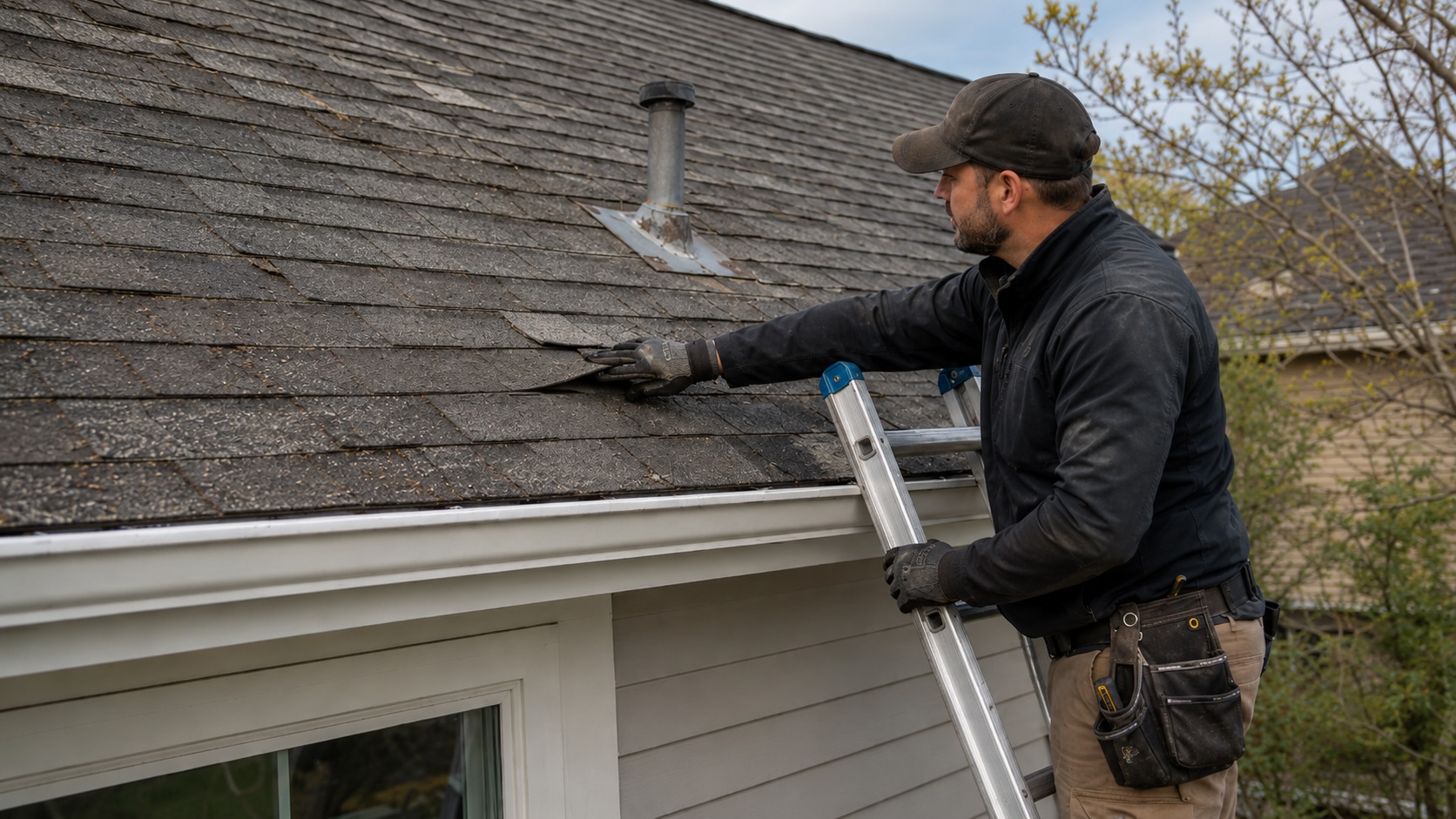
Roofing material failures are not always obvious from the ground. A roof can look mostly intact while worn shingles, failed flashing, damaged pipe boots, clogged ventilation paths, or wet roof decking are already letting moisture into the attic or ceiling system.
This guide explains how roofing materials and roof details fail, how those failures lead to leaks or moisture damage, and when the problem points toward repair, replacement, contractor evaluation, warranty review, or material comparison. It is part of the broader guide to structural moisture problems in homes, because roof failures are one of the main ways moisture reaches framing, sheathing, insulation, ceilings, and interior finishes.
For the full home moisture framework, start with how to find, fix, and prevent moisture problems in homes. For roof aging, roof leaks, flashing failure, roof decking, ventilation, or roofing material breakdown, use this hub to find the right next guide.
Why Roofing Material Failures Lead to Moisture Problems
A roof is not just a visible outer layer. It is a water-shedding system made from roofing material, underlayment, flashing, valleys, penetrations, fasteners, roof decking, ventilation paths, and attic structure. When one part fails, water may not enter immediately. But once the roof can no longer shed rain, drain properly, or dry between wetting cycles, moisture can reach hidden parts of the home.
The most common roof-related moisture problems usually come from one of four patterns:
- Water gets through the roof covering. This can happen when shingles crack, metal panels loosen, rubber membranes deteriorate, tiles break, cedar shakes split, or storm damage creates openings.
- Water enters at roof details. Flashing, valleys, chimneys, pipe boots, skylights, vents, and roof-wall intersections often leak before the main field of roofing material fails.
- Moisture forms inside the attic. Poor ventilation, blocked soffit vents, air leaks, or high indoor humidity can allow condensation to form on cold roof sheathing, even when rain is not entering through the roof.
- The roof stops drying properly. Repeated small leaks, wet insulation, poor airflow, trapped debris, or multiple roof layers can keep decking and framing damp long enough for rot or mold risk to rise.
This is why roof failure should be evaluated as a system. A missing shingle is one kind of problem. A failed flashing joint is another. Wet roof sheathing from condensation is another. Rotten decking below old shingles is another. Treating them all as “roof leaks” can lead to the wrong repair.
Roofs Fail as Systems, Not Just Surfaces
Many homeowners first look for damage on the visible roofing material. That is a reasonable starting point, but the surface is only part of the system. A roof can leak even if most shingles still look normal. Water can enter through a cracked pipe boot, lifted step flashing, worn valley, exposed fastener, poor nail placement, or an old repair that no longer moves with the roof.
The reverse is also true. A roof can show ugly wear without an active leak. Granule loss, fading, surface staining, minor curling, or weathering may show age, but they do not always prove that water is entering the home. The important question is whether the roof is still shedding water, protecting the underlayment, draining at vulnerable details, and allowing the attic to dry.
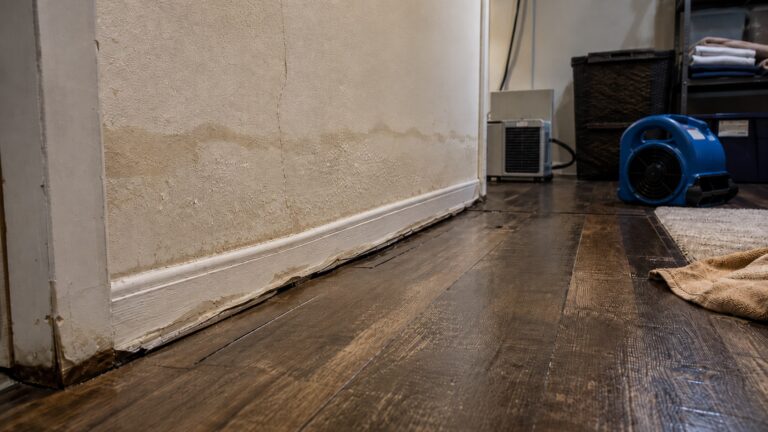
When a roofing problem becomes a moisture problem, the evidence often appears inside the home or attic before the source is obvious outside. Common clues include damp insulation, darkened sheathing, stains below roof penetrations, ceiling discoloration after rain, musty attic odor, mold on roof framing, or water marks near valleys and chimneys.
When visible roof wear and interior moisture appear together, separate the failure type before assuming the repair. Material wear, flashing failure, poor ventilation, condensation, storm damage, and structural roof damage each point to a different next step.
For interior warning signs, start with signs of roof leaks inside the house. If the source is not obvious, use how to detect hidden roof leaks or how to inspect roof areas for leak damage. If roof moisture has already raised mold concerns, read why roof leaks cause mold growth; after the source is found, use how to prevent roof leak damage.
Roof Leaks and Roof Condensation Are Not the Same Problem
One of the easiest mistakes is assuming that all attic moisture means the roof is leaking. Roof leaks come from water entering through the roof system during rain, melting snow, wind-driven storms, or standing water. Roof condensation forms when warm, moisture-laden air reaches a cold roof surface and turns into liquid water or frost.
Both problems can wet sheathing, insulation, rafters, and ceiling materials. But the source is different.
A true roof leak often follows weather patterns. The stain may appear after rain, grow during storms, or return when wind pushes water toward a specific side of the roof. The source may be a flashing joint, roof valley, damaged shingle, cracked pipe boot, chimney area, or roof penetration.
Condensation often follows temperature and ventilation patterns. The roof may show damp sheathing, attic frost, musty odor, or mold on the underside of roof decking even when there is no clear rain-entry point. This is more likely when attic ventilation is poor, soffit intake is blocked, bathroom fans vent into the attic, indoor humidity is high, or warm indoor air leaks into the attic.
For a deeper guide to ventilation-related moisture, use the article on why poor roof ventilation causes moisture problems. If the attic shows moisture but the roof does not have an obvious exterior leak, the guide to signs of roof condensation in attics can help separate condensation from rain leakage.
The Most Common Ways Roofing Materials Fail
Different roofing materials fail in different ways. Asphalt shingles usually age differently from metal roofing. Rubber roofing fails differently from tile, slate, or cedar shakes. The goal is not only to ask whether the roof is old, but how that specific material usually breaks down and how that breakdown affects moisture risk.
For a full comparison of material types, use the guide to types of roofing materials. If you are choosing a new roof instead of diagnosing an existing one, the guide on how to choose the right roofing material gives a better decision framework.
Asphalt Shingle Failure
Asphalt shingles are common because they are affordable, familiar to contractors, and available in many styles. Their weakness is that they depend on granules, asphalt flexibility, proper sealing, correct nailing, underlayment, and flashing details to keep water moving off the roof.
Common asphalt shingle failures include:
- granule loss that exposes the asphalt layer
- curling or cupping shingles
- cracked or brittle shingles
- missing shingles after wind
- lifted tabs that no longer seal properly
- improper nail placement
- shingles installed over weak decking or too many old layers
- premature aging from poor attic ventilation
Granule loss does not always mean the roof is leaking today, but it does mean the protective surface is wearing down. Once shingles become brittle, cracked, or loose, they are less able to shed water and resist wind. That increases the chance of leaks around exposed nail heads, lifted edges, valleys, and transitions.
If your roof is asphalt and you are trying to judge its age, start with how long asphalt shingles last. If you are choosing between shingle types, use architectural shingles vs 3-tab shingles or the guide on how to choose roofing shingles.
Metal Roof Failure
Metal roofing can shed water very well when it is installed correctly, but it still depends on seams, fasteners, flashing, coatings, panel movement, and penetration details. Many metal roof leaks do not come from the flat field of the panel. They start where fasteners loosen, seal washers deteriorate, seams open, coatings wear, or flashing details fail.
Common metal roof failures include:
- loose or backed-out fasteners
- worn fastener washers
- rust around scratches, cut edges, or exposed metal
- failed sealant at penetrations
- panel movement that stresses flashing or seams
- poorly sealed laps on exposed-fastener systems
- incorrect flashing around chimneys, walls, skylights, or vents
Metal roofing failure is often detail-driven. A panel may still look solid while the leak starts around a fastener line, wall transition, or roof penetration. This is one reason repair quality matters. A bead of sealant over a moving joint may slow water temporarily, but it does not always fix the underlying movement, fastening, or flashing problem.
If you are comparing metal to shingles, use metal roof vs asphalt shingles. If you are comparing metal roof profiles, use standing seam metal vs corrugated metal roofing. If your main question is roof age, use how long metal roofs last.
Rubber Roof Failure
Rubber roofing is common on low-slope or flat roof areas. It can work well when seams, edges, drains, penetrations, and flashing are handled correctly. The main risk is that low-slope roofs do not shed water as quickly as steep roofs. That makes seam quality, drainage, and surface condition especially important.
Common rubber roof failures include:
- open seams
- punctures from foot traffic or debris
- shrinkage or pulling at edges
- poor drainage or ponding water
- failed flashing at walls or curbs
- loose termination bars
- deteriorated patches from old repairs
Rubber roof problems often show up around seams, edges, drains, or rooftop penetrations. Small punctures and weak seams can become serious because water may sit on the surface longer than it would on a steep roof. If water ponds repeatedly, even minor defects have more time to leak.
For material comparison, use rubber roof vs asphalt shingles. For age expectations, use how long rubber roofs last. For repair decisions, use when to repair vs replace a rubber roof.
Slate and Tile Roof Failure
Slate and tile roofs can last a long time, but they are not immune to failure. Their strength is durability. Their weakness is that individual pieces can crack, break, slip, or expose underlayment and flashing details. On these roofs, the visible material may last longer than the components beneath or around it.
Common slate and tile failures include:
- cracked or broken pieces
- slipped tiles or slate
- failed fasteners or hangers
- aging underlayment beneath otherwise durable materials
- flashing failure around transitions
- damage from foot traffic
- storm impact damage
Slate and tile are also less forgiving when handled incorrectly. Walking on them, patching them with the wrong materials, or ignoring underlayment age can create leaks even when the visible roof appears high-quality. The repair question is often not simply whether the material is durable, but whether the roof assembly beneath it is still performing.
If you are comparing materials, use slate roof vs asphalt shingles or clay tile vs asphalt shingles. For age-specific guidance, use how long slate roofs last or how long tile roofs last.
Cedar Shake Roof Failure
Cedar shake roofs fail differently from asphalt, metal, tile, or rubber. Wood can split, cup, rot, absorb moisture, grow moss, or deteriorate faster when the roof stays shaded and damp. Cedar also depends heavily on airflow and drying potential. A cedar roof that cannot dry between rain events is more vulnerable to decay.
Common cedar shake failures include:
- split shakes
- cupping or curling
- rot in shaded or damp areas
- moss and debris holding moisture against the wood
- loose or missing shakes
- fastener corrosion
- poor ventilation below the roof surface
Cedar shake failure is often tied to moisture retention. If the roof has heavy tree cover, poor airflow, repeated wetting, or debris buildup, wood shakes may age faster. The issue is not only whether the material is strong enough, but whether the roof can dry.
If you are comparing cedar to asphalt, use cedar shake roof vs asphalt shingles. If you are judging age and replacement timing, use how long cedar shake roofs last.
Roof Age, Lifespan, and Leak Risk
Roof age matters, but it should not be used alone. A newer roof can leak if it was installed poorly, damaged by hail, or flashed incorrectly. An older roof may still perform if it was well installed, well ventilated, and maintained. Age is most useful when it is combined with visible condition, leak history, material type, storm exposure, repair history, and attic moisture signs.
As roofing materials age, they usually become less forgiving. Shingles lose flexibility. Seal strips weaken. Metal fasteners and washers age. Rubber seams become more vulnerable. Cedar shakes split or decay. Tile and slate may outlast other materials, but their underlayment, flashing, or fasteners can still fail.
The practical question is not simply, “How old is the roof?” It is, “Is the roof still shedding water, protecting the decking, resisting wind, and allowing the attic to dry?”
When Age Points Toward Repair
Age may still point toward repair when the problem is isolated and the rest of the roof is performing. Examples include a single damaged pipe boot, a localized flashing issue, a few missing shingles, a small valley problem, or storm damage limited to one area. In these cases, a qualified roofer may be able to correct the failure without replacing the entire roof.
Repair is more realistic when:
- the roof is not near the end of its expected service life
- damage is limited to one area
- decking is still sound
- there is no repeated leak history
- materials around the repair area are still flexible and serviceable
- the failure has a clear source
If you are trying to decide whether repair makes sense, use when roof repairs are worth the cost.
When Age Points Toward Replacement
Age points more strongly toward replacement when the roof has widespread deterioration, repeated leaks, brittle or failing materials, rotten decking, chronic flashing issues, or storm damage across multiple slopes. Replacing one small section may not make sense if the surrounding material is already failing or cannot hold a durable repair.
Replacement becomes more likely when:
- the roof has reached the end of its expected service life
- multiple leaks are appearing in different areas
- shingles are brittle, curling, cracked, or losing large amounts of granules
- metal roof fasteners or seams are failing across large areas
- rubber roof seams or ponding areas are widespread
- decking is rotten or soft
- previous repairs keep failing
- storm damage affects enough of the roof to make patching unreliable
For a focused replacement guide, use signs a roof needs replacement or when a roof must be replaced instead of repaired. If you need a broader decision framework, use how to decide whether to repair or replace a roof.
Flashing, Valleys, and Penetrations: The Most Common Leak Points
Many roof leaks do not start in the middle of the roofing material. They start where the roof changes direction, meets another structure, or has something passing through it. These detail areas are harder to protect because they have edges, joints, seams, fasteners, and movement. Even a roof with decent shingles can leak if the flashing, valley, or penetration details fail.
This is why a roof should not be judged only by the condition of the main roof surface. A shingle field may look normal while water is entering around a chimney, pipe boot, skylight, wall intersection, valley, or vent. These areas deserve special attention when a ceiling stain appears after rain or when attic moisture shows up near a roof transition.
Why Flashing Failures Cause Leaks
Flashing is used where the roof meets walls, chimneys, skylights, dormers, vents, and other transitions. Its job is to move water over the roofing material instead of letting it slip behind the roof covering. When flashing is missing, loose, corroded, poorly layered, or sealed with temporary patch material, water can enter behind the visible roof surface.
Common flashing problems include:
- step flashing that was installed incorrectly
- counterflashing that has pulled loose from masonry
- rusted or corroded metal flashing
- sealant that has cracked or separated
- flashing buried under shingles instead of layered correctly
- wall flashing that does not direct water out over the roof surface
- old roof cement hiding a problem instead of correcting it
Flashing failures can be especially confusing because the water may enter at one point and travel along framing, underlayment, or ceiling materials before it becomes visible inside. A stain on a ceiling does not always sit directly below the exterior failure point.
If flashing is the suspected weak point, use signs roof flashing is failing for warning signs and why roof flashing failures cause leaks for the cause-and-effect explanation.
Why Roof Valleys Fail
Roof valleys collect water from two roof slopes. Because more water moves through these areas, valleys are more vulnerable to wear, debris buildup, ice problems, poor installation, and surface deterioration. A small defect in a valley can receive far more water than a small defect on an open roof plane.
Valley failure may happen when shingles wear thin, valley metal corrodes, underlayment breaks down, debris traps moisture, or the valley was installed with poor overlap. In heavy rain, a weak valley can allow water to move sideways under shingles or downward into the roof deck.
Common warning signs include:
- worn or broken shingles along the valley
- debris sitting in the valley after rain
- rust or damage on exposed valley metal
- ceiling stains below valley areas
- repeated leaks during heavy rain
- moss or organic debris holding water in the valley channel
For a deeper look at this specific failure point, use signs roof valleys are failing.
Why Roof Penetrations Leak
Every pipe, vent, skylight, exhaust hood, satellite mount, or roof-mounted fixture creates a potential leak point. Penetrations interrupt the roof surface, so they rely on boots, collars, flashing, fasteners, and sealants. When those parts crack, shrink, lift, or separate, water can enter even if the surrounding roofing material is still serviceable.
Pipe boots are one of the most common examples. The rubber portion can split or deteriorate while the shingles around it still look normal. Skylights, vent stacks, and exhaust penetrations can also leak if flashing was installed poorly or if sealants have aged.
Penetration leaks often show up as:
- stains near bathrooms, kitchens, laundry areas, or utility chases
- water marks below attic vent pipes
- damp insulation near a roof penetration
- cracked rubber boots around plumbing vents
- rusted fasteners around roof-mounted fixtures
- repeated leaks after wind-driven rain
If roof penetrations are the likely source, use signs roof penetrations are leaking. If the moisture is showing up indoors and you are still trying to confirm whether the roof is involved, use signs of water damage from roof leaks.
When Roof-Wall Intersections Become Water Entry Points
Some roof leaks happen where roofing meets siding, stucco, brick, dormers, chimneys, or upper walls. These areas need correct flashing layers so water drains out and away instead of moving behind the wall or under the roofing material. When the detail is wrong, the problem may look like a roof leak, a siding leak, or a wall moisture problem.
Roof-wall intersections are especially important because water can move from one system into another. A failed kickout flashing detail, for example, can send roof water behind siding. A chimney flashing failure can send water into framing or ceiling cavities. A poorly sealed wall transition can make the roof look guilty when the real failure is the connection between systems.
For broader water-entry paths beyond the roof itself, use how water enters homes through structural gaps. If the issue appears to involve siding or exterior walls, use how exterior walls allow moisture into homes.
Ventilation and Condensation Problems That Look Like Roof Failure
Not every wet roof deck is caused by rain entering from outside. Attic ventilation problems can create moisture patterns that homeowners mistake for roof leaks. When warm indoor air leaks into a cold attic, moisture can condense on the underside of roof sheathing. If the attic cannot dry, the sheathing, rafters, nails, insulation, and roof deck may stay damp.
This matters because the repair is different. Replacing shingles will not fix a moisture problem caused by blocked soffits, poor exhaust, bathroom fans venting into the attic, or indoor air leaking into attic spaces. The visible symptom may be roof sheathing moisture, but the source may be airflow and humidity rather than failed roofing material.
How Poor Attic Ventilation Damages Roof Systems
A roof system needs a path for air to enter and leave the attic. In many homes, intake air enters through soffit vents and exits near the ridge or upper roof area. When intake is blocked, exhaust is weak, vents are clogged, or insulation blocks airflow at the eaves, moisture can build up inside the attic.
Poor ventilation can contribute to:
- damp roof sheathing
- attic condensation
- mold on the underside of roof decking
- rusted roofing nails visible from the attic
- shortened shingle life from excess heat
- ice-related moisture problems in cold climates
- musty attic odors
Ventilation problems are not always visible from the roof surface. A ridge vent may exist but not work well if the intake is blocked. Soffit vents may look present from outside while insulation inside the attic is blocking airflow. Older mesh-style ridge vents can also become less effective if they clog with debris, dust, or paint.
If you suspect this issue, use signs of poor attic ventilation or how to detect inadequate roof ventilation. For blocked intake specifically, use signs soffit vents are blocked and how to inspect soffit vents for blockages.
To check whether airflow is restricted, use how to inspect roof vents for blockages. If the attic moisture pattern points to ventilation rather than an exterior leak, read why roof ventilation problems cause moisture and signs attic ventilation is causing roof damage. If mechanical ventilation may be part of the solution, compare best attic ventilation fans.
How Condensation Wets Roof Sheathing
Condensation forms when warm, moist air reaches a cold surface. In an attic, that cold surface is often the underside of roof sheathing. During cold weather, moisture may appear as frost first and then melt into liquid water. In humid or poorly ventilated conditions, damp sheathing may persist long enough to cause staining, mold growth, or wood deterioration.
Roof condensation can be mistaken for a leak because the result looks similar: wet wood, damp insulation, ceiling stains, musty odor, or darkened roof decking. The difference is that condensation may appear without a clear rain pattern. It may be worse during temperature swings, cold weather, high indoor humidity, or periods when the attic has poor airflow.
Common condensation clues include:
- dark staining spread across large sections of sheathing
- moisture or frost on roofing nails inside the attic
- musty attic odor without a clear exterior leak
- damp insulation below cold roof surfaces
- mold growth on the underside of roof decking
- moisture that appears during cold weather rather than only during rain
For a focused guide, use how to detect roof condensation problems. If the sheathing itself appears damp or stained, use signs of condensation on roof sheathing and why roof sheathing stays wet.
When condensation has begun affecting the roof assembly, use why roof condensation causes mold growth. For prevention and follow-up inspection, read how to prevent roof condensation and how to inspect roof surfaces for condensation damage. If the problem keeps returning, use signs of persistent roof condensation problems and how to fix recurring roof condensation issues.
Blocked Soffits and Weak Ridge Vents
Soffit vents and ridge vents work together only when air can move. A ridge vent without enough intake cannot exhaust moisture effectively. Soffit vents covered by insulation, paint, dust, debris, or exterior materials may leave the attic with weak airflow even when the home appears to have a ventilation system.
When intake is blocked, moist air can linger near the roof deck. When exhaust is weak, warm attic air may not leave quickly enough. Both situations reduce drying potential and can make roof sheathing stay damp after temperature changes, minor leaks, or normal household humidity movement.
Warning signs may include:
- uneven attic temperatures
- stale or musty attic air
- dark sheathing near the eaves
- rusted nails on the underside of the roof deck
- insulation pushed tightly into soffit areas
- ridge vents that exist but do not seem to improve attic conditions
If soffit vents are blocked, use how to clean soffit vents safely. If the entire ventilation system seems to be underperforming, use signs that roof ventilation needs repair or how to fix persistent ventilation problems in attics.
When Moisture Is Not Caused by Rain
Rain leaks and condensation can both damage roof systems, but they should not be fixed the same way. A rain leak usually requires finding the exterior entry point. A condensation problem usually requires controlling air movement, humidity, insulation gaps, and attic ventilation. If the wrong source is assumed, repairs may fail even if the work is done carefully.
Moisture is less likely to be a simple roof leak when:
- sheathing is damp over a broad area instead of near one leak path
- moisture appears during cold weather without recent rain
- attic nails show rust or frost patterns
- bathroom or kitchen exhaust air enters the attic
- soffit airflow is blocked
- humidity is high inside the home
- previous shingle or flashing repairs did not stop the attic moisture
That does not mean the roof covering should be ignored. A home can have both a leak and a ventilation problem. But separating the patterns helps prevent repeated repairs that never address the real moisture source.
Roof Decking, Rafters, and Structural Moisture Damage
Roof moisture becomes more serious when it moves beyond the outer roofing material and affects the deck, rafters, framing, or attic structure. A one-time leak that dries quickly is different from repeated moisture that keeps wood damp. Long-term wetting can soften decking, stain rafters, damage insulation, support mold growth, and weaken repair options.
This is where roof problems connect directly to structural moisture. The issue is no longer only the surface material. The question becomes whether the roof structure beneath the material is still dry, solid, and able to support a durable repair.
When Roof Damage Reaches the Decking
Roof decking, also called sheathing, sits below the visible roofing material. It supports shingles, metal panels, underlayment, and other roof coverings. If water reaches the decking repeatedly, the wood can darken, swell, delaminate, soften, or rot.
Decking damage may be suspected when:
- the roof feels soft or uneven in one area
- the attic shows dark or stained sheathing
- roof leaks return after surface repairs
- shingles sag between rafters
- mold appears on the underside of the roof deck
- roofers find soft wood during repair or replacement
- old leaks have affected the same area repeatedly
Surface repairs are less reliable when the decking below them is rotten or soft. New shingles, flashing, or patch materials need a sound base. If the deck cannot hold fasteners or stay dry, the repair may fail early.
For deeper guidance, use signs roof decking is rotten, when roof decking must be replaced, or how to inspect roof decking from the attic.
How Wet Rafters and Roof Framing Develop
Rafters and roof framing usually become wet after moisture has already entered or formed inside the roof system. The source may be a roof leak, condensation, poor ventilation, wet insulation, or a repeated flashing failure. Once framing stays damp, the issue becomes more than a cosmetic stain.
Roof framing moisture may appear as:
- dark staining on rafters
- musty odor in the attic
- visible mold growth on wood framing
- wet insulation touching framing members
- soft or deteriorated wood near leak paths
- water marks below valleys, chimneys, or penetrations
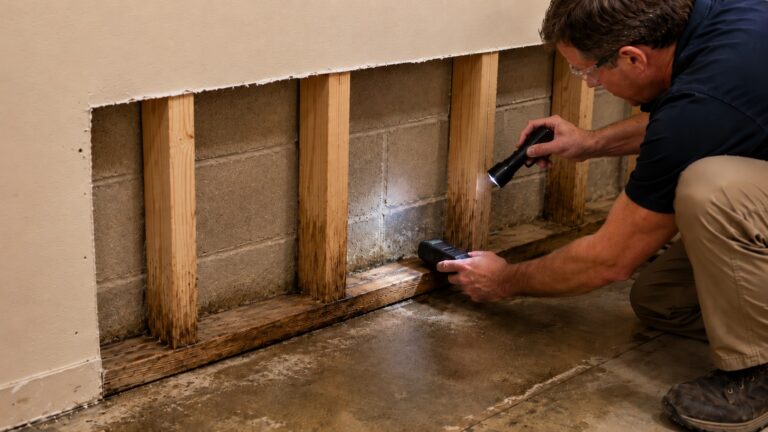
Framing moisture should be evaluated carefully because wood can look stained long after it has dried. A dark rafter is not always actively wet, but repeated dampness, softness, mold growth, or worsening stains are warning signs. The key is to identify whether moisture is still present and whether the source has been corrected.
Use signs of moisture damage in roof rafters for symptom recognition and how to detect moisture in roof framing for a more focused inspection path.
If damp framing has led to repeated staining or biological growth, use why roof framing develops mold problems and signs of mold growth in roof framing. For prevention and inspection, read how to prevent structural moisture in roof systems and how to inspect roof framing for moisture damage. If rafters stay damp or the damage appears long-term, use why roof rafters stay wet and signs of long-term roof moisture damage.
Why Long-Term Roof Moisture Is Different From a One-Time Leak
A small, quickly corrected leak does not have the same risk profile as recurring moisture. Roof systems can sometimes dry after a short event, especially if the attic is ventilated and absorbent materials were not soaked for long. Long-term or repeated moisture is different because the same areas get wet again before they fully dry.
Recurring roof moisture can lead to:
- persistent ceiling stains
- wet insulation that loses performance
- mold growth on sheathing or rafters
- soft decking
- failed roof repairs
- worsening attic odor
- structural wood deterioration
If the same stain returns after each storm, or if attic sheathing remains damp between weather events, the roof needs more than another surface patch. The source, pathway, and drying conditions all need to be addressed.
For recurring problems, use how to fix persistent roof leak problems. If the broader issue is recurring moisture after repairs, use why moisture problems keep returning.
When Roof Damage Becomes Structural
Roof damage becomes structural when the moisture affects the materials that support or stabilize the roof system. Surface wear, missing shingles, or loose flashing may be repair issues. Rotten decking, compromised rafters, sagging sections, wet framing, and long-term sheathing deterioration are more serious because they affect the roof assembly beneath the visible material.
Warning signs include:
- sagging roof lines
- soft decking
- rot around roof penetrations or valleys
- wet rafters or roof framing
- mold growth on structural wood
- ceiling areas that deform or remain damp
- repeated leaks despite repair attempts
Structural roof concerns should be handled carefully. Homeowners can document symptoms from the attic or ground, but walking on a weakened roof can be dangerous. If decking feels soft, the roof sags, or framing appears compromised, a qualified roofer or structural professional may be needed.
For a focused guide, use how to tell if roof damage is structural. For broader home-level structural moisture symptoms, use signs of structural moisture problems.
Installation Problems That Cause Early Roof Failure
Some roof failures are not caused by the roofing material itself. They come from how the material was installed. A high-quality shingle, metal panel, rubber membrane, tile, or slate roof can still fail early if the roof was nailed incorrectly, flashed poorly, layered over weak decking, ventilated badly, or installed without respecting the way water actually moves across the roof.
Incorrect Shingle Installation
Shingles need correct nailing, alignment, exposure, overlap, starter strips, edge details, and flashing integration. If any of those details are wrong, the roof may be more vulnerable to wind lift, water entry, premature wear, or repeated leaks.
Common shingle installation problems include:
- nails placed too high or too low
- overdriven or underdriven nails
- missing starter shingles at edges
- incorrect shingle exposure
- poor alignment that leaves weak overlap
- shingles installed over damaged decking
- incorrect layering around valleys or flashing
These problems may not show up immediately. The roof may look acceptable from the ground after installation, but wind, rain, heat, and repeated wetting can expose weak details over time. If the roof is newer but leaking, installation quality should be considered along with storm damage and flashing failure.
For a more focused checklist, use signs of improper roof shingle installation. For broader installation concerns, use signs a roof was installed incorrectly.
Poor Flashing Sequencing
Flashing has to be layered so water moves out and over the next material. If flashing is installed in the wrong order, buried behind the wrong layer, sealed instead of lapped, or forced into place after the roofing material is already installed, it may fail even if the metal itself is not damaged.
This is one reason caulk and roof cement are often poor substitutes for correct flashing. Sealants can help in limited situations, but they should not be used to replace missing water-shedding layers. When movement, sunlight, temperature changes, and water exposure break down the sealant, the leak often returns.
Poor flashing sequencing can affect:
- chimneys
- dormers
- sidewalls
- skylights
- roof-to-wall transitions
- valleys
- pipe and vent penetrations
If flashing has been patched repeatedly, or if a leak returns after every repair, the problem may be the flashing design rather than the visible crack that was sealed. Use most common roof installation mistakes for the broader failure pattern.
Too Many Roof Layers
Some homes have a second layer of shingles installed over an older layer. In limited cases, this may be allowed by local code and roof condition. But too many layers can hide decking damage, add weight, make flashing details harder to correct, and prevent installers from seeing problems beneath the old roof surface.
Multiple roof layers can create problems such as:
- hidden rotten decking
- uneven shingle surfaces
- weaker fastener hold
- poor flashing transitions
- harder leak diagnosis
- shorter service life for the top layer
If a roof has repeated leaks and more than one shingle layer, the hidden condition of the deck matters. A surface repair may not solve a problem that began below the top layer. For more detail, use how many layers of shingles are too many.
Poor Ventilation Planning
Roof installation and attic ventilation are connected. A new roof can still develop moisture problems if the attic cannot move air properly. Ventilation problems may come from blocked soffits, weak exhaust, mismatched intake and exhaust, insulation covering airflow paths, or vent products that do not perform well in the actual roof assembly.
Poor ventilation planning can contribute to:
- attic condensation
- wet roof sheathing
- mold on the underside of decking
- shortened shingle life
- ice-related moisture issues in cold climates
- recurring moisture after roof replacement
This is why replacing roofing material alone may not solve attic moisture. If the old roof failed partly because the attic stayed damp or overheated, the new roof may face the same stress unless ventilation and air movement are corrected.
For the ventilation side of this problem, use how to prevent moisture problems with proper roof ventilation.
Why Installation Quality Can Matter as Much as Material Quality
Homeowners often compare roof materials by lifespan, price, appearance, warranty, or brand. Those factors matter, but the installation can decide whether the material performs as expected. A durable product installed poorly may leak sooner than a less expensive product installed correctly.
Installation quality affects:
- how water is directed at edges and transitions
- whether fasteners hold properly
- whether flashing can shed water instead of trapping it
- whether roof penetrations remain sealed
- whether the attic can dry
- whether warranty coverage remains valid
If a roof failed earlier than expected, do not assume the material alone was bad. Weather exposure, roof slope, ventilation, workmanship, flashing, and maintenance may all be part of the failure. For a practical homeowner guide, use roof installation problems that lead to mold or hidden roofing problems most homeowners miss.
Neglect can turn small roof weaknesses into larger moisture problems. Use roofing mistakes homeowners should never ignore for practical warning signs, why cheap roofing materials fail early when material quality is part of the concern, and most overlooked roofing maintenance tasks for ongoing prevention.
Weather, Wind, Hail, and Storm Damage
Weather affects every roof, but not every storm leaves obvious damage. Wind can lift shingles, weaken seals, loosen flashing, or damage edges. Hail can bruise shingles, crack materials, dent metal, break tile, or create hidden weaknesses that leak later. Heavy rain can expose flashing errors, valley problems, and drainage failures that were not visible during dry weather.
Storm damage is also time-sensitive. A roof may not leak immediately after wind or hail, but damaged materials may become weaker over time. Hidden damage can shorten roof life, reduce water-shedding performance, or create leak paths during later storms.
How Weather Shortens Roof Lifespan
Roofing materials age faster when they face repeated stress. Sun exposure can dry and harden some materials. Heat can accelerate wear. Wind can loosen edges and fasteners. Rain can exploit small openings. Debris can trap moisture. Freeze-thaw cycles can widen cracks. Humid conditions can slow drying.
The same material may perform differently from one home to another because the roof environment is different. Slope, shade, tree cover, ventilation, attic heat, roof color, local climate, storm exposure, and maintenance all affect lifespan.
Weather-related aging often appears as:
- granule loss on shingles
- cracking or brittleness
- loose or lifted edges
- rust or coating wear on metal
- moss or algae holding moisture
- debris buildup in valleys
- sealant failure around roof details
For a focused discussion, use how weather affects roof lifespan.
How Hail Creates Hidden Leak Risk
Hail damage is not always a hole through the roof. On asphalt shingles, hail can bruise the surface, knock away granules, weaken the mat, or create impact marks that age faster than the surrounding material. On metal, hail may dent panels or damage coatings. On tile or slate, hail may crack individual pieces.
The risk is that damage may not leak right away. A weakened area can become more vulnerable to later rain, wind, sunlight, and freeze-thaw movement. Over time, a small impact area may become a leak path.
Possible hail-related warning signs include:
- random impact marks on shingles
- fresh granules in gutters after a storm
- dented metal vents, gutters, or flashing
- cracked tile or slate
- new ceiling stains after later rain
- visible damage on soft metals around the roof
If hail is a concern, use signs of hail damage on roofs and how to inspect a roof for hail damage. If the damage is not obvious but leaks begin later, use hidden hail damage that causes roof leaks; for the moisture pathway after impact damage, read how hail damage leads to roof moisture problems.
How Wind Weakens Roof Seals
Wind damage can be obvious when shingles are missing, but it can also be subtle. Shingles may lift and reseal poorly. Edges may loosen. Fasteners may be stressed. Flashing may pull away. Wind-driven rain can push water into areas that do not leak during ordinary rain.
Wind-related failure is more likely around:
- roof edges
- ridges
- hips
- loose shingle tabs
- poorly nailed shingles
- older brittle materials
- roof slopes exposed to prevailing storms
After strong winds, the roof may need inspection even if no water is dripping indoors. A lifted shingle, weakened seal, or damaged edge can become a leak later. Use signs of wind damage on roofs, how to inspect roof shingles after high winds, and how wind damage weakens roof seals. If leaks develop later without obvious damage from the ground, read hidden wind damage that leads to roof leaks.
When Storm Damage Changes the Repair vs Replacement Decision
Storm damage may be repairable when it is isolated. A few missing shingles, one cracked pipe boot, or limited flashing damage may not require a full roof replacement if the surrounding roof is healthy. But widespread hail impact, large areas of lifted shingles, repeated storm-related leaks, damaged decking, or an older roof near the end of its life can shift the decision toward replacement.
The repair-vs-replacement decision after storm damage depends on:
- how widespread the damage is
- the age of the roof
- whether the roof was already deteriorating
- whether decking or underlayment was affected
- whether materials can still hold a repair
- whether leaks have already reached the attic or ceiling
- whether matching materials are available
If the roof was already old or brittle, storm damage may expose a condition that patching cannot solve well. Use repair vs replace a roof after storm damage, when hail damage requires roof replacement, or when wind damage requires roof replacement.
Repair, Replacement, and Contractor Decision Points
Roofing decisions become expensive because the visible problem is not always the whole problem. A small leak may need only a targeted repair. A repeated leak may point to a failed detail. A widespread material failure may justify replacement. A roof with soft decking may need structural correction before new material is installed.
The goal is to avoid two opposite mistakes: replacing a roof that could have been repaired, or repeatedly patching a roof that has already reached the point where repairs are poor value.
When a Roof Repair May Be Enough
A roof repair may be enough when the failure is localized, the roof is otherwise in good condition, and the source is clear. Examples include a cracked pipe boot, a small flashing issue, a limited section of missing shingles, a localized valley problem, or minor storm damage on a roof that still has useful life left.
Repair is more likely to make sense when:
- the roof is not near the end of its expected life
- there is only one leak location
- the surrounding material is still flexible and serviceable
- decking is not soft or rotten
- the leak source can be identified
- the repair corrects the water pathway, not just the stain
Targeted repairs should fix the failed part of the system. That may mean replacing a boot, correcting flashing, repairing a valley, replacing damaged shingles, or fixing a roof penetration. Simply sealing the most visible crack may not work if the actual water path is above or behind it.
For more detail, use should you repair or replace roof leak damage.
When Repeated Repair Is a Warning Sign
If the same roof area keeps leaking after repairs, the problem may not be the visible surface defect. The repair may have missed the source, the flashing may be wrong, the decking may be damaged, or the roof may be too worn to hold a lasting fix. Repeated repair is especially concerning when stains return after every storm or when moisture keeps appearing in the attic.
Repeated repair failure can happen when:
- roof cement was used instead of proper flashing repair
- old shingles are too brittle to reseal well
- decking beneath the repair is soft
- water is entering above the repaired area
- ventilation or condensation was mistaken for a roof leak
- multiple roof layers are hiding the true problem
- storm damage is more widespread than first assumed
Recurring leaks should be treated as a pattern, not as a random event. For this specific issue, use roof repairs that fail most often and how to fix persistent roof leak problems.
When Replacement May Be the Better Long-Term Choice
Replacement may be the better choice when roof failure is widespread, when materials are near the end of their life, when repairs keep failing, or when roof decking and hidden components need access. A new roof is not automatically the answer, but it becomes more reasonable when patching no longer addresses the system-level problem.
Replacement becomes more likely when:
- many areas of the roof are deteriorating
- the roof has several active or recurring leak points
- shingles are brittle, curled, cracked, or missing across large sections
- metal roof fasteners or seams are failing widely
- rubber roof seams, edges, or drainage areas are failing repeatedly
- tile, slate, or cedar repairs no longer address the underlying assembly
- decking replacement is needed in multiple areas
- storm damage affects enough of the roof to make isolated repair unreliable
Replacement also gives the contractor access to hidden parts of the roof system. That can matter when underlayment, decking, flashing, ventilation, or previous installation errors need to be corrected at the same time.
For the broader decision, use how to decide whether to repair or replace a roof. For cost-value judgment, use when roof repairs are worth the cost and when roof replacement saves money long-term.
Material also affects the repair decision. Use when to repair vs replace an asphalt shingle roof, when to repair vs replace a metal roof, when to repair vs replace a slate roof, or when to repair vs replace a tile roof when the roofing type changes what repair can realistically accomplish.
When to Call a Roofing Contractor
Homeowners can often identify warning signs from the ground, from inside the home, or from the attic. But roof walking, steep slopes, storm damage, soft decking, structural concerns, and complex flashing repairs are not safe or reliable DIY situations for most people.
Call a roofing contractor when:
- there is an active leak during or after rain
- ceiling stains keep returning
- attic sheathing or rafters are wet
- roof decking appears soft or rotten
- flashing around chimneys, walls, or skylights is failing
- hail or wind damage may be present
- the roof is old and multiple areas are deteriorating
- temporary repairs have failed
- you are deciding between repair and replacement
A good contractor should identify the source of the failure, explain whether the issue is material, flashing, ventilation, decking, storm damage, or installation-related, and clarify whether the proposed work is a repair or a replacement strategy. For help with that process, use when to hire a roofing contractor for moisture problems and how to choose a roofing contractor for leak repairs. If cost is your main concern, use how much roof leak repair costs.
Choosing Roofing Materials That Resist Moisture Problems
Roofing material choice affects moisture risk, but it does not work alone. A durable material can still leak if it is installed poorly, flashed incorrectly, ventilated badly, or matched to the wrong roof slope. A lower-cost material can perform well when the roof design, installation, ventilation, drainage, and maintenance are handled correctly.
The best roofing material for a home depends on more than expected lifespan. Climate, roof pitch, tree cover, attic ventilation, storm exposure, maintenance needs, contractor skill, and warranty terms all affect how the roof performs over time.
Match the Material to Climate, Slope, and Exposure
A roof in a rainy climate has different demands than a roof in a dry climate. A shaded roof under heavy tree cover has different risks than a roof with full sun exposure. A low-slope roof needs different detailing than a steep roof. A coastal, humid, storm-prone, or high-wind region may also change the best material choice.
When choosing roofing material, consider:
- how quickly the roof sheds water
- whether the material suits the roof slope
- how well the material handles repeated wetting
- whether the roof can dry after rain
- how much maintenance the material requires
- how exposed the roof is to wind, hail, sun, or falling debris
- whether qualified local contractors install that material well
For example, a low-slope section may need a membrane system instead of standard shingles. A heavily shaded cedar shake roof may hold moisture longer than one with better sun and airflow. A metal roof can shed water well, but fastener, seam, and flashing details matter. A tile or slate roof may last a long time, but the underlayment and flashing beneath it still need attention.
If you are comparing options, use how to choose the right roofing material for your home. For a broader starting point, use types of roofing materials explained.
Wet Climates vs High-Humidity Climates
Wet climates and high-humidity climates are related, but they are not the same roofing problem. Wet climates put more rain, storms, and water-shedding demand on the roof. High-humidity climates can slow drying, increase condensation risk, and make ventilation more important.
In wet climates, the main concern is how well the roof handles bulk water. Valleys, flashing, penetrations, slope, drainage, underlayment, and wind-driven rain matter. Materials and details need to move water off the roof quickly and keep water from backing into vulnerable transitions.
In high-humidity climates, the roof also needs to dry well. Attic ventilation, mold resistance, material moisture retention, and airflow around the roof assembly become more important. A roof may not be actively leaking and still have moisture problems if humid air, poor ventilation, or slow drying keeps sheathing or framing damp.
For rain-heavy areas, use best roofing materials for wet climates. For humid regions where condensation and drying potential are major concerns, use best roofing materials for high humidity.
Why Brand, Warranty, and Workmanship Matter
Roofing material quality matters, but the brand name alone does not guarantee performance. Different product lines from the same manufacturer may have different durability, wind ratings, impact ratings, warranty terms, installation requirements, and climate suitability. The contractor’s workmanship can be just as important as the product itself.
When comparing roofing brands or product lines, look at:
- material thickness and durability
- wind and impact resistance where relevant
- manufacturer warranty terms
- workmanship warranty from the contractor
- installation requirements
- ventilation requirements
- history of common problems or complaints
- availability of matching repair materials later
If you are comparing asphalt shingle brands, use best asphalt shingle brands compared. For durability-focused comparisons, use most durable roofing shingle brands or roofing brands that last the longest. If you are researching known weaknesses, use common roofing brand problems.
For specific brand comparisons, use TAMKO vs Owens Corning shingles, TAMKO vs CertainTeed shingles, or TAMKO vs GAF shingles.
Warranties, Product Help, and Temporary Repairs
Roofing warranties and temporary repair products can both be useful, but neither should be misunderstood. A warranty does not automatically cover every leak. A tube of sealant or roll of flashing tape does not permanently fix every roof failure. Both have a place, but they need to be used with realistic expectations.
Why Roofing Warranties Matter but Do Not Solve Every Roof Failure
A roofing warranty can help protect against certain material defects or workmanship problems, but coverage depends on the details. Material warranties, workmanship warranties, extended warranties, prorated coverage, ventilation requirements, storm exclusions, installation rules, and transfer terms can all affect what is actually covered.
Many roof failures are not simple product defects. A leak may come from poor installation, storm damage, blocked ventilation, improper repairs, neglected maintenance, or flashing work that falls under workmanship rather than material coverage. That means homeowners should not assume that a long warranty automatically means a leak will be covered.
Before choosing a roof or filing a claim, understand:
- who provides the warranty
- whether it covers materials, labor, or both
- whether coverage is prorated over time
- what installation requirements must be met
- whether ventilation issues can void coverage
- how storm damage is handled
- whether the warranty transfers to a new owner
For the full warranty framework, use how roofing warranties work. If you want to understand coverage limits, use what roofing warranties actually cover. When comparing roof bids, use how to compare roofing warranties.
When Temporary Roof Repair Products May Help
Temporary repair products can help in limited situations, especially when the goal is to reduce water entry until a proper repair can be made. Roof sealants, flashing tape, butyl tape, roof patch products, emergency repair kits, and roofing tar products may be useful for small, accessible, short-term leak-control situations.
Temporary products may help when:
- a small leak needs short-term control before a roofer arrives
- a minor flashing gap needs emergency sealing
- a small puncture or crack needs a temporary patch
- weather prevents immediate permanent repair
- the product is compatible with the roof material
But temporary repair products are not a substitute for correcting failed flashing, replacing rotten decking, fixing poor installation, replacing brittle shingles, or resolving ventilation-related condensation. If a repair product covers the symptom but not the water path, the leak may return.
For product-specific help, use best roof leak repair kits, best roof sealants for emergency repairs, best roof flashing repair tape, or best roof patch products for small leaks.
When Sealants, Tapes, and Patches Are Not Enough
Sealants, tapes, and patches are most limited when the failure is structural, widespread, moving, or hidden. A roof detail that expands and contracts may break a simple seal. Rotten decking cannot be fixed from the surface. A cracked pipe boot may need replacement, not coating. A failed valley may need proper reconstruction, not another layer of tar.
Do not rely on temporary products alone when:
- the roof has repeated leaks in the same area
- decking is soft or rotten
- flashing was installed incorrectly
- shingles are brittle or failing across a large area
- the roof is near the end of its service life
- storm damage is widespread
- condensation is the real moisture source
- water is entering behind siding, walls, or chimney details
If you need repair materials for limited situations, compare best butyl tape for roof repairs, best roofing caulks for leak prevention, best roofing tar products for small repairs, and best self-adhesive roof flashing. For homeowner-safe tools, use best roof repair tools for homeowners.
How to Use This Roofing Hub
Use the sections below to move from the symptom you see to the detailed guide that fits the problem.
If You See Interior Moisture Signs
If the first sign is a ceiling stain, damp insulation, attic odor, or moisture on roof framing, start by identifying whether the moisture follows rain, condensation patterns, or a specific roof detail. For interior symptoms related to roof leaks, use signs of water damage from roof leaks. If the issue may be hidden above the ceiling or inside the attic, use how to find hidden moisture in different areas of your home.
If Your Roof Is Old
If the roof is aging but not clearly leaking, focus on material lifespan, wear patterns, and replacement signs. Use the material-specific lifespan articles, then compare them with signs a roof needs replacement and how roof age affects leak risk.
If the Leak Keeps Returning
If the same leak returns after patching, the problem may be failed flashing, poor installation, hidden decking damage, condensation, or a missed water pathway. Use how to fix persistent roof leak problems and roof repairs that fail most often. If this fits a broader pattern across the home, use why moisture problems keep returning.
If You Are Comparing Roofing Materials
If your main goal is choosing a new roof, start with types of roofing materials explained and how to choose the right roofing material for your home. Then use the comparison articles for your specific decision, such as metal vs asphalt, slate vs asphalt, cedar shake vs asphalt, tile vs asphalt, or architectural shingles vs 3-tab shingles.
If Storm Damage May Be Involved
If the concern started after hail, wind, or severe weather, look for both obvious and hidden damage. Hail may bruise or weaken materials without creating an immediate leak. Wind may lift shingles or weaken seals before water enters. Use signs of hail damage on roofs, signs of wind damage on roofs, and repair vs replace a roof after storm damage.
If You Are Deciding Between Repair and Replacement
If you are weighing repair against replacement, focus on age, material condition, leak history, storm damage, decking, and whether past repairs have held. A localized problem on a younger roof may justify repair. Widespread deterioration, soft decking, repeated leaks, or end-of-life materials may point toward replacement.
Use how to decide whether to repair or replace a roof, when roof repairs are worth the cost, and when roof replacement saves money long-term.
Frequently Asked Questions About Roofing Material Failures
What roofing material fails most often?
Asphalt shingles are often discussed most because they are common, not because every asphalt roof is poor. They can fail through granule loss, cracking, curling, wind damage, poor installation, and age. Other materials fail differently: metal roofs often fail at fasteners or seams, rubber roofs at seams or drainage points, cedar shakes through splitting or rot, and slate or tile through broken pieces or aging underlayment.
Can a roof leak even if the shingles look normal?
Yes. The leak may come from flashing, valleys, pipe boots, skylights, roof penetrations, roof-wall intersections, or hidden decking problems. The main shingle field can look acceptable while a detail area is allowing water into the attic or ceiling system.
Is roof condensation the same as a roof leak?
No. A roof leak means water is entering from outside. Roof condensation forms when moist indoor air reaches cold roof sheathing and turns into liquid water or frost. Both can wet attic materials, but the repair path is different.
When does roof damage become structural?
Roof damage becomes structural when moisture affects decking, rafters, framing, or other support materials. Warning signs include soft decking, sagging roof areas, wet rafters, mold on roof framing, repeated leaks, or deterioration beneath the visible roofing material.
Should an old roof be repaired or replaced?
It depends on age, material condition, leak history, decking condition, storm damage, and how widespread the failure is. A small isolated problem on an otherwise healthy roof may be repairable. Widespread deterioration, repeated leaks, brittle materials, or rotten decking may make replacement the better long-term option.
Do roofing warranties cover leaks?
Some warranties may cover certain leaks, but coverage depends on the type of warranty, the cause of the leak, installation requirements, exclusions, ventilation conditions, and whether the issue is a material defect or workmanship problem. Always read the actual warranty terms instead of assuming all leaks are covered.
Can roof sealant permanently fix a leak?
Sometimes sealant can help with limited, compatible, minor repairs, but it should not be treated as a permanent fix for failed flashing, rotten decking, widespread material failure, poor installation, or recurring leaks. If the water pathway is not corrected, the leak can return.
What is the first sign of roofing material failure?
The first sign depends on the material. Asphalt shingles may show granule loss, curling, cracking, or lifted tabs. Metal roofs may show loose fasteners, rust, or seam problems. Rubber roofs may show seam separation or ponding water. Cedar may split or rot. Slate and tile may crack, slip, or expose aging underlayment. Interior moisture signs, such as attic stains or ceiling marks, may appear after the exterior failure has already started.
Final Thoughts
Roofing material failure is easiest to understand when the roof is treated as a system. The visible roof covering matters, but so do flashing, valleys, penetrations, ventilation, decking, rafters, installation quality, weather exposure, and repair history.
Match the next step to the pattern. An old roof may need lifespan and replacement guidance. Interior moisture calls for roof leak and attic moisture diagnosis. Recurring leaks point toward failed repairs, poor flashing, condensation, or hidden structural damage. A new roof decision should compare material type, climate fit, warranty, brand, and contractor workmanship.
A roof does not have to be perfect to protect the home, but it does need to shed water, drain at details, dry between wetting cycles, and protect the structure beneath it. When one of those functions breaks down, roofing material failure can quickly become a moisture problem.
2 Comments
Comments are closed.