How to Compare Roofing Warranties
Roofing warranties can be difficult to compare because the strongest-sounding warranty is not always the strongest protection. One contractor may advertise a lifetime shingle warranty. Another may offer a long workmanship warranty. A third may include an enhanced manufacturer-backed system warranty. On the surface, all three offers may sound excellent, but they may protect the homeowner in very different ways.
The mistake many homeowners make is comparing only the headline warranty length. A 50-year or lifetime warranty may still have exclusions, prorated coverage, limited labor protection, transfer restrictions, and installation requirements. A shorter warranty may be clearer, easier to use, and backed by a more reliable contractor.
The best way to compare roofing warranties is to break each offer into practical parts: who provides the warranty, what it covers, how long the strongest coverage lasts, whether labor, tear-off, and disposal are included, what conditions can weaken coverage, and who handles the claim if something goes wrong.
If you need the basic structure first, review how roofing warranties work. If you are trying to understand specific coverage limits, review what roofing warranties actually cover. This guide focuses on comparing warranty offers before you sign a roofing contract.
Why Roofing Warranties Are Hard to Compare
Roofing warranties are hard to compare because they use similar words to describe different levels of protection. “Lifetime,” “limited,” “enhanced,” “system,” “workmanship,” “manufacturer-backed,” and “transferable” can all sound strong, but each word depends on the written warranty terms.
One warranty may cover only the roofing material. Another may include labor during an early protection period. Another may require a complete roof system installed by a certified contractor. Another may sound long but become prorated after a shorter period, leaving the homeowner with only partial material coverage later.
Another complication is that roof failures do not all come from the same cause. A roof may fail because of a material defect, bad flashing, incorrect fastening, poor ventilation, storm damage, improper maintenance, or a later roof penetration. A warranty that is strong for one cause may be weak for another.
The goal is not to find the longest warranty on paper. The goal is to find the warranty package that gives the best realistic protection for the roof being installed, the contractor doing the work, the climate the home faces, and the homeowner’s long-term plans for the property.
Roof warranties should also be compared alongside common roofing material failures. A warranty matters most when it supports real performance risks, not just sales language.
Start by Separating Manufacturer and Workmanship Warranties
The first comparison step is to separate the manufacturer warranty from the contractor workmanship warranty. These two warranties protect against different problems, so they should not be treated as one combined promise unless the written warranty clearly says so.
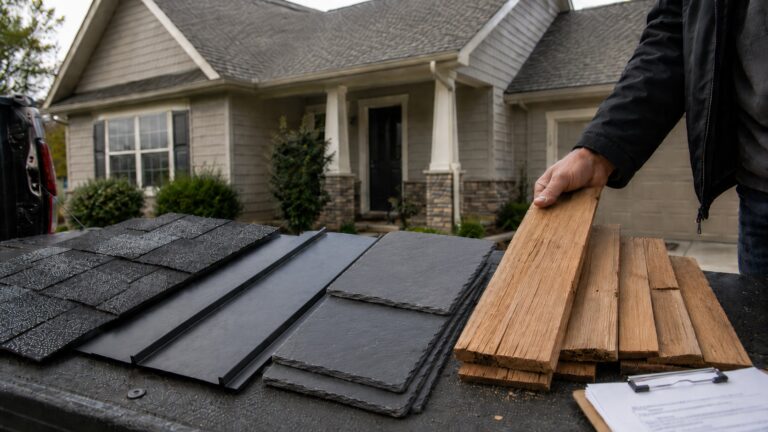
A manufacturer warranty is tied to the roofing product. It may cover qualifying defects in shingles, panels, tiles, or other roofing materials. The manufacturer may provide replacement materials, partial credit, or other remedies if the product fails in a way covered by the warranty.
A workmanship warranty is tied to the installation. It is usually provided by the roofing contractor and may cover certain labor mistakes, installation defects, or leak problems caused by the contractor’s work. This matters because many roof leaks are not caused by defective materials. They are caused by installation details.
When comparing estimates, list these two warranty types separately:
- Manufacturer material warranty
- Contractor workmanship warranty
- Enhanced or system warranty, if included
- Any separate wind, algae, accessory, or leak-related coverage
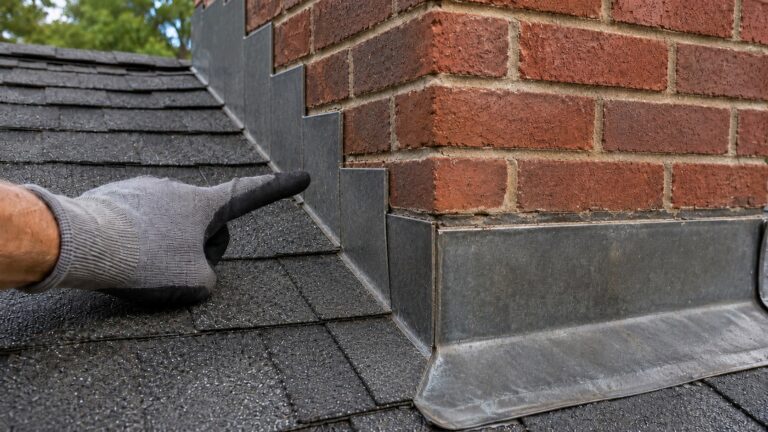
Do not let a long manufacturer warranty distract you from a weak workmanship warranty. A roof can have durable shingles and still leak if the contractor handles valleys, flashing, penetrations, or underlayment poorly. Installation quality is one reason homeowners should understand common roof installation mistakes before comparing warranty promises.
Also avoid the opposite mistake. A contractor’s long workmanship warranty does not replace a good manufacturer warranty if the roofing material itself fails early. Strong warranty protection usually means both layers are clear: the material warranty and the workmanship warranty.
Compare the Non-Prorated Period, Not Just the Headline Length
The headline warranty length is often the least useful number in the comparison. A warranty may advertise 30 years, 50 years, or lifetime protection, but the strongest coverage may apply only during the non-prorated period.
A non-prorated period is the early part of the warranty when coverage is usually strongest. Depending on the warranty, this may include better material replacement terms and sometimes labor coverage for qualifying problems. Once the warranty becomes prorated, coverage may reduce over time. The homeowner may receive only partial material value based on the age of the roof.
This is why two “lifetime” warranties may not be equal. One may offer a longer non-prorated period, stronger labor protection, or better system coverage. Another may shift to reduced coverage earlier. If you only compare the word “lifetime,” you miss the part that affects real cost protection.
When comparing warranties, ask each contractor:
- How long is the non-prorated period?
- What happens after that period ends?
- Does coverage reduce each year?
- Does the reduced coverage apply only to materials?
- Are labor, tear-off, or disposal included during the strongest period?
The better warranty is often the one with the clearest and strongest early protection, especially during the years when manufacturing defects or installation problems are most likely to become obvious.
Check Whether Labor, Tear-Off, and Disposal Are Included
After comparing the non-prorated period, the next step is to compare what costs the warranty may actually pay for. A warranty that covers only replacement materials is very different from a warranty that may include labor, tear-off, and disposal for qualifying problems.
This distinction matters because materials are only part of the real cost of a roof repair or replacement. If defective shingles need to be removed, the homeowner may also face labor costs, underlayment work, flashing adjustments, disposal fees, and cleanup. A materials-only warranty may leave the homeowner paying much of the real project cost even if the claim is approved.
When reviewing each warranty, look for these cost categories:
- Replacement roofing materials
- Labor to remove defective materials
- Labor to install replacement materials
- Tear-off costs
- Disposal costs
- Flashing, accessories, or roof system components
- Interior damage or moisture-related repairs
Do not assume these items are included because the warranty sounds strong. Some warranties include labor only during a specific early period. Others may include materials but exclude tear-off and disposal. Some enhanced warranties may provide broader cost protection, but only if the roof meets the warranty requirements.
This is especially important for homeowners trying to protect against leak-related moisture damage. A warranty may help replace a roofing product, but that does not automatically mean it pays for stained drywall, wet insulation, attic moisture, mold concerns, or temporary protection while a claim is being reviewed. Roofing warranty protection should be part of a broader plan for long-term moisture protection for the home, not the only safeguard.
Compare Standard Warranties vs Enhanced System Warranties
Many roofing estimates include a standard manufacturer warranty. Some contractors may also offer enhanced or system-level warranties. These upgraded warranties can be valuable, but they are not automatically better in every situation. They must be compared based on what they add and what they require.
A standard warranty usually applies to the roofing product itself. It may protect against qualifying manufacturing defects under the manufacturer’s terms. An enhanced system warranty may provide stronger protection when the roof is installed as a complete system using approved components. It may also require a contractor with specific manufacturer certification.
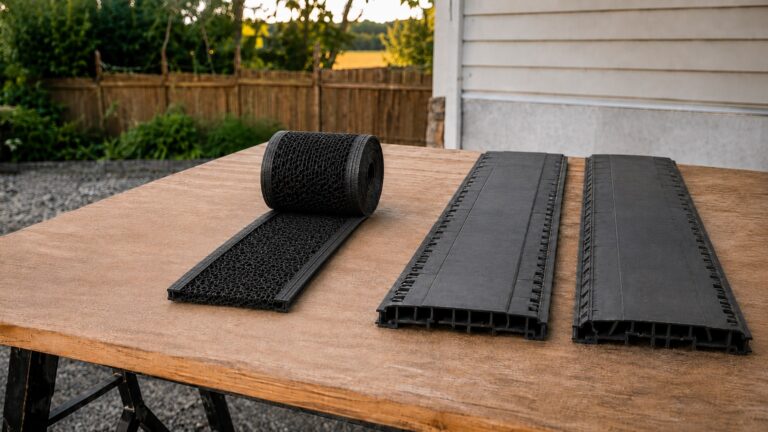
System warranties exist because a roof is more than shingles. A complete roof assembly may include underlayment, starter strips, ridge caps, ventilation, drip edge, ice and water protection, and other approved components. When these parts are installed together according to manufacturer requirements, the manufacturer may be willing to offer stronger warranty protection.
When comparing standard and enhanced warranties, ask:
- What extra coverage does the enhanced warranty provide?
- Does it extend the non-prorated period?
- Does it add labor coverage?
- Does it cover more roof system components?
- Does it require specific products from the same manufacturer?
- Does it require a certified contractor?
- Does it require registration after installation?
- What happens if one required component is not installed?
An enhanced warranty may be worth considering when the roof replacement is a major investment, the homeowner plans to stay in the house, the contractor is qualified to offer it, and the written coverage adds meaningful protection. But it should not be accepted blindly. If the upgraded warranty mostly repeats the basic warranty or adds requirements without much practical benefit, the homeowner should ask for clarification.
Warranty comparison should also support material selection. A strong warranty does not automatically make a material the best choice for the home. Climate, roof slope, ventilation, wind exposure, and moisture risk still matter when homeowners choose roofing shingles.
Look Closely at Contractor Workmanship Coverage
The workmanship warranty may be the most important warranty when comparing roofing contractors. That is because many roof problems come from installation details, not defective materials. A contractor who installs the roof poorly can create leaks even when the shingles or panels are high quality.
Compare workmanship warranties by more than length. A long workmanship warranty is helpful only if it is written clearly and backed by a contractor who will respond when there is a problem. A vague lifetime workmanship promise may be less useful than a shorter warranty with clear terms, a stable company, and a strong service reputation.
When comparing workmanship coverage, ask:
- How long does the workmanship warranty last?
- Is it written into the contract?
- What installation problems are included?
- What problems are excluded?
- Does it include leak calls during the warranty period?
- Does it cover labor to correct installation defects?
- Does it cover interior damage caused by workmanship errors?
- Who performs warranty service if the original crew is unavailable?
- Is the warranty transferable if the home is sold?
The contractor’s ability to honor the warranty matters. A workmanship warranty is not just paper. It depends on communication, documentation, company stability, and willingness to stand behind the work. If the contractor avoids direct answers about warranty service, that should affect your decision.
Ask for the workmanship warranty in writing before signing, not after the roof is installed. A verbal promise is difficult to compare and even harder to rely on if the contractor later changes staff, closes, or disputes what was said.
It also helps to compare the contractor’s warranty with the risk areas on your roof. A simple roof with few penetrations is different from a complex roof with valleys, skylights, chimneys, dormers, and multiple roof-to-wall transitions. Complex roofs place more pressure on workmanship quality.
If you are choosing between contractors, warranty language should be reviewed alongside references, licensing, insurance, installation details, cleanup practices, and leak response. Homeowners who are already focused on leak risk should also learn how to choose a roofing contractor for leak repairs instead of relying only on warranty length.
Compare Transfer Rules Before You Sell the Home
Transferability can make a roofing warranty more valuable, especially if you may sell the home before the roof reaches the end of its expected life. A transferable warranty can help reassure a future buyer that the roof still has some protection. But transfer rules are often limited, so they should be compared carefully.
Some warranties transfer automatically. Others require written notice, a transfer fee, a deadline after the home sale, or specific paperwork. Some warranties transfer only once. Some transfer with reduced coverage. Some enhanced warranty benefits may change after transfer, even if the basic material warranty continues.
When comparing roofing warranties, ask:
- Is the warranty transferable?
- How many times can it transfer?
- Does transfer require registration or written notice?
- Is there a deadline after the home sale?
- Is there a transfer fee?
- Does coverage reduce after transfer?
- Does the workmanship warranty transfer, or only the manufacturer warranty?
This matters because a warranty that looks strong for the original owner may be less valuable to a future buyer. If you plan to sell the home within the next few years, a clear transferable warranty may deserve more weight in your decision than it would for a homeowner planning to stay long term.
Check the Exclusions That Could Matter Most
Warranty exclusions are easy to ignore when everything is new, but they become important when there is a leak, defect, or dispute. A good comparison should look at the exclusions most likely to affect real roof problems.
Start with installation exclusions. If the manufacturer excludes improper application, incorrect fastening, missing components, or failure to follow installation instructions, then the contractor’s workmanship warranty becomes more important. The manufacturer may not be responsible for problems caused by the installer.
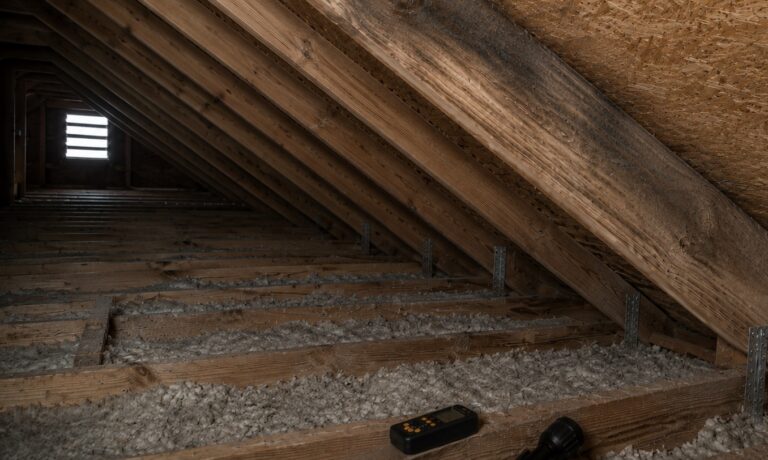
Next, compare ventilation requirements. Many roof systems depend on proper attic ventilation to manage heat and moisture. If the attic has poor airflow, trapped moisture, or excessive heat buildup, the roof may deteriorate faster or develop moisture problems. The warranty may not protect the homeowner if the roof system was installed without meeting ventilation requirements.
Storm and impact exclusions also matter. A warranty may not cover hail, falling branches, flying debris, severe weather, or wind events outside the written terms. If you live in a high-wind or hail-prone area, ask how wind coverage works and whether impact damage is excluded.
Also compare exclusions for algae, moss, foot traffic, ponding water, structural movement, roof deck problems, unauthorized repairs, and later roof penetrations. These details may seem minor, but they can decide whether a claim is approved.
The goal is not to find a warranty with no exclusions. Every warranty has limits. The goal is to identify which exclusions are most relevant to your roof. A steep, simple roof in a mild climate has different risks than a low-slope roof, a complex roof with multiple penetrations, or a home with known attic ventilation problems.
Use a Side-by-Side Roofing Warranty Comparison Checklist
The easiest way to compare roofing warranties is to put the details side by side. Do not compare warranties from memory or from sales language. Ask each contractor for the written warranty documents and fill out the same comparison points for every quote.
Use this checklist when reviewing each warranty:
- Manufacturer: Which company provides the product warranty?
- Product line: Which exact shingles, panels, or roofing materials are being installed?
- Warranty type: Is it basic, enhanced, system-level, or contractor-backed?
- Headline length: What total warranty duration is advertised?
- Non-prorated period: How long does the strongest coverage last?
- Prorated period: When does reduced coverage begin?
- Material coverage: Are replacement materials included for qualifying defects?
- Labor coverage: Is labor included, and for how long?
- Tear-off: Does the warranty pay to remove defective materials?
- Disposal: Are disposal costs included?
- System components: Are underlayment, starter strips, ridge caps, drip edge, flashing accessories, or other required components included?
- Workmanship: What does the contractor warranty cover?
- Transferability: Can the warranty transfer to a new owner?
- Registration: Does the warranty need to be registered after installation?
- Exclusions: What conditions could weaken or void coverage?
- Claim process: Who handles the claim if a problem appears?
After completing the checklist, compare the warranties based on real protection instead of marketing phrases. A warranty with a shorter headline length may be stronger if it has a longer non-prorated period, clearer workmanship support, better labor coverage, fewer relevant exclusions, and a contractor who explains the claim process clearly.
Warranty comparison is also a good time to evaluate the roofing material itself. If two quotes include different shingle lines or manufacturers, compare durability, climate suitability, and long-term performance as well. Brand-level resources such as best asphalt shingle brands compared and most durable roofing shingle brands can help with product research, but the warranty should still be read on its own written terms.
When a Shorter Roofing Warranty May Be the Better Choice
A shorter roofing warranty may be the better choice when the terms are clearer, the contractor is stronger, and the actual protection is more relevant to the home. Warranty length should not outweigh installation quality, material suitability, or contractor trustworthiness.
For example, one contractor may offer a very long warranty but avoid explaining exclusions, labor coverage, or claim handling. Another contractor may offer a shorter workmanship warranty but provide a clear written document, better installation details, stronger references, manufacturer certification, and a more careful roof assessment. The second offer may be the safer choice even if the warranty sounds less dramatic.
A shorter warranty may also be acceptable when the roof system is simple, the material is appropriate for the climate, the contractor has an excellent track record, and the homeowner receives clear documentation. On the other hand, a complex roof, premium material, or high-risk climate may justify stronger warranty protection if the terms are meaningful.
Do not choose a roofing warranty in isolation. Compare it with the contractor’s installation plan, roof ventilation approach, flashing details, underlayment choices, material quality, and service reputation. A warranty helps after something goes wrong. Good planning reduces the chance that something goes wrong in the first place.
FAQ About Comparing Roofing Warranty Offers
Is the longest roofing warranty always the best?
No. The longest warranty is not always the strongest warranty. A long warranty may become prorated quickly, exclude labor, exclude tear-off, or provide only limited material coverage. Compare the non-prorated period, labor terms, workmanship warranty, exclusions, and claim process before judging the warranty by length.
Should I compare manufacturer warranties or workmanship warranties first?
Compare both, but separate them. The manufacturer warranty usually applies to product defects. The workmanship warranty applies to installation-related problems. Since many roof leaks come from installation details, a strong workmanship warranty can be just as important as a strong manufacturer warranty.
Is an enhanced roofing warranty worth paying for?
It can be, but only if the enhanced warranty adds meaningful protection. Look for a longer non-prorated period, labor coverage, system component coverage, and clear claim support. Also confirm that the contractor is qualified to offer it and that the roof will be installed with all required components.
What warranty terms matter most when comparing roof quotes?
The most important terms are the non-prorated period, labor coverage, tear-off and disposal coverage, workmanship warranty length, transferability, registration requirements, exclusions, and who handles claims. These details usually matter more than the headline warranty length.
Can two contractors offer different warranties for the same shingles?
Yes. Two contractors may install the same shingles but offer different workmanship warranties or different manufacturer-backed warranty levels. Contractor certification, required system components, accessory products, installation documentation, and registration can all affect the warranty package available for the same roofing material.
Should I choose a roofer based only on warranty length?
No. Warranty length should be only one part of the decision. Also compare installation details, contractor reputation, communication, licensing, insurance, ventilation planning, flashing methods, written scope, and service response. A long warranty cannot make up for poor workmanship.
How to Choose the Stronger Roofing Warranty
The stronger roofing warranty is the one that gives clearer real-world protection, not the one with the biggest number on the sales sheet. Compare what is covered, how long the strongest protection lasts, whether labor and tear-off are included, and who is responsible for service if a problem appears.
Start by separating manufacturer coverage from contractor workmanship coverage. Then compare the non-prorated period, prorated terms, labor, tear-off, disposal, transferability, exclusions, registration rules, and claim process. Once those details are clear, the stronger offer is usually easier to identify.
A strong warranty should support a good roofing decision, not replace one. Choose materials that fit the home, choose a contractor who installs them properly, and choose warranty terms that are specific enough to be useful if a problem appears later.
Key Takeaways
- Roofing warranties should be compared by actual claim protection, not headline length.
- Manufacturer warranties and contractor workmanship warranties cover different types of problems.
- The non-prorated period is often more important than the total advertised warranty length.
- Labor, tear-off, disposal, and system-component coverage can make a major difference in real claim value.
- Enhanced warranties may be useful, but only if the roof qualifies, the paperwork is completed, and the added protection is meaningful.
- Contractor workmanship coverage should be written, specific, and backed by a reliable company.
- Transfer rules matter if you may sell the home before the roof reaches the end of its expected life.
- Exclusions for installation, ventilation, storm damage, maintenance, and later roof penetrations should be reviewed before signing.
- A shorter, clearer warranty from a better contractor may be safer than a longer but vague warranty.