
How to Decide Whether to Repair or Replace Siding
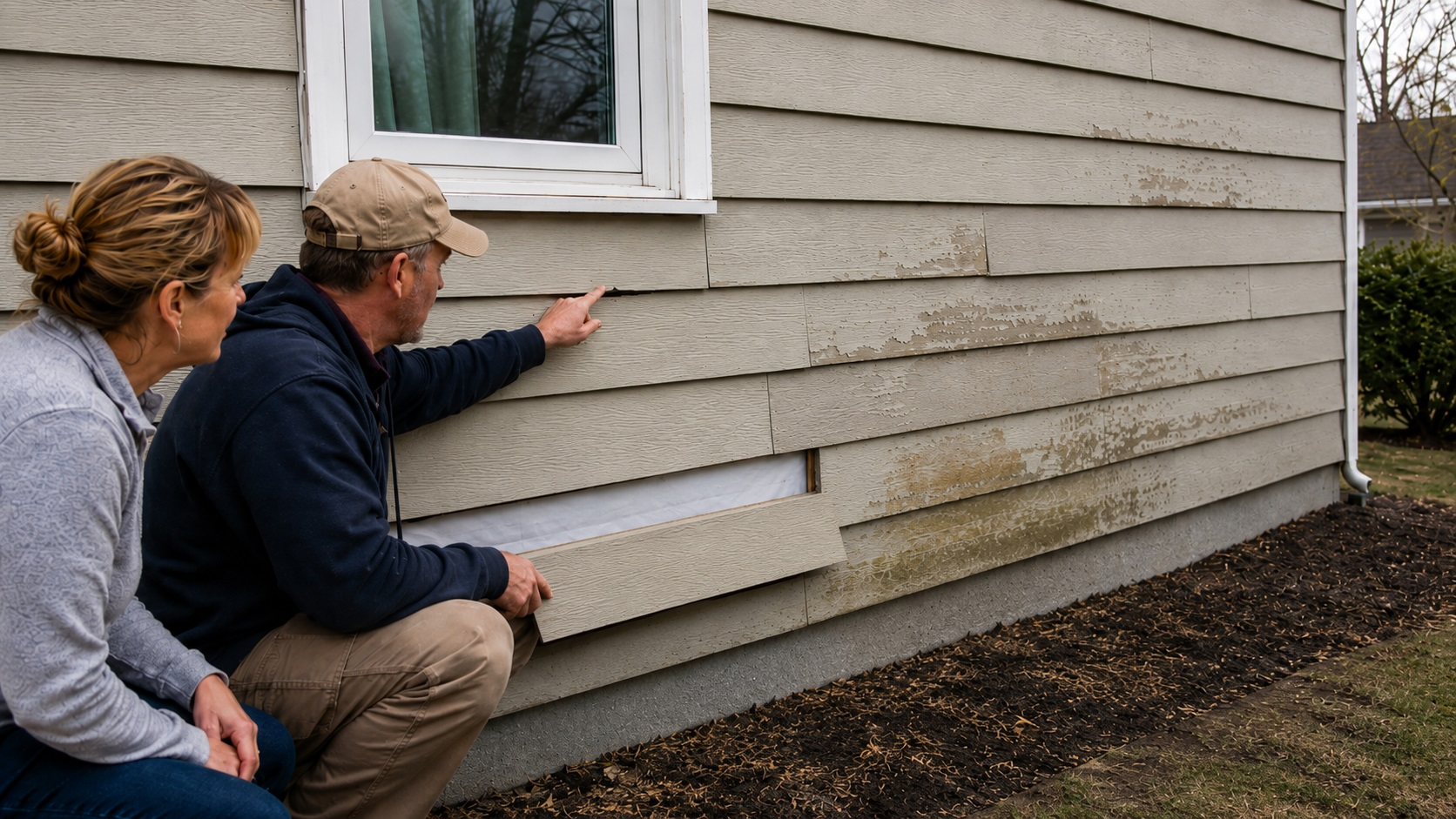
Deciding whether to repair or replace siding depends on more than how the exterior looks. Siding is part of the wall protection system. It helps shed rain, shield the drainage layer, protect sheathing, and reduce the amount of moisture that reaches the wall assembly. When siding is damaged, the real question is whether it still protects the wall behind it.
As a basic rule, repair siding when the damage is small, dry, isolated, and easy to integrate with the existing material. Consider partial or full replacement when the damage is widespread, water is getting behind the siding, sheathing is soft, repairs keep failing, or the siding no longer works as a reliable exterior barrier.
The best decision starts with separating appearance problems from performance problems. Fading, minor dents, and small cosmetic flaws may not be urgent. Gaps, rot, warping, delamination, loose panels, failed flashing, and moisture behind the siding are more serious because they can allow water to move into the exterior wall system. That is why siding decisions should be tied to how exterior walls allow moisture into homes, not just curb appeal.
Repair or Replace Siding Based on What Has Failed
Siding has several jobs. It should shed water, resist wind exposure, protect the drainage plane, reduce direct weather contact with the wall, and help the exterior assembly dry properly. When siding is damaged, the repair-or-replace decision depends on which of those jobs it can no longer do.
If the siding is only scratched, faded, lightly dented, or damaged in a small area, repair may be enough. The wall behind the siding may still be dry and protected. But if the siding has open gaps, loose seams, rotted boards, warped panels, cracked corners, failed trim, or water stains near windows and doors, the damage may be functional. Functional siding damage can let water reach the materials behind the exterior finish.
A good siding decision looks at three layers:
- The siding surface: Are panels, boards, shingles, or planks cracked, loose, warped, rotted, dented, or missing?
- The water-control layer: Are housewrap, flashing, drainage gaps, seams, and trim details still directing water out?
- The wall structure: Is the sheathing, framing, or insulation behind the siding dry and solid?
Repair is more likely to be enough when only the first layer is affected. Replacement becomes more likely when the second or third layer is compromised. For example, replacing one broken panel is very different from removing siding to repair wet sheathing and failed flashing. Once water has moved behind the siding, the project is no longer only about the exterior finish.
This is why homeowners should avoid judging siding damage from the street alone. A wall can look mostly intact while moisture is collecting behind one section. The reverse can also be true: siding can look faded or unattractive while still protecting the wall. The goal is to decide whether the siding still keeps water out and allows the wall system to dry.
A quick way to think about the decision is this:
| Condition | Most likely decision |
|---|---|
| Small, dry, isolated damage | Repair |
| One wall section with localized moisture or storm damage | Partial replacement |
| Widespread failure, repeated repairs, soft sheathing, or water behind multiple areas | Full replacement |
When Siding Repair Is Usually Enough
Siding repair is usually enough when the damage is local, the surrounding siding is stable, and the wall behind the damaged area is dry. In those situations, repairing the affected pieces can restore the siding’s function without replacing a larger section.
Common repair-level problems include one or two cracked vinyl panels, a small dented metal panel, a loose fiber cement board, a damaged trim piece, a small dry area of wood damage near an edge, or a limited impact mark from a branch, tool, grill, or ladder. These problems may look frustrating, but they do not always mean the siding system is failing.
Siding repair is usually reasonable when these conditions are present:
- The damage is limited to a small area.
- The siding around the damaged section is still secure.
- The wall behind the siding is dry.
- There are no interior stains, bubbling paint, or musty odors on the other side of the wall.
- The damaged material can be matched or blended acceptably.
- The failure has a clear cause, such as impact, one loose fastener, or a small trim issue.
- The same area has not needed repeated repairs.
Repair is especially practical when the siding material is designed for individual piece replacement. Vinyl panels, some fiber cement boards, some wood boards, and certain metal sections can often be replaced without disturbing the entire wall. The repair should still be done carefully so the replacement piece integrates with seams, laps, trim, flashing, and drainage details.
A siding repair should not simply cover damage. It should restore the siding’s ability to shed water. If a panel is cracked, replacing the panel is more reliable than smearing caulk over the crack. If a board is loose, refastening or replacing it is better than hiding the gap. If a trim joint has opened, the repair should identify whether the joint failed from normal movement, poor installation, or water damage behind the trim.
Repair is less reliable when the same section keeps failing. If a repaired panel pulls loose again, paint keeps peeling in the same area, or moisture returns after every rain, the issue may not be the siding surface alone. At that point, the homeowner should look for drainage, flashing, wall moisture, or installation problems before paying for the same repair again.
When Partial Siding Replacement Makes Sense
Partial siding replacement is the middle option between a small repair and a full replacement. It makes sense when the damage is larger than a simple repair but still limited to one wall section, one elevation, one lower band, or one problem area around a window, door, deck, roofline, or foundation edge.
This option is useful when the rest of the siding is still performing well. For example, one side of the house may have storm damage while the other walls are fine. A lower section may be damaged by splashback from poor drainage. A wall section near a deck may have moisture wear from trapped debris or poor clearance. A section below a leaking window may need removal so the wall behind it can be inspected and repaired.
Partial replacement usually makes sense when:
- the damage is limited to one wall area or one elevation;
- the remaining siding is still stable and serviceable;
- matching or compatible siding can be installed correctly;
- the wall behind the damaged section can be inspected;
- any moisture damage is localized;
- the repair will restore water-shedding performance, not only appearance;
- the same problem is not showing up across the entire house.
Partial replacement is often the right choice when a wall section has visible moisture symptoms but the rest of the house does not. In that case, the contractor may remove the damaged siding, inspect the sheathing, repair or replace the water-resistive barrier, correct flashing details, and install new siding on that section. This is more involved than patching the surface, but it may prevent the homeowner from replacing siding that is still functional elsewhere.
Window and door areas deserve special attention. Damage around these openings may not be caused by the siding material itself. Failed flashing, poorly sealed trim, missing kick-out flashing, or incorrect water management around the opening can send water behind otherwise good siding. If the repair only replaces the siding without correcting the water path, the new siding can fail again.
Partial replacement becomes less practical when the material cannot be matched or when the new section cannot be integrated properly. Color fading, discontinued profiles, different board thicknesses, and incompatible locking systems can make a small section look obvious or perform poorly. Matching is not only cosmetic. The replacement material must fit the existing system well enough to shed water and move with the wall.
When Moisture Damage Changes the Decision
Moisture behind siding changes the repair-or-replace decision because the problem is no longer limited to the exterior surface. If water has reached the sheathing, framing, insulation, or interior wall materials, the siding may need to be removed so the wall system can be inspected and repaired. Simply replacing the visible siding may leave wet or damaged materials hidden behind it.
Do not seal, paint, or cover the damaged area until the water source is corrected and hidden materials have been checked for moisture.
Signs of moisture behind siding can include stains below windows, swollen trim, soft wall sheathing, bubbling interior paint, musty odors, recurring mold on interior walls, siding that feels loose or spongy, or damage that returns after previous repair. Homeowners who see these symptoms should compare them with broader signs of water damage behind siding before assuming the problem is only surface-level.
Moisture changes the decision because siding is only one part of the exterior wall system. The wall may also depend on housewrap, flashing, drainage gaps, sheathing, sealant joints, trim details, and proper clearances. If any of those parts fail, water can collect behind the siding and remain hidden. Over time, repeated wetting can damage wood sheathing, promote mold growth, deteriorate insulation, and create interior wall symptoms.
The decision becomes more serious when moisture symptoms appear after rain or return in the same area. A one-time stain from a known event may be repairable. Repeated staining, soft sheathing, or musty odors suggest that water is still entering or failing to drain. In that situation, the siding should not just be patched. The wall should be opened enough to confirm whether hidden materials are dry and structurally sound.
Moisture-related siding problems often involve one of these hidden failures:
- failed or missing flashing around windows, doors, decks, or roof-wall intersections;
- damaged or deteriorated housewrap behind the siding;
- siding installed too close to grade, roofing, decking, or hard surfaces;
- trapped debris holding water against the wall;
- improperly sealed penetrations for lights, vents, pipes, or cables;
- paint, caulk, or trim details that trap water instead of letting it drain;
- wall sheathing that has softened from repeated wetting.
When these problems are present, the best repair may involve siding removal, wall inspection, flashing correction, sheathing repair, and then siding replacement. This is why moisture behind siding often turns a small-looking exterior issue into a larger wall-protection project. If the homeowner is unsure whether moisture is present, the next step may be to detect moisture behind exterior siding before deciding on the repair scope.
When Full Siding Replacement Is the Better Choice
Full siding replacement is usually the better choice when the siding failure is widespread, repeated, or connected to hidden wall damage. The goal of full replacement is not only to improve appearance. It is to restore the exterior wall system so it can shed water, protect the structure, and reduce future moisture risk.
Replacement becomes more logical when damage appears across several walls or when the same type of failure is present in many places. For example, widespread wood rot, broad vinyl warping, repeated fiber cement cracking, large areas of delamination, extensive paint failure, or multiple moisture-damaged wall sections may show that repair is no longer cost-effective. For a broader symptom checklist, compare those patterns with signs siding needs replacement.
Full replacement should be considered when:
- siding damage appears across multiple elevations;
- repairs keep failing or new damaged areas keep appearing;
- moisture has reached sheathing, framing, or insulation in more than one area;
- the siding no longer sheds water reliably;
- material is too brittle, warped, rotted, swollen, or delaminated to repair cleanly;
- replacement pieces cannot be matched or integrated properly;
- the original installation has widespread clearance, flashing, or fastening problems;
- the wall system needs broader housewrap, flashing, or sheathing correction.
Full replacement is especially important when the siding has stopped protecting the wall. If water is repeatedly getting behind the exterior finish, the homeowner may be paying for visible repairs while hidden wall materials continue to deteriorate. At that point, the decision should be based on wall protection, not only on whether individual boards or panels can technically be patched.
The clearest sign that replacement may be the better choice is a pattern. One damaged section can often be repaired. Damage on several sides of the house, repeated moisture problems, and widespread material deterioration usually point to a system that is no longer reliable. If moisture keeps returning behind the siding after repairs, the problem may connect to persistent moisture problems behind siding rather than simple surface damage.
Cost vs Lifespan: When Siding Repair Is Worth It
Siding repair value depends on how much useful life the repair protects. A small repair can be a good investment if the rest of the siding is still performing well. A larger repair may be a poor value if the siding is already near the end of its useful life or if the same wall will likely need replacement soon anyway. If age is part of the decision, compare the material with how long different siding materials last instead of judging the siding by appearance alone.
The cost decision should not be based only on the repair estimate. Homeowners should also consider how long the repaired siding is likely to last, whether the repair will blend properly, whether the siding can still shed water, and whether hidden wall damage is likely. A low-cost repair can become expensive if it leaves moisture behind the wall. A higher repair can be worthwhile if it restores one damaged section and prevents a larger wall problem.
Repair value is strongest when:
- the siding still has years of useful life left;
- the damaged area is small and clearly defined;
- the replacement material can be matched or integrated well;
- the wall behind the siding is dry;
- the repair corrects the cause of the damage;
- the same problem has not happened repeatedly.
Replacement value becomes stronger when repair costs are rising but the siding system is still unreliable. If a homeowner repairs one wall this year, another wall next year, and another section after the next storm, replacement may eventually cost less than continued patching. This is especially true when each repair requires labor to remove siding, inspect moisture, correct flashing, and reinstall material.
Appearance also matters, but it should not control the entire decision. Faded siding can make repairs visible because the new piece may not match the old field. If the mismatch is small and the wall is protected, repair may still be reasonable. But if large sections need replacement and the new material will not integrate well, full replacement may be more practical.
The most important value question is whether the repair restores function. Siding that looks better but still allows water behind the wall is not a good repair. Siding that is slightly mismatched but sheds water properly may be a good repair. The decision should prioritize long-term wall protection over perfect cosmetic appearance.
How Different Siding Materials Change the Decision
The general repair-or-replace framework applies to all siding, but material type changes the repair threshold. Some siding materials are easier to patch or replace in sections. Others are more vulnerable to moisture, cracking, swelling, or matching problems. This section is only a quick decision summary; the material-specific articles handle the deeper thresholds.
Vinyl siding
Vinyl siding is often repairable when damage is isolated. A cracked, loose, or punctured panel can sometimes be replaced without replacing the entire wall. Repair is more likely when the panels are still flexible, the locking edges are intact, and a matching or compatible replacement panel is available.
Replacement becomes more likely when vinyl siding is brittle, heavily faded, warped, repeatedly loose, or damaged across multiple areas. Heat distortion, UV aging, poor installation, and repeated panel failure can make individual repairs less reliable. For vinyl-specific thresholds, homeowners should compare the issue with when to repair vs replace vinyl siding.
Fiber cement siding
Fiber cement siding can often be repaired when the issue is limited to one cracked board, a loose plank, a small impact area, or a damaged trim detail. The repair needs to preserve proper clearances, flashing, fastening, and paint protection so water does not enter the edges or back side of the material.
Replacement becomes more likely when fiber cement shows widespread cracking, swelling, delamination, soft edges, repeated paint failure, or moisture damage from improper installation. If multiple boards have absorbed moisture or the wall has poor clearances, replacing only the worst board may not solve the underlying problem. A more detailed material-specific decision belongs in when to repair vs replace fiber cement siding.
Wood siding
Wood siding has a lower tolerance for repeated wetting because it can rot, swell, split, and support fungal growth when moisture is not controlled. Small areas of rot, cracked boards, or damaged trim may be repairable if the damage is localized and the surrounding wood is dry and sound.
Replacement becomes more practical when wood siding has widespread rot, repeated paint failure, soft boards, pest damage, open joints, or moisture behind multiple sections. Wood siding repairs should never ignore the moisture source. Replacing a rotted board without correcting splashback, roof runoff, flashing failure, or poor clearance can lead to the same damage again. For wood-specific guidance, the article on when to repair vs replace wood siding should handle the deeper decision.
Engineered wood or composite siding
Engineered wood and composite siding may be repairable when damage is limited to a small number of boards or panels. The repair depends on whether the edges, coatings, and cut ends can be protected correctly. Moisture swelling, edge damage, and delamination are more concerning because they can show that water has entered the material.
Replacement becomes more likely when swelling or delamination appears across many boards, especially near lower edges, joints, windows, doors, or roof-wall transitions. If the material has lost its shape or water resistance, patching individual spots may not restore reliable wall protection.
Metal siding
Metal siding can sometimes be repaired when the damage is cosmetic, such as small dents that do not open seams or expose vulnerable edges. A dent may not require replacement if water is still shedding properly and the protective finish is intact.
Replacement becomes more likely when corrosion, open seams, damaged fasteners, punctures, or edge failures allow water behind the siding. Metal siding decisions often depend on whether the panel can still shed water and whether the damaged section can be replaced without compromising surrounding seams.
Questions to Ask Before Repairing or Replacing Siding
Before approving siding repair or replacement, homeowners should ask questions that separate surface damage from wall-system failure. These questions help determine whether the project should stay small or expand to include moisture inspection, flashing correction, sheathing repair, or broader replacement.
- Is the damage cosmetic or functional? Fading and minor dents may be cosmetic. Cracks, gaps, rot, warping, and loose sections can affect water control.
- Is water getting behind the siding? Stains, soft sheathing, musty odors, and interior bubbling paint suggest a deeper issue.
- Does the damage change after rain? Stains, swelling, odors, or interior symptoms that appear after storms usually point to water entry, not just cosmetic siding wear.
- Is the sheathing dry and solid? Soft or darkened sheathing changes the decision from siding repair to wall repair.
- Is the problem isolated? One damaged section is more repairable than repeated damage across several walls.
- Can the material be matched? The replacement must integrate visually and functionally with the existing siding.
- Has this section failed before? Repeated failure suggests a drainage, flashing, clearance, or installation issue.
- Will the repair restore water-shedding performance? A repair that only improves appearance is not enough if water can still enter.
If the answers point to a small, dry, isolated problem, repair may be the right choice. If the answers point to water entry, soft materials, repeated failure, or widespread damage, replacement or partial replacement should be evaluated more seriously.
When to Call a Siding Contractor
Call a siding contractor when the decision involves more than a simple surface repair, especially if there may be moisture behind the siding, damage around windows or doors, soft sheathing, repeated repair failure, or large sections pulling away from the wall.
Professional inspection is especially important when siding damage appears near wall openings. Windows, doors, vents, hose bibs, decks, roof-wall intersections, and trim transitions are common water-entry points. Damage in these areas may involve failed flashing or a drainage problem behind the siding, not just a broken board or panel. If the contractor only replaces the visible siding without checking the water path, the problem can return.
A contractor should also be involved when the wall behind the siding may be damaged. Soft sheathing, dark staining, moldy odor, wet insulation, or interior wall symptoms mean the project may require more than siding replacement. In those cases, the contractor may need to remove enough siding to inspect exterior siding for water damage and confirm whether the wall assembly is still sound.
Call a siding contractor when you notice:
- soft or spongy areas behind the siding;
- water stains, moldy odors, or bubbling paint on the inside wall;
- siding damage around windows, doors, decks, or roof-wall intersections;
- large areas of cracked, warped, rotted, swollen, or loose siding;
- repeated repairs in the same section;
- uncertainty about housewrap, flashing, or sheathing condition;
- siding that no longer fits tightly, drains correctly, or sheds water reliably.
A good contractor should explain whether the damage is cosmetic, surface-level, moisture-related, or structural, and why repair, partial replacement, or full replacement is the most practical option. The recommendation should connect to the condition of the wall system, not only the appearance of the siding.
If moisture was the cause, the repair should also include prevention. That may mean correcting clearances, improving flashing, sealing penetrations properly, removing trapped debris, fixing roof runoff, or restoring drainage behind the siding. Otherwise, new siding may be installed over a wall condition that will keep causing damage. After repair or replacement, homeowners should also understand how to prevent moisture damage behind siding so the same failure does not return.
FAQ About Repairing or Replacing Siding
Can you replace only part of siding?
Yes. Partial siding replacement can work when the damage is limited to one section, one wall, or one affected area. The replacement material must fit the existing siding system correctly and the wall behind the damaged section should be dry. If moisture damage is widespread, partial replacement may not be enough.
Is siding worth repairing if water got behind it?
It depends on how far the water spread. If the sheathing is dry and the water entry was limited, repair may still be enough. If sheathing, framing, insulation, or interior walls are wet or damaged, the project may need partial replacement and wall repair instead of a surface patch.
When is siding damage cosmetic?
Siding damage is usually cosmetic when it does not create gaps, water entry, loose pieces, rot, swelling, or wall moisture. Minor fading, shallow dents, and small surface scratches may not require replacement. Damage becomes functional when it affects water shedding or exposes the wall system.
Should I repair siding before selling a house?
Repairing siding before selling can make sense if the damage is isolated and the repair is honest and durable. Small visible defects may raise buyer concerns during inspection. However, surface repairs should not be used to hide moisture damage, soft sheathing, or wall problems that should be disclosed and corrected properly.
How do I know if siding damage is structural?
Siding damage may involve the structure if the wall feels soft, sheathing is dark or deteriorated, interior paint bubbles, moldy odors appear, or water stains show after rain. Structural concern increases when moisture has moved beyond the siding into sheathing, framing, or insulation.
Is it better to repair or replace old siding?
Old siding can still be repaired if the damage is isolated and the wall behind it is dry. Replacement becomes more practical when the siding is brittle, rotted, warped, repeatedly failing, difficult to match, or no longer protecting the wall from moisture. Age matters most when it affects performance.
Final Decision: Repair, Partial Replacement, or Full Replacement?
Repair siding when the problem is small, dry, isolated, and the surrounding material still performs well. Choose partial replacement when one wall section or moisture-prone area needs to be opened, inspected, and rebuilt correctly. Consider full replacement when failure is widespread, repairs keep failing, moisture has reached hidden wall materials, or the siding no longer sheds water reliably.
The final decision should be based on whether the siding is still protecting the wall system, not whether the exterior can be patched to look better. If the siding is no longer keeping the exterior wall system dry, replacement may protect the home better than continued patching.
3 Comments
Comments are closed.