Why Pipes Leak Under Floors
Pipes leak under floors for several reasons, including age, corrosion, loose joints, high water pressure, pipe movement, freezing, poor installation, damaged drain lines, and stress from the surrounding structure. These leaks are especially frustrating because the pipe is hidden below finished flooring, inside a floor cavity, above a ceiling, in a crawl space, or beneath a concrete slab. By the time the homeowner notices soft flooring, staining, odor, or moisture, the leak may already have affected nearby materials.
An under-floor pipe leak is not only a plumbing problem. It can become a structural moisture problem because water may soak into subfloor panels, framing, insulation, flooring, cabinets, trim, or ceiling materials below. That is why under-floor leaks belong in the larger category of structural moisture problems in homes, especially when the leak has gone unnoticed for days, weeks, or longer.
This article explains why pipes leak under floors, how different leak causes behave, and why hidden water below flooring can create damage before the source is obvious. If you are already trying to confirm whether a leak is present, see how to detect plumbing leaks under floors.
Why Under-Floor Pipe Leaks Are Often Hidden
Under-floor pipe leaks are often missed because the leak begins in a concealed area. A pipe below the floor may leak into a joist cavity, crawl space, basement ceiling, utility chase, or concrete slab before any water reaches the finished surface. The first visible sign may be a soft spot in the floor, a musty smell, a ceiling stain below, or flooring that begins to warp.
Finished flooring hides early moisture
Hardwood, laminate, tile, vinyl, and carpet can all hide the beginning stages of an under-floor leak. Finished flooring may look normal while the subfloor underneath is absorbing moisture. In some cases, the finished floor is the last material to show symptoms.
Wood flooring may cup, crown, darken, or separate. Laminate may swell at the seams. Vinyl may bubble or loosen. Tile may develop cracked grout or hollow-sounding areas. Carpet may smell musty or feel damp near the edges. These symptoms can be mistaken for flooring failure, but the real cause may be water coming from plumbing below or within the floor assembly.
Water travels before it becomes visible
Water rarely stays exactly where the pipe leaks. It can follow gravity, run along pipe surfaces, move across the top of ceiling drywall, travel along joists, soak into insulation, or collect at low points. This means the visible symptom may appear several feet away from the leak source.
For example, a leaking pipe under a bathroom floor might show up as a stain in the room below, swelling near a baseboard, dampness at the edge of a hallway floor, or moisture in a crawl space. The stain or soft spot tells you where water appeared, not always where the pipe failed.
Subfloors and framing can absorb water quietly
Subfloors, joists, blocking, and insulation can absorb or hold moisture below finished flooring. Even a slow pipe leak can keep those materials damp long enough to cause swelling, softness, odors, mold growth, fastener corrosion, or structural weakening. For a broader explanation of how plumbing leaks affect building materials, see how plumbing leaks cause structural damage.
Common Reasons Pipes Leak Under Floors
Pipes under floors usually leak because the pipe, fitting, joint, support, or surrounding structure has been stressed or weakened. A one-time loose connection is different from a system-wide problem such as aging pipes, corrosion, high pressure, or repeated movement.
Aging pipe materials
Older plumbing is more likely to leak under floors because pipe materials and fittings weaken over time. Metal pipes can corrode. Plastic pipes can become stressed at fittings or connections. Older joints may loosen, seals may fail, and previous repairs may become weak points.
The risk depends on the pipe material, water chemistry, installation quality, pressure, and the environment around the pipe. A pipe that has lasted for decades may begin leaking at a joint, bend, fitting, or area where it rubs against framing. In older homes, an under-floor leak may be a sign that more than one section of plumbing deserves inspection.
Corrosion and pinhole leaks
Corrosion can create small leaks that are difficult to notice at first. A pinhole leak may release only a small amount of water, but when it happens under a floor, that water can keep soaking the same hidden materials over and over. Because the leak is concealed, the homeowner may not see the source until the floor or ceiling materials show damage.
Corrosion can be influenced by water chemistry, pipe age, contact with incompatible materials, poor installation, soil or concrete exposure, and electrical or grounding issues in some systems. The important point for homeowners is that a tiny pipe opening can cause major moisture damage when the leak continues undetected.
Loose fittings or failed joints
Many under-floor leaks happen at joints, elbows, tees, couplings, shutoff connections, or fixture branches rather than in the straight section of pipe. Joints are common failure points because they experience stress from pressure changes, movement, vibration, thermal expansion, and installation errors.
A slightly loose fitting may leak only under certain conditions. A drain connection may leak when a fixture is used. A supply connection may leak continuously. A joint near a bathroom, kitchen, laundry room, or water heater may be hidden behind flooring or below the subfloor, which allows the leak to spread before it is noticed.
High water pressure
High water pressure can stress pipes, fittings, valves, supply lines, and connections. Over time, this stress may contribute to leaks, especially in older systems or areas with weak joints. Under-floor plumbing can be affected because the pressure is present even when the pipes are hidden from view.
High pressure does not always create an immediate burst. It may accelerate wear, make small weaknesses worse, or cause fittings to seep. If a home has repeated plumbing leaks in different areas, pressure should be checked with a gauge rather than guessed from faucet strength alone.
Pipe movement and vibration
Pipes under floors can move slightly when water turns on and off, when fixtures drain, when appliances cycle, or when hot water expands the pipe material. Small movement is normal, but poorly supported pipes can vibrate, knock, rub against framing, or place stress on fittings over time.
Washing machines, dishwashers, water heaters, and quick-closing valves can add stress to plumbing systems. If a pipe is not secured properly, that movement can weaken joints, wear through contact points, or make an existing weak connection leak. This is one reason leaks may develop near laundry rooms, kitchens, bathrooms, and utility areas.
Poor installation or unsupported pipes
Under-floor pipes need proper support, correct fittings, safe routing, and enough room for expansion and movement. Leaks are more likely when pipes are bent too sharply, strained into position, poorly supported, rubbing against framing, or installed with weak connections.
Improper installation may not fail right away. A pipe can work for years before a stressed joint begins to seep. In floor systems, this is especially damaging because the leak may start slowly and remain hidden until flooring, subflooring, or ceiling materials show symptoms.
Freezing and thawing
Pipes under floors can leak after freezing, especially in crawl spaces, exterior floor cavities, poorly insulated rooms, garages, additions, or areas above unconditioned spaces. When water freezes inside a pipe, it expands and can split the pipe or weaken a fitting. The leak may not become obvious until the pipe thaws and water begins flowing again.
Freeze-related leaks are often associated with cold drafts, missing insulation, exposed crawl space plumbing, or pipes routed near exterior walls. Even if the pipe does not burst dramatically, freezing can create small cracks or stressed joints that leak later.
Drain-line leaks below floors
Not all under-floor pipe leaks come from pressurized water supply lines. Drain lines can also leak below floors. These leaks may happen at loose fittings, cracked pipes, worn seals, failed toilet connections, tub drains, shower drains, sink drains, or appliance drain lines.
Drain-line leaks may only appear when the fixture is used. For example, a ceiling stain below an upstairs bathroom may get worse after showers or baths, while the water meter does not show constant movement. A drain leak can still cause serious damage because wastewater may repeatedly wet the same floor cavity or ceiling area.
Damage from remodeling or fasteners
Flooring work, remodeling, cabinet installation, trim work, or fixture replacement can accidentally damage hidden plumbing. Screws, nails, saws, and fasteners can puncture or weaken pipes if plumbing routes are not known. Sometimes the leak appears immediately. Other times, the pipe is weakened and begins leaking later.
This is especially risky where pipes run close to subfloors, walls, or fixture areas. If under-floor moisture appears after a renovation, new flooring installation, bathroom remodel, kitchen remodel, or appliance installation, recent work should be considered as a possible cause.
Supply Line Leaks vs. Drain Line Leaks Under Floors
One of the most important distinctions is whether the under-floor leak is coming from a supply line or a drain line. Both can damage flooring and structural materials, but they behave differently. Understanding the difference helps explain why some leaks are constant while others only appear after a fixture is used.
Supply line leaks may be constant
Supply lines carry pressurized water to fixtures and appliances. If a supply pipe, fitting, valve, or connection leaks under a floor, the leak may continue even when no fixture is running. That is why supply leaks can cause steady moisture, spreading stains, water meter movement, and damage that worsens even when the room is not being used.
A supply-line leak under a floor is often more urgent because water can keep entering the structure until the supply is shut off or repaired. In some cases, the leak is small enough to stay hidden for a while, but the constant moisture can still damage subflooring, joists, insulation, and ceiling materials below.
Drain line leaks may only appear during use
Drain lines carry water away from sinks, showers, tubs, toilets, washing machines, dishwashers, and other fixtures. A drain-line leak may only happen when water is draining through that section of pipe. This can make the leak harder to confirm because the area may appear dry until the fixture is used.
If a stain, odor, or damp area gets worse after showers, baths, sink use, toilet flushing, or laundry cycles, a drain leak may be involved. Drain leaks can be intermittent, but they can still create hidden moisture because the same materials are repeatedly wetted.
Timing helps narrow the cause
The timing of moisture symptoms can provide useful clues. If the floor stays damp all the time or the water meter shows use when fixtures are off, a supply leak is more likely. If moisture appears only after a shower, tub, toilet, sink, or appliance drains, the problem may be drain-related.
This timing does not replace professional leak detection, but it helps homeowners explain the pattern clearly. When calling a plumber, it is useful to describe whether the moisture is constant, appears after fixture use, worsens during rain, or changes after appliances run.
Why Floor Structure Makes Pipe Leaks Worse
A pipe leak under a floor can cause more damage than the same leak in an open area because finished flooring, underlayment, subflooring, joists, insulation, ceilings, and trim can all hide moisture and slow drying.
Subfloors absorb and hold moisture
Subfloor panels can absorb water from below or above. Once wet, they may swell, soften, delaminate, or lose stiffness. The finished floor may not show damage right away, but the support layer underneath may already be changing.
Soft or uneven flooring is often a sign that moisture has reached the subfloor. If the floor feels spongy near a bathroom, kitchen, laundry room, water heater, or appliance, a hidden plumbing source should be considered. For more on this symptom, see why flooring feels soft after water damage.
Joists and framing can stay damp
When water leaks into a floor cavity, it can run along joists, blocking, and other framing members. Wood framing does not always fail immediately, but repeated moisture exposure can lead to staining, swelling, mold growth, fastener corrosion, and eventual weakening if the source continues.
This is one reason under-floor plumbing leaks should not be treated as surface flooring problems only. A visible flooring symptom may be the top layer of a deeper moisture path.
Insulation can trap water against wood
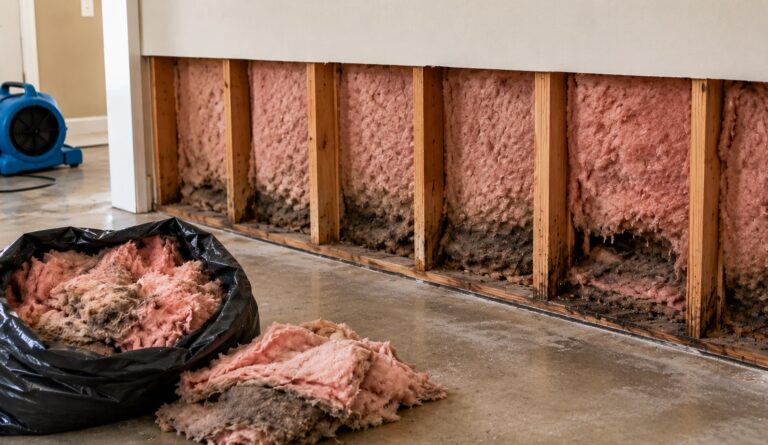
Floor insulation can hold moisture against subfloors and joists, especially in crawl spaces or floor cavities over unconditioned areas. Wet insulation may sag, lose effectiveness, and slow drying. Even if the leak is repaired, damp insulation can keep nearby materials wet.
When a leak occurs above a crawl space, basement ceiling, or insulated floor cavity, the hidden materials below the pipe may need inspection. If wet insulation remains in place, the floor system may not dry properly.
Finished flooring can delay discovery
Finished flooring can hide damage until the underlayers have already been wet. Tile may hide moisture until grout cracks or tiles loosen. Vinyl may trap water beneath the surface. Laminate may swell at seams after the subfloor has already absorbed moisture. Hardwood may cup or darken gradually.
Because the visible surface can be misleading, repeated moisture symptoms near plumbing should be checked before assuming the flooring itself is the only problem.
Why Pipes Leak Under Bathroom, Kitchen, and Laundry Floors
Pipes can leak under any floor, but bathrooms, kitchens, laundry rooms, and utility areas have higher risk because supply lines, drain lines, fixture connections, appliance hoses, shutoff valves, and floor penetrations are concentrated there.
Bathroom floors
Bathroom floors are common locations for under-floor leaks because showers, tubs, toilets, sinks, and supply lines are close together. A leak may come from a pressurized supply pipe, a toilet connection, a tub drain, a shower drain, a sink drain, or a fitting hidden below the floor.
Bathroom leaks are especially tricky because water may appear in several different places. It may soften flooring near the toilet, stain the ceiling below, dampen a nearby baseboard, or create odor in an adjacent room. In upstairs bathrooms, even a small under-floor leak can become visible as a ceiling stain below the bathroom.
Kitchen floors
Kitchen floors can develop under-floor leaks from sink plumbing, dishwasher lines, refrigerator water lines, ice maker tubing, drain pipes, and supply branches. Water may travel under cabinets before it reaches the finished floor, which means the leak can be hidden by cabinet bases, toe kicks, underlayment, or finished flooring.
Kitchen leaks may also be mistaken for spills or cleaning water. If flooring near the sink, dishwasher, refrigerator, or cabinet base repeatedly feels damp or begins to lift, the source may be plumbing rather than surface water.
Laundry room floors
Laundry rooms add another source of stress because washing machines use supply hoses, drain standpipes, valves, and repeated vibration. A leaking line or connection may send water into the floor cavity, especially if the laundry room is upstairs or built over a crawl space or basement.
Vibration can also make weak connections worse over time. If the floor near the washing machine becomes soft, stained, or musty, the problem may involve more than a surface spill. The supply valves, hoses, drain area, and under-floor plumbing path should be considered.
Utility and water heater areas
Water heaters, plumbing manifolds, filtration systems, and utility sinks can also create under-floor leak risks. These areas often contain multiple connections in a small space. A slow leak may run into the floor system before it becomes visible, especially if the utility area is finished or partially enclosed.
When moisture appears near a utility room or mechanical area, it is important to consider both plumbing leaks and equipment-related leaks. The cause may be a pipe, valve, tank connection, drain line, condensation line, or overflow path.
Why Pipes Leak Under Concrete Slabs
Some under-floor plumbing leaks happen beneath concrete slabs. These are often called slab leaks, and they can begin because of corrosion, soil movement, abrasion, pressure stress, or temperature-related expansion and contraction. For the symptom side of this topic, see signs of slab plumbing leaks.
Pipe corrosion below the slab
Pipes under slabs can corrode depending on pipe material, water chemistry, soil conditions, concrete contact, and installation quality. A small corrosion point can become a pinhole leak. Because the pipe is concealed, the leak may continue for a long time before the homeowner sees obvious symptoms.
Soil movement and slab movement
Soil beneath a home can move because of moisture changes, settlement, expansion, erosion, or poor compaction. When soil or slab movement stresses buried plumbing, pipes and fittings can shift, bend, or rub against surrounding materials.
Over time, that movement can weaken the pipe or its joints. Even small movement can matter when a pipe is locked in place beneath concrete or routed through tight spaces.
Abrasion and contact points
Pipes may leak when they rub against concrete, framing, soil, gravel, or other hard materials. This is sometimes related to poor protection during installation. A pipe that touches a rough surface may not fail immediately, but repeated movement, pressure pulses, or expansion and contraction can wear the material over time.
Under slabs, abrasion can be hard to see until the pipe fails. This is one reason proper installation and protection are important in concealed plumbing routes.
Pressure and temperature stress
Hot water lines under slabs can expand and contract as water temperature changes. Pressurized lines can also experience stress from water pressure and quick valve closures. If a pipe is already weakened by age, corrosion, abrasion, or poor support, pressure and temperature changes may contribute to leakage.
These stresses do not always cause the leak by themselves, but they can make existing weaknesses worse.
Signs the Cause May Be Serious
Some under-floor leaks remain small for a while, while others are already affecting flooring, subflooring, ceilings, or structural materials. The more symptoms you see, the more urgent the situation becomes.
Soft or spongy flooring
A soft, spongy, uneven, or sinking floor near plumbing may indicate that water has reached the subfloor or framing. This is more serious than a simple surface spill because it suggests hidden materials may have absorbed moisture.
Soft flooring near a bathroom, kitchen, laundry room, water heater, or utility area should not be ignored. Even if the finished surface looks mostly normal, the structure underneath may be wet.
Stains on ceilings below plumbing areas
If a bathroom, kitchen, or laundry room is above another finished space, an under-floor pipe leak may show up as staining on the ceiling below. The stain may be yellow, brown, gray, or irregular. It may spread after fixture use or continue growing if a supply line is leaking.
Ceiling stains below plumbing areas should be treated as more than cosmetic discoloration. Water may be collecting above the ceiling drywall, running along framing, or dripping from a pipe or drain connection hidden above.
Flooring changes near fixtures
Flooring that cups, buckles, bubbles, lifts, separates, or darkens near plumbing may indicate that water is reaching the floor assembly. These symptoms are common near bathrooms, kitchens, laundry rooms, water heaters, and appliance areas.
The pattern matters. A small area of lifting near a refrigerator line, a soft spot beside a toilet, or bubbling vinyl near a laundry area may point toward a localized plumbing source.
Musty odor near the floor
A musty smell near the floor can develop when hidden materials stay damp. The odor may come from wet subflooring, damp insulation, mold growth, contaminated drain water, or moisture trapped below finished flooring.
Odor alone does not prove an under-floor pipe leak, but odor combined with soft flooring, staining, water meter movement, or fixture-related dampness is more concerning.
Water meter movement when fixtures are off
If the water meter moves when no fixtures or appliances are running, there may be a supply-side leak somewhere in the plumbing system. If floor symptoms are also present, the leak may be under the floor or inside a nearby wall or slab.
This type of symptom should be taken seriously because pressurized leaks can continue releasing water until the source is isolated and repaired.
What to Do When You Suspect a Pipe Is Leaking Under the Floor
If you suspect a pipe is leaking under the floor, avoid treating the problem as only a flooring issue. Warped flooring, stains, soft spots, musty odors, or damp baseboards may be the visible result of a plumbing leak hidden below the surface. The first priority is to identify and stop the water source before repairs or drying begin.
If water is near electrical outlets, fixtures, appliances, or a ceiling light below the leak area, avoid contact with the wet area and shut off power to the affected circuit if it is safe to do so.
Look for patterns before disturbing materials
Pay attention to when the symptoms get worse. If moisture appears after showers, baths, sink use, toilet flushing, dishwasher cycles, or laundry cycles, a drain line or fixture-related leak may be involved. If the area stays damp all the time or the water meter moves when fixtures are off, a pressurized supply line may be leaking.
Take photos, note when the dampness appears, and identify nearby plumbing fixtures. This information can help a plumber narrow the search area and avoid unnecessary damage when accessing the pipe.
Do not cover soft or damp flooring
Do not install new flooring, add underlayment, caulk seams, or cover a soft area with rugs before the moisture source is corrected. Covering damp flooring can trap moisture below the surface and allow subfloor damage, mold growth, and odors to continue.
If the floor already feels soft or uneven, the problem may have moved beyond the finished flooring layer. In that case, the subfloor, underlayment, insulation, or framing may need inspection after the plumbing source is found.
Call a plumber when the leak appears active
A plumber should be called when you see water meter movement, spreading stains, recurring dampness, ceiling stains below a plumbing area, soft flooring near fixtures, or symptoms that worsen after plumbing use. Under-floor leaks often require professional leak location because the pipe may be hidden below flooring, above a ceiling, in a crawl space, or under a slab.
If the same floor area keeps getting wet or more than one area appears affected, the problem may be larger than a single loose fitting. For recurring floor moisture, see how to fix persistent moisture under floors. If you are deciding whether the situation needs a plumber, see when to hire a plumbing professional for leak repairs.
Dry affected materials after the source is fixed
Repairing the pipe does not automatically dry the floor system. Subfloors, insulation, trim, ceiling drywall, and framing can remain wet after the plumbing leak stops. If moisture has spread into hidden materials, drying may require access, airflow, dehumidification, removal of wet materials, or professional water damage evaluation.
This is especially important when the leak has affected wood subflooring, insulation, or a ceiling cavity below the floor. If hidden moisture remains trapped, damage can continue even after the pipe is repaired.
FAQ: Why Pipes Leak Under Floors
What causes pipes to leak under floors?
Pipes leak under floors because of age, corrosion, loose joints, high water pressure, freezing, pipe movement, poor installation, damaged drain lines, or stress from surrounding materials. The exact cause depends on the pipe material, location, pressure, installation quality, and whether the leak is from a supply line or drain line.
Can high water pressure cause pipes under floors to leak?
Yes. High water pressure can stress pipes, fittings, valves, and joints. It may not cause an immediate burst, but it can make weak connections fail sooner and contribute to repeated plumbing leaks. If a home has multiple leaks in different areas, water pressure should be checked.
How do I know if a supply line or drain line is leaking under the floor?
A supply line leak may be constant because the pipe is pressurized. Signs may continue even when no fixture is being used, and the water meter may move while everything is off. A drain line leak may only appear after showers, sinks, toilets, tubs, dishwashers, or washing machines are used.
Can a pipe leak under the floor without visible water?
Yes. A pipe can leak under the floor without creating visible puddles. The first signs may be soft flooring, musty odor, cupping wood, swollen laminate, loose tile, stained ceilings below, damp baseboards, or unexplained water use.
Why does my floor feel soft near plumbing?
A floor may feel soft near plumbing when water has reached the subfloor, underlayment, or framing. The cause could be a leaking pipe, drain connection, fixture seal, appliance line, or past water damage that was never dried properly. A soft floor near plumbing should be inspected because the damage may be below the finished surface.
Are slab leaks the same as under-floor pipe leaks?
A slab leak is one type of under-floor pipe leak. It happens when plumbing below or within a concrete slab leaks. Other under-floor leaks can happen in crawl spaces, joist cavities, basement ceilings, or floors between levels. Slab leaks are often harder to access because the pipe is hidden beneath concrete.
Why do old pipes leak under wood floors before the damage is visible?
Old pipes can leak beneath wood floors because of corrosion, worn fittings, weak joints, pressure stress, or movement. Wood flooring may look normal at first because the subfloor below may absorb moisture before the finished boards cup, darken, separate, or feel uneven.
When should I call a plumber for a pipe leak under the floor?
Call a plumber if you notice recurring dampness, water meter movement, soft flooring near plumbing, stains on a ceiling below, musty odors, visible moisture in a crawl space, or symptoms that worsen after fixture use. Under-floor leaks often need professional leak location because the pipe may be hidden below flooring, above a ceiling, inside a crawl space, or beneath a slab.
Conclusion
Pipes usually leak under floors because age, corrosion, pressure, movement, poor support, freezing, failed joints, drain failure, slab stress, or installation problems have weakened the plumbing system. Because the leak is hidden, water can damage subflooring, joists, insulation, ceiling materials, cabinets, trim, and finished flooring before the source is obvious.
If soft flooring, stains, odors, water meter movement, or recurring dampness appears near plumbing, find the water source before making cosmetic repairs. The pipe must be repaired and the affected materials must be dried before the floor is covered again.