
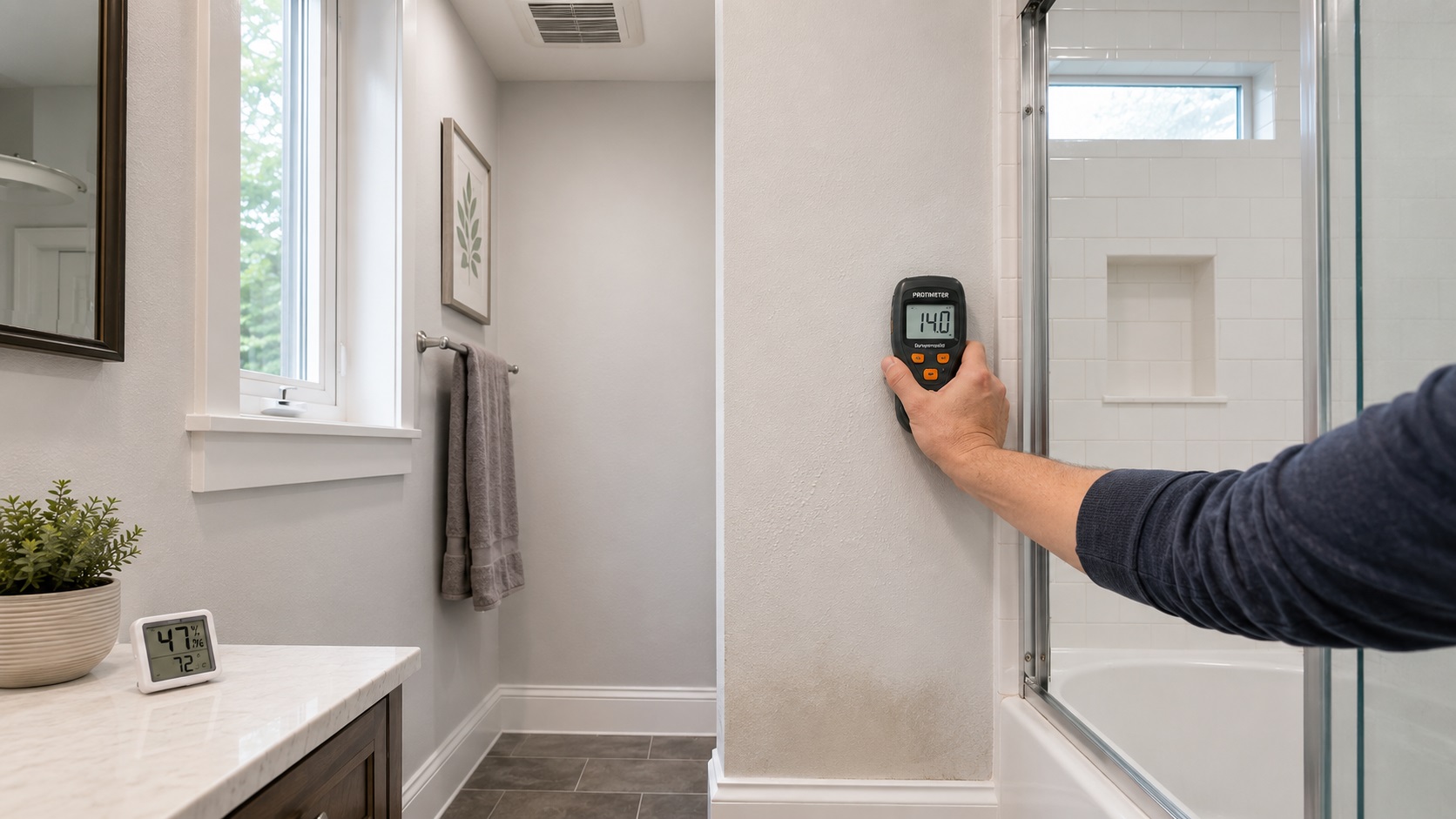
How to Fix Persistent Bathroom Moisture Problems
To fix persistent bathroom moisture problems, first separate normal shower humidity from moisture that keeps returning because of poor ventilation, hidden leaks, failed seals, trapped wall moisture, or structural drying problems. Occasional condensation after a shower is normal, but damp walls, ceilings, fixtures, trim, or stains that return day after day usually mean the bathroom is not drying correctly.
The right fix depends on the pattern. Some bathrooms need better airflow and humidity control, while others need leak inspection, fixture sealing, wall cavity evaluation, or professional repair. Repeated dampness should not be covered with paint, caulk, or new finishes until the moisture source is identified.
In some situations, ongoing dampness can eventually lead to mold development, damaged finishes, softened materials, or hidden structural moisture if the source is not corrected. For broader repair-readiness guidance, see Structural Moisture Problems in Homes: Causes, Risks, and Repair Guide.
This guide explains how to recognize persistent bathroom moisture, narrow down the likely cause, decide which homeowner steps are reasonable, and identify when the problem has moved into professional repair territory.
Signs Bathroom Moisture Has Become Persistent
Bathroom moisture becomes persistent when dampness occurs repeatedly and fails to dry completely between uses. Unlike short-term humidity that clears quickly, persistent moisture follows consistent patterns that indicate an imbalance between moisture production and drying capacity.
Daily Condensation Patterns
One of the earliest indicators of persistent moisture is recurring condensation that appears on surfaces every day. While temporary fogging during showers is normal, condensation that forms repeatedly and lingers suggests that drying systems are not keeping up.
Daily condensation patterns commonly appear as:
- Water droplets forming on walls after every shower
- Moisture collecting on mirrors long after use
- Fog returning quickly after temporary clearing
- Repeated damp patches forming in the same locations
When condensation follows predictable daily cycles, it indicates that moisture removal is incomplete.
Slow Drying Surfaces
Slow drying surfaces are another strong indicator of persistent moisture. Bathroom materials should dry within a reasonable timeframe once humidity levels decrease. When surfaces remain wet for extended periods, moisture retention is likely occurring.
Signs of slow drying include:
- Walls that stay damp for several hours
- Water streaks remaining visible after showers
- Surfaces feeling cool and damp long after use
- Repeated wetness despite ventilation use
These patterns suggest that airflow, temperature balance, or moisture removal systems may be insufficient.
Recurring Moisture Damage
Visible damage that returns repeatedly is one of the clearest signs of persistent moisture problems. When paint, finishes, or materials show recurring deterioration, moisture exposure is likely ongoing beneath the surface.
Recurring moisture damage may include:
- Peeling or bubbling paint
- Discoloration on walls or ceilings
- Repeated staining patterns
- Deterioration of surface finishes
These warning signs indicate that moisture problems are not temporary and may require deeper investigation.
Common Reasons Moisture Problems Continue
Persistent bathroom moisture rarely results from a single cause. Instead, it usually develops from multiple conditions that allow humidity to remain inside the room or enter structural materials repeatedly. Identifying the underlying reason moisture continues is one of the most important steps in solving long-term dampness problems.
Many of these surface-level conditions are explained in detail in why bathroom walls stay damp, but persistent moisture problems often occur when several factors overlap or when moisture has moved beyond visible wall surfaces.
Ventilation System Limitations
Ventilation systems remove humid air and help surfaces dry efficiently. When ventilation capacity is limited or airflow is restricted, moisture remains trapped inside the bathroom. Over time, this leads to repeated condensation cycles that prevent surfaces from fully drying.
Ventilation limitations commonly occur when:
- Exhaust fans are undersized for the room
- Vent ducts are blocked or partially restricted
- Airflow paths are obstructed by dust buildup
- Fans are not operated long enough after showers
These limitations allow humidity to remain inside the bathroom longer than intended, increasing the likelihood of persistent dampness.
Hidden Moisture Sources
Some moisture problems originate from sources that remain out of sight. Hidden moisture sources can maintain ongoing damp conditions even when visible surfaces appear dry.
Hidden moisture sources may include:
- Minor plumbing leaks behind walls or fixtures
- Worn seals around sinks or tubs
- Water intrusion near shower enclosures
- Slow leaks from supply lines or drains
Even small amounts of continuous moisture can create long-term dampness patterns if left undetected.
Repeated Humidity Exposure
Repeated humidity exposure occurs when moisture is generated frequently without allowing sufficient time for surfaces to dry completely. Bathrooms used multiple times per day often experience overlapping humidity cycles that interrupt the drying process.
Repeated humidity exposure is more likely in bathrooms that:
- Serve multiple household members
- Experience long or frequent showers
- Lack time between uses for drying
- Remain enclosed with limited airflow
When moisture is introduced faster than it can evaporate, dampness gradually becomes persistent rather than temporary.
Troubleshooting Persistent Bathroom Moisture
Troubleshooting persistent moisture involves identifying the factors that prevent effective drying. Rather than focusing on a single condition, troubleshooting should evaluate airflow, humidity levels, and moisture sources together.
Many homeowners begin troubleshooting by reviewing strategies to reduce bathroom wall moisture, but persistent moisture problems often require a more systematic approach.
A practical troubleshooting sequence is to run the exhaust fan during and after bathing, leave the door open when possible, check whether surfaces dry within a few hours, look for recurring stains in the same locations, inspect caulk and fixture edges, and compare moisture patterns on shower-use days versus non-use days. If the same area stays damp even when the bathroom is not being used, treat the problem as a possible leak or hidden moisture source rather than ordinary humidity.
Checking Ventilation Performance
Ventilation performance determines how quickly humid air leaves the bathroom. Evaluating ventilation effectiveness helps determine whether airflow limitations are contributing to ongoing dampness.
Signs ventilation performance should be reviewed include:
- Steam remaining in the room long after showers
- Mirrors staying fogged for extended periods
- Air feeling humid even with the fan running
- Limited airflow noticeable near exhaust vents
These conditions suggest that airflow may not be sufficient to support proper drying cycles. If steam, fog, or damp surfaces remain for hours after shower use, the bathroom may need a stronger fan, longer fan run time, better under-door airflow, or duct correction.
Monitoring Humidity Conditions
Humidity levels provide important insight into persistent moisture problems. Monitoring indoor humidity helps determine whether moisture removal is keeping pace with moisture production.
High humidity conditions commonly appear as:
- Condensation forming on multiple surfaces
- Dampness developing in several areas simultaneously
- Lingering humidity after routine bathroom use
- Repeated moisture buildup despite ventilation use
Humidity monitoring can reveal patterns that are not immediately visible during casual observation.
A small hygrometer can help confirm whether the bathroom is staying humid between uses. If readings remain elevated long after showers or moisture returns even when humidity is controlled, the issue may involve a hidden source rather than ventilation alone.
Inspecting Problem Areas
Inspecting specific problem areas helps identify localized moisture sources. These inspections focus on areas where moisture damage appears repeatedly.
Problem areas often include:
- Wall seams near showers
- Areas around plumbing fixtures
- Corners where airflow is limited
- Surfaces exposed to repeated splashing
Repeated moisture patterns in these locations may indicate localized sources that require further attention. Mark the damp area, dry it completely, and check whether the same spot returns after the next shower, after several dry hours, or when the bathroom has not been used. Moisture that returns without recent bathroom use is more suspicious for a leak or trapped moisture source.
When DIY Solutions May Not Be Enough
Many bathroom moisture problems can be reduced through improved ventilation, better airflow, and routine moisture control practices. However, when dampness continues despite repeated efforts, the issue may extend beyond surface-level conditions. Recognizing when DIY solutions are no longer effective helps prevent worsening damage and unnecessary delays in resolving the underlying cause.
Do not seal, repaint, recaulk, or cover damp materials until the moisture source has been corrected. Covering persistent moisture can trap water inside walls, behind trim, or around fixtures and make the damage harder to find later.
Persistent moisture problems often indicate that deeper systems are involved. When symptoms continue to appear despite reasonable preventive actions, additional evaluation becomes necessary.
Signs Structural Moisture May Be Present
Structural moisture refers to moisture that exists inside walls, ceilings, or building materials rather than only on visible surfaces. When moisture enters structural areas, drying becomes more difficult and long-term damage becomes more likely.
Signs that structural moisture may be present include:
- Soft or spongy drywall surfaces
- Walls that feel unusually cool or damp to the touch
- Persistent staining that returns after repainting
- Visible warping or surface distortion
- Musty odors that do not improve with ventilation
These symptoms often indicate that moisture has moved beyond surface exposure and into hidden building components.
Situations That Require Professional Inspection
Certain situations make professional inspection a practical next step. Professionals can evaluate moisture behavior using specialized tools and methods that identify hidden sources not visible during routine observation.
Professional inspection may be appropriate when:
- Moisture problems return repeatedly despite corrective efforts
- Surface damage continues to reappear
- Dampness spreads beyond the original location
- Moisture affects multiple surfaces simultaneously
- Odors persist even after cleaning and drying
These patterns suggest that moisture sources may exist inside wall systems or structural components. Stop DIY cosmetic repairs and get professional help sooner if drywall feels soft, trim is swelling, flooring feels spongy, stains spread, musty odors persist, or moisture appears when the bathroom has not recently been used.
Understanding System-Level Problems
System-level moisture problems occur when multiple factors contribute to ongoing dampness. Rather than a single issue, several conditions combine to create persistent moisture cycles.
Common system-level contributors include:
- Insufficient ventilation capacity
- Hidden plumbing leaks
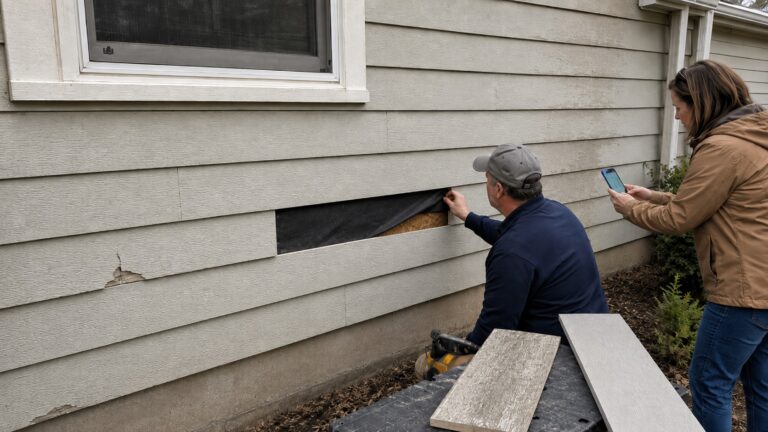
- Moisture entering from exterior surfaces
- Materials that retain moisture over time
When several of these conditions exist together, moisture problems often require coordinated solutions rather than isolated adjustments.
How Professionals May Correct Persistent Moisture Issues
When moisture problems exceed routine control methods, professionals use diagnostic tools and structural improvements to restore proper moisture balance. These solutions address the root causes of persistent dampness rather than only treating visible symptoms.
Ventilation Upgrades
Ventilation upgrades improve airflow capacity and remove humid air more efficiently. Increasing ventilation performance helps reduce condensation cycles and supports faster drying.
Professional ventilation improvements may involve:
- Installing higher-capacity exhaust fans
- Correcting duct routing problems
- Removing airflow obstructions
- Improving airflow balance throughout the bathroom
These upgrades help restore proper humidity control and reduce persistent moisture buildup.
Sealing and Moisture Barrier Improvements
Moisture barriers protect structural materials from repeated exposure to humidity and water intrusion. When existing barriers fail or degrade, moisture can migrate into walls and remain trapped.
Professional moisture barrier improvements may include:
- Correcting failed waterproofing or moisture-resistant layers behind shower and tub surfaces
- Addressing worn or damaged sealing materials
- Replacing damaged moisture-resistant drywall, backer board, or seal materials where needed
- Improving water control around shower, tub, and fixture edges
These improvements reduce the likelihood of long-term moisture retention inside structural materials.
Structural Moisture Correction
In severe cases, moisture problems extend into structural materials that require corrective action. Structural moisture correction focuses on restoring proper drying conditions and eliminating ongoing moisture sources.
Professional structural correction strategies may include:
- Addressing hidden moisture intrusion points
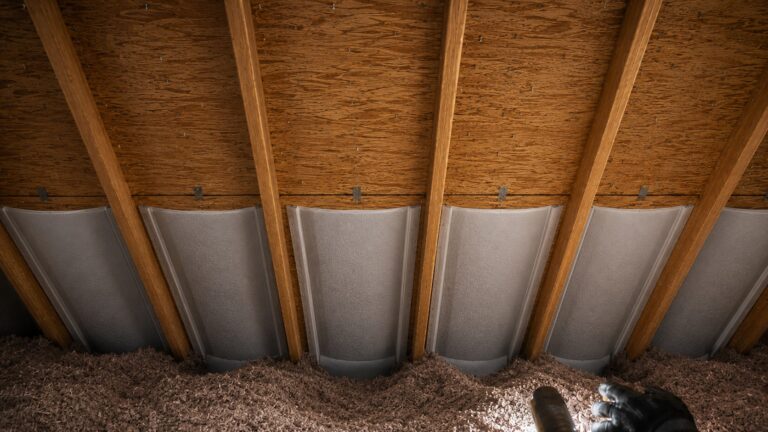
- Improving insulation conditions
- Correcting long-term moisture retention areas
- Restoring proper drying conditions before damaged materials are closed back in
These solutions help stop moisture from remaining trapped inside bathroom materials after normal drying conditions have been restored.
Conclusion
Persistent bathroom moisture problems rarely resolve on their own when dampness continues despite ventilation use and routine drying efforts. Repeated condensation, slow drying surfaces, recurring stains, and returning material damage usually mean the bathroom needs a source-focused correction rather than another surface cleanup.
Understanding the difference between minor humidity issues and persistent moisture problems allows homeowners to respond appropriately. Early troubleshooting can often reduce moisture buildup, but continued symptoms may signal deeper structural or environmental causes that require professional attention.
Long-term success depends on addressing the root causes of moisture rather than only managing surface conditions. Once the active source is corrected, prevention strategies such as those outlined in how to prevent mold behind bathroom walls can help reduce future moisture and mold risk without replacing the need for proper repair.
Key Takeaways
- Persistent bathroom moisture occurs when drying cycles cannot keep up with moisture production.
- Recurring condensation and slow drying surfaces are early signs of chronic moisture problems.
- Ventilation limitations and hidden moisture sources often contribute to long-term dampness.
- Repeated moisture damage usually indicates deeper structural involvement.
- System-level problems may require professional inspection before repainting, resealing, or replacing damaged materials.
- Addressing root causes prevents recurring moisture problems and long-term damage.
Frequently Asked Questions About How to Fix Persistent Bathroom Moisture Problems
What is considered persistent bathroom moisture?
Persistent bathroom moisture occurs when dampness continues to appear repeatedly and surfaces fail to dry completely between uses. Moisture that lingers for hours or returns daily typically indicates an ongoing imbalance in drying conditions.
Why does bathroom moisture keep coming back?
Moisture often returns when ventilation is insufficient, hidden leaks exist, or humidity cycles occur too frequently. Repeated exposure without complete drying allows moisture to accumulate over time.
Can persistent moisture damage bathroom walls?
Yes. Persistent moisture can weaken paint, drywall, and other materials. Over time, repeated dampness may lead to visible deterioration and increase the risk of mold growth.
When should I call a professional for bathroom moisture problems?
Professional evaluation may be necessary when moisture returns despite corrective efforts, spreads to multiple surfaces, or causes recurring damage. Persistent odors and structural changes are also strong indicators that professional inspection is needed.
Can moisture prevention help avoid long-term bathroom damage?
Yes. Preventive measures reduce moisture buildup and improve drying performance. Consistent prevention helps protect materials and reduces the likelihood of persistent moisture returning.
One Comment
Comments are closed.