
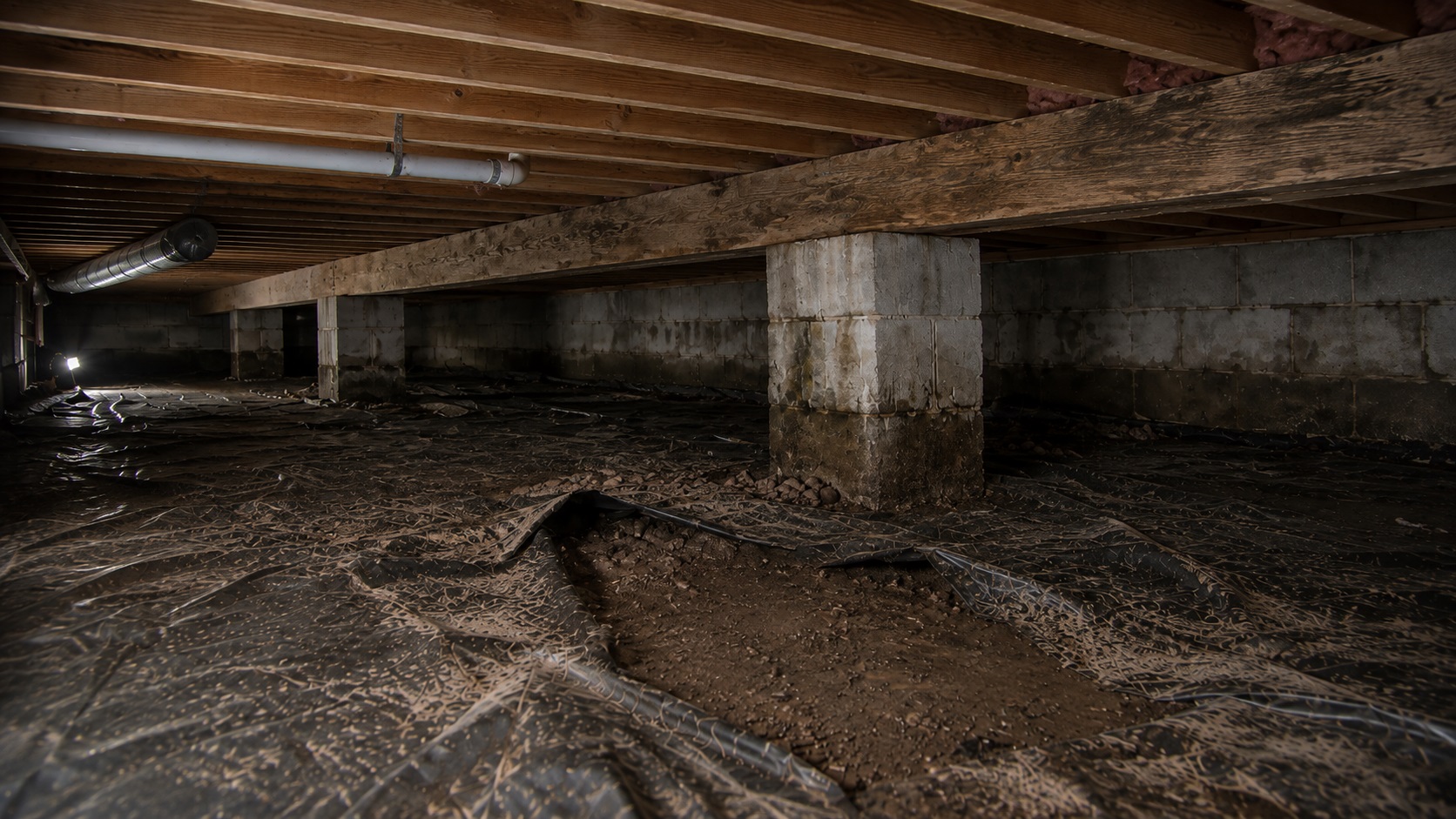
Signs Your Crawl Space Needs Encapsulation
Your crawl space may need encapsulation when moisture signs keep returning, affect more than one material, or begin showing up inside the home. Musty odors, visible mold, sagging insulation, condensation, wet soil, and softening wood all suggest that crawl space moisture is no longer temporary.
Many homeowners first notice symptoms upstairs—such as musty smells, uneven floors, or rising indoor humidity—before realizing the crawl space below is the source. These conditions often develop as part of broader structural moisture problems, which are explained in detail in the Structural Moisture Problems in Homes: Causes, Risks, and Repair Guide.
This article focuses on the warning signs that indicate encapsulation may be needed. It does not explain the full installation process; instead, it helps you recognize when crawl space conditions are moving beyond occasional dampness and toward long-term moisture damage.
Early Crawl Space Signs That Point Toward Encapsulation
Most crawl space problems begin with minor humidity buildup before they become visible damage.
Early-stage warning signs may include:
- Mild musty odors
- Occasional condensation
- Slightly damp materials
If ignored, these conditions often progress into more serious issues such as mold growth, insulation failure, and structural weakening.
Small Symptoms Often Indicate Larger Problems
Visible symptoms often represent only part of the crawl space problem. A faint odor, small mold patch, or damp insulation area may point to elevated humidity that has been present for months.
Understanding these early signals helps prevent the more severe damage patterns described in Signs of Moisture in Crawl Spaces, where long-term exposure leads to structural deterioration.
Encapsulation Is a Preventive Decision
Encapsulation is often considered before severe damage appears. When crawl space humidity keeps returning, sealing the ground, controlling air leaks, and stabilizing moisture can help prevent further deterioration.
If you are unfamiliar with the encapsulation process itself, the system and its function are explained in detail in What Is Crawl Space Encapsulation and How It Works.
Persistent Musty Odors Inside the Home
Musty odors are one of the most common and earliest warning signs of crawl space moisture problems. These odors often appear before visible damage occurs, making them an important early indicator.
Why Musty Odors Often Start in Crawl Spaces
Musty smells typically develop when moisture accumulates in enclosed areas. Crawl spaces contain materials such as wood framing, insulation, and organic debris that absorb moisture over time.
When these materials remain damp, mold and bacteria begin to grow. As microorganisms develop, they release gases that produce the familiar musty smell.
Even when mold is not visible, microbial activity may still be occurring inside hidden areas beneath the home.
How Crawl Space Odors Spread Into Living Areas
Air naturally moves upward through homes due to temperature differences. This movement allows crawl space air to enter living spaces through small openings.
Common pathways include:
- Gaps around plumbing and wiring
- Openings near duct systems
- Cracks between floorboards
- Utility penetrations
As air moves upward, odors travel with it. This is why musty smells are often strongest near floors or inside lower-level rooms.
Homes experiencing these conditions often also show patterns similar to those explained in Why Crawl Spaces Stay Damp, where moisture sources remain active over long periods.
When Musty Odors Suggest Encapsulation May Be Needed
Not every odor indicates severe damage, but persistent smells usually signal long-term moisture conditions.
Encapsulation may be necessary when:
- Musty odors return after cleaning
- Odors become stronger during humid weather
- Smells remain year-round
- Odors are strongest near floors or crawl space access points
These patterns suggest moisture is entering the crawl space continuously rather than occasionally.
If odors are accompanied by visible mold growth, the severity of the issue increases significantly. Mold-related warning signs are described in Signs of Mold Growth in Crawl Spaces.
Visible Mold Growth on Crawl Space Surfaces
Visible mold growth is one of the clearest signs that crawl space moisture is no longer under control. Small patches on joists, subfloor panels, insulation facing, or foundation surfaces often mean humidity has stayed elevated long enough for growth to begin.
Where Mold Commonly Appears in Crawl Spaces
In crawl spaces, mold usually appears first on moisture-holding or organic surfaces.
Common mold locations include:
- Floor joists and beams
- Subfloor panels
- Insulation facing materials
- Foundation walls
- Stored materials or debris
Growth across several surfaces is more concerning than one isolated spot because it suggests the whole crawl space environment is staying damp.
Early-stage mold often appears as small dark spots or light discoloration. More advanced growth may form fuzzy or patchy layers across large surfaces.
Patterns of mold development inside crawl spaces are explained in greater detail in Why Mold Forms in Crawl Spaces, where humidity exposure plays a central role.
When Mold Growth Indicates Encapsulation May Be Needed
Mold growth alone does not always require encapsulation, but recurring or widespread mold strongly suggests long-term moisture problems.
Encapsulation may be necessary when:
- Mold returns after cleaning or treatment
- Mold appears on multiple surfaces
- Growth spreads across structural materials
- Musty odors accompany visible mold
These conditions indicate that moisture exposure continues even after temporary fixes are applied.
When mold growth becomes extensive, cleanup may be needed before encapsulation can begin so the new system is not installed over active contamination.
Damp or Sagging Crawl Space Insulation
Damp or sagging insulation is a strong sign that crawl space humidity has been active for more than a short period. Once insulation absorbs moisture, it can lose effectiveness, hold dampness against framing, and support mold growth.
Why Crawl Space Insulation Becomes Damp
Fiberglass insulation, commonly installed between floor joists, is highly vulnerable to moisture exposure. When humidity rises or condensation forms, insulation absorbs moisture and becomes heavier.
As insulation collects moisture, it loses its ability to maintain proper temperature control. Over time, wet insulation may pull away from framing or collapse entirely.
Common causes of damp insulation include:
- High humidity levels
- Condensation on ductwork
- Ground moisture evaporation
- Air leaks allowing humid outdoor air to enter
These conditions often appear alongside the moisture patterns described in Signs of Moisture in Crawl Spaces, where persistent dampness affects multiple materials.
Why Sagging Insulation Signals Ongoing Moisture Problems
Insulation usually does not sag without repeated moisture exposure, poor support, or long-term deterioration. When insulation detaches from joists or hangs loosely in a damp crawl space, it often indicates ongoing humidity buildup.
Sagging insulation increases the risk of:
- Mold growth inside insulation fibers
- Reduced energy efficiency
- Moisture retention against wood framing
- Structural deterioration over time
If insulation continues to deteriorate despite repairs, encapsulation may be necessary to control the underlying moisture conditions.
Condensation on Pipes, Ducts, or Framing
Condensation inside a crawl space indicates unstable humidity and temperature conditions. When warm, humid air contacts cooler surfaces, water droplets form. Over time, repeated condensation cycles allow moisture to accumulate throughout the crawl space.
This moisture buildup often leads to mold growth, rust, and wood deterioration.
Where Condensation Typically Forms
Condensation most commonly appears on surfaces that cool rapidly or remain cooler than surrounding air.
Typical condensation locations include:
- HVAC ducts
- Plumbing pipes
- Metal fasteners and hangers
- Wood framing near airflow paths
Water droplets forming on these surfaces may drip onto insulation and wood materials, creating ongoing moisture exposure.
Condensation-related moisture patterns are often associated with airflow problems such as those described in Signs of Poor Crawl Space Ventilation.
Why Repeated Condensation Is a Serious Warning Sign
Occasional condensation during unusual weather may not mean encapsulation is necessary. Repeated droplets on pipes, ducts, fasteners, or framing are more serious because they show that crawl space air is regularly reaching dew point.
Encapsulation may be necessary when:
- Condensation appears regularly
- Water droplets drip from ducts or pipes
- Surfaces remain damp between inspections
- Rust begins forming on metal components
Repeated condensation cycles can lead to gradual structural damage and mold development. Stabilizing humidity levels is essential to prevent these long-term effects.
High Humidity Inside the Crawl Space
High humidity is one of the most reliable indicators that crawl space moisture conditions are becoming dangerous. While some moisture is normal in enclosed spaces, consistently elevated humidity levels create conditions that allow mold, wood damage, and insulation failure to develop.
Unlike visible water, humidity problems often go unnoticed until other damage appears. Many crawl spaces remain humid for long periods without showing obvious signs until materials begin to deteriorate.
How High Humidity Develops Beneath a Home
Humidity inside crawl spaces typically builds from multiple sources working together. These sources include ground moisture, humid outdoor air entering through vents, and water intrusion from nearby soil.
Even when liquid water is not visible, water vapor may still be accumulating in the air. Over time, this vapor settles into structural materials and increases moisture content.
Common contributors to high humidity include:
- Exposed soil releasing moisture vapor
- Outdoor air entering through foundation vents
- Poor drainage around the foundation
- Hidden plumbing leaks
- Seasonal humidity changes
These conditions are often linked to the long-term moisture patterns explained in Why Crawl Spaces Stay Damp, where environmental exposure causes ongoing humidity buildup.
Visible Signs of Excess Humidity
Even without specialized tools, high humidity often produces visible changes inside crawl spaces.
Common visual indicators include:
- Damp surfaces that remain wet for long periods
- Sticky or clammy materials
- Rust forming on metal components
- Condensation appearing on pipes or framing
- Persistent musty odors
These signs often appear before major structural damage develops, making early recognition critical.
Why High Humidity Requires Long-Term Solutions
Temporary fixes such as drying surfaces or replacing insulation may not solve persistent humidity problems. When moisture sources remain active, humidity quickly returns.
Encapsulation helps address the root cause by blocking moisture entry and stabilizing humidity levels beneath the home.
If humidity problems continue for extended periods, structural damage may begin to develop. Early intervention helps prevent the severe deterioration described in Signs of Moisture Damage in Floor Joists.
Standing Water or Persistently Wet Soil
Standing water or consistently wet soil is one of the strongest signs that crawl space moisture is not under control. Even shallow puddles can keep humidity elevated when the ground stays damp after rain.
Why Wet Soil Creates Continuous Moisture Problems
Wet soil continuously releases water vapor into the air through evaporation. Even after visible water disappears, the soil beneath the crawl space may remain saturated.
This moisture release raises humidity levels and promotes mold growth on nearby materials.
Over time, recurring wet soil conditions increase the likelihood of structural damage and insulation failure.
Patterns of persistent moisture accumulation are often linked to the drainage problems described in How Water Enters Homes Through Structural Gaps, where water moves into crawl spaces through foundation openings.
Common Causes of Standing Water in Crawl Spaces
Standing water may develop due to several external or structural conditions.
Common causes include:
- Poor grading around the home
- Clogged or damaged gutters
- Downspouts directing water toward the foundation
- Groundwater intrusion during heavy rain
- Broken drainage pipes
Each of these problems increases the amount of moisture entering the crawl space environment.
Water accumulation patterns often match the warning signs explained in Signs of Standing Water in Crawl Spaces, where persistent pooling signals serious drainage failure.
Why Standing Water Requires Immediate Attention
Standing water does not simply evaporate without consequences. As water evaporates, it raises humidity levels throughout the crawl space.
This process accelerates:
- Mold growth
- Wood decay
- Insulation failure
- Metal corrosion
Encapsulation often becomes necessary after drainage corrections are completed, especially when moisture conditions remain unstable.
Do not encapsulate over active standing water, sewage contamination, or unresolved drainage failure; those sources should be corrected before the crawl space is sealed.
Structural Wood Discoloration or Softening
Wood discoloration or softening means moisture has already begun affecting structural materials. Because crawl space framing supports the floor above, these signs deserve more urgency than odor or humidity alone.
Early Signs of Moisture Damage in Wood
Wood exposed to moisture absorbs water and changes in appearance over time. Early-stage damage may appear as subtle discoloration or surface staining.
Common early signs include:
- Darkened or stained wood surfaces
- White or gray mold patches
- Surface cracking or flaking
- Localized soft spots
These changes indicate moisture exposure has persisted long enough to affect material strength.
Damage progression often follows the same patterns described in Signs of Moisture Damage in Floor Joists, where wood fibers weaken over time.
Advanced Wood Damage Indicators
As moisture exposure continues, wood deterioration becomes more visible and more dangerous.
Advanced warning signs include:
- Soft or spongy wood texture
- Wood crumbling when touched
- Visible rot patterns
- Structural sagging or movement
These symptoms may indicate compromised structural integrity. Encapsulation cannot reverse rotten or weakened wood, but it can help prevent further deterioration after damaged materials and water sources are addressed.
Indoor Air Quality Changes Inside the Home
Crawl space moisture can affect indoor air before structural damage becomes obvious. Humidity, odors, and airborne particles may move upward through gaps around plumbing, wiring, ductwork, and subfloor openings.
How Crawl Space Conditions Affect Indoor Air
When crawl space air contains excess humidity, odors, or mold particles, those conditions can show up inside the home as stale air, persistent smells, or humidity that feels hard to control.
Indoor air issues linked to crawl spaces are often connected to mold growth patterns explained in Why Mold Forms in Crawl Spaces, where persistent moisture allows spores to spread.
Common Indoor Symptoms Linked to Crawl Space Moisture
Indoor air quality changes caused by crawl space moisture may include:
- Allergy-like symptoms that seem worse in damp or musty conditions
- Frequent respiratory irritation
- Persistent musty smells
- Higher indoor humidity levels
- Condensation on windows
These symptoms often appear gradually and may worsen during humid weather.
If indoor air quality problems occur alongside visible crawl space moisture, encapsulation may be necessary to stabilize environmental conditions.
When Multiple Warning Signs Appear Together
One warning sign alone may not always indicate a serious moisture problem. However, when multiple symptoms appear at the same time, the risk of long-term structural damage increases significantly.
Multiple warning signs suggest that moisture exposure has been ongoing rather than temporary.
Common Symptom Combinations That Indicate Risk
Some combinations of symptoms strongly indicate that crawl space moisture problems are worsening.
High-risk combinations include:
- Musty odors combined with visible mold
- Sagging insulation combined with condensation
- Standing water combined with wood discoloration
- Rust formation combined with damp surfaces
These combinations indicate that moisture is affecting multiple materials simultaneously.
When several warning signs develop together, long-term solutions such as encapsulation become more likely.
Why Multiple Symptoms Increase Structural Risk
Each warning sign represents a specific type of moisture damage. When multiple signs appear together, the cumulative effects accelerate structural deterioration.
For example, condensation increases humidity, while sagging insulation traps moisture against wood framing. Together, these conditions create ideal environments for mold growth and wood decay.
Understanding these patterns helps homeowners recognize when problems are escalating rather than stabilizing.
When to Seek Professional Crawl Space Evaluation
While homeowners can identify many warning signs, professional inspections are often necessary to confirm the severity of moisture problems. Crawl spaces can contain hidden hazards that are difficult to evaluate without specialized tools.
Professional evaluations help determine whether encapsulation is appropriate and identify conditions that must be repaired first.
A single short-term symptom after unusual weather does not always mean encapsulation is required. The stronger warning pattern is moisture that returns, spreads, or affects odors, insulation, wood, and indoor humidity at the same time.
When Mold Growth Covers Large Areas
Small patches of mold may be manageable, but widespread mold growth usually indicates persistent humidity exposure.
Professional evaluation becomes necessary when:
- Mold appears on multiple structural surfaces
- Mold returns after repeated cleaning
- Strong odors remain despite ventilation
- Visible mold spreads over time
Extensive mold contamination should be evaluated before encapsulation so cleanup, moisture correction, and sealing happen in the right order.
When Structural Changes Become Noticeable
Structural symptoms often signal advanced moisture damage. Floors that feel soft, uneven, or unstable may indicate deterioration beneath the home.
Professional inspection is recommended when:
- Floors begin to sag
- Subfloor movement becomes noticeable
- Structural wood appears weakened
- Damage spreads across multiple areas
Addressing structural concerns early helps prevent more expensive repairs later.
When Standing Water Persists After Rainfall
Standing water that remains after rainfall suggests drainage problems that require professional correction.
Persistent water accumulation increases the risk of mold growth and structural deterioration.
Drainage failures often follow patterns explained in Signs of Standing Water in Crawl Spaces, where repeated pooling signals significant water intrusion.
Frequently Asked Questions About Crawl Space Encapsulation Warning Signs
How many warning signs mean encapsulation is necessary?
There is no fixed number, but encapsulation becomes more likely when several signs appear together, such as musty odors, sagging insulation, repeated condensation, wet soil, and mold on structural surfaces. The pattern matters more than the count.
Can one symptom indicate serious moisture problems?
Yes. Standing water, soft wood, widespread mold, or insulation that repeatedly falls from the joists can indicate a serious problem even if other symptoms are not obvious yet.
Are musty odors always caused by crawl space moisture?
Not always, but crawl spaces are a common source of persistent musty odors. When odors originate near flooring or worsen during humid conditions, crawl space moisture should be investigated.
Does condensation always mean encapsulation is required?
No. Brief condensation during unusual weather may be temporary. Repeated condensation on pipes, ducts, fasteners, or framing is more concerning because it shows the crawl space is staying humid often enough to wet surrounding materials.
How quickly do crawl space problems worsen?
The speed of damage progression depends on humidity levels, temperature conditions, and material exposure. Some problems worsen within months, while others take years to become severe.
Regular inspection helps detect early changes before major damage occurs.
Conclusion
Crawl space encapsulation becomes worth considering when moisture signs are persistent, recurring, or affecting several materials at once. Musty odors, visible mold, sagging insulation, repeated condensation, wet soil, and softening wood all point to conditions that may continue worsening without long-term moisture control.
If warning signs are already present, the next step is to confirm the moisture source and decide whether sealing, drainage correction, humidity control, and encapsulation are appropriate. A detailed explanation of the system is provided in What Is Crawl Space Encapsulation and How It Works.
Key Takeaways
- Persistent musty odors are often one of the first signs of crawl space moisture problems.
- Visible mold growth indicates ongoing humidity exposure that requires long-term solutions.
- Sagging insulation signals repeated moisture buildup beneath the home.
- Condensation on pipes and ducts suggests unstable humidity conditions.
- Standing water and wood damage indicate advanced moisture exposure.
- Multiple warning signs appearing together significantly increase structural risk.
- Professional inspection helps determine whether encapsulation is necessary.
One Comment
Comments are closed.