
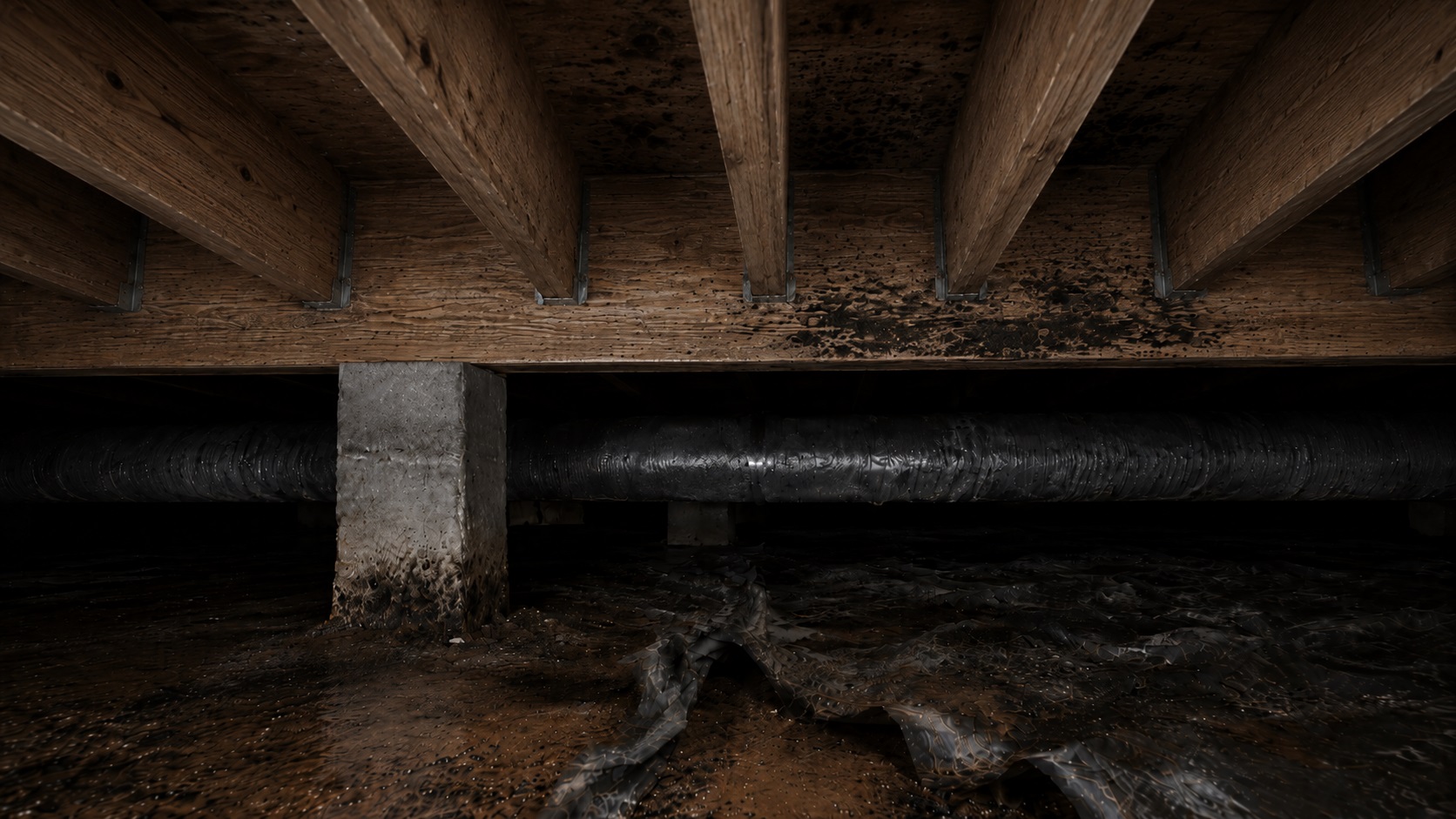
Why Mold Forms in Crawl Spaces
Mold forms in crawl spaces when moisture stays in contact with wood, insulation, dust, or other organic material long enough for spores to grow. The moisture may come from damp soil, missing vapor barriers, poor drainage, humid outdoor air, condensation on cold surfaces, plumbing leaks, or standing water.
This is why crawl space mold often returns after cleaning. Surface treatment may remove visible growth, but mold can develop again if the crawl space still has high humidity, wet soil, condensation, or materials that never fully dry.
If you have already noticed visible growth or musty odors beneath your home, reviewing signs of mold growth in crawl spaces can help confirm whether mold is actively present. This article focuses on the next question: what allowed the mold to form in the first place?
This cause-focused article fits into the larger pattern explained in why moisture problems keep returning, because crawl space mold usually comes back when moisture entry, vapor movement, or trapped humidity is still active beneath the home.
The Conditions Mold Needs to Grow
Mold forms when moisture, food, temperature, and time overlap. In crawl spaces, the condition homeowners can usually control most directly is moisture.
The four essential conditions that allow mold to develop include:
- Moisture — damp air, wet soil, condensation, seepage, or leaks
- Organic material — wood framing, paper-faced insulation, dust, cardboard, or debris
- Moderate temperatures — common in enclosed crawl spaces for much of the year
- Time — moisture that remains long enough for spores to colonize surfaces
Crawl spaces often provide these conditions at the same time. Structural wood, paper-faced insulation, cardboard debris, and dust can all support mold once moisture is present. Limited light and slow air movement also mean damp materials may stay wet longer than homeowners expect.
Even small moisture sources can support mold growth when they persist long enough. Many homeowners assume that mold requires flooding or major leaks, but this is not always true. In fact, slow moisture buildup is one of the most common causes of crawl space mold problems.
If your crawl space remains damp for extended periods, the conditions that allow mold growth are already in place. Reviewing why crawl spaces stay damp can help explain why moisture often remains trapped beneath homes long after wet conditions begin.
Ground Moisture and Vapor Movement
One of the most common reasons mold forms in crawl spaces is moisture rising from the soil beneath the home. Even when the ground appears dry, soil naturally contains moisture that slowly evaporates into the air. This process, known as vapor movement, can steadily increase humidity levels inside crawl spaces.
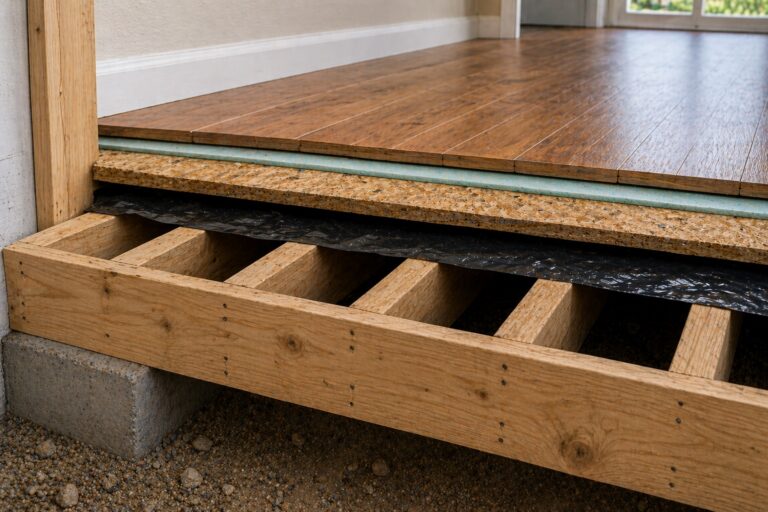
When crawl spaces lack proper vapor barriers, moisture vapor rises continuously from the ground. Over time, this vapor accumulates in the air and settles onto cooler surfaces such as wood framing and insulation. These materials absorb the moisture, creating conditions that support mold growth.
Ground vapor is especially likely to be involved when the problem is spread across the crawl space instead of limited to one pipe, duct, or foundation corner. Typical signs include:
- Damp soil beneath the crawl space
- Water droplets forming on plastic sheeting
- Wood framing that feels slightly cool or damp
- Persistent humidity despite no visible leaks
Homes without a continuous ground vapor barrier are especially vulnerable. Thin plastic that is torn, loosely overlapped, unsealed at seams, pulled away from piers, or missing along edges can still allow steady vapor release into the crawl space.
If moisture symptoms are already present in the crawl space, reviewing signs of moisture in crawl spaces can help identify whether ground moisture is contributing to mold conditions.
Poor Drainage Around Foundations
Exterior drainage often determines how wet a crawl space becomes after rain. When gutters, downspouts, grading, or low spots leave water near the foundation, moisture can move into the crawl space through soil, foundation openings, block walls, or perimeter gaps.
Common drainage-related causes include:
- Short or disconnected downspouts
- Clogged gutters that overflow during rainfall
- Improper ground slope directing water toward the home
- Low spots near foundation walls
When water collects near the foundation, soil moisture increases and eventually transfers into the crawl space. This leads to elevated humidity levels that support mold formation over time.
Drainage problems often show up first near the foundation wall, low side of the crawl space, or area below overflowing gutters. Mold or damp staining concentrated along the perimeter is a clue that exterior water management may be part of the cause.
Water intrusion from outside the home may also result in periodic standing water during heavy rainfall. Even temporary water pooling can significantly increase humidity levels, allowing mold to form long after visible water disappears.
High Humidity Entering Through Crawl Space Vents
Many crawl spaces rely on vents to promote airflow and reduce moisture buildup. However, in humid climates or during warm seasons, these vents can actually introduce additional moisture into the crawl space.
When warm outdoor air enters through vents and encounters cooler surfaces inside the crawl space, condensation may occur. This condensation forms moisture droplets that settle onto wood framing, insulation, and other materials.
This process explains why some crawl spaces remain damp even when no leaks or flooding events have occurred. In areas with high outdoor humidity, ventilation alone may not be enough to prevent mold formation.
Typical humidity-related causes of mold include:
- Warm humid air entering crawl space vents
- Cool structural surfaces collecting condensation
- Seasonal humidity increases during summer months
- Insufficient airflow to remove trapped moisture
In some homes, increased ventilation can unintentionally raise humidity levels rather than reduce them. This is especially true when outdoor air contains more moisture than indoor air.
If mold appears to return seasonally, humidity-driven moisture may be contributing to the problem. Understanding the connection between airflow and moisture buildup helps explain why mold can develop even in crawl spaces that appear well ventilated.
Condensation on Cold Surfaces
Condensation is another major reason mold forms in crawl spaces, especially when temperature differences exist between indoor air and structural materials. This process occurs when warm, humid air contacts cooler surfaces, causing moisture to form as water droplets.
Condensation often develops on surfaces such as:
- Metal ductwork carrying cool air
- Cold water pipes
- Foundation walls in shaded areas
- Uninsulated structural components
These cold surfaces create localized moisture zones that remain damp for long periods. Even when the surrounding crawl space appears dry, condensation can provide enough moisture to support mold growth in specific areas.
Typical signs of condensation-related moisture include:
- Water droplets forming on pipes or ducts
- Localized mold patches beneath mechanical systems
- Rust forming on metal components
- Wet insulation near cold surfaces
Condensation problems are often seasonal. For example, during summer months, warm outdoor air entering crawl spaces can cause moisture to collect rapidly on cool surfaces. Without proper insulation or humidity control, mold growth can develop repeatedly in these areas.
Standing Water, Plumbing Leaks, and Repeated Wetting
Standing water is one of the most obvious contributors to mold formation, but it is not always the most common. When water pools beneath a home, humidity levels increase dramatically, allowing mold to spread quickly across nearby materials.
Standing water typically results from:
- Heavy rainfall that temporarily floods low areas under the home
- Foundation seepage during wet weather
- Broken, dripping, or sweating plumbing pipes
- Condensate drain or HVAC drainage problems
- Exterior grading that sends water back toward the crawl space
Even when standing water disappears, moisture often remains trapped in surrounding materials. Wood framing, insulation, and soil can retain water long after surface puddles are gone.
This lingering moisture creates an ideal environment for mold development. If water intrusion has occurred recently, reviewing how to dry crawl spaces after moisture exposure can help reduce long-term humidity before mold spreads further.
Repeated water accumulation significantly increases the risk of large-scale mold growth. Crawl spaces that experience periodic flooding or seepage are especially vulnerable.
Failed or Incomplete Vapor Barriers
A vapor barrier can be present and still fail if it is not continuous. The weak points are usually seams, edges, piers, punctures, and areas where the plastic has shifted away from the soil.
Common vapor barrier problems include:
- Bare soil exposed around edges or support piers
- Torn, punctured, or brittle plastic sheeting
- Loose overlaps instead of sealed seams
- Plastic displaced by pests, workers, storage, or previous repairs
- Water trapped on top of the barrier instead of draining away
Even small gaps in vapor barriers allow moisture to escape into the crawl space. Over time, this steady vapor release increases humidity and encourages mold growth on nearby surfaces.
What to Check First When Looking for the Cause
When trying to understand why mold formed, look for the moisture pattern before focusing on the mold itself. Mold spread evenly across joists often points to high humidity or ground vapor. Mold concentrated near one wall may point to drainage or foundation seepage. Mold below a pipe, duct, or HVAC line may point to condensation or a small leak.
Also check whether the crawl space has bare soil, torn vapor barrier seams, standing water stains, rust on metal parts, wet insulation, or wood that feels cool and damp. These clues usually reveal whether the main cause is vapor, bulk water, condensation, or repeated wetting.
Why Mold Often Keeps Returning
Recurring crawl space mold usually means the moisture source is still active. Cleaning visible growth does not correct damp soil, missing vapor barriers, humid vent air, condensation, seepage, or incomplete drying.
Common reasons mold returns include:
- Hidden moisture sources that remain active
- Seasonal humidity changes
- Incomplete drying after water exposure
- Persistent airflow or ventilation problems
This is why crawl space mold may seem seasonal. Growth may slow during dry periods, then return when outdoor humidity rises, soil moisture increases, or condensation begins forming again on cooler surfaces.
If mold repeatedly returns despite cleaning, it may indicate a deeper moisture issue requiring long-term correction. In these cases, reviewing how to fix persistent crawl space moisture problems can help identify when more comprehensive solutions are needed.
If mold covers a large area, insulation is contaminated, wood appears soft, or the crawl space has sewage, floodwater, or unsafe electrical conditions, stop DIY inspection and contact a qualified remediation or crawl space professional.
How Long It Takes Mold to Develop in Crawl Spaces
Mold may not be visible immediately after a crawl space becomes damp, but growth can begin quickly when wood, paper, dust, or insulation stay wet.
Under favorable conditions, mold can begin growing within 24 to 48 hours after materials become damp, although visible colonies often take longer to notice. In crawl spaces, the problem is often discovered after moisture has been present for days, weeks, or repeated seasonal cycles.
The speed of mold formation depends on several factors, including:
- Humidity levels inside the crawl space
- Temperature consistency
- Amount of organic material available
- Airflow and drying conditions
Short-term moisture exposure may not always result in visible mold, especially if materials dry quickly. However, repeated dampness creates long-term risk. Even minor moisture events that occur frequently can eventually allow mold to develop.
In many homes, mold problems grow slowly and remain unnoticed until the damage becomes widespread. Crawl spaces are rarely inspected regularly, allowing moisture to persist long enough for mold colonies to expand.
Why Some Crawl Spaces Are More Vulnerable Than Others
Not all crawl spaces develop mold at the same rate. Risk depends on soil moisture, drainage, climate, air movement, vapor control, and how often the area is inspected.
Several factors increase mold risk, including:
- Homes built on damp or poorly drained soil
- Older crawl spaces lacking vapor barriers
- Limited airflow due to blocked vents
- Frequent seasonal humidity changes
- Homes located in areas with heavy rainfall
Crawl spaces built without moisture control features are especially vulnerable. In older homes, vapor barriers may never have been installed, or existing materials may have deteriorated over time. These conditions allow moisture to accumulate gradually.
Seasonal weather also plays a significant role. During warm months, humidity levels often rise, increasing condensation risks. During cooler months, trapped moisture may remain inside crawl spaces due to limited airflow.
If your crawl space shows recurring moisture symptoms, reviewing signs of moisture in crawl spaces can help determine whether conditions are consistently favorable for mold development.
Frequently Asked Questions About Why Mold Forms in Crawl Spaces
What causes mold in crawl spaces most often?
The most common causes include ground moisture rising from soil, poor drainage around foundations, high humidity entering through vents, and condensation forming on cold surfaces. These conditions allow moisture to remain long enough for mold to grow.
Does ventilation prevent crawl space mold?
Ventilation only helps when the incoming air is drier than the crawl space air and can actually remove moisture. In humid weather, open vents may bring in damp air that condenses on cooler framing, pipes, ducts, or foundation surfaces.
Can humidity alone cause crawl space mold?
Yes. High crawl space humidity can keep wood, dust, and insulation backing damp enough for mold growth even when there is no visible leak or standing water.
Why does mold keep coming back in crawl spaces?
Mold usually returns when the underlying moisture source has not been corrected. Cleaning visible mold does not eliminate humidity, condensation, or vapor movement that supports continued growth.
How quickly can mold start forming in crawl spaces?
Mold can begin growing within 24 to 48 hours when crawl space materials stay damp, but visible colonies may take longer to notice. Repeated dampness over days or weeks is often what turns a small moisture problem into visible mold.
Conclusion
Mold forms in crawl spaces when moisture remains long enough for spores to colonize wood, insulation, dust, or other organic material. The cause may be ground vapor, poor drainage, humid vent air, condensation, standing water, plumbing leaks, or failed vapor control.
The most important step is identifying the moisture pattern. Once you know whether the problem is coming from soil, outside drainage, condensation, leaks, or trapped humidity, you can choose the right drying, repair, or prevention strategy instead of repeatedly cleaning mold that is likely to return.
For this reason, the cause matters more than the visible mold pattern alone: two crawl spaces can look similar but require different fixes if one is driven by ground vapor and the other by exterior drainage or condensation.
2 Comments
Comments are closed.