
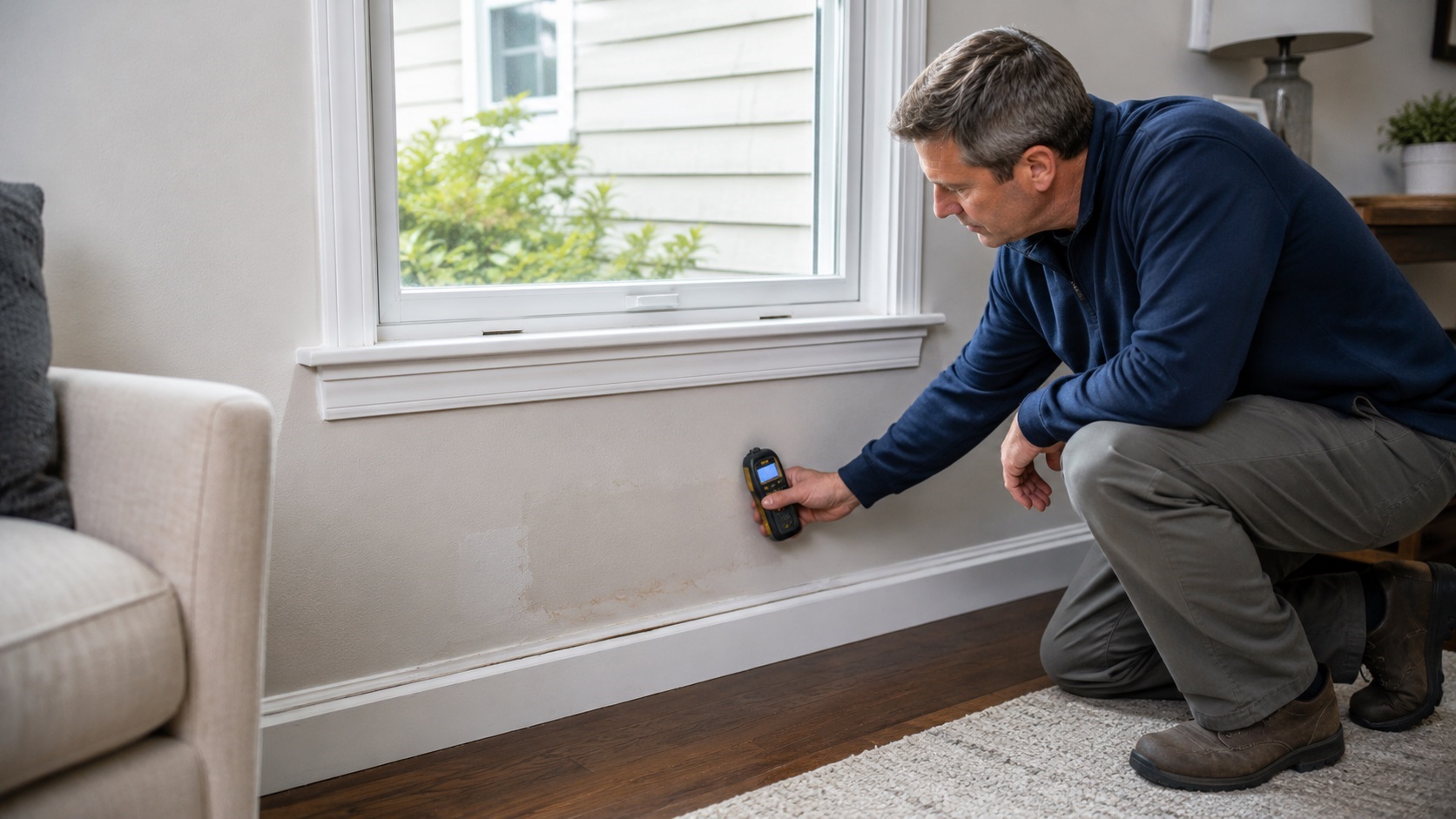
Why Moisture Problems Keep Returning
Moisture problems usually come back for one reason: the visible symptom was treated, but the moisture system behind it was not fully controlled. A stain may be painted over, mold may be cleaned, a damp floor may be dried on the surface, or a leak may be patched, but if the source, pathway, trapped moisture, airflow problem, humidity condition, or damaged material remains, the problem can return.
This is why recurring moisture problems are often more frustrating than a single obvious leak. The homeowner may feel like the issue was already fixed, yet the same wall stains again, the same room smells musty, the same cabinet base swells, the same floor feels damp, or the same mold returns after cleaning. In those situations, the problem is not just “water damage.” It is a repeat pattern that needs to be understood as a system.
This guide explains why moisture problems keep returning, how to recognize the difference between a one-time event and a recurring pattern, and how to think through the most common reasons moisture keeps showing up after cleaning, drying, or repairs. For the broader sitewide framework, see how to find, fix, and prevent moisture problems in homes.
This guide is not a full repair manual for every leak, wall, floor, attic, crawl space, HVAC system, or appliance. Instead, it helps you understand the repeating pattern so you can move into the right next article, whether you need to identify signs moisture is returning after repairs, understand why moisture returns after cleanup, learn how to detect repeated moisture problems, or monitor an area after a leak repair.
Why Moisture Problems Come Back After You Think They Are Fixed
Moisture problems often return because the first fix addressed what could be seen instead of what was causing the moisture to keep moving, collecting, or staying trapped. A wet spot on drywall may be the visible result, but the real issue could be a slow pipe leak, condensation inside a wall cavity, roof water traveling down framing, poor attic ventilation, damp insulation, exterior drainage failure, or moisture rising from a crawl space.
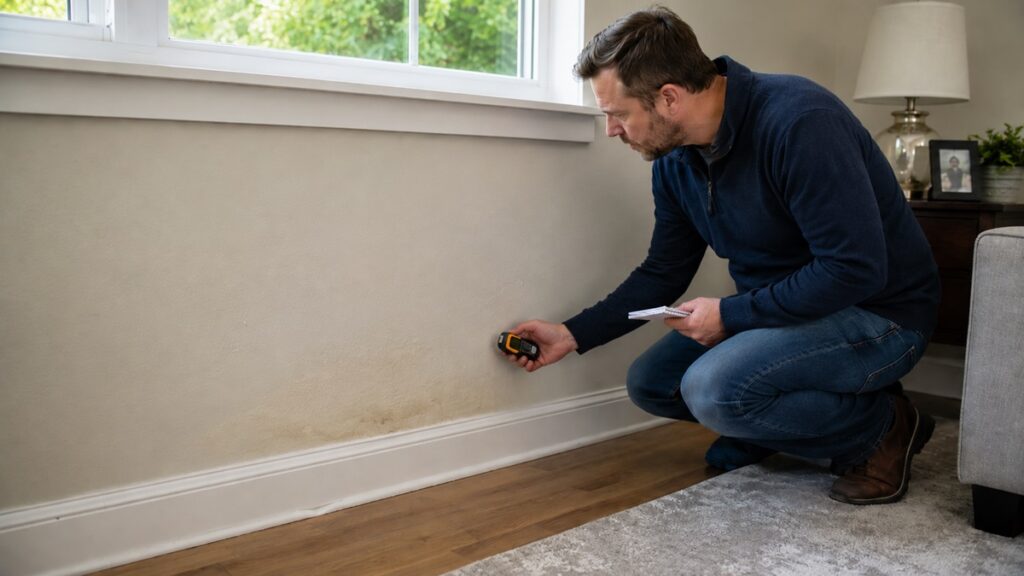
A recurring moisture problem usually has three parts: the source, the path, and the symptom. The source is where the water or humidity is coming from. The path is how that moisture moves through air, surfaces, cavities, materials, or structural gaps. The symptom is what the homeowner sees, smells, or feels. Most repeat problems happen because the symptom was treated before the source and path were fully understood.
When the visible symptom is treated by itself, the home may look better for a while. The wall may be repainted. The cabinet may be wiped clean. The carpet may feel dry. The odor may fade after ventilation. But if the surrounding materials are still damp, or if the condition that caused the moisture is still active, the same symptom can reappear days, weeks, or months later.
The visible symptom was treated, but the source remained
One of the most common reasons moisture keeps returning is that the source was never fully stopped. This can happen when mold is cleaned without fixing the moisture source, a stain is covered without locating the leak, a window area is dried without correcting the water entry path, or a crawl space is treated without solving ground moisture, drainage, vapor movement, or airflow problems.
In many homes, the visible damage is not located exactly where the water first entered. Water can travel along framing, insulation, pipes, roof decking, subfloor layers, trim, or wall cavities before it becomes visible. That means the place where the stain appears may not be the place where the source begins.
This is especially common with slow leaks, roof leaks, wall leaks, and recurring moisture near cabinets, baseboards, windows, doors, ceilings, and floors. The surface problem may be cleaned or repaired, but moisture keeps returning because the original source is still active somewhere nearby.
The material dried on the surface but stayed wet inside
Another reason moisture returns is that porous materials can look dry before they are dry all the way through. Drywall, wood framing, subfloors, cabinets, insulation, trim, carpet padding, and stored materials can hold moisture inside even after the surface feels normal. When those materials stay damp, they can continue feeding odor, staining, swelling, mold growth, or high humidity in the surrounding area.
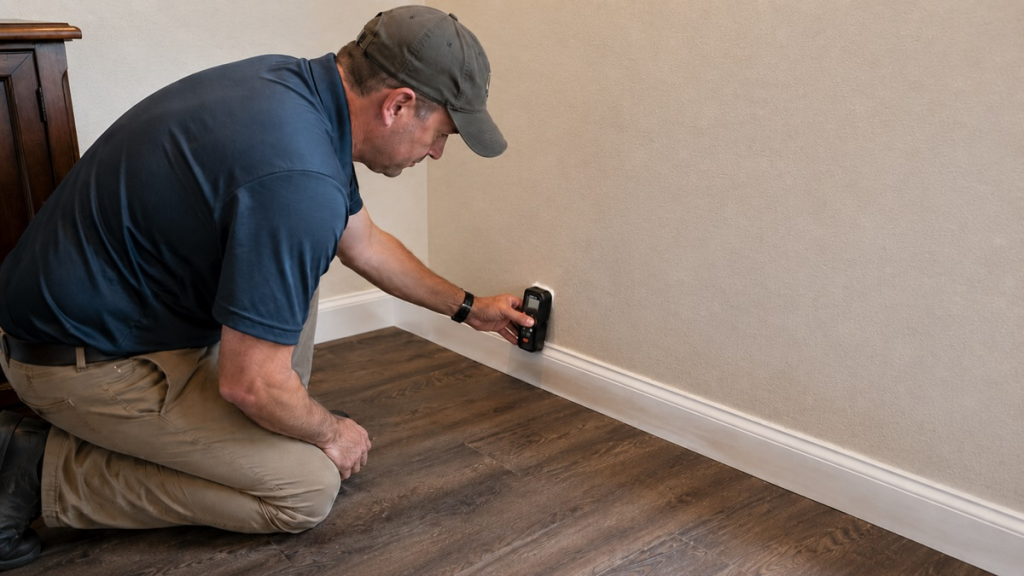
This is why a room can seem dry at first and still develop problems later. Moisture can remain inside the wall, under flooring, behind cabinets, below trim, inside insulation, or in wood components. As temperature, airflow, and humidity conditions change, that hidden moisture can move back toward the surface or create new symptoms.
Surface drying is not always enough. A fan pointed at a room may dry exposed surfaces, but it may not dry the back side of drywall, the underside of flooring, damp insulation, enclosed cabinet backs, or moisture trapped between layers. When the hidden material stays wet, the homeowner may see the same problem return even though the area appeared dry at first.
The repair fixed one pathway but missed the larger system
Some moisture problems return after repairs because the repair fixed one defect but not the larger moisture system. A roof patch may stop water at one shingle but not correct failing flashing. A plumbing repair may stop one drip while another fitting, valve, or drain connection continues to leak. A basement crack may be sealed while exterior drainage still pushes water toward the foundation. An HVAC drain line may be cleared while the underlying condensation or airflow issue remains.
Recurring moisture often means the home has more than one contributing factor. For example, a damp wall might involve a small exterior gap, poor drying, humid indoor air, and absorbent materials that were already wet. A crawl space might involve ground vapor, poor drainage, airflow imbalance, and exposed wood. An attic might involve roof leakage, ventilation problems, insulation contact, and condensation during temperature changes.
When only one part of the system is corrected, the symptoms may improve temporarily but return when the same conditions repeat. This is why repeated moisture problems should be evaluated by pattern, not just by the first visible symptom.
The Main Reasons Moisture Problems Keep Returning
Recurring moisture does not always come from the same kind of failure. Some problems are caused by active water leaks. Others are caused by trapped moisture, poor drying, high humidity, condensation, poor airflow, seasonal weather, exterior drainage, or incomplete repairs. The key is to identify which type of recurrence is happening before choosing the next fix.
Hidden leaks are still active
A hidden leak can keep feeding moisture into the same area even when the surface has been cleaned or repaired. Slow plumbing leaks, roof leaks, appliance leaks, drain leaks, supply line leaks, and leaks around windows or doors can all create repeated dampness without obvious flowing water.
Hidden leaks are especially likely when moisture returns in the same location after use of a fixture, after rain, after HVAC operation, or after an appliance cycle. A bathroom wall that gets damp after showers, a cabinet base that swells under a sink, a ceiling stain that returns after storms, or flooring that softens near an appliance may point to an active source that was not fully corrected.
When the same symptom keeps appearing, the next step is not just to dry the surface again. The better question is what continues to feed that area. If the pattern repeats, the source may still be active even if the leak is too slow or concealed to notice immediately.
Wet materials were never fully dried
Moisture can return after a cleanup because the damaged material was not dried deeply enough. This is common after small leaks, overflows, roof water, wet flooring, damp cabinets, wall moisture, and enclosed spaces that do not get strong airflow. The surface may look normal while moisture remains inside the assembly.
Materials that commonly stay damp include drywall, insulation, subfloors, baseboards, framing, cabinet boxes, carpet padding, ceiling materials, and crawl space wood. If those materials remain damp, they can continue releasing moisture into nearby air or provide conditions for odor and mold to return.
This is one reason homeowners often notice that an area smells musty after it looks dry. The odor may not be coming from the cleaned surface. It may be coming from the material behind it, below it, or inside it. For a cleanup-specific explanation, read why moisture returns after cleanup.
Humidity is still too high
Some recurring moisture problems are not caused by a direct leak at all. They come back because indoor humidity remains high enough to keep surfaces damp, slow drying, or create repeated condensation. This can happen in bathrooms, basements, crawl spaces, closets, laundry areas, kitchens, garages, and poorly ventilated rooms.
High humidity can make a home feel damp even after a repair. It can also make old moisture problems seem to return because materials dry slowly, odors linger, and condensation forms on cooler surfaces. In some homes, humidity remains elevated because wet materials are still drying out. In others, the home keeps generating moisture through everyday use, poor ventilation, damp foundation areas, or inadequate dehumidification.
If humidity stays high after a repair, the problem may need to be tracked separately from the original leak. A repaired leak can stop new water entry, but the home may still need better airflow, dehumidification, ventilation, or source control before the area becomes stable.
Airflow is too weak for the area to dry
Moisture problems return more easily in areas where air does not move well. Closets, cabinets, corners, crawl spaces, attic sections, wall cavities, behind baseboards, under flooring, behind furniture, and inside ducts can all hold moisture longer than open surfaces.
Poor airflow does not always create moisture by itself, but it can keep moisture from leaving. That means a small leak, condensation event, spill, or humidity problem can last much longer in a poorly ventilated area. Over time, the area may develop repeated musty odors, surface mold, damp materials, or recurring stains.
This is why the same house can have one area that repeatedly develops moisture while nearby areas stay dry. The issue may not be that the whole home is wet. It may be that one enclosed or restricted area cannot dry fast enough after moisture enters.
Condensation keeps forming under the same conditions
Condensation-related moisture can return even when there is no active leak. Condensation forms when moist air contacts a cooler surface. If the same temperature and humidity conditions keep repeating, the same surface can keep getting damp.
This often happens around windows, exterior walls, attic surfaces, HVAC ducts, cold corners, poorly insulated areas, bathrooms, basements, and crawl spaces. The homeowner may clean the surface or dry the area, but the moisture returns because the underlying temperature, humidity, and airflow conditions did not change.
Recurring condensation is different from a one-time spill or leak. It is a condition-based problem. The area becomes wet again whenever the indoor air, surface temperature, and airflow pattern recreate the same moisture conditions.
Exterior water is still finding a path inside
Moisture can keep returning when rainwater, groundwater, or exterior drainage continues to reach the same part of the house. This can happen through roof details, siding gaps, window openings, door thresholds, foundation cracks, basement walls, crawl space vents, chimney areas, flashing failures, or exterior wall penetrations.
Exterior water entry is often confusing because the indoor symptom may appear far from the actual entry point. A ceiling stain may begin at a roof or flashing defect. Moisture near a wall may begin at siding, trim, masonry, or a window opening. A damp basement wall may be related to grading, gutters, soil pressure, or exterior drainage rather than the wall surface alone.
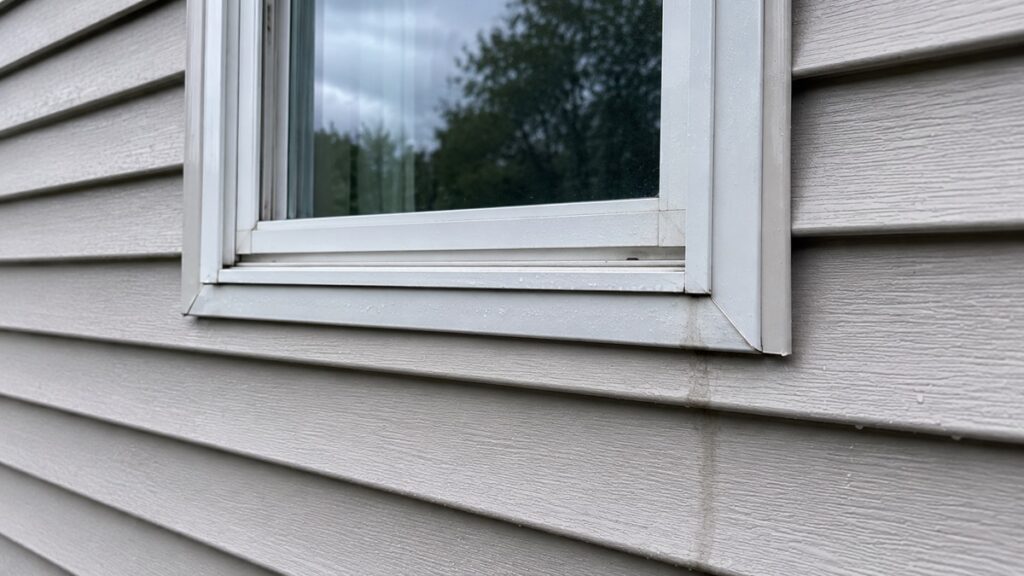
When exterior water keeps finding the same pathway, indoor cleaning or cosmetic repair will not stop the problem. The moisture may disappear during dry weather and return after rain, storms, irrigation, snowmelt, or seasonal groundwater changes. If the pattern is connected to weather, the article on how water enters homes through structural gaps can help narrow the source.
Previous repairs were incomplete or cosmetic
Some moisture problems return because the previous repair improved the appearance without correcting the cause. Painting over a stain, replacing a small section of trim, wiping mold, sealing an interior crack, or drying the visible surface may make the area look finished, but those steps do not always prove the moisture system has been controlled.
A repair can also be incomplete if it fixes only the most obvious defect. For example, a roof leak may be patched where water appeared, while nearby flashing remains vulnerable. A plumbing leak may be fixed at one joint while a damaged cabinet base remains wet. A basement wall may be sealed inside while poor exterior drainage keeps the wall damp.
Recurring moisture after repairs should be evaluated by what happens after normal use, rain, humidity changes, HVAC operation, and seasonal shifts. A repair that looks successful in dry conditions may fail again when the original moisture pressure returns.
Damaged materials were left in place
Moisture problems may continue when damaged materials are left in place after the visible cleanup. Wet insulation, swollen MDF trim, delaminated cabinet bases, damp carpet padding, compromised drywall, mold-contaminated porous material, and softened subflooring can all keep causing symptoms after the original water event appears to be over.
Some materials can dry successfully when the moisture event is limited and drying begins quickly. But repeated moisture, long exposure, hidden wet layers, and organic materials that stay damp are more likely to keep causing problems.
If a material has absorbed moisture deeply, lost structural integrity, or become contaminated, drying the surface may not be enough. In that case, the recurring moisture problem may not be only about new water entering. It may also be about old moisture damage that was never fully removed or repaired.
Seasonal conditions keep recreating the problem
Some moisture problems appear to go away for months and then return during the same season each year. This can happen when humidity rises in summer, condensation worsens in winter, rain patterns change in spring, or outdoor moisture loads increase during certain weather cycles.
Seasonal recurrence is common around windows, exterior walls, basements, crawl spaces, attics, garages, and poorly ventilated rooms. A wall may stay dry during mild weather but become damp when indoor humidity rises. A basement may stay stable during dry months but become damp after spring rain. A window may look fine most of the year but collect condensation during cold weather.
When moisture returns on a seasonal pattern, the problem is usually connected to changing moisture pressure, temperature differences, ventilation, drainage, or humidity. Fixing only the visible symptom will not stop the problem if the same seasonal condition comes back.
How to Tell Whether This Is a Recurring Moisture Problem
Not every damp spot means a moisture problem is returning. A single spill, one-time plumbing overflow, brief window condensation event, or isolated leak can sometimes be handled without becoming a pattern. The concern increases when the same symptom comes back in the same place, under the same conditions, or after the area was already cleaned, dried, repaired, or painted.
Recurring moisture usually has a pattern. The pattern may be based on location, weather, appliance use, plumbing use, humidity, HVAC operation, season, or material behavior. Looking for that pattern is more useful than asking only whether the area is wet today.
The same area gets damp again
The clearest sign of a recurring moisture problem is dampness that returns to the same area. This may be a lower wall, baseboard, ceiling corner, cabinet bottom, floor edge, window trim, closet wall, basement wall, crawl space framing, or attic section.
When the same area gets damp again, the location is giving you a clue. It may be near a leak source, a cold surface, a poor airflow zone, a vapor pathway, an exterior water entry point, or an absorbent material that was not fully dried.
A one-time event usually fades after the source is stopped and the materials dry. A recurring problem repeats because something about that area still allows moisture to collect, enter, condense, or stay trapped.
The problem returns after rain, humidity, or use
Moisture that returns after rain often points toward roof, siding, window, door, foundation, drainage, grading, flashing, or exterior wall problems. Moisture that returns after plumbing use may point toward supply lines, drains, fixtures, appliances, shower assemblies, toilet seals, or sink connections.
Moisture that returns during humid weather may point toward indoor humidity, crawl space moisture, basement dampness, poor ventilation, or inadequate dehumidification. Moisture that returns during HVAC operation may point toward condensate drains, duct condensation, airflow restriction, or equipment-related moisture.
The timing matters because it helps separate source types. If a ceiling stain appears after storms, that pattern is different from a wall that sweats during winter or a cabinet that smells after sink use.
Odor returns before visible damage appears
A musty odor that returns after cleaning is a strong warning sign that moisture may still be present. Odor can appear before staining, swelling, or mold becomes visible. This is especially common inside cabinets, closets, wall cavities, crawl spaces, basements, flooring layers, HVAC returns, and closed rooms.
The odor may become stronger during humid weather, after rain, when the HVAC system runs, or when a room has been closed for several hours. That timing can help locate the moisture pathway. For example, odor that appears after rain may suggest exterior water entry, while odor that appears when air conditioning runs may suggest a duct, drain, or airflow issue.
Do not assume the problem is gone just because the visible surface looks clean. Odor may be coming from materials behind the surface or from air passing through a damp cavity.
Stains, swelling, or mold return after cosmetic repair
Paint, caulk, stain-blocking primer, trim replacement, surface cleaning, and deodorizing can make a moisture problem look better for a while. But if the underlying moisture remains, the symptoms may return through the new surface.
Common repeat symptoms include yellow or brown stains, bubbling paint, peeling caulk, swollen baseboards, soft drywall, cupped flooring, musty odor, dark specks, or discoloration along seams and corners. These symptoms are especially important when they appear in the same place as the original damage.
If a cosmetic repair fails, the next step should not be another cosmetic layer. The area needs source tracing, moisture testing, material evaluation, and monitoring under the conditions that make the problem return.
Why Cleaning Alone Does Not Stop Moisture From Returning
Cleaning can remove the visible symptom, but it does not control the moisture condition that caused the symptom. Mold, mildew, musty odor, cabinet dampness, stained drywall, and surface discoloration can all return if the source, trapped moisture, airflow problem, or humidity condition remains active.
This is why moisture sometimes returns after cleanup. The surface may look better while moisture remains behind baseboards, under flooring, behind cabinets, inside drywall, in insulation, in subfloors, in crawl space wood, or inside HVAC components.
After cleaning or drying a moisture-affected area, the next step is to confirm that the area stays stable under the same conditions that caused the original problem. Watch for returning stains, odor, condensation, swelling, soft spots, mold, or dampness. If the same issue returns, treat the area as unresolved until the source and drying conditions are understood.
For a deeper cleanup-specific explanation, read why moisture returns after cleanup. If the area was repaired and you want to know what to watch afterward, use how to monitor areas after leak repairs.
Why Repairs Sometimes Fail to Stop Recurring Moisture
A repair can be useful and still not solve the full moisture problem. This happens when the repair addresses one visible defect, one damaged surface, or one suspected leak, but the larger moisture pattern remains.
The better test is not whether the surface looks better immediately after repair. The better test is whether the area stays dry under the same conditions that caused the original problem. If the stain returns after rain, the cabinet swells again after sink use, the wall smells musty during humid weather, or the ceiling discolors after another storm, the repair did not fully stabilize the area.
The original diagnosis was incomplete
Repairs often fail when the original diagnosis was too narrow. One obvious issue may be fixed while another source, pathway, or wet material remains active. A roof leak may be blamed on one damaged shingle when flashing, underlayment, roof penetrations, or attic condensation also contribute. A sink leak may be tightened while damp cabinet material remains in place. A basement crack may be sealed while grading or drainage still pushes water toward the foundation.
Recurring moisture requires a wider diagnostic view. The question is not only “What is wet?” but also “Why did this area become wet, what path did the moisture take, what material absorbed it, and what will happen when the same conditions return?”
The repair stopped the leak but not the moisture reservoir
Sometimes the active leak is repaired, but the moisture reservoir remains. A moisture reservoir is any material or space that continues to hold water after the source has stopped. This can include drywall, insulation, framing, cabinets, subfloors, crawl space wood, carpet padding, ceiling materials, and enclosed wall cavities.
When the reservoir remains damp, symptoms can continue even after the leak is fixed. The area may smell musty, surfaces may stain again, humidity may stay elevated, or mold may return because the material itself is still releasing moisture.
This is why leak repair and drying are separate steps. Stopping new water entry is essential, but it does not automatically remove the water already absorbed by surrounding materials.
The repair did not address the conditions that made moisture collect
Some repairs stop an obvious defect but leave the environmental condition unchanged. A bathroom may get a new caulk line while ventilation remains weak. A basement crack may be sealed while humidity stays high. A closet may be cleaned while airflow remains blocked. A window may be wiped dry while condensation continues every cold morning.
In these cases, moisture returns because the house is still creating the same condition. The repair may have addressed one visible path, but the broader moisture balance did not change.
Recurring moisture often stops only when both the source and the supporting conditions are corrected. That may mean fixing the leak, drying the material, improving airflow, reducing humidity, correcting drainage, insulating cold surfaces, or replacing damaged materials.
Common Places Where Moisture Problems Return
Moisture can return anywhere, but repeat problems are most common where water sources, absorbent materials, hidden cavities, poor airflow, and temperature differences overlap. Use the location as a clue, but do not assume the visible area is where the moisture began.
Walls, baseboards, and trim
Walls, baseboards, and trim often show recurring moisture before the source is obvious. Paint may bubble, drywall may discolor, trim may swell, baseboards may separate from the wall, or a musty smell may return near the floor line. The pattern matters: after rain, after plumbing use, during humid weather, near exterior walls, near bathrooms, or near flooring transitions.
Kitchen cabinets and floors
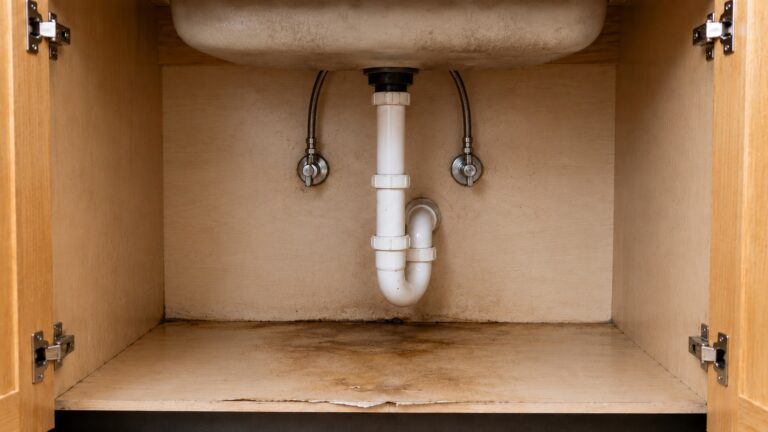
Kitchens are common recurrence zones because they contain plumbing, appliances, cabinets, flooring layers, and enclosed spaces with weak drying. Repeated swelling under a sink, damp cabinet odor, soft flooring near an appliance, or mold behind cabinet panels usually means the area needs source control and deeper drying, not just surface cleaning.
Bathrooms and shower areas
Bathrooms combine plumbing, shower spray, high humidity, wall cavities, and frequent condensation. Moisture may return near shower walls, flooring, toilets, vanities, trim, and ceilings if the leak, ventilation problem, or hidden wet material remains.
Attics, roofs, and ceilings
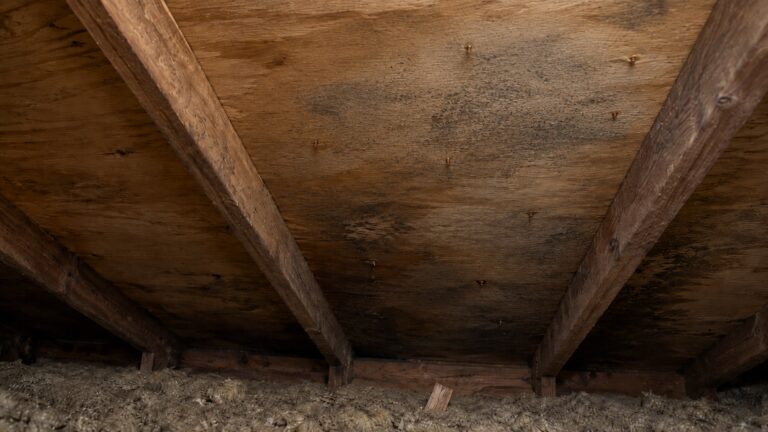
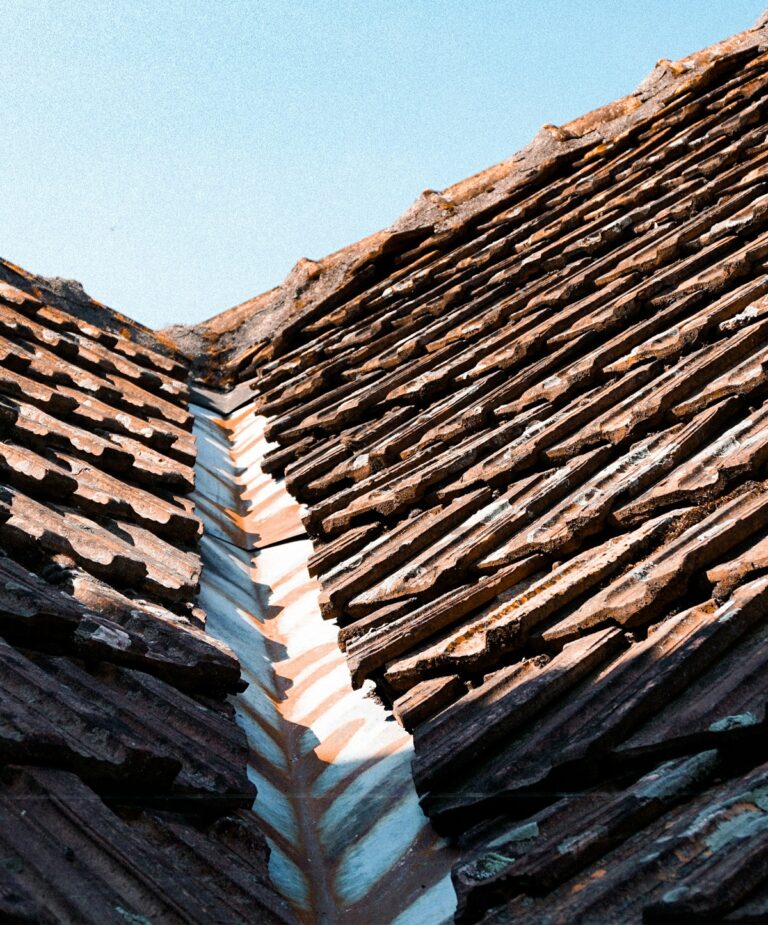
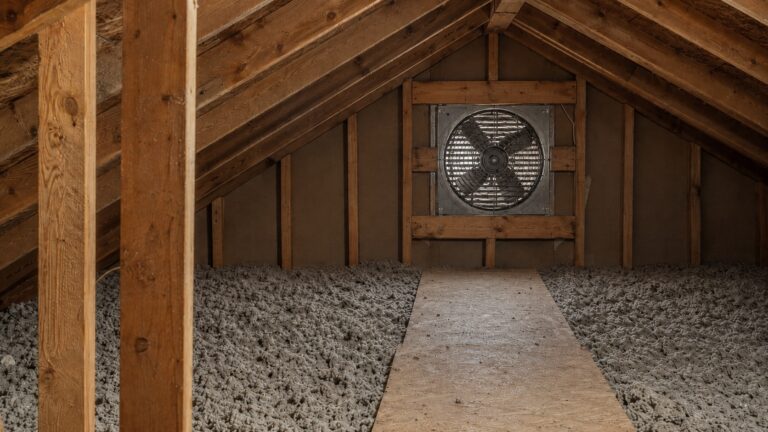
Attic and roof moisture may return after storms, temperature swings, snowmelt, condensation cycles, or incomplete roof repairs. A ceiling stain may be only the final symptom of roof leakage, damp insulation, poor ventilation, or condensation above the ceiling.
Crawl spaces and basements
Crawl spaces and basements often need system-level thinking because soil moisture, drainage, vapor movement, airflow, foundation pressure, insulation, and wood framing interact. A surface treatment may fail if ground moisture, exterior water, or damp air keeps feeding the area.
HVAC systems, ducts, and water heater areas
Mechanical areas can create recurring moisture through drain problems, condensation, leaking components, damp ducts, drain pans, relief valve discharge, or poor airflow. Timing is especially important: symptoms that appear during HVAC operation, appliance cycles, or water heater use usually need system-specific diagnosis.
Exterior walls, windows, doors, garages, and stored items
Exterior walls, windows, doors, garages, and storage areas often repeat moisture problems because they are affected by rain, temperature differences, slab moisture, limited climate control, stored materials, and air leaks. If the problem returns after rain, during seasonal humidity, or around stored boxes and exterior openings, the moisture source may be environmental rather than a single indoor spill.
How to Diagnose the Pattern Before Choosing a Fix
Recurring moisture is easier to understand when you stop looking at each symptom as a separate event and start tracking the pattern. The best clues usually come from timing, location, weather, material behavior, moisture readings, and whether the problem changes after drying, cleaning, or repair.
The goal is not to guess the cause immediately. The goal is to gather enough clues to separate an active leak from trapped moisture, humidity, condensation, airflow weakness, exterior water entry, or incomplete repair.
Track when the moisture returns
Timing is one of the most useful diagnostic clues. Write down when the moisture appears, what was happening before it appeared, and how long it takes to fade. Moisture that returns after rain has a different likely cause than moisture that returns after showers, cooking, laundry, HVAC use, or cold nights.
Helpful timing clues include:
- After rain or storms
- After snowmelt or irrigation
- After showers or bath use
- After sink, dishwasher, washing machine, or refrigerator use
- During high humidity
- During cold weather
- When the air conditioner or furnace runs
- After the room has been closed for several hours
Once the timing becomes clear, the source category usually becomes easier to narrow.
Compare the affected area with nearby areas
A recurring moisture problem often affects one area more than nearby surfaces. Compare the damp area with the same material a few feet away. Look for differences in odor, temperature, staining, swelling, softness, paint condition, trim movement, condensation, or moisture readings.
If one wall, cabinet, floor edge, or ceiling corner behaves differently from nearby areas, the problem may be local. If several rooms or surfaces show similar dampness, the issue may involve whole-house humidity, ventilation, crawl space moisture, basement moisture, or HVAC conditions.
This comparison helps prevent guessing. A damp cabinet bottom under one sink points in a different direction than dampness on several exterior walls during humid weather.
Use moisture readings to confirm what your eyes cannot see
Moisture meters, hygrometers, and humidity monitoring can help confirm whether the area is truly dry or only looks dry. A surface can appear normal while deeper material remains damp. Readings should be compared with nearby dry reference areas, not interpreted in isolation.
A pinless moisture meter can help scan larger surface areas. A pin-type meter can help compare material moisture more directly where small pin holes are acceptable. A hygrometer can show whether indoor humidity is high enough to slow drying or encourage condensation.
If readings remain elevated after the area should have dried, the problem may involve trapped moisture, an active source, or poor drying conditions. If readings rise again after rain, fixture use, or HVAC operation, the timing can point toward the cause.
Do not rely on appearance alone
Appearance can be misleading after a moisture problem. Paint may hide stains. Trim may cover damp drywall edges. Flooring may hide wet subflooring. Cabinets may hide damp backs or bases. Insulation may hold moisture above a ceiling or inside a wall even when the visible surface looks dry.
A recurring problem should be evaluated by pattern, material condition, odor, readings, and source clues. If the area repeatedly smells musty, feels damp, stains again, or shows elevated readings, the visible surface should not be treated as proof that the assembly is dry.
This is especially important before repainting, recaulking, replacing trim, installing new flooring, closing wall cavities, or storing items against the affected area.
When Recurring Moisture Means a Bigger Problem
Some recurring moisture issues are small and local. Others point to a larger system failure that needs professional evaluation. The difference depends on the source, the material involved, how long the issue has continued, whether mold or structural damage is present, and whether the area affects electrical, plumbing, HVAC, roofing, foundation, or framing systems.
A recurring stain or odor should not be ignored just because it dries between events. Moisture that returns repeatedly can cause damage slowly, especially inside hidden assemblies where materials stay damp longer than the surface.
The affected area keeps expanding
If the damp area grows, spreads, or affects new surfaces, the problem may still be active. Expanding stains, spreading mold, widening floor damage, growing ceiling discoloration, or increasing odor suggest that moisture is continuing to move through the home.
Expansion is especially concerning when it follows rain, plumbing use, appliance cycles, or HVAC operation. That pattern can mean the source is not only unresolved but still feeding nearby materials.
A growing moisture area should be treated as an active problem until proven otherwise. Repainting, cleaning, or drying the surface again may delay diagnosis and allow more damage to develop.
Structural materials are involved
Moisture around framing, subfloors, joists, beams, sheathing, roof decking, sill plates, stairs, load-bearing walls, or foundation-adjacent wood should be taken seriously. Structural materials can stay damp inside even when the surface looks improved.
Warning signs include soft wood, dark staining, fungal growth, sagging, cupping, deflection, crumbling materials, repeated swelling, or fastener corrosion. These symptoms may require professional inspection, especially if the moisture has been present for a long time or keeps returning after repair.
Structural moisture problems should not be covered with finish materials until the source is stopped, the affected assembly is dry, and damaged materials are evaluated.
Electrical systems or contaminated water are involved
Recurring moisture near outlets, electrical panels, wiring, lights, appliances, HVAC equipment, or water heaters requires caution. Water and electrical systems should not be handled casually. If moisture is near electrical components, power may need to be shut off and the area evaluated safely.
Contaminated water also changes the situation. Sewage, floodwater, stormwater intrusion, drain backups, or water that has passed through dirty materials can require professional cleanup and material removal. Drying the surface is not enough when contamination is involved.
If the moisture source is unsafe, contaminated, or connected to electrical systems, stop DIY work and bring in qualified help.
Mold keeps returning in the same area
Mold that keeps returning usually means the moisture condition has not been corrected. The issue may be a leak, condensation, high humidity, poor airflow, damp material, or contamination behind the surface. Cleaning visible mold repeatedly does not solve the reason it keeps growing.
Small surface mold on nonporous materials may sometimes be cleaned safely with proper precautions, but recurring mold on porous materials, large areas, hidden cavities, HVAC systems, or repeatedly wet materials needs more careful evaluation.
If mold returns after cleaning, use the mold-specific guide on why mold keeps coming back after cleaning to understand the most likely reasons.
How to Stop Moisture Problems From Returning Long Term
Stopping recurring moisture is not just about drying the surface again. The long-term solution depends on controlling the source, drying the affected materials, correcting the pathway, improving drying conditions, and monitoring the area long enough to confirm that the same pattern does not return.
The exact fix depends on the type of recurrence. A roof leak needs a different solution than condensation. A damp crawl space needs a different solution than a leaking sink drain. A high-humidity room needs a different solution than a wet subfloor. But the process is usually similar: identify the pattern, stop the source, dry the material, correct the conditions, and monitor the area.
Stop the source before repairing finishes
Do not repair the finish layer before the moisture source is controlled. Paint, caulk, trim, flooring, drywall patches, cabinet panels, and ceiling repairs can hide a problem temporarily, but they do not stop water from entering, condensing, or staying trapped.
The source may be a plumbing leak, roof defect, exterior wall gap, foundation moisture, high humidity, condensation, HVAC drain issue, or damp crawl space. Until that source is corrected, repairs to the visible surface are likely to fail again.
Once the source is stopped, repair work is more likely to last because the new materials are not being exposed to the same moisture condition.
Dry the affected assembly, not just the visible surface
A recurring moisture problem often involves materials behind or below the visible surface. Drywall backs, wall cavities, insulation, subfloors, cabinet bases, trim, framing, carpet padding, ceiling cavities, and crawl space wood may need drying, inspection, or replacement.
Drying should be verified by material condition, moisture readings, odor, and time under normal conditions. If an area looks dry but still smells musty, reads elevated, feels soft, or stains again, hidden moisture may still be present.
Avoid closing cavities, installing new flooring, repainting, or replacing trim until the affected materials are stable and dry enough for repair.
Improve airflow and humidity control
Airflow and humidity control help prevent moisture from staying trapped after the source is fixed. This may involve better bathroom ventilation, dehumidification, crawl space control, basement moisture management, improved HVAC airflow, furniture spacing, closet airflow, or better air circulation in enclosed areas.
The goal is not just to move air for a few hours. The goal is to create conditions where materials can dry and stay dry during normal use, seasonal changes, and humidity swings.
If humidity remains high, recurring moisture may continue even after a leak repair. If airflow remains weak, damp materials may take too long to dry and may develop odor, staining, or mold again.
Monitor the area after the repair
A repair is not fully proven the day it is completed. The repaired area should be monitored through the conditions that caused the original problem. If the moisture appeared after rain, check after several rain events. If it appeared after shower use, check after normal bathroom use. If it appeared during humid weather, monitor during humid periods.
Use your senses and simple tools. Watch for odor, staining, swelling, surface dampness, condensation, softness, and changing moisture readings. Compare the repaired area with nearby dry areas. If the readings rise again or symptoms return, the repair may not have solved the full problem.
For a detailed post-repair approach, use the guide on how to monitor areas after leak repairs.
Use prevention articles for system-specific next steps
Once the recurrence pattern is understood, the next step is usually system-specific prevention. A bathroom moisture problem may need ventilation and fixture inspection. A basement moisture problem may need drainage, dehumidification, or waterproofing. A roof-related problem may need flashing or roof repair. A crawl space issue may need vapor control, drainage, and airflow correction.
This guide explains why the problem keeps returning. For a fuller prevention strategy after the pattern is identified, use how to prevent recurring moisture damage.
Related Guides by Recurring Moisture Pattern
If you already know where the moisture keeps returning, use the guides below to move from the general recurrence pattern to the specific source, material, room, or system involved.
Core recurring moisture diagnosis
- Signs of Moisture Returning After Repairs
- Why Moisture Returns After Cleanup
- How to Detect Repeated Moisture Problems
- How to Monitor Areas After Leak Repairs
- How to Detect Moisture After Small Leaks
- Why Hidden Leaks Cause Mold Growth
- Why Some Homes Have Ongoing Moisture Problems
- Why Moisture Problems Come Back
Baseboards, floors, and hidden wet materials
- Why Baseboards Become Moldy After Leaks
- Why Floors Develop Mold After Water Damage
- Why Kitchen Floors Develop Mold After Leaks
- Why Kitchen Floors Stay Wet After Cleaning
- How to Prevent Recurring Moisture Under Kitchen Flooring
Kitchen cabinets and sink areas
- Why Mold Forms Behind Kitchen Cabinets
- How to Prevent Recurring Mold Behind Kitchen Cabinets
- Why Mold Forms Under Kitchen Sink Cabinets
- How to Prevent Recurring Leaks Under Kitchen Sinks
Attics, roofs, and ventilation-related recurrence
- Why Attics Develop Hidden Moisture Problems
- Why Mold Forms in Attic Insulation
- Why Attic Insulation Stays Damp
- How to Fix Persistent Attic Moisture Problems
- How to Monitor Roof Areas After Repairs
- Signs of Recurring Roof Leaks
- Why Roof Leaks Return After Repairs
- Signs of Moisture Caused by Ventilation Failure
- Why Attic Airflow Problems Lead to Mold Growth
- How to Improve Airflow in Attic Spaces
- How to Fix Persistent Structural Roof Moisture Problems
Crawl spaces, basements, and exterior moisture
- Why Basements Stay Damp
- Why Crawl Spaces Stay Damp
- Why Mold Forms in Crawl Spaces
- How to Fix Persistent Crawl Space Moisture Problems
- Why Crawl Space Ventilation Causes Moisture Problems
- Why Crawl Space Airflow Problems Lead to Mold Growth
- Why Crawl Space Encapsulation Systems Fail
- Why Crawl Space Joists Stay Damp
- Why Exterior Walls Stay Damp
HVAC, condensation, airflow, and humidity recurrence
- Why HVAC Systems Develop Moisture Problems
- Why HVAC Systems Stay Damp
- Why HVAC Systems Produce Excess Condensation
- Why HVAC Drain Lines Overflow
- Why HVAC Units Leak Water Indoors
- Why HVAC Ducts Develop Condensation
- Why HVAC Ducts Stay Damp
- Signs of Poor Airflow in HVAC Systems
- How to Detect HVAC Airflow Problems
- Why Poor Airflow Causes Moisture Problems
- Why Humidity Persists After Repairs
- Signs Moisture Conditions Are Becoming Unstable
- Why Condensation Problems Get Worse in Winter
Seasonal, garage, odor, and mold recurrence
- Spring Moisture Problems in Homes: What to Watch For
- Seasonal Moisture Risks Every Homeowner Should Know
- How Stored Items Increase Garage Humidity
- Why Garage Moisture Problems Keep Returning
- Why Musty Odors Return After Cleaning
- Why Odor Problems Persist After Moisture Removal
- Why Mold Returns After Removal
- How Hidden Moisture Causes Recurring Mold
- Why Mold Returns in the Same Locations
- How Poor Drying Causes Mold Recurrence
- How Improper Repairs Lead to Mold Return
- Signs Recurring Mold Indicates Hidden Damage
- Why Mold Returns After Professional Cleaning
- Why Water Heater Leaks Keep Returning
FAQ About Moisture Problems That Keep Returning
Why do moisture problems keep coming back after repairs?
Moisture problems keep coming back after repairs when the repair did not control the full moisture system. The source may still be active, the material may still be wet, the repair may have missed another pathway, humidity may still be high, or the conditions that caused condensation may still exist.
Can a wall look dry but still have moisture inside?
Yes. Drywall, insulation, trim, framing, and wall cavities can hold moisture after the surface looks dry. This is why recurring stains, musty odors, elevated readings, or soft materials should be taken seriously even if the visible surface appears normal.
Why does a musty smell return after drying?
A musty smell may return after drying if hidden materials are still damp, airflow is weak, humidity remains high, mold or microbial growth remains behind the surface, or the original source was not fully corrected. Odor often appears before visible damage returns.
Does recurring moisture always mean there is mold?
No. Recurring moisture can exist before mold becomes visible. However, repeated dampness increases the risk of mold growth, odor, staining, material damage, and indoor air problems. The moisture source should be corrected before mold becomes a larger issue.
Why does mold come back after cleaning?
Mold comes back after cleaning when the surface was cleaned but the growth condition was not corrected. The remaining issue may be a slow leak, damp material behind the surface, high humidity, weak airflow, or recurring condensation. For the mold-specific version of this problem, read why mold keeps coming back after cleaning.
Does recurring moisture always mean there is a leak?
No. Recurring moisture can come from active leaks, but it can also come from condensation, high humidity, damp materials, poor airflow, crawl space moisture, basement dampness, or exterior water entry. The timing and location of the recurrence help identify the source.
How long should I monitor an area after a moisture repair?
Monitor the area through the same conditions that caused the original problem. If the moisture appeared after rain, check after several rain events. If it appeared after plumbing use, monitor after normal use. If it appeared during humid weather, monitor during humidity changes.
When should I call a professional for recurring moisture?
Call a professional if moisture keeps returning after repairs, the affected area is expanding, structural materials are involved, mold keeps returning, electrical systems are nearby, contaminated water is involved, or you cannot identify the source. Persistent moisture often needs deeper inspection than surface cleaning can provide.
Conclusion
Moisture problems keep returning when the home has not reached a stable dry condition. The visible symptom may be cleaned, dried, patched, or repaired, but the problem can come back if the source remains active, materials stay wet, humidity stays high, airflow is poor, condensation keeps forming, or the repair does not address the full system.
A repeated stain, odor, mold patch, damp floor, wet crawl space, sweating duct, or returning leak is a pattern. That pattern can reveal whether the problem is connected to rain, plumbing, HVAC operation, humidity, condensation, poor drying, hidden material damage, or seasonal conditions.
Once you understand the pattern, choose the next guide that matches the problem. If the issue returned after a repair, look for signs moisture is coming back. If it returned after cleaning, investigate why cleanup did not solve it. If you are unsure whether the issue is repeating, learn how to detect repeated moisture problems. And if a repaired area needs to be watched, monitor it through the same conditions that caused the original moisture problem.
10 Comments
Comments are closed.