Why Condensation Problems Get Worse in Winter
Condensation problems often get worse in winter because warm indoor air meets cold indoor surfaces. When moisture in the air touches window glass, exterior wall corners, roof sheathing, cold pipes, or other surfaces that are cold enough, that moisture can turn into visible water droplets. The colder the surface and the higher the indoor humidity, the more likely condensation becomes.
This is why condensation often appears during cold mornings, cold snaps, and long stretches of winter weather. A home may not have an active leak, but it can still have water on windows, damp corners, musty closets, or moisture in attic areas because indoor moisture is repeatedly reaching cold surfaces. If this keeps happening, it can become part of the pattern behind why moisture problems keep returning.
Winter condensation should not be ignored, but it should also not be misread too quickly. Water on the inside of a window does not automatically mean the window is leaking. Moisture on attic sheathing does not always mean the roof is leaking. The first step is understanding how indoor humidity, cold surfaces, ventilation, insulation, and airflow work together during winter.
Why Condensation Often Gets Worse During Winter
Condensation becomes more common in winter because the temperature difference between indoor air and outdoor conditions becomes much larger. The air inside the home is warmed by the heating system, while windows, exterior walls, rim joists, attic surfaces, and other boundary areas become colder because they are closer to the outdoors.
At the same time, normal household activity continues to add moisture indoors. Showers, cooking, laundry, breathing, houseplants, aquariums, damp towels, and humidifiers all release water vapor into the air. Because windows and doors are usually kept closed during winter, that moisture may not leave the home as quickly.
When warm, moist indoor air reaches a cold surface, the air near that surface cools. Cooler air cannot hold as much moisture. If the surface is cold enough, water vapor condenses into liquid water. This is the same reason a cold drink sweats in a warm room, but in a house the “cold drink” may be a window pane, an exterior wall corner, or a cold roof deck.
This is also why condensation may appear even when the whole house does not feel humid. A room can feel comfortable, but if the glass, wall, or sheathing is cold enough, moisture can still collect there. Winter condensation is not only about how much moisture is in the air. It is about the relationship between indoor humidity and surface temperature.
Winter condensation is one seasonal moisture pattern. If the same home also has humidity swings in other seasons, compare it with how seasonal weather affects indoor humidity.
How Cold Surfaces Trigger Winter Condensation
Cold surfaces are the main reason condensation becomes visible in winter. Moisture may be present in the indoor air all year, but it becomes more noticeable when cold materials drop below the temperature at which water vapor condenses. That temperature is commonly called the dew point.
You do not need to calculate dew point to understand the practical issue. If a surface inside the home becomes cold enough and the surrounding air contains enough moisture, condensation can form. The colder the surface, the less humidity it takes for condensation to appear.
Window glass and frames
Windows are the most common place homeowners notice winter condensation because glass is often one of the coldest visible surfaces inside the home. Moist indoor air touches the cold glass, cools down, and releases water as droplets. Those droplets may collect at the bottom of the pane and run onto the sill.
This does not always mean the window is leaking. Interior condensation usually appears on the room side of the glass, especially overnight or early in the morning. A true exterior leak is more likely to show staining, water trails, soft trim, or moisture after rain or melting snow.
Window condensation becomes more likely when indoor humidity is high, curtains trap air against the glass, blinds are closed tightly, airflow is weak, or the window has poor insulating value. Older windows, single-pane glass, metal frames, and damaged seals can make the glass colder, but even good windows can develop condensation if indoor humidity is too high for the outdoor temperature.
For a deeper window-specific explanation, see why windows develop condensation and mold around glass, frames, and trim.
Exterior wall corners
Exterior wall corners often become condensation points because they are colder than open wall areas and receive less air circulation. Corners may have more framing, less effective insulation, or thermal bridging that transfers outdoor cold inward. When warm indoor air reaches that cold corner, moisture can collect on the surface.
This is why mold or damp staining sometimes appears in upper corners, lower corners, or behind trim during winter. The area may not be leaking from outside. It may simply be cold enough for indoor moisture to condense repeatedly.
Exterior corners are especially vulnerable when furniture, curtains, or storage blocks airflow. Without air movement, the corner stays colder and dries more slowly. Over time, repeated condensation can affect paint, drywall paper, baseboards, and nearby stored items.
Behind furniture and inside closets
Condensation can also form behind furniture placed against exterior walls. Large furniture pieces reduce airflow and trap a pocket of cooler air against the wall. If indoor moisture reaches that area, the wall surface may stay damp without being visible during daily use.
Closets can have a similar problem. A closet on an exterior wall may be cooler than the room, especially if the door stays closed and clothing or boxes are packed tightly against the wall. The air inside the closet becomes stagnant, surfaces dry slowly, and musty odors may develop.
Winter closet condensation is often mistaken for a mysterious mold problem because there may be no obvious leak. The real issue may be poor airflow, cold wall surfaces, and indoor humidity collecting in an enclosed space.
Attic and roof surfaces
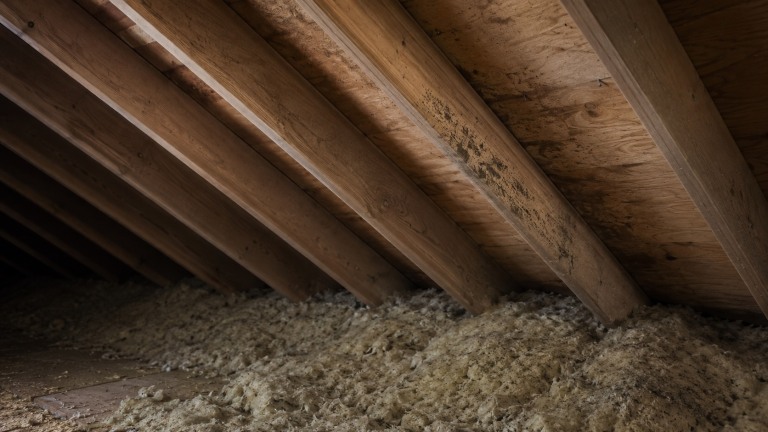
Attics can also develop condensation in winter when warm, moist indoor air leaks upward into the cold attic. Once that air reaches cold roof sheathing, rafters, nails, or other surfaces, moisture can condense. In cold climates, it may even appear as frost before melting later.
Attic condensation can be confused with a roof leak because both can leave stains, damp insulation, or wet sheathing. The difference is often in the pattern. Condensation may be widespread across cold sheathing or appear during cold weather even without rain, while roof leaks often follow specific water entry paths from flashing, shingles, valleys, penetrations, or damaged roof areas.
If you see damp roof sheathing, frost, wet insulation, or staining during cold weather, it may help to compare the pattern with common signs of roof condensation in attics. Attic condensation deserves attention because repeated wetting can affect insulation, sheathing, framing, and indoor air quality over time.
Why Indoor Moisture Builds Up in Winter
Winter condensation is not caused by cold surfaces alone. Moisture also has to be present in the indoor air. During winter, normal household moisture continues, windows stay closed, ventilation is often reduced, and humidifiers may be used more often. A home can even feel dry to your skin while still carrying enough moisture to condense on cold glass, exterior walls, or attic sheathing.
Showers, cooking, laundry, and normal daily moisture
Everyday activities add water vapor to indoor air. Showers, cooking, boiling water, dishwashers, damp towels, indoor drying racks, houseplants, aquariums, pets, and people all contribute some moisture.
In winter, that moisture often stays indoors longer because homes are closed tightly to conserve heat. A little condensation after a shower may be normal, but daily window water, wet sills, damp corners, or musty closets suggest that indoor moisture is building up faster than the home can release it.
Humidifiers set too high for cold weather
Humidifiers can improve comfort in dry winter air, but they can also make condensation worse when they add more moisture than the home can handle. This is especially common during cold weather because the colder the outdoor temperature is, the lower the indoor humidity may need to be to avoid condensation on cold surfaces.
A humidity level that seems comfortable during mild weather may cause window condensation during a cold snap. If the glass, exterior walls, or attic surfaces become colder, the same indoor humidity can suddenly become too high for the building conditions.
Whole-house humidifiers, portable humidifiers, and bedroom humidifiers should be adjusted based on actual humidity readings and how cold it is outside. If water appears on windows, sills, exterior corners, or attic surfaces after humidifier use, the home may be carrying more moisture than those cold surfaces can handle.
Instead of guessing, it is better to test indoor humidity levels in the rooms where condensation appears. This helps you see whether the problem is a humidity level issue, a cold-surface issue, or both.
Closed windows and reduced air exchange
Many homes have less air exchange in winter because windows stay closed and homeowners try to avoid heat loss. This is understandable, but it also means moisture from daily living can become trapped indoors. Without enough ventilation, humidity can rise near bathrooms, kitchens, bedrooms, laundry areas, and other moisture-producing spaces.
Modern homes that are tighter and better insulated may hold heat well, but they can also hold moisture if ventilation is inadequate. Older homes may leak air more freely, but they can still develop condensation if cold surfaces are exposed, insulation is uneven, or indoor moisture sources are strong.
Winter ventilation is a balancing act. Too little ventilation allows moisture to build. Too much uncontrolled air leakage can waste heat and carry moist indoor air into cold cavities, attics, or rim joists where condensation can form. The goal is not random air leakage. The goal is controlled moisture removal and better airflow where moisture is produced.
Why Poor Ventilation Makes Condensation Worse
Poor ventilation makes winter condensation worse because moisture remains inside longer and has more time to reach cold surfaces. In rooms where moisture is produced, such as bathrooms and kitchens, weak ventilation can allow water vapor to spread into nearby rooms, closets, attic access points, and wall cavities.
Bathroom exhaust fans are especially important in winter. A hot shower can add a large burst of moisture to a small room. If the fan is weak, clogged, rarely used, or shut off too soon, that moisture may linger on mirrors, walls, ceilings, window glass, towels, and trim. It may also migrate into colder spaces where condensation forms later.
Kitchen ventilation matters too. Boiling water, cooking without a range hood, and dishwashing can all raise indoor humidity. Laundry areas can add moisture if dryer vents leak or if damp clothes are dried indoors. In cold weather, these moisture sources may be more noticeable because the house is closed up and cold surfaces are already cold enough for condensation.
Poor ventilation can also create stagnant areas where condensation lasts longer. Exterior corners, closets, rooms with closed doors, and spaces behind furniture may not receive enough warm moving air to keep surfaces dry. Even if the rest of the home seems comfortable, these stagnant zones can stay cold and damp.
If condensation appears along with musty odor, slow-drying surfaces, window water, or damp rooms, it may be part of a broader indoor moisture pattern. Looking at the signs of high indoor humidity problems can help you decide whether the issue is limited to one cold surface or affecting the whole home.
Where to Look for Winter Condensation Damage
Winter condensation tends to appear where warm indoor moisture meets cold surfaces or stagnant air. These locations are often predictable. The more often a surface gets cold and stays damp, the more likely it is to show staining, mold, peeling paint, swelling, or musty odor over time.
Windows and sills
Windows are the most visible condensation point in many homes. Water may bead on the glass, collect at the bottom of the pane, drip onto the sill, or dampen nearby trim. This often happens overnight because indoor moisture builds while glass temperatures drop.
Some window condensation is temporary, especially during very cold weather. But if sills are wet every morning, wood trim swells, paint peels, or mold appears near the frame, the repeated moisture is beginning to affect materials.
Bathrooms and kitchens
Bathrooms and kitchens create frequent bursts of moisture. In winter, that moisture may linger longer because windows are closed and surfaces are colder. Bathroom ceilings, upper wall corners, window glass, caulk lines, and painted walls may collect condensation after showers. Kitchen windows and nearby walls may collect moisture during cooking.
When condensation repeatedly affects these areas, it may cause peeling paint, mildew-like spotting, swollen trim, or persistent odor. Better exhaust use often helps, but ventilation alone does not solve every case. Cold surfaces, indoor humidity, and airflow patterns all matter.
Exterior walls and corners
Exterior walls and corners can develop condensation when insulation is weak, thermal bridging is present, or airflow is blocked. Corners are especially prone because they often stay colder and receive less air movement than the middle of a wall.
Condensation on exterior walls may show up as dark spotting, damp paint, musty odor, or mold behind furniture. If the problem is near one cold wall or corner and appears mainly in winter, condensation is a strong possibility. If it worsens after rain or snowmelt, exterior water intrusion should also be considered.
Attics and roof sheathing
Attic condensation can appear on roof sheathing, rafters, nail tips, insulation, and framing. It often happens when warm indoor air leaks upward through ceiling gaps, attic hatches, recessed lights, duct openings, or bath fan leaks. Once that air reaches cold attic surfaces, moisture condenses.
This type of condensation may be widespread or seasonal. It can be mistaken for a roof leak, but the source is often indoor air movement rather than water entering from outside. Because attic moisture can affect insulation and roof framing, it should be evaluated carefully instead of ignored.
Basements and rim joists
Basement rim joists, foundation edges, cold pipes, and lower-level wall areas can also collect condensation in winter. These areas are close to outdoor temperatures and may have gaps, thin insulation, or air leakage. When warm indoor air reaches cold basement materials, moisture can collect.
Basement condensation may show up as damp wood, musty odor, moisture on pipes, or staining near the top of foundation walls. It can be confused with seepage, so timing and pattern matter. Condensation often follows cold surface conditions, while seepage usually follows rain, snowmelt, soil saturation, or drainage problems.
Why Winter Condensation Keeps Coming Back
Winter condensation keeps coming back because the same conditions often repeat every day. Indoor moisture is produced by normal household activity, outdoor temperatures keep surfaces cold, windows stay closed, and airflow may be limited. Unless one of those conditions changes, condensation can return each morning, after showers, during cooking, or during every cold snap.
This is why wiping up condensation is only a temporary response. Wiping removes the visible water, but it does not change indoor humidity, surface temperature, ventilation, or airflow. If the window glass, wall corner, closet wall, or attic surface becomes cold again and moist indoor air reaches it again, condensation will return.
Recurring condensation is also common because winter homes often have several moisture issues at the same time. A bathroom fan may be weak, a humidifier may be set too high, furniture may block airflow against an exterior wall, and an attic hatch may leak warm air upward. Each issue may seem small by itself, but together they can keep moisture moving toward cold surfaces.
When condensation returns in the same locations repeatedly, it should be treated as a moisture pattern rather than a one-time nuisance. The goal is to identify why that surface is staying cold, why moisture is reaching it, and why the area is not drying between condensation cycles.
Start by checking the room humidity, whether air can move freely around the wet surface, and whether the moisture appears mainly during cold weather instead of after rain or plumbing use.
How to Tell Condensation Apart From a Leak
Winter condensation is often mistaken for a leak because both can create wet surfaces, stains, peeling paint, damp trim, and musty odors. Condensation usually forms when indoor moisture collects on cold surfaces. A leak usually involves liquid water entering from a plumbing, roof, exterior wall, foundation, or appliance source.
Because the symptoms can overlap, pattern matters more than one single sign. Check when the moisture appears, where it forms, how widespread it is, and whether it follows cold weather, indoor activity, rain, snowmelt, or plumbing use.
Condensation patterns
Condensation often appears on cold surfaces during cold weather, especially overnight or early in the morning. It may show up on window glass, metal frames, exterior wall corners, cold pipes, attic sheathing, or behind furniture against exterior walls. The moisture may appear as beads, fogging, dampness, frost, or widespread surface wetness.
Condensation is more likely when the moisture appears during cold weather even without rain, when several cold surfaces show similar symptoms, or when the problem improves after indoor humidity is lowered and airflow is improved.
Leak patterns
Leaks are often more localized and connected to a specific water source. A roof leak may appear after rain, snowmelt, or ice dam activity. A plumbing leak may worsen after fixture use. A window leak may show staining around the frame after wind-driven rain. A foundation leak may appear after soil saturation or poor drainage.
Leak-related moisture may also leave directional stains, soft materials, spreading discoloration, or damage that continues even when indoor humidity is lower. If moisture appears in one exact area regardless of indoor humidity or cold-surface conditions, a leak should be considered.
Weather and timing clues
Timing is one of the best clues. Condensation usually gets worse during cold weather because surfaces get colder. It may appear overnight, during cold mornings, after showers, after cooking, or when a humidifier runs. It may improve when indoor humidity drops or when air movement improves around the surface.
Leaks often follow water events. If the damp area appears after rain, snowmelt, plumbing use, appliance operation, or exterior water exposure, the source may be liquid water rather than condensation. If the moisture appears only during dry but cold weather, condensation becomes more likely.
Material damage clues
Condensation usually starts as surface moisture. Over time, however, it can still damage materials. Repeated condensation can soften paint, swell wood trim, damage drywall paper, dampen insulation, and support mold growth. That means material damage does not automatically prove a leak.
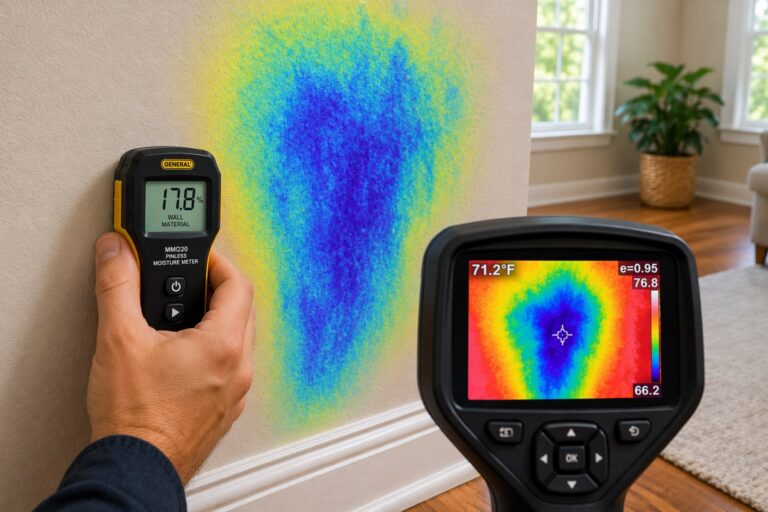
However, severe swelling, crumbling drywall, deep staining, sagging material, wet insulation in a narrow path, or moisture that remains wet between cold-weather cycles may point to a deeper source. When the pattern is unclear, moisture testing and inspection are better than guessing.
When Winter Condensation Becomes a Bigger Moisture Problem
Winter condensation becomes a bigger moisture problem when it repeatedly wets materials that are not designed to stay damp. Glass can handle temporary condensation, but wood trim, drywall, insulation, framing, carpet, and stored items can be damaged when condensation happens over and over.
The risk increases when condensation causes water to run onto sills, soak into trim, dampen drywall, wet insulation, or collect behind furniture. These areas may not dry quickly, especially during winter when airflow is reduced. Over time, repeated wetting can lead to staining, peeling paint, swollen trim, musty odor, and mold growth.
Condensation is also more concerning when it appears in hidden or semi-hidden areas. Moisture inside wall cavities, behind furniture, inside closets, near rim joists, or on attic sheathing can continue for a long time before homeowners notice visible damage. If cold surfaces and indoor moisture are affecting hidden areas, the problem may be more serious than window fogging.
Wall-related condensation deserves special caution because repeated moisture inside or near wall cavities can be difficult to evaluate from the room side. If exterior walls, corners, or closed cavities are involved, it may help to understand how to prevent condensation inside walls so the problem does not become trapped behind finished surfaces.
Condensation also becomes more serious when mold begins to appear. Mold near window frames, exterior corners, closets, attic sheathing, or cold wall areas often means the surface is staying damp long enough to support growth. At that point, the issue is no longer only condensation cleanup. It is a moisture-control problem that needs correction before the mold keeps returning.
When condensation begins causing mold, recurring stains, damaged trim, wet insulation, or musty odor, it is worth looking at the broader winter moisture pattern. A focused guide on why homes develop mold problems in winter can help connect condensation, humidity, airflow, and mold risk without treating the visible mold as the only issue.
Professional inspection may be needed if condensation appears in attic areas, inside walls, around structural wood, near electrical components, or in locations where you cannot tell whether the moisture is condensation or leakage. The purpose of an inspection should be to identify the source: indoor humidity, air leakage, poor insulation, inadequate ventilation, roof leakage, plumbing leakage, or another hidden moisture source.
Do not paint, caulk, or seal over recurring damp areas until the moisture source is understood. Covering the symptom can trap moisture and make hidden damage harder to find later.
Winter condensation is easiest to manage when it is still an early warning sign. Once it begins damaging materials or recurring in hidden areas, the solution usually requires more than wiping surfaces dry. The home may need humidity adjustment, better ventilation, improved airflow, air sealing, insulation correction, or targeted moisture investigation.
FAQs About Condensation Getting Worse in Winter
Why are my windows wet every morning in winter?
Windows are often wet in the morning because warm indoor air touches cold glass overnight. As the air near the glass cools, it can no longer hold as much moisture, so water vapor condenses on the window. This is more likely when indoor humidity is high, curtains trap air near the glass, or outdoor temperatures are very cold.
Is winter condensation caused by bad windows?
Not always. Poorly insulated windows can make condensation worse because the glass gets colder, but even good windows can collect condensation when indoor humidity is too high for the outdoor temperature. If water appears on the room side of the glass, it is often indoor condensation rather than a window leak.
Can condensation happen even if indoor humidity is not extremely high?
Yes. Condensation depends on both humidity and surface temperature. If a surface is cold enough, condensation can form even when the whole house does not feel very humid. Exterior corners, window glass, metal frames, attic sheathing, and cold pipes can all reach temperatures low enough to collect moisture.
Does heating the house cause condensation?
Heating the house does not create condensation by itself. Condensation happens when moisture in warm indoor air reaches a cold surface. Heating can allow indoor air to hold moisture, but the visible condensation forms when that moist air cools against windows, walls, roof surfaces, or other cold materials.
Can winter condensation cause mold?
Yes. Repeated winter condensation can support mold when it keeps drywall, wood trim, dust, insulation, fabric, or other materials damp. Mold risk increases when condensation returns daily, collects behind furniture, soaks into window trim, or affects hidden areas that dry slowly.
Is attic condensation a roof leak?
Attic condensation is not always a roof leak. It can happen when warm, moist indoor air leaks into a cold attic and condenses on roof sheathing, rafters, or nail tips. Roof leaks usually follow specific exterior water entry paths, while condensation may appear during cold weather even without rain.
Should I open windows to reduce condensation in winter?
Brief ventilation can help in some situations, but leaving windows open is not usually the best winter moisture-control plan. Use bathroom and kitchen exhaust, measure indoor humidity, reduce moisture sources, and improve airflow around cold surfaces. The goal is controlled moisture removal without unnecessary heat loss.
When should I worry about condensation?
You should worry about condensation when it happens repeatedly, runs onto wood or drywall, causes peeling paint, creates musty odors, appears in attics or wall areas, or supports mold growth. Occasional window fog during a cold snap may be minor, but repeated wet materials should be investigated.
Key Takeaways
- Winter condensation gets worse when warm indoor air meets cold indoor surfaces.
- Windows are the most visible condensation point, but walls, closets, attics, pipes, and rim joists can also collect moisture.
- Condensation depends on both indoor humidity and surface temperature.
- Showers, cooking, laundry, breathing, and humidifier use can add winter moisture indoors.
- Reduced ventilation and closed windows can trap indoor moisture.
- Condensation is not always a leak, but repeated condensation can still damage materials.
- Recurring condensation, mold, musty odor, wet trim, or attic moisture should be investigated instead of only wiped dry.
- Controlling winter condensation usually requires managing humidity, ventilation, airflow, insulation, and air leakage together.