
How to Test Indoor Humidity Levels (Tools and Methods Explained)
Testing indoor humidity helps you see whether the air in your home is staying in a healthy range, rising after normal activities, or remaining damp long enough to cause condensation, musty odors, or mold-prone conditions. A room can feel damp or show window condensation before there is obvious water damage, so a humidity reading gives you a number instead of a guess.
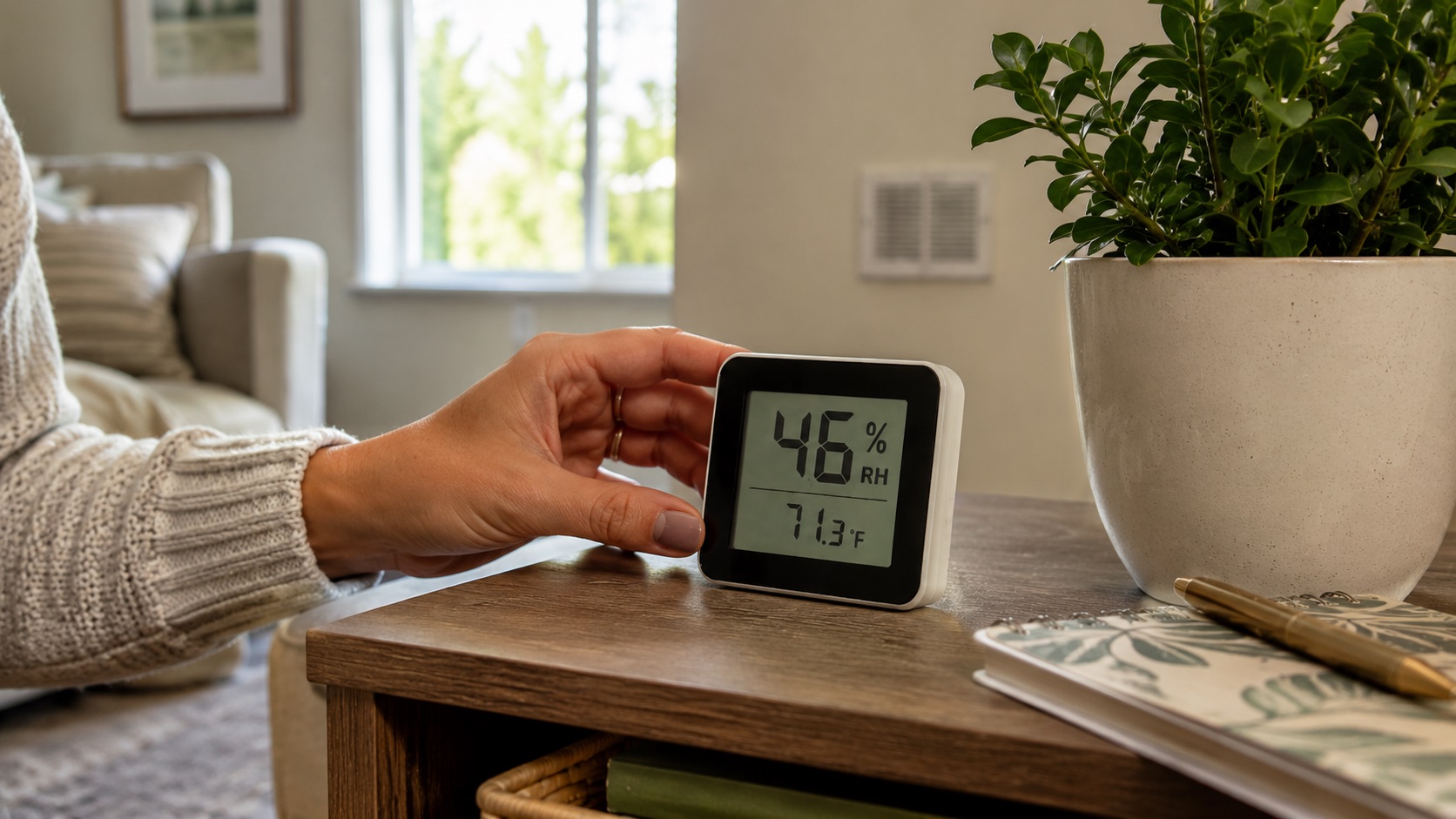
The main tool for testing indoor humidity is a hygrometer, which measures relative humidity as a percentage. For many homes, a practical target is roughly 30% to 50% relative humidity, while readings that stay near or above 60% deserve closer attention, especially if they occur with condensation, musty odor, or damp materials.
This guide explains how to test indoor humidity levels, where to place a hygrometer, how long to track readings, and how to interpret the results without confusing air humidity with hidden leaks or material moisture. Humidity testing is part of the larger process of finding, fixing, and preventing moisture problems in homes, but its specific job is to show what the air is doing so you know whether to monitor, ventilate, reduce humidity, or investigate further.
If the home already feels damp, smells musty, or shows condensation, compare your readings with the visible signs of high humidity in a house so the number and the symptoms are interpreted together.
What Indoor Humidity Testing Actually Measures
Indoor humidity testing measures moisture in the air, not moisture inside walls, flooring, cabinets, insulation, or framing. That distinction matters because homeowners often use the word “moisture” for several different problems. A room can have high air humidity without a leak. A wall can be wet inside even when the room’s air humidity looks normal. A hygrometer helps you understand one part of the moisture picture, but it does not replace a full moisture inspection when materials may be wet.
What relative humidity means
Most home humidity monitors show relative humidity. Relative humidity describes how much water vapor the air is holding compared with how much it could hold at that temperature. Warmer air can hold more moisture than cooler air, so the same room may show a different humidity percentage as the temperature changes.
That is why humidity readings should always be interpreted with context. A reading that appears normal in a warm room may still allow condensation on a cold window. A reading that rises after a shower may not be serious if it drops quickly. A reading that stays elevated for hours or days is more important than a short spike from cooking, bathing, laundry, or outdoor weather.
The goal is not to chase a perfect number every hour. The goal is to see whether humidity stays in range, differs by room, or remains elevated long enough to support condensation, musty odors, or mold-prone surfaces.
Why one humidity reading is not enough
One reading can be useful, but it can also be misleading. Humidity changes throughout the day as the home warms, cools, runs HVAC equipment, exchanges air with the outdoors, and responds to normal moisture-producing activities. A bathroom reading immediately after a shower is different from the same bathroom reading two hours later. A basement reading after several days of rain may not represent that basement during a dry week.
The best way to test indoor humidity is to compare readings across conditions. Check the same room at different times of day. Compare the room that feels damp with a room that feels normal. Watch what happens after showers, cooking, laundry, rain, or changes in outdoor weather. If only one room keeps reading high, the next question is not just “Is my house humid?” but why some rooms have higher humidity than others.
Pattern-based testing also prevents overreaction. A short spike after bathing, cooking, laundry, or humid outdoor air is common. Readings that stay high after ventilation, HVAC cycles, or weather changes matter more.
What a hygrometer can and cannot tell you
A hygrometer is the right tool for measuring air humidity. It can help you see whether a room is dry, comfortable, damp, or consistently humid. It can also help you compare rooms, monitor seasonal changes, and confirm whether a dehumidifier or ventilation change is affecting the air.
But a hygrometer cannot prove that building materials are dry. It does not tell you whether drywall is wet behind paint, whether a subfloor is holding moisture, whether a cabinet base has absorbed water, or whether insulation inside a wall cavity is damp. Those questions require visual inspection, material moisture testing, leak tracing, or a more targeted moisture investigation.
This is where tool confusion causes mistakes. A humidity meter or hygrometer measures the air. A moisture meter checks materials. A thermal camera shows temperature patterns that may point toward moisture, insulation gaps, or air movement, but it does not directly measure water. Each tool has a different job.
Tools for Testing Indoor Humidity
The best tool for testing indoor humidity is usually a digital hygrometer. It is inexpensive, easy to read, and accurate enough for most homeowner monitoring when placed correctly. More advanced tools can help when you need remote alerts, long-term data, or material moisture checks, but most homes do not need complicated equipment just to understand indoor humidity patterns.
Digital hygrometers
A digital hygrometer is the basic tool for checking indoor humidity. It usually displays relative humidity and temperature on a small screen. Some models also show daily highs and lows, comfort indicators, or trend arrows. For most homes, this is enough to begin testing.
If you want a simple room monitor rather than a full smart sensor system, product-specific reviews such as the AcuRite 00613 Digital Hygrometer review and ThermoPro TP49 Hygrometer review can help you compare basic options.
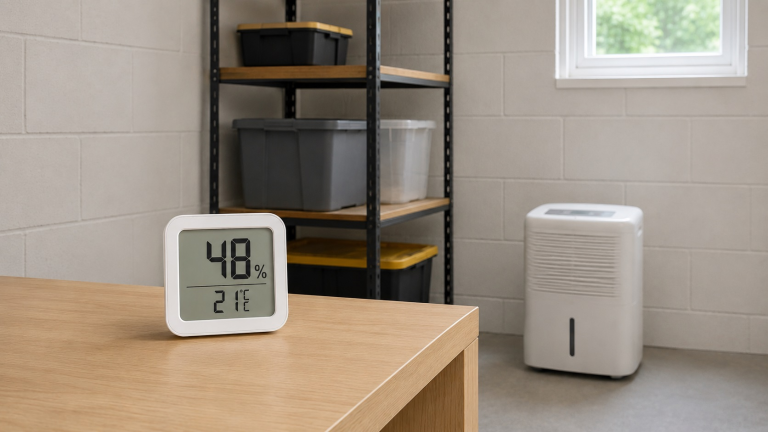
Digital hygrometers are useful in bedrooms, living rooms, basements, closets, bathrooms, laundry rooms, and any room that feels damp or develops condensation. They are especially helpful when you want to compare rooms. If one room regularly reads higher than the others, that difference tells you where to investigate first.
A basic hygrometer works best when it stays in one location long enough to stabilize. Moving it from room to room every few minutes can give you rough comparisons, but it may not give the device enough time to adjust. For a more reliable reading, place it in the room, let it sit, and check the number after it has had time to respond to the room conditions.
As a practical rule, leave the hygrometer in place for at least 15 to 30 minutes after moving it to a new room, and longer if the room temperature is very different from the previous location. For long-term monitoring, leave it in the same location and compare readings at similar times of day.
Smart hygrometers and remote humidity sensors
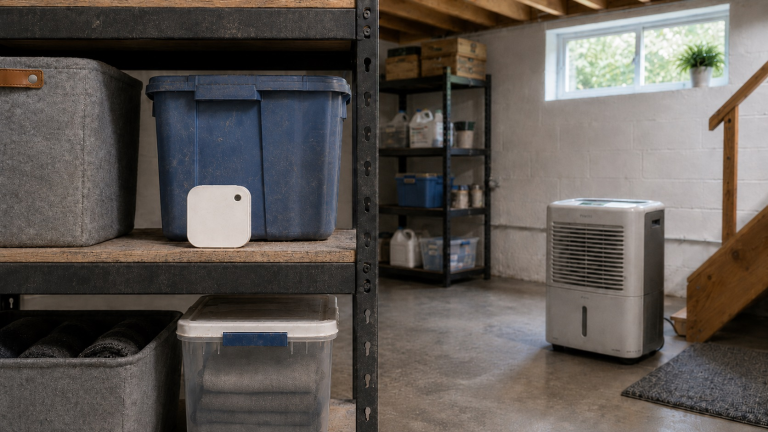
Smart hygrometers and remote humidity sensors are useful when you want to track humidity over time without checking the device manually. Some connect by Bluetooth. Others connect through Wi-Fi and can send alerts when humidity rises above a set level. These can be helpful in basements, garages, vacation homes, crawl-space-adjacent rooms, storage areas, or places where moisture problems may return when you are not watching.
Remote monitoring is especially useful when the question is not “What is the humidity right now?” but “Does this space keep getting damp?” A smart sensor can help show whether humidity rises overnight, after rain, during summer weather, or after HVAC cycles. That kind of pattern can be more useful than a single snapshot reading.
Smart sensors are not always necessary, but they can help in areas where repeated moisture would be expensive or difficult to catch early. If you are comparing Bluetooth monitoring, Wi-Fi alerts, or higher-end wireless sensors, reviews such as the Govee H5075 hygrometer review, Govee WiFi Hygrometer H5051 review, and SensorPush HT1 Hygrometer review are better fits than a basic room-reading guide.
Moisture meters versus humidity meters
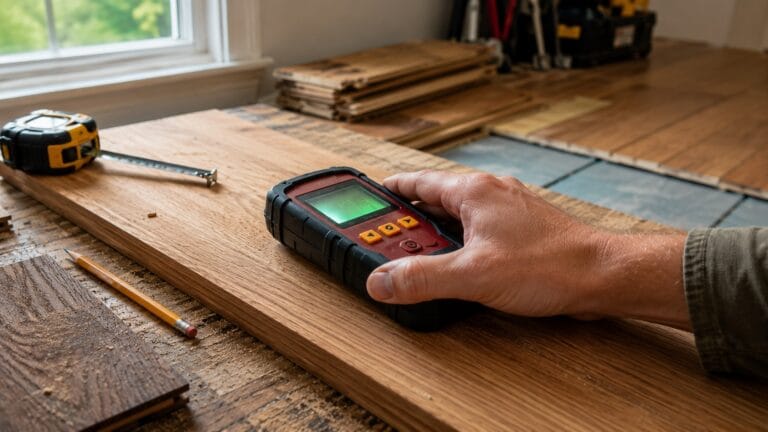
A moisture meter is not the same as a hygrometer. A hygrometer measures moisture in the air. A moisture meter measures moisture in materials such as wood, drywall, subflooring, trim, or other building materials. Both tools are useful, but they answer different questions.
Use a hygrometer when you want to know whether a room’s air is too humid. Use a moisture meter when you need to know whether a material may still be wet. For example, after a leak, a room might feel normal and show acceptable air humidity, but a baseboard, cabinet bottom, or lower drywall edge may still hold moisture. In that case, a moisture meter gives information that a hygrometer cannot.
Moisture meters are more relevant when there are visible stains, swelling, soft materials, water damage, or a specific surface that may be wet. Tool reviews such as the Dr.meter MD918 moisture meter review, General Tools MMD4E moisture meter review, Klein Tools ET140 moisture meter review, and General Tools MMD7NP moisture meter review fit material-testing situations better than basic indoor humidity monitoring.
The main mistake to avoid is using one tool as if it answers every moisture question. A hygrometer can tell you the room air is humid. It cannot tell you where the moisture is coming from. A moisture meter can help test materials. It cannot tell you whether the air in the entire room is staying too humid over time.
When a basic hygrometer is enough
A basic hygrometer is usually enough when you are trying to answer simple questions:
- Is this room more humid than the rest of the house?
- Does the humidity rise after showers, cooking, or laundry?
- Does the room dry back down after ventilation?
- Does humidity stay high overnight?
- Does indoor humidity rise during rain or humid outdoor weather?
- Does a dehumidifier or exhaust fan change the reading?
Where to Place a Hygrometer in Your Home
Where you place a hygrometer affects the reading. A device placed beside a shower, supply vent, sunny window, exterior door, humidifier, or cooking area may show a distorted number. Sometimes that is useful if you are intentionally testing that source. But for a general room reading, the device should sit in a stable location that represents the room’s normal air.
Best general placement
For a general indoor humidity reading, place the hygrometer in the room you want to evaluate, away from direct moisture sources and direct airflow. A table, shelf, dresser, interior wall shelf, or central location in the room usually works better than a window sill, bathroom counter, floor corner, or spot directly under a vent.
The goal is to measure the room, not one distorted microclimate. A window sill may be colder than the room. A bathroom counter may spike after a shower. A supply vent may show air from the HVAC system before it mixes with the room. A sunny location may warm the device and distort the reading.
In most rooms, choose a place that is:
- away from direct sunlight
- away from HVAC supply vents and return grilles
- away from exterior doors and drafty windows
- away from showers, sinks, cooking steam, and laundry exhaust
- high enough to avoid floor-level dampness unless you are testing that specific area
- stable enough that the device can remain in place for repeated readings
Places that can distort humidity readings
Some locations create misleading humidity readings because they are not representative of the whole room. A hygrometer placed too close to a bathroom shower may show a high reading that drops quickly once the fan runs and the room dries. A hygrometer placed in direct sunlight may read differently because the device warms up. A hygrometer beside an air-conditioning vent may show lower humidity while the system is running, even if the rest of the room is more humid.
That does not mean those readings are useless. It means you need to know what you are measuring. If you want a normal room reading, avoid distorted locations. If you want to test a specific problem area, place the device near that area and compare it with a better general-room location.
For example, if a window corner develops condensation, you may want one reading near the problem window and another reading in the center of the room. If the window area behaves differently from the room as a whole, the issue may involve surface temperature, airflow, insulation, or localized condensation rather than simply high humidity throughout the house.
Rooms worth testing separately
Humidity is rarely identical throughout a home. Some rooms produce more moisture, receive less airflow, have colder surfaces, or connect to basements, garages, crawl spaces, or damp foundations. Testing only one central hallway or living room can miss the rooms where moisture actually collects.
Garages deserve separate attention because they often behave differently from conditioned living areas. If that is the problem area, compare your readings with the signs of high humidity in garages.
Rooms worth testing separately include:
- bathrooms, especially after showers and several hours later
- bedrooms with closed doors or poor airflow
- basements and lower-level rooms
- laundry rooms
- kitchens and rooms near cooking moisture
- closets, storage rooms, and enclosed spaces
- garages and rooms connected to garages
- rooms with condensation on windows or exterior walls
- rooms that smell musty or feel damp even without visible leaks
- areas recently affected by water damage
If one room consistently reads higher than the rest of the house, the next step is to understand whether that room has a moisture source, poor airflow, colder surfaces, outdoor air influence, or another condition that allows humidity to build. That is where a room-specific article such as why some rooms have higher humidity than others becomes more useful than a general humidity reading alone.
How to Test Indoor Humidity Step by Step
Testing indoor humidity is simple, but the process works best when you treat it as a short monitoring routine instead of a one-time check. The goal is to learn how the home behaves under normal conditions, during moisture-producing activities, and during weather changes. That pattern gives you more useful information than a single number.
Step 1: Start with a normal living-area reading
Begin in a main living area that feels normal and does not have an obvious moisture problem. Place the hygrometer in a stable location away from direct sunlight, vents, exterior doors, cooking steam, or bathroom moisture. Let the device sit long enough to adjust to the room before you rely on the reading.
This first reading gives you a baseline. It does not prove the entire house is dry, but it helps you compare other rooms against a room that appears to be behaving normally. Write down the humidity percentage, room temperature, time of day, and any conditions that might matter, such as rain, recent showering, cooking, laundry, or HVAC operation.
Step 2: Compare problem rooms with normal rooms
Next, move to the rooms that feel damp, smell musty, show condensation, or have had previous moisture issues. Test those rooms the same way, using a stable location away from direct distortion unless you are intentionally testing a specific problem area.
If one room reads much higher than the rest of the home, that difference matters. It may point toward poor airflow, a moisture source, exterior exposure, basement influence, garage influence, recent water damage, or a room that does not dry as quickly as the rest of the house. The humidity number does not identify the exact cause by itself, but it tells you where to look more closely.
If the whole house reads high, the problem is more likely related to whole-house moisture load, outdoor humidity, ventilation, HVAC operation, or a broad humidity-control issue. If only one room reads high, the issue is more likely local.
Step 3: Check readings at different times of day
Humidity can change from morning to afternoon to evening. A room may read higher overnight when doors are closed, airflow is lower, or the HVAC system runs differently. Bathrooms, bedrooms, basements, and closed-off rooms often show patterns that are easy to miss if you test only once.
Take readings at different times for at least a few days if you are trying to understand a recurring problem. A basic pattern may look like this:
- morning reading before showers or cooking
- midday reading during normal home use
- evening reading after showers, cooking, laundry, or HVAC cycles
- overnight or early-morning reading in bedrooms or closed rooms
The most important question is whether the humidity drops back down after normal moisture events. A short spike is often less concerning than a reading that stays high for hours or remains elevated day after day.
Step 4: Test before and after moisture-producing activities
Some rooms naturally spike during normal use. Bathrooms rise after showers. Kitchens rise during cooking. Laundry rooms may rise during washing, drying, or poor venting. The question is not whether these rooms ever get humid. The question is whether they recover.
To test recovery, take one reading before the activity, another soon after, and another later after the room has had time to ventilate. For example, in a bathroom, check humidity before a shower, shortly after the shower, and again after the exhaust fan has run. If the reading drops back near the rest of the home, the spike may be temporary. If the reading stays high, the room may need better ventilation, more drying time, or further investigation.
This same method works for cooking, laundry, humidifiers, and rooms that become damp after rain. You are not just looking for the highest number. You are looking for how long the room stays humid.
Step 5: Track readings for several days
A short humidity log can show patterns that are not obvious from memory. Write down the room, reading, temperature, time, weather, and recent activities. You do not need a complicated chart. Even a simple note on your phone can help.
| What to record | Why it matters |
|---|---|
| Room | Shows whether the issue is local or whole-house |
| Relative humidity | Shows the actual moisture level in the air |
| Temperature | Helps explain condensation and seasonal changes |
| Time of day | Shows morning, evening, and overnight patterns |
| Weather | Shows whether rain or outdoor humidity affects the room |
| Recent activity | Shows whether showers, cooking, laundry, or humidifiers caused a spike |
Track at least three types of rooms:
- a normal living area
- a room that feels damp or has symptoms
- a moisture-prone room such as a bathroom, basement, laundry room, or garage
If the same room keeps reading high, the pattern is more meaningful than one isolated number. If readings rise only during certain activities and then recover quickly, the issue may be normal moisture load. If readings rise during rain or humid weather, outdoor conditions may be influencing the home.
Step 6: Compare readings during dry and wet weather
Weather can change indoor humidity, especially in homes with air leaks, damp basements, attached garages, older windows, crawl spaces, or limited ventilation control. A room that seems fine during dry weather may feel damp during rain, storms, or humid outdoor conditions.
Take readings during a dry period and compare them with readings during or after rain. If indoor humidity rises sharply during weather shifts, the issue may not be caused by daily activities alone. The home may be responding to outdoor moisture, air leakage, wet foundation conditions, garage moisture, or changes in ventilation. For a deeper explanation of that pattern, use the guide on why humidity levels change during weather shifts.
What Indoor Humidity Readings Mean
Readings in the normal range
In many homes, indoor humidity is usually managed somewhere around the middle range rather than at either extreme. Readings that stay in a reasonable range and do not coincide with condensation, musty odors, damp materials, or comfort problems are usually less concerning than readings that remain high or vary sharply by room.
However, a normal reading does not prove that every material in the home is dry. A hygrometer measures air. If a specific wall, cabinet, floor, trim section, or ceiling area shows water staining, swelling, softness, peeling paint, or musty odor, that material may still need closer inspection even when the room air looks normal.
Readings that are temporarily high
Temporary high readings are common after showers, cooking, laundry, humidifier use, rainy weather, or open windows during humid outdoor conditions. A temporary spike is not always a problem. The recovery pattern is more important.
Ask these questions:
- Does the reading drop after ventilation?
- Does the room return near the rest of the house?
- Does the spike happen only during a specific activity?
- Does the same room stay high long after the activity ends?
- Does the spike happen during weather changes even when no indoor activity changed?
If the humidity rises briefly and falls back down, the room may simply need normal ventilation. If it stays high, repeats often, or spreads to nearby rooms, the pattern deserves more attention.
Readings that stay high
Persistent high humidity matters more than a brief spike. If a room stays humid for long periods, the air may be carrying more moisture than the space can release. That can increase condensation risk, make the room feel damp, contribute to musty odors, and create conditions that support surface mildew or mold-prone areas.
Persistent high readings can come from several sources, including poor ventilation, outdoor humidity, basement or crawl space influence, wet materials after water damage, frequent moisture-producing activities, HVAC issues, or hidden humidity sources. For a full cause-focused breakdown, use the guide on why indoor humidity levels become too high.
If readings stay high throughout much of the home, the next step may be whole-house humidity reduction, ventilation improvement, HVAC review, or dehumidification. If readings stay high in one room only, focus on that room’s moisture sources, airflow, exterior exposure, and recent water history.
Readings that differ from room to room
Room-to-room differences are one of the most useful things humidity testing can reveal. If the living room reads normally but a bedroom, bathroom, basement, garage, closet, or laundry area reads much higher, the issue is probably not just “the house is humid.” It may be that one area is producing moisture, trapping moisture, receiving less airflow, or being influenced by outdoor or structural conditions.
Compare the higher room with nearby rooms. Check whether doors are often closed, vents are blocked, exhaust fans are weak, windows are cold, exterior walls are damp, or the room connects to a basement, crawl space, garage, or laundry area. If the pattern repeats, the room needs its own explanation, not just a general humidity label.
Readings that feel wrong even without visible leaks
Sometimes the air feels damp even though you cannot find an active leak. A hygrometer can help confirm whether the damp feeling is related to high air humidity or whether the issue may be more localized. If the reading is high, the room may have a humidity problem even without visible water. If the reading is normal but the room still smells musty or materials look affected, the problem may be hidden moisture, old water damage, or localized condensation.
That distinction matters. High air humidity points toward ventilation, dehumidification, outdoor weather, or hidden humidity sources. Normal air humidity with visible material symptoms points more toward a specific wet material, leak history, or surface-level moisture issue. For the air-quality side of that confusion, use the guide on why indoor air feels damp even without leaks.
How Weather and Seasons Affect Humidity Readings
Humidity readings are not the same all year. A home can behave differently during summer humidity, winter heating, spring rain, storm fronts, or long wet periods, so one week of readings may not represent the home’s full moisture behavior.
When testing, record the weather beside the reading. A number is more useful when you know whether it was taken during dry weather, after rain, during a humid week, or during a cold spell. If readings rise during storms or wet weather and fall afterward, outdoor conditions may be influencing the home. If they stay high after the weather changes, the issue deserves closer investigation.
For deeper explanations, use the guides on why humidity levels change during weather shifts, how seasonal changes affect indoor moisture, why humidity problems worsen in winter, why humidity problems increase in summer, and how outdoor conditions affect indoor moisture.
When Humidity Testing Suggests a Bigger Moisture Problem
Humidity testing does not diagnose every moisture problem by itself, but it can show when a room deserves closer attention. A repeated pattern matters more than one high number, especially when readings line up with musty odor, condensation, staining, damp materials, weather changes, or past water damage.
High readings plus musty odor
A musty odor with high humidity often means the room has more moisture than it can release. The source may be damp air, poor ventilation, wet materials, stored items, an old leak, basement moisture, or another hidden source. The hygrometer does not identify the source, but it confirms that the air in the room is holding enough moisture to support the odor problem.
If the odor is strongest in one room, closet, cabinet, basement area, or wall section, compare readings in that location with nearby rooms. If the humidity is much higher in the odor area, the problem may be local. If the entire home reads high, the issue may be broader humidity control.
High readings plus condensation
Condensation is one of the clearest signs that air moisture and surface temperature are interacting. If a room shows high humidity and also has condensation on windows, exterior walls, pipes, toilet tanks, or cold corners, the air may be holding too much moisture for those surfaces.
However, condensation does not always mean the whole room is extremely humid. Cold surfaces can collect moisture even when the general room reading is not unusually high. That is why you should test both the room air and the problem area. A window corner, exterior wall, or cold surface may behave differently from the center of the room.
High readings after water damage
Humidity readings can help you monitor a room after a leak, flood, appliance overflow, roof leak, or plumbing problem. If the air stays humid after cleanup, the room may still be drying, or wet materials may still be releasing moisture into the air.
This is where humidity testing becomes a monitoring tool. Take readings in the affected room and compare them with unaffected rooms. If the damaged area remains consistently higher, continue investigating. The room air may improve before hidden materials are fully dry, so do not rely on a hygrometer alone when drywall, trim, flooring, cabinets, or insulation may have absorbed water.
For recurring post-damage problems, connect humidity readings with broader moisture prevention planning through the guide on preventing recurring moisture damage.
Normal humidity but visible material damage
A normal humidity reading does not rule out water damage. This is one of the most important limits of humidity testing. If you see staining, swelling, peeling paint, soft drywall, warped trim, damp flooring, cabinet damage, or mold-like growth, do not dismiss the issue just because the room air reads normally.
In that situation, the problem may be inside a material, behind a surface, or limited to one small area. A hygrometer measures the air around the material, not the moisture inside it. Material symptoms need visual inspection, moisture-meter testing, leak tracing, or a closer look at the affected surface.
Stop and get professional help if you find soft drywall, sagging ceiling material, crumbling wood, active water intrusion, sewage or floodwater contamination, electrical fixtures near moisture, or mold-like growth covering a large area. Humidity readings are not enough to judge structural safety, contamination risk, or hidden material damage.
What to Do After You Test Indoor Humidity
After you collect a few readings, the next step depends on the pattern. Do not jump straight to buying equipment or assuming a leak. Use the readings to sort the problem into one of four basic categories: normal, temporary, persistent, or suspicious.
If readings are normal
If readings stay in a reasonable range and there are no moisture symptoms, you may only need occasional monitoring. Keep a hygrometer in a representative location and check it during seasonal changes, rainy periods, or times when the home feels different.
Normal readings are useful because they give you a baseline. If the home later feels damp, develops condensation, or has a leak, you will have a reference point for comparison.
If readings are temporarily high
If readings rise after showers, cooking, laundry, humidifier use, or short weather events but drop back down afterward, the issue may be temporary moisture load. Improve ventilation during those activities, run exhaust fans long enough, open interior doors when appropriate, and continue monitoring.
The key question is recovery. A room that spikes and dries back down is different from a room that never fully recovers. If the temporary spike becomes a repeated long-lasting pattern, treat it as persistent humidity instead.
If readings stay high
If readings remain high for long periods, the home may need humidity reduction, better ventilation, dehumidification, HVAC review, or source correction. This is the point where testing turns into action: the readings help you decide whether the next step is reducing humidity, choosing better equipment, improving airflow, or looking for a hidden source.
For broad reduction methods, use the guide on how to reduce humidity in a house. If the next step involves dehumidification, use the guide on how to choose and use a dehumidifier effectively. If you already use a dehumidifier and need target settings, use best dehumidifier settings to prevent mold.
If readings point to a hidden source
If one area stays humid without an obvious explanation, or if humidity rises repeatedly in the same room, the next step is source detection. Look for moisture-producing activities, poor airflow, damp stored items, nearby plumbing, wet materials, exterior wall exposure, basement or crawl space influence, garage moisture, or weather-related patterns.
Do not assume the source is obvious. A room can stay humid because of a hidden moisture source, but it can also stay humid because it lacks airflow or shares air with a damp area nearby. For the next diagnostic step, use the guide on how to detect hidden humidity sources.
If symptoms continue even when humidity readings look normal
If the room smells musty, shows stains, has swollen trim, or feels damp in one specific area even though the hygrometer reading looks normal, shift your attention from air humidity to materials and localized moisture. The issue may be a wet surface, hidden leak, cold-surface condensation, old water damage, or moisture trapped behind trim, flooring, cabinets, or drywall.
In that situation, humidity testing has still helped. It tells you the problem may not be a whole-room air humidity issue. Now the investigation should move toward the specific material, surface, or location that shows symptoms.
Common Mistakes When Testing Indoor Humidity
Humidity testing is easy, but small mistakes can make the readings less useful. Most errors happen because the device is placed in a distorted location, checked only once, or interpreted as if it can answer questions it was not designed to answer.
Mistake 1: Trusting one reading
A single reading can show the room’s condition at that moment, but it cannot show whether the condition is normal, temporary, or recurring. Always compare readings over time if the issue matters. A three-day pattern is more useful than one number.
Mistake 2: Placing the hygrometer near a vent
HVAC vents can distort readings because supply air may be cooler, warmer, drier, or moving faster than the rest of the room. Unless you are intentionally testing HVAC influence, keep the device away from direct airflow.
Mistake 3: Testing beside a window or exterior door
Windows and exterior doors may be colder, draftier, or more affected by outdoor conditions than the rest of the room. A reading taken right beside them may tell you about that microclimate, not the whole room.
Mistake 4: Testing only the room that feels normal
A central living room may read normally while a bathroom, basement, closet, laundry room, or closed bedroom stays humid. Test both normal areas and problem areas so you can see whether the issue is local or widespread.
Mistake 5: Ignoring weather and season
Humidity readings are easier to understand when you record the weather. Rain, summer humidity, winter surface temperatures, and seasonal ventilation changes can all affect indoor moisture. If a room only reads high during wet weather, that pattern matters.
Mistake 6: Confusing air humidity with material moisture
A hygrometer does not measure drywall moisture, wood moisture, flooring moisture, or insulation moisture. It measures the air. If you suspect a material is wet, use a moisture meter, visual inspection, or a more targeted moisture investigation.
Mistake 7: Assuming high humidity proves there is a leak
High humidity does not automatically mean a plumbing leak, roof leak, or foundation leak is present. It may come from ventilation, weather, daily activities, damp stored items, HVAC operation, or poor drying. Use high readings as a reason to investigate, not as proof of one specific cause.
Mistake 8: Assuming normal humidity rules out hidden moisture
Normal air humidity does not prove that every hidden cavity, material, or surface is dry. A small leak, wet cabinet base, damp subfloor, or moisture behind trim can exist even when the air in the room is not extremely humid.
Mistake 9: Buying equipment before understanding the pattern
A dehumidifier, smart sensor, exhaust fan, or moisture meter may be useful, but the right next step depends on the pattern. First learn whether the issue is whole-house, room-specific, temporary, seasonal, weather-related, or connected to a specific material or source.
FAQ About Testing Indoor Humidity Levels
What is a good indoor humidity level?
A common indoor humidity target is roughly 30% to 50% relative humidity, with many moisture-control recommendations advising homeowners to keep indoor humidity below about 60%. The exact reading still needs context because temperature, season, surface conditions, condensation, and how long the reading stays high all matter.
How long should a hygrometer sit before I trust the reading?
Let the hygrometer sit long enough to adjust to the room before relying on the number. If you move it from one room to another, give it time to stabilize. For pattern testing, it is better to leave the device in the same location and check it repeatedly than to move it constantly.
Can humidity be high in one room but normal elsewhere?
Yes. One room can be more humid because of poor airflow, closed doors, weak ventilation, moisture-producing activities, damp materials, exterior exposure, basement influence, garage influence, or a nearby hidden source. Room-by-room comparison is one of the most useful parts of humidity testing.
Does a hygrometer detect mold?
No. A hygrometer does not detect mold. It measures air humidity. High humidity can create conditions that support mold-prone areas, but a humidity reading does not prove that mold is present or absent.
Does normal humidity mean my walls are dry?
No. Normal room humidity only shows that the room air is not unusually humid at that moment. If drywall, wood, insulation, flooring, or cabinets show staining, swelling, softness, musty odor, or water damage, those materials may still need direct inspection or moisture-meter testing.
Should I test humidity after water damage?
Yes, humidity testing can help you monitor whether the affected room is returning to normal conditions. However, it should not be the only drying check. Materials that absorbed water may still hold moisture even after the air begins to feel normal.
Is a moisture meter the same as a humidity meter?
No. A humidity meter or hygrometer measures moisture in the air. A moisture meter checks moisture in materials. Use a hygrometer for room air and a moisture meter when you need to evaluate drywall, wood, trim, subflooring, or other building materials.
The Best Way to Use Indoor Humidity Readings
The best humidity test is a pattern, not a single number. Use a hygrometer, place it away from distorted locations, compare normal rooms with problem rooms, and record the time, temperature, weather, and recent activities.
If readings stay in range and no symptoms appear, occasional monitoring may be enough. If readings spike and recover, improve ventilation during the activity that caused the spike. If readings stay high, differ sharply by room, or appear with condensation, musty odor, staining, swelling, or soft materials, move from air-humidity testing to source investigation.
A hygrometer helps you understand the air, but it does not prove that drywall, wood, flooring, cabinets, or insulation are dry. Use the reading as a decision tool: monitor normal patterns, reduce persistent humidity, and inspect specific materials when visible symptoms suggest hidden moisture.
7 Comments
Comments are closed.