How to Fix Persistent Indoor Humidity Problems
Persistent indoor humidity problems are different from temporary moisture issues. Instead of appearing occasionally and then improving, humidity remains high, returns quickly, or never fully goes away. This often leads to ongoing discomfort, recurring musty odors, condensation, and increased risk of mold or material damage.
If you have already tried basic steps such as using exhaust fans, improving airflow, or running a dehumidifier, but humidity continues to return, the fix is usually not “more of the same.” You need to identify whether moisture is still entering the home, trapped in materials, poorly exhausted, or overwhelming the HVAC or dehumidification system.
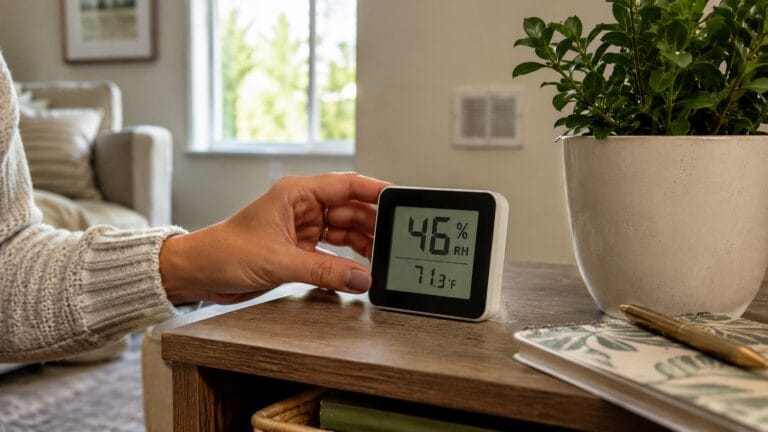
If you have not yet confirmed humidity levels across your home, start with how to test indoor humidity levels using reliable tools. Measuring multiple rooms helps determine whether the problem is localized or affecting the entire house.
Why Humidity Problems Keep Coming Back
Humidity becomes persistent when moisture continues to enter or remain inside the home faster than it can be removed. Unlike temporary humidity spikes, persistent problems involve ongoing sources or conditions that prevent the home from returning to a balanced state.
For example, a damp basement, short HVAC run times, and poor bathroom exhaust can combine into one whole-house humidity problem.
Moisture Is Still Being Added
If moisture sources are still active, humidity will continue to rise even if steps are taken to reduce it. This can include everyday activities, hidden leaks, or moisture entering from outside the home.
When humidity returns shortly after improving conditions, it often indicates that moisture input has not been fully addressed.
Moisture Is Not Being Removed Effectively
Even normal levels of moisture can become a problem if the home cannot remove it efficiently. This can happen when ventilation is limited, airflow is uneven, or equipment such as dehumidifiers and HVAC systems are not performing as expected.
In these situations, humidity may remain elevated despite efforts to improve conditions.
Moisture Is Stored in Materials
Building materials and household items can absorb moisture during periods of high humidity. Once saturated, they release that moisture slowly over time.
This creates a cycle where humidity appears to drop temporarily, then rises again as stored moisture is released back into the air.
This is why readings may improve during dehumidifier use, then climb again after the unit shuts off.
Signs Your Humidity Problem Is Persistent
The clearest warning sign is a pattern: humidity drops after a fix, then returns under the same conditions. That pattern usually means the source has not been removed.
Humidity Returns Quickly After Improvements
If humidity drops briefly after ventilation or dehumidification but rises again within a short time, it suggests that moisture is still being added or released continuously.
A temporary drop usually means the removal method is working, but the moisture source is still active.
Condensation Appears Regularly
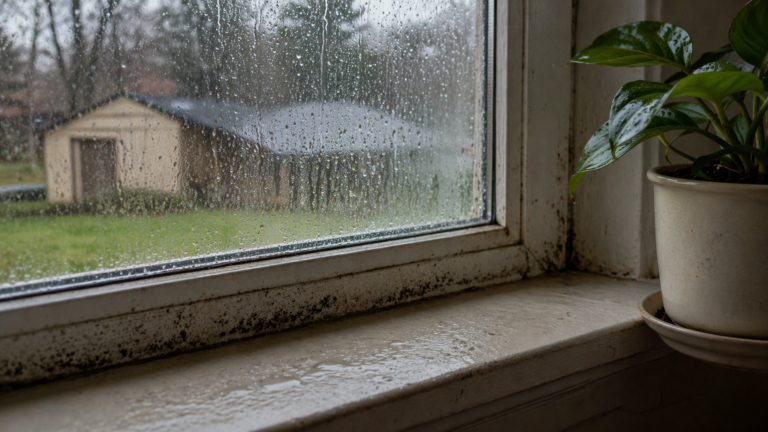
Frequent condensation on windows, walls, or other surfaces indicates that indoor humidity is staying elevated over time. Occasional condensation may be normal, but repeated or daily occurrence is a sign of a deeper problem.
These patterns often match broader warning signs described in signs of high indoor humidity problems, but persist rather than appearing occasionally.
Musty Odors Keep Returning
Musty smells are often caused by moisture that remains trapped in materials or hidden spaces. If odors return after cleaning or ventilation, it usually indicates that humidity levels are still high in that area.
This can point to hidden moisture sources or poor airflow that allows damp conditions to continue.
Mold Growth Reappears
If mold continues to return after cleaning, it is a strong sign that humidity remains elevated. Mold requires moisture to grow, so recurring growth indicates that the underlying conditions have not been resolved.
Addressing mold without fixing humidity often leads to repeated problems. Long-term prevention strategies are covered in how to remove mold permanently and prevent it from returning.
Common Reasons Basic Fixes Don’t Work
When humidity problems continue despite using fans, improving airflow, or running a dehumidifier, it usually means that the underlying issue has not been fully addressed. In these situations, basic fixes may provide temporary relief but cannot resolve the root cause.
Hidden Moisture Sources
One of the most common reasons humidity persists is moisture that is not visible. This can include small plumbing leaks, moisture trapped inside walls or floors, or condensation forming in hidden areas.
Because these sources are not obvious, they can continue adding moisture to the air even when the visible parts of the home appear dry.
Clues that hidden moisture may be feeding the humidity include:
- Musty odors that return quickly
- Humidity that stays elevated without a clear cause
- Damp feeling in certain rooms despite ventilation
- Baseboards, drywall, flooring, or cabinets that feel slightly soft, swollen, or cooler than nearby materials
Continuous Moisture Entry from Outside
Moisture can enter a home continuously from external sources, especially in basements, crawl spaces, and areas exposed to weather. This type of moisture does not rely on indoor activities and can remain constant.
Common examples include:
- Ground moisture moving through basement walls and floors
- Moisture entering from crawl spaces
- Exterior wall infiltration during wet conditions
When moisture is entering the home continuously, humidity levels may remain high regardless of indoor efforts to reduce it.
Ventilation That Does Not Remove Moisture
Ventilation only helps when moist air is actually exhausted outdoors. If a fan only circulates air, vents into an attic, or runs too briefly, humidity may move around the home instead of leaving it.
Examples of ineffective ventilation include:
- Bathroom fans that vent into attics instead of outside
- Range hoods that recirculate air instead of exhausting it
- Airflow that moves moisture between rooms rather than removing it
In these cases, humidity may shift locations but does not decrease overall.
HVAC Systems That Do Not Dehumidify Properly
Cooling systems remove moisture only when they run long enough for air to pass across a cold coil and drain condensate away. If the system short-cycles, is oversized, has poor airflow, or is not draining properly, the home may feel cool but still damp.
This can result in:
- Cool but damp indoor air
- Humidity levels that remain high even when temperature feels comfortable
- Uneven humidity throughout the home
If HVAC performance is contributing to humidity problems, it may require adjustment or evaluation.
How to Identify the Real Source of Persistent Humidity
Fixing persistent humidity requires identifying where moisture is coming from and how it is behaving inside the home. Without this step, efforts may focus on symptoms rather than the underlying problem.
Look for Patterns Over Time
Humidity patterns often reveal the source. Track readings at the same times each day, especially after showers, cooking, laundry, rain, HVAC cycles, and overnight periods.
For example:
- Humidity that rises after showers may point to ventilation issues
- Humidity that stays high in a basement may indicate ground moisture
- Humidity that increases overnight may be related to airflow limitations
Recognizing patterns helps distinguish between temporary conditions and persistent sources.
Compare Different Areas of the Home
Measuring humidity in multiple rooms can show whether the problem is localized or affecting the entire house. If one room consistently has higher humidity, it may have a specific moisture source or airflow issue.
Differences between rooms are explained further in why some rooms have higher humidity than others.
Check for Signs of Hidden Moisture
Even when water is not visible, subtle signs can indicate hidden moisture problems. These may include:
- Soft or slightly damaged materials
- Persistent damp smells
- Areas that feel cooler or wetter than surrounding surfaces
Identifying these signs early can prevent more extensive damage and help target the source more accurately.
Fixing Persistent Humidity Step by Step
Once a humidity problem is confirmed as persistent, fixing it requires a structured approach. Instead of relying on a single solution, the goal is to reduce moisture input, improve removal, and address any deeper sources that are allowing humidity to continue.
Work in this order: confirm the readings, reduce active moisture sources, improve removal, then investigate hidden or structural moisture if humidity still returns.
Step 1: Reduce or Eliminate Ongoing Moisture Sources
The first priority is to limit how much moisture is entering the home. Even small sources can keep humidity elevated if they are continuous.
This may include:
- Addressing indoor moisture from cooking, showers, or laundry
- Fixing small plumbing leaks
- Limiting activities that add excess moisture to the air
For general moisture reduction methods, see how to reduce indoor humidity levels effectively.
Step 2: Improve Moisture Removal
After reducing sources, the next step is to improve how moisture is removed from the home. This includes both ventilation and dehumidification.
Key actions include:
- Ensuring exhaust fans remove air to the outside
- Improving airflow between rooms
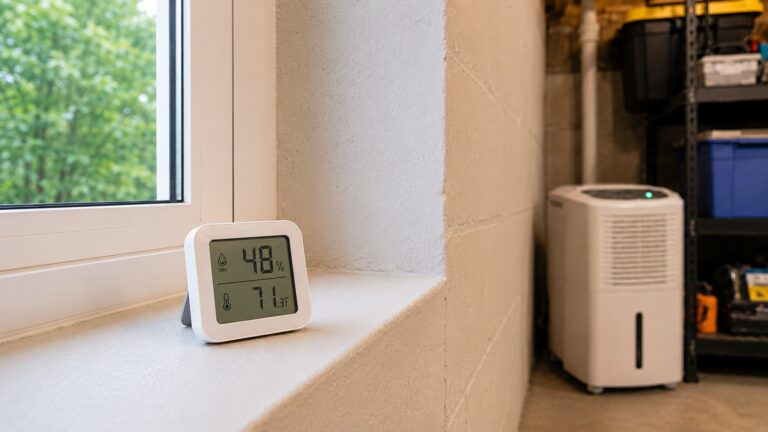
- Using dehumidifiers in consistently damp areas
When removal methods are effective, humidity should begin to stabilize instead of rebounding quickly after fans, HVAC cycles, or dehumidifiers shut off.
Step 3: Address Structural Moisture Issues
If humidity continues after basic improvements, the problem may involve structural moisture. This includes moisture entering through foundations, walls, or below-grade areas.
Common indicators include:
- Persistent basement humidity
- Moisture returning despite dry indoor conditions
- Damp surfaces near exterior walls or floors
These issues often require more targeted solutions to prevent moisture from entering the home. If damp materials, below-grade moisture, or recurring moisture patterns are involved, review structural moisture problems in homes before assuming the issue is only indoor humidity.
Step 4: Allow Time for Materials to Dry
Even after moisture sources are controlled, materials that have absorbed moisture may continue releasing it into the air. This can delay visible improvements in humidity levels.
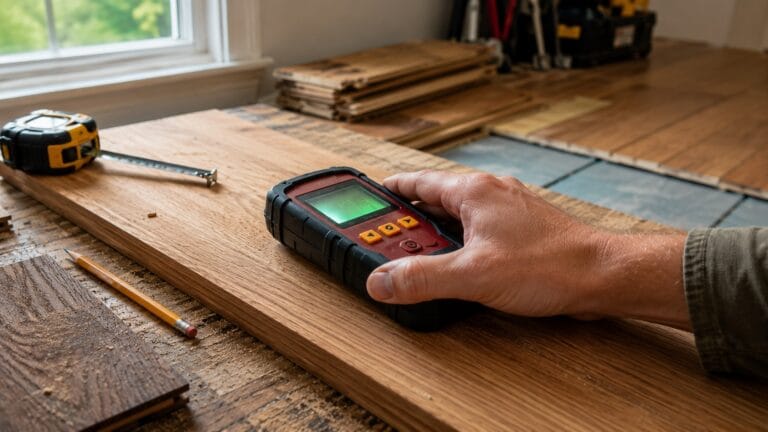
Depending on conditions, it may take several days or longer for materials such as wood, drywall, and flooring to dry, and surfaces can feel dry before deeper materials have released stored moisture.
During this time, maintaining ventilation and dehumidification helps speed up the process and prevent moisture from returning.
When Humidity Becomes a Structural Problem
Persistent humidity can move beyond an air quality issue and begin affecting the structure of the home. At this stage, moisture is no longer just present in the air but is interacting with building materials.
Moisture Inside Walls and Floors
When humidity remains high over time, moisture can accumulate inside walls, ceilings, and floors. This can weaken materials and create conditions for mold growth.
Signs may include:
- Soft or deteriorating drywall
- Warped wood or flooring
- Persistent dampness in specific areas
Basement and Crawl Space Moisture
Below-grade spaces are especially vulnerable to long-term moisture problems. If humidity remains high in these areas, it can affect the structure above and contribute to whole-home humidity issues.
Moisture from basements and crawl spaces can move upward into living areas, making it difficult to control humidity without addressing the source.
Long-Term Material Damage
Over time, persistent humidity can lead to visible damage such as peeling paint, swelling materials, and deterioration of finishes. These changes indicate that moisture has been present long enough to affect the structure of the home.
At this stage, simple humidity control measures may not be enough, and further evaluation may be needed.
When to Call a Professional
Some humidity problems require professional evaluation, especially when they involve hidden moisture, structural concerns, or systems that are not performing properly.
Consider contacting a professional when:
- Humidity remains above recommended levels despite repeated efforts
- Mold continues to return after cleaning
- Materials feel soft, damaged, or deteriorated
- Musty odors persist without a clear source
Professionals can identify hidden moisture sources, evaluate ventilation systems, and determine whether structural issues are contributing to the problem.
Addressing these issues early helps prevent more extensive damage and reduces long-term repair costs.
Frequently Asked Questions About Persistent Indoor Humidity
Why does humidity keep coming back in my house?
Humidity keeps returning when moisture sources are still active or when moisture is trapped in materials and slowly released back into the air. It can also happen if ventilation or dehumidification is not strong enough to remove moisture as quickly as it builds up.
Can a dehumidifier fail to fix humidity problems?
Yes. A dehumidifier can remove moisture from the air, but it cannot stop new moisture from entering through leaks, basement walls, crawl spaces, wet materials, or poor exhaust ventilation. If humidity drops while the unit runs but rises again soon after, the source is probably still active.
How do I know if moisture is hidden inside walls?
Hidden moisture is often indicated by musty odors, persistent humidity, or subtle material changes such as soft drywall or warped surfaces. If humidity remains high without a clear source, hidden moisture may be present.
Is persistent humidity dangerous for a home?
Persistent humidity can lead to mold growth, material damage, and reduced indoor air quality over time. While it may begin as a comfort issue, it can develop into a structural concern if not addressed.
What is the hardest humidity problem to fix?
The hardest problems are usually caused by structural or hidden moisture, such as basement vapor intrusion, damp crawl spaces, wet wall cavities, or moisture stored in flooring and framing. These problems require source correction, not just fans or portable dehumidifiers.
Conclusion
Persistent indoor humidity is usually a source problem, a removal problem, or a hidden moisture problem. If humidity keeps returning after basic fixes, track where it rises, confirm whether moisture is still entering the home, and address structural or system issues before relying on ventilation or dehumidifiers alone.
Key Takeaways
- Persistent humidity occurs when moisture continues entering, remaining, or being released inside the home
- Basic fixes may fail if hidden moisture, structural moisture, or HVAC limitations are present
- Tracking patterns by room, time, weather, and HVAC activity helps reveal the source
- Long-term control requires both reducing moisture input and improving moisture removal
- Stored moisture in drywall, flooring, wood, and other materials can delay improvement
- Professional evaluation may be needed when humidity persists with mold, odors, soft materials, or basement/crawl space moisture