How to Detect Hidden Humidity Sources
Hidden humidity sources are usually found by tracking patterns, not by looking for puddles or stains. In many homes, damp air comes from daily activity, poor ventilation, appliance behavior, outdoor weather, or moisture stored inside materials.
To detect the source, measure humidity by room, time of day, weather, HVAC cycle, and household activity. If the readings rise after showers, cooking, laundry, or appliance use, the source is likely activity-based. If humidity stays high with no clear activity, the problem may involve airflow, outdoor moisture, stored material moisture, or hidden dampness.
If you have not measured humidity yet, start with the basics in how to test indoor humidity levels. Reliable readings are the foundation of source detection because damp air alone does not always reveal where moisture is coming from.
Why Hidden Humidity Sources Are Hard to Identify
Hidden humidity sources are hard to identify because humidity behaves differently than liquid water. A plumbing leak may leave a stain, drip, or wet patch. Humidity, on the other hand, moves through the air, spreads between rooms, rises and falls with temperature, and can come from several small sources at the same time.
This is why a home can feel damp even when every surface appears dry. Moisture may be suspended in the air, trapped in stagnant rooms, released from damp materials, or pulled indoors from humid outdoor conditions. The source may be intermittent instead of constant.
For example, a bathroom exhaust fan that works poorly may only raise humidity after showers. A dryer vent problem may only show up on laundry days. A damp basement may slowly influence the rest of the home without creating obvious water on the floor. These sources are easy to miss unless you observe when and where humidity changes.
Another challenge is that the most humid room is not always the original source. Moisture can move with air currents. A hallway, bedroom, or closet may feel damp because humid air is drifting from another area or becoming trapped where airflow is poor.
A useful humidity check should answer four basic questions:
- Is humidity actually elevated?
- Which rooms show the highest readings?
- When does humidity increase?
- What activity, weather condition, or system behavior happens before the increase?
This separates normal humidity fluctuation from a recurring source before you spend money on the wrong fix.
Start by Confirming Humidity Levels
Before looking for a hidden source, confirm that humidity is actually elevated. A room can feel damp because of low airflow, cool surfaces, or temperature discomfort, even when humidity is only moderately high. A hygrometer gives you a clear reading instead of relying on sensation alone.
Place a hygrometer in the area where dampness is most noticeable and leave it there for at least a full day if possible. A single reading is useful, but a pattern is more useful. Humidity that briefly rises after a shower or cooking may be normal. Humidity that stays high for hours, returns quickly after ventilation, or remains elevated day after day suggests a moisture source or ventilation problem.
As a general guide, indoor humidity that repeatedly rises above 60% deserves attention. Readings above that range can make air feel damp and may increase the risk of condensation, mildew, and mold-friendly conditions if they persist.
When checking humidity, record:
- The room being measured
- The humidity reading
- The temperature reading, if your hygrometer shows it
- The time of day
- Recent activity in the home
- Outdoor weather conditions
- Whether HVAC, fans, or windows were in use
This simple log often reveals more than a visual inspection. If humidity rises after specific activities, the source may be behavioral or appliance-driven. If humidity stays high even when no one is cooking, showering, or doing laundry, the source may be related to airflow, outdoor conditions, stored moisture, or hidden damp materials.
If the home feels damp but humidity readings are not consistently high, review why indoor air feels damp even without leaks. That guide explains why air can feel clammy due to ventilation, temperature, and material moisture behavior even before the source is obvious.
Once humidity is confirmed, the next step is to compare readings across rooms and look for patterns that point toward the source.
Track When and Where Humidity Changes
Once humidity is confirmed, track how it changes by time, room, and activity. The goal is to find the moment or location where readings begin to rise.
Watch Time-Based Patterns
Humidity often increases at specific times of day. These patterns can point directly to the source:
- Morning humidity spikes may indicate moisture buildup overnight due to poor airflow or cooler temperatures
- Evening spikes often relate to cooking, showers, or laundry activity
- Consistently high humidity all day suggests a continuous source such as poor ventilation, outdoor moisture entry, damp materials, or an HVAC system that is not removing enough moisture
Tracking these changes over several days helps you distinguish between temporary humidity increases and persistent moisture problems. If humidity rises and falls predictably, it is likely tied to behavior or daily routines. If it remains elevated regardless of activity, a hidden or ongoing source is more likely.
Compare Room-to-Room Differences
Humidity rarely affects an entire home evenly. Differences between rooms are one of the strongest clues when detecting hidden moisture sources.
If one room consistently shows higher humidity than others, the source is usually nearby. However, that does not always mean the source is inside that exact room. Moisture may be entering from an adjacent space or becoming trapped due to poor airflow.
Pay close attention to:
- Rooms that feel noticeably more damp than the rest of the home
- Areas where humidity stays high even when doors are open
- Spaces with limited airflow, such as closets or interior rooms
This type of variation is common in homes where airflow is uneven. Learning why some rooms have higher humidity than others can help explain why moisture collects in certain areas first.
When comparing rooms, try placing your hygrometer in multiple locations over the course of a day or two. Even simple measurements can reveal patterns that are not obvious by feel alone.
Check Common Indoor Moisture Sources
Many hidden humidity problems come from everyday activities. These sources are easy to overlook because they are part of normal routines, but they can contribute significant moisture when ventilation is limited.
Bathrooms
Bathrooms are one of the most common sources of indoor humidity. Showers release large amounts of steam into the air, especially when hot water is used. If the exhaust fan is weak or not used consistently, moisture can spread into nearby rooms and linger for hours.
To detect bathroom-related humidity:
- Measure humidity before and after showers
- Check how long it takes for levels to return to normal
- Observe whether nearby rooms become damp after use
- Check whether the fan clears mirror fog and damp air within a reasonable time after showering
Kitchens
Cooking—especially boiling water—adds moisture to the air. Kitchens without proper ventilation can cause humidity to build up quickly during meal preparation.
Detection tips:
- Monitor humidity during cooking periods
- Check if moisture spreads to adjacent rooms
- Use range hoods or ventilation and observe changes
Laundry Areas
Laundry rooms can contribute hidden humidity, particularly if dryers are not vented properly or if clothes are air-dried indoors. Even small amounts of moisture released repeatedly can raise humidity levels over time.
To evaluate laundry-related humidity:
- Measure humidity during and after drying cycles
- Check for damp air, linty moisture, or unusual warmth near the dryer, vent hose, or adjacent room
- Look for slow drying times, which may indicate high humidity
If humidity spikes match these activities, the source is usually indoor moisture production plus weak ventilation. If readings stay high when these activities are not happening, look next at appliances, airflow, outdoor moisture, and stored moisture in materials.
Identify Appliance-Driven Humidity
Some humidity sources are tied directly to appliances, but they are not always obvious because they only release moisture during operation. These intermittent sources can be difficult to detect unless you observe how humidity changes while the appliance is running.
Common appliance-related contributors include:
- Dishwashers releasing steam during and after cycles
- Washing machines adding moisture to enclosed laundry spaces
- Dryers that are not properly vented to the outside
- Ovens and stovetops producing steam during cooking
To detect appliance-driven humidity, measure humidity before use, during operation, and 30–60 minutes afterward. If levels rise during operation and stay elevated afterward, the appliance, venting path, or room airflow may be contributing to the problem.
Dryers are especially important to check. A poorly vented dryer can release a large amount of moisture into the home, often without obvious signs. If laundry takes longer than usual to dry or the room feels warm and damp during operation, the dryer may be introducing humidity into the air.
Evaluate Airflow and Ventilation
Airflow determines how quickly moisture leaves the home. Even small humidity sources can become a problem when air is not moving properly. Evaluating airflow is a key step in detecting hidden humidity issues.
Start by checking how air moves through your home:
- Feel airflow at supply and return vents
- Notice whether certain rooms feel stagnant or stuffy
- Check whether doors or furniture block airflow paths
- Observe whether humidity improves when fans or doors are opened
A simple test is to compare humidity with the door open and closed. If a room becomes humid only when closed off, the problem may be trapped moisture and poor air exchange rather than a hidden leak inside the room.
Rooms with poor airflow tend to trap moisture, making them feel damp earlier than the rest of the home. These areas may not be the source of humidity, but they can amplify the problem by slowing down evaporation and air exchange.
Ventilation systems also play a major role. Exhaust fans in bathrooms and kitchens should remove moisture quickly. If humidity lingers after these fans are used, they may not be functioning effectively or may not be strong enough for the space.
If improving airflow temporarily reduces humidity, it is a strong sign that ventilation is part of the issue. In these cases, the goal is not only to identify the source but also to ensure moisture is being removed efficiently.
Look for Moisture Stored in Materials
One of the most overlooked humidity sources is moisture stored inside building materials. After past water exposure—such as a leak, condensation event, or seasonal dampness—materials can retain moisture and release it slowly over time.
This type of hidden moisture behaves differently from air-based humidity. Instead of causing immediate spikes, it produces gradual and sometimes unpredictable increases in humidity.
Common signs of stored moisture include:
- A musty smell that persists in one area
- Humidity that rises without a clear activity-based cause
- Dampness that returns after ventilation improves
- Rooms that feel humid even during dry weather
Do not treat a dry surface as proof that the material behind it is dry. Drywall, trim, insulation, subfloors, and cabinet bases can release moisture slowly even when the outer surface no longer looks wet.
Materials that frequently hold moisture include drywall, wood framing, carpet padding, and insulation. Because this moisture is not visible, it is often mistaken for a ventilation or airflow problem.
If you suspect stored moisture, pay attention to areas with a history of water exposure. Basements, crawl space-influenced rooms, and areas near previous leaks are common locations. In some cases, humidity may fluctuate depending on temperature changes, as materials release moisture more quickly when warmed.
Understanding this behavior is important because it explains why damp conditions can persist even after repairs. For a deeper explanation of this effect, see why moisture problems keep returning.
If patterns suggest moisture is coming from within materials rather than from daily activities or airflow, further investigation may be needed to confirm the source.
Test Individual Rooms to Isolate the Source
After identifying general patterns, the next step is to isolate the humidity source by testing individual rooms. This process helps determine whether moisture is localized or spreading from another part of the home.
Start by closing off one room at a time and monitoring humidity levels inside it. Then compare those readings to nearby areas. If humidity rises faster or remains higher in that space, the source is likely inside or directly adjacent to that room.
You can also test how conditions change when airflow is altered:
- Close doors and measure whether humidity increases
- Open doors and run fans to see if levels drop
- Adjust HVAC settings and observe changes over several hours
This type of isolation testing helps determine whether the problem is caused by a specific source or by general airflow and ventilation issues. If humidity remains high regardless of airflow changes, the source may be hidden within materials or influenced by outdoor conditions.
When to Suspect Hidden Structural Moisture
While many humidity sources are related to daily activities or airflow, persistent moisture can sometimes indicate hidden structural issues. These problems are not always visible and may develop slowly over time.
You should consider the possibility of hidden structural moisture if:
- Humidity remains high even when no activities are adding moisture
- Musty odors are strong or worsening
- Dampness is concentrated in a specific area without explanation
- Previous leaks or water exposure occurred in the same location
These conditions do not automatically mean there is a major leak, but they do mean the source should be investigated carefully. Hidden structural moisture can exist behind walls, under floors, around windows, near plumbing, or in crawl spaces, and it should not be dismissed just because the visible surface looks dry.
At this stage, the goal is not to guess the exact cause but to recognize that the problem goes beyond normal humidity variation. If needed, additional tools or professional inspection may help confirm the source.
When to Call a Professional
Most hidden humidity sources can be identified through careful observation and testing. However, some situations require professional evaluation, especially when patterns are unclear or conditions continue to worsen.
Consider seeking professional help if:
- Humidity remains elevated after improving ventilation and airflow
- You cannot identify a clear pattern or source
- Musty odors persist or become stronger
- Mold begins to appear on surfaces
- Materials feel soft, cool, or damaged
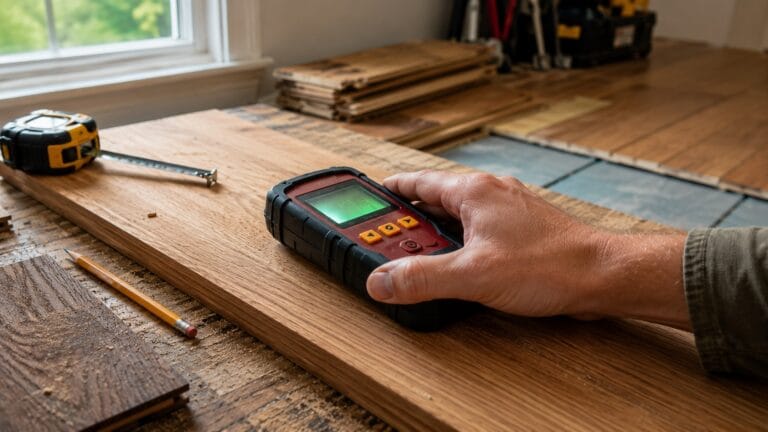
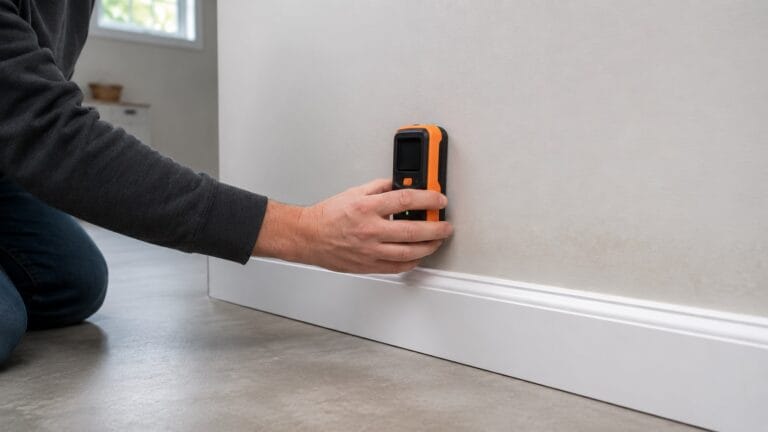
Professionals may use advanced tools such as moisture meters, infrared cameras, or airflow diagnostics to locate hidden moisture. These methods can confirm whether humidity is coming from structural sources, HVAC performance issues, or environmental conditions.
Early evaluation can prevent more serious problems. Persistent humidity creates conditions that support mold growth and material deterioration, even when the original source is relatively minor.
Frequently Asked Questions About How to Detect Hidden Humidity Sources
How do I find where humidity is coming from in my house?
Start by measuring humidity in the dampest area, then compare that reading with nearby rooms. Record the time, recent activity, HVAC operation, and weather. If the same spike repeats after a specific activity or in one specific room, you have a strong clue to the source.
Can humidity come from appliances?
Yes. Showers, cooking, dishwashers, washing machines, and dryers can all release moisture into the air. Monitoring humidity during use helps identify their impact.
Why is only one room humid?
One humid room usually points to trapped air, a nearby moisture source, cooler surfaces, or damp materials in or near that room. Test it with the door open and closed. If humidity rises only when the room is closed, airflow is likely part of the problem.
How do I test for hidden moisture without opening walls?
Use non-invasive methods such as hygrometers, airflow testing, and pattern tracking. These approaches help identify likely sources without damaging the structure.
When should I worry about hidden humidity sources?
If humidity remains elevated, odors develop, or conditions worsen despite basic improvements, further investigation is recommended to rule out hidden moisture problems.
What to Do After You Find the Pattern
Once you know when and where humidity rises, match the pattern to the likely source. A spike after showers, cooking, or laundry points to activity and ventilation. A single humid room points to airflow, nearby moisture, or a localized source. Humidity that stays high without activity points to outdoor moisture, stored material moisture, HVAC performance, or hidden dampness.
If the pattern is clear, fix the source before relying on a dehumidifier alone. If the pattern stays unclear, or if musty odors, visible mold, soft materials, or recurring high readings continue, it is time to inspect more deeply or bring in a professional.
After identifying the likely source, choose the right control method for that specific problem. For broader moisture-control options, see how to reduce humidity in a house.
If the humidity pattern points to a larger moisture problem rather than a single indoor source, use how to find, fix, and prevent moisture problems in homes as the broader next-step guide.