Why Indoor Air Feels Damp Even Without Leaks
Indoor air can feel damp or clammy even when there is no visible leak because moisture may be present as water vapor instead of liquid water. High humidity, poor airflow, damp building materials, outdoor weather, or HVAC performance can all make a home feel sticky, heavy, or slightly musty while floors and walls still appear dry.
The fastest way to confirm whether the problem is humidity-driven is to measure the air instead of relying only on how the room feels. Learning how to test indoor humidity levels helps separate normal damp-air discomfort from a moisture condition that needs closer attention.
This guide explains why indoor air feels damp without obvious leaks, which conditions commonly cause it, and when persistent dampness may point to a hidden moisture problem.
Why a House Can Feel Damp Without an Obvious Leak
A house can feel damp even without visible water because moisture does not always appear as liquid. Most indoor moisture problems begin as water vapor—an invisible form of water that builds up in the air. When humidity rises beyond comfortable levels, air begins to feel heavy, sticky, or cool and clammy.
Many everyday activities release moisture into the air. Cooking meals, taking showers, washing clothes, and even breathing add water vapor indoors. In homes with limited ventilation or high humidity levels, this moisture can accumulate faster than it escapes.
Once humidity builds up, it affects comfort before causing visible damage. Air may feel stale or muggy, fabrics may feel slightly damp, and rooms may develop faint musty odors. These early warning signs often appear long before water damage becomes visible.
Some homeowners first notice damp air during seasonal changes or weather shifts. This happens because outdoor humidity levels strongly influence indoor conditions. Understanding how outdoor conditions affect indoor moisture helps explain why damp air can appear suddenly without an indoor water source.
Damp air does not automatically mean structural damage is present. In many homes, the problem starts as an environmental condition that builds slowly until rooms feel uncomfortable, odors appear, or condensation begins to form.
When indoor air feels damp, homeowners are usually experiencing one or more of the following conditions:
- Humidity levels that remain too high for extended periods
- Air that does not circulate properly
- Moisture trapped in building materials
- Outdoor humidity entering the home
- Cooling systems that remove temperature but not moisture
These causes are often connected. For example, a poorly ventilated home with elevated humidity may also have materials slowly releasing moisture into the air from past dampness. Over time, these combined factors create the persistent damp sensation many homeowners struggle to identify.
If the air in your home consistently feels heavy or uncomfortable, it is often useful to compare what you are experiencing with known signs of high humidity in a house. This helps determine whether the issue is mild discomfort or an early-stage moisture condition that deserves attention.
High Indoor Humidity Can Make Air Feel Heavy or Clammy
The most common reason indoor air feels damp—even without any visible leak—is elevated humidity. When relative humidity rises above comfortable levels, the air begins to feel heavier, cooler, and slightly sticky against the skin. This happens because the air is holding more moisture than your body can easily evaporate, which changes how temperature and comfort are perceived.
In most homes, indoor humidity should stay between 30% and 50%. Once levels move above 60%, many people begin to notice a damp or clammy feeling in the air. At higher levels, the environment can feel persistently muggy, even if the temperature is not particularly warm.
This type of dampness often develops gradually. Homeowners may first notice that:
- Clothing feels slightly damp after sitting out
- Bed sheets feel cool or clammy at night
- Rooms feel stuffy even with normal temperatures
- Air feels heavier than usual, especially in the morning
Because humidity is invisible, it is easy to misinterpret these symptoms as a hidden leak. In reality, the issue is often excess moisture suspended in the air rather than water entering the structure.
Humidity levels can rise for several reasons, even in homes without water intrusion:
- Frequent cooking or boiling water
- Long or hot showers without proper exhaust ventilation
- Drying laundry indoors
- Large numbers of occupants in a closed space
- Poor airflow between rooms
In many cases, multiple small moisture sources combine to create a noticeable effect. While each source may seem insignificant on its own, together they can push humidity into an uncomfortable range.
Another important factor is that high humidity does not always affect every room equally. Some areas of the home may feel significantly more damp than others due to airflow differences or localized moisture buildup. If you notice this pattern, it can help to understand why some rooms have higher humidity than others, since uneven moisture distribution is a common contributor to damp air complaints.
It is also worth noting that high humidity often becomes more noticeable at certain times of day. Early mornings, evenings, or periods after showers and cooking are when moisture tends to accumulate most. During these times, airflow is often reduced and temperatures may drop slightly, making the damp sensation more pronounced.
Even when humidity is the primary cause, the feeling of damp air can still indicate a developing moisture issue. Persistent high humidity increases the likelihood of condensation forming on cooler surfaces such as windows, walls, and floors. Over time, this can lead to visible moisture problems if conditions are not controlled.
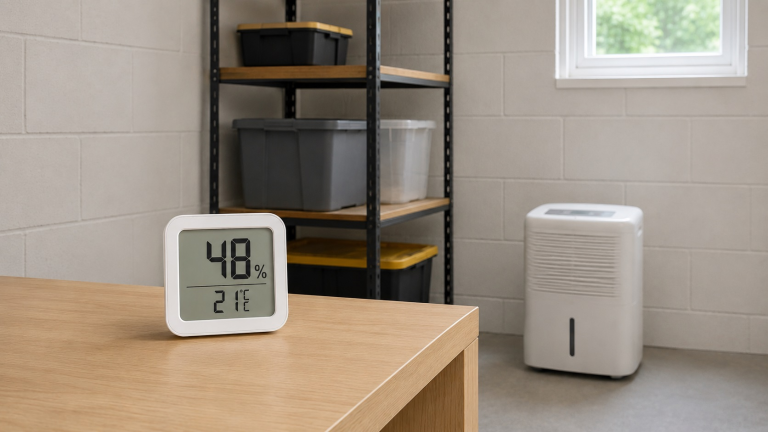
If you suspect humidity is the cause, the most reliable way to confirm it is by measuring indoor moisture levels directly. Using a hygrometer or similar device allows you to verify whether humidity is consistently elevated and determine how severe the problem is.
Once confirmed, reducing indoor humidity becomes the next step. While this article focuses on diagnosing the cause, you can explore practical solutions in how to reduce humidity in a house if measurements show levels are too high.
Poor Ventilation Can Trap Moisture Indoors
Even when humidity levels are not extremely high, poor ventilation can make indoor air feel damp. This happens because moisture becomes trapped inside the home instead of being carried out through natural or mechanical airflow. When air remains stagnant, even moderate humidity can feel heavier and more noticeable.
Ventilation matters because moisture has to leave the room after it is produced. If bathroom fans are weak, kitchen exhaust is rarely used, return airflow is blocked, or interior doors stay closed for long periods, damp air can linger even when there is no active leak.
Common ventilation-related causes of damp air include:
- Closed windows and doors for extended periods
- Blocked or undersized HVAC return vents
- Exhaust fans that are not used or not working properly
- Furniture or storage blocking airflow paths
- Interior rooms without windows or air circulation
These conditions are especially common in modern homes that are built to be energy efficient. While airtight construction helps reduce energy loss, it also limits natural airflow, making moisture management more dependent on mechanical systems.
One of the most noticeable effects of poor ventilation is uneven humidity. Certain rooms—such as bathrooms, laundry rooms, or interior bedrooms—may feel significantly more damp than others. This is often not because those rooms are producing more moisture, but because the moisture is not being removed effectively.
Low airflow also slows down evaporation. When air is moving, moisture evaporates and disperses more easily. In stagnant conditions, moisture lingers on surfaces and in the air, making rooms feel damp for longer periods.
Ventilation issues often go unnoticed because they do not produce obvious signs like leaks or condensation right away. Instead, they create a persistent environment where moisture gradually builds up. Over time, this can lead to the same conditions associated with high humidity, including musty odors and surface dampness.
If you suspect ventilation is contributing to damp air, it can help to observe how conditions change when airflow improves. Opening interior doors, running exhaust fans, or allowing air to circulate may temporarily reduce the damp feeling. If these changes make a noticeable difference, airflow is likely part of the problem.
A simple comparison can help: measure humidity in the damp-feeling room, then measure a better-ventilated room at the same time. If the damp room reads higher or drops noticeably after the door is opened and the fan runs, poor air movement is likely contributing.
However, ventilation alone does not always solve moisture issues. In some cases, moisture may already be stored within building materials and slowly releasing back into the air. This can cause damp conditions to persist even after airflow improves.
Damp Materials Can Release Moisture Back Into the Air
Another common reason indoor air feels damp—even without an active leak—is moisture stored inside building materials. After past water exposure, materials such as drywall, wood, insulation, and flooring can retain moisture for extended periods. This stored moisture does not remain static; it gradually evaporates back into the surrounding air.
This process can continue long after a visible problem appears to be resolved. For example, a minor leak that was repaired weeks earlier may leave behind moisture trapped inside walls or subfloors. As the home warms and cools throughout the day, this moisture slowly releases into the air, creating a persistent damp sensation.
Materials that commonly retain moisture include:
- Drywall and painted wall surfaces
- Wood framing and subfloors
- Carpet and padding
- Insulation inside walls and ceilings
Because this moisture is hidden, homeowners often assume the issue is ongoing humidity rather than residual moisture from past exposure. This is one of the main reasons damp air can persist even when no active leak is present.
Visible dryness is not always proof that materials are fully dry. If drywall, subflooring, carpet padding, or insulation was recently wet, moisture readings or a professional inspection may be needed before sealing, painting, or covering the area again.
In these situations, the air may feel damp even if humidity levels fluctuate or appear normal at times. This happens because moisture is being released intermittently as temperature, airflow, and pressure conditions change.
Stored moisture is especially common after:
- Past plumbing leaks
- Roof leaks that were repaired
- Minor flooding or water intrusion
- Condensation inside wall cavities
- Repeated humidity exposure over time
A home may also feel damp after cleanup if materials were dried only at the surface. Drywall, framing, and subfloor materials can appear dry from the outside while still holding moisture deeper inside. As that moisture evaporates, it can make nearby rooms feel humid or musty.
After a known moisture event, persistent damp air is a clue that deeper materials may still be releasing moisture even if the surface looks dry.
If damp air seems connected to a past water issue, it may be helpful to investigate whether hidden materials are still holding moisture. Learning how to detect hidden humidity sources can help determine whether materials inside walls, floors, or ceilings are still releasing moisture into the air.
HVAC Problems Can Make Indoor Air Feel Damp
An HVAC system can make a home feel cool but still damp if it lowers the temperature faster than it removes moisture. This often happens when airflow is restricted, the system short cycles, or the equipment is not matched well to the home’s humidity load.
One of the most common issues is short cycling. This occurs when an air conditioning system turns on and off too quickly. While it may cool the air effectively, it does not run long enough to remove moisture. As a result, the home feels cool but still damp.
Other HVAC-related causes include:
- Oversized air conditioning units that cool too quickly
- Dirty or blocked evaporator coils reducing moisture removal
- Restricted airflow due to clogged filters or duct issues
- Improper system settings that limit dehumidification cycles
In these situations, homeowners often lower the thermostat because the air still feels uncomfortable. However, lowering the temperature does not always solve the problem. In some cases, it can make surfaces cooler and increase the chance of condensation if humidity remains high.
Air conditioning systems remove moisture only when they run long enough for condensation to form on the evaporator coil and drain away properly. If the system shuts off too quickly, moisture remains in the air even though the room temperature drops.
This creates a confusing condition: the room may feel cool and damp at the same time. Homeowners may describe the air as cold, clammy, or heavy, even though the thermostat shows a normal temperature.
HVAC-related dampness may also be more noticeable in certain rooms if airflow is unbalanced. Rooms far from the air handler, rooms with closed vents, or spaces with poor return airflow may feel more humid than the rest of the home.
If damp air improves when the HVAC system runs longer, airflow is balanced, or dehumidification improves, the issue may be related to system performance rather than a leak. In some cases, an HVAC inspection may be needed to confirm whether the system is removing moisture properly.
Outdoor Humidity Can Move Indoors
Outdoor conditions can make indoor air feel damp even when the home itself has no active leak. Humid outdoor air can enter through open doors, windows, vents, gaps, crawl spaces, basements, and normal air exchange. Once inside, that moisture affects indoor comfort.
This is especially common during warm, humid weather. When outdoor air holds a large amount of moisture, even small amounts of air exchange can raise indoor humidity levels. Homes may feel damp after rainy periods, during summer humidity, or when outdoor dew points remain high.
Outdoor moisture can enter through:
- Open windows and doors
- Unsealed gaps around walls, windows, and doors
- Crawl space vents or foundation openings
- Attic or roof ventilation pathways
- Air leaks around utility penetrations
This does not mean the home is leaking water. Instead, moisture is entering as vapor. Because vapor is invisible, the home may feel damp before any surface moisture appears.
Outdoor humidity also explains why damp air may appear suddenly. A home may feel normal for several days, then become clammy after a weather shift, storm system, or stretch of humid air. When conditions outside change, indoor moisture levels often respond.
Seasonal patterns can also affect indoor dampness. Some homes feel more humid in summer because warm outdoor air carries more moisture. Others feel damp during transitional seasons when indoor temperatures drop and surfaces become cooler.
If damp air appears mainly during certain weather patterns, the cause may be connected to outdoor conditions rather than an indoor leak. However, outdoor humidity can still create indoor moisture problems if the home lacks proper air sealing, ventilation control, or dehumidification.
For a deeper explanation of this pattern, see how outdoor conditions affect indoor moisture, which explains how rain, humidity, temperature, and air movement influence moisture inside homes.
Temperature Differences Can Make Air Feel Clammy
Indoor air can feel damp when temperature and humidity are not balanced. Even moderate humidity may feel uncomfortable if indoor surfaces are cool or if air movement is low. This is why a room can feel clammy even when the humidity reading is only moderately elevated.
Cool air holds less moisture than warm air. When warm, moist air contacts cooler surfaces, moisture can approach the point where condensation begins. Even before visible condensation appears, the air may feel damp, heavy, or chilly.
This often happens near:
- Exterior walls
- Windows
- Basement walls or floors
- Poorly insulated rooms
- Areas with limited airflow
A room with cooler surfaces may feel damp even if another room with the same humidity level feels comfortable. This is because comfort depends on temperature, humidity, airflow, and surface conditions working together.
Temperature differences can also explain why dampness feels worse at night or in the early morning. As indoor temperatures drop, surfaces become cooler and humidity feels more noticeable. This may create a clammy sensation even before visible condensation forms.
If damp air is strongest near cold surfaces, windows, basement walls, or poorly insulated areas, the issue may involve temperature imbalance rather than a water leak. Improving insulation, airflow, or humidity control may help reduce the damp sensation.
Daily Activities Can Add More Moisture Than Expected
A home can feel damp without leaks simply because everyday activities add moisture faster than it leaves. This is especially common in smaller homes, tightly sealed homes, or homes with limited exhaust ventilation.
Common indoor moisture sources include:
- Showers and baths
- Cooking and boiling water
- Drying laundry indoors
- Humidifiers
- Houseplants
- Aquariums
- Multiple occupants in closed rooms
Each source may seem minor, but the combined effect can be significant. A long shower, a pot of boiling water, and laundry drying indoors can all raise humidity during the same day. If the home does not remove that moisture quickly, the air begins to feel damp.
This type of moisture buildup is often mistaken for a hidden leak because no single source seems large enough to explain the problem. However, repeated daily moisture release can create persistent humidity, especially when ventilation is limited.
The pattern is usually activity-related. Dampness may increase after showers, cooking, laundry, or periods when many people are home. If the air improves when these activities are reduced or ventilation is increased, daily moisture production is likely contributing.
When Damp Air May Point to a Hidden Moisture Problem
While many cases of damp indoor air are caused by humidity and ventilation issues, persistent dampness can sometimes indicate a hidden moisture problem. The key is recognizing when the symptoms go beyond normal environmental behavior.
Damp air may signal a deeper issue if you notice:
- Persistent musty or earthy odors
- Dampness that does not improve with ventilation
- Humidity levels that remain elevated despite normal activity
- Localized areas that consistently feel more damp than others
These signs suggest that moisture may be entering or remaining in the home in ways that are not immediately visible. This does not always mean a major leak is present, but it may indicate hidden moisture sources such as damp materials, concealed condensation, or slow water intrusion.
If conditions persist, it is often helpful to investigate further by identifying potential hidden sources. This process is explained in detail in how to detect hidden humidity sources, which focuses on isolating moisture behavior that is not visible at the surface.
The longer damp air continues, the more important it becomes to confirm whether the issue is simple humidity, poor airflow, stored moisture, or an active hidden source.
How to Confirm Whether the Problem Is Humidity
The most reliable way to determine whether damp air is caused by humidity is to measure it directly. Using a hygrometer allows you to track indoor moisture levels and identify patterns throughout the day.
When measuring humidity, check more than one room and look for:
- Consistent readings above 60%
- Spikes during certain activities or times of day
- Differences between rooms
Tracking humidity over time provides valuable insight into whether the problem is environmental or related to a specific source. If readings remain elevated, it confirms that moisture in the air—not just perception—is contributing to the damp feeling.
Once confirmed, controlling humidity becomes the next step. This may involve improving ventilation, adjusting HVAC performance, or using dedicated moisture control methods. If humidity remains difficult to manage, it may indicate a broader moisture pattern. Understanding why moisture problems keep returning can help identify recurring conditions that allow dampness to persist.
When to Take Damp Indoor Air Seriously
Not all damp air requires immediate action, but it should not be ignored if it becomes persistent. Early-stage humidity problems are easier to correct than long-term moisture issues.
Consider taking action if:
- Damp conditions last for several days or longer
- Musty odors begin to develop
- Condensation appears on windows or surfaces
- Materials feel soft, cool, or slightly damp
If these conditions continue despite efforts to improve airflow or reduce humidity, further investigation may be necessary. In some cases, professional evaluation can help identify hidden moisture or system-related issues that are not easily detected.
The most useful next step is to compare the pattern: when the air feels damp, where it feels worst, what the humidity reading shows, and whether airflow or weather changes affect it.
Frequently Asked Questions About Why Indoor Air Feels Damp
Why does my house feel damp but my walls are dry?
This usually means moisture is present in the air rather than on surfaces. High humidity, poor ventilation, or moisture stored in materials can all create a damp feeling without visible wetness.
Can indoor air feel damp even if humidity readings seem normal?
Yes. Low airflow, temperature differences, or localized moisture can make air feel damp even if overall humidity appears moderate. Measuring in multiple rooms often reveals variations.
Does poor airflow make a house feel humid?
Poor airflow traps moisture and slows evaporation, which can make even moderate humidity feel more noticeable. Stagnant air often feels heavier and more uncomfortable.
Can a previous leak cause ongoing damp air?
Yes. Materials can retain moisture and slowly release it over time, causing persistent dampness even after the original leak has been repaired.
Should I investigate further if damp air does not improve?
Yes. If damp air lasts for several days, produces musty odors, stays localized in one room, or does not improve after ventilation and humidity control, investigate for hidden moisture sources.
Key Takeaways
- Damp indoor air is often caused by humidity, not visible leaks
- Humidity above 60% can make air feel heavy and uncomfortable
- Poor ventilation traps moisture and worsens damp conditions
- Building materials can release stored moisture over time
- HVAC systems can cool air without properly removing humidity
- Outdoor weather can significantly affect indoor moisture levels
- Persistent dampness may indicate hidden moisture that requires investigation
For a broader guide to moisture sources, damage risks, and prevention steps, see how to find, fix, and prevent moisture problems in homes.