
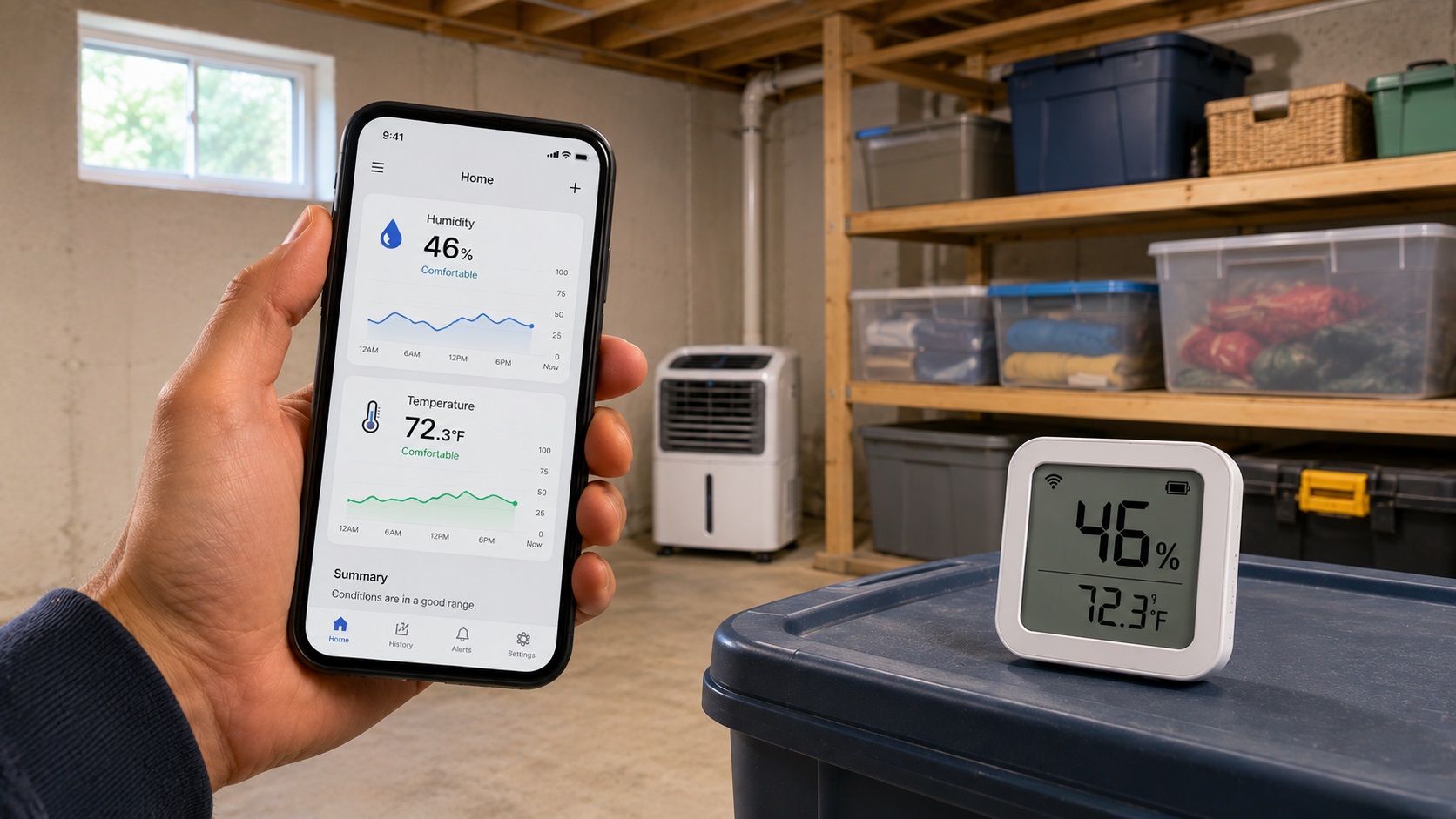
Best Smart Hygrometers for Home Monitoring: Bluetooth and WiFi Humidity Sensors Compared
High indoor humidity can quietly create the conditions for musty odors, condensation, mold growth, and hidden moisture damage. The problem is that many homeowners do not notice humidity changes until there is already a visible warning sign, such as window condensation, damp basement air, swollen trim, or a musty smell in a closet or crawl space.
The best smart hygrometers for home monitoring help solve that problem by tracking temperature and humidity through an app, storing history, and in some cases sending alerts when humidity rises above a set level. This can be especially useful in basements, crawl spaces, storage rooms, garages, laundry areas, and vacation homes where you may not check conditions every day.
This guide focuses on app-connected Bluetooth and WiFi humidity monitors, not basic non-smart hygrometers.
For basic humidity testing methods, start with our guide on how to test indoor humidity levels. For the broader process of identifying moisture risks throughout the home, see our guide on how to find, fix, and prevent moisture problems in homes.
Disclosure: As an Amazon Associate, DryHomeGuide.com earns from qualifying purchases. This means we may earn a commission if you buy through links on this page, at no extra cost to you.
Quick Picks: Best Smart Hygrometers for Home Monitoring
If you already know what type of smart humidity monitor you need, these are the strongest picks from the products selected for this guide.
- Best Overall: Govee Digital Hygrometer Indoor Thermometer Room H5075
- Best Budget Smart Hygrometer: ThermoPro TP357 Digital Hygrometer Indoor Thermometer
- Best Premium Sensor: SensorPush HT1 Smart Temperature Sensor & Humidity Sensor
- Best for Crawl Spaces and Damp Areas: SensorPush HT.w Smart Temperature Sensor & Humidity Sensor
- Best for Smart Home Automation: SwitchBot Meter Plus / SwitchBot Thermometer Hygrometer
- Best Multi-Room Monitoring Kit: Govee Hygrometer Thermometer 3Pack H5100
Best Smart Hygrometer Reviews
Best Overall: Govee Digital Hygrometer Indoor Thermometer Room H5075
The Govee H5075 is the best overall smart hygrometer for most homeowners because it balances an easy-to-read display with Bluetooth app tracking, humidity alerts, and long-term data history. It is a practical choice for basements, bedrooms, storage rooms, offices, and other spaces where you want more than a simple number on a screen.
This model is especially useful if you are trying to spot humidity patterns before they turn into visible moisture problems. For example, if a basement rises after rain or a storage room stays humid during summer, the app history can help you see whether the problem is occasional or recurring. For a deeper product-specific discussion, see our Govee H5075 hygrometer review.
Key Features
- Bluetooth app monitoring for temperature and humidity readings
- Built-in display for quick checks without opening the app
- Custom humidity notification alerts through the app
- Long-term data storage and export features
- Compact design that fits shelves, desks, basements, and storage areas
- Useful for tracking changes near dehumidifiers or moisture-prone rooms
Pros
- ✔ Strong balance of screen visibility and app tracking
- ✔ Good choice for everyday home humidity monitoring
- ✔ Alerts can help catch rising humidity before you would normally notice it
- ✔ Data history helps identify recurring patterns
- ✔ Simple enough for homeowners who do not want a complicated system
Cons
- ✖ Bluetooth range is not the same as true away-from-home monitoring
- ✖ App features require phone setup
- ✖ Not intended to diagnose leaks or material moisture by itself
Best For
- Homeowners who want one reliable smart hygrometer for general monitoring
- Basements, bedrooms, storage rooms, and offices
- Tracking humidity trends near a dehumidifier
- People who want both a physical display and app history
Best Budget Smart Hygrometer: ThermoPro TP357 Digital Hygrometer Indoor Thermometer
The ThermoPro TP357 is a good budget smart hygrometer for homeowners who want app-connected humidity tracking without moving into a more expensive sensor system. It is compact, simple, and well suited for small rooms, closets, cabinets, storage areas, garages, and basic basement monitoring.
This is not the most advanced option in the list, but it is useful when you want short-range Bluetooth monitoring and basic app history. It can help you confirm whether a small enclosed space is staying damp, whether a closet needs better airflow, or whether a room is recovering after ventilation.
Key Features
- Bluetooth app connection for local humidity monitoring
- Compact body that works well in smaller spaces
- Humidity and temperature tracking through the app
- Fast reading updates for changing room conditions
- Useful for closets, cabinets, storage bins, and small rooms
- Simple setup compared with more advanced monitoring systems
Pros
- ✔ Good entry point for smart humidity monitoring
- ✔ Compact enough for tight spaces
- ✔ Useful when a basic hygrometer is not enough
- ✔ App tracking helps show trends instead of one-time readings
- ✔ Good fit for budget-conscious homeowners
Cons
- ✖ Bluetooth-only monitoring is limited by range
- ✖ Smaller display than some room hygrometers
- ✖ Not ideal for full whole-home monitoring
- ✖ Not as premium as SensorPush or as display-friendly as Govee H5075
Best For
- Budget users who still want app-connected readings
- Closets, cabinets, small storage rooms, and enclosed areas
- Checking humidity in small spaces where mold or mildew has appeared before
- Homeowners who only need local Bluetooth monitoring
Best Premium Sensor: SensorPush HT1 Smart Temperature Sensor & Humidity Sensor
The SensorPush HT1 is a strong premium choice for homeowners who care more about data quality, app history, and long-term tracking than having a large display on the device. It is a small sensor designed for detailed temperature and humidity monitoring, making it useful in spaces where moisture patterns matter over time.
This type of sensor is especially helpful in crawl space access areas, basements, wine storage areas, instrument storage, RVs, and rooms where humidity changes gradually. It is important to understand that the HT1 is Bluetooth-based by itself. If you want true away-from-home monitoring, you generally need the compatible SensorPush gateway. For more detail, see our SensorPush HT1 hygrometer review.
Key Features
- Compact wireless temperature and humidity sensor
- Detailed app-based monitoring and long-term data history
- Designed for users who want trend tracking rather than only instant readings
- Can be expanded with a compatible gateway for remote access
- Useful for storage, basements, crawl space access points, and sensitive areas
- No large display, which allows discreet placement
Pros
- ✔ Strong choice for detailed humidity trend monitoring
- ✔ Good for homeowners who want more serious data tracking
- ✔ Compact and easy to place out of the way
- ✔ Useful for rooms or spaces that are not checked daily
- ✔ Can become a more capable system with the optional gateway
Cons
- ✖ No built-in display for quick room checks
- ✖ True remote monitoring requires additional gateway hardware
- ✖ More expensive and more specialized than basic smart hygrometers
- ✖ Not the best choice if you only want a simple shelf display
Best For
- Premium humidity tracking
- Basements, crawl space access areas, storage rooms, and RVs
- Homeowners who want long-term patterns instead of occasional readings
- Users willing to add a gateway for away-from-home monitoring
Best for Crawl Spaces and Damp Areas: SensorPush HT.w Smart Temperature Sensor & Humidity Sensor
The SensorPush HT.w is the better SensorPush option when the location may be damp, humid, or more exposed than a normal interior room. It is not a device to place in standing water, but it is a stronger fit than a standard indoor-only sensor for protected damp areas where humidity is a recurring concern.
This makes it useful for crawl space access zones, garages, utility rooms, sheds, protected outdoor-adjacent areas, and damp storage spaces. If a crawl space regularly smells musty or a utility area stays humid after weather changes, a sensor like this can help you track whether the condition is improving or getting worse.
Key Features
- Water-resistant smart temperature and humidity sensor design
- App-based humidity history and trend tracking
- Better suited to damp conditions than standard indoor-only sensors
- Compact size for crawl space access points, garages, and utility rooms
- Can work with a compatible gateway for remote monitoring
- Useful for tracking damp-area humidity over time
Pros
- ✔ Better fit for damp and protected semi-exposed areas
- ✔ Strong choice for crawl space and garage humidity tracking
- ✔ Helpful when humidity varies by season or weather
- ✔ App history helps reveal recurring dampness patterns
- ✔ Good premium option for moisture-prone locations
Cons
- ✖ Should not be placed in standing water or submerged
- ✖ More specialized than most homeowners need for normal rooms
- ✖ Gateway may be needed for true remote monitoring
- ✖ No large screen for quick visual readings
Best For
- Crawl space access areas and damp utility rooms
- Garages, sheds, and protected storage areas
- Homes with recurring musty smells in lower or enclosed spaces
- Monitoring seasonal humidity changes in moisture-prone locations
Best for Smart Home Automation: SwitchBot Meter Plus / SwitchBot Thermometer Hygrometer
The SwitchBot Meter Plus is the best pick in this list for homeowners who want a smart hygrometer that can fit into a broader smart-home setup. It has a clear display for local readings and can become more useful when paired with the SwitchBot ecosystem for remote access, automation, and alerts.
This is a good option if you already use SwitchBot devices or want humidity readings to help trigger smart-home routines. For example, some users may want humidity data to help manage a fan, dehumidifier, or room environment. The key caveat is that some remote and automation features depend on the hub setup, so it should not be treated as a full remote system on its own.
Key Features
- Large display for local temperature and humidity readings
- App monitoring when connected through the SwitchBot ecosystem
- Useful for smart-home routines and automation planning
- Good option for users who already own SwitchBot devices
- Can support more advanced features when paired with a compatible hub
- Works well in bedrooms, living rooms, offices, and monitored spaces
Pros
- ✔ Strong option for smart-home users
- ✔ Large display makes it easy to check readings quickly
- ✔ Better ecosystem potential than many simple Bluetooth sensors
- ✔ Useful for automation-based humidity control planning
- ✔ Good fit for rooms where visibility matters
Cons
- ✖ Some remote features require a SwitchBot hub
- ✖ Best value is for users who want the ecosystem, not just one sensor
- ✖ Not as rugged as damp-area sensors
- ✖ Can be more than necessary for simple humidity checks
Best For
- Smart-home users
- Bedrooms, offices, living rooms, and monitored indoor spaces
- Homeowners who want display visibility plus automation potential
- Users planning to connect humidity readings with other smart devices
Best Multi-Room Monitoring Kit: Govee Hygrometer Thermometer 3Pack H5100
The Govee H5100 3-Pack is the best choice here for homeowners who want to monitor more than one area without buying a separate premium system. Instead of guessing whether the basement, bedroom, closet, or storage room has the biggest humidity problem, you can place multiple sensors and compare readings.
This is a good multi-room starter kit, but it should not be confused with a full whole-home monitoring system. It is best for Bluetooth-based room comparisons, not complex gateway dashboards. For a broader strategy on tracking readings throughout the home, see our guide on how to monitor moisture levels throughout your home.
Key Features
- Three smart humidity sensors in one kit
- Bluetooth app monitoring for several areas
- Useful for comparing rooms and spotting localized humidity problems
- Compact design for closets, storage spaces, basements, and living areas
- App history helps track changes across multiple locations
- Good starter option for homeowners who want more than one sensor
Pros
- ✔ Lets you compare humidity in several rooms
- ✔ Good value for multi-area monitoring
- ✔ Helpful for homes with basements, closets, and storage rooms
- ✔ More useful than one sensor when humidity varies by room
- ✔ App tracking makes patterns easier to notice
Cons
- ✖ Not a full professional whole-home monitoring system
- ✖ Bluetooth range can limit convenience in larger homes
- ✖ More sensors means more placement decisions and battery upkeep
- ✖ Not as premium as SensorPush for detailed long-term monitoring
Best For
- Multi-room humidity checks
- Basement, bedroom, closet, and storage-room comparisons
- Homeowners trying to find which area stays most humid
- People who want a simple starter kit instead of one single sensor
Check the Govee Hygrometer Thermometer 3Pack H5100 on Amazon to see current availability.
Smart Hygrometer Product Comparison Table
| Product | Category Label | Best Use Case | Key Strengths | Main Limitation | Amazon Link |
|---|---|---|---|---|---|
| Govee H5075 | Best Overall | General smart home humidity monitoring | Display, app alerts, data history, easy everyday use | Bluetooth range is not true away-from-home monitoring | Check on Amazon |
| ThermoPro TP357 | Best Budget Smart Hygrometer | Small rooms, closets, cabinets, and budget monitoring | Compact size, Bluetooth app tracking, simple setup | Limited by Bluetooth range and small display | Check on Amazon |
| SensorPush HT1 | Best Premium Sensor | Long-term data tracking and serious humidity monitoring | Compact sensor, strong app history, premium monitoring feel | Remote monitoring requires optional gateway | Check on Amazon |
| SensorPush HT.w | Best for Crawl Spaces and Damp Areas | Damp crawl space access points, garages, utility rooms, and protected areas | Water-resistant design, strong damp-area fit, app history | Not for standing water or submersion | Check on Amazon |
| SwitchBot Meter Plus | Best for Smart Home Automation | Smart-home users who want humidity readings tied to an ecosystem | Large display, app support, hub-based automation potential | Best remote features require a hub | Check on Amazon |
| Govee H5100 3-Pack | Best Multi-Room Monitoring Kit | Comparing humidity across several rooms | Three sensors, app history, good room-to-room comparison value | Not a full gateway-based whole-home system | Check on Amazon |
Buying Guide: How to Choose the Right Smart Hygrometer
The right smart hygrometer depends on what you are trying to protect. A bedroom that feels slightly damp does not need the same setup as a crawl space, basement, storage room, or vacation home. Before choosing a device, decide whether you need simple local readings, app history, humidity alerts, remote access, or several sensors in different rooms.
Choose Bluetooth for Local Monitoring
Bluetooth smart hygrometers are useful when you are usually within range of the device. They can help you check a basement from upstairs, review data from a nearby storage room, or monitor a closet without opening it constantly.
The Govee H5075, ThermoPro TP357, Govee H5100, SensorPush HT1, and SensorPush HT.w can all be useful for local app-based monitoring. Just remember that Bluetooth is not the same as cloud access from anywhere.
Choose WiFi or a Gateway for Away-From-Home Monitoring
If you want to check readings while traveling or receive alerts when you are away from home, pay close attention to whether the product supports true remote access. Some sensors require a separate hub or gateway for this function.
This matters for vacation homes, rental properties, crawl spaces, and basements where a long period of high humidity could cause problems before anyone notices. If you are trying to monitor a property remotely, a basic Bluetooth-only device may not be enough.
Choose a Display Model for Everyday Rooms
For bedrooms, living rooms, offices, and basements you walk through regularly, a display is useful. You can glance at the humidity reading without opening an app. The Govee H5075 and SwitchBot Meter Plus are better fits when visibility matters.
If you only need basic non-smart room readings, you may be better served by our broader guide to the best hygrometers for home humidity, which includes simpler non-smart models.
Choose a Water-Resistant Sensor for Damp Areas
Damp areas need more care. A standard indoor sensor may be fine for a bedroom or office, but a crawl space access area, garage, or utility room may expose the device to higher humidity, dust, and occasional moisture.
The SensorPush HT.w is the better choice in this list for damp protected areas. Still, water-resistant does not mean waterproof in all conditions. Do not place any sensor where it can sit in standing water.
Choose a Multi-Pack When Humidity Varies by Room
Many homes do not have one uniform humidity level. A basement may read high while the living room feels normal. A closet may smell musty while the bedroom reads fine. A laundry room may spike during wash days while nearby rooms recover quickly.
If you suspect room-to-room differences, a multi-pack like the Govee H5100 can help you compare areas. If you need a full gateway-based multi-room system, that belongs in a separate whole-home hygrometer system decision, not just a simple smart hygrometer purchase.
Setup and Usage Advice for Smart Hygrometers
A smart hygrometer is only useful if the readings reflect the room or problem area you actually care about. Poor placement can make a good sensor seem inaccurate or cause you to miss a moisture problem.
Place the Sensor Away From Distorted Air
Do not place a smart hygrometer directly beside a shower, supply vent, return grille, sunny window, exterior door, humidifier, or dehumidifier outlet unless you are intentionally testing that specific microclimate. For normal room monitoring, place it where air circulates naturally.
Let the Device Stabilize
After moving a hygrometer to a new room, give it time to adjust before judging the reading. A sensor moved from a cool basement to a warm living room may need time before the reading reflects the new location.
Track Patterns, Not Just One Reading
One high reading does not always mean there is a serious problem. A bathroom may rise after a shower. A kitchen may rise during cooking. A basement may rise during humid weather. The important question is whether the humidity drops back down or stays elevated.
If readings stay high, compare them with visible signs of high humidity in a house. If the room also has condensation, musty odors, swelling trim, or mold-like spotting, the reading deserves more attention.
Use Alerts as Warnings, Not Diagnoses
A humidity alert tells you that conditions changed. It does not tell you why. High humidity may come from weather, poor ventilation, a damp crawl space, a basement issue, wet materials, a bathroom fan problem, laundry moisture, or hidden water intrusion.
If a room stays humid even after ventilation or dehumidification, use the reading as a reason to investigate further. Our guide on how to reduce humidity in a house explains broader humidity-control steps.
Pair Hygrometers With the Right Moisture-Control Tools
A hygrometer measures air humidity. It does not remove moisture. If your readings stay high, the next step may involve ventilation, source correction, or a dehumidifier. If you are already using a dehumidifier, compare your readings with our guide on best dehumidifier settings to prevent mold.
If you need help choosing or operating a dehumidifier, see our guide on how to choose and use a dehumidifier effectively.
Common Smart Hygrometer Mistakes to Avoid
Mistake 1: Treating Bluetooth as Full Remote Monitoring
Bluetooth smart hygrometers are useful, but they are usually limited by distance, walls, and phone connection. If you want alerts while away from home, look for WiFi support or a compatible hub or gateway.
Mistake 2: Placing the Sensor Too Close to a Moisture Source
A sensor placed beside a shower, dehumidifier, vent, or cold window may show a reading that does not represent the room. That can lead to overreacting or missing the real problem area.
Mistake 3: Ignoring Room-to-Room Differences
One smart hygrometer in a hallway will not tell you what is happening in a basement, closet, crawl space access area, bathroom, or laundry room. If your home has several moisture-prone areas, use more than one sensor or move a sensor long enough to compare patterns.
Mistake 4: Assuming a Normal Reading Means Materials Are Dry
A smart hygrometer measures humidity in the air. It does not prove that drywall, subflooring, cabinets, trim, insulation, or framing are dry. If you see stains, swelling, softness, or musty odors, you may need a moisture meter or closer inspection.
Mistake 5: Setting Alerts Too High
If your alert threshold is too high, the room may stay damp for long periods before you are notified. Set alerts based on your goal: comfort, mold risk reduction, storage protection, or basement moisture control. Avoid treating the alert as a guarantee that mold or damage will not happen.
Mistake 6: Buying a Premium Sensor When a Basic One Would Work
If you only want to check a bedroom once a day, a premium sensor may be unnecessary. Use a smart hygrometer when you need app history, alerts, remote access, or hidden-area monitoring.
Mistake 7: Ignoring the Source of Persistent Humidity
A hygrometer helps you notice high humidity, but it does not fix the cause. If humidity keeps returning, look for ventilation problems, damp lower spaces, wet materials, hidden leaks, seasonal weather effects, or poor dehumidifier performance. For long-term prevention, see how to prevent recurring moisture damage.
FAQ About Smart Hygrometers for Home Monitoring
What is the best smart hygrometer for most homes?
For most homeowners, the Govee H5075 is the best overall choice because it combines a physical display, Bluetooth app tracking, alerts, and data history. It works well for general room monitoring, basements, storage areas, and everyday humidity checks.
Do smart hygrometers prevent mold?
No smart hygrometer can guarantee mold prevention. A smart hygrometer helps you monitor conditions that may support mold growth, especially high humidity. You still need to correct the source of moisture, improve ventilation, dry wet materials, or use a dehumidifier when needed.
Is Bluetooth or WiFi better for humidity monitoring?
Bluetooth is usually enough for local monitoring when you are nearby. WiFi or a hub-based system is better if you want to check readings away from home or receive remote alerts. For basements and vacation homes, true remote access may be worth the extra setup.
Where should I place a smart hygrometer?
Place it in the room or area you want to monitor, away from direct sunlight, vents, showers, exterior doors, and dehumidifier outlets. For a basement, place it where it reflects the general air rather than directly beside the dehumidifier. For a closet or cabinet, place it where air is likely to become trapped.
Should I use a smart hygrometer in a crawl space?
A smart hygrometer can be useful near a crawl space access point or in a safe protected crawl space location, but avoid unsafe, wet, contaminated, or hard-to-access areas. A water-resistant sensor such as the SensorPush HT.w is a better fit for damp protected areas than a standard indoor-only unit.
How many smart hygrometers do I need?
Many homes benefit from at least one sensor in the most moisture-prone area, such as a basement, crawl space access area, bathroom, laundry room, or storage room. If humidity varies across the home, a multi-pack like the Govee H5100 can help compare several rooms.
Can a smart hygrometer detect leaks?
No. A smart hygrometer measures air humidity. It may show that humidity rises after a leak or damp event, but it does not locate the leak or prove that a leak exists. For active water detection, a leak sensor is a different product category.
What humidity level should trigger concern?
Many homeowners aim to keep indoor humidity roughly in the 30% to 50% range. Readings that stay near or above 60% deserve attention, especially when combined with condensation, musty odors, damp materials, or previous mold problems. The pattern matters more than one short spike.
Conclusion: Which Smart Hygrometer Should You Choose?
The best smart hygrometer for home monitoring depends on where you need to track humidity and how much information you want.
Choose the Govee H5075 if you want the best overall balance of display, app tracking, alerts, and everyday usability. Choose the ThermoPro TP357 if you want an affordable Bluetooth option for smaller spaces. Choose the SensorPush HT1 if you want premium long-term monitoring and do not need a large screen.
For damp protected areas such as crawl space access points, garages, and utility rooms, the SensorPush HT.w is the better fit. If you use smart-home devices and want automation potential, the SwitchBot Meter Plus makes the most sense. If you need to compare several rooms, the Govee H5100 3-Pack is the most practical starter kit.
Whichever model you choose, remember that a smart hygrometer is a monitoring tool. It helps you spot humidity patterns early, but persistent high readings should lead to source correction, better ventilation, dehumidification, or deeper moisture inspection when needed.