
Best Dehumidifier Settings to Prevent Mold: Ideal Humidity Levels for Every Room
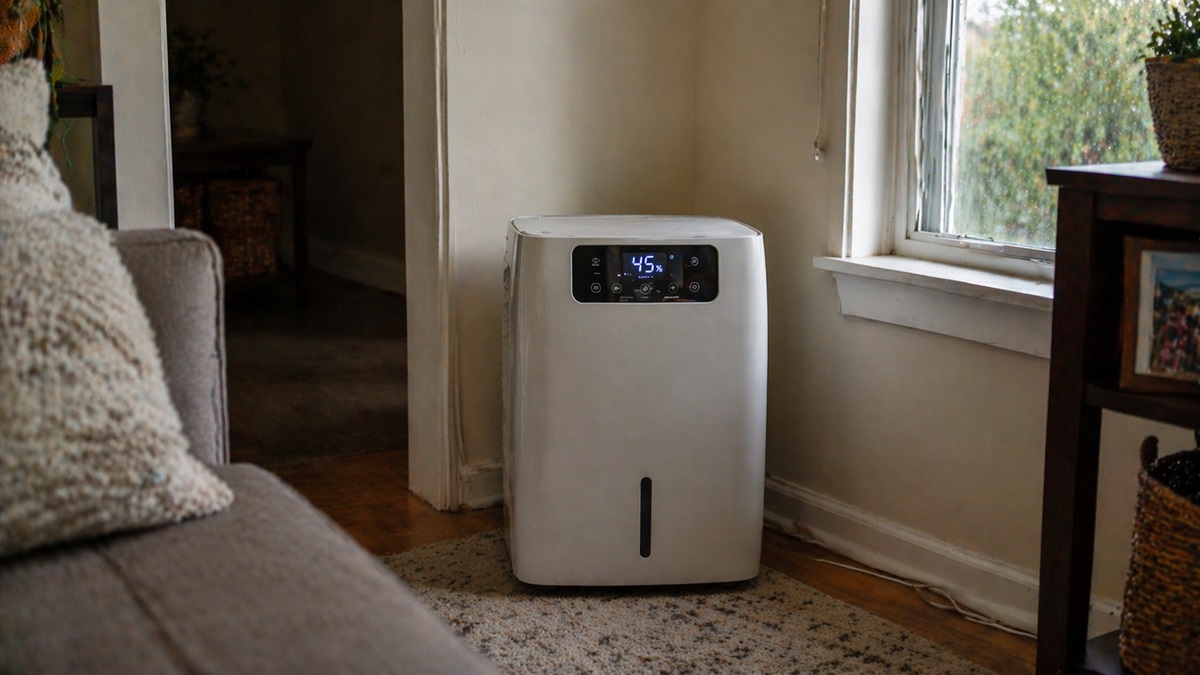
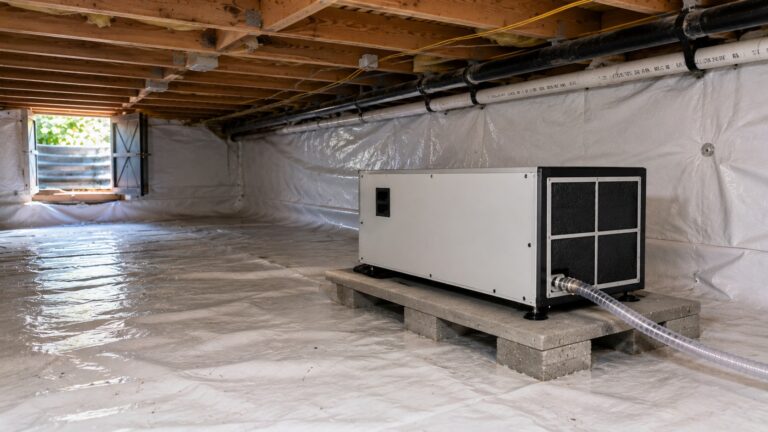
The best dehumidifier setting to prevent mold is usually between 40% and 50% relative humidity. Damp basements, crawl spaces, and rooms with previous moisture problems may need a lower target around 35% to 45%, while most living areas stay comfortable and mold-resistant near 45%.
Humidity above 60% creates mold-friendly conditions, especially in rooms with poor airflow, cool surfaces, or hidden moisture. Setting humidity too low can also cause comfort problems and unnecessary energy use, so the goal is not the lowest possible setting but the lowest practical setting for each room.
This guide is part of our complete guide to choosing and using a dehumidifier effectively, where homeowners can learn how to select, place, operate, and maintain dehumidifiers for long-term moisture control.
What Humidity Level Causes Mold Growth?
Mold spores exist naturally in indoor air, but they require moisture to grow. When humidity rises above certain levels, mold growth becomes much more likely.
If mold has already developed, proper removal methods are essential before adjusting humidity levels. See our complete guide on how to remove mold permanently for safe and effective remediation steps.
Mold Risk Levels by Humidity
| Relative Humidity (RH) | Mold Risk Level | Typical Outcome |
|---|---|---|
| Below 30% | Low | Dry conditions, minimal mold risk |
| 30–50% | Safe | Ideal range for mold prevention |
| 50–60% | Moderate | Increased mold risk possible |
| Above 60% | High | Conditions suitable for mold growth |
| Above 70% | Very High | Rapid mold development likely |
Keeping humidity within the safe range prevents many mold problems before they begin. If moisture problems have already occurred, early detection still matters because mold prevention settings cannot dry soaked materials or fix hidden leaks.
Best Indoor Humidity Range to Prevent Mold
Most homes benefit from maintaining indoor humidity between 30% and 50%. This range balances comfort, energy efficiency, and mold prevention.
Recommended Humidity Targets
| Humidity Range | Condition | Recommendation |
|---|---|---|
| 30–40% | Dry environments | Suitable for winter conditions |
| 40–50% | Balanced indoor humidity | Ideal for most homes |
| 50–55% | Slightly elevated | Monitor closely |
| Above 60% | High humidity | Adjust dehumidifier settings immediately |
Maintaining proper humidity supports long-term mold prevention, but a dehumidifier setting cannot replace leak repair, ventilation, or drying after water exposure.
Best Dehumidifier Settings by Room Type
Different areas of the home experience different moisture levels. Setting humidity targets based on room type improves mold prevention and helps dehumidifiers operate more efficiently.
High-moisture areas such as basements, bathrooms, laundry rooms, and crawl-space-adjacent rooms often need stricter humidity control than bedrooms or living rooms. Use a separate hygrometer in problem areas because one central thermostat reading may miss localized moisture.
Recommended Humidity Settings by Room
| Room Type | Recommended Humidity | Why It Matters |
|---|---|---|
| Basement | 35–45% | Reduces mold risk in enclosed spaces |
| Bathroom | 40–50% | Controls moisture from showers |
| Kitchen | 40–50% | Balances cooking-related humidity |
| Living Areas | 40–50% | Maintains comfortable indoor air |
| Bedrooms | 40–50% | Supports comfort and mold prevention |
| Conditioned attics or sealed storage areas | 35–45% | Helps control condensation in enclosed, conditioned spaces |
Maintaining proper humidity in high-risk areas helps prevent hidden mold development, but readings that stay above 55% after the dehumidifier has been running may point to poor placement, undersized equipment, excess air leakage, or an active moisture source.
If moisture problems are suspected but not visible, specialized tools can help confirm the issue. See our guide to the best moisture meters for detecting hidden water damage.
Best Basement Dehumidifier Settings to Prevent Mold
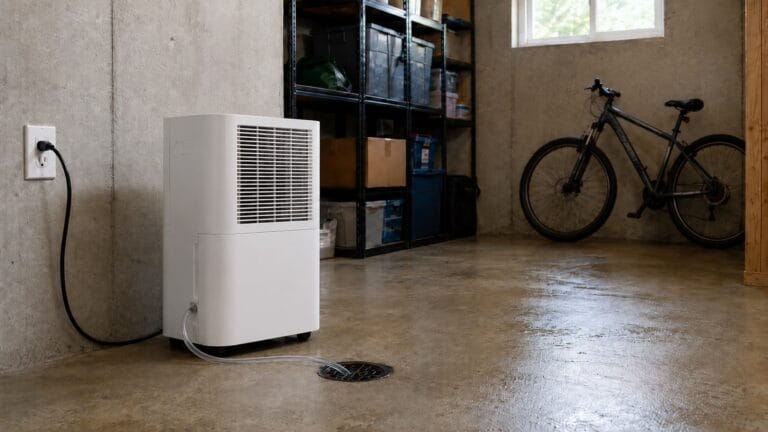
Basements are one of the most common locations for mold growth due to their cooler temperatures and limited airflow. Even small increases in humidity can create conditions where mold develops beneath flooring, behind walls, or on stored materials.
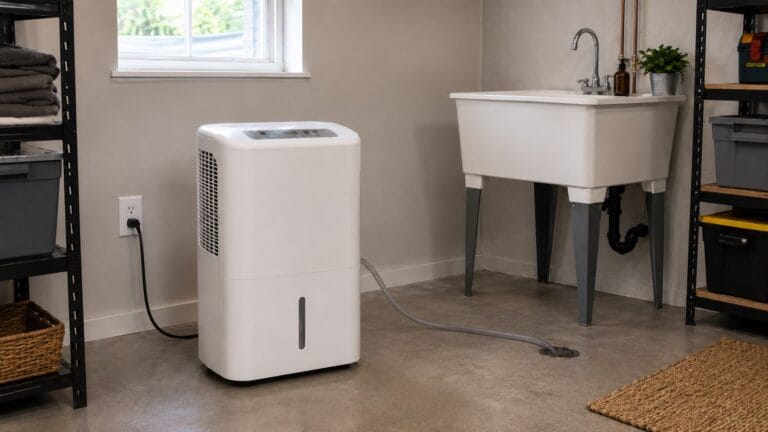
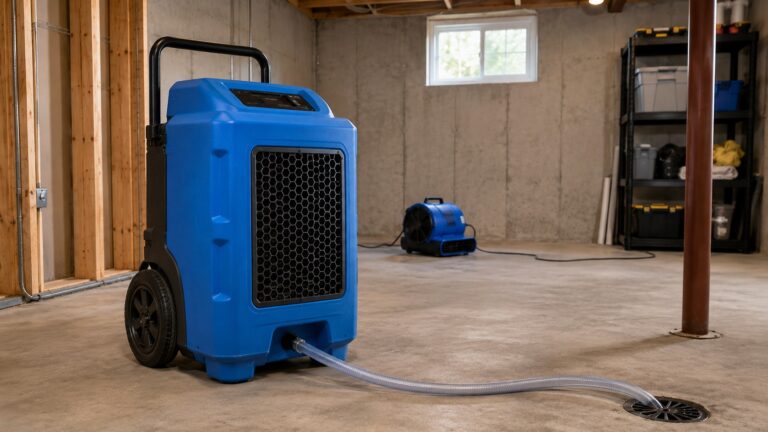
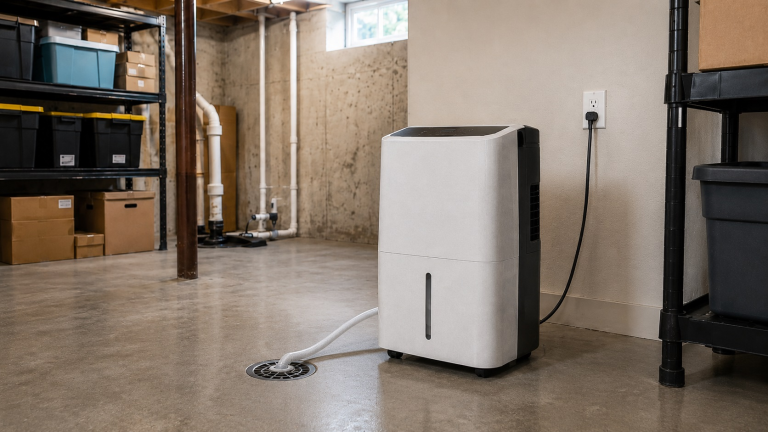
Setting basement humidity correctly is essential for long-term moisture control. If your basement cannot stay below 50% even with the unit running, equipment size, placement, drainage, or a continuing moisture source may be the problem. You can compare basement-specific options in our guide to the best basement dehumidifiers to prevent mold and moisture.
Recommended Basement Humidity Levels
| Condition | Recommended Setting |
|---|---|
| Normal basement conditions | 40–45% |
| Damp or humid basement | 35–40% |
| After water exposure | 35–40% |
| Seasonal humidity spikes | 35–45% |
If your basement has experienced previous moisture damage, maintaining lower humidity targets reduces the chance of mold recurrence. However, humidity control should be paired with leak repair, drainage correction, and drying if water has reached flooring or wall materials.
Best Bathroom Humidity Settings to Prevent Mold
Bathrooms generate high humidity during showers and baths. Without proper ventilation and humidity control, moisture can remain trapped on walls, ceilings, and grout lines.
Using a dehumidifier near a bathroom can help control moisture after repeated water use, but bathroom exhaust ventilation should still be the first line of defense during and after showers.
Bathroom Humidity Control Guidelines
- Maintain humidity between 40% and 50%
- Use exhaust fans during and after showers
- Run a dehumidifier nearby if humidity remains high after ventilation
- Monitor moisture buildup on ceilings and walls
- Keep ventilation systems clean and functional
If bathroom humidity remains elevated after showers, hidden moisture may be present. You can identify possible issues using our guide to signs of water damage behind shower walls.
Seasonal Dehumidifier Settings for Mold Prevention
Humidity levels change throughout the year due to outdoor weather conditions and indoor heating or cooling systems. Adjusting dehumidifier settings seasonally improves mold prevention and indoor comfort.
Recommended Seasonal Humidity Settings
| Season | Recommended Humidity | Why It Matters |
|---|---|---|
| Spring | 40–50% | Controls rising humidity levels |
| Summer | 35–45% | Prevents high humidity from outdoor air |
| Fall | 40–50% | Maintains stable indoor conditions |
| Winter | 30–40% | Reduces condensation from indoor heating |
Seasonal humidity control helps prevent sudden moisture spikes that encourage mold growth.
How to Set Your Dehumidifier Correctly
Setting your dehumidifier properly ensures consistent humidity control and prevents mold-friendly conditions from developing. Most modern dehumidifiers include digital humidity controls that allow precise adjustments.
Steps to Set Your Dehumidifier
- Set the humidistat to 45% for most rooms, or 35% to 45% for damp basements and other high-risk areas.
- Place a separate hygrometer across the room from the unit so you can confirm the whole space is reaching the target humidity.
- Let the unit run long enough to stabilize the room before judging the setting, especially after humid weather or water exposure.
- Check humidity readings daily in problem areas until the space stays consistently below 50%.
- Lower the setting during seasonal humidity spikes, then raise it slightly if the room becomes uncomfortably dry.
Using a reliable humidity monitor improves accuracy because a dehumidifier’s built-in reading may not match the humidity on the far side of the room. If you need a separate monitor, see our guide to the best hygrometers for monitoring home humidity.
Common Dehumidifier Setting Mistakes That Increase Mold Risk
Even when homeowners use dehumidifiers regularly, incorrect settings can reduce their effectiveness. Small configuration mistakes often allow humidity to remain high enough for mold growth.
The most common mistake is treating the setting as “set it once and forget it” instead of checking whether the room actually reaches the target humidity.
Humidity Setting Mistakes to Avoid
| Mistake | Why It Causes Problems | Recommended Fix |
|---|---|---|
| Setting humidity above 55% | Creates conditions suitable for mold growth | Lower to 40–50% |
| Turning off the dehumidifier too early | Humidity rebounds quickly when damp materials, concrete, or stored items release moisture back into the air | Let the unit run until readings stay below 50% without quick rebound |
| Using only one unit for large areas | Uneven humidity distribution | Add additional units if needed |
| Ignoring humidity readings | Moisture levels go unnoticed, especially in corners, closets, basements, and rooms with poor airflow | Check readings daily in high-risk areas and weekly once conditions stabilize |
| Blocking airflow around the unit | Reduces efficiency | Keep intake and exhaust areas clear |
Maintaining consistent humidity readings helps reduce the risk of hidden moisture buildup in walls and flooring systems.
How Low Should Humidity Be to Prevent Mold?
Many homeowners assume lower humidity is always better. However, setting humidity too low can create comfort issues, increase energy use, and damage certain materials.
The ideal humidity range balances mold prevention with indoor comfort.
Safe Minimum Humidity Levels
| Humidity Level | Impact | Recommendation |
|---|---|---|
| Below 30% | Air becomes excessively dry | Avoid long-term exposure |
| 30–40% | Safe for winter conditions | Use during colder months |
| 40–50% | Ideal indoor range | Maintain year-round when possible |
Maintaining humidity within the ideal range helps reduce stress on building materials while preventing mold-friendly conditions.
Signs Your Humidity Is Too High
Excess humidity often produces noticeable warning signs before mold becomes visible. Identifying these symptoms early helps prevent moisture from accumulating in structural materials.
Common Signs of High Indoor Humidity
- Condensation forming on windows
- Musty odors in enclosed spaces
- Damp or sticky air feeling
- Visible moisture on walls or ceilings
- Recurring mold growth in humid areas
- Warping wood or peeling paint
If these symptoms appear, adjusting humidity levels quickly can prevent further moisture damage. You can compare these indicators to broader symptoms in our guide to signs of hidden moisture in walls.
Signs Your Humidity Is Too Low
While mold prevention requires reducing moisture, excessively dry air can also create problems. Maintaining balanced humidity improves comfort and protects materials.
Common Signs of Low Indoor Humidity
- Dry skin or irritated sinuses
- Cracking wood furniture
- Static electricity buildup
- Shrinking wood flooring
- Dry or brittle materials
Adjusting humidity slightly upward helps restore comfort without increasing mold risk.
When One Dehumidifier Is Not Enough
Larger homes or multi-level spaces often require more than one dehumidifier. Using multiple units helps maintain consistent humidity across different areas.
Situations That May Require Additional Units
- Homes with large basements
- Multi-story houses with humidity differences
- High-moisture areas such as laundry rooms
- Homes in humid climates
- Properties with previous water damage
If one unit keeps the room near the dehumidifier dry but distant corners stay above 55%, the problem may be placement, airflow, unit capacity, or the need for a second unit.
Frequently Asked Questions About Dehumidifier Settings and Mold Prevention
What humidity level prevents mold growth?
Maintaining indoor humidity between 30% and 50% significantly reduces mold risk. Levels above 60% create conditions favorable for mold growth.
Should I set my dehumidifier to 40% or 50%?
Most homes benefit from setting humidity between 40% and 50%. In damp areas such as basements, slightly lower settings around 35% to 45% may provide better protection.
Is 55% humidity too high?
Humidity around 55% increases mold risk, especially in areas with limited airflow. Lowering humidity to 50% or below improves moisture control.
Does mold grow at 50% humidity?
Mold growth is less likely at 50% humidity, but poorly ventilated corners, cool surfaces, damp materials, or hidden leaks can still allow mold to develop even when the room average looks acceptable.
What humidity level is best for basements?
Basements typically benefit from humidity levels between 35% and 45%. After water exposure or during seasonal humidity spikes, a temporary target closer to 35% to 40% may provide better protection.
Final Thoughts: Setting Dehumidifiers Correctly to Prevent Mold
Maintaining proper humidity levels is one of the most reliable ways to prevent mold growth inside homes. Consistent humidity control protects walls, flooring, stored items, and other materials that can support mold when moisture stays elevated.
By adjusting dehumidifier settings based on room type, seasonal changes, and environmental conditions, homeowners can create stable indoor environments that resist mold development.
For more help choosing, placing, sizing, and maintaining a unit, see our complete guide to using a dehumidifier effectively. Consistent monitoring and small setting adjustments are what keep humidity low enough for long-term mold prevention.
3 Comments
Comments are closed.