Why Humidity Levels Change During Weather Shifts
Humidity levels often change when the weather changes because indoor air is not completely separate from outdoor air. Even in a closed home, outdoor temperature, rain, wind, pressure systems, and incoming air masses can affect how much moisture is present indoors and how that moisture behaves.
This is why a home may feel damp before a storm, why a hygrometer may rise during rainy weather, or why humidity may suddenly drop after a cold front moves through. These changes do not always mean there is a leak. In many cases, they are caused by normal weather-driven moisture movement.
Still, weather-related humidity changes can reveal problems that were already present. Poor ventilation, weak HVAC airflow, damp basements, crawlspace moisture, air leaks, and cold interior surfaces can all make humidity swings more noticeable. If humidity stays high after the weather clears, or if one room reacts much more strongly than the rest of the home, the change may deserve closer attention.
The useful question is not whether humidity changes during weather shifts. It is whether the change rises and falls with the weather, or whether it stays high after conditions outside have stabilized. For the measurement side of this topic, see how to test indoor humidity levels.
Why Humidity Often Changes When the Weather Changes
Humidity changes during weather shifts because outdoor air conditions change faster than most indoor environments can fully buffer. A house slows the movement of heat and moisture, but it does not stop it completely. Air still moves through small gaps, vents, HVAC systems, attic spaces, crawlspaces, doors, windows, and normal daily activity.
The most important thing to understand is that humidity is not only about how much water vapor is in the air. It is also about temperature. Warm air can hold more moisture than cool air. When the temperature changes, the same amount of water vapor can feel very different and produce a different relative humidity reading.
That is why humidity may rise when the air cools, even if no new moisture source has appeared. A room that felt comfortable at 72°F may feel damp after the temperature drops because the air is closer to saturation. The moisture did not necessarily come from a leak. The air simply became less able to hold that moisture comfortably.
Weather shifts usually affect indoor humidity through several overlapping forces:
- Outdoor air masses bring more or less moisture into the area.
- Temperature changes alter relative humidity readings.
- Rain and storms slow drying and increase damp-air conditions.
- Pressure changes influence airflow and moisture movement.
- Wind can push humid outdoor air into small building gaps.
- HVAC systems may remove moisture differently depending on runtime and airflow.
Because these forces often happen together, humidity changes can feel sudden. A warm, humid air mass may arrive before rain, temperatures may fall, and the HVAC system may run differently. The result can be a noticeable humidity jump even when nothing inside the home has changed.
How Rain, Storms, and Weather Fronts Affect Humidity
Rainy weather often causes indoor humidity to rise, but not always for the reason homeowners assume. The rainwater outside is not usually entering the house directly unless there is a leak, seepage problem, or drainage failure. More often, the humidity increase begins because the air mass arriving with the rain contains more moisture.
Before many storms, warm and moist air moves into the area. This can raise outdoor humidity hours before rain starts. As that air enters the home through normal air exchange, indoor humidity can rise too. This is why a hygrometer may climb before there is any visible rain.
During the storm, indoor materials may also dry more slowly. Damp outdoor air reduces evaporation. A basement floor, bathroom wall, laundry area, or cool interior surface may stay damp longer because the surrounding air is already carrying a lot of moisture. This can make the home feel heavier, cooler, or more humid even without active water intrusion.
Weather fronts can also create quick humidity changes. A warm front may bring moist air and raise indoor humidity. A cold front may lower the temperature, which can temporarily raise relative humidity even if the total moisture in the air begins to drop. After the front passes, drier air may move in and humidity readings may fall.
A normal storm-related humidity pattern may look like this:
- Humidity rises before the storm.
- The home feels damp during rain.
- Humidity may stay elevated while surfaces dry slowly.
- Humidity may drop after drier air arrives.
These weather-driven changes are usually normal when they are temporary and affect the home broadly. They become more concerning when humidity remains high long after the weather clears, or when one area of the home reacts much more strongly than others. Persistent high readings may point toward signs of high indoor humidity problems rather than ordinary weather variation.
Why Indoor Humidity Can Rise Even Without a Leak
One of the most common concerns homeowners have during weather changes is whether rising humidity means there is a hidden leak. In many cases, it does not. Indoor humidity can increase simply because the surrounding air has become more humid and the home is absorbing that change.
Homes are not sealed environments. Even well-built houses allow small amounts of air exchange through:
- Door and window gaps
- Attic and crawlspace connections
- Ventilation systems and exhaust fans
- HVAC return and supply pathways
- Minor cracks in walls and foundations
When outdoor humidity rises quickly, that moisture enters gradually and raises indoor humidity levels. This can happen without any visible water source. As a result, rooms may feel damp, surfaces may feel slightly cooler, and hygrometer readings may climb.
Another important factor is moisture already inside the home. Everyday activities such as cooking, showering, drying clothes, and even breathing add water vapor to indoor air. When weather conditions prevent that moisture from escaping efficiently, it accumulates.
This explains why a home may feel noticeably more humid during a storm or on a rainy day: normal indoor moisture is being removed more slowly.
In some cases, weather-driven humidity increases can reveal underlying issues. For example:
- Poor ventilation allows moisture to build up faster.
- Restricted airflow prevents the HVAC system from removing humidity efficiently.
- Cold surfaces increase condensation risk.
- Damp basements or crawlspaces release additional moisture into the home.
If humidity frequently rises during weather shifts and stays elevated, it may indicate a broader issue related to why indoor humidity levels become too high rather than a temporary environmental change.
How Temperature Changes Make Humidity Readings Look Different
Temperature plays a major role in how humidity is measured and perceived. Relative humidity is not just a measure of moisture—it is a measure of how close the air is to being saturated at a specific temperature.
When temperature drops, the air’s ability to hold moisture decreases. This means the same amount of water vapor can produce a higher relative humidity reading. This is why humidity often rises when the air cools, even if no additional moisture is present.
For example:
- A room at 75°F and 45% humidity may feel comfortable.
- If the temperature drops to 65°F, the relative humidity may rise significantly.
- The air may now feel damp or heavy, even though the actual moisture level has not changed.
This effect is especially noticeable during weather shifts that involve rapid cooling, such as:
- Cold fronts moving in
- Evening temperature drops
- Storm-driven cooling
Temperature-related humidity changes also explain why condensation can appear suddenly. When surfaces such as windows, walls, or floors become cooler than the surrounding air, moisture in the air can condense onto those surfaces.
This can happen even when humidity levels are not extremely high. It is a combination of temperature and moisture balance. In many homes, this effect becomes more visible during weather changes because both temperature and humidity are shifting at the same time.
Understanding this relationship helps prevent misinterpretation. A sudden increase in humidity does not always mean moisture is entering the home. It may mean the air has cooled and is holding moisture differently.
Why Pressure Systems Can Make Indoor Air Feel Damp
Weather systems also affect how humidity behaves during weather shifts. Low-pressure systems are commonly associated with storms and often arrive with moisture-heavy air. As that outdoor air gradually enters the home, indoor humidity can rise too.
Before a storm arrives, falling pressure is often part of a larger weather pattern that brings warmer, moisture-heavy air into the area. Indoors, this may show up as:
- A gradual rise in humidity readings
- A damp or heavy feeling in the air
- Slower drying of surfaces
Wind also plays a role. During storms, wind can push humid outdoor air into the home through small openings in the building envelope. This effect is often subtle but can contribute to noticeable humidity increases.
In contrast, high-pressure systems are usually associated with drier air. After a storm passes and pressure rises, outdoor air often becomes less humid. This allows indoor humidity levels to drop as drier air replaces moist air and evaporation becomes more effective.
These pressure-driven changes are a normal part of how weather affects indoor environments. However, if indoor humidity does not return to normal after pressure stabilizes, moisture may be retained or generated inside the home. For the broader connection between outdoor climate and indoor dampness, see how outdoor conditions affect indoor moisture.
When Weather-Related Humidity Swings Are Normal
Not every humidity swing points to a home problem. Short-term changes are normal when readings rise and fall with storms, fronts, temperature drops, or drier air moving in.
In most homes, weather-driven humidity changes follow predictable patterns:
- Humidity rises gradually before rain or storms.
- Humidity feels higher during rainy or overcast conditions.
- Humidity may increase when temperatures drop quickly.
- Humidity decreases after a cold front or when drier air moves in.
These changes typically affect the entire home rather than one specific room. They also tend to be temporary, resolving within hours or a day after the weather stabilizes.
It is also normal for humidity to vary throughout the day. Morning readings may be higher due to overnight cooling, while afternoon readings may be lower as temperatures rise and air circulation improves.
Most short-term humidity swings fall within a moderate range, often between 5% and 15%. These changes reflect normal environmental shifts rather than a structural or moisture problem.
If your humidity readings follow these patterns and return to normal levels, the changes are likely weather-related and not a cause for concern.
When Changing Humidity May Signal a Home Moisture Problem
While weather shifts can explain many humidity changes, they can also reveal underlying moisture issues. The key difference is how the humidity behaves after the weather stabilizes.
You should pay closer attention if you notice any of the following patterns:
- Humidity remains high long after rain or storms have passed.
- One room consistently shows higher humidity than others.
- Humidity rises quickly and does not drop back to normal levels.
- Condensation appears on surfaces without significant temperature changes.
- The home feels persistently damp or musty.
These signs may indicate that moisture is being trapped or generated inside the home rather than simply entering from outside. Common causes include:
- Poor ventilation or blocked airflow
- Hidden moisture sources such as damp materials or slow leaks
- HVAC systems that are not removing humidity effectively
- Basement or crawlspace moisture entering the living space
In these situations, it becomes important to understand how to reduce indoor humidity levels and identify whether the issue is temporary or ongoing.
Weather changes often act as a trigger that makes existing problems more noticeable. A home that already struggles with moisture control will react more strongly when outdoor humidity rises.
How to Track Humidity During Weather Changes
Tracking humidity during changing weather conditions helps you understand what is normal for your home and what is not. Without consistent measurement, it is difficult to tell whether humidity changes are temporary or part of a larger issue.
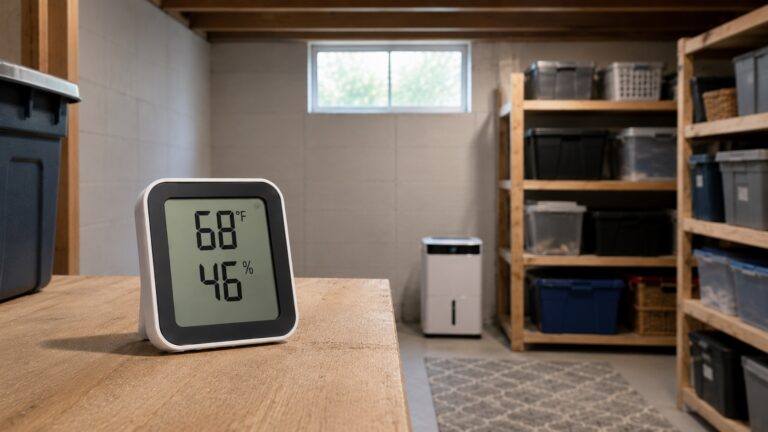
Start by using a reliable hygrometer and checking readings at different times of the day. For the clearest pattern, write down the outdoor weather condition beside each reading, such as “before rain,” “during rain,” “after cold front,” or “clear and dry.”
Focus on:
- Morning versus afternoon readings
- Changes before, during, and after storms
- Differences between rooms
- Humidity levels after the weather clears
Placement of the hygrometer matters. Avoid placing it directly near windows, exterior walls, vents, or HVAC equipment, as these areas can produce misleading readings. Instead, place it in a central, representative area of the room.
Over time, patterns will become clearer. You may notice that your home consistently responds to weather in a predictable way. This baseline makes it easier to identify unusual changes that may require investigation.
If humidity frequently spikes and remains elevated, or if readings vary widely between rooms, it may be helpful to evaluate airflow, insulation, and ventilation conditions. In some cases, improving stability requires learning how to stabilize indoor humidity levels across the home.
When to Take Action
Not every humidity change requires action, but some situations do. Knowing when to respond helps prevent both unnecessary adjustments and long-term moisture problems.
You should consider taking action if:
- Humidity stays above 60% for extended periods.
- Condensation appears regularly on windows, walls, or ceilings.
- The home develops a persistent damp or musty smell.
- Materials such as wood, drywall, or fabrics begin to feel damp.
Short-term solutions may include running bath and kitchen exhaust fans, improving airflow, or using a dehumidifier during prolonged damp weather. However, if humidity stays high after outdoor conditions improve, look for a source that is holding or adding moisture indoors.
The concern is not a short spike during bad weather. The concern is humidity that stays elevated after the weather pattern has passed.
FAQ: Humidity Changes During Weather Shifts
Why does humidity rise before it rains?
Humidity often rises before rain because a moist air mass moves into the area ahead of the storm. This air contains more water vapor, which raises both outdoor and indoor humidity levels before rainfall begins.
Can indoor humidity change without a leak?
Yes. Indoor humidity frequently changes due to outdoor air conditions, temperature shifts, and ventilation patterns. These changes can happen even when no water is entering the home.
Why does my house feel damp during storms?
During storms, outdoor air is often more humid, and indoor surfaces dry more slowly. Moisture from normal activities can build up more easily, making the air feel heavier or damp.
How much can indoor humidity change during a weather shift?
A short-term change of about 5% to 15% can be normal during storms, rain, or fast temperature changes. Larger jumps, repeated spikes, or readings that stay high after the weather clears deserve closer attention.
Should I run a dehumidifier during weather changes?
A dehumidifier can help if humidity rises above comfortable levels, especially during prolonged rainy periods. However, it may not be necessary for short-term fluctuations that return to normal quickly.
Can weather changes cause condensation inside the home?
Yes. When temperatures drop or surfaces become cooler than the surrounding air, moisture can condense even if humidity levels are not extremely high. This is common during rapid weather changes.
Key Takeaways
- Humidity often changes during weather shifts due to air mass movement and temperature changes.
- Indoor humidity can rise before rain because moist outdoor air enters the home.
- Temperature drops can increase relative humidity even without adding moisture.
- Storms and high humidity conditions slow drying and make air feel damp.
- Short-term humidity changes are normal, especially during weather transitions.
- Persistent or localized humidity problems may indicate ventilation or moisture issues.
- Tracking humidity patterns helps distinguish normal behavior from potential problems.