
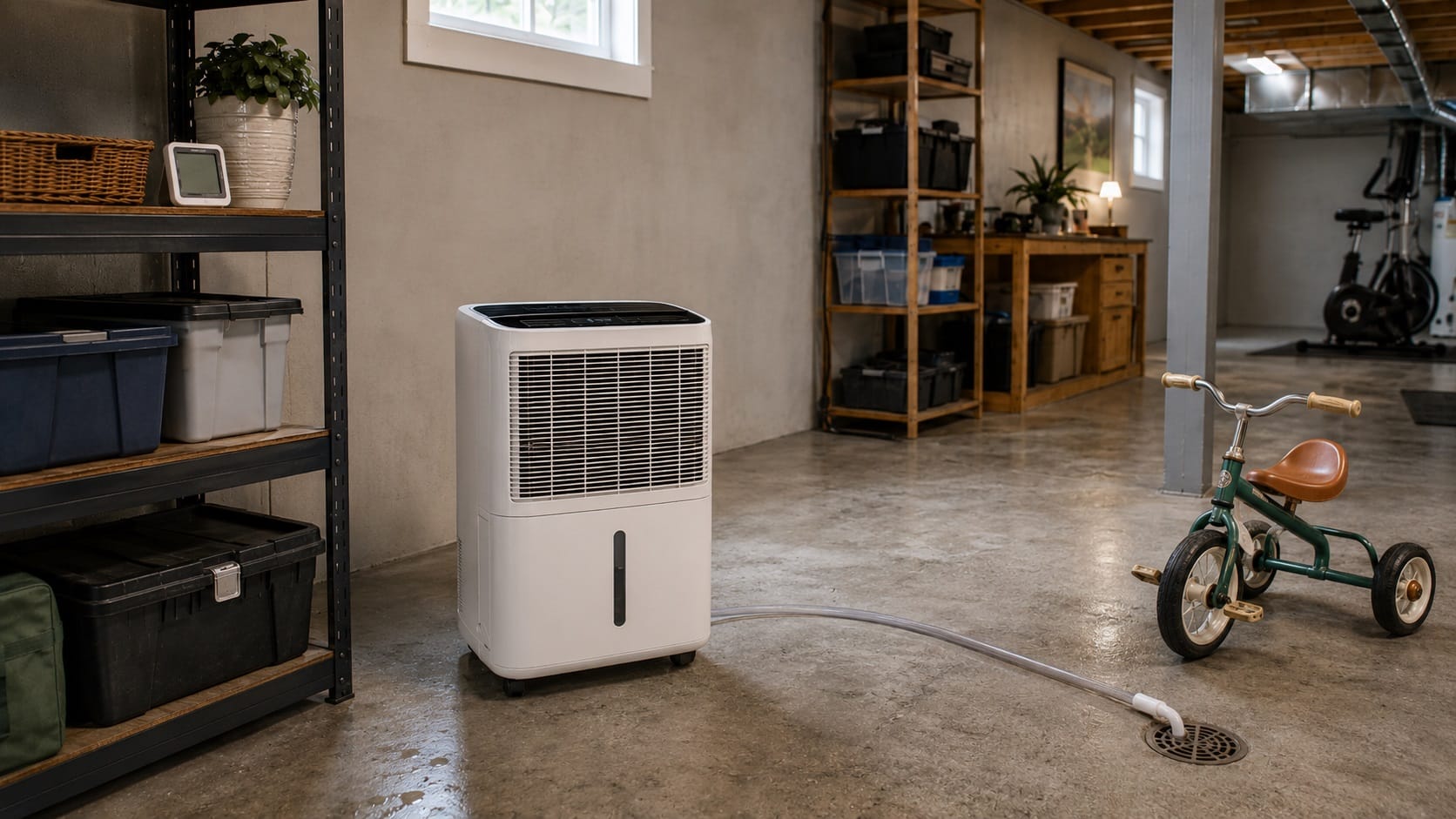
How to Choose and Use a Dehumidifier Effectively
A dehumidifier can help control damp air, reduce condensation, and make mold less likely to grow, but only when it is used for the right problem. A dehumidifier removes moisture from the air. It does not repair leaks, stop water from entering a basement, dry soaked building materials by itself, or remove existing mold.
That distinction matters because many homeowners buy a dehumidifier after noticing musty odors, damp rooms, window condensation, basement humidity, or recurring mold. In some cases, the dehumidifier is exactly what the space needs. In other cases, high humidity is only a symptom of a deeper moisture source, such as a plumbing leak, basement seepage, poor crawl space sealing, wet materials, or inadequate ventilation.
This guide explains how to choose and use a dehumidifier effectively. It covers where dehumidifiers help, where they do not, how to choose the right size and type, how to think about settings, where to place the unit, how long to run it, and when to look beyond the dehumidifier for the real moisture source.
If you are trying to understand the larger moisture system in your home, start with the complete guide to how to find, fix, and prevent moisture problems in homes. A dehumidifier is one tool inside that larger system, not a replacement for leak repair, waterproofing, drying, or mold cleanup.
Dehumidifiers Work Best When You Know What Problem You Are Solving
The first step is not choosing a brand or pint capacity. The first step is identifying the kind of moisture problem you have. A dehumidifier is very useful for air humidity, but it is not designed to solve every moisture issue in a home.
High indoor humidity can come from normal activities such as showering, cooking, laundry, breathing, and seasonal weather. It can also come from damp basements, crawl spaces, wet building materials, foundation moisture, or hidden leaks. The dehumidifier may reduce the humidity reading, but if moisture keeps entering the space, the unit may run constantly without truly solving the problem.
Air Humidity Is Different From Leaks and Water Intrusion
A dehumidifier removes water vapor from indoor air. That means it can help when the air itself is too damp. It can reduce a clammy feeling in rooms, help lower condensation risk, and make mold growth less likely in areas where humidity is the main problem.
But a dehumidifier does not stop bulk water. If rainwater is entering through basement walls, water is coming through a floor crack, a pipe is leaking behind a wall, or a crawl space has standing water, the source still needs to be corrected. In those situations, a dehumidifier may help control the air while the problem is being addressed, but it should not be treated as the repair.
This is especially important in basements and crawl spaces. A damp basement may need a dehumidifier, but water seepage, hydrostatic pressure, poor drainage, or failed waterproofing needs a different solution. If the moisture is coming through basement walls or floors, read the guide on why hydrostatic pressure causes basement leaks before assuming a larger dehumidifier will fix the issue.
When a Dehumidifier Helps
A dehumidifier is most useful when the main issue is excess moisture in the air. It can help in rooms that feel damp, basements that stay humid after the water source has been controlled, crawl spaces that need ongoing humidity control, bathrooms with lingering moisture, laundry rooms, storage rooms, and mold-prone areas where humidity stays too high.
A dehumidifier can also help after repairs. For example, if a minor leak has been fixed and the area has been properly dried, a dehumidifier may help keep humidity from rising again. It can also help stabilize spaces where seasonal humidity causes repeated condensation or musty odors.
The key is that the dehumidifier should be controlling air moisture, not trying to compensate for an unresolved water source.
When a Dehumidifier Is Not Enough
A dehumidifier is not enough when the source of moisture is still active. If water is entering the home, materials are wet, or mold is already growing, the dehumidifier may be only one supporting step.
A dehumidifier is not enough if you see standing water, wet drywall, wet insulation, soaked flooring, repeated basement seepage, plumbing leaks, roof leaks, water-stained ceilings, swollen trim, or mold that keeps returning in the same area. Those signs point to a moisture source that must be found and corrected.
Existing mold also needs to be handled separately. Lowering humidity helps reduce the conditions that allow mold to grow, but it does not remove mold that is already present. If mold, damp materials, and odor keep returning, the problem is usually not just the dehumidifier setting.
What a Dehumidifier Actually Does
A dehumidifier pulls humid air across cold coils or another moisture-removal system. Moisture condenses out of the air, collects in a bucket or drain line, and drier air returns to the room. Over time, this lowers the relative humidity in the space.
That process sounds simple, but real homes make it more complicated. Air moves between rooms. Damp materials release moisture slowly. Outdoor air can add humidity. Crawl spaces and basements can pull moisture from soil, concrete, foundation walls, or unsealed openings. A dehumidifier has to keep up with the moisture entering the space.
Why Relative Humidity Matters
Relative humidity is the amount of moisture in the air compared with how much moisture the air can hold at that temperature. Warm air can hold more moisture than cool air, so humidity problems often change by season, room temperature, and surface temperature.
High relative humidity makes rooms feel damp and can increase condensation risk on cooler surfaces. It can also make mold more likely if the humidity stays elevated long enough and there is an organic surface or dust layer for mold to grow on.
This is why dehumidifiers are commonly used in basements, crawl spaces, bathrooms, and storage areas. These spaces often have cooler surfaces, limited airflow, and higher moisture loads than the rest of the home.
Why the Built-In Humidity Reading May Not Be Enough
Most modern dehumidifiers have a built-in humidistat, but that reading may not represent the entire room. The sensor is inside or near the unit, so it may read the air closest to the dehumidifier instead of the dampest part of the space.
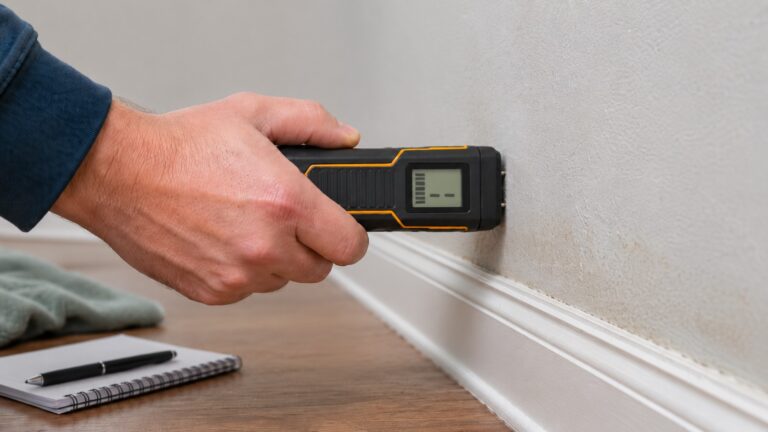
For better decisions, use a separate humidity monitor in the room. This helps you confirm whether the dehumidifier is actually lowering humidity where the problem exists. If you are not sure how to measure humidity correctly, use the guide on how to test indoor humidity levels.
Why a Dehumidifier May Run Constantly
A dehumidifier that runs constantly is not always broken. It may be undersized, poorly placed, working in a very damp space, or trying to keep up with moisture that is still entering the home.
Common reasons a dehumidifier runs constantly include:
- The unit is too small for the room or moisture load.
- The humidity setting is too low for the space.
- The room has poor air circulation.
- The filter or coils are dirty.
- The bucket or drain system is interrupting operation.
- Outdoor air is adding humidity faster than the unit can remove it.
- A leak, seepage problem, or damp material is still releasing moisture.
If the unit runs all day and humidity remains high, do not automatically buy a larger model. First confirm the humidity reading, check placement, inspect the drain and filter, and look for an active moisture source.
How to Know If You Need a Dehumidifier
You may need a dehumidifier if indoor humidity stays high even when there is no active leak or standing water. A dehumidifier is especially useful when damp air is causing comfort problems, condensation, musty odors, or mold-prone conditions.
However, symptoms alone are not enough. The same musty smell that points to high humidity may also point to hidden moisture, old water damage, wet materials, or mold growth. A dehumidifier can help only after the underlying cause is understood.
Signs a Dehumidifier May Help
A dehumidifier may help if you notice:
- Rooms that feel damp or clammy.
- Musty odors without visible water.
- Condensation on windows or cold surfaces.
- Humidity readings that stay high indoors.
- Damp basement air after leaks or seepage have been controlled.
- Storage areas where boxes, fabrics, or stored items feel damp.
- Bathroom humidity that lingers long after showers.
- Seasonal humidity spikes during warm, wet weather.
These signs suggest the air may be holding too much moisture. A dehumidifier can lower the humidity and make the space less favorable for condensation and mold.
Signs You Need More Than a Dehumidifier
You may need leak repair, drying, waterproofing, ventilation improvements, or mold cleanup if you notice:
- Water stains that keep expanding.
- Wet drywall, trim, flooring, or insulation.
- Standing water in a basement or crawl space.
- Water entering after rain.
- A soft, swollen, or crumbling surface.
- Mold growth that returns in the same place.
- Localized dampness near one wall, cabinet, window, pipe, or floor area.
- A dehumidifier that runs constantly but cannot lower humidity.
In these cases, a dehumidifier may still be useful, but it should not be the only response. The source of moisture has to be found and corrected, or the humidity problem will continue.
Test Humidity Before Guessing
Before buying a dehumidifier, measure the humidity in the actual problem area. This helps you avoid guessing based on odor or comfort alone.
Place a separate hygrometer in the room and watch the reading over time. Check the reading during different weather conditions, after showers or laundry, and after the dehumidifier has been running. If humidity drops and stays controlled, the dehumidifier is likely helping. If humidity stays high or rebounds quickly, the room may have a larger moisture source.
For rooms with recurring dampness, test more than one location. A basement corner, crawl space opening, bathroom wall, storage room, or lower wall area may have higher humidity than the center of the room.
Choosing the Right Type of Dehumidifier
The right dehumidifier depends on the space, the moisture load, the drainage setup, and whether the problem is room-specific or whole-house. A small unit that works in a bedroom may fail in a damp basement. A portable basement unit may not be enough for a whole-house humidity problem. A standard room unit may not be built for crawl space conditions.
Instead of starting with the cheapest model, start with the use case.
Portable Room Dehumidifiers
Portable room dehumidifiers are the most common option for bedrooms, offices, laundry rooms, finished basements, storage rooms, and other accessible indoor areas. They usually collect water in a bucket or allow a drain hose connection.
These units are useful when the moisture problem is limited to one room or one area. They are easy to move, easy to set up, and often enough for moderate humidity control. However, they depend on good airflow and regular emptying unless they are connected to a drain.
A portable unit may be a poor fit if the space is very damp, the bucket fills constantly, or you need reliable unattended operation. In that case, a larger unit, pump model, gravity drain setup, or specialty dehumidifier may be better.
Basement Dehumidifiers
Basements often need stronger dehumidification because they are cooler, closer to soil moisture, and more likely to have concrete, foundation walls, poor airflow, or past water intrusion. A basement dehumidifier should usually have enough capacity for the full moisture load and a practical drainage option.
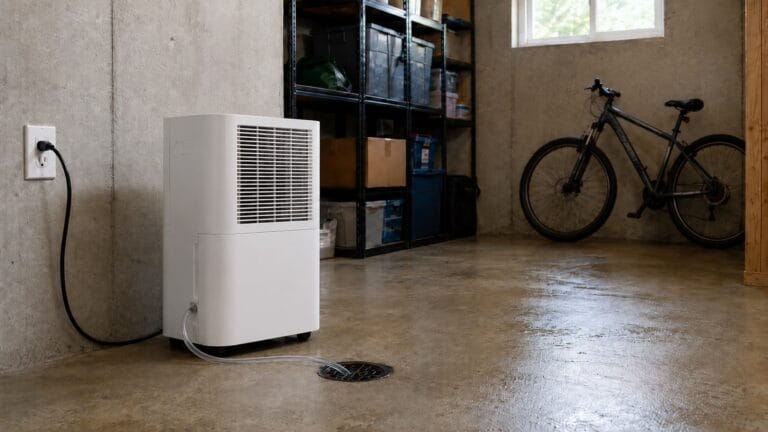
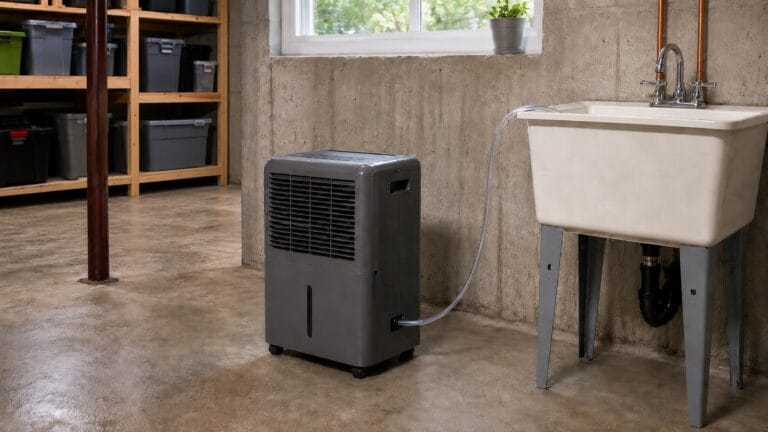
For unfinished basements, continuous drainage is often more important than appearance. A hose to a floor drain, sump pit, condensate pump, or utility sink can keep the unit running without daily bucket emptying.
If the basement has active seepage, water entering after rain, or puddles, choose the water-control path first. A dehumidifier can manage humidity, but it cannot replace drainage, sump pump function, foundation sealing, or waterproofing.
Crawl Space Dehumidifiers
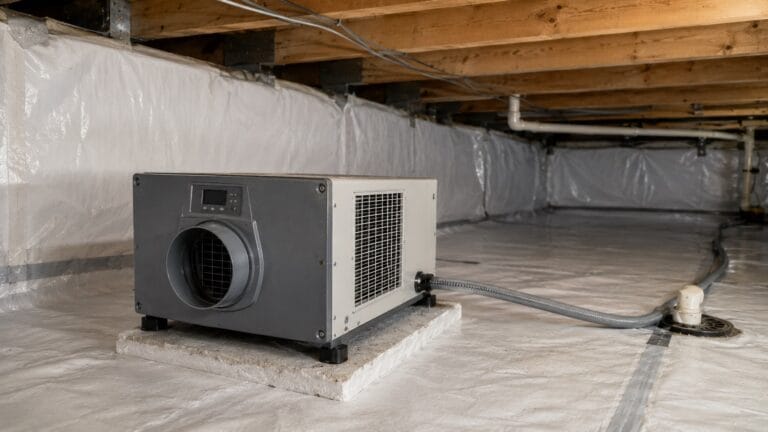
Crawl spaces often need specialized dehumidifiers, especially if the space is encapsulated or difficult to access. Crawl space units are usually designed for lower clearance, continuous drainage, and more demanding moisture conditions than a standard room unit.
A crawl space dehumidifier works best when the crawl space is sealed, ground moisture is controlled, drainage problems are addressed, and outside humid air is not freely entering the space. If the crawl space has standing water, exposed soil, missing vapor barrier, or foundation drainage issues, those problems need attention before a dehumidifier can perform well.
For product-specific guidance, compare the best crawl space dehumidifiers for mold prevention and humidity control.
Bathroom Dehumidifiers
Bathrooms create short bursts of high humidity from showers and baths. In many bathrooms, a properly sized exhaust fan is the first line of defense. A dehumidifier can help when humidity lingers, the room has poor ventilation, or moisture problems continue after normal exhaust fan use.
Bathroom dehumidifiers are usually smaller than basement units, but they still need safe placement, adequate airflow, and a practical way to empty or drain collected water. They should not be placed where they can be splashed or create an electrical hazard.
If the bathroom has mold because of a leak behind tile, a failed shower surround, or wet wall materials, a dehumidifier will not solve the source. It may reduce room humidity, but the hidden water problem still needs repair.
Whole-House Dehumidifiers
A whole-house dehumidifier is designed to control humidity across a larger area, often through the HVAC system or dedicated ducting. This can make sense when humidity problems affect many rooms, not just one basement corner or bathroom.
Whole-house units are usually more expensive and may require professional installation, but they can provide more consistent humidity control than moving portable units from room to room. They are especially useful in homes where air conditioning does not remove enough moisture or where indoor humidity remains high across the house.
If you are comparing larger systems, see the guide to the best whole-house dehumidifiers.
How to Choose the Right Size Dehumidifier
Dehumidifier size is one of the biggest reasons units either perform well or disappoint. If you need the full capacity breakdown, use the guide on how to choose the right size dehumidifier.
A unit that is too small may run constantly, fill its bucket quickly, or fail to bring humidity down. A unit that is larger than needed may still work, but it may cost more than necessary and may cycle differently depending on the space.
The right size depends on more than square footage. It also depends on how damp the area is, how much air exchange the space has, whether the room has wet materials, whether the space is below grade, and whether moisture keeps entering from soil, leaks, outdoor air, or daily activities.
Start With the Space, Not the Rating Alone
Many dehumidifiers are marketed by pint capacity and coverage area. Those numbers are useful, but they do not tell the whole story. A 1,000-square-foot finished basement with mild seasonal humidity is different from a 1,000-square-foot unfinished basement with concrete walls, musty odors, and moisture entering after rain.
When choosing capacity, consider:
- The square footage of the area.
- Whether the space is mildly damp, very damp, or wet.
- Whether the room is above grade, below grade, or in a crawl space.
- Whether the area has good airflow.
- Whether the unit can drain continuously.
- Whether humidity stays high after the unit runs.
- Whether moisture is still entering from a source that has not been fixed.
If the area is large, below grade, poorly ventilated, or repeatedly damp, it usually needs a stronger unit than a similar-sized dry room upstairs.
Why Undersized Units Struggle
An undersized dehumidifier may still collect water, but that does not mean it is controlling the space effectively. It may remove moisture near the unit while the far side of the room stays damp. It may also run almost constantly because moisture is entering faster than the unit can remove it.
Common signs that a dehumidifier may be undersized include:
- The room still feels damp after long operation.
- Humidity readings stay above the target range.
- The unit runs constantly without reaching the set point.
- Musty odors return quickly.
- Condensation continues on cold surfaces.
- The bucket fills very frequently in normal conditions.
Before assuming the unit is too small, check for blocked airflow, dirty filters, incorrect settings, poor placement, and active moisture sources. If those are not the problem, the space may need a higher-capacity unit or a different type of dehumidifier.
Why Bigger Is Not Always the Only Answer
Buying a larger dehumidifier can help when the space has a heavy moisture load, but capacity is not the only factor. A poorly placed large unit may perform worse than a properly placed smaller unit. A large unit with no drain setup may shut off when the bucket fills. A powerful unit in a leaky or wet basement may still struggle if water keeps entering.
For many homes, the best result comes from matching the dehumidifier to the space and correcting the source of excess moisture. That may mean improving drainage, sealing air leaks, using an exhaust fan, drying wet materials, or fixing a leak before expecting the dehumidifier to maintain stable humidity.
Best Dehumidifier Settings for Moisture and Mold Prevention
The best dehumidifier setting depends on the room, the season, the moisture load, and whether mold prevention is the main concern. In general, the goal is to keep humidity low enough to reduce condensation and mold risk without making the room unnecessarily dry or forcing the unit to run constantly.
For most homes, the practical target is a moderate indoor humidity range rather than the lowest possible setting. If the setting is too high, mold-prone areas may stay damp. If the setting is too low, the unit may waste energy, run excessively, or struggle to reach a target that is not necessary for the space.
For a more detailed settings guide, use the article on best dehumidifier settings to prevent mold.
Why Settings Matter
The setting tells the dehumidifier when to run and when to stop. If the setting is too high, the unit may shut off before the room is dry enough. If the setting is too low, the unit may run longer than needed.
Settings matter most in rooms where mold, condensation, or musty odors are recurring issues. A basement, crawl space, bathroom, storage room, or damp bedroom may need tighter humidity control than a dry living room.
Do Not Trust the Setting Blindly
A dehumidifier setting is not always the same as the actual humidity across the room. The built-in humidistat may read the air close to the unit. The dampest corner, wall, or storage area may be higher.
Use a separate hygrometer to verify the room. If the unit says the humidity is controlled but the room still feels damp or musty, the sensor may not be telling the full story. Move the hygrometer to the problem area and compare readings.
Lower Is Not Always Better
Some homeowners assume the lowest setting is the safest setting for mold prevention. That is not always true. A very low setting may make the unit run constantly without adding much practical benefit, especially if the space is not sealed or if outdoor humidity keeps entering.
The better approach is to choose a realistic setting, verify the room with a separate humidity monitor, and adjust based on actual conditions. If the unit cannot reach a reasonable target, the problem may be capacity, placement, drainage, maintenance, or an unresolved moisture source.
Where to Place a Dehumidifier for Better Results
Placement affects performance more than many homeowners realize. A dehumidifier needs access to damp air, enough clearance for intake and exhaust, and a practical way to drain or empty collected water. For room-by-room setup details, see where to place a dehumidifier in your home.
The best location depends on the room layout and where the moisture problem is strongest. In an open basement, a central location may work well. In a divided basement or cluttered storage area, the unit may need to be closer to the dampest zone or paired with better air movement.
Keep Airflow Clear
Most dehumidifiers need open space around the intake and exhaust. If the unit is pushed tightly against a wall, hidden behind boxes, placed in a closet, or surrounded by stored items, air cannot circulate well.
Blocked airflow can make the unit less efficient and may cause one part of the room to dry while another part stays damp. Leave enough clearance around the unit and avoid placing it where furniture, walls, curtains, shelving, or storage bins restrict airflow.
Place It Near the Moisture Problem, But Not in a Hazardous Spot
A dehumidifier should usually be placed near the area with the highest humidity, but it still needs safe operating conditions. Do not place it in standing water, where it can be splashed, where the cord creates a trip hazard, or where it blocks exits or service access.
In a basement, the best location may be near the dampest area if airflow is open. In a bathroom, electrical safety matters more than convenience. In a crawl space, a dedicated crawl space unit should be installed where it can drain properly and move air through the space.
Plan Drainage Before You Choose the Final Location
A dehumidifier may work well for a few hours and then shut off when the bucket fills. In damp basements, crawl spaces, and storage areas, bucket collection can become a constant maintenance problem.
If the space has a floor drain, sump pit, utility sink, condensate pump, or safe drain route, choose a location that allows continuous drainage. A gravity drain hose must slope properly. A pump model can move water upward or across a longer distance, but the pump and hose still need to be checked regularly.
How Long to Run a Dehumidifier
How long a dehumidifier should run depends on the humidity level, the size of the space, the moisture load, the unit capacity, and whether the moisture source has been controlled. If you want a more detailed runtime schedule, see how long to run a dehumidifier each day.
Some spaces need short seasonal use. Others need ongoing operation during humid months. Damp basements and crawl spaces may need continuous humidity control.
The goal is not to run the unit for a fixed number of hours every day. The goal is to maintain stable humidity in the space.
Use Humidity Readings Instead of Guesswork
Rather than deciding only by time, watch the humidity reading. If the room starts high and drops into a stable range, the unit is doing its job. If humidity climbs again soon after the unit shuts off, the space may need longer operation, better sealing, improved ventilation, or source correction.
In many cases, auto mode or humidistat control is better than manually turning the unit on and off. The unit can respond when humidity rises and stop when the target range is reached.
Continuous Operation Can Make Sense in Damp Spaces
Continuous operation can be useful in basements, crawl spaces, and other areas where humidity keeps returning. However, continuous operation should be paired with continuous drainage whenever possible. Otherwise, the unit may shut off when the bucket fills.
If a dehumidifier runs continuously and still cannot lower humidity, that is a warning sign. The space may have an active moisture source, the unit may be undersized, or the placement may be poor.
Seasonal Use May Be Enough in Some Homes
Some homes only need dehumidification during warm, humid seasons. A room that is dry in winter may become damp in summer when outdoor humidity rises, windows are opened, or cool basement surfaces cause moisture to condense.
In those cases, the dehumidifier may not need to run year-round. Use humidity readings and room conditions to decide when to start and stop seasonal operation.
Drainage Options: Bucket, Gravity Drain, or Pump
Drainage is one of the most practical parts of using a dehumidifier. A unit can only keep working if collected water has somewhere to go. If the bucket fills and the unit shuts off, humidity can rise again even if the dehumidifier itself is properly sized.
The best drainage option depends on the room and how much water the unit collects.
Bucket Collection
Bucket collection is simple and works well for light or occasional use. The unit collects water in a removable container, and you empty it when full.
This is convenient in bedrooms, offices, and mildly damp rooms. It is less practical in basements, crawl spaces, or high-humidity areas where the bucket fills often. If you forget to empty it, the unit shuts off and humidity begins rising again.
Gravity Drain Hose
A gravity drain hose allows water to flow from the dehumidifier to a nearby drain. This is a good option when the unit can sit higher than the drain and the hose can slope downward continuously.
Gravity drainage can work well in basements with a floor drain, utility sink, or sump pit. The hose should be routed carefully so it does not kink, clog, or sit flat in a way that prevents water from moving.
Built-In Pump or External Pump
A pump allows the dehumidifier to move water upward or across a distance. This is useful when there is no nearby floor drain or when the drain point is higher than the unit.
Pump models are common in basements and utility areas. They can reduce the need for bucket emptying, but they add another part that must be maintained. Check the pump, hose, and discharge point regularly so water does not back up or spill.
Why Drainage Matters Most in High-Moisture Areas
Drainage matters most where the unit collects a lot of water. In a damp basement or crawl space, a dehumidifier may collect enough water that bucket emptying becomes unrealistic. Continuous drainage keeps the unit operating and makes humidity control more reliable.
If you plan to use a dehumidifier in a space you do not check every day, drainage should be part of the buying decision from the beginning.
Dehumidifier vs Ventilation
Dehumidifiers and ventilation both affect indoor moisture, but they do not solve the same problem in the same way. A dehumidifier removes moisture from indoor air. Ventilation replaces indoor air with outdoor air or exhausts moisture from a specific room. For a fuller comparison, see when to use a dehumidifier vs ventilation.
Ventilation can be very helpful when it removes humid air at the source, such as a bathroom exhaust fan during and after a shower. But ventilation can also make a humidity problem worse if it brings in warm, humid outdoor air faster than the home can dry it.
When Ventilation Helps
Ventilation helps when moisture is being created indoors and needs to be exhausted quickly. Bathrooms, kitchens, laundry rooms, and utility spaces often benefit from targeted ventilation because moisture is produced in short bursts.
Examples include:
- Running a bathroom fan during and after showers.
- Using a range hood while cooking.
- Venting a clothes dryer outdoors.
- Improving airflow in closed rooms where damp air gets trapped.
- Using spot ventilation to remove moisture before it spreads into nearby rooms.
In these cases, ventilation reduces the moisture load before a dehumidifier has to remove it from the air.
When Ventilation Can Make Humidity Worse
Ventilation is not always the better answer. If outdoor air is humid, bringing more of it indoors can raise indoor humidity. This is especially common in warm, humid climates, damp basements, vented crawl spaces, and rooms where outside air enters through leaks or open windows.
This is why simply opening windows does not always dry a home. If the outdoor air contains more moisture than the indoor air, ventilation may make the space feel wetter, not drier.
A dehumidifier is often better when the goal is to remove moisture from indoor air without relying on outdoor conditions.
When You May Need Both
Some rooms need both ventilation and dehumidification. A bathroom may need an exhaust fan to remove shower humidity and a small dehumidifier if moisture lingers. A basement may need a dehumidifier for ongoing humidity control and air sealing to reduce humid outdoor air entry. A laundry room may need proper dryer venting and dehumidification if the room still stays damp.
The right choice depends on where the moisture comes from. If the moisture is produced indoors in short bursts, ventilation often helps. If the space stays humid over time, a dehumidifier may be needed. If humidity keeps returning despite both, look for a hidden moisture source.
How to Maintain a Dehumidifier So It Keeps Working
A dehumidifier only works well when air can move through it and the collected water can leave the unit. Poor maintenance can make a good dehumidifier seem weak, inefficient, noisy, or unreliable. For a full cleaning and care checklist, use the guide on how to maintain a dehumidifier.
Maintenance is especially important in basements, crawl spaces, laundry rooms, workshops, and storage areas where dust, lint, and damp air are common.
Clean or Replace the Filter
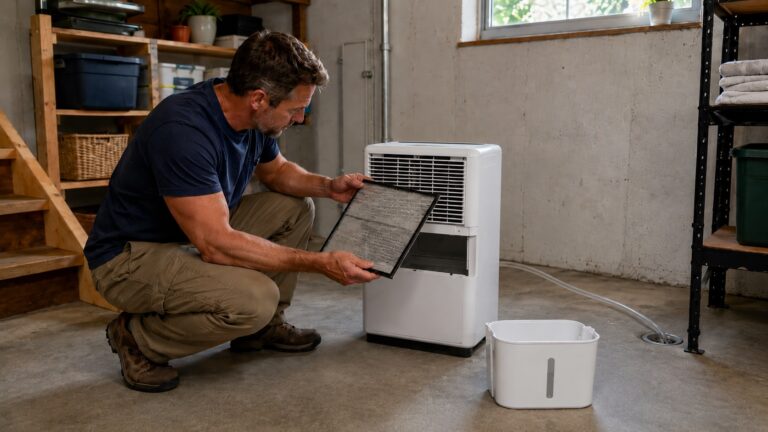
Most dehumidifiers have an air filter that catches dust before air passes through the unit. If the filter is dirty, airflow drops. That can reduce moisture removal, make the unit run longer, and increase strain on the system.
Check the filter regularly during heavy-use seasons. Clean it according to the manufacturer’s instructions and let it dry before reinstalling it. In dusty areas, you may need to clean it more often.
Keep the Coils and Intake Clear
Dust, pet hair, lint, and debris can collect around the intake, exhaust, and coils. When airflow is restricted, the dehumidifier cannot process room air efficiently.
Keep the area around the unit open. Do not store boxes, laundry, tools, or furniture directly against it. If the unit is in a basement or utility room, check it more often because those areas tend to collect dust and debris.
Clean the Bucket and Drain Hose
The bucket and drain system can develop slime, odor, or clogs if they are not cleaned. A dirty bucket can make the room smell worse, and a clogged hose can stop drainage or cause leaks around the unit.
If you use bucket collection, empty and rinse the bucket regularly. If you use a drain hose, check that the hose is not kinked, clogged, flattened, or sloped incorrectly. If you use a pump, check the pump reservoir and discharge hose as part of routine maintenance.
Watch for Frost, Short Cycling, and Poor Water Collection
A dehumidifier that collects little water may not always be broken. The room may already be dry, the temperature may be too low for efficient operation, the setting may be too high, or airflow may be restricted.
However, repeated frost, short cycling, unusual noise, leaks around the unit, or a sudden drop in water collection can point to a maintenance issue or mechanical problem. Check the filter, coils, drain path, placement, and room temperature before assuming the unit needs replacement.
Best Dehumidifier Options by Use Case
The best dehumidifier depends on where you plan to use it. A unit that works well in a bedroom may not be the right choice for a basement, crawl space, bathroom, or whole-house system. Use the space and moisture load to narrow the type of product before comparing individual models.
This hub explains the selection logic. Product roundups and individual reviews should handle specific model comparisons.
For Mold-Prone Homes
If your goal is mold prevention, look for a dehumidifier that can hold the room within a stable humidity range, drain reliably, and run consistently during damp seasons. The best choice is not always the smallest or cheapest model. Reliability, capacity, drainage, and accurate humidity control matter more than extra features.
For product comparisons focused on this use case, see the guide to the best dehumidifiers for mold prevention.
For Basements
Basements usually need higher-capacity dehumidifiers than ordinary rooms because they are cooler, below grade, and more likely to experience moisture from concrete, foundation walls, or past water intrusion. A basement unit should usually have strong moisture removal, continuous drainage, and enough airflow to serve the space.
If the basement only feels damp in humid weather, a properly sized portable unit may be enough. If the basement has water entering after rain, repeated seepage, or standing water, fix the water source first. The dehumidifier can help control the air, but it cannot replace waterproofing or drainage.
If you are comparing models for this kind of space, start with the guide to the best basement dehumidifiers to prevent mold and moisture.
For Crawl Spaces
Crawl spaces often need dedicated crawl space dehumidifiers. These units are built for low-clearance spaces, continuous drainage, and long operating periods. They are usually part of a broader crawl space moisture-control system.
A crawl space dehumidifier performs best when the crawl space is sealed, ground vapor is controlled, and drainage problems are corrected. If humid outdoor air, soil moisture, or standing water keeps entering the crawl space, the dehumidifier may run constantly and still struggle.
For Bathrooms
Bathrooms create short, intense humidity spikes. A bathroom exhaust fan is usually the first tool to use, but a small dehumidifier can help when the room stays damp after showers or has poor airflow.
Safety matters in bathrooms. Choose a unit that can be placed away from splashing water, wet floors, and shower areas. Do not use a dehumidifier as a substitute for repairing leaking tile, failed caulk, plumbing leaks, or wet wall cavities.
For Whole-House Humidity Problems
If several rooms stay humid, a single portable dehumidifier may not be enough. A whole-house dehumidifier can provide more consistent control across the home, especially when connected to HVAC ductwork or installed as part of a larger air-control system.
Whole-house systems cost more and often require professional installation, but they may be more practical than using several portable units. They are best for homes where humidity is widespread rather than isolated to one room.
For product guidance, compare the best whole-house dehumidifiers.
Popular Dehumidifier Reviews
Once you understand the type of dehumidifier you need, individual reviews can help compare model-specific strengths and weaknesses. Reviews are most useful after you know your use case, capacity range, drainage needs, and installation limitations.
For portable 50-pint models, compare these reviews:
- Midea Cube 50 Pint Dehumidifier review
- GE 50 Pint Dehumidifier with Pump review
- Frigidaire 50 Pint Dehumidifier review
- hOmeLabs 50 Pint Dehumidifier review
- Waykar 50 Pint Dehumidifier review
- Danby DDR050BJP2WDB Dehumidifier review
- Keystone 50 Pint Dehumidifier review
For heavier-duty or specialty use, compare these reviews:
Do not choose a model only because it has a high capacity rating. Match the unit to the room, drainage setup, temperature conditions, access needs, and severity of the moisture problem.
When a Dehumidifier Will Not Solve the Problem
A dehumidifier is often helpful, but it has limits. If the underlying problem is water entry, wet materials, or existing mold, the dehumidifier may reduce air humidity while the real issue continues.
This section is important because many moisture problems look like humidity problems at first. A room may smell musty because the air is damp, but it may also smell musty because materials are wet behind a wall, under flooring, inside a cabinet, or near a foundation.
Active Leaks
If a pipe, roof, appliance, window, shower, or fixture is leaking, the leak must be repaired. A dehumidifier can help reduce air moisture, but it cannot stop new water from entering the material or room.
Signs of an active leak include expanding stains, recurring wet spots, dripping, damp cabinets, soft drywall, swollen trim, and moisture that returns after drying.
Basement Seepage
Basement seepage is not just an air humidity problem. Water may enter through foundation cracks, wall-floor joints, porous masonry, floor cracks, or pressure beneath the slab. A dehumidifier can reduce damp air, but it cannot block the water pathway.
If the basement becomes wet after rain or water appears near walls or floors, investigate drainage, foundation conditions, and waterproofing before relying on dehumidification alone.
Wet Drywall, Wood, Flooring, or Insulation
Wet materials can release moisture into the air for a long time. A dehumidifier may help the drying environment, but it does not guarantee that materials are dry internally.
Drywall, wood, subfloors, insulation, and cavities may need direct drying, removal, repair, or professional evaluation depending on how wet they became and how long they stayed wet.
Existing Mold
A dehumidifier can help reduce conditions that support mold growth, but it does not remove mold colonies from surfaces or hidden cavities. If mold is already present, the source of moisture must be corrected and the affected material must be cleaned, removed, or remediated as appropriate.
If mold keeps returning after cleaning, that usually means moisture is still present. In that situation, a dehumidifier may be helpful, but it is not the full solution.
Recurring Moisture After Repairs
If moisture returns after repairs, the original source may not have been fully corrected. A dehumidifier may temporarily improve the room, but recurring dampness means the system still needs diagnosis.
For broader guidance, read the guide on how to prevent recurring moisture damage.
Simple Decision Guide: What to Do Next
The best next step depends on what you are seeing in the home. A dehumidifier is most useful when air humidity is the main issue. If the problem is active water, wet materials, or recurring mold, use the dehumidifier as support while you correct the source.
If Humidity Is High but There Is No Visible Water
If the room feels damp, smells musty, or has high humidity readings but you do not see visible water, start with measurement and controlled dehumidification.
- Place a separate hygrometer in the problem area.
- Run the dehumidifier at a realistic setting.
- Check whether humidity drops and stays stable.
- Watch for condensation, odor, or dampness returning.
- Improve airflow if one area stays damp.
If humidity improves and the room stays dry, the dehumidifier may be enough. If humidity rebounds quickly, look for a moisture source that is still feeding the room.
If One Room Is Damp
If only one room is damp, the issue may be room-specific. Bathrooms, laundry rooms, basements, storage rooms, and enclosed bedrooms can all trap moisture for different reasons.
Check whether the room has poor airflow, an exhaust problem, a cold exterior wall, a window condensation issue, a plumbing source, or stored items blocking air movement. A dehumidifier can help, but the room may also need better ventilation, source control, or layout changes.
If the Basement or Crawl Space Is Damp
Basements and crawl spaces need extra caution because humidity may come from soil, foundation walls, outdoor air, poor drainage, or past water intrusion.
If the space is only humid, a properly sized dehumidifier with continuous drainage may help. If the space has standing water, seepage, exposed soil, missing vapor barrier, or water entering after rain, address those problems first. A dehumidifier cannot overcome constant water entry forever.
If Mold Keeps Returning
If mold keeps returning after cleaning, do not treat the dehumidifier as the entire solution. Recurring mold usually means the moisture source is still present or the affected material was not properly cleaned, dried, or removed.
Use the dehumidifier to reduce air humidity, but also inspect for leaks, condensation patterns, damp materials, poor ventilation, hidden cavities, and recurring water entry. Mold prevention depends on controlling the moisture source, not only lowering the setting on the unit.
If You Are Ready to Compare Products
If you already know the type of space and the moisture problem, move into product comparison. Choose by use case first, then compare capacity, drainage, pump options, noise, controls, warranty, and maintenance needs.
For mold-prone rooms, start with dehumidifiers for mold prevention. For larger system-level humidity control, compare whole-house dehumidifiers. For specific models, use individual reviews only after you know the category of unit you need.
Common Mistakes When Using a Dehumidifier
Most dehumidifier problems come from using the right tool in the wrong way. The unit may be capable, but the setup, setting, drainage, or diagnosis may be wrong.
Mistake 1: Using a Dehumidifier Instead of Fixing the Source
The biggest mistake is using a dehumidifier to hide an active moisture problem. If water is entering the home, the dehumidifier may collect a lot of water, but it is not solving the cause.
Always look for the source when humidity stays high, water returns, materials remain damp, or mold comes back.
Mistake 2: Choosing Only by Square Footage
Square footage matters, but moisture load matters more. A mildly damp room and a wet basement may be the same size but need very different dehumidifier capacity.
Choose based on the room, the severity of dampness, drainage options, and whether the space is above grade, below grade, or in a crawl space.
Mistake 3: Ignoring Drainage
A dehumidifier cannot keep working if the bucket fills and the unit shuts off. In damp spaces, continuous drainage is often the difference between reliable humidity control and inconsistent operation.
Before buying, decide whether you will use a bucket, gravity drain, built-in pump, or external condensate pump.
Mistake 4: Placing the Unit Where Air Cannot Move
A dehumidifier needs airflow. If it is boxed in by furniture, storage bins, walls, or clutter, it may not pull in enough damp air from the room.
Keep clearance around the unit and avoid hiding it in a closed corner unless airflow is still adequate.
Mistake 5: Setting It Too Low
A very low setting may make the unit run constantly without providing much extra benefit. It can also waste energy and make it harder to tell whether the room has a source problem.
Use a realistic setting, verify the room with a separate hygrometer, and adjust based on actual readings.
Mistake 6: Forgetting Maintenance
A dirty filter, blocked intake, clogged drain hose, or neglected bucket can reduce performance. If the unit seems weaker than before, check maintenance before replacing it.
Frequently Asked Questions About Choosing and Using a Dehumidifier
Do dehumidifiers prevent mold?
Dehumidifiers can help prevent mold by lowering the humidity that allows mold to grow. However, they do not guarantee mold prevention by themselves. Mold also depends on moisture sources, surface conditions, airflow, temperature, dust, organic material, and whether existing mold has already formed.
A dehumidifier is most effective for mold prevention when leaks are fixed, wet materials are dried, humidity is monitored, and the unit is sized and placed correctly.
What humidity should I set my dehumidifier to?
The best setting depends on the room and the reason you are using the unit. For mold prevention, you generally want the space dry enough to prevent damp surfaces and condensation without forcing the unit to run constantly at an unnecessarily low setting.
For detailed setpoint guidance, use the guide to dehumidifier settings for mold prevention.
Should I run my dehumidifier all day?
You may need to run a dehumidifier continuously in damp basements, crawl spaces, or humid seasons, especially if the unit has automatic humidity control and continuous drainage. In milder spaces, the unit may only need to run when humidity rises.
Use humidity readings rather than a fixed schedule. If the room stays dry, the unit does not need to run constantly. If humidity rises quickly after it shuts off, the room may need longer operation or source correction.
Can a dehumidifier dry wet walls or floors?
A dehumidifier can help create a drier environment, but it does not guarantee that wet walls, floors, subfloors, insulation, or cavities are dry internally. Wet materials may need direct drying, inspection, removal, or repair depending on how wet they became and how long they stayed wet.
If materials are wet from a leak or flood, do not rely on a dehumidifier alone.
Is a bigger dehumidifier always better?
Not always. A larger unit can help in damp or large spaces, but performance also depends on placement, airflow, drainage, settings, maintenance, and whether moisture is still entering the space.
A correctly sized and properly drained unit usually works better than an oversized unit placed poorly or allowed to shut off when the bucket fills.
Do basements need special dehumidifiers?
Many basements need higher-capacity dehumidifiers than ordinary rooms because they are cooler, below grade, and more likely to have foundation moisture or poor airflow. Some basements can use a standard portable unit, while others need stronger units with continuous drainage or pump options.
If the basement has active water intrusion, fix that source first. A basement dehumidifier can control air humidity, but it cannot waterproof the basement.
Is ventilation better than a dehumidifier?
Ventilation is better when the goal is to remove moisture at the source, such as exhausting shower humidity from a bathroom. A dehumidifier is better when indoor air stays humid and outdoor air is not a reliable drying source.
In some homes, both are needed. The right choice depends on whether moisture is being created indoors, entering from outdoors, or remaining in the air after normal ventilation.
Should I buy a portable or whole-house dehumidifier?
Choose a portable dehumidifier if the problem is limited to one room, basement, storage area, or crawl space zone. Consider a whole-house dehumidifier if humidity is high across many rooms or if your HVAC system does not control moisture well enough.
A whole-house system usually costs more and may require professional installation, but it can provide more consistent control when humidity is not isolated to one area.
Conclusion
A dehumidifier is one of the most useful tools for controlling damp indoor air, but it works best when it is matched to the right problem. It can lower humidity, reduce condensation risk, support mold prevention, and make damp rooms more stable. It cannot repair leaks, stop basement seepage, dry hidden cavities by itself, or remove existing mold.
Start by identifying the moisture source. Measure humidity with a separate monitor. Choose the right type and capacity for the space. Plan drainage before relying on the unit. Place it where air can move. Use a realistic setting. Maintain the filter, coils, bucket, and drain system. If humidity stays high or moisture keeps returning, look beyond the dehumidifier for the underlying cause.
Used correctly, a dehumidifier becomes part of a larger moisture-control system. It helps keep the air dry enough to protect rooms, stored items, and mold-prone areas, while the rest of the home’s moisture problems are handled through proper detection, repair, ventilation, drying, and prevention.
4 Comments
Comments are closed.