How Long to Run a Dehumidifier Each Day
Most rooms need a dehumidifier to run for a few hours at a time, while damp basements, crawl spaces, and newly humid areas may need much longer runtime or auto mode for much of the day. The right runtime depends on the room, the humidity level, the season, and how much moisture keeps entering the space.
The goal is not to run the dehumidifier for the same number of hours every day. The goal is to run it long enough to bring humidity into the right range and keep it there. For the broader process of choosing, setting up, and using a unit, see this guide on how to choose and use a dehumidifier effectively.
How Long Should You Run a Dehumidifier?
Run a dehumidifier until the room reaches the range you selected on the unit or confirmed with a hygrometer, then let the unit cycle as needed. In a mildly humid room, that may only take a few hours. In a damp basement, crawl space, or humid season, the unit may need to run for much of the day, especially during the first drying period.
If the dehumidifier is new to the space, expect longer runtime during the first day or two. The unit is not only drying the air. It may also be pulling moisture from surfaces, stored items, carpets, concrete, wood, and other materials that have absorbed humidity over time.
Run It Until the Room Reaches the Right Humidity Range
A dehumidifier should be controlled by humidity readings, not guesswork. If you only run it for a fixed number of hours, you may turn it off before the room is actually dry enough. If you run it constantly when the room is already controlled, you may waste energy.
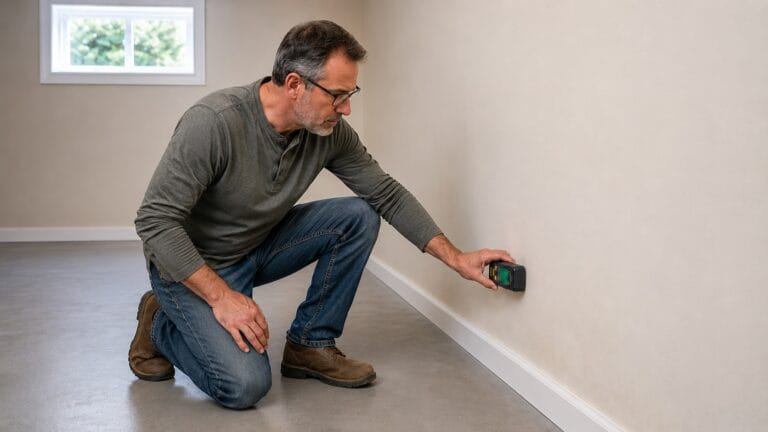
Use a hygrometer to check the room before, during, and after operation. Check the reading away from the dehumidifier too, because the air near the machine may dry faster than the far side of the room. This helps you see whether the unit is actually lowering humidity or only collecting water without controlling the space. If you need help measuring correctly, see this guide on how to test indoor humidity levels.
Runtime and settings work together: runtime is how long the machine operates, while the setting is the humidity level it is trying to reach. For target setting guidance, see this article on the best dehumidifier settings to prevent mold.
Should a Dehumidifier Run Continuously?
A dehumidifier may need to run continuously at first if the room is very humid, musty, or has not been controlled for a long time. This is common in basements, storage rooms, crawl spaces, and humid lower-level areas.
Continuous operation can also be normal during humid weather, after heavy rain, or when the space has a steady moisture load. The key question is whether humidity is dropping. If the unit runs continuously and humidity steadily improves, long runtime may simply mean the room needed drying.
Constant runtime becomes a warning sign when humidity does not drop or quickly rises again after the unit shuts off. In that case, the unit may be undersized, poorly placed, set too low, dirty, or fighting an ongoing moisture source.
When Auto Mode Is Better Than Guessing Hours
Auto mode or humidistat control is usually better than manually guessing how many hours to run the dehumidifier. In auto mode, the unit runs when humidity rises and shuts off or cycles down when the room reaches the selected setting.
This is especially useful in basements and crawl spaces, where humidity changes with weather, soil moisture, rain, and seasonal conditions. A fixed schedule may be too short on damp days and longer than needed on dry days.
Auto mode is not perfect if the unit is in a poor location or if the built-in humidity sensor reads only the air immediately around the machine. For larger or divided spaces, it helps to check humidity in more than one area and adjust placement if needed.
If auto mode never shuts off, do not assume the feature is broken. First check whether the room is still too humid, whether the setting is too low, whether the unit is properly sized, and whether moisture is entering faster than the unit can remove it.
How Long to Run a Dehumidifier in a Basement
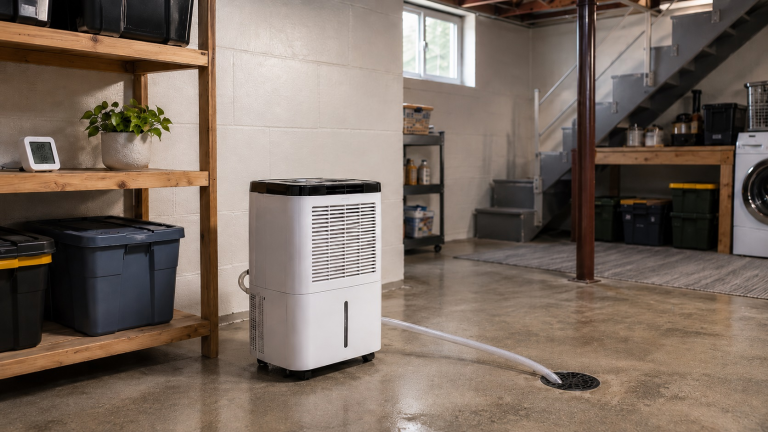
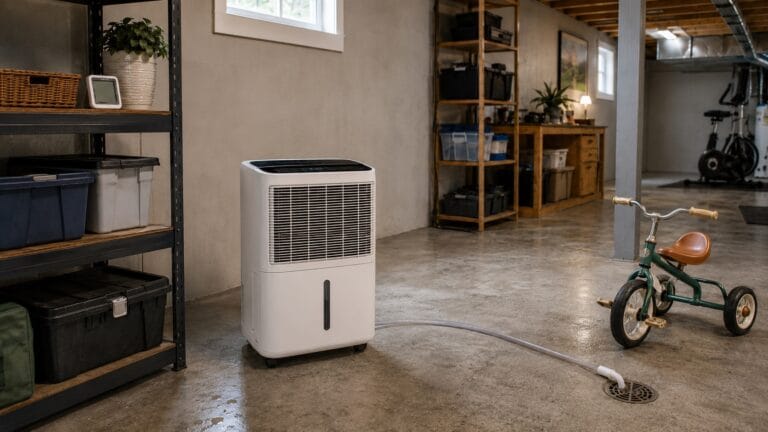
A basement dehumidifier often needs to run longer than a unit in an upstairs room. Basements are cooler, below grade, and more affected by foundation moisture, humid outdoor air, and limited airflow.
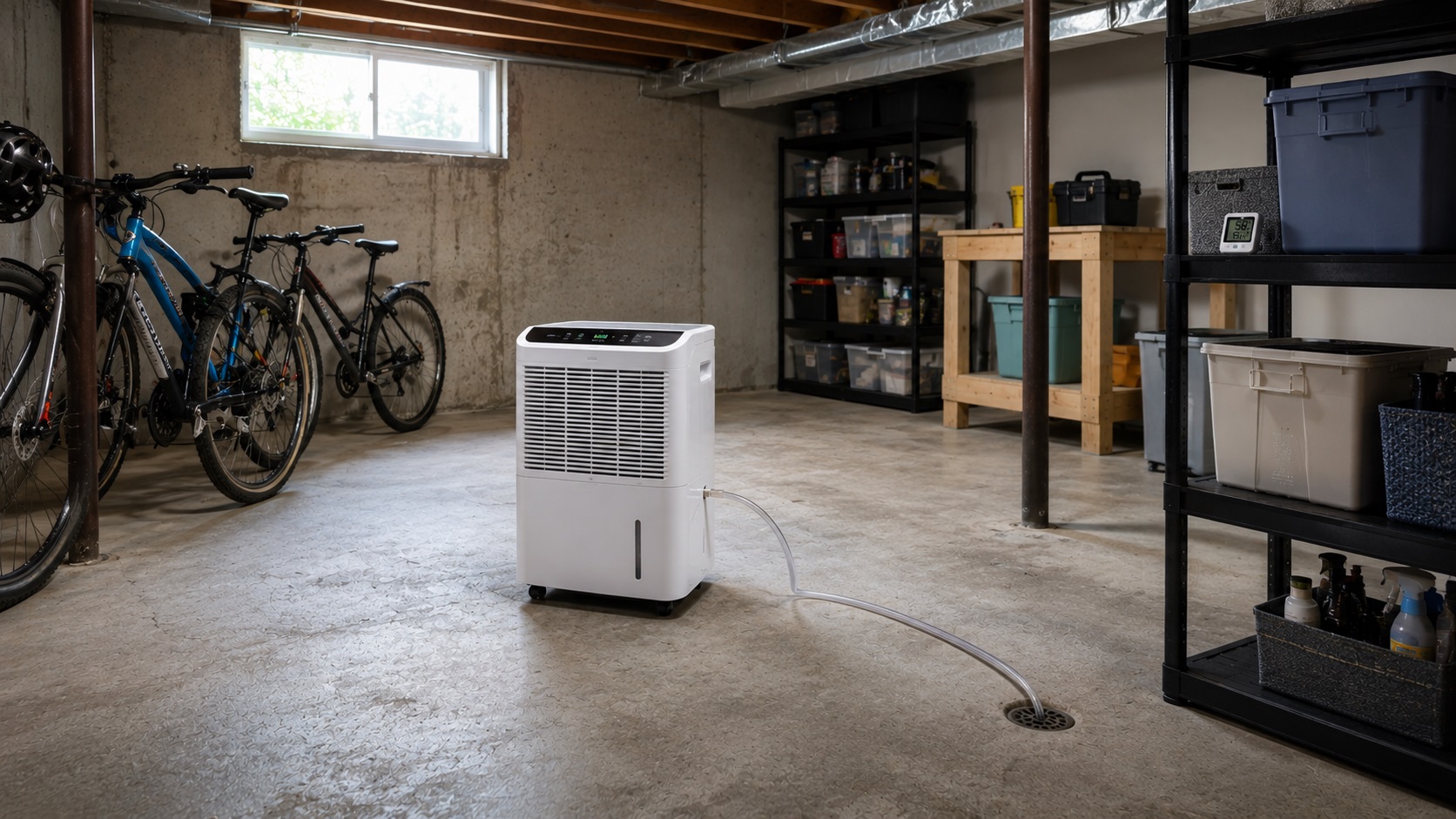
During humid seasons, a basement unit may run for much of the day. That can be normal if humidity drops and stays controlled. If it runs constantly but the basement still smells musty or feels damp, check the unit size, placement, drainage, and moisture source.
How Long to Run a Dehumidifier in a Crawl Space
Crawl space dehumidifiers often run for long periods because crawl spaces can have steady moisture from soil vapor, foundation walls, vents, and air leakage. In a controlled crawl space, auto mode or humidistat operation is usually more practical than turning the unit on and off manually.
If a crawl space dehumidifier runs constantly, the space may have too much moisture entering. Exposed soil, damaged vapor barrier, standing water, open vents, or poor drainage can all make the unit work harder than it should.
When Daily Runtime Should Increase or Decrease
You may need longer runtime during humid weather, after heavy rain, after water cleanup, during summer, or when a basement or storage area starts to smell musty. Laundry rooms and utility areas may also need more runtime when moisture-producing activities increase.
You may need less runtime during dry seasons, colder months, or when humidity readings stay stable without constant operation. The safest approach is to adjust based on readings instead of using the same schedule year-round.
Why Your Dehumidifier Runs Constantly
A dehumidifier that runs constantly is not always a problem. It may simply be drying a damp space. But if humidity does not improve, something else is wrong.
Common reasons include:
- The unit is too small for the space.
- The humidity setting is too low.
- The dehumidifier is in a poor location with blocked airflow.
- The filter, intake, or exhaust area is dirty or blocked.
- Doors or windows are letting humid air in.
- Water is entering from leaks, seepage, or crawl space soil.
If the unit cannot keep up, check whether you need to choose the right size dehumidifier or improve where to place a dehumidifier for better airflow.
When Long Runtime Means a Bigger Moisture Problem
Long runtime can be a warning sign when the dehumidifier keeps running but humidity stays high. This often means the space is being re-wetted faster than the unit can dry the air.
Look for damp foundation walls, wet crawl space soil, plumbing leaks, seepage after rain, recurring musty odor, or condensation that keeps returning after the unit has already lowered the air humidity. In those cases, the dehumidifier can help, but the source still needs to be corrected. For broader source control, learn how to find and fix moisture problems and prevent recurring moisture damage.
FAQ About How Long to Run a Dehumidifier
Is it safe to run a dehumidifier all day?
Yes, if the unit is designed for continuous use, placed on a stable surface, kept clear of blocked airflow, and draining properly. Avoid unsafe extension cord setups, and use auto mode when possible so the unit cycles based on humidity instead of running unnecessarily.
Should I run a dehumidifier overnight?
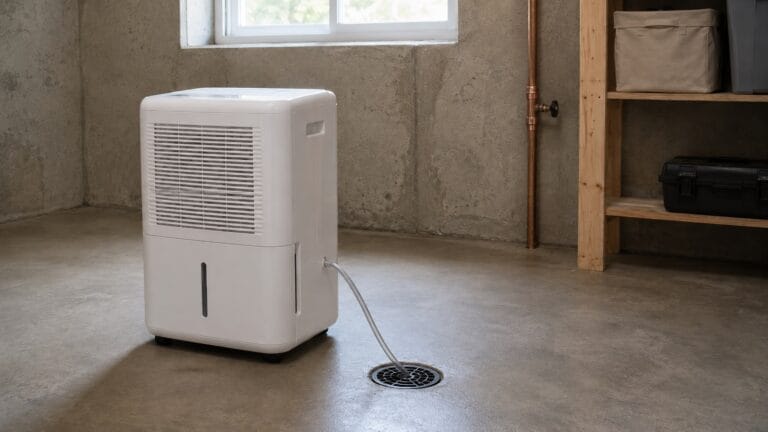
You can run a dehumidifier overnight if it is on a stable surface, has a safe electrical setup, has open airflow around the unit, and will not shut off from a full bucket. Continuous drainage is helpful for overnight use.
Should a basement dehumidifier run continuously?
It may run continuously during humid weather or when the basement is first being dried. If humidity drops and stabilizes, auto mode should let it cycle instead of running nonstop.
Why does my dehumidifier never shut off?
It may be undersized, set too low, poorly placed, dirty, or fighting an active moisture source. Check humidity readings in more than one part of the room to see whether the space is actually improving.
Should I turn off the dehumidifier when humidity drops?
You can, but auto mode is usually easier. It lets the unit restart when humidity rises again, which is helpful in basements and crawl spaces where conditions change often.
How long should I run a dehumidifier after rain?
Run it until humidity returns to the desired range and stays stable. If humidity rises after every rain, check for seepage, drainage problems, or damp foundation materials.
Should a dehumidifier run less in winter?
Yes. Many homes need less dehumidifier runtime in colder or drier seasons. However, basements and crawl spaces can still need humidity control if moisture remains elevated.
Final Runtime Check
Run a dehumidifier long enough to reach and maintain the humidity range you want. A mildly humid room may only need a few hours at a time, while a damp basement or crawl space may need long cycles or auto-mode operation during humid weather and the first days of drying.
For most homes, auto mode is better than guessing a fixed number of hours. If the unit runs constantly but humidity stays high, look beyond runtime. The issue may be size, placement, settings, maintenance, or a moisture source that needs to be fixed.