GE 50 Pint Dehumidifier with Pump Review: Is It Worth It for Basements?
If your basement feels damp, smells musty, or forces you to empty a dehumidifier bucket every day, a 50-pint dehumidifier with a built-in pump can be much more practical than a basic bucket-only unit. The GE 50 Pint Dehumidifier with Pump is worth considering when humidity is the main problem and you have a reliable place to send the pump hose.
This review focuses on the GE APER50LZ model connected to the Amazon listing for the GE Energy Star Portable Dehumidifier 50 Pint with Pump. It is a portable residential dehumidifier, not a whole-house system, crawl space unit, waterproofing product, or mold removal device. Its job is to reduce humidity in the air, especially in damp indoor spaces such as basements, garages, bedrooms, and wet rooms.
One important note: GE’s official support information lists the APER50LZ as manufactured from March 2020 through September 2022. That does not automatically mean the unit is a poor choice, but it does mean buyers should verify current Amazon availability, seller condition, return policy, and whether the listing is new, used, renewed, or limited-stock before purchasing.
For broader comparison shopping, see our guide to the best basement dehumidifiers. This article stays focused on this one GE model and whether it makes sense for basement humidity control.
Disclosure: This article may contain affiliate links. If you buy through these links, we may earn a commission at no extra cost to you.
GE 50 Pint Dehumidifier with Pump: Quick Verdict
- Best for: Damp basements, garages, and wet rooms where pump drainage is useful.
- Not ideal for: Crawl spaces or buyers who want a guaranteed current-production model. This is also not the only solution for active leaks, standing water, or whole-house humidity control.
- Main strength: 50-pint moisture removal capacity combined with a built-in pump for more convenient drainage.
- Main limitation: GE support lists the APER50LZ manufacturing window as March 2020 through September 2022, so current availability and listing condition should be checked carefully.
- Bottom line: The GE 50 Pint Dehumidifier with Pump can be a practical basement humidity-control option if you find a valid listing and need pump drainage, but leaks, seepage, or flooding still need to be fixed at the source.
What This GE 50 Pint Pump Dehumidifier Is Designed to Do
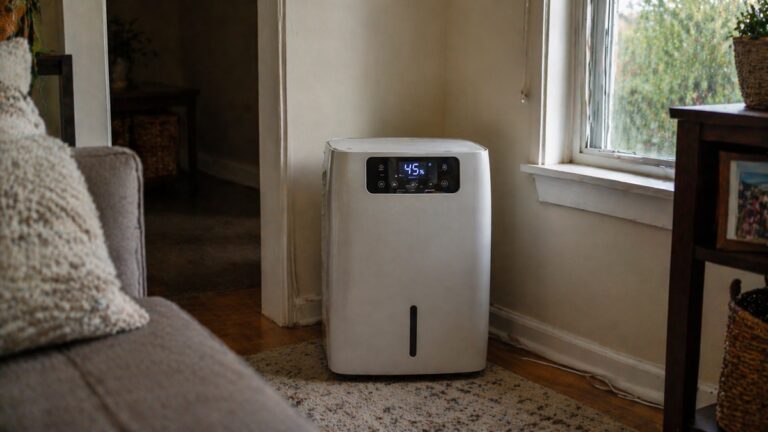
The GE 50 Pint Dehumidifier with Pump is a portable compressor-style dehumidifier built for indoor humidity control. Its main appeal is simple: 50-pint capacity plus pump-assisted drainage for basements where manually emptying a bucket becomes annoying or unrealistic.
In normal basement use, a dehumidifier like this is meant to help keep relative humidity under control. That matters because high humidity can make a basement feel damp, encourage musty odors, and support conditions where mold is more likely to grow. A dehumidifier does not remove mold, repair leaks, waterproof foundation walls, or solve drainage problems outside the home, but it can be an important part of a moisture-control plan.
The built-in pump is the feature that separates this model from simpler 50-pint dehumidifiers. With a bucket-only unit, the machine shuts off when the tank fills. In a damp basement, that can happen often. With a pump setup, collected water can be moved through a hose to a suitable drain point, which can make longer operation much more convenient.
GE’s official product information lists the APER50LZ as a 50-pint Energy Star dehumidifier with a built-in pump, washable filter, removable bucket, automatic shutoff, automatic defrost, and dimensions of 24 inches high by 14.75 inches wide by 11.375 inches deep.
That said, the pump only helps if your setup makes sense. You still need a good discharge location, a properly routed hose, and enough access to check that water is draining correctly. For placement basics, including airflow and drainage access, see our guide on where to place a dehumidifier.
This model fits within the broader homeowner decision process covered in our guide on how to choose and use a dehumidifier effectively. It is not a fixed whole-house system and should not be confused with contractor-grade drying equipment or dedicated crawl space dehumidifiers.
GE 50 Pint Dehumidifier with Pump Key Features Explained
50-Pint Moisture Removal Capacity
The 50-pint capacity is the main reason this GE model belongs in the basement conversation. Smaller dehumidifiers can work in bedrooms or bathrooms, but a damp basement often needs more capacity, especially during humid weather.
That does not mean a 50-pint unit is automatically enough for every basement. Room size, temperature, airflow, air leaks, and the source of moisture all matter. If the basement is damp because of normal humidity, this capacity range can be useful. For deeper sizing help, see our guide on how to choose the right size dehumidifier.
Built-In Pump Drainage
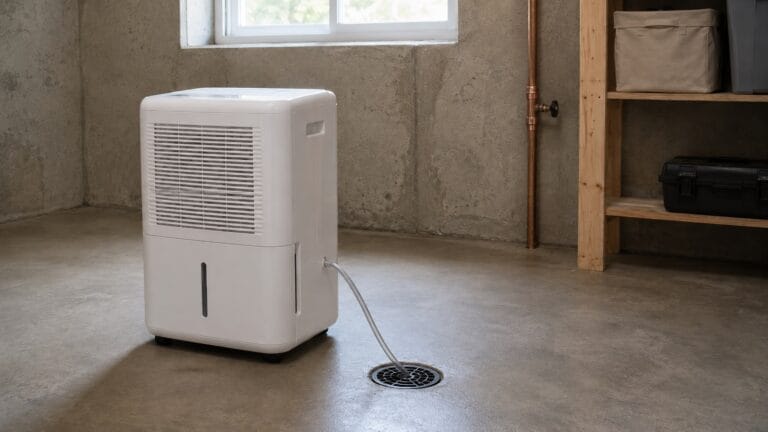
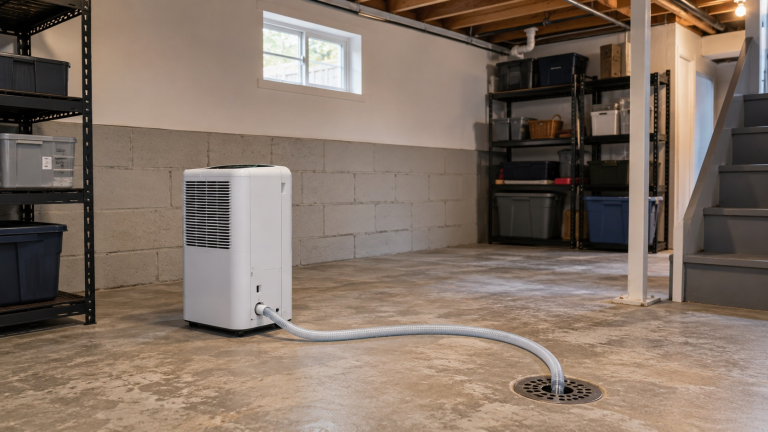
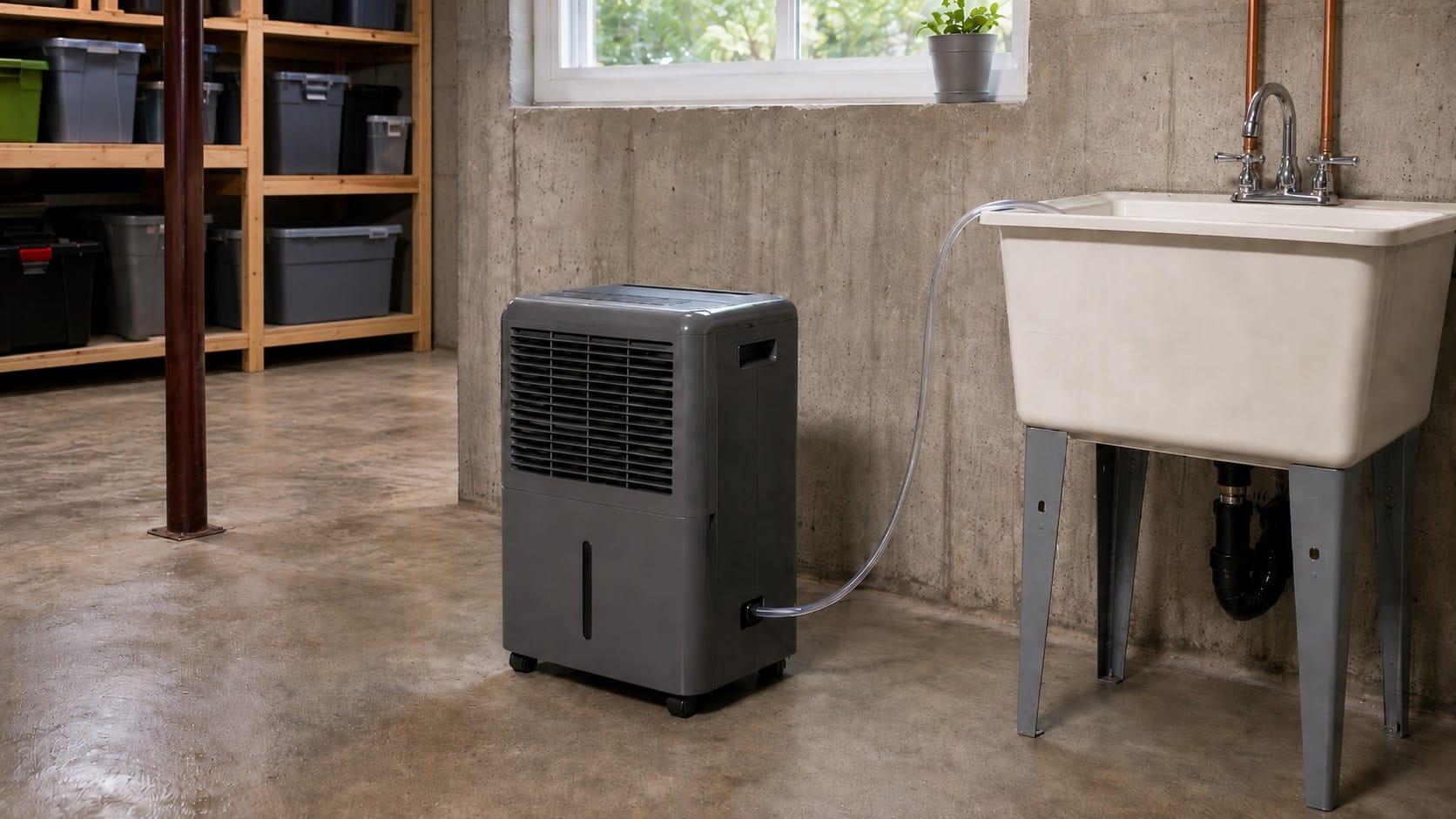
The built-in pump is the feature that makes this model more attractive for basement use. Instead of relying only on the bucket, the pump can move collected water through a hose to a suitable drain point, such as a utility sink, floor drain, or laundry drain.
That is useful because a damp basement can fill a bucket quickly. If the bucket fills while you are away, the unit may shut off and stop removing moisture. Pump drainage makes longer operation easier, but the hose still needs a sensible route: avoid kinks, keep the discharge end secure, and check occasionally that water is actually reaching the drain.
Bucket, Alarm, and Automatic Shutoff
The bucket gives you a manual drainage option when the pump is not being used. The full-bucket alarm and automatic shutoff help prevent overflow if the bucket fills or is not seated correctly.
For basement use, though, the bucket should be viewed as a backup rather than the main selling point. If you are buying this model for a damp lower level, the pump is the feature that matters most.
Humidistat, Fan Speeds, Auto Restart, and Auto Defrost
The adjustable humidistat, fan speeds, auto restart, and auto defrost make the unit easier to live with. The humidistat helps you set a target instead of turning the machine on and off manually. Auto restart helps after a power interruption, and auto defrost can help in cooler spaces where frost may reduce performance.
These are useful features, not magic fixes. Auto defrost does not make the unit ideal for very cold spaces, and the humidistat still depends on the actual conditions in the room.
Portability and Basement Setup
Wheels and handles help with positioning, but this is still a larger portable appliance. Once you find the right basement location, it will usually function more like a semi-stationary unit than something you move every day.
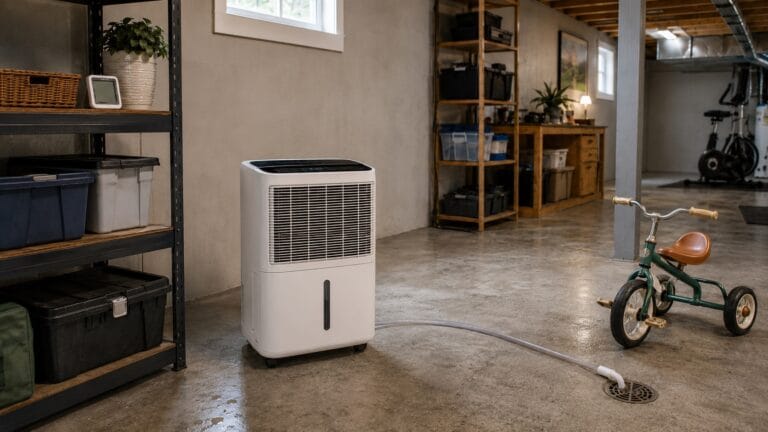
The best setup is a level spot with open airflow, access to power, and a reliable drain route for the pump hose.
GE 50 Pint Dehumidifier Real-World Performance
In a basement where the main problem is damp air, the GE 50 Pint Dehumidifier with Pump should be useful. It can help lower humidity, reduce the damp feeling in the room, and make the space less favorable for musty odors and mold growth.
The key phrase is damp air. This is not a water-removal solution for active leakage. If the basement has wall seepage, floor cracks, poor exterior drainage, plumbing leaks, or recurring flooding, those problems need to be fixed directly. A dehumidifier can support a dry basement plan, but it cannot replace drainage repair, waterproofing, or leak correction.
The pump is what improves day-to-day use. A bucket-only unit may work, but it needs more attention. With pump drainage, the unit can run for longer periods without constant bucket emptying, as long as the hose is routed correctly and the drain point is reliable.
If the unit runs constantly and the basement still feels humid, that is not always a product failure. It may mean the space has a larger moisture source, poor air sealing, weak airflow, or an unresolved water-entry problem.
Where the GE 50 Pint Dehumidifier with Pump Works Best
This GE model works best in basements where humidity is the problem and continuous drainage is practical. It is most useful when you have a utility sink, floor drain, laundry drain, or another suitable place to send pump water.
It can also fit garages, utility rooms, laundry areas, and wet rooms where humidity rises seasonally. The best buyer is someone who wants a familiar portable dehumidifier with enough capacity for a damp room and a pump that reduces bucket-emptying.
The appeal is simple: large-room moisture removal with easier drainage.
Where the GE 50 Pint Dehumidifier May Fall Short
The biggest drawback is availability. GE support lists the APER50LZ manufacturing window as March 2020 through September 2022, so buyers should check the live Amazon listing carefully before assuming they are getting a normal current-production unit. Look at whether the listing is new, used, renewed, or sold by a third-party seller, and review the return policy before buying.
This model may also fall short if you do not have a good pump discharge route. Without a practical drain location, you may end up using the bucket most of the time, which weakens the main reason to choose this version.
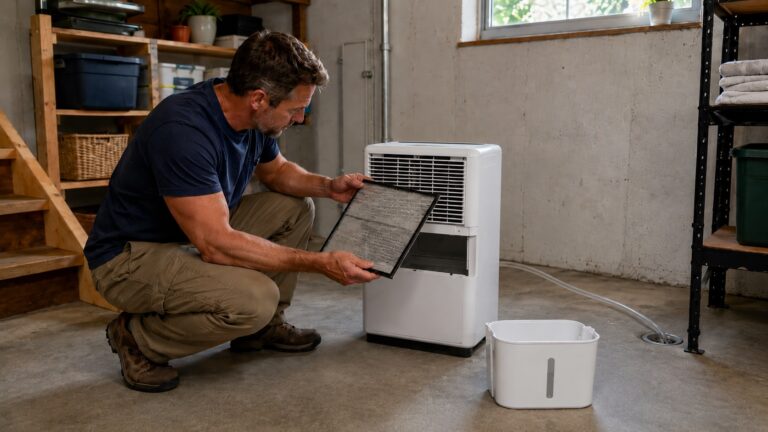
The pump and filter also need routine attention. Hoses can kink, shift, clog, or drain poorly if they are not installed well. For general care, see our guide on how to maintain a dehumidifier.
Best Fit for the GE 50 Pint Dehumidifier with Pump
Buy this model if you need a portable dehumidifier for a damp basement and specifically want pump drainage. It is a good fit when the basement feels humid or musty, the moisture problem is not active flooding, and you have a reliable place to discharge the pump hose.
It is also worth considering if you want a GE-branded unit and find a current listing with acceptable condition, seller terms, and return protection. Because GE support lists the APER50LZ manufacturing window as March 2020 through September 2022, the listing details matter more than usual.
View the GE 50 Pint Dehumidifier with Pump on Amazon
When This GE Pump Dehumidifier Is the Wrong Choice
Skip this model if you only want a currently manufactured dehumidifier with normal new-stock availability. A newer pump-equipped dehumidifier may be a safer choice if the Amazon listing is limited, used, renewed, or unclear.
This dehumidifier is also not the only solution if your basement has active leaks, seepage, standing water, or repeated flooding. It can help manage humidity after moisture enters the air, but it cannot stop water from coming through foundation walls, floor cracks, exterior drainage problems, or plumbing leaks. If water is still entering the basement, fix the source first and use the dehumidifier only as part of the broader drying and humidity-control plan.
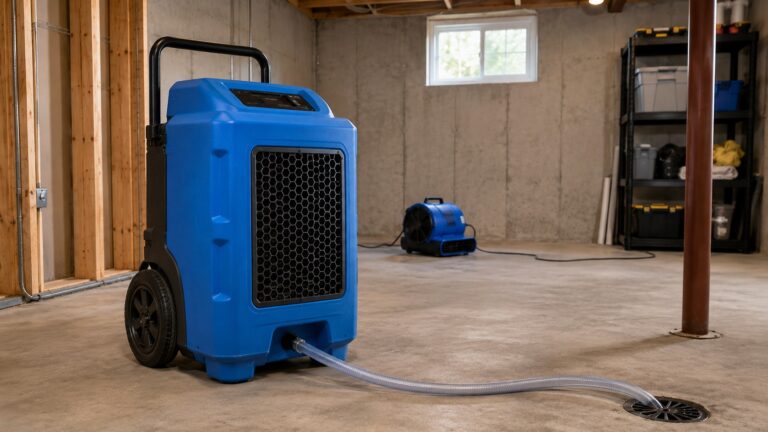
It is also not the right fit for whole-house humidity control or dedicated crawl-space use. Whole-home moisture problems and crawl space moisture often require different equipment, better drainage planning, or a more complete moisture-control system.
Finally, this model may not be worth paying extra for if you do not have a practical pump discharge route. Without a utility sink, floor drain, laundry drain, or another suitable drainage point, you may end up using the bucket most of the time, which weakens the main reason to choose the pump version.
How The GE 50 Pint Dehumidifier with Pump Compares to Typical Alternatives
Compared with a bucket-only 50-pint dehumidifier, the GE 50 Pint Dehumidifier with Pump is more convenient for basement use because it can move collected water through a hose. That is the main advantage. If you are tired of emptying a bucket, the pump feature is worth considering.
Compared with gravity-drain models, the pump gives you more placement flexibility. Gravity drainage depends on water flowing downhill. A pump can help when the best drain location is a utility sink, laundry drain, or another spot that is not directly below the unit.
Compared with smaller portable dehumidifiers, this model is better suited for damp basements and larger rooms. Compared with whole-house or crawl-space dehumidifiers, it is simpler and more portable, but less specialized.
Compared with newer models, availability is the main concern. If the APER50LZ listing is limited, used, or inconsistent, a current pump-equipped model may be the better long-term buy. For side-by-side alternatives, use our best basement dehumidifiers guide instead of treating this single-product review as a full comparison page.
Frequently Asked Questions About the GE 50 Pint Dehumidifier with Pump
Is the GE 50 Pint Dehumidifier with Pump good for basements?
Yes, it can be a good fit for damp basements where high humidity is the main problem and pump drainage can be set up properly. It is not a fix for active leaks, seepage, or flooding.
Does the built-in pump mean I do not have to empty the bucket?
If the pump hose is installed correctly and drains to a suitable location, it can greatly reduce routine bucket emptying. The hose and pump path still need to be checked so they do not kink, clog, loosen, or drain poorly.
Is the GE APER50LZ still being manufactured?
GE’s official support information lists the APER50LZ as manufactured from March 2020 through September 2022. Buyers should verify current Amazon availability, seller condition, return terms, and whether the item is new, used, or renewed.
Can this dehumidifier stop mold in a basement?
It can help lower humidity, which may make the basement less favorable for mold growth. It does not remove mold, kill mold inside materials, or guarantee mold prevention.
Can it fix basement leaks or water seepage?
No. A dehumidifier removes moisture from the air after moisture is already present. It can support drying and humidity control, but foundation seepage, floor cracks, plumbing leaks, and exterior drainage problems still need to be fixed at the source.
Should I buy this model if only used or limited listings are available?
Only if the condition, seller reputation, price, and return policy make sense. If you want the safest long-term purchase, a current-production pump-equipped dehumidifier may be easier to support and replace.
Is the GE 50 Pint Dehumidifier with Pump Worth It?
The GE 50 Pint Dehumidifier with Pump is worth considering if you need a portable basement dehumidifier with pump drainage and you can verify a trustworthy current listing. Its best use case is a damp basement where humidity is the problem, bucket-emptying has become inconvenient, and the pump hose can drain safely.
Its biggest caution is availability. Because GE support lists the APER50LZ manufacturing window as March 2020 through September 2022, check the condition, seller, return policy, and whether the product is listed as new, used, or renewed before buying.
If your basement has active seepage, standing water, foundation cracks, or recurring flooding, this dehumidifier should not be your only solution. Fix the water source first, then use a dehumidifier as part of the drying and humidity-control plan.
Overall, this GE model is a strong fit for the right basement setup, but it is not automatically the best choice if availability is limited or newer pump-equipped alternatives are easier to buy.