Midea Cube 50 Pint Dehumidifier Review: Is It Worth It?
The Midea Cube 50 Pint Dehumidifier is a high-capacity portable dehumidifier for basements, large rooms, garages, and other damp indoor areas. Its main appeal is the combination of 50-pint moisture removal, built-in pump drainage, a large Cube-style tank, smart controls, and a more compact storage design than many traditional dehumidifiers.
It is worth considering if you need stronger humidity control without constantly emptying a small bucket, especially in a basement or large damp room. It may help reduce damp air and support mold-prevention efforts, but it does not fix leaks, stop basement seepage, repair foundation problems, or remove existing mold.
If you are still comparing different dehumidifier options, you may also want to review our guide to the best dehumidifiers for mold prevention. This review focuses only on the Midea Cube 50 Pint model and whether it makes sense for common homeowner use.
Disclosure: This article may contain affiliate links. If you buy through these links, we may earn a commission at no extra cost to you.
Midea Cube 50 Pint Dehumidifier Quick Verdict
- Best for: Basements, large rooms, utility areas, and homeowners who want a 50-pint dehumidifier with pump drainage.
- Not ideal for: Active leaks, flooding, very small rooms, or buyers who only need a simple low-cost dehumidifier.
- Main strength: High moisture-removal capacity combined with built-in pump drainage, smart controls, and a large Cube-style tank.
- Main limitation: It controls humidity but does not solve the underlying cause of water intrusion or structural moisture problems.
- Bottom line: The Midea Cube 50 Pint Dehumidifier is a strong fit for homeowners who want convenient large-room humidity control with pump drainage, but buyers should check the current Amazon listing carefully before purchasing.
Midea Cube 50 Pint Overview
The Midea Cube 50 Pint Dehumidifier is a portable residential dehumidifier built for larger indoor spaces where humidity tends to stay elevated. Official Midea product information identifies the current 50-pint Cube pump model as a dehumidifier with a built-in pump, smart control, wheels, and a room-size rating of up to 4,500 square feet.
These manufacturer-listed specs are useful for confirming the model, but room-size ratings should still be matched to the actual moisture load, layout, and drainage setup in your home.
For homeowners, that means the unit is intended for spaces that need more than a small bedroom dehumidifier. It is most relevant for basements, finished lower levels, large living areas, garages, laundry spaces, and other rooms where damp air, musty odors, condensation, or humidity swings are a recurring problem.
The “Cube” design is what separates this model from many standard portable dehumidifiers. Instead of using a conventional tall upright body with a relatively small bucket, the Cube design uses a larger tank and a lift-and-twist style form that can be used in an extended position or nested for more compact storage. That design matters most for users who want fewer bucket-emptying trips or a unit that stores more neatly when not in use.
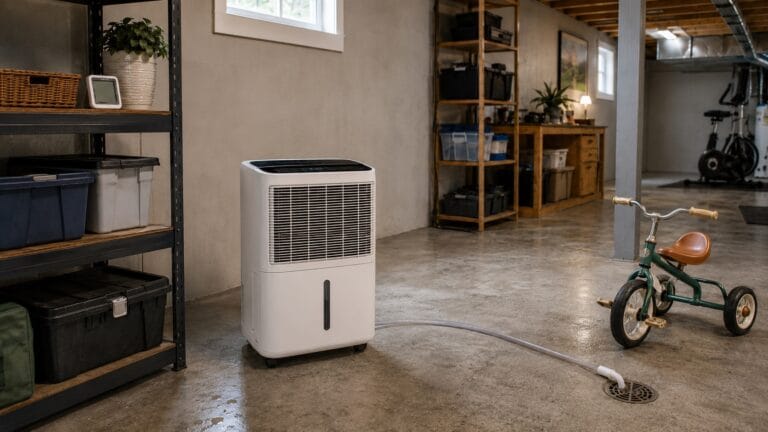
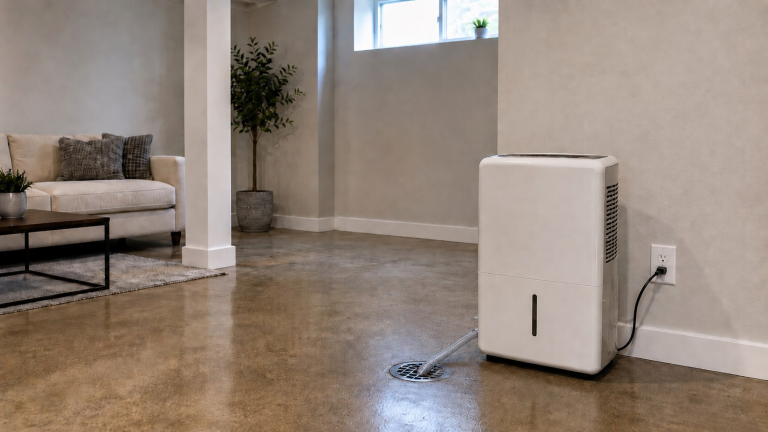
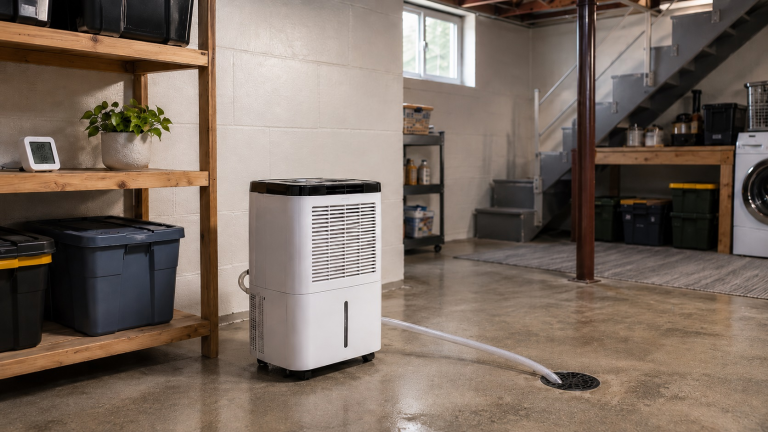
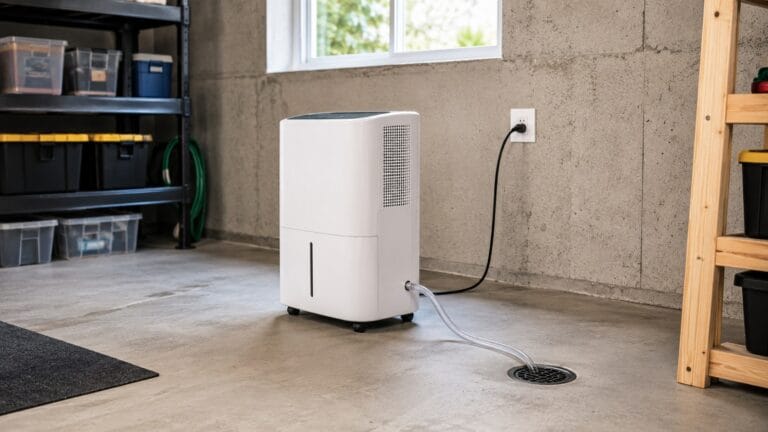
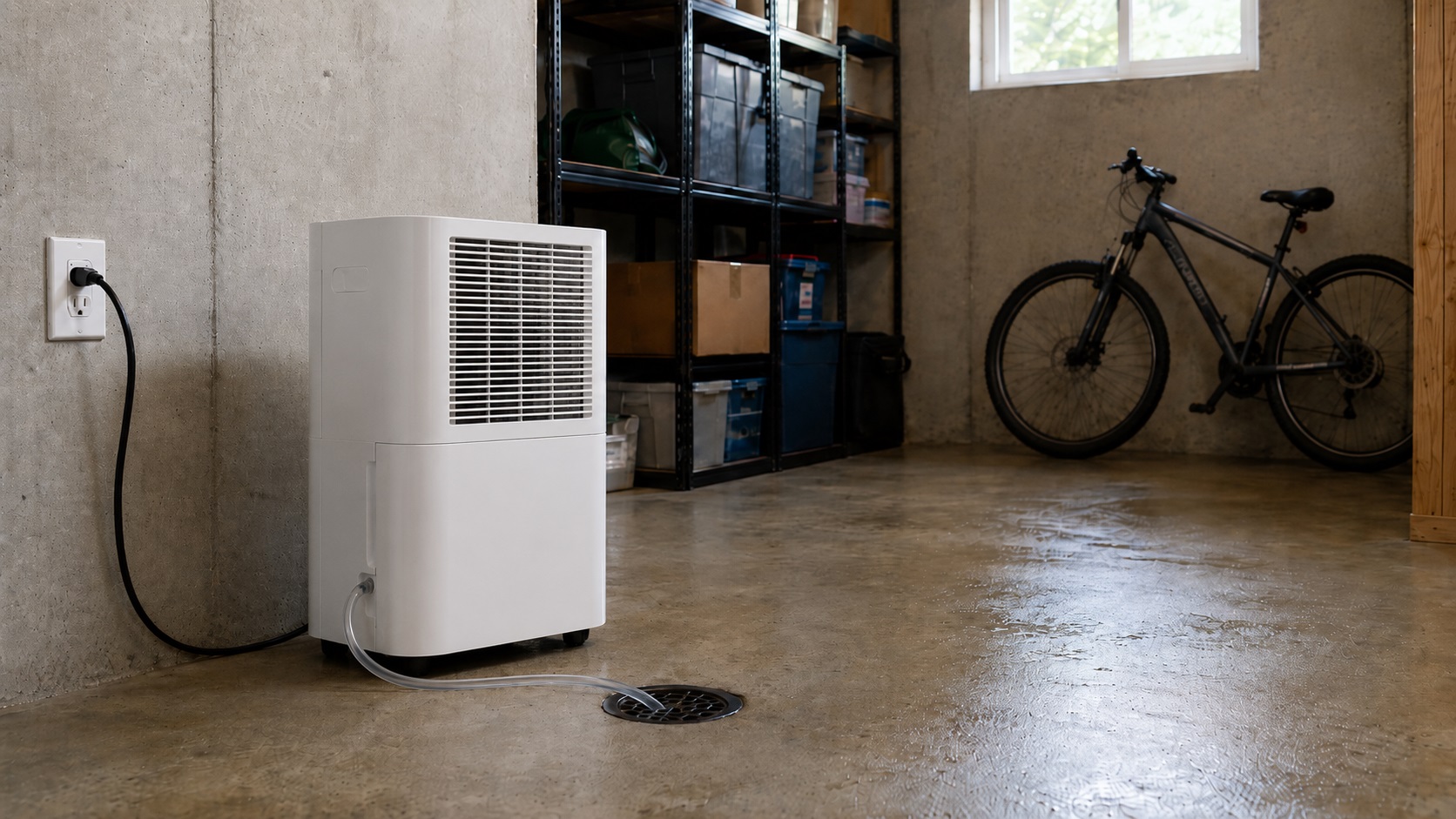
The built-in pump is one of the biggest practical advantages. A gravity-drain dehumidifier needs a low drain location, but a pump gives homeowners more flexibility to route water toward a sink, utility drain, or other suitable drainage point, which can be especially helpful in basements during humid weather.
The Midea Cube also includes smart-control functionality, which makes it more appealing to homeowners who want to adjust settings or monitor operation without standing directly beside the machine. Smart features do not make a dehumidifier remove more water by themselves, but they can make routine operation easier.
For broader help deciding how this type of unit fits into your home, see our guide on how to choose and use a dehumidifier effectively.
You can also view the Midea Cube 50 Pint Dehumidifier on Amazon to check the current listing, availability, and model details.
Midea Cube 50 Pint Key Features Explained
50-Pint Moisture Removal Capacity
The main performance feature is the 50-pint daily moisture-removal capacity. For homeowners, this places the Midea Cube in the larger portable dehumidifier category rather than the small-room category. A 50-pint unit is generally better suited for basements, large rooms, and spaces where humidity rises enough that a smaller unit may run constantly or need frequent emptying.
This capacity is useful when the problem is excess moisture in the air. For example, a basement that feels damp in summer, a large finished room with musty odors, or a utility area with elevated humidity may benefit from a larger-capacity unit. However, capacity should not be confused with water-damage repair. If water is actively entering through a basement wall, leaking from plumbing, or soaking building materials, the moisture source still needs to be corrected.
Built-In Pump and Drain Hose Support
The built-in pump is one of the strongest reasons to consider this model over a basic portable dehumidifier. Without a pump, the homeowner usually has two options: empty the bucket manually or drain by gravity into a nearby low drain. With a pump, the dehumidifier can move collected water upward or across a more flexible route, depending on the setup.
This matters in real basements because the most convenient drain is not always directly beside the unit. A pump can reduce daily maintenance and make continuous operation more practical. That said, the pump still needs proper hose routing, a safe drainage destination, and occasional checking to make sure the system is working correctly.
Before relying on pump drainage, confirm that the hose can reach the drain without kinks, that the outlet cannot spill back onto the floor, and that the unit shuts off or alerts you if drainage is interrupted.
Large Cube-Style Tank
The Cube-style tank is designed to reduce the inconvenience of constant bucket emptying. This is helpful for homeowners who want to run the unit in bucket mode but do not want to empty a small reservoir several times during humid conditions.
The tradeoff is that a larger water tank can become heavy when full. Homeowners who have difficulty lifting or carrying water may prefer to use the pump or continuous-drain setup rather than relying on manual emptying. The design is convenient, but it does not eliminate the practical weight of collected water.
Smart Controls
The Midea Cube includes smart-control capability, which can be useful if the unit is placed in a basement, utility room, or other area that you do not visit constantly. App control can make it easier to adjust settings, check operation, or manage the unit as part of a broader humidity-control routine.
Smart features are best viewed as convenience features. They do not replace good placement, correct drainage, and proper humidity settings. A dehumidifier still needs airflow around the unit, a realistic moisture load, and a drainage plan that fits the room.
Wheels, Handle, and Storage Design
The Midea Cube has wheels and a handle to make repositioning easier, and the nested Cube design helps with storage when the unit is not in use. This is useful if you plan to move the unit between a basement, garage, or other damp area seasonally.
However, this is still a substantial appliance. It should not be treated like a small lightweight dehumidifier that can be casually carried around the house. Wheels help on flat floors, but stairs and full-bucket handling can still be inconvenient.
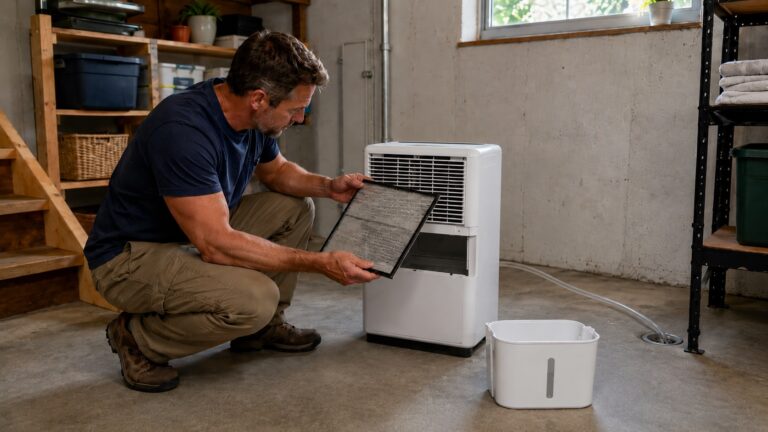
Because this model depends on airflow, drainage, and routine cleaning, maintenance still matters. The bucket, drain hose, filter, and intake areas should still be checked regularly. For general care tips, see our guide on how to maintain a dehumidifier.
Midea Cube 50 Pint Dehumidifier Real-World Performance
In real use, the Midea Cube 50 Pint Dehumidifier should make the most sense in spaces where humidity is consistently too high but the moisture source is manageable. A damp basement in summer, a large room with musty air, or a garage that holds humidity after wet weather are more appropriate use cases than an actively leaking foundation wall or a recently flooded room.
The built-in pump can make long-running operation much easier. Instead of waiting for the bucket to fill, emptying it, and restarting the unit, homeowners can route collected water to an appropriate drain location. For many basement users, that convenience may be the difference between using the dehumidifier consistently and letting it sit idle.
Placement still matters. A dehumidifier needs open airflow around the intake and exhaust areas, and it should be placed where it can pull moisture from the room effectively. If it is crowded into a tight corner, blocked by storage bins, or placed far from the dampest zone, performance may be less effective. For setup help, see our guide on where to place a dehumidifier.
Humidity targets also matter. Running a dehumidifier without paying attention to the actual humidity level can lead to either underuse or unnecessary runtime. For mold-prevention support, the goal is usually to keep indoor humidity in a controlled range rather than simply run the appliance nonstop. You can learn more in our guide to the best dehumidifier settings to prevent mold.
The Midea Cube should perform best when paired with a realistic moisture-control plan: correct placement, clean airflow, proper drainage, and attention to the humidity level. It should not be expected to overcome unresolved leaks, wet drywall, standing water, or poor exterior drainage by itself.
Where the Midea Cube 50 Pint Works Best
The Midea Cube 50 Pint Dehumidifier works best in larger spaces where humidity control is the main goal. Basements are the clearest fit, especially when the space feels damp during warm months or develops musty odors as humidity rises. The 50-pint capacity gives it more headroom than smaller models, while the pump makes longer runtime easier to manage.
It can also fit large rooms, utility spaces, and garages where damp air keeps returning. This model sits between a basic plug-in dehumidifier and a more permanent whole-house or crawl-space system: more capable and convenient than many simple portable units, but still not a built-in moisture-control system.
If you are unsure whether a 50-pint model is the right size for your space, review our guide on how to choose the right size dehumidifier.
Where the Midea Cube 50 Pint May Fall Short
The Midea Cube may fall short if the home has an active water problem rather than a humidity problem. If a basement wall leaks during rain, a pipe is dripping inside a wall, or water is entering through a floor crack, the dehumidifier may reduce some air moisture but will not fix the cause. In those cases, the moisture source needs to be repaired first, and wet building materials may need separate drying or removal.
It may also be more than necessary for small rooms or occasional light humidity. A smaller and simpler unit may be easier to justify if the room is compact and the humidity problem is mild. Buyers who do not need smart controls, pump drainage, or a larger tank may not get full value from the Cube’s feature set.
Portability is another realistic limitation. Although the unit has wheels and a handle, it is still a larger appliance. Homeowners who need to carry a dehumidifier up and down stairs frequently may want to think carefully about weight and handling before choosing this model.
Finally, buyers should check the current Amazon listing before purchasing, especially if availability, seller offers, return terms, or newer model options have changed.
Best Fit for the Midea Cube 50 Pint Dehumidifier
Buy the Midea Cube 50 Pint Dehumidifier if you need a stronger portable unit for a basement, large room, garage, or utility area where humidity regularly rises above a comfortable level. It makes the most sense when the problem is damp air, not active water entry.
It is also a good fit if bucket emptying is the main reason you do not use a dehumidifier consistently. The built-in pump can make daily operation easier when you have a suitable drain location and can route the hose properly.
Choose this model if you value convenience features such as smart control, pump drainage, a larger tank, and more flexible storage. Skip it if you only need a small, simple unit for occasional light humidity.
When the Midea Cube Is Not Enough
Do not rely on the Midea Cube 50 Pint Dehumidifier as the only solution if your home has active water intrusion. It can help lower humidity after the source is addressed, but it cannot stop rainwater, repair a leaking pipe, drain standing water, or dry saturated materials by itself.
Homeowners who need a permanent crawl space, ducted, or whole-house humidity-control system may also need a more specialized setup. The Midea Cube is a portable residential unit, not a professionally installed moisture-control system.
How This Product Compares to Typical Alternatives
Compared with basic portable dehumidifiers, the Midea Cube 50 Pint Dehumidifier offers more convenience and capacity. The most important differences are the built-in pump, larger Cube-style tank, smart controls, and higher moisture-removal capacity. Those features make it a better fit for homeowners who expect the unit to run often in a larger damp space.
Compared with no-pump dehumidifiers, the built-in pump is the clearest advantage. A no-pump model may work well if you have a nearby floor drain or do not mind emptying the bucket. But if your drain location is higher than the unit or farther away, a pump can make continuous drainage much more practical.
Compared with smaller dehumidifiers, this model is better suited for spaces where humidity is a regular issue rather than an occasional inconvenience. A small dehumidifier may be fine for a bedroom or closet, but it may struggle in a basement or large room with a heavier moisture load.
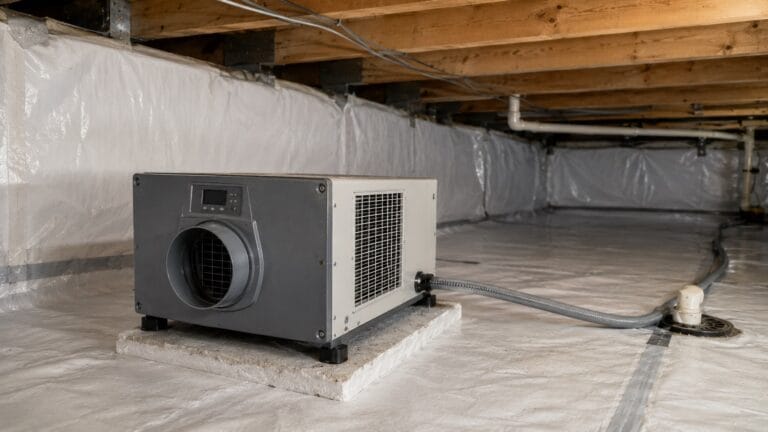
If your main concern is basement humidity, it may also help to compare this unit with other best basement dehumidifiers. The Midea Cube fits the portable, high-capacity category, while a dedicated crawl-space dehumidifier system may make more sense for enclosed crawl spaces or more permanent moisture-control setups.
Compared with permanent systems, the Midea Cube is easier to buy, place, and move, but it does not offer the same whole-home integration. That makes it a practical middle-ground option for homeowners who want stronger portable humidity control without installing a dedicated system.
If you are comparing this model against other humidity-control products, see our broader guide to the best dehumidifiers for mold prevention.
Frequently Asked Questions
Is the Midea Cube 50 Pint Dehumidifier good for basements?
Yes, it can be a good fit for basements where the main problem is elevated humidity, musty air, or seasonal dampness. The 50-pint capacity and built-in pump make it more practical for larger basement areas than many smaller portable units. However, it should not be used as a substitute for repairing active leaks, seepage, or drainage problems.
Does the Midea Cube 50 Pint Dehumidifier remove mold?
No. A dehumidifier does not remove existing mold. It may help reduce the damp conditions that allow mold to grow, but visible mold still needs proper cleanup, and the moisture source must be corrected. Think of this product as a humidity-control tool, not a mold-removal product.
Do you need the built-in pump?
You need the built-in pump if you want more flexible continuous drainage and do not have a convenient low floor drain nearby. If you plan to empty the bucket manually or already have a gravity-drain setup that works well, the pump may be less important. For many basement users, though, the pump is one of the most useful features.
Is a 50-pint dehumidifier too large for a small room?
It may be more than necessary for a small room with mild humidity. A 50-pint dehumidifier is better suited for larger spaces or areas with a heavier moisture load. In a small room, a smaller unit may be easier to place and more cost-effective.
Should I buy this model if Amazon shows a newer version available?
You should compare the current listing carefully before buying. If Amazon shows a newer version, check the model number, features, rating, availability, return options, and price difference. The older model may still make sense if the features and price are right, but the final decision should be based on the current listing details.
Final Verdict: Is the Midea Cube 50 Pint Worth It?
The Midea Cube 50 Pint Dehumidifier is worth considering if you want a high-capacity portable dehumidifier with more convenience than a basic bucket-only model. Its strongest advantages are pump drainage, smart controls, a large Cube-style tank, and enough capacity for larger damp spaces.
It makes the most sense for basements, large rooms, utility spaces, and other areas where humidity regularly becomes uncomfortable or contributes to musty air. If you have a suitable drain location and want to reduce bucket emptying, the built-in pump is the main reason to choose this version.
Its main limit is simple: it controls humidity, not water entry. If the home has active seepage, plumbing leaks, flooding, or wet building materials, those problems need to be corrected before any dehumidifier can perform as expected.
Before buying, check the current Amazon listing for availability, seller details, newer model options, and return terms.
For more related buying and usage help, start with our guide on how to choose and use a dehumidifier effectively.