
Best Dehumidifiers for Mold Prevention
Introduction
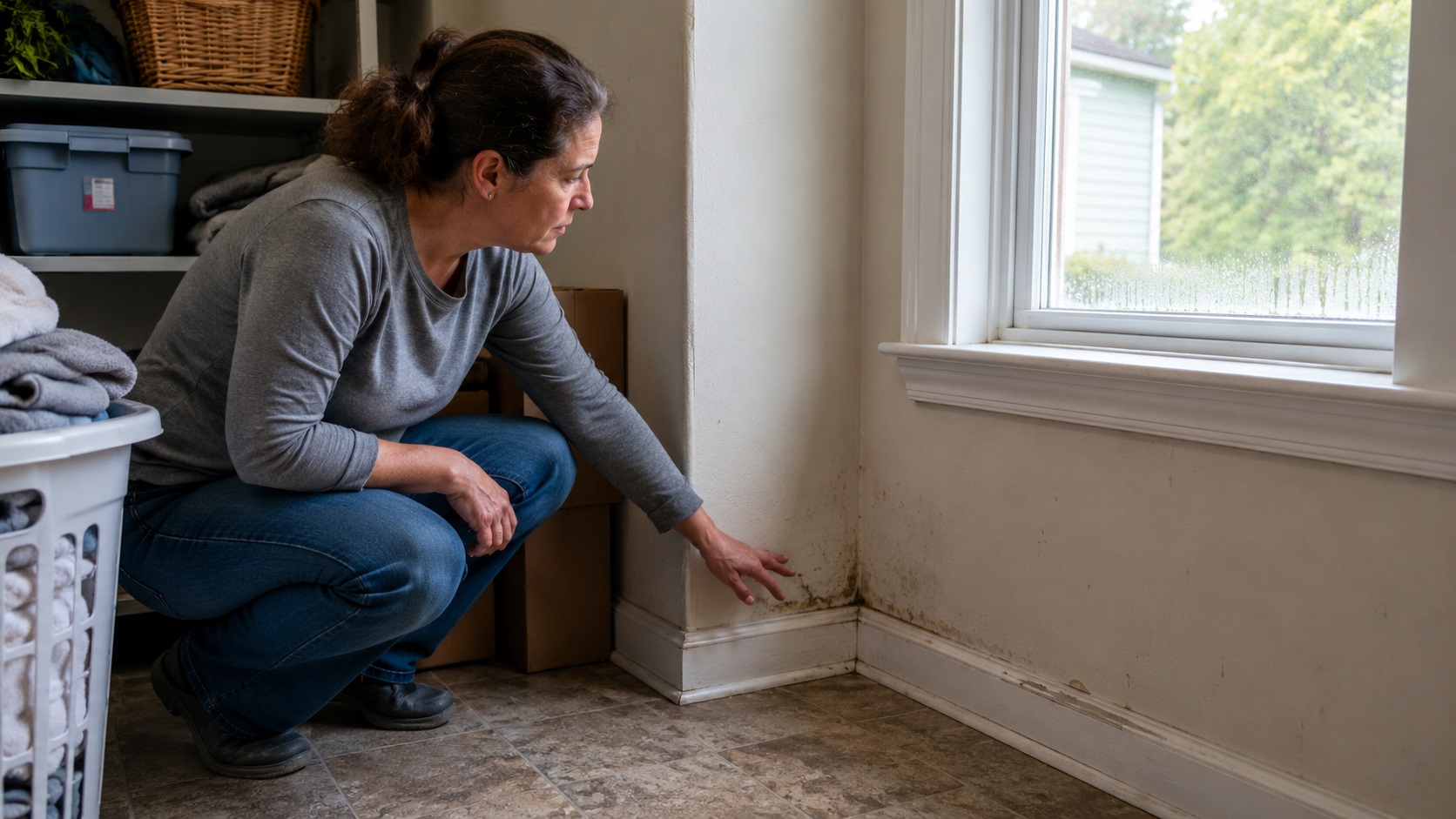
If a room keeps smelling musty no matter how often you clean it, excess humidity may be part of the problem. The best dehumidifiers for mold prevention help reduce the damp air conditions that allow mold to grow, especially in rooms where humidity keeps coming back.
This guide focuses on general mold-prevention dehumidifiers for damp rooms, laundry areas, closets, storage spaces, small apartments, and larger moisture-prone areas. It is not meant to replace specialized guides for basements, crawl spaces, bathrooms, or whole-house dehumidifiers.
For broader help choosing, sizing, placing, setting, and maintaining a unit, start with how to choose and use a dehumidifier effectively. For moisture problems beyond dehumidifier selection, see how to find, fix, and prevent moisture problems in homes.
Important: A dehumidifier can help control air humidity, but it should not be used to ignore active leaks, standing water, wet drywall, or visible mold. Fix the moisture source first, then use the dehumidifier to help keep humidity from returning.
Disclosure: As an Amazon Associate, this site earns from qualifying purchases. This does not affect the price you pay. Product recommendations are based on suitability for mold-prevention humidity control, residential usability, key features, and overall fit for common homeowner moisture problems.
Quick Picks: Best Dehumidifiers for Mold Prevention
- Best Overall Dehumidifier for Mold Prevention: AEOCKY 4500 Sq.Ft Energy Star Most Efficient 2025 Dehumidifier — A strong all-around choice for homeowners who want reliable humidity control in damp rooms and moisture-prone areas.
- Best for Everyday Mold Prevention in Damp Rooms: Waykar 80 Pints 2025 Energy Star Dehumidifier — A practical option for larger rooms, storage areas, laundry spaces, and other places where humidity stays high.
- Best for Large Mold-Prone Areas: Waykar 120 Pints Energy Star Dehumidifier — Useful when a bigger damp area needs stronger moisture removal and continuous drainage support.
- Best Small-Space Dehumidifier for Mold Prevention: Midea Cube 20 Pint Dehumidifier — A compact choice for smaller rooms, apartments, bathrooms, closets, and laundry areas.
- Best Heavy-Duty Alternative When Portable Units Are Not Enough: Moiswell 155 Pint Commercial Dehumidifier — A stronger alternative for unfinished or severe humidity situations where ordinary room units may struggle.
Quick Recommendation: For most homeowners looking for a general mold-prevention dehumidifier, the AEOCKY 4500 Sq.Ft Energy Star Most Efficient 2025 Dehumidifier is the best place to start. Larger damp areas may need the Waykar 80-pint or 120-pint models, while smaller rooms are usually better matched to the Midea Cube 20 Pint.
A good mold-prevention dehumidifier should be easy to run consistently, simple to drain, and strong enough for the space where humidity keeps returning. For target humidity guidance, see best dehumidifier settings to prevent mold.
Best Dehumidifiers for Mold Prevention Reviewed
Each product below is matched to a specific mold-prevention situation, from general damp rooms to small spaces and heavier humidity problems. The goal is not to name one unit for every home, but to help you choose the right type of dehumidifier for the way moisture actually shows up in your space.
1. Best Overall Dehumidifier for Mold Prevention
AEOCKY 4500 Sq.Ft Energy Star Most Efficient 2025 Dehumidifier, Max 80 Pint/Day Smart Compressor Dehumidifier with Drain Hose, Intelligent Humidistat, for Basement, Bedroom, Home, Bathroom
The AEOCKY 4500 Sq.Ft Energy Star Most Efficient 2025 Dehumidifier is the strongest overall pick for homeowners who want one versatile unit for damp rooms and moisture-prone areas. It is designed for large residential spaces, includes a drain hose for continuous operation, and uses an intelligent humidistat to help maintain steadier humidity.
This model makes sense when a room keeps feeling damp even after normal ventilation or air conditioning has run. It fits large rooms, laundry areas, bedrooms with poor airflow, finished lower-level spaces, and other areas where humidity tends to stay elevated.
Key Features:
- Max 80 pint/day moisture removal rating
- Designed for spaces up to 4,500 square feet
- Energy Star Most Efficient 2025 positioning
- Smart compressor design
- Intelligent humidistat for humidity control
- Drain hose included for continuous drainage
- Suitable for bedrooms, bathrooms, homes, and damp residential areas
Pros:
- ✔ Strong all-around choice for mold-prevention humidity control
- ✔ Good fit for larger damp rooms and moisture-prone areas
- ✔ Continuous drainage helps reduce manual emptying
- ✔ Built-in humidistat helps maintain more consistent humidity
- ✔ Energy-focused design is useful for regular operation
Cons:
- ✖ May be more unit than needed for very small rooms
- ✖ Still requires proper placement and drainage setup
- ✖ Does not fix hidden leaks, standing water, or existing mold by itself
Best For:
- Homeowners who want one strong general-purpose mold-prevention dehumidifier
- Large damp rooms or moisture-prone areas
- Laundry areas, bedrooms, bathrooms, and lower-level living spaces
- Homes where humidity rises seasonally
- Users who want continuous drainage instead of frequent bucket emptying
2. Best for Everyday Mold Prevention in Damp Rooms
Waykar 80 Pints 2025 Energy Star Dehumidifier for Spaces up to 5,000 Sq. Ft for Basement and Home, Large Room with Drain Hose and 1.14 Gallons Water Tank
The Waykar 80 Pints 2025 Energy Star Dehumidifier is a practical middle-ground choice for damp rooms where humidity keeps returning. It offers more capacity than a small-room dehumidifier while still staying in the standard residential category.
It fits laundry rooms, storage spaces, and larger rooms that feel damp whenever the weather turns humid. The included drain hose also makes longer operation easier without relying only on the tank.
Key Features:
- 80 pint/day class moisture removal
- Designed for spaces up to 5,000 square feet
- Energy Star positioning
- Drain hose included for continuous drainage
- 1.14-gallon water tank
- Digital humidity control
- Suitable for large rooms and general home moisture control
Pros:
- ✔ Good option for larger damp rooms
- ✔ Useful for everyday mold-prevention humidity control
- ✔ Drain hose supports longer unattended operation
- ✔ Larger coverage rating than many compact models
- ✔ Practical balance of capacity and residential usability
Cons:
- ✖ May be oversized for bathrooms, closets, or small bedrooms
- ✖ Tank use may still require regular emptying if continuous drainage is not set up
- ✖ Not a substitute for fixing active water intrusion or hidden leaks
Best For:
- Large damp rooms
- Laundry areas and storage spaces
- Homes with recurring seasonal humidity
- Homeowners who want more capacity than a compact dehumidifier
- Everyday mold-prevention humidity control in general living areas
Check the Waykar 80 Pints 2025 Energy Star Dehumidifier on Amazon to see current availability.
3. Best for Large Mold-Prone Areas
Waykar 120 Pints Energy Star Dehumidifier for Spaces up to 6,000 Sq. Ft at Home, in Basements and Large Rooms with Drain Hose and 1.14 Gallons Water Tank
The Waykar 120 Pints Energy Star Dehumidifier makes sense when the damp area is large enough that smaller units run constantly without catching up. It is a large-area mold-prevention pick for homeowners who need stronger portable humidity control without moving into a ducted whole-house system or a crawl-space-specific unit.
This type of higher-capacity unit can help when humidity rises quickly after rain, during humid seasons, or in areas where airflow is limited. The drain hose is especially important because larger damp areas often need longer runtime than a manual bucket setup can support.
Key Features:
- 120 pint/day class moisture removal
- Designed for spaces up to 6,000 square feet
- Energy Star positioning
- Drain hose included for continuous drainage
- 1.14-gallon water tank
- Digital humidity controls
- Designed for large rooms and high-humidity residential spaces
Pros:
- ✔ Stronger capacity for larger mold-prone areas
- ✔ Useful when smaller units struggle to lower humidity
- ✔ Continuous drainage supports long operation periods
- ✔ Good choice for large rooms and unfinished areas with persistent dampness
- ✔ Helps maintain more consistent humidity when properly sized and placed
Cons:
- ✖ Too large for small rooms or light humidity issues
- ✖ Requires enough space for proper airflow
- ✖ Higher-capacity operation may be unnecessary if the moisture problem is minor
- ✖ Severe water intrusion still needs source repair, not just dehumidification
Best For:
- Large mold-prone areas
- Unfinished rooms with persistent dampness
- Homes where humidity rises quickly during humid seasons
- Large storage areas or multipurpose spaces
- Homeowners who need more power than a standard compact dehumidifier
Check the Waykar 120 Pints Energy Star Dehumidifier on Amazon to see current availability.
4. Best Small-Space Dehumidifier for Mold Prevention
Midea Cube 20 Pint Dehumidifier for Basement, Up to 1,500 Sq. Ft. Dehumidifier with Drain Hose, ENERGY STAR Certificated, Smart Control, Compatible with Alexa, White
The Midea Cube 20 Pint Dehumidifier is the better fit when the mold-risk area is small or localized. It works for bedrooms, bathrooms, laundry areas, closets, apartments, and enclosed spaces where humidity lingers but a large unit would be bulky or unnecessary.
Its compact cube-style design makes it easier to place in tighter areas, while the drain hose option gives homeowners more flexibility for longer runtime without relying only on the tank.
Key Features:
- 20 pint/day class moisture removal
- Designed for spaces up to 1,500 square feet
- Compact cube-style design
- Drain hose compatibility
- Energy Star certification
- Smart control features
- Compatible with Alexa
Pros:
- ✔ Better fit for small mold-prone spaces than oversized units
- ✔ Compact design is easier to place in tight areas
- ✔ Drain hose option supports longer operation
- ✔ Smart controls can make humidity management more convenient
- ✔ Useful for apartments, bedrooms, bathrooms, and laundry areas
Cons:
- ✖ Not ideal for very large damp areas
- ✖ Lower capacity than the larger units in this guide
- ✖ May need to run more often in very humid conditions
- ✖ Not designed for whole-home humidity control
Best For:
- Small rooms with recurring humidity
- Bathrooms, laundry rooms, and closets
- Apartments or compact living areas
- Finished rooms where a large unit would be excessive
- Homeowners who want a smaller dehumidifier for localized mold prevention
Check the Midea Cube 20 Pint Dehumidifier on Amazon to see current availability.
5. Best Heavy-Duty Alternative When Portable Units Are Not Enough
Moiswell 155 Pint Commercial Dehumidifier with Drain Hose for Crawl Spaces, Basements, Industry Water Damage Unit, Large Capacity, Compact, Portable, Auto Defrost, Memory Starting
The Moiswell 155 Pint Commercial Dehumidifier is the heavy-duty alternative in this guide. It is not the unit most people would buy for a bedroom or bathroom. Its role is for unfinished areas, storage zones, utility spaces, work areas, or severe humidity situations where a standard portable unit may not keep up.
It can be useful when a homeowner needs a more durable unit with continuous drainage, auto defrost, and memory restart features. However, if the area has standing water, active leaks, drainage failure, or structural moisture problems, the source still needs to be corrected.
Key Features:
- 155 pint/day class moisture removal rating
- Commercial-style design for demanding humidity conditions
- Drain hose included for continuous drainage
- Compact horizontal form factor
- Auto defrost function
- Memory restart after power interruption
- Designed for unfinished, high-humidity, and heavy-duty moisture situations
Pros:
- ✔ Strong option when standard portable units are not enough
- ✔ Continuous drainage supports longer operation
- ✔ Auto defrost is useful in cooler damp environments
- ✔ Memory restart helps maintain operation after power interruptions
- ✔ Better suited for severe humidity than small residential units
Cons:
- ✖ More than most small rooms need
- ✖ Not the best choice for casual bedroom or bathroom use
- ✖ Requires proper drainage planning
- ✖ Heavy-duty dehumidification does not solve water intrusion by itself
Best For:
- Unfinished areas with persistent humidity
- Storage spaces where moisture keeps returning
- Utility areas or workspaces with heavy dampness
- Homeowners whose smaller dehumidifiers have not kept up
- Severe humidity situations that need stronger continuous moisture removal
Check the Moiswell 155 Pint Commercial Dehumidifier on Amazon to see current availability.
Dehumidifier Comparison Table for Mold Prevention
| Product | Category Label | Capacity / Size | Coverage Area | Best Use Case | Drainage |
|---|---|---|---|---|---|
| AEOCKY 4500 Sq.Ft Energy Star Most Efficient 2025 Dehumidifier | Best Overall Dehumidifier for Mold Prevention | Max 80 pint/day class | Up to 4,500 sq. ft. | General mold-prevention humidity control in damp rooms and moisture-prone areas | Drain hose included |
| Waykar 80 Pints 2025 Energy Star Dehumidifier | Best for Everyday Mold Prevention in Damp Rooms | 80 pint/day class | Up to 5,000 sq. ft. | Larger damp rooms, laundry areas, storage areas, and seasonal humidity control | Drain hose included and water tank |
| Waykar 120 Pints Energy Star Dehumidifier | Best for Large Mold-Prone Areas | 120 pint/day class | Up to 6,000 sq. ft. | Large rooms, unfinished areas, and heavier humidity conditions | Drain hose included and water tank |
| Midea Cube 20 Pint Dehumidifier | Best Small-Space Dehumidifier for Mold Prevention | 20 pint/day class | Up to 1,500 sq. ft. | Small rooms, bathrooms, laundry areas, closets, apartments, and localized humidity problems | Drain hose compatible |
| Moiswell 155 Pint Commercial Dehumidifier | Best Heavy-Duty Alternative When Portable Units Are Not Enough | 155 pint/day class | Large unfinished or severe humidity areas | Heavy-duty moisture control when smaller residential units struggle | Drain hose included |
The best dehumidifier for mold prevention depends on the size of the area, how much humidity you are dealing with, and whether the unit can drain continuously. A compact model may be enough for a small damp room, while a larger unit may be needed for persistent humidity in bigger areas.
If your main issue is a specific environment, choose a specialized guide instead of relying only on a general mold-prevention comparison. For basement dampness, compare the best basement dehumidifiers. For low-clearance or encapsulated crawl spaces, use the guide to best crawl space dehumidifiers. If humidity affects the entire home, compare the best whole-house dehumidifiers.
How to Choose a Dehumidifier for Mold-Prone Areas
Choosing a dehumidifier for mold prevention starts with the area where humidity keeps returning. A small laundry room, a damp bedroom, a closet, a storage area, and an unfinished utility space do not all need the same type of unit.
Use the product capacity as a starting point, but also consider moisture severity, airflow, drainage, and whether the problem is localized or spread across a larger area. For a fuller capacity framework, see how to choose the right size dehumidifier.
For ongoing mold prevention, continuous drainage is usually more reliable than relying only on a tank. If the bucket fills and the unit shuts off, humidity can rise again before you notice. For placement and drain setup guidance, see where to place a dehumidifier in your home.
If the space has active leaks, standing water, wet materials, or mold that keeps returning, the dehumidifier should be only one part of the solution. Use how to find, fix, and prevent moisture problems in homes to look for the source.
How to Use a Dehumidifier for Mold Prevention
After choosing the right product, place it where it can pull in damp air, keep the intake and exhaust clear, and use continuous drainage when humidity returns often. For full setup guidance, see where to place a dehumidifier in your home.
Use a separate humidity monitor to verify that the problem area is actually drying. For measurement methods, see how to test indoor humidity levels. For target settings, see best dehumidifier settings to prevent mold.
If the unit runs constantly, the drain hose leaks, or the filter gets dirty, performance can drop. For operation and care details, use how long to run a dehumidifier each day and how to maintain a dehumidifier.
Common Mistakes to Avoid
The biggest mistake is treating a dehumidifier as a complete mold solution. A dehumidifier can lower air humidity, but it does not remove existing mold, repair leaks, dry hidden cavities, or fix water intrusion.
Other common mistakes include choosing based only on the largest coverage claim, using a small unit for a repeated moisture problem, letting the tank fill and shut the unit off, blocking airflow around the unit, and ignoring hidden moisture sources.
If mold is already visible, use how to remove mold permanently. If moisture keeps returning even with a dehumidifier running, use how to find, fix, and prevent moisture problems in homes to look for the source.
Frequently Asked Questions About Dehumidifiers for Mold Prevention
Can a dehumidifier prevent mold?
A dehumidifier can help prevent mold by reducing excess humidity in the air. Mold is more likely to grow when moisture stays high, especially in rooms with poor airflow, damp materials, or recurring condensation.
However, a dehumidifier does not remove existing mold and does not repair the source of a moisture problem. If mold is already growing, the affected area needs proper cleaning, drying, removal, or professional evaluation. The dehumidifier’s role is to help keep the space drier after the moisture source has been corrected.
What humidity level helps prevent mold?
Most homes should aim to keep indoor humidity controlled and avoid letting damp areas stay overly humid for long periods. Many homeowners use a dehumidifier to keep problem areas in a moderate humidity range rather than allowing humidity to remain high enough for mold-friendly conditions.
For specific target settings and when to adjust them, see our guide to the best dehumidifier settings to prevent mold.
Is a bigger dehumidifier always better for mold prevention?
Not always. A larger dehumidifier can help in large mold-prone areas or rooms where humidity returns quickly, but bigger is not automatically better for every space.
For small rooms, closets, apartments, or lightly damp areas, an oversized unit may be bulky and unnecessary. For larger damp areas, a compact unit may run constantly without lowering humidity enough. For a fuller capacity framework, see how to choose the right size dehumidifier.
Should I use a drain hose or empty the tank manually?
For occasional use in a small room, manually emptying the tank may be fine. For ongoing mold prevention, a drain hose is usually more reliable because it allows the unit to keep running without shutting off when the tank fills.
Continuous drainage is especially useful in damp rooms, laundry areas, storage spaces, and larger moisture-prone areas. For setup guidance, see where to place a dehumidifier in your home.
Can I use a regular dehumidifier in a basement or crawl space?
Sometimes, but it depends on the space. A standard portable dehumidifier may work in some accessible basement areas, but low-clearance crawl spaces usually need a unit designed for that environment.
If your main issue is a basement, compare the best basement dehumidifiers. If your main issue is a crawl space, use the guide to best crawl space dehumidifiers.
Will a dehumidifier get rid of a musty smell?
A dehumidifier may help reduce musty odors if the smell is caused by high humidity and damp air. By lowering moisture levels, it can make the area less favorable for mildew and mold growth.
But if the musty smell comes from hidden mold, wet materials, plumbing leaks, or water-damaged building materials, a dehumidifier alone may not solve the problem. In that case, the source of the odor needs to be found and corrected.
Do I still need an air purifier if I use a dehumidifier?
A dehumidifier and an air purifier do different jobs. A dehumidifier removes moisture from the air. An air purifier filters airborne particles. If your main concern is preventing mold growth, humidity control is usually the first priority.
If your concern is airborne particles, musty indoor air, or mold spores after a moisture problem, an air purifier may be useful as a separate tool. It should not replace moisture control, leak repair, or proper mold cleanup.
How do I know if a dehumidifier is not enough?
A dehumidifier may not be enough if humidity stays high even while the unit runs, if mold keeps returning, if materials remain damp, or if you see water stains, condensation, swelling trim, or recurring musty odors.
Those signs may point to a hidden leak, water intrusion, poor drainage, trapped moisture, or a ventilation problem. In that case, the dehumidifier can help manage symptoms, but the underlying moisture source still needs to be fixed.
Final Thoughts
The best dehumidifier for mold prevention depends on where humidity is building up and how severe the moisture problem is. For most homeowners who want a strong general-purpose option, the AEOCKY 4500 Sq.Ft Energy Star Most Efficient 2025 Dehumidifier is the best overall pick.
The Waykar 80-pint model is a good fit for everyday damp rooms, the Waykar 120-pint model is better for larger mold-prone areas, the Midea Cube 20 Pint fits smaller spaces, and the Moiswell 155 Pint Commercial Dehumidifier is the heavy-duty alternative when ordinary portable units are not enough.
No dehumidifier should be treated as a complete mold solution by itself. The right unit can help control humidity, but leaks, wet materials, airflow problems, and existing mold still need to be handled directly.
Best overall pick: AEOCKY 4500 Sq.Ft Energy Star Most Efficient 2025 Dehumidifier
5 Comments
Comments are closed.