Do Mold Test Kits Detect Exposure Risks?
Mold test kits can detect mold in a collected sample, but they do not directly detect personal exposure risk. A home mold test may show that mold spores or mold-like growth were present on a sampled surface, in an air sample, or in a settle plate during a specific testing window. That can provide useful clues, but it does not prove whether mold is making someone sick, whether the whole home is safe, or whether hidden mold is absent.
This distinction matters because many homeowners buy mold test kits hoping for a simple yes-or-no answer: “Am I being exposed to mold?” In reality, mold exposure risk depends on more than one sample. It depends on where mold is growing, whether materials are damp, whether spores are becoming airborne, how air moves through the home, how much time people spend in affected rooms, and whether the source is visible, hidden, active, or recurring.
A mold test kit can be useful when it answers a specific question. It is less useful when it is expected to replace moisture inspection, professional testing, or medical advice. For a broader explanation of how testing fits into indoor air concerns, see this guide to mold exposure and indoor air quality.
Can Mold Test Kits Actually Detect Exposure Risk?
Not directly. Mold test kits test samples, not people. A kit may collect material from a wall, floor, piece of trim, air sample, or dish. If the sample is analyzed, the result may identify mold or mold types found in that sample. But that does not automatically tell you how much mold a person inhaled, how long exposure occurred, whether symptoms are connected, or whether every problem area in the home has been found.
This is why a mold test kit should be viewed as a clue-gathering tool. It can support a decision, but it should not be treated as a complete exposure-risk measurement. A positive result may need context. A negative result may miss hidden or intermittent sources. A test result that seems simple can be misleading if it is separated from the moisture conditions in the home.
A Mold Test Kit Tests a Sample, Not the Whole Home
A mold test kit only tells you something about the specific sample you collected. If you swab a stained baseboard, the result applies to that sampled area. If you use an air sample in one bedroom, the result applies to that room during that sample window. If you set out a settle plate, the result reflects what landed in that dish during that period.
That is very different from testing every wall cavity, crawl space, attic, HVAC component, carpet pad, cabinet, and damp material in the home. Mold problems are often localized. A bedroom sample may not reveal mold behind a bathroom wall. A hallway sample may not reveal a musty crawl space. A negative dish in one room may not rule out mold under flooring in another area.
Because mold usually starts with moisture, the stronger question is often not “Did this sample grow mold?” but “Where is the moisture source, and what material is being affected?” If you are trying to connect testing, moisture evidence, odors, and room patterns, use this broader guide to confirm mold exposure risks inside your home rather than relying on a test result alone.
Mold Presence Is Not the Same as Exposure Risk
Mold spores are common indoors and outdoors. A sample that finds mold does not automatically mean the home has a severe mold problem. It may mean the sampled surface had mold-like growth, that outdoor spores entered the room, that settled dust contained spores, or that a damp indoor source is releasing material. The result needs context before it can guide action.
The same is true in the opposite direction. A negative result does not prove the home is mold-free. Mold may be hidden behind materials, inactive during the sample window, trapped in a wall cavity, growing in a crawl space, or present in a room that was not sampled. Mold can also become more airborne when materials are disturbed or when HVAC airflow changes.
For that reason, mold test kit results should be interpreted alongside visible signs, odors, water damage history, humidity readings, and moisture inspection. A test result can be one piece of the puzzle, but it is not the whole puzzle.
What Mold Test Kits Can Tell You
A mold test kit can still be useful when the goal is narrow and realistic. It may help you document a suspicious spot, collect a preliminary sample, or decide whether a professional inspection is worth the next step. The value depends on the type of kit, how carefully the sample is collected, and what question you are trying to answer.
They Can Show Whether Mold Was Found in a Sample
The clearest thing a mold test kit can do is show whether mold was detected in the sample you collected. A surface test may help confirm whether a suspicious dark or fuzzy area is mold-like growth. An air or settle-plate test may show whether mold spores were collected during the test window.
This can be useful when a homeowner is unsure whether a stain is dirt, mildew-like growth, dust, soot, or mold. It can also be useful when someone wants to document a specific surface before deciding whether to clean, remove, or escalate the concern.
They Can Sometimes Identify Mold Types in the Sample
Some kits include laboratory analysis. In those cases, the lab may identify mold types found in the submitted sample. That can be more useful than a visual-only kit because it provides more information about the sample itself.
However, mold type should not become the only focus. Homeowners often become fixated on the name of the mold instead of the moisture source, material damage, and extent of growth. In many real situations, where the mold is growing and why it is growing matter more for the next step than the mold name alone.
They Can Support a Next-Step Decision
A test kit may help you decide what to do next. If a suspicious surface sample confirms mold-like growth, you may decide to correct moisture and clean or remove the affected material. If a musty room produces concerning results and the source is unclear, you may decide to inspect more deeply or call a professional.
If you are choosing a kit for a specific purpose, a guide to mold test kits for homeowners can help you compare basic options. Just remember that the kit should answer a defined question, not replace the full investigation.
What Mold Test Kits Cannot Tell You
Mold test kits become misleading when they are treated as complete exposure-risk tools. A kit may test a surface, air sample, or dish, but it cannot interpret the entire building, measure a person’s exposure history, diagnose symptoms, or identify every hidden mold source.
They Cannot Diagnose Symptoms
A mold test kit cannot tell you whether headaches, coughing, sinus irritation, fatigue, dizziness, rashes, or breathing symptoms are caused by mold. It is not a medical test. Even if a kit finds mold in a sample, that result does not prove the mold caused a specific symptom.
If symptoms are persistent, severe, or affecting someone with asthma, allergies, immune concerns, or respiratory sensitivity, discuss the health side with a qualified healthcare professional. Use the home test only for a building question, such as whether a specific stain, room, or surface sample contains mold.
They Cannot Prove the Home Is Safe
A negative mold test kit result does not prove that a home is mold-free or safe from mold exposure concerns. The sample may have been taken in the wrong room, at the wrong time, or during a period when spores were not airborne. Hidden mold may remain behind walls, under flooring, in insulation, inside cabinets, in crawl spaces, in attics, or near HVAC components.
A negative result may reduce concern about that specific sample, but it should not override musty odors, past water damage, visible staining, or recurring dampness.
They Cannot Reliably Find Hidden Mold
Hidden mold is difficult for a basic home test kit to confirm or rule out. Mold behind drywall, under carpet pad, inside a ceiling cavity, behind a vanity, under kitchen flooring, or in a crawl space may not release enough material into the sampled area during the test window. Air movement, HVAC cycles, door position, outdoor conditions, and recent cleaning can all affect results.
If the home has a persistent mold smell with no visible mold, testing may provide one clue, but the bigger task is finding the source. Odor tracing, moisture readings, humidity checks, and inspection of likely hidden areas are usually more useful than a single kit result.
They Cannot Measure Long-Term Exposure
Exposure changes over time. A person’s actual exposure depends on how long they spend in affected rooms, how often mold particles become airborne, whether contaminated materials are disturbed, whether the HVAC system spreads particles, and whether moisture conditions change throughout the day or season.
A short-term kit can only capture what was present in the sample at the time and place it was taken. It should not be used as proof that exposure is high, low, dangerous, or harmless.
They Cannot Replace Moisture Inspection
Mold is usually a moisture problem first. A test kit may confirm mold in a sample, but it does not tell you why the mold grew. It does not identify a leaking pipe, roof leak, foundation seepage, condensation issue, wet insulation, or high humidity problem. Without finding the moisture source, mold can return even after cleaning.
If the concern is exposure risk, the source matters. Mold growing on a damp surface can keep releasing particles or odors until the moisture and material problem are corrected. Testing without source investigation often leads to confusion because the result does not explain what needs to be fixed.
Types of Mold Test Kits and What They Mean
Not all mold test kits work the same way. Some collect surface material. Some collect air. Some rely on mold growth in a dish. Some are sent to a lab, while others are interpreted visually by the homeowner. Understanding the type of test helps prevent overinterpretation.
Surface Test Kits
Surface test kits are used on visible or suspicious material. They may involve a swab, tape lift, or similar collection method. These kits can be useful when you want to know whether a specific spot contains mold-like growth.
The limitation is that surface testing does not tell you what is happening elsewhere in the home. A positive surface sample confirms something about that spot. It does not measure airborne exposure throughout the house. A negative surface sample does not rule out mold behind nearby materials or in another room.
Air Sampling Kits
Air sampling kits are designed to collect airborne particles during a specific time period. They may be more relevant when the concern is what people are breathing in a room, but they are still limited snapshots. The result can change depending on activity, airflow, HVAC operation, open windows, outdoor spore levels, and whether a hidden source was releasing particles during the test.
Air sampling is also harder to interpret without context. A professional inspector may compare indoor and outdoor samples, inspect moisture conditions, and select sampling locations based on the building layout. A basic DIY air sample may not provide that level of interpretation.
Petri Dish or Settle Plate Kits
Petri dish kits are common because they are simple and inexpensive. The homeowner leaves a dish exposed so particles can settle into it, then watches for growth. The problem is that mold spores are common, and the dish is designed to grow what lands on it. Seeing growth in a dish does not automatically prove a dangerous indoor mold source.
These kits can be easy to overread. A dish that grows mold may simply show that mold spores were present in the environment, which is often expected. Without comparison samples, moisture inspection, and context, the result may create more anxiety than clarity.
Lab-Analyzed Kits
Lab-analyzed kits are generally more useful than visual-only kits because a lab can identify what was found in the submitted sample. This can help if you need documentation or want more information about a suspicious material.
Even then, lab analysis does not turn a home kit into a full building assessment. The lab can analyze the sample. It cannot tell from that sample alone whether there is hidden mold in a wall, whether a leak is active, whether a room is safe, or whether someone’s symptoms are caused by mold.
Visual-Only Kits
Visual-only kits rely heavily on what the homeowner sees. They are the easiest to misunderstand because mold growth patterns, colors, and appearances are not enough to determine exposure risk or remediation needs. Color alone is not a reliable safety guide.
If the decision matters, such as whether to remove materials, hire a contractor, document a concern, or investigate a hidden source, a visual-only kit is usually too limited. A lab-analyzed kit or professional inspection may be more appropriate.
When a Mold Test Kit May Be Useful
A mold test kit is most useful when it answers a narrow question and helps decide the next reasonable step.
When You Have Suspicious Staining
If a surface has staining that could be mold, dirt, soot, mineral residue, or water staining, a surface test may provide a clue. This can be useful on trim, drywall, cabinet interiors, stored items, or other small areas where the homeowner is unsure what they are seeing.
Even then, the moisture source still matters. If the stain is near a leak, condensation area, damp basement wall, or recurring humidity problem, the test result should not distract from the need to correct moisture.
When There Is Musty Odor but No Visible Mold
A mold test kit may be one clue when a room smells musty but no mold is visible. However, this is also one of the situations where kits can miss the real problem. The source may be hidden behind materials, in a crawl space, inside an HVAC system, under flooring, or in stored belongings.
In this scenario, a kit should be paired with inspection. Check for dampness, humidity, past leaks, water stains, soft materials, and odor patterns. If the smell keeps returning, the source needs to be found even if a DIY test is unclear.
When You Want to Document a Specific Surface
A mold test kit can be useful when you want to document one specific surface before deciding what to do next. For example, you may want to sample a stained cabinet base, a discolored section of trim, a suspicious patch near a window, or a spot on stored belongings before cleaning or discarding the item.
This kind of testing is most helpful when the sampled area is clearly defined. The result can help you decide whether the material should be cleaned, removed, monitored, or shown to a professional. It is less helpful when the goal is to judge the entire house from one small sample.
When You Are Preparing for a Professional Inspection
A home test kit may help you organize your concerns before calling an inspector. For example, if you have a musty basement, a stained wall, and symptoms that seem worse in one room, a kit result may become one piece of information you share with the professional.
However, the kit should not replace the inspection itself. A trained inspector can look for moisture patterns, material damage, hidden sources, drainage issues, HVAC problems, and conditions that a test kit cannot evaluate.
When a Mold Test Kit Is Not Enough
A mold test kit is not enough when the situation already shows signs of a real moisture or mold problem. In those cases, testing may only delay the action that is already needed. If the evidence points to active mold, wet materials, or hidden contamination, the priority should shift from product testing to source correction and professional judgment.
When Visible Mold Is Already Present
If you can already see mold growing on a wall, ceiling, floor, cabinet, trim, carpet, insulation, or stored item, a test kit often adds little. The more important questions are why the material is damp, how far the growth extends, whether the material can be cleaned, and whether removal or professional remediation is needed.
Testing visible mold may identify what is in the sample, but it does not change the need to correct moisture. If a bathroom ceiling, basement wall, or cabinet base has visible mold and the moisture source remains, the problem can return after cleaning.
Do not disturb large mold areas, moldy insulation, contaminated materials, or mold growth connected to sewage or floodwater just to collect a DIY sample. Those situations require more caution than a basic test kit can provide.
When There Is Obvious Water Damage
Water stains, swollen trim, soft flooring, damp carpet, bubbling paint, wet insulation, or recurring leaks are already meaningful evidence. A mold test kit cannot repair those materials or determine the full extent of damage. It may confirm mold in one spot, but the larger issue is moisture movement through the structure.
When water damage is visible, start by identifying the source. Look for plumbing leaks, roof leaks, window leaks, foundation seepage, appliance leaks, condensation, or humidity problems. Testing may come later if documentation is needed, but it should not be the first or only step.
When Symptoms Are the Main Reason for Testing
If the main reason for buying a mold kit is that someone feels sick, use caution. A home mold test cannot diagnose symptoms or prove that mold is causing them. It can only provide limited information about the sample collected.
That does not mean the home should be ignored. It means the problem needs two tracks: health concerns should be discussed with a qualified healthcare professional, and the building should be evaluated for moisture, mold, odors, and indoor air quality conditions. If you are deciding whether symptoms justify testing, see when to test your home after mold exposure symptoms.
When Hidden Mold or HVAC Contamination Is Suspected
Hidden mold is one of the weakest areas for basic DIY testing. If mold may be inside a wall cavity, under flooring, in attic insulation, in a crawl space, or inside HVAC components, a simple test kit may miss the source or produce results that are hard to interpret.
HVAC concerns are especially tricky because airflow can move particles through different parts of the home. A sample from one room may not explain what is happening inside ducts, coils, drain pans, insulation, or returns. If HVAC contamination is suspected, professional inspection is usually more useful than a basic home kit.
When the Results Will Affect Expensive Decisions
If the result will influence a major repair, contractor decision, remediation job, insurance discussion, rental dispute, or home sale decision, a basic mold test kit may not be enough. In those cases, sampling design, chain of custody, documentation, interpretation, and moisture inspection matter more.
Professional testing is usually more appropriate when the stakes are high. A home kit may be useful for early curiosity, but it should not carry the full weight of a costly repair decision.
How to Interpret Positive and Negative Mold Test Results
The biggest mistake homeowners make is treating mold test results as absolute. A positive result does not always mean the home is dangerous. A negative result does not always mean the home is safe. The result must be interpreted with the condition of the home.
What a Positive Mold Test Kit Result Means
A positive result means mold was found in the sample. That may be important, especially if the sample came from a suspicious surface or a room with musty odor. But it does not automatically tell you the size of the problem, the source of moisture, the amount of exposure, or the health significance.
After a positive result, ask practical building questions:
- Where was the sample taken?
- Was the sampled area damp, stained, or damaged?
- Is there visible mold nearby?
- Has there been a leak, flood, condensation issue, or humidity problem?
- Does the odor or concern return after cleaning?
- Is the mold on a cleanable surface or a porous material?
These questions matter more than panic over the word “positive.” A positive sample should lead to moisture-source investigation, not fear-based guessing.
What a Negative Mold Test Kit Result Means
A negative result means mold was not detected in that sample. It does not prove that mold is absent everywhere in the home. The kit may have sampled the wrong location, missed an intermittent airborne event, or failed to reach a hidden source.
If there is no odor, no visible staining, no moisture history, and no symptoms tied to the home, a negative result may be reassuring. But if strong warning signs remain, the negative result should not end the investigation. Moisture evidence is often more important than one test result.
Why Context Matters More Than the Kit Alone
Test results are most useful when combined with observation. A positive surface test from a damp, stained wall is more meaningful than a random positive dish in a clean room. A negative air sample in one bedroom is less reassuring if the adjacent bathroom has a long-term leak and musty odor.
Think of a mold kit as one tool in a larger decision process. It should support what you are seeing, smelling, measuring, and inspecting. If you need a broader framework, use a step-by-step process to confirm mold exposure risks inside your home rather than relying on the kit alone.
Mold Test Kit vs Professional Testing
A mold test kit and professional mold testing are not the same thing. A home kit collects a limited sample. Professional testing is usually paired with inspection, moisture evaluation, building history, sampling strategy, and result interpretation. That difference matters when the goal is to understand exposure risk rather than simply find mold in one sample.
DIY Kits Are Limited Snapshots
A DIY kit may tell you what was found in one surface, air, or settle-plate sample. That can be useful for a narrow question, but it is still a snapshot. It does not explain why mold is present, how far the problem extends, whether moisture is still active, or whether the sample represents typical conditions.
This is why DIY kits are best for early-stage clue gathering. They are less reliable when the results will guide major remediation, structural repair, insurance documentation, rental disputes, or health-related decisions.
Professional Testing Includes Better Context
A professional mold inspector can choose sampling locations based on the home’s layout, moisture history, HVAC behavior, visible damage, odor patterns, and suspected hidden sources. They may also compare indoor and outdoor conditions, inspect areas a homeowner may overlook, and interpret lab results alongside the building conditions.
Professional testing is especially useful when mold may be hidden, when symptoms continue, when the odor source is unclear, or when the result will affect a significant repair decision. For a more detailed threshold, see when mold exposure requires professional testing.
Inspection Often Matters More Than Sampling
In many homes, the most important discovery is not the mold type. It is the moisture source. A trained inspection may reveal a leaking pipe, roof leak, foundation seepage, blocked HVAC drain, wet insulation, poor crawl space conditions, or condensation problem. Those are the conditions that allow mold to grow and return.
A positive sample still needs a source-based plan. Without moisture correction, cleanup may fail and mold may return.
What to Do Before Buying a Mold Test Kit
Before buying a mold test kit, decide what question you need the kit to answer. A vague question like “Is there mold somewhere?” is hard for a basic home kit to answer well. A specific question like “Is this suspicious spot on the cabinet base likely mold?” is more realistic.
Before sampling, write down the exact location, what you saw or smelled, whether the area was damp, and whether there was a recent leak or humidity problem. That simple note makes the result easier to interpret later.
Look for Moisture First
Start with moisture because mold usually follows moisture. Check for recent leaks, water stains, swelling, soft materials, condensation, high humidity, damp odors, wet insulation, or musty storage areas. If you find active water damage, the moisture source should become the priority.
A mold test kit does not fix the water source. If the home has moisture problems, the test result should not distract from leak repair, drying, humidity control, or material removal.
Check Whether Mold Is Already Visible
If mold is already visible, testing may not be necessary before taking action. The more important questions are how much material is affected, what the material is, why it became damp, and whether the area can be safely cleaned or needs professional remediation.
Testing can still be useful for documentation in some cases, but it is not always the best first step. Visible mold plus moisture evidence usually tells you enough to begin source correction.
Pay Attention to Odor Patterns
Musty odor can be one of the most useful clues. Notice when the smell appears, where it is strongest, and what conditions make it worse. Does it increase after rain? When the HVAC runs? In one bedroom? Near a basement stairway? Around a crawl space access door? Inside a closet?
Those patterns may guide inspection better than a random test location. If you decide to use a kit, sample the area connected to the strongest evidence, such as the room with the strongest odor, the stained surface, or the area near a known moisture source.
Use Humidity and Air Quality Tools Carefully
A hygrometer, moisture meter, air purifier, or dehumidifier can all support the investigation, but each tool has limits. A hygrometer measures humidity, not mold. A moisture meter helps find damp materials, not mold species. Air purifiers and dehumidifiers may reduce risk conditions, but they do not confirm whether a person was exposed.
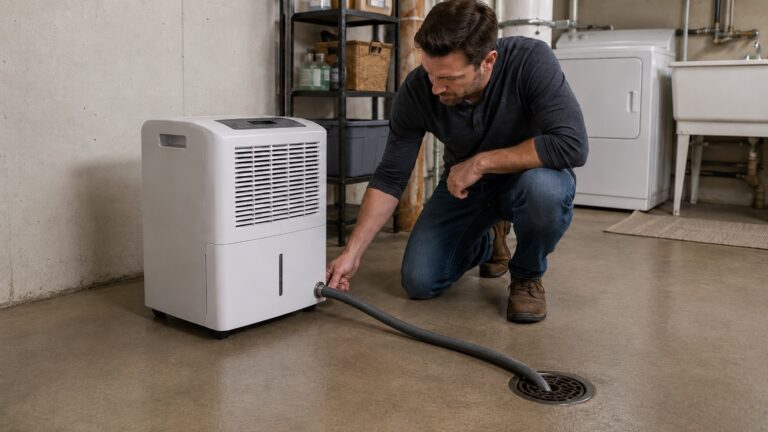
These tools are most useful when they answer specific questions. If you are considering next steps after testing, it may help to understand the separate roles of air purifiers and mold exposure risks and dehumidifiers and mold exposure risk.
FAQ
Can a mold test kit tell if mold is making me sick?
No. A mold test kit cannot diagnose symptoms or prove that mold is making someone sick. It can only provide information about the sample collected. Persistent or serious symptoms should be discussed with a qualified healthcare professional while the home is evaluated for moisture, mold, and indoor air quality problems.
What does a positive mold test kit mean?
A positive result means mold was detected in the sample. It does not automatically prove dangerous exposure, identify the full source, or show how much mold is present throughout the home. A positive result should be interpreted with moisture evidence, visible growth, odor patterns, and the location of the sample.
Can a negative mold test rule out mold?
No. A negative result only means mold was not detected in that specific sample. It can miss hidden mold, intermittent airborne particles, unsampled rooms, or sources inside walls, flooring, HVAC systems, attics, crawl spaces, or cabinets.
Are petri dish mold kits reliable?
Petri dish kits can show that mold spores landed in the dish and grew, but they are easy to overinterpret. Because mold spores are common, growth in a dish does not automatically prove a dangerous indoor source or measure exposure risk. Lab-analyzed samples and professional inspection are more useful when decisions matter.
Should I test if I can already see mold?
Usually, visible mold already tells you there is a problem to address. The priority is finding the moisture source, determining the affected material, and deciding whether cleaning, removal, or professional remediation is needed. Testing may help with documentation, but it is not always necessary before taking action.
Is professional mold testing better than a home kit?
Professional testing is usually better when the source is hidden, symptoms continue, the results will guide expensive repairs, or documentation matters. A home kit may provide a clue, but it does not provide the same inspection, sampling strategy, or interpretation.
Can a mold test kit find hidden mold?
Sometimes it may raise suspicion, but it cannot reliably rule hidden mold in or out. Hidden mold may not release particles during the sample window, or the sample may be taken in the wrong location. Persistent odor, water damage, or room-specific symptoms may require deeper inspection.
What to Remember Before You Trust a Mold Test Kit
- Mold test kits can detect mold in a sample, but they do not directly detect personal exposure risk.
- A positive result needs context and does not automatically mean the home is dangerous.
- A negative result does not rule out hidden mold or unsampled sources.
- Visible mold usually does not need a test before moisture correction and cleanup begin.
- Petri dish kits are easy to misinterpret because mold spores are common.
- Professional testing is better when hidden mold, symptoms, documentation, or expensive repairs are involved.
- Moisture investigation is usually more important than the test result alone.
Bottom Line: Use Mold Test Kits as Clues, Not Proof of Exposure
Mold test kits can be useful, but they do not directly detect exposure risk. They test a sample, not your body, your symptoms, your long-term exposure, or every hidden space in the home. A useful result depends on where the sample was taken, why it was taken, what moisture evidence exists, and what decision the result will guide.
If you already see mold or obvious water damage, the priority is source correction and cleanup. If you smell mold but cannot find it, a kit may provide one clue, but inspection is often more important. If symptoms, hidden sources, or major repair decisions are involved, professional testing may be the better path.
The most reliable approach is to use testing as part of a larger investigation: look for moisture, check visible surfaces, notice odor patterns, monitor humidity, and decide what question the test must answer. If a home kit is appropriate for your situation, compare mold test kits for homeowners before choosing one.