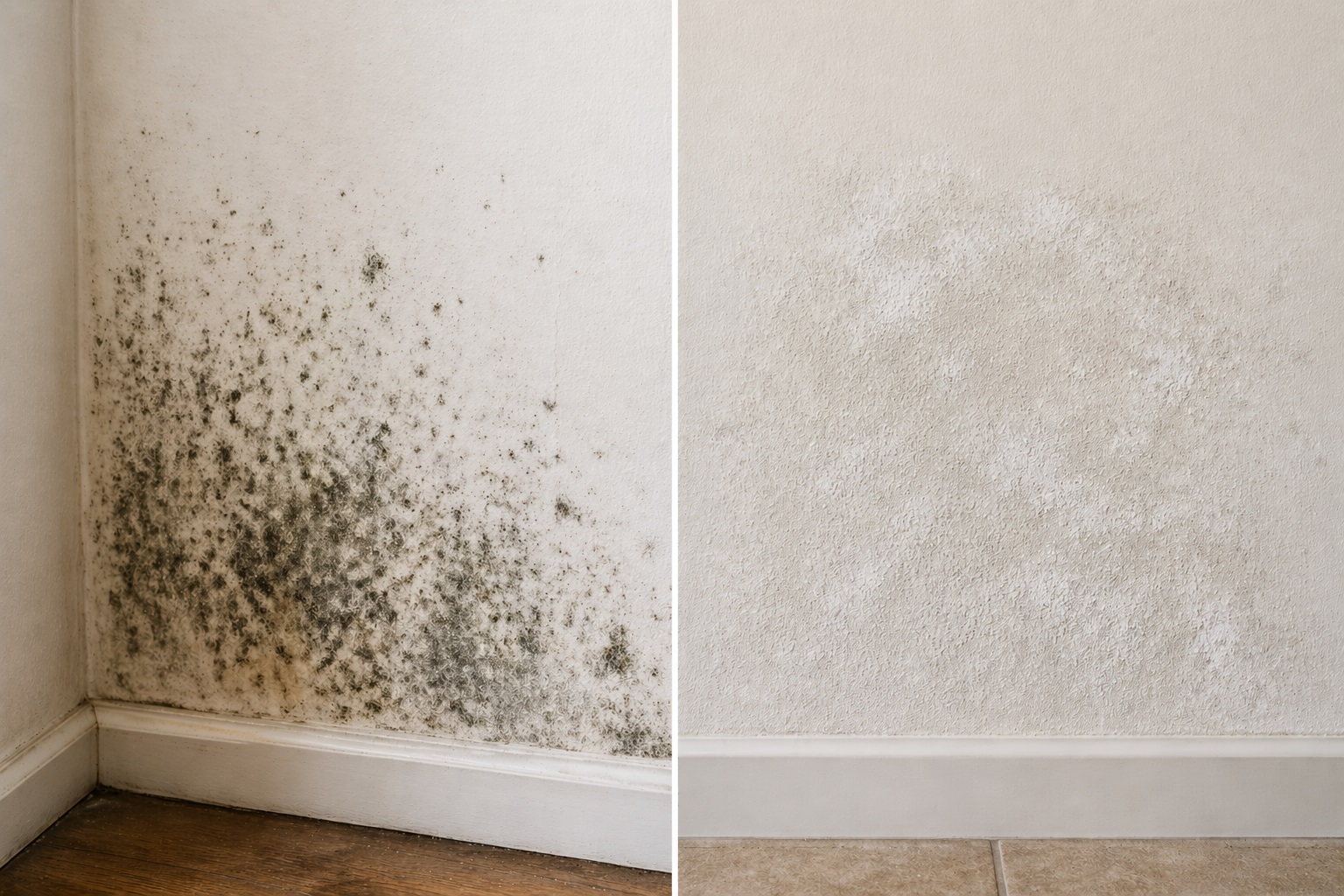
Mold vs Mildew on Walls: How to Tell the Difference and Identify Hidden Risks
Mold and mildew are often confused because both appear as wall discoloration in damp areas. In general, mildew is lighter, flatter, and more surface-level, while mold is often darker, patchier, mustier, and more likely to indicate hidden moisture or material damage.
The difference matters because mildew can often be handled as a surface moisture warning, while mold may require closer inspection, moisture-source correction, and safer cleanup. If growth is dark, fuzzy, spreading, returning after cleaning, or accompanied by a strong musty smell, treat it as a possible mold problem until proven otherwise.
For broader guidance on mold exposure, indoor air concerns, and hidden moisture risks, see Mold Exposure and Indoor Air Quality: Complete Home Guide.
Mildew usually signals surface moisture, while mold may point to deeper moisture, material damage, or indoor air quality concerns.
What Is Mold?
Mold is a type of fungus that grows in damp environments and spreads by releasing airborne spores. When mold develops on walls, it often penetrates beneath surface materials, making it more difficult to remove than surface-level growth.
Mold commonly appears in areas where moisture remains trapped, such as behind walls, under flooring, and inside poorly ventilated spaces.
Common Characteristics of Mold
- Typically appears black, green, brown, or dark gray
- Often forms irregular patches or clusters
- Can grow beneath paint or wallpaper
- Produces strong musty odors
- May spread rapidly in humid environments
If mold is suspected inside walls, early detection helps prevent widespread contamination. You can review structural warning signs in our guide on signs of mold behind walls.
What Is Mildew?
Mildew is a surface-level fungus that typically grows in areas with persistent moisture. Unlike mold, mildew usually remains on the surface of materials and does not penetrate deeply into structural layers.
Mildew commonly develops in bathrooms, kitchens, and other humid areas where moisture collects on wall surfaces.
Common Characteristics of Mildew
- Usually appears white, gray, or light yellow
- Forms thin, powdery patches
- Stays primarily on surface materials
- Produces mild odors compared to mold
- Often develops in high-humidity areas
Persistent humidity increases the risk of mildew formation. If mildew keeps returning, humidity testing can help confirm whether the room is staying damp enough to support repeated growth.
Key Differences Between Mold and Mildew
While mold and mildew share some similarities, several key differences help homeowners identify them accurately.
Mold vs Mildew Comparison Overview
| Feature | Mold | Mildew |
|---|---|---|
| Color | Black, green, brown | White, gray, yellow |
| Growth Pattern | Irregular patches | Flat surface spread |
| Depth | Penetrates surfaces | Surface-level growth |
| Odor | Strong musty smell | Mild damp odor |
| Removal Difficulty | Often difficult | Usually easier |
The most important clues are color, texture, depth, odor, and whether the growth returns after cleaning.
As a quick homeowner check, look at the growth without disturbing it: mildew is usually flat or powdery and wipes from the surface more easily, while mold is more likely to look fuzzy, slimy, stained into the material, or connected with a musty odor. Do not scrape or sand suspected mold, because disturbing it can release spores into the air.
Visual Differences Between Mold and Mildew on Walls
Visual appearance is often the first clue homeowners use to identify mold or mildew. While both can appear as discolored patches, their growth patterns and textures differ in noticeable ways.
Use visual clues as a first screen, not a final diagnosis, especially when growth appears under paint, behind wallpaper, or near a leak-prone area.
If visual clues are unclear and the wall also shows stains, bubbling paint, or recurring dampness, moisture testing may help confirm whether hidden moisture is present.
Visual Identification Guide
| Visual Feature | Mold | Mildew |
|---|---|---|
| Color Range | Dark colors such as black, green, or brown | Light colors such as white or gray |
| Texture | Fuzzy or slimy | Powdery or flat |
| Growth Pattern | Uneven patches with defined edges | Thin, spreading surface film |
| Surface Penetration | Often spreads beneath surfaces | Usually remains on the surface |
| Surface Damage | May stain or weaken materials | Rarely causes deep damage |
If growth appears beneath paint or wallpaper, it may indicate mold spreading behind the wall surface. You can confirm additional warning signs using our guide on signs of mold behind walls.
Health Risks: Mold vs Mildew
Both mold and mildew can affect indoor air quality, but mold typically presents greater concern because it is more likely to spread, penetrate porous materials, and release spores into the air.
Understanding the differences in health impact helps homeowners determine how urgently action should be taken.
Health Risk Comparison
| Health Concern | Mold | Mildew |
|---|---|---|
| Respiratory irritation | Common | Possible |
| Allergic reactions | Frequent | Occasional |
| Asthma symptoms | May worsen significantly | Usually mild |
| Indoor air quality concern | Higher concern | Lower to moderate concern |
| Long-term exposure risk | Higher | Lower |
If indoor air quality changes occur alongside visible growth, hidden moisture sources may be present. Compare symptoms using our guide on signs of hidden moisture in walls.
Growth Conditions: Why Mold and Mildew Develop
Both mold and mildew require moisture to grow, but their preferred conditions differ slightly. Understanding these conditions helps homeowners prevent future growth.
Environmental Conditions That Support Growth
| Condition | Mold | Mildew |
|---|---|---|
| Humidity Level | Above 60% | Above 55% |
| Moisture Exposure | Long-term moisture | Surface moisture |
| Ventilation | Poor ventilation encourages growth | Limited airflow encourages growth |
| Temperature | Warm indoor environments | Warm and humid environments |
| Surface Type | Organic materials | Smooth surfaces |
Controlling indoor humidity helps reduce both mold and mildew growth risks. Maintaining proper humidity levels remains one of the most effective prevention strategies.
Where Mold and Mildew Commonly Appear on Walls
Certain areas of the home are more vulnerable to moisture buildup. Identifying these high-risk locations allows homeowners to monitor problem areas more effectively.
Common Mold Locations
- Behind drywall in damp rooms
- Inside wall cavities with plumbing leaks
- Under wallpaper or paint
- Behind cabinets and fixtures
- Near roof or plumbing leak areas
Common Mildew Locations
- Bathroom walls and ceilings
- Shower enclosures
- Kitchen walls near sinks
- Laundry rooms
- High-humidity living spaces
If mold appears in concealed areas, structural moisture may be present. Growth under paint, wallpaper, trim, or nearby flooring should be treated as a hidden moisture warning rather than a simple surface stain.
Which Is More Dangerous on Walls: Mold or Mildew?
Mold is generally more concerning than mildew because it can penetrate porous building materials and release airborne spores. While mildew is often limited to surface-level growth, mold may spread deeper into drywall, wood, insulation, or wall cavities when moisture remains unresolved.
If the growth is confirmed as mold on drywall, proper cleanup becomes important. Follow safe remediation steps in our guide on how to remove mold from drywall.
Risk increases when growth spreads, returns after cleaning, produces a strong odor, or appears on damaged drywall, wood, insulation, or other porous materials.
Risk Comparison: Mold vs Mildew
| Risk Factor | Mold | Mildew |
|---|---|---|
| Structural damage potential | High | Low |
| Spread rate | Rapid | Slower |
| Removal difficulty | Often complex | Usually easier |
| Air quality impact | Significant | Moderate |
| Long-term risk | Higher | Lower |
If growth spreads quickly or appears beneath surfaces, mold is the more likely cause and should be evaluated promptly.
Can Mildew Turn Into Mold?
Mildew does not transform into mold, but the conditions that allow mildew to grow can also support mold development. Persistent moisture allows both types of fungus to thrive.
If mildew appears repeatedly in the same location, hidden moisture problems may be present inside walls or structural materials.
Signs That Mildew Conditions May Lead to Mold
- Mildew reappears after cleaning
- Dark spots begin forming near mildew areas
- Musty odors become stronger over time
- Surface discoloration spreads beneath paint
- Humidity levels remain consistently high
Recurring mildew often indicates ongoing moisture problems. Investigating moisture sources early helps prevent more serious damage.
When Mildew Should Be Treated Like Mold
Although mildew is usually less harmful than mold, certain situations require treating mildew with the same level of concern.
These scenarios often involve persistent moisture or structural exposure.
Situations That Require Extra Caution
- Mildew covers large wall areas
- Growth spreads beyond surface layers
- Musty odors remain after cleaning
- Mildew appears repeatedly in the same location
- Moisture damage exists behind walls
If mildew persists despite cleaning, deeper moisture problems may exist inside structural materials. Stop cleaning and inspect for leaks, soft drywall, peeling paint, swollen trim, or a strong musty odor before repainting or covering the area.
How to Reduce the Chance of Mold or Mildew Returning
Preventing mold and mildew begins with controlling moisture and improving ventilation. Even after removal, recurring moisture can lead to repeated growth.
Prevention Strategies
- Maintain indoor humidity between 30% and 50%
- Use exhaust fans in bathrooms and kitchens
- Repair leaks immediately
- Increase airflow in enclosed areas
- Inspect high-moisture areas regularly
Humidity control remains one of the most effective ways to prevent recurring growth. For detailed humidity control strategies, explore our guide on best dehumidifier settings to prevent mold.
Frequently Asked Questions About Mold vs Mildew on Walls
What is the main difference between mold and mildew?
Mold penetrates surfaces and spreads more aggressively, while mildew typically remains on the surface and is easier to remove.
Is mildew harmful to health?
Mildew can cause mild respiratory irritation in some individuals, but mold generally poses greater health risks due to its ability to release airborne spores.
Which grows faster, mold or mildew?
Mold usually spreads faster than mildew, especially in environments with high humidity and poor ventilation.
Can mildew indicate hidden mold?
Yes. Persistent mildew does not turn into mold, but it can signal damp conditions that also allow hidden mold to develop inside walls or structural materials.
Should mildew always be removed immediately?
Yes. Removing mildew quickly helps limit surface growth and gives you a chance to correct the moisture conditions before more serious fungal growth develops.
Final Thoughts: Identifying Mold vs Mildew on Walls
The safest response is to treat mildew as a moisture warning and treat suspected mold as a deeper risk until the source is understood.
If the growth is confirmed mold on drywall, use safe cleanup guidance from how to remove mold from drywall.
Mold typically presents greater structural and health risks, while mildew often signals surface-level moisture problems. Identifying the growth early, correcting moisture sources, and keeping humidity under control reduces the chance of repeated wall growth.
For more guidance on mold exposure, indoor air concerns, and when testing may be needed, visit Mold Exposure and Indoor Air Quality: Complete Home Guide.