
Signs of Mold Inside Ceiling Cavities (How to Detect Hidden Ceiling Mold)
Mold inside ceiling cavities is difficult to detect because it grows above drywall or plaster before visible mold appears. The most common warning signs are musty odors from above, stains that return or spread, bubbling ceiling paint, dark speckled spots, damp insulation, fixture corrosion, and soft or sagging ceiling areas.
Ceiling cavity mold usually starts after a roof leak, plumbing leak, attic condensation, bathroom humidity, or HVAC moisture problem. If several symptoms appear together, especially after rain or periods of high humidity, the ceiling cavity should be inspected before the area is painted, patched, or sealed.
This guide explains the most reliable signs of mold inside ceiling cavities, how to recognize early warning patterns, and when ceiling symptoms indicate a deeper moisture problem.
How Mold Forms Inside Ceiling Cavities
Ceiling cavity mold grows when moisture stays trapped above drywall or plaster long enough for mold to colonize wood framing, drywall backing paper, insulation dust, or other organic material. Because airflow is limited inside the cavity, damp materials may stay wet even when the visible ceiling surface looks dry.
Moisture Sources That Lead to Ceiling Mold
Several types of moisture intrusion commonly affect ceiling cavities. In many homes, these sources begin as small problems that worsen gradually.
- Roof leaks — Even small leaks allow water to drip slowly into insulation and ceiling materials.
- Attic condensation — Poor attic ventilation traps humidity that condenses on cooler surfaces.
- Bathroom humidity — Steam from showers rises into ceiling spaces when ventilation fans are inadequate.
- HVAC condensation — Cooling systems sometimes produce moisture that collects around ducts.
- Plumbing leaks above ceilings — Pipes running through upper floors can leak slowly into cavities.
- Ice dams (in colder climates) — Melted snow can seep under roofing materials and enter ceiling spaces.
These moisture sources often go unnoticed at first. Without obvious dripping water, homeowners may not realize that moisture is accumulating above the ceiling.
Why Ceiling Cavities Are High-Risk Areas for Mold Growth
Ceiling cavities create ideal conditions for mold because they combine three important factors: moisture, organic material, and limited airflow.
Common materials inside ceilings that support mold growth include:
- Wooden joists
- Drywall backing paper
- Dust accumulation
- Fiberglass insulation binders
- Ceiling panel materials
When moisture enters the cavity, these materials absorb and hold water. In many cases, mold growth can begin within 24 to 48 hours after moisture exposure.
If moisture spreads downward from a ceiling cavity, it may eventually affect nearby wall cavities. When wall symptoms appear below the ceiling line, compare them with signs of mold behind walls while keeping this inspection focused on the ceiling source.
How Mold Spreads Inside Ceiling Spaces
Once mold begins growing inside a ceiling cavity, it can spread along wood framing, insulation, ceiling seams, and nearby openings.
Typical spread patterns include:
- Lateral spread along joists — Mold travels horizontally across wood framing.
- Downward migration — Spores fall into lower living areas.
- Insulation contamination — Mold spreads through damp insulation materials.
- Airborne distribution — Spores circulate through HVAC systems.
Because mold spreads silently inside ceiling cavities, visible symptoms often appear only after significant growth has occurred. That is why recognizing subtle early warning signs is essential.
Early Signs of Mold Inside Ceiling Cavities
Hidden ceiling mold usually produces warning signs before major structural damage appears. These signs are easy to miss when they appear one at a time, but several symptoms together often point to moisture buildup or mold activity above the ceiling.
Persistent Musty Odors Coming From Above
One of the earliest indicators of mold inside a ceiling cavity is a musty or earthy odor that seems to come from above. This smell often develops before any visible stains or surface damage appear.
Mold releases microscopic spores and gases called microbial volatile organic compounds (MVOCs). These compounds create the familiar musty odor associated with mold growth.
Common odor characteristics include:
- A damp, earthy smell
- Odors that intensify during humid weather
- Smells strongest near ceiling areas
- Odors returning after cleaning
- Persistent smells despite no visible mold
If odors appear in upper areas of the home — especially after leaks or heavy humidity — mold inside the ceiling cavity may be developing.
A single sign does not always prove hidden mold, but a pattern of odor, staining, moisture, and material changes deserves closer inspection.
Odors That Change With Weather Conditions
Another early warning sign is odor intensity that changes with weather conditions. Mold odors often become stronger during:
- Rainstorms
- Humid days
- After snowmelt (in colder climates)
- Periods of high indoor humidity
This pattern occurs because moisture entering the ceiling cavity activates mold growth and increases odor production.
If your home experiences frequent humidity problems, monitoring indoor moisture levels becomes critical. Recognizing broader humidity symptoms — such as those described in signs of high humidity in a house — can help identify conditions that support ceiling mold growth.
Visible Warning Signs on Ceiling Surfaces
Although ceiling cavity mold begins out of sight, the ceiling surface often reveals clues as moisture accumulates above drywall or plaster. Small stains, paint changes, speckled spots, and soft areas can all point to hidden moisture behind the visible layer.
If drywall damage is suspected, homeowners may also benefit from reviewing how to tell if drywall has water damage to better understand warning signs of internal deterioration.
Water Stains That Slowly Grow or Change Color
Water stains are one of the most common warning signs of mold growth inside ceiling cavities. These stains usually begin as small, faint discolorations but expand gradually as moisture spreads.
Typical ceiling stain characteristics include:
- Yellow, brown, or rust-colored rings
- Irregular stain shapes
- Darkening over time
- Stains appearing after rainstorms
- New stains forming near existing ones
Stains that grow larger or appear repeatedly in the same location often indicate ongoing moisture exposure. Over time, these damp areas create ideal conditions for mold growth inside the ceiling cavity.
If ceiling stains develop after a known leak, it is important to understand how quickly mold can form. In many cases, growth timelines match those described in how long mold takes to grow after water damage.
Bubbling, Peeling, or Cracking Ceiling Paint
Paint damage is another strong visual indicator of moisture problems inside ceiling cavities. As moisture builds above the ceiling surface, it pushes against paint layers and weakens adhesion.
Common paint-related warning signs include:
- Paint bubbling or blistering
- Peeling paint patches
- Fine cracks forming in painted surfaces
- Paint separating from drywall
- Soft spots beneath painted areas
These symptoms often appear before visible mold emerges. Bubbling paint suggests trapped moisture beneath the surface — one of the earliest stages of hidden ceiling mold development.
Dark Spots or Speckled Patterns
In some cases, mold growth inside ceiling cavities eventually becomes visible through small dark spots on the ceiling surface. These spots may appear as isolated dots or clustered speckled patterns.
Warning characteristics include:
- Black, gray, or green specks
- Spots forming along seams or corners
- Patterns spreading gradually outward
- Clusters appearing near vents or fixtures
- Recurring spots after cleaning
While these spots may indicate surface mold, they often originate from hidden growth above the ceiling layer. If multiple dark spots appear in combination with odors or moisture stains, deeper mold growth is likely.
Sagging or Warped Ceiling Sections
Structural changes in ceiling shape often indicate prolonged moisture exposure. When ceiling materials absorb water, they become heavy and lose structural strength.
Common structural warning signs include:
- Sagging ceiling panels
- Uneven ceiling surfaces
- Visible dips or bulges
- Soft areas when lightly pressed
- Cracks forming around sagging areas
Sagging ceilings should always be treated as a serious warning sign. Moisture buildup inside ceiling cavities weakens drywall and may lead to collapse if ignored.
Hidden Structural Signs Above Ceilings
Not all ceiling mold symptoms are visible from below. In many cases, structural clues develop inside the ceiling cavity itself before surface changes become noticeable. These hidden signs often require closer inspection or awareness of subtle structural changes.
Homeowners with attic access may notice early signs of ceiling mold from above. However, even without attic access, structural warning signals often reveal developing moisture problems.
Damp or Compressed Insulation
Insulation inside ceiling cavities is highly sensitive to moisture. When water enters the cavity, insulation materials absorb moisture quickly and lose their effectiveness.
Signs of moisture-damaged insulation include:
- Insulation that feels damp to the touch
- Flattened or compressed insulation layers
- Discolored insulation fibers
- Musty odors coming from attic spaces
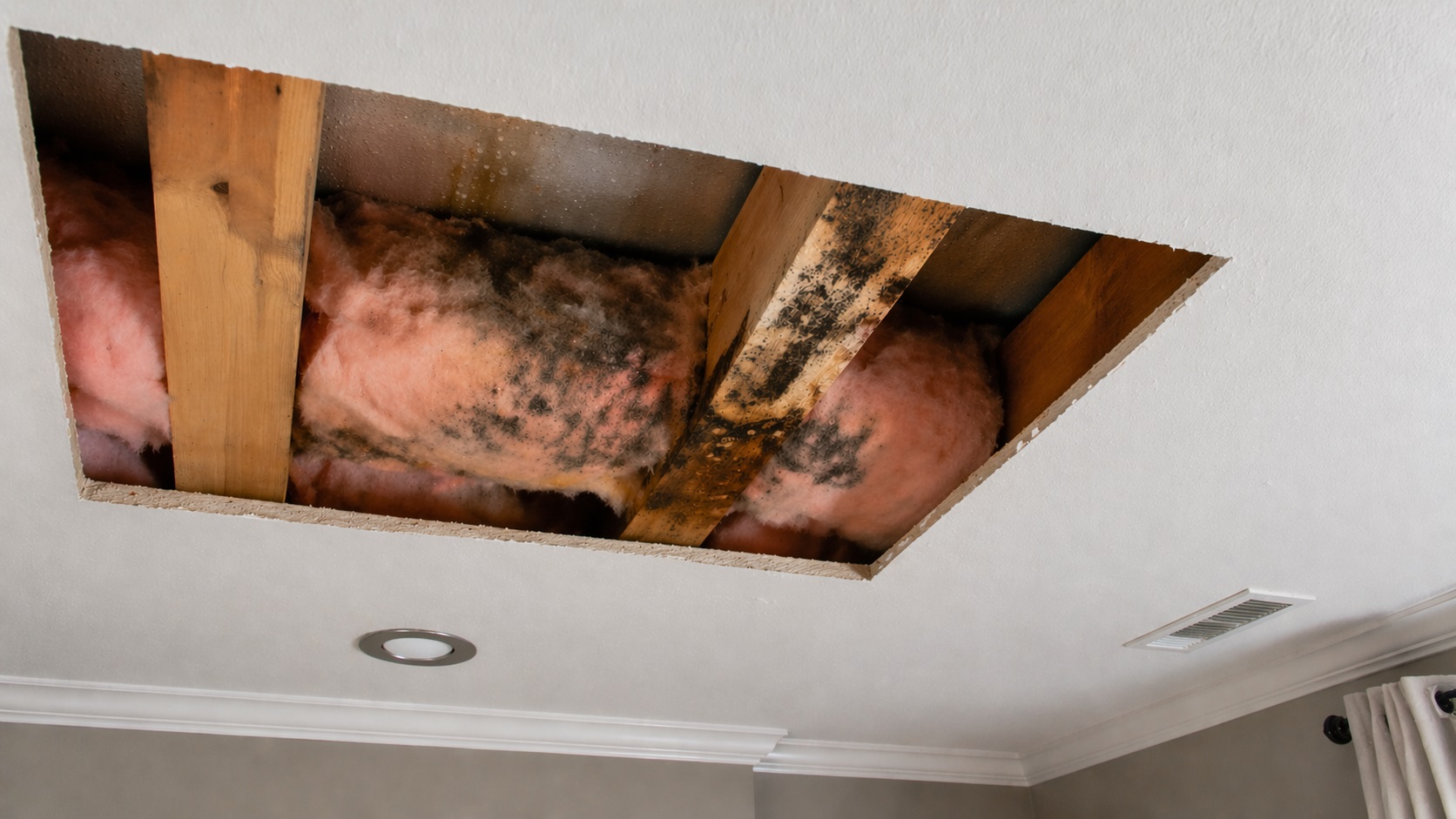
- Visible mold growth on insulation surfaces
Damp insulation should never be ignored. If insulation looks compressed, discolored, matted, or wet, avoid disturbing it unnecessarily because contaminated insulation can release spores and dust. The moisture source should be corrected before insulation is replaced.
When insulation becomes damp, proper drying techniques are essential. Guidance provided in how to dry insulation after water damage explains safe recovery methods for moisture-contaminated insulation.
Wood Framing Discoloration or Staining
Wooden joists and structural framing inside ceilings often show early signs of mold growth. These changes typically appear as discoloration or staining along wood surfaces.
Common wood-related warning signs include:
- Dark streaks along wood framing
- Gray or black staining patterns
- Soft or weakened wood surfaces
- Visible mold growth on wood fibers
- Musty odors near wood framing areas
Wood framing provides an organic surface that supports mold growth when moisture is present. Once mold colonizes structural wood, it spreads quickly along joists and beams.
Once wood framing or insulation shows mold-related staining, the moisture source should be corrected before cosmetic ceiling repairs begin.
Rusting or Corrosion on Ceiling Fixtures
Metal components inside ceiling cavities — such as fasteners, nails, and brackets — may show corrosion when moisture remains present over time.
Warning signs include:
- Rust forming on nails or screws
- Corrosion on metal brackets
- Staining around recessed lighting fixtures
- Rust marks bleeding through ceiling surfaces
- Metal discoloration near ceiling openings
Rust is not mold itself, but it indicates persistent moisture conditions that strongly support mold development.
Dust or Debris Around Ceiling Openings
Dust, debris, or dark residue around ceiling vents, fixtures, or seams can sometimes indicate airflow movement from a contaminated ceiling space. This sign is weaker than odor, staining, sagging, or damp insulation, but it becomes more concerning when it appears with other moisture symptoms.
Moisture Clues That May Point to Hidden Ceiling Mold
Moisture indicators are not proof of mold, but they show conditions that can support hidden ceiling cavity growth. When ceiling materials stay damp, mold risk rises quickly.
Understanding safe moisture thresholds is important when diagnosing hidden damage. Reference ranges such as those outlined in moisture levels that indicate water damage can help identify when ceiling materials are at risk.
Repeated Ceiling Leaks or Dripping Sounds
Frequent leaks or unexplained dripping sounds strongly suggest moisture buildup inside ceiling cavities. Even minor leaks can create long-term mold risks when moisture remains trapped.
Common warning signs include:
- Water dripping sounds after rainstorms
- Occasional ceiling leaks that stop on their own
- Leaks appearing near lighting fixtures
- Moisture dripping from ceiling edges
- Recurring water spots in the same location
Leaks that appear sporadically are particularly dangerous because they often go unnoticed for extended periods. Over time, small leaks can create large mold colonies inside ceiling cavities.
Soft or Spongy Ceiling Surfaces
Ceiling surfaces that feel soft or spongy often indicate internal moisture damage. This condition occurs when drywall absorbs water and begins breaking down internally.
Signs of soft ceiling materials include:
- Ceiling areas that compress slightly when touched
- Localized softness around stains
- Flaking drywall surfaces
- Weak spots near ceiling seams
- Small indentations forming over time
Soft ceiling materials should never be ignored. Continued moisture exposure weakens structural integrity and increases the risk of ceiling collapse.
Condensation Around Ceiling Fixtures
Condensation forming around ceiling-mounted fixtures — such as lights, fans, or vents — often indicates excessive humidity inside ceiling spaces.
Common condensation-related warning signs include:
- Water droplets forming on ceiling fixtures
- Moisture collecting around vents
- Dampness around recessed lighting
- Water streaks near ceiling fans
- Visible moisture around attic access panels
Condensation problems frequently occur in homes with poor ventilation or high humidity levels. Over time, condensation creates persistent damp conditions that support mold growth.
Moisture Near HVAC Vents or Ceiling Registers
Air conditioning systems can produce condensation that accumulates around ceiling ducts and vents. If moisture is not properly managed, mold growth can develop inside surrounding ceiling cavities.
Warning signs include:
- Dampness near ceiling vents
- Discoloration around duct openings
- Rust stains around vent covers
- Cold air drafts accompanied by moisture
- Musty odors near ceiling registers
These symptoms often signal airflow or humidity issues that contribute to mold growth. Addressing ventilation problems early reduces the likelihood of ceiling mold development.
Risk Situations That Commonly Lead to Ceiling Mold
Certain household conditions increase the likelihood of mold forming inside ceiling cavities. Recognizing these risk scenarios helps homeowners watch for early warning signs after leaks, humidity spikes, or ventilation problems.
In many cases, mold growth begins shortly after moisture events that may appear minor at first.
Recent Roof Leaks or Storm Damage
Roof leaks are one of the most common causes of mold growth inside ceiling cavities. Even temporary leaks can introduce enough moisture to support mold development.
High-risk conditions include:
- Damaged roofing materials
- Missing shingles
- Clogged gutters causing water backup
- Storm-related roof damage
- Ice dam formation (in colder regions)
After roof leaks occur, mold growth can begin quickly if materials remain damp. Understanding mold development timelines — such as those explained in how long mold takes to grow after water damage — helps homeowners recognize how quickly problems escalate.
Poor Attic Ventilation
Attics rely on proper ventilation to remove excess moisture. Without sufficient airflow, humidity accumulates and condenses on cooler surfaces inside ceiling cavities.
Common ventilation-related risk factors include:
- Blocked attic vents
- Insufficient ridge ventilation
- Poor airflow pathways
- Trapped attic humidity
- Improper insulation installation
Over time, poor ventilation allows moisture to accumulate unnoticed, creating ideal conditions for hidden mold growth.
High Indoor Humidity Levels
Homes with consistently high humidity face increased risk of ceiling mold growth. Moist air naturally rises, making ceiling cavities particularly vulnerable to moisture buildup.
High humidity often results from:
- Inadequate ventilation in bathrooms
- Frequent cooking without exhaust fans
- Large indoor plants
- Unvented dryers
- Humid climate conditions
In homes where humidity remains elevated, widespread moisture symptoms may appear throughout the house. Recognizing whole-home humidity indicators — such as those outlined in signs of high humidity in a house — helps identify long-term moisture risks.
When Ceiling Mold Becomes Dangerous
Mold inside ceiling cavities becomes more serious when moisture affects structural materials, insulation, or electrical openings. Expanding stains, soft ceiling areas, sagging, and recurring odors should be treated as warning signs of an active problem.
Large or Expanding Ceiling Stains
Stains that grow rapidly or continue spreading after moisture exposure should always be treated as warning signs of active moisture problems.
Danger indicators include:
- Stains expanding noticeably over days or weeks
- Multiple stains forming in different areas
- Dark stains appearing suddenly
- Recurring stains after cleaning or repainting
- Stains accompanied by musty odors
Expanding stains typically indicate ongoing moisture intrusion — one of the most important conditions supporting mold growth.
Ceiling Materials That Feel Weak or Unstable
Structural weakness inside ceiling materials should never be ignored. Moisture weakens drywall and wood components over time, increasing the risk of collapse.
Serious warning signs include:
- Ceiling areas that bend when lightly pressed
- Cracking sounds from ceiling sections
- Large sagging areas forming
- Bulging sections filled with trapped water
- Ceiling materials separating from framing
Weak ceiling materials may indicate advanced water damage. Do not press hard on sagging, crumbling, or wet ceiling areas, and keep people away from the area if the ceiling appears unstable. In these situations, mold growth may be accompanied by structural deterioration.
Health Symptoms Linked to Indoor Mold Exposure
Mold inside ceiling cavities can affect indoor air quality long before visible damage occurs. As mold releases spores into the air, occupants may begin experiencing respiratory symptoms.
Common exposure-related symptoms include:
- Persistent coughing or sneezing
- Eye irritation
- Runny nose or congestion
- Headaches in specific rooms
- Worsening allergy symptoms indoors
When to Investigate Your Ceiling Further
Not every ceiling stain or odor means mold is present. However, certain combinations of warning signs strongly suggest the need for further investigation.
Taking action early helps reduce repair costs and limits mold spread to other parts of the home.
Situations That Require Immediate Inspection
Homeowners should investigate ceiling cavities promptly if they notice:
- Multiple warning signs appearing together
- Persistent musty odors without visible source
- Recurring leaks or stains
- Sagging ceiling surfaces, especially if the area feels soft or continues to grow
- Odors worsening during humid conditions
- Water stains forming after storms
- Water, stains, or odors around recessed lights, fans, vents, or other ceiling openings
Early inspection prevents hidden mold from spreading into other structural areas. In many homes, ceiling mold can eventually affect wall cavities, leading to symptoms similar to those described in signs of mold behind walls.
When Professional Assessment Is Recommended
Professional inspection may be necessary when warning signs indicate widespread moisture or structural concerns.
Situations that typically require professional help include:
- Large or expanding ceiling damage
- Repeated mold-related odors
- Unidentified moisture sources
- Structural ceiling sagging
- Previous water damage that was not fully dried
In situations where ceilings cannot be opened immediately, homeowners may benefit from using non-invasive detection methods such as those explained in how to detect moisture without opening walls.
Professional inspections may involve moisture detection tools, thermal imaging, or limited ceiling access to confirm the presence of mold.
For broader cleanup and prevention guidance after hidden mold is confirmed, review How to Remove Mold Permanently, the parent mold removal guide for this article.
Frequently Asked Questions About Mold Inside Ceiling Cavities
Can mold grow above drywall ceilings?
Yes, mold commonly grows above drywall ceilings when moisture enters the ceiling cavity. Materials such as insulation, wood framing, and drywall backing provide organic surfaces that support mold growth when damp.
What does mold in a ceiling cavity smell like?
Mold inside ceiling cavities usually produces a musty or earthy odor. The smell often becomes stronger during humid weather or after rainfall when moisture activates mold growth.
Can ceiling mold spread to walls?
Yes, mold inside ceiling cavities can spread downward into walls if moisture conditions persist. This process may eventually create symptoms similar to those described in signs of mold behind walls.
Is ceiling mold dangerous?
Ceiling mold can become dangerous if it spreads widely or weakens structural materials. In addition to structural risks, airborne mold spores can affect indoor air quality and trigger respiratory symptoms.
Should I open my ceiling to check for mold?
Opening a ceiling without proper preparation may spread mold spores, expose contaminated insulation, or disturb damaged materials. If the ceiling is sagging, wet, or near electrical fixtures, professional assessment is safer.
How quickly can mold grow inside ceiling cavities?
Mold can begin growing within 24 to 48 hours after moisture exposure. Growth continues as long as moisture remains trapped inside the ceiling cavity.
What to Do If You Suspect Mold Inside a Ceiling Cavity
If you notice a musty ceiling odor, spreading stains, bubbling paint, damp insulation, fixture corrosion, or soft ceiling areas, treat the ceiling cavity as a possible hidden moisture zone. Do not paint over stains or seal damaged areas until the moisture source has been found and corrected.
After a recent leak, safe drying may reduce the risk of mold spreading. For drying-focused guidance, see how to dry ceilings after water damage. If the ceiling is sagging, materials feel weak, stains keep spreading, odors keep returning, or mold may be inside insulation or framing, professional inspection is the safer next step.

2 Comments
Comments are closed.