How to Tell If Drywall Has Water Damage: Complete Diagnosis Guide for Homeowners
Drywall may have water damage if you see staining, bubbling paint, soft spots, swelling, sagging, crumbling edges, musty odors, or moisture meter readings that are higher than nearby dry areas. The most reliable diagnosis comes from comparing visible symptoms, touch tests, moisture readings, and the pattern of the damage.
Drywall absorbs moisture quickly through its paper facing and gypsum core, so even a small leak can spread beyond the visible stain. Checking the area early helps you decide whether the wall only needs drying and monitoring or whether the damaged section may need repair or replacement.
This article is part of our guide to finding hidden moisture in different areas of your home, where homeowners can compare drywall symptoms with other wall, floor, ceiling, bathroom, and attic moisture warning signs.
Why Drywall Is Vulnerable to Water Damage
Drywall consists of a gypsum core covered by paper facing. While gypsum helps provide a firm wall surface and fire resistance, the paper facing is highly absorbent and can hold moisture long enough for staining, softening, and mold risk to develop.
When drywall becomes wet, moisture can spread through the gypsum core and paper facing. This weakens the wall surface, damages joints and seams, and creates conditions suitable for mold growth if the area stays damp.
How Moisture Spreads Inside Drywall
- Water enters through leaks or surface exposure
- Moisture spreads through porous gypsum
- Paper facing retains moisture
- Hidden moisture accumulates inside walls
- Damage expands beyond visible areas
Because moisture spreads internally, visible damage often represents only a portion of the affected area.
Where to Check First
- Below bathrooms, kitchens, laundry rooms, and plumbing fixtures
- Around windows, exterior walls, roof leak paths, and ceiling-wall corners
- Near baseboards, drywall seams, outlets, and areas with bubbling paint
- Above and below the visible stain, because water often travels before showing on the surface
Early Signs That Drywall May Have Water Damage
Start with subtle surface changes, especially near plumbing, ceilings, windows, baseboards, and previously repaired areas.
Subtle Warning Signs to Watch For
| Sign | What It May Indicate |
|---|---|
| Faint discoloration on walls | Minor moisture intrusion |
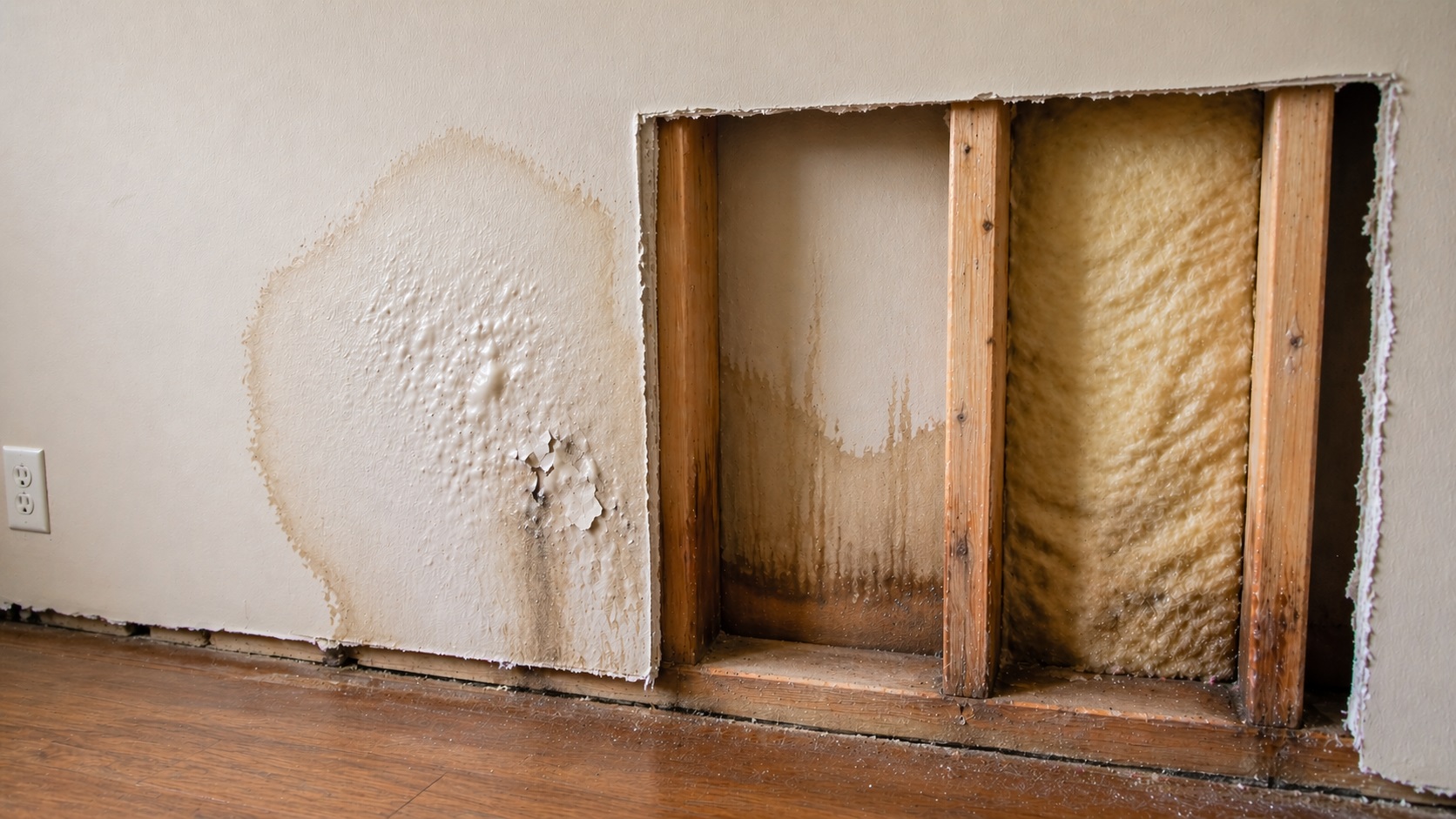
| Peeling or bubbling paint | Water trapped beneath surface |
| Small soft spots | Localized moisture damage |
| Slight warping of wall surface | Water absorption beginning |
| Musty odors near walls | Possible hidden moisture |
These early warning signs often appear before major structural damage occurs. For broader wall moisture symptoms, review our guide on signs of hidden moisture in walls.
Moderate Signs of Drywall Water Damage
As moisture exposure continues, drywall damage becomes more noticeable. Moderate signs typically indicate ongoing moisture intrusion that requires further investigation.
Moderate Warning Signs
- Soft drywall when pressed
- Visible water stains spreading across surfaces
- Cracks forming along drywall seams
- Paint separating from wall surfaces
- Swollen drywall joints
- Warped or uneven wall surfaces
If moderate signs appear, testing moisture levels becomes important to confirm damage severity. Follow measurement guidance in our article on moisture levels that indicate water damage.
Severe Signs of Drywall Water Damage
Severe drywall damage usually indicates prolonged moisture exposure or significant water intrusion. At this stage, structural materials inside the wall may already be affected, and immediate action becomes necessary to prevent further deterioration.
Severe Drywall Damage Indicators
| Sign | What It Typically Means | Recommended Action |
|---|---|---|
| Bulging or sagging drywall | Water trapped inside wall cavity | Investigate immediately |
| Large spreading stains | Active or recurring water leak | Locate water source |
| Drywall crumbling when touched | Structural failure of material | Replace damaged sections |
| Strong musty odor | Possible mold contamination | Inspect for mold presence |
| Visible mold growth | Long-term moisture exposure | Begin mold remediation steps |
If drywall shows signs of structural failure, repair or replacement may be required. This diagnosis guide stops at identifying the damage; for repair steps, use our guide on how to fix water-damaged drywall.
How to Physically Test Drywall for Water Damage
Physical inspection helps confirm whether a stain is only surface discoloration or whether moisture has softened the drywall behind the paint.
Manual Drywall Testing Methods
- Press gently with your fingertips, not a tool, so you do not puncture weakened drywall.
- Compare the suspected area with a nearby dry section of the same wall.
- Check for softness, sponginess, crumbling paper, or a surface that flexes under light pressure.
- Inspect seams, joints, corners, baseboards, and the area below the visible stain.
- Stop pressing if the drywall feels unstable, sags, breaks apart, or shows signs of electrical or structural risk.
Drywall that feels soft or flexible may have absorbed moisture beyond safe levels.
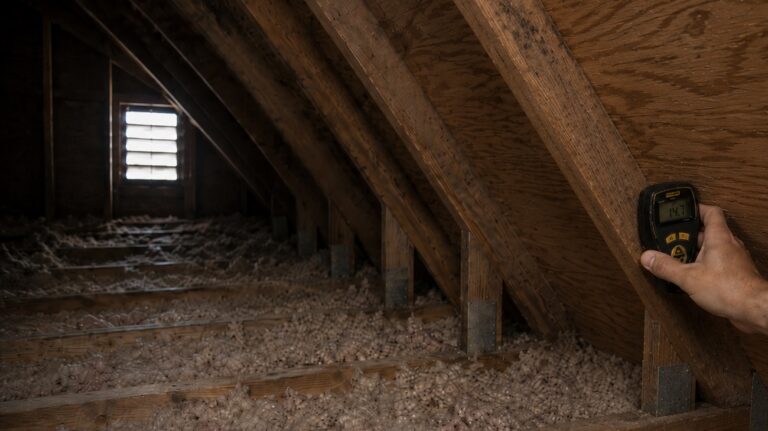
How to Use a Moisture Meter to Test Drywall
Moisture meters help confirm whether a suspicious area is actually wetter than nearby drywall. They are especially useful when stains, odors, or soft spots suggest hidden moisture yet the surface no longer feels wet.
For equipment recommendations and comparison guidance, review our guide to best moisture meters for detecting hidden water damage.
Steps for Moisture Meter Testing
- Select a known dry area as a reference
- Test the suspected damp area
- Compare readings between locations
- Check multiple spots across the wall
- Record readings to monitor progress
Moisture meter readings vary by meter type, wall material, calibration, and whether the tool uses a percentage scale or relative scale. Use the numbers below as general guidance, but always compare the suspected area with a known dry area on the same wall.
Typical Drywall Moisture Readings
| Moisture Level | Condition | Recommended Action |
|---|---|---|
| Below 1–2% | Dry | Normal condition |
| 2–5% | Elevated | Monitor closely |
| Above 5% | High | Investigate moisture source |
| Above 10% | Severe | Likely structural damage |
If readings remain elevated after drying or are much higher than the surrounding wall, look for an active moisture source before sealing, repainting, or repairing the drywall.
How Severe Is the Drywall Water Damage?
Not all drywall water damage requires the same response. Understanding severity levels helps determine whether drying, repair, or replacement is necessary.
Drywall Damage Severity Classification
| Severity Level | Symptoms | Typical Response |
|---|---|---|
| Minor | Light stains, slight discoloration | Dry and monitor |
| Moderate | Soft spots, visible swelling | Repair damaged areas |
| Severe | Bulging, crumbling drywall | Replace affected sections |
| Critical | Mold growth or structural failure | Professional remediation |
Use this table as a first-pass diagnosis, then confirm suspicious areas with touch testing, moisture readings, and source inspection before covering or repainting the wall.
How to Confirm Hidden Drywall Moisture
Visible symptoms alone do not always confirm the full extent of drywall damage. Moisture often spreads inside walls beyond the areas that appear wet or stained. Confirming hidden drywall moisture helps ensure that damage is properly addressed.
The strongest confirmation usually comes from a pattern: a visible symptom, a soft or swollen area, and moisture readings that are higher than nearby dry drywall.
Steps to Confirm Hidden Drywall Moisture
- Identify visible signs such as stains or discoloration
- Use a moisture meter to scan surrounding areas
- Compare readings across multiple wall sections
- Check areas above and below visible damage
- Look for moisture patterns that follow gravity
If elevated readings extend beyond visible damage, additional structural inspection may be necessary. Hidden moisture sources often originate from plumbing leaks, roof failures, or condensation buildup. Follow structured leak detection guidance in our article on how to find hidden water leaks inside walls.
What to Do After Identifying Water-Damaged Drywall
Once drywall damage is confirmed, determining the appropriate next step depends on the severity of moisture exposure. Acting quickly helps prevent further structural deterioration and mold growth.
Next Steps Based on Severity
| Severity Level | Recommended Action |
|---|---|
| Minor damage | Dry affected areas and monitor moisture levels |
| Moderate damage | Repair affected drywall sections |
| Severe damage | Replace compromised materials |
| Critical damage | Consult professional restoration services |
If drywall repairs are required, move to the repair-specific guide on how to fix water-damaged drywall instead of expanding this diagnosis article into a repair tutorial.
Common Mistakes When Diagnosing Drywall Water Damage
Misdiagnosing drywall damage can lead to incomplete repairs or unnecessary material removal. Avoiding common mistakes improves accuracy and reduces long-term risks.
Drywall Diagnosis Mistakes to Avoid
| Mistake | Why It Causes Problems |
|---|---|
| Ignoring minor stains | Small stains often signal larger hidden problems |
| Assuming drywall is dry after surface drying | Moisture can remain trapped internally |
| Testing only one location | Moisture spreads beyond visible areas |
| Overlooking recurring moisture patterns | Repeated exposure indicates unresolved leaks |
| Skipping moisture measurements | Visual inspection alone may be misleading |
The safest approach is to compare symptoms, readings, and moisture patterns before assuming the visible stain shows the full damaged area.
When to Call a Professional for Drywall Water Damage
Some drywall damage situations require professional evaluation. Large-scale moisture problems or structural risks may exceed the capabilities of standard homeowner tools.
Situations That Require Professional Assistance
- Large sections of drywall are affected
- Moisture readings remain elevated after drying
- Visible mold growth appears
- Structural weakening is suspected
- Damage spreads into multiple rooms
- Water exposure lasted longer than 48 hours
- The water may involve sewage, flooding, contaminated water, or electrical hazards
If mold is discovered, follow the structured cleanup guidance in our mold removal guide before disturbing contaminated materials.
Professionals use specialized equipment to detect deep moisture, confirm whether wall cavities are affected, and determine whether drying, removal, or structural evaluation is needed.
Frequently Asked Questions About Drywall Water Damage
What does water-damaged drywall feel like?
Water-damaged drywall often feels soft, spongy, or slightly flexible when pressed. Severe damage may cause crumbling or sagging.
Can drywall dry on its own after water exposure?
Minor moisture exposure may dry naturally under favorable conditions, but moderate to severe water damage usually requires active drying methods.
How long before drywall becomes damaged by water?
Drywall can begin absorbing water immediately. Visible damage may appear within hours, while mold growth can begin within 24 to 48 hours if moisture remains.
To understand how quickly mold can develop after water exposure, review our guide on how long mold takes to grow after water damage.
Should drywall be replaced after water exposure?
Replacement depends on the extent of damage. Minor moisture exposure may allow drying and repair, while severe damage often requires replacement.
How do I confirm hidden drywall moisture?
Use a moisture meter to compare the suspected area with a known dry area on the same wall, then check above, below, and around the visible damage to see how far the moisture extends.
Bottom Line: How to Confirm Drywall Water Damage
Drywall water damage is easiest to diagnose when you compare several clues instead of relying on one sign. A faint stain may be old, but a stain with softness, swelling, musty odor, or elevated moisture readings should be treated as active or unresolved damage until the source is confirmed.
For a broader room-by-room approach, use our guide to finding hidden moisture in different areas of your home to compare drywall damage with warning signs in ceilings, floors, bathrooms, attics, and other moisture-prone areas.