
Signs of Moisture in Exterior Walls
Signs of moisture in exterior walls often appear as peeling paint, stains, musty odors, cold wall surfaces, swollen trim, soft drywall, recurring mold spots, or bulging wall finishes. These symptoms may show up on the inside face of an outside wall long before the source of moisture is obvious.
Exterior wall moisture usually comes from rain penetration, failed flashing or siding details, condensation inside the wall cavity, or trapped humidity behind furniture and finishes. This guide focuses on recognizing the warning signs, not full leak tracing or repair. For the broader entry-path overview, review how exterior walls allow moisture into homes. If symptoms need confirmation, use the inspection methods in how to detect hidden moisture in exterior walls.
In this article, “exterior wall” usually means the inside surface of a wall that faces outdoors, such as a bedroom, living room, closet, or hallway wall on the perimeter of the home.
Why Exterior Wall Moisture Signs Matter
Exterior walls contain siding, sheathing, insulation, framing, and interior finishes. When moisture enters these layers or becomes trapped inside them, the first signs may look minor: a stain, a cold patch, peeling paint, or a musty area behind furniture.
Those early signs matter because repeated wetting can reduce insulation performance, damage drywall, support mold growth, and eventually affect wood framing or sheathing. The sooner the symptom pattern is recognized, the easier it is to investigate before the damage spreads.
Early Signs of Moisture in Exterior Walls
Early signs usually show up first in paint, drywall, trim, odors, or temperature differences before the wall feels soft or visibly deformed.
Bubbling or Peeling Paint
Paint bubbling or peeling is one of the most common early indicators of moisture inside exterior walls. This occurs when water vapor or liquid moisture becomes trapped behind the paint layer.
When moisture accumulates beneath painted surfaces, it disrupts adhesion between the paint and the underlying material. As pressure builds, the paint surface begins to lift, forming bubbles or peeling sections.
This symptom typically appears:
- On interior surfaces of exterior-facing walls
- Near windows or wall corners
- After periods of rain or high humidity
- In areas with poor ventilation
While occasional paint damage may result from age or poor application, repeated bubbling in the same location often indicates ongoing moisture exposure.
A common misconception is that repainting will solve the problem. In reality, repainting without addressing the moisture source only hides the symptom temporarily. Moisture trapped beneath new paint layers often causes repeated failure.
Discoloration or Staining
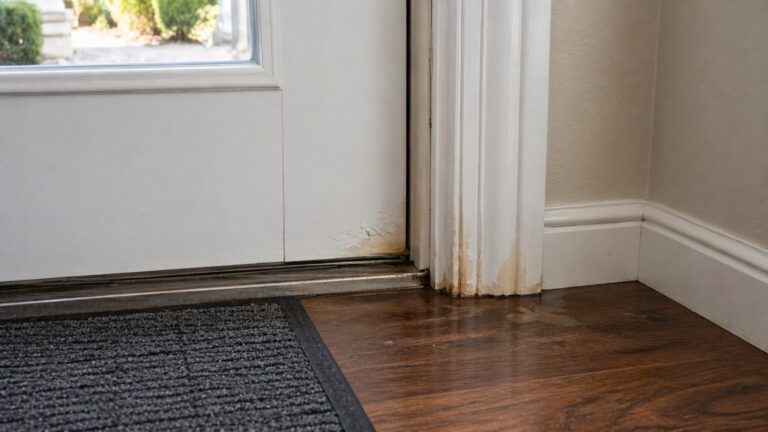
Discoloration on wall surfaces is another early sign of moisture intrusion. These stains may appear yellow, brown, gray, or slightly darker than surrounding surfaces.
Moisture stains typically develop when water moves through porous materials such as drywall or plaster. As water evaporates, it leaves behind minerals and contaminants that create visible marks.
These stains often appear:
- Below window openings
- Along exterior wall seams
- Near roofline junctions
- At the lower portions of walls
Some stains appear faint at first and gradually darken over time. Others may fade temporarily, only to reappear after rain or humidity changes.
Even small discolorations matter when they darken after rain, spread over time, or return after repainting.
Cold or Damp Wall Surfaces
Walls that feel noticeably cold or damp compared to surrounding surfaces may indicate moisture retention inside the wall cavity.
This condition often occurs when insulation becomes wet or when moisture accumulates behind interior wall surfaces. Wet materials transfer heat differently, creating localized cold spots.
You may notice this symptom when:
- Touching exterior-facing walls
- Standing near walls during colder weather
- Comparing different sections of the same wall
- Observing uneven indoor comfort levels
Cold or damp surfaces may also indicate condensation forming inside the wall system. While condensation alone does not always cause severe damage, repeated moisture cycles can gradually weaken materials.
If this symptom appears along with visible staining or odors, it increases the likelihood that moisture is present inside the wall structure.
Musty Odors Near Exterior Walls
A persistent musty smell near exterior walls often signals moisture buildup inside concealed spaces. This odor is typically caused by microbial activity in damp materials.
Musty odors may be strongest:
- In enclosed rooms
- Behind furniture placed against exterior walls
- Inside closets located on exterior walls
- Near window or door openings
Unlike temporary odors from spills or cleaning products, moisture-related smells tend to linger and intensify over time.
Musty odors are especially important when they are strongest near one exterior wall, behind furniture, inside an exterior-wall closet, or after rain. If the odor returns in the same location, use the broader room-by-room approach in how to find hidden moisture in different areas of your home to narrow down the affected area.
Moderate Signs Moisture May Be Inside the Wall
Moderate-stage symptoms usually mean moisture has been present long enough to affect drywall, plaster, trim, paint, or other finish materials.
Soft Drywall or Plaster
One of the clearest signs of prolonged moisture exposure is drywall or plaster that feels soft when pressed. Normally, drywall remains firm and resistant to light pressure. When moisture enters the material, the gypsum core begins to weaken.
This symptom often appears in areas where moisture collects repeatedly, such as:
- Below windows
- Along exterior wall seams
- Near roof or gutter lines
- At lower wall sections close to flooring
Soft drywall may initially feel slightly spongy. Over time, the affected area may crumble or collapse when pressed. This type of damage suggests moisture has been present for an extended period.
Another warning sign is when small dents remain visible after pressing lightly on the wall surface. While this may not always indicate severe damage, it often signals that moisture has compromised structural integrity.
If softness spreads beyond a small area or appears in multiple locations, professional inspection methods such as those described in how to inspect exterior walls for moisture damage may help determine the extent of the issue.
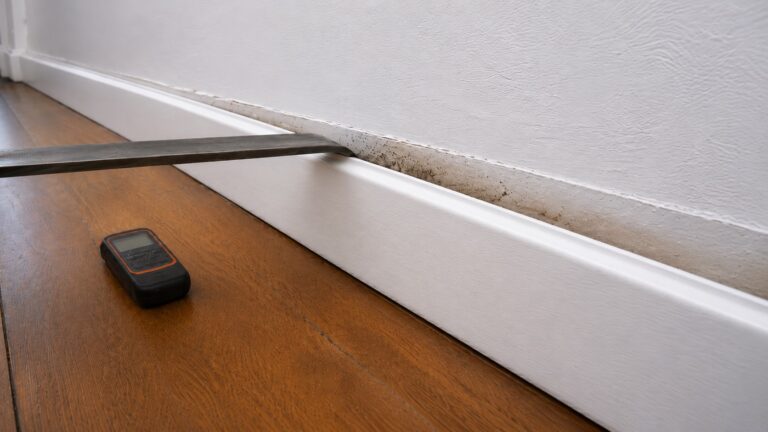
Swollen Trim or Baseboards
Baseboards and trim installed along exterior walls frequently absorb moisture when water travels through wall cavities. These materials, often made from wood or composite products, expand when exposed to water.
Signs of swelling may include:
- Baseboards pulling away from the wall
- Visible warping along trim edges
- Paint cracking at trim joints
- Gaps forming between trim and flooring
Swollen trim is commonly mistaken for normal expansion caused by seasonal humidity changes. However, localized swelling—especially along exterior walls—often indicates trapped moisture rather than seasonal movement.
When trim swelling returns in the same area, compare the location with likely exterior entry points such as windows, siding joints, roofline intersections, or wall penetrations. The cause-focused guide to why exterior walls develop moisture problems explains those entry patterns in more detail.
Recurring Mold Spots
Recurring mold growth is a strong indicator that moisture is present inside or behind wall surfaces. Mold spores exist naturally in most indoor environments, but they require moisture to grow.
If mold appears repeatedly in the same location after cleaning, it often indicates that moisture conditions remain unresolved.
Common characteristics of recurring mold spots include:
- Dark specks reappearing after cleaning
- Growth concentrated along corners or seams
- Mold forming near baseboards or window edges
- Surface mold spreading outward from a central point
In many cases, visible mold is only the surface-level symptom of a deeper problem inside the wall. Hidden mold may continue growing within insulation or framing materials.
If mold keeps returning on the same exterior wall, compare the pattern with the exterior-wall-specific warning signs in signs of mold growth in exterior walls.
Wall Finish Warping or Uneven Surfaces
Warping or distortion in wall finishes is another moderate-stage symptom of moisture intrusion. This occurs when materials expand unevenly as they absorb water.
Wall finishes affected by moisture may appear:
- Uneven or slightly bowed
- Separated at seams
- Raised along panel edges
- Wrinkled beneath wallpaper
Warping may develop slowly and go unnoticed until changes become visible under lighting conditions. In some cases, the distortion becomes more noticeable when shadows highlight uneven surfaces.
This type of damage often suggests that moisture has penetrated beyond surface layers and is affecting deeper materials. When warping spreads across a large area, it may indicate sustained moisture exposure rather than a single isolated event.
Where Exterior Wall Moisture Signs Usually Appear
Moisture problems rarely occur randomly. Certain areas of exterior walls are more vulnerable due to structural design, exposure to weather, and airflow patterns. Understanding these high-risk zones helps homeowners recognize symptoms earlier.
Around Windows
Windows represent one of the most common entry points for moisture in exterior wall systems. Even small gaps in sealing materials can allow water infiltration during rain or wind-driven storms.
Signs of moisture around windows may include:
- Staining below window frames
- Paint peeling along window trim
- Soft drywall beneath window sills
- Mold growth at window corners
Because windows interrupt the wall surface, they create seams that require careful sealing. When these seals degrade, moisture may enter slowly and remain hidden inside wall cavities.
Exterior Wall Corners
Wall corners often accumulate moisture due to airflow patterns and temperature differences. These areas may remain cooler than surrounding surfaces, increasing the likelihood of condensation.
Corner-related moisture signs may include:
- Dark discoloration in upper wall corners
- Recurring mold patches
- Cold surfaces during cooler weather
- Condensation forming near ceiling intersections
Because corners typically receive less airflow, moisture that accumulates there may dry more slowly. Over time, this creates favorable conditions for persistent dampness.
If the corner staining appears after rain or lines up with an outside trim joint, siding corner, roof edge, or gutter area, exterior water entry becomes more likely than indoor humidity alone.
Near Rooflines or Gutters
Exterior walls located below roof edges are especially vulnerable to moisture intrusion. Improper drainage or clogged gutters can allow water to overflow and run down wall surfaces.
When this occurs repeatedly, moisture may penetrate beneath siding materials and enter wall cavities.
Warning signs in these areas may include:
- Vertical staining along exterior-facing walls
- Damage concentrated below roof edges
- Localized peeling paint near upper wall sections
- Interior staining aligned with exterior roof features
Water traveling down exterior surfaces may appear harmless at first. However, repeated exposure increases the likelihood of moisture entering hidden layers within the wall system.
Behind Furniture or Stored Items
Furniture placed tightly against exterior walls can restrict airflow and trap moisture. Limited air movement slows drying, allowing damp conditions to persist longer than usual.
Common warning signs behind furniture include:
- Musty odors trapped in enclosed areas
- Discoloration hidden behind large objects
- Cool or damp wall surfaces behind cabinets or shelving
- Mold growth that becomes visible after moving furniture
This situation is especially common in bedrooms, living rooms, and storage areas where large furniture pieces remain stationary for extended periods.
Even when exterior moisture entry is minimal, poor airflow behind furniture can worsen localized humidity conditions and allow symptoms to develop.
Advanced Signs of Moisture Damage in Exterior Walls
Advanced moisture symptoms suggest that damage may extend beyond the wall surface into insulation, framing, sheathing, or other concealed materials. Multiple advanced symptoms in the same area should be investigated promptly.
Structural Wood Softening or Rot
When moisture remains trapped inside exterior walls for extended periods, wood framing components may begin to soften or rot. Wood rot occurs when moisture allows fungal organisms to break down structural fibers.
While framing damage is usually hidden behind drywall, surface symptoms often provide clues. You may notice:
- Walls that feel unusually flexible or weak
- Trim that no longer holds nails securely
- Baseboards pulling loose without obvious force
- Sections of wall that feel hollow or unstable
Wood rot rarely occurs quickly. Instead, it develops gradually as moisture repeatedly saturates wood components. Once structural wood begins to deteriorate, repairs often require removal of damaged materials.
If wood softness or rot is suspected, the next step is to look for the entry path that kept the wall wet. The guide to how water enters homes through structural gaps explains common structural leak paths.
Wall Surface Deformation or Bulging
Bulging or outward movement of wall surfaces is a serious warning sign. This condition occurs when trapped moisture causes internal materials to expand or deteriorate.
Deformation may appear as:
- Noticeable swelling in localized wall sections
- Raised drywall seams
- Wall sections that appear bowed or uneven
- Visible distortion beneath wallpaper or paneling
This symptom often suggests that moisture has penetrated deeply into wall layers, affecting both structural components and interior finishes.
Bulging surfaces may worsen during periods of rain or high humidity, especially when exterior drainage issues allow repeated wetting.
Visible Mold Colonies on Exterior Walls
Visible mold growth is one of the clearest signs that moisture problems have progressed beyond early stages. Mold often appears as black, green, gray, or white patches that spread across wall surfaces.
Common mold indicators include:
- Clusters of dark specks forming along seams
- Patchy discoloration spreading outward
- Fuzzy or powdery surface textures
- Persistent musty odors accompanying visible growth
Surface mold often indicates that hidden moisture conditions have existed for extended periods. Even when mold appears small, the underlying moisture source may be significant.
Visible mold on an exterior-facing wall should be treated as both a mold symptom and a moisture symptom. For exterior-wall-specific mold patterns, review signs of mold growth in exterior walls.
Cracking or Separation in Wall Materials
Cracking along exterior walls may signal repeated expansion and contraction caused by moisture cycles. As materials absorb water, they expand. When they dry, they contract. Repeated cycles weaken joints and cause separation.
Crack-related symptoms may include:
- Horizontal or vertical cracks along seams
- Gaps between drywall panels
- Separation between trim and wall surfaces
- Visible fractures near window or door openings
While small cracks can result from normal settling, cracks accompanied by staining, mold, or softness strongly suggest moisture involvement.
When Exterior Wall Moisture Signs Need Prompt Attention
Some moisture signs can be monitored briefly, but others point to active water intrusion or deeper damage. Prompt investigation is especially important when symptoms worsen after rain, spread across the wall, or affect the strength of the material.
Do not wait if you notice:
- Soft, crumbling, bulging, or unstable wall materials
- Mold growth that returns after cleaning
- Moisture signs in several places on the same exterior wall
- Damage that spreads over weeks or worsens after rainfall
- Staining, swelling, or softness near electrical outlets, switches, or wiring
Avoid cutting into wet walls, probing near electrical devices, or disturbing moldy materials if the affected area is large, the wall feels unstable, or electrical components may be involved. In those cases, a qualified moisture, mold, or building professional can use moisture meters, thermal imaging, and selective inspection to determine how far the damage extends.
FAQ About Signs of Moisture in Exterior Walls
Can moisture be inside exterior walls without visible leaks?
Yes, moisture can exist inside exterior walls without obvious leaks. Small gaps in siding, flashing, or sealant can allow water to enter slowly during wind-driven rain. Condensation inside walls can also occur when warm indoor air meets cooler exterior surfaces. In these cases, symptoms may develop gradually rather than appearing suddenly.
This is why subtle warning signs—such as recurring stains, odors, or paint failure—should not be ignored, even when visible leaks are not present.
Why does my exterior wall feel cold and damp compared to other walls?
A cold, damp wall surface often indicates moisture trapped within insulation or wall materials. Wet materials transfer heat differently than dry ones, creating localized temperature differences.
This symptom is especially noticeable during cooler seasons when moisture accumulation disrupts normal insulation performance. If this condition persists, further evaluation using methods outlined in how to detect hidden moisture in exterior walls may help determine whether moisture is present inside the wall cavity.
Are small stains on exterior-facing walls always moisture problems?
Not always. A single stain may come from an old leak, condensation event, or surface contamination. The warning sign is a stain that appears on an exterior-facing wall, darkens after rain, spreads over time, feels damp, or returns after repainting. Those patterns suggest active moisture rather than an old cosmetic mark.
How long does moisture damage take to appear in exterior walls?
The timeline varies depending on how much moisture enters the wall and how frequently exposure occurs. Small amounts of moisture may take weeks or months to produce visible symptoms. Larger or repeated water intrusion events can produce noticeable damage more quickly.
Moisture problems often progress slowly at first, making early symptoms easy to overlook until damage becomes more noticeable.
Can moisture signs disappear temporarily?
Yes, some symptoms may fade temporarily as surfaces dry. Stains may lighten, odors may become less noticeable, and surfaces may appear normal during dry conditions. However, underlying moisture may still exist inside wall cavities.
If symptoms return after rainfall or humidity changes, it usually indicates that the moisture source remains active.
Conclusion: Recognizing Exterior Wall Moisture Signs Early
Moisture inside exterior walls often starts with small clues: peeling paint, stains, musty odors, cold surfaces, swollen trim, or damage that returns after rain. When those signs appear in the same location repeatedly, treat them as evidence of a moisture pattern rather than a cosmetic flaw.
The next step is to confirm whether the wall is still damp and identify where moisture may be entering. The broader guide to how exterior walls allow moisture into homes can help connect the visible symptoms with likely exterior entry points.
Key Takeaways
- Moisture inside exterior walls often begins with subtle warning signs such as stains, odors, or peeling paint.
- Early symptoms typically indicate moisture exposure but not yet severe structural damage.
- Moderate signs, including soft drywall or swollen trim, suggest longer-term moisture presence.
- Advanced symptoms—such as wall deformation or visible mold—require immediate investigation.
- High-risk locations include windows, corners, rooflines, and areas behind furniture.
- Moisture symptoms that worsen after rain or humidity changes usually indicate ongoing water intrusion.
- Early detection and investigation significantly reduce long-term repair costs.
5 Comments
Comments are closed.