How to Fix Persistent Crawl Space Drainage Problems
To fix persistent crawl space drainage problems, first confirm whether water is coming from exterior runoff, groundwater pressure, a blocked drain line, or a failed sump system. Then repair the failed component instead of repeating surface-level fixes. Persistent water usually requires clearing or replacing drain lines, correcting sump pump failures, improving discharge routes, and reducing the amount of water reaching the foundation.
If the problem is still in the early warning stage, reviewing signs that crawl space drainage needs repair can help confirm whether repair-level conditions are present. This guide focuses on what to do after the problem has become recurring.
For the larger structural context, see Structural Moisture Problems in Homes: Causes, Risks, and Repair Guide, which explains how repeated water exposure can affect framing, subfloors, and other building materials.
Why Persistent Drainage Problems Require Structured Solutions
When crawl space drainage problems become persistent, simple fixes rarely solve the issue. Water movement follows predictable pathways, and when those pathways fail, the same moisture patterns continue repeating.
Persistent drainage problems usually involve one or more of the following conditions:
- Water returning after nearly every rainstorm
- Soil remaining damp long after rainfall
- Sump pumps operating frequently or continuously
- Repeated mold or moisture damage
- Drainage systems struggling to remove water
These conditions indicate that drainage components are no longer working as intended. Understanding the underlying causes described in why crawl space drainage systems fail helps determine which repairs are most appropriate.
A useful way to narrow the repair is to match the symptom to the failure: water near the foundation often points to exterior runoff or grading, water collecting near the sump basin points to pump or discharge problems, and water spreading along the perimeter often points to blocked, undersized, or damaged drain lines.
Why Temporary Fixes Often Fail
Temporary drainage fixes may reduce visible water, but they rarely address structural system failures. For example, redirecting surface water may help temporarily, but clogged or collapsed pipes will still prevent proper drainage.
- Water returns shortly after temporary diversion
- Moisture continues spreading beneath the crawl space
- Repeated cleanup becomes necessary
- Short-term improvements lose effectiveness
- Damage gradually increases over time
When temporary fixes stop working, the next step is to identify which part of the drainage path is failing before spending more money on cleanup or surface diversion.
Confirming the Source of Recurring Water
Before beginning any repair, confirm where water enters, where it collects first, and how it leaves the crawl space. Repairing the wrong component can waste time and money while allowing the same moisture pattern to return after the next storm.
Safety note: Do not enter a crawl space with standing water near electrical wiring, sewage contamination, strong mold growth, unstable framing, or signs of animal activity. In those situations, inspect from the access opening and call a qualified professional.
Observe Moisture Patterns During Rainfall
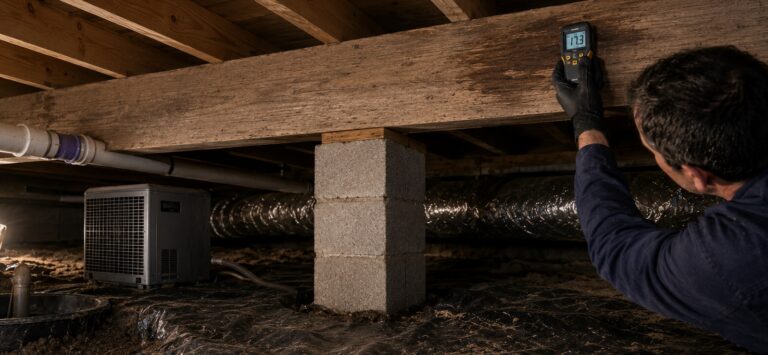
Water behavior during storms often reveals the source of failure. Observing where water appears first helps determine whether the issue involves exterior runoff, internal drainage failure, or groundwater pressure.
- Watch where water collects first during rainfall
- Note areas that remain wet the longest
- Identify repeating moisture patterns
- Look for signs of flow direction
- Track changes between storms
Recurring patterns are strong indicators of drainage failure points.
Inspect Drainage Components Carefully
Drainage systems include multiple components that must function together. When one component fails, the entire system becomes less effective.
- Check drainage channels for sediment buildup
- Look for damaged or blocked pipes
- Inspect sump pump performance
- Confirm discharge locations are clear
- Evaluate soil conditions near drainage lines
Detailed evaluation steps are explained in how to inspect crawl space drainage systems, which provides guidance for identifying system failures safely.
Repairing Blocked or Damaged Drain Lines
Blocked or damaged drain lines are among the most common causes of persistent crawl space drainage problems. Over time, sediment, roots, and debris can reduce pipe capacity or stop water movement entirely.
Restoring flow through these lines is often one of the first steps in correcting persistent moisture problems.
Clearing Sediment and Debris Buildup
Sediment gradually accumulates inside drainage pipes, especially when filtration materials are damaged or missing. This buildup restricts water movement and causes recurring moisture problems.
- Sediment filling sections of drainage pipe
- Reduced water flow through system components
- Water backing up inside channels
- Visible debris blocking pipe openings
- Slow drainage following rainfall
If sediment keeps returning after cleaning, the problem may be damaged filter fabric, poor pipe slope, crushed pipe sections, or soil washing into the drainage trench.
Replacing Collapsed or Cracked Pipes
When pipes become damaged or collapse, water movement stops completely. In these cases, replacement of affected sections is usually required.
- Collapsed pipe sections blocking water flow
- Cracks allowing soil intrusion
- Pipe deformation from soil pressure
- Breaks caused by heavy loads above ground
- Severely restricted drainage capacity
Replacement is usually needed when the pipe is crushed, separated, heavily clogged with soil, or no longer sloped well enough to move water toward the discharge point.
Fixing Failed Sump Pump Systems
Sump pumps are one of the most important components in crawl space drainage systems. When they fail, water quickly accumulates because the system loses its ability to move water away from the structure. Persistent drainage problems often involve mechanical failure within the sump system.
A persistent sump-related problem may require more than a new pump. The basin, float switch, check valve, discharge line, outlet, and backup power plan all affect whether the system can keep up during heavy rain.
Replacing Worn or Failed Pump Units
Sump pumps operate under demanding conditions, especially during heavy rainfall. Over time, motors wear out, internal components degrade, and performance declines. When a pump fails completely, replacement is usually required.
- Pump motor no longer activating
- Unusual noises during operation
- Reduced pumping speed or output
- Frequent overheating during use
- Water remaining in the sump basin
Replacing worn pump units restores system reliability and prevents water accumulation during storms.
Repairing or Replacing Float Switches
The float switch controls when the sump pump turns on and off. If this component becomes stuck or damaged, the pump may fail to activate even when water levels rise.
- Float stuck in one position
- Pump failing to activate at proper water level
- Delayed pump response
- Irregular on-and-off cycling
- Water overflowing before activation
Correcting float switch problems prevents delayed activation and reduces the risk of sudden flooding.
Clearing Blocked Discharge Lines
Even when sump pumps operate correctly, discharge lines must remain clear to allow water to exit. Blocked or restricted discharge lines prevent water from leaving the crawl space.
- Debris blocking discharge openings
- Ice formation restricting winter flow
- Kinks or bends reducing water movement
- Animal nests obstructing pipe exits
- Water backing up toward the sump basin
The discharge line should carry water far enough away that it does not cycle back toward the foundation, sump basin, or low areas beside the crawl space.
Correcting Exterior Water Flow Failures
Persistent drainage problems often originate outside the crawl space. When water reaches the foundation in large volumes, internal drainage components become overwhelmed. Correcting exterior water flow reduces pressure on the drainage system.
Exterior corrections are frequently necessary alongside internal repairs.
Regrading Soil Around the Foundation
Improper grading directs water toward the crawl space rather than away from it. Regrading should create a visible slope away from the foundation so roof runoff and surface water do not collect against crawl space walls.
- Restoring soil slope away from foundation
- Filling depressions near crawl space walls
- Removing soil buildup against foundation
- Stabilizing loose soil areas
- Redirecting runoff before it reaches crawl space openings
Proper grading helps prevent recurring water entry caused by poor surface drainage.
Installing Surface Drainage Systems
Some homes require additional surface drainage to collect and redirect water before it reaches the crawl space. These systems may be especially helpful on sloped lots or properties with poor natural drainage.
- French drains near problem areas
- Swales to guide water away
- Catch basins in low areas
- Drainage extensions for downspouts
- Surface channels to prevent pooling
Exterior drainage improvements are discussed in more detail in how to improve drainage around crawl spaces, which explains how outside water control reduces crawl space moisture risks.
Upgrading Undersized Drainage Systems
Some crawl space drainage problems persist because the original system is too small for the amount of water reaching the home. Even when components are not broken, undersized systems may be unable to handle heavy rainfall or high groundwater conditions.
Upgrading drainage capacity can be necessary when the system functions but cannot keep up.
Increasing Pipe Capacity
Drainage pipes must be large enough to handle expected water volume. When pipes are too small, water backs up or spreads through the crawl space faster than the system can remove it.
- Slow water movement during storms
- Drainage channels filling quickly
- Water exceeding pipe capacity
- Repeated overflow from drainage areas
- Moisture spreading before the system can respond
Capacity upgrades are most useful when the system still drains but cannot keep up during heavier storms.
Adding Additional Drainage Zones
Some crawl spaces need drainage in more than one area. If water enters from multiple sides or low points, a single drainage path may not be enough.
- Water entering from several foundation walls
- Separate low areas holding moisture
- Drainage only covering part of the crawl space
- Repeated moisture in corners or edges
- Uneven drying after storms
Additional drainage zones are most useful when water enters from more than one side or repeatedly collects in areas the existing drain never reaches.
Replacing Severely Damaged Drainage Components
Some drainage systems are too damaged to repair effectively. When pipes, drainage trenches, sump components, or discharge pathways fail repeatedly, replacement may be more reliable than repeated repairs.
Replacement becomes especially important when older systems no longer match current moisture conditions around the home.
When Drain Line Damage Is Widespread
Localized damage may be repaired by replacing individual pipe sections. However, widespread failure often requires larger system replacement.
- Multiple collapsed pipe sections
- Sediment throughout the drainage system
- Drainage trenches no longer functioning
- Repeated failure in different areas
- System layout no longer effective
In these cases, replacing large sections may provide better long-term protection than repairing one visible failure point at a time.
When Existing Materials Have Reached the End of Their Lifespan
Drainage materials age over time. Pipes can weaken, filter fabrics can clog, and gravel beds can fill with fine sediment. When materials no longer function properly, repairs may only provide temporary improvement.
- Old drainage pipes becoming brittle or crushed
- Filter materials clogged with soil
- Drainage stone filled with sediment
- Poor flow despite cleaning
- Repeated repairs with limited improvement
If pipes, fabric, and drainage stone are all contaminated or failing, replacing the worn materials may be more reliable than trying to clean one section at a time.
When Full System Replacement Is Necessary
Full system replacement is usually considered when the original layout is wrong, the system lacks coverage in key areas, or repeated targeted repairs have failed. At that point, the issue is no longer one broken component but a drainage design that cannot control the water reaching the crawl space.
Severe System Design Limitations
Some drainage systems were poorly designed from the beginning. If pipes do not slope correctly, drainage coverage is incomplete, or discharge locations are poorly placed, repeated problems are likely.
- Drainage does not cover wet areas
- Water bypasses collection points
- Pipe slope is inadequate
- Discharge location allows water to return
- Sump system is too small for water volume
When design limitations cause recurring failure, targeted repairs may not solve the problem.
Long-Term Recurring Failure Patterns
Repeated drainage failure over several seasons often indicates that the system cannot manage current site conditions. Changes in grading, soil movement, landscaping, or groundwater patterns can make older systems ineffective.
- Water problems returning year after year
- Multiple repair attempts failing
- Moisture appearing in new areas
- Storms overwhelming the system repeatedly
- Drainage repairs lasting only briefly
Persistent failure patterns may justify a full drainage redesign rather than continued patch repairs.
DIY vs Professional Repair Decisions
Some crawl space drainage repairs can be handled by homeowners, while others require professional evaluation. The difference depends on the complexity of the failure, the amount of water involved, and whether buried or structural components are affected.
Knowing when to stop DIY repairs helps prevent unsafe conditions and repeated failures.
Repairs That May Be Safe for DIY
Minor maintenance tasks may be manageable if the crawl space is accessible and conditions are safe.
- Clearing visible debris from discharge outlets
- Extending downspouts away from the foundation
- Removing light sediment from accessible channels
- Testing sump pump operation
- Correcting minor surface drainage issues
These repairs are generally safer when performed under dry conditions, without disturbing electrical wiring, structural supports, insulation, or contaminated materials.
Repairs That Typically Require Professional Help
More serious drainage failures often require professional repair. Buried pipes, sump systems, excavation work, and structural moisture concerns should be evaluated carefully before repairs begin.
- Collapsed or buried drainage lines
- Frequent sump pump failure
- Standing water near electrical components
- Drainage repairs requiring excavation
- Moisture damage affecting framing or subfloors
Professional repairs are especially important when persistent drainage problems are already causing structural deterioration or mold growth.
How to Prevent Future Crawl Space Drainage Failures
Repairing persistent crawl space drainage problems is only part of the long-term solution. After repairs are made, the system should be checked after heavy rain, seasonal changes, and any landscaping work that changes how water moves around the foundation.
Establish a Routine Inspection Schedule
Routine inspections help identify small problems before they become major drainage failures. Crawl space drainage systems should be checked after heavy rain and during seasonal changes.
- Inspect after major storms
- Check sump pump operation regularly
- Look for sediment buildup in drainage channels
- Confirm discharge points remain clear
- Watch for new moisture patterns
Routine inspections help prevent small drainage restrictions from becoming recurring failures.
Maintain Drainage Components Regularly
Drainage systems require maintenance to remain effective. Sediment, roots, debris, and weather-related damage can reduce performance over time.
- Clear debris from exposed drainage areas
- Keep discharge outlets open
- Test pump activation
- Check for damaged discharge pipes
- Correct small grading problems early
If the same outlet, basin, or channel needs frequent cleaning, that may indicate a design or sediment-control problem rather than normal maintenance.
Monitor Exterior Drainage Conditions
Exterior drainage conditions can change over time. Soil settlement, landscaping changes, clogged gutters, and new hardscape surfaces can alter how water moves around the home.
- Check grading near the foundation
- Keep gutters and downspouts clear
- Watch for soil erosion near crawl space walls
- Correct pooling near the foundation
- Review drainage after landscaping changes
Exterior monitoring helps reduce the amount of water that reaches the crawl space drainage system.
Seasonal Maintenance Considerations
Seasonal changes affect crawl space drainage performance. Heavy spring rain, summer storms, falling leaves, and freezing winter conditions can all create drainage challenges.
- Clear leaves and debris before heavy rain seasons
- Check discharge lines before freezing temperatures
- Inspect after soil settlement
- Confirm pump operation before storm seasons
- Review grading after landscaping work
Seasonal maintenance keeps drainage systems prepared for changing water conditions.
Record Changes in System Performance
Tracking drainage behavior helps identify patterns that may not be obvious during a single inspection. If moisture returns after specific types of storms or in certain areas, those patterns can guide future repairs.
- Record when water appears
- Note which areas stay damp longest
- Track sump pump activity
- Compare conditions after different storms
- Document repeated problem areas
Documentation helps homeowners and contractors make better repair decisions if problems return.
Key Takeaways
- Persistent crawl space drainage problems require structured repair solutions.
- Blocked pipes and failed sump pumps are common causes of recurring moisture.
- Upgrading undersized systems improves drainage capacity during heavy rainfall.
- Full system replacement may be necessary for widespread damage.
- Professional repair is often required for complex or buried system failures.
- Routine inspection and maintenance help prevent future drainage problems.
- Prompt repairs reduce the risk of mold growth and structural damage.
Frequently Asked Questions About Fixing Persistent Drainage Problems
Can crawl space drainage problems be repaired without replacing the entire system?
Yes, some problems can be corrected by clearing blockages, repairing sump pump components, improving discharge lines, or correcting exterior drainage. Full replacement is usually needed only when damage is widespread or the system design is inadequate.
How do I know if the problem is the drain line or the sump pump?
If water reaches the sump basin but does not leave quickly, the pump, float switch, check valve, or discharge line may be the problem. If water spreads along the crawl space perimeter before reaching the basin, blocked, damaged, or undersized drain lines may be more likely.
Can repairs be performed in stages?
In some cases, yes. Homeowners may begin with exterior drainage corrections or sump pump repairs before replacing larger drainage components. However, staged repairs should still address the main failure source.
How long do crawl space drainage repairs last?
Repair lifespan depends on installation quality, maintenance frequency, and environmental conditions. Properly installed and maintained repairs often provide reliable performance for many years.
What happens if drainage repairs are delayed?
Delaying repairs increases the risk of mold growth, structural damage, and higher repair costs. Persistent water exposure weakens materials and spreads moisture throughout the crawl space.
Conclusion
Fixing persistent crawl space drainage problems starts with identifying why water keeps returning. Once the source is clear, the repair may involve clearing or replacing drain lines, correcting sump pump or discharge failures, improving exterior water flow, or redesigning an undersized system.
The most reliable repair is the one that matches the actual failure. If water continues returning after basic improvements, the crawl space likely needs a repair-level evaluation rather than another temporary cleanup.