How to Fix Persistent Dishwasher Moisture Problems
When moisture keeps appearing around your dishwasher—even after cleaning, drying, or tightening connections—it usually means the root problem was never fully resolved. Persistent dishwasher moisture problems are frustrating because they seem to disappear temporarily, only to return days or weeks later.
Recurring dampness under or behind a dishwasher is rarely random. Most repeat moisture problems come from one of three sources: an active leak that was not found, an installation or component failure that keeps returning under use, or trapped moisture beneath flooring that was never fully dried. The right fix depends on identifying which of those three situations you actually have.
This guide focuses specifically on deciding what is still wrong when dishwasher moisture keeps returning after basic cleanup or repairs. If you are still trying to confirm whether the appliance is leaking, start with how to detect hidden dishwasher leaks. If moisture already spread into flooring, review how to dry flooring after dishwasher leaks. If the area smells musty or shows discoloration, compare the warning signs with signs of mold behind dishwashers.
Quick Answer: Why Dishwasher Moisture Keeps Coming Back
Persistent dishwasher moisture usually means one of three things: the dishwasher is still leaking during use, a supply or drain connection is failing intermittently, or earlier water reached flooring or subfloor materials that were never fully dried. The fastest way to narrow it down is to check when the moisture appears: during the wash cycle, after draining, near the rear connections, at the front door edge, or even when the dishwasher has not run.
Why Dishwasher Moisture Problems Keep Returning
Recurring moisture problems almost always indicate that only the visible symptom was addressed—not the actual cause. Many homeowners dry the area, tighten a visible fitting, or clean surface mold without correcting the mechanical or structural issue that created the moisture in the first place.
Dishwashers operate under pressure and vibration during every cycle. Even minor defects—such as slightly loose fittings or worn seals—can release small amounts of water repeatedly, causing dampness to return after each cleaning or drying attempt.
Why Surface Fixes Often Fail
Temporary solutions may appear to work at first because visible water disappears. However, if the source of moisture remains, the problem returns once the dishwasher runs again.
Common temporary fixes that do not solve the real problem include:
- Wiping up visible water without repairing the leak source
- Running fans without confirming moisture removal beneath flooring
- Cleaning mold without correcting the moisture source
- Tightening one connection while ignoring other weak points
- Assuming the problem was a one-time spill instead of a mechanical failure
Persistent moisture is a strong warning sign that deeper inspection is needed before the area is covered, repainted, or treated as fixed. If the leak has reached flooring, cabinets, or surrounding framing, compare the situation with structural moisture problems in homes so you can decide whether this is still a simple appliance issue or a larger repair concern.
How Recurring Moisture Patterns Develop
Repeat moisture problems often follow predictable timing and location patterns.
For example, moisture that appears after every dishwasher cycle usually indicates a mechanical leak, while moisture that returns days later without dishwasher use may point to trapped subfloor moisture or adjacent plumbing issues.
Most Common Causes of Persistent Dishwasher Moisture Problems
Several mechanical and structural issues are responsible for most recurring moisture problems around dishwashers. Understanding these causes helps narrow down the source quickly and prevents repeated failed repairs.
Loose or Failing Water Supply Connections
The water supply connection feeding the dishwasher operates under pressure during every cycle. Even slightly loose fittings or aging washers can allow small amounts of water to escape repeatedly.
These leaks are often intermittent, making them difficult to detect. Moisture may appear during operation and then dry between cycles, giving the impression that the problem resolved on its own.
Typical signs of supply connection failure include:
- Moisture returning after several dishwasher cycles
- Dampness strongest near the rear connection area
- Water appearing intermittently rather than continuously
- Minor staining that gradually spreads outward
Drain Hose Failures or Blockages
The dishwasher drain hose removes used water during the drain cycle. Damage, looseness, or internal blockages can cause water to escape or backflow into unintended areas.
Drain hose failures often create moisture that appears after the wash cycle finishes rather than during operation.
Common drain-related warning signs include:
- Water appearing after the dishwasher completes its cycle
- Dampness strongest near the back or side of the unit
- Recurring moisture after heavy-use cycles
- Evidence of water spreading beyond the original leak area
Door Seal or Gasket Damage
The dishwasher door seal keeps water inside the appliance during wash cycles. Over time, seals may harden, warp, or develop gaps that allow water to escape along the front edge of the appliance.
This type of leak often produces moisture directly beneath the door area rather than behind the appliance.
Typical signs of door seal failure include:
- Moisture appearing at the front edge of the dishwasher
- Small puddles forming during wash cycles
- Water appearing consistently after each use
- No visible leaks behind the appliance
Improper Dishwasher Installation or Leveling Issues
Improper installation is a surprisingly common cause of persistent dishwasher moisture problems. Even when the appliance appears correctly installed, slight tilting can allow water to collect and escape from areas not designed to handle overflow.
Dishwashers must be installed level from front to back and side to side. When the appliance tilts forward or sideways, water inside the unit can shift toward seals or edges, increasing the likelihood of leakage during operation.
Common signs of installation or leveling problems include:
- Moisture appearing repeatedly in the same corner
- Water pooling near one side of the dishwasher
- Leaks that occur during heavy wash cycles
- Recurring dampness without obvious hose damage
- Moisture returning after previous repairs
Even a slight angle difference can affect water flow inside the appliance. If installation problems are suspected, correcting alignment can significantly reduce recurring moisture issues.
Hidden Subfloor Moisture That Was Never Fully Dried
In many homes, recurring moisture does not come from an active leak but from water trapped beneath flooring materials after a previous incident. Surface drying alone may remove visible moisture while leaving subfloor materials damp.
Over time, trapped moisture migrates upward, creating the appearance of new leaks even when no additional water is entering the area.
This condition often follows situations where water spread beneath flooring but was not completely dried. If earlier water exposure occurred, reviewing how to dry flooring after dishwasher leaks can help confirm whether hidden moisture remains.
Signs of lingering subfloor moisture include:
- Dampness returning without dishwasher use
- Persistent musty odors near the appliance
- Flooring that feels cool or slightly soft
- Moisture spreading gradually outward
- Stains reappearing after drying efforts
Subfloor moisture is one of the most misunderstood causes of recurring dampness. Many homeowners assume the dishwasher is still leaking when, in reality, trapped moisture continues migrating upward.
Internal Dishwasher Component Failures
Internal mechanical failures inside the dishwasher can also create persistent moisture problems. These failures are less visible because water escapes from inside the unit rather than from external connections.
Components that may fail internally include:
- Float switches that control water levels
- Internal seals that prevent leaks
- Pumps that circulate and remove water
- Spray arm connections that redirect water flow
Internal failures often produce inconsistent leak patterns, making them harder to identify without careful observation.
Typical signs of internal dishwasher problems include:
- Large amounts of water appearing unexpectedly
- Leaks that vary in size or location
- Changes in dishwasher performance
- Unusual sounds during operation
- Water appearing without visible external damage
When internal failures occur, repairs may require replacing specific components or, in some cases, replacing the appliance itself.
How to Identify the Real Cause of Recurring Moisture
Careful observation of when moisture appears, where it collects, and how frequently it returns can reveal the underlying cause.
Using Timing Clues to Identify Leak Sources
One of the most reliable ways to identify persistent moisture sources is to observe exactly when dampness appears. Timing patterns often point directly to the failing component.
- Moisture appears during wash cycles: Often indicates door seal or internal component failure.
- Moisture appears after draining: Commonly caused by drain hose problems.
- Moisture appears intermittently: May indicate supply connection leaks.
- Moisture appears without dishwasher use: Often caused by trapped subfloor moisture.
Timing observations reduce guesswork and help prioritize inspection areas.
Using Location Clues to Narrow Down the Source
The exact location where moisture appears provides additional clues about the source of the problem.
- Front edge moisture: Often linked to door seal failure or leveling problems.
- Rear moisture: Frequently caused by supply or drain hose leaks.
- Side moisture: May indicate cabinet spread or subfloor migration.
- Moisture beneath flooring: Often caused by trapped subfloor moisture.
Combining location and timing observations significantly improves diagnostic accuracy.
Dishwasher Moisture Pattern Checklist
- Wet during the wash cycle: Check the door gasket, spray arm direction, leveling, and internal seals.
- Wet after the drain cycle: Check the drain hose, drain connection, air gap, disposal connection, and hose routing.
- Wet near the rear connection area: Check the supply line, shutoff valve, fittings, washers, and hose condition.
- Wet at the front edge: Check the door gasket, detergent use, loading pattern, and whether the dishwasher is level.
- Wet when the dishwasher has not run: Suspect trapped flooring moisture, nearby plumbing, or another leak source instead of the dishwasher itself.
- Soft flooring, swollen cabinets, or spreading odor: Stop treating it as a simple appliance leak and evaluate surrounding materials for moisture damage.
Recognizing Patterns That Indicate Structural Problems
Persistent moisture that spreads or worsens over time may indicate structural damage beneath the dishwasher area. Structural issues usually develop after repeated moisture exposure and can continue even after leaks are repaired.
Warning signs of structural moisture damage include:
- Flooring becoming soft or unstable
- Cabinet bases swelling or warping
- Persistent musty odors that do not fade
- Moisture spreading into nearby rooms
- Repeated mold growth after cleaning
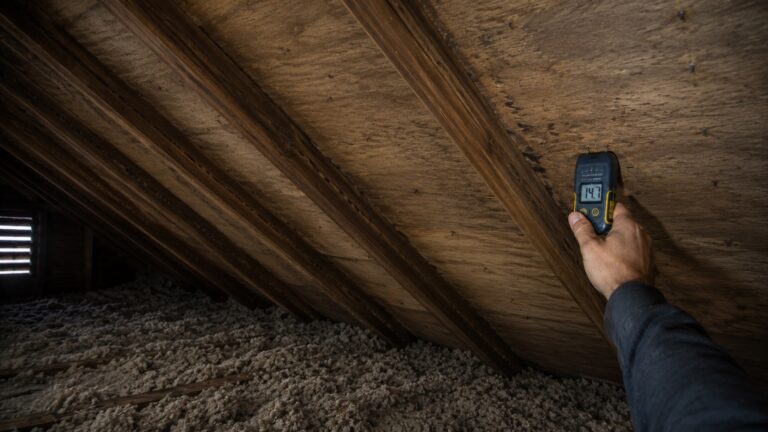
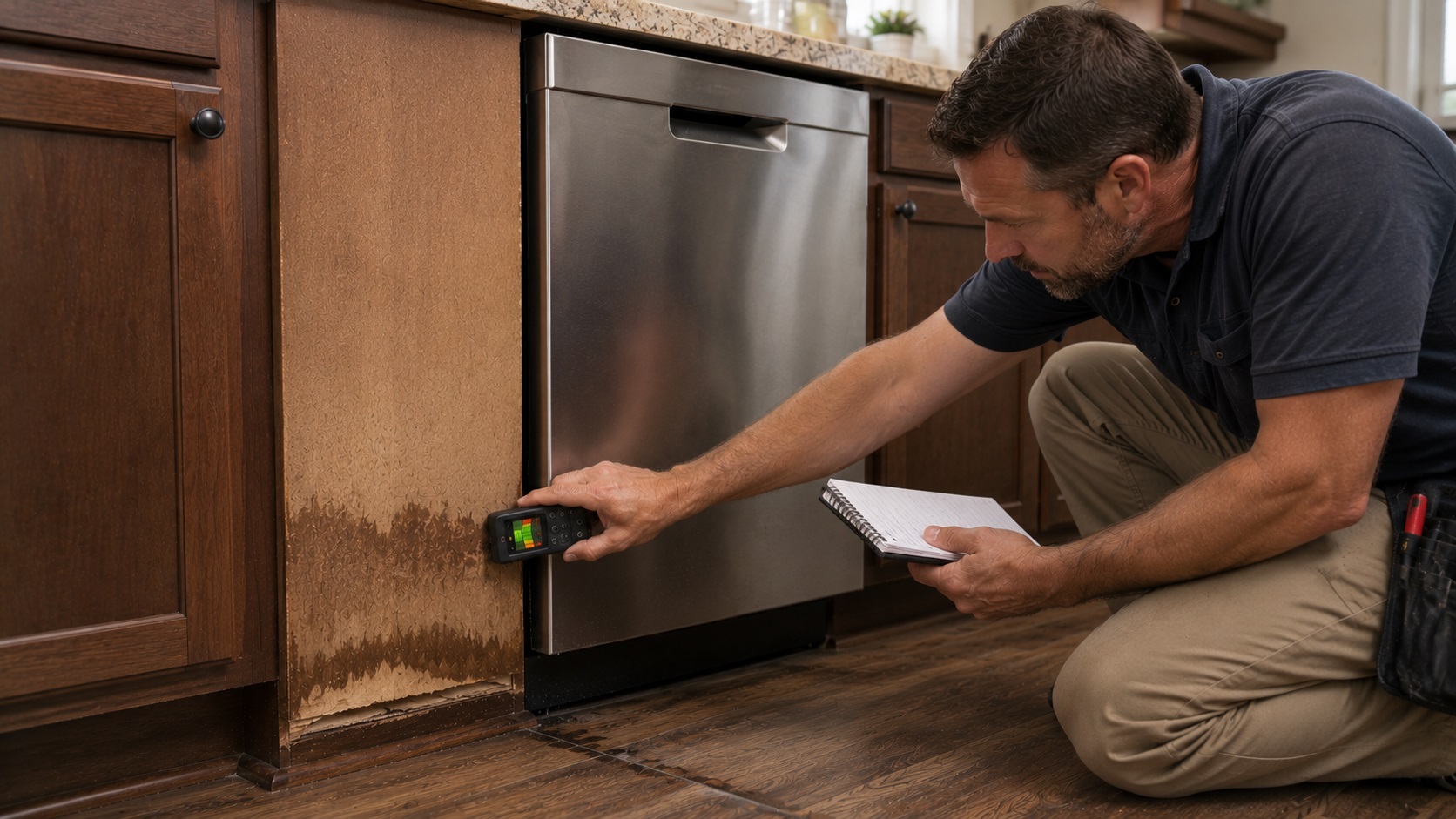
A pinless moisture meter can help compare the dishwasher area with nearby dry flooring or cabinet materials, but readings should be used as clues rather than proof that the area is safe to cover.
If these signs appear, do not cover the area with new flooring, trim, caulk, or paint until the moisture source is fixed and affected materials are dry. In those situations, reviewing signs of mold behind dishwashers can help determine whether mold conditions are developing alongside moisture damage.
Repair Decisions That Solve Persistent Dishwasher Moisture Problems
Once the likely cause is identified, the next decision is whether the problem can be handled with a basic adjustment, a component replacement, a drying correction, or professional repair. Temporary solutions may reduce visible symptoms, but lasting results require correcting the specific failure responsible for the moisture.
The following repair decisions address the most common causes of persistent dishwasher moisture problems. Match the action to the failure pattern instead of replacing parts at random.
Tightening or Replacing Water Supply Connections
Loose supply connections are among the most frequent causes of recurring dishwasher leaks. Over time, vibration from normal dishwasher operation can loosen fittings or wear down washers that seal the connection.
A reliable repair decision usually starts with:
- Inspect supply line fittings for looseness
- Tighten connections carefully without over-tightening
- Replace worn washers or damaged fittings
- Install new supply hoses if the existing hose is aging, stiff, or brittle
- Check the connection again after several wash cycles
Replacing an aging or stiff supply hose is often more reliable than repeatedly tightening old fittings, especially when the same connection keeps showing moisture after test cycles.
If the supply line is old, brittle, corroded, or repeatedly leaking at the fitting, compare the warning signs with when to replace dishwasher supply lines before assuming another tightening attempt will solve the problem.
When Drain Hose Problems Need Correction or Replacement
Drain hose problems often cause moisture to appear after dishwasher cycles. Cracks, clogs, or loose connections allow water to escape or back up into unintended areas.
Effective repairs may include:
- Inspect hoses for cracks, stiffness, or loose connections
- Clear debris from blocked drain lines when safe to access
- Secure loose hose connections
- Replace damaged or worn drain hoses
- Confirm proper hose routing and support
Drain hose repairs are particularly important when moisture appears consistently after wash cycles finish.
Replacing Worn Door Seals or Gaskets
Door gasket failure is a common cause of front-edge leaks. Seals gradually harden, crack, or lose flexibility, allowing water to escape during operation.
If the gasket is the likely failure point, the next step is usually to:
- Inspect the gasket for cracks, stiffness, gaps, or buildup
- Clean buildup that prevents the gasket from sealing evenly
- Replace the gasket if it is cracked, warped, brittle, or no longer holding contact
- Confirm that the door closes evenly after the gasket is cleaned or replaced
- Run a short test cycle and check the front edge for new moisture
Door seal cleaning or replacement often resolves front-edge moisture problems when the gasket is the confirmed failure point.
Correcting Dishwasher Leveling Problems
Improper leveling causes water to flow unevenly inside the appliance. Even minor tilt can direct water toward seals or edges where leakage occurs repeatedly.
Leveling adjustments typically involve:
- Check level alignment from front to back
- Adjust leveling feet to correct tilt
- Confirm side-to-side alignment
- Recheck level after adjustment
- Test dishwasher operation afterward
Proper leveling restores correct water flow patterns and reduces stress on seals.
Removing Trapped Subfloor Moisture
When trapped moisture beneath flooring is responsible for recurring dampness, drying the surface alone is not enough. Subfloor materials must be thoroughly dried to prevent moisture from migrating upward.
Depending on how far the moisture spread, the next step may require:
- Increase airflow beneath flooring areas
- Remove sections of flooring when moisture persists
- Dry subfloor materials thoroughly
- Replace damaged subfloor sections when necessary
- Confirm dryness before reinstalling materials
If moisture originated from a previous leak, follow the drying workflow outlined in how to dry flooring after dishwasher leaks to ensure complete moisture removal.
When Internal Dishwasher Failures May Require Service
Internal mechanical failures often require more advanced repair or component replacement. When internal parts fail, moisture problems can continue until defective components are replaced.
Typical situations that may require appliance service include:
- Possible float switch problems that allow incorrect water levels
- Internal seals that may no longer hold water reliably
- Pump problems that affect circulation or draining
- Spray arm issues that redirect water toward the door or tub edges
- Internal drainage problems that need appliance-level diagnosis
Internal component repairs are usually necessary when large or unpredictable leaks occur.
When Moisture Problems Come From Structural Damage
Persistent moisture problems sometimes extend beyond mechanical components and begin affecting surrounding materials. Repeated exposure to moisture weakens flooring, cabinets, and nearby wall materials.
Signs of Structural Moisture Damage
- Soft or unstable flooring near the dishwasher
- Cabinet bases swelling or separating
- Visible mold returning repeatedly
- Water spreading beyond the original area
- Persistent musty odors in surrounding rooms
These symptoms indicate that moisture damage has progressed beyond simple leak repair. If mold growth accompanies structural damage, review signs of mold behind dishwashers to assess the severity of contamination.
Mistakes That Make Dishwasher Moisture Problems Return
Persistent dishwasher moisture often returns because the visible water is handled but the failure pattern is not confirmed. Before calling the area fixed, avoid these common mistakes:
- Replacing one hose without checking whether the moisture appears during filling, washing, or draining
- Drying the surface while leaving damp flooring or subfloor materials covered
- Assuming a front-edge leak is always a bad gasket without checking leveling, detergent, and loading habits
- Covering swollen flooring or cabinet bases before moisture readings return to normal
- Running repeated cycles after moisture spreads into cabinets, flooring, or nearby rooms
When to Call a Professional for Persistent Moisture Problems
Some dishwasher moisture problems require professional assistance. Attempting repeated repairs without identifying the root cause may increase damage over time.
Professional Repair Triggers
- Moisture returns after multiple repair attempts
- Source of leak cannot be identified
- Structural damage appears in flooring or cabinets
- Mold growth continues despite cleaning
- Water spreads into nearby rooms
- Flooring, subfloor, or cabinet materials feel soft, swollen, crumbly, or unstable
Professional inspection can identify hidden mechanical or structural failures that are difficult to diagnose without specialized tools.
If recurring moisture has already caused visible growth, persistent odor, or contamination behind the appliance, use signs of mold behind dishwashers to judge whether the issue is still only a moisture problem or has become a mold-risk situation.
Frequently Asked Questions About Persistent Dishwasher Moisture Problems
Why does my dishwasher keep leaking even after tightening the connections?
If moisture continues after tightening connections, the problem may involve worn seals, damaged hoses, internal components, or trapped subfloor moisture. Tightening fittings alone does not fix deteriorated materials or internal failures. When moisture keeps returning, a more detailed inspection is usually needed to identify the exact source.
Can old dishwasher hoses cause recurring moisture problems?
Yes, aging hoses are one of the most common causes of repeat moisture issues. Over time, hoses become brittle, develop small cracks, or lose flexibility. Even if the hose appears intact, internal deterioration can allow small amounts of water to escape during operation. Replacing older hoses often prevents recurring leaks.
How do I know if trapped subfloor moisture is causing the problem?
Subfloor moisture is likely when dampness returns even when the dishwasher has not been used recently. You may also notice persistent musty odors, cool flooring, or gradual spreading of damp areas. In these cases, drying beneath the flooring is necessary. If you suspect this situation, review how to dry flooring after dishwasher leaks for guidance on removing hidden moisture.
Is it better to repair or replace a dishwasher with recurring leaks?
The decision depends on the age of the appliance and the severity of the failure. Minor issues such as hose replacement or leveling adjustments are usually worth repairing. However, repeated internal component failures or severe water damage may make replacement the more practical solution.
Can recurring dishwasher moisture cause mold problems?
Yes, repeated moisture exposure creates ideal conditions for mold growth, especially behind appliances and beneath flooring materials. Mold can develop quickly when moisture remains trapped in enclosed areas. If you suspect mold may already be present, compare your symptoms with signs of mold behind dishwashers to identify early warning indicators.
Fix the Moisture Source Before Repairing the Area
Recurring dishwasher moisture problems rarely resolve on their own. If moisture keeps returning, it almost always means that a mechanical issue, installation problem, or hidden moisture source remains unresolved.
Identifying patterns in timing, location, and frequency allows you to focus on the most likely failure points. Whether the problem comes from loose connections, worn seals, improper installation, or trapped subfloor moisture, fixing the true cause prevents repeated damage and reduces long-term repair costs.
Addressing persistent moisture early protects flooring, cabinets, and surrounding structures from progressive deterioration. It also reduces the risk of mold growth and structural weakening that can develop when moisture is ignored.
For broader guidance on moisture damage that affects flooring, cabinets, framing, or other building materials, review structural moisture problems in homes.
Key Takeaways
- Persistent dishwasher moisture almost always indicates an unresolved root cause.
- Temporary fixes often fail because they do not address mechanical or structural failures.
- Common causes include loose connections, drain failures, worn seals, leveling problems, and trapped subfloor moisture.
- Tracking moisture timing and location helps identify the true source of recurring leaks.
- Structural damage may develop when moisture continues unchecked.
- Professional inspection is recommended when moisture returns repeatedly or spreads.
- Fixing the root cause early prevents mold growth and costly long-term repairs.