
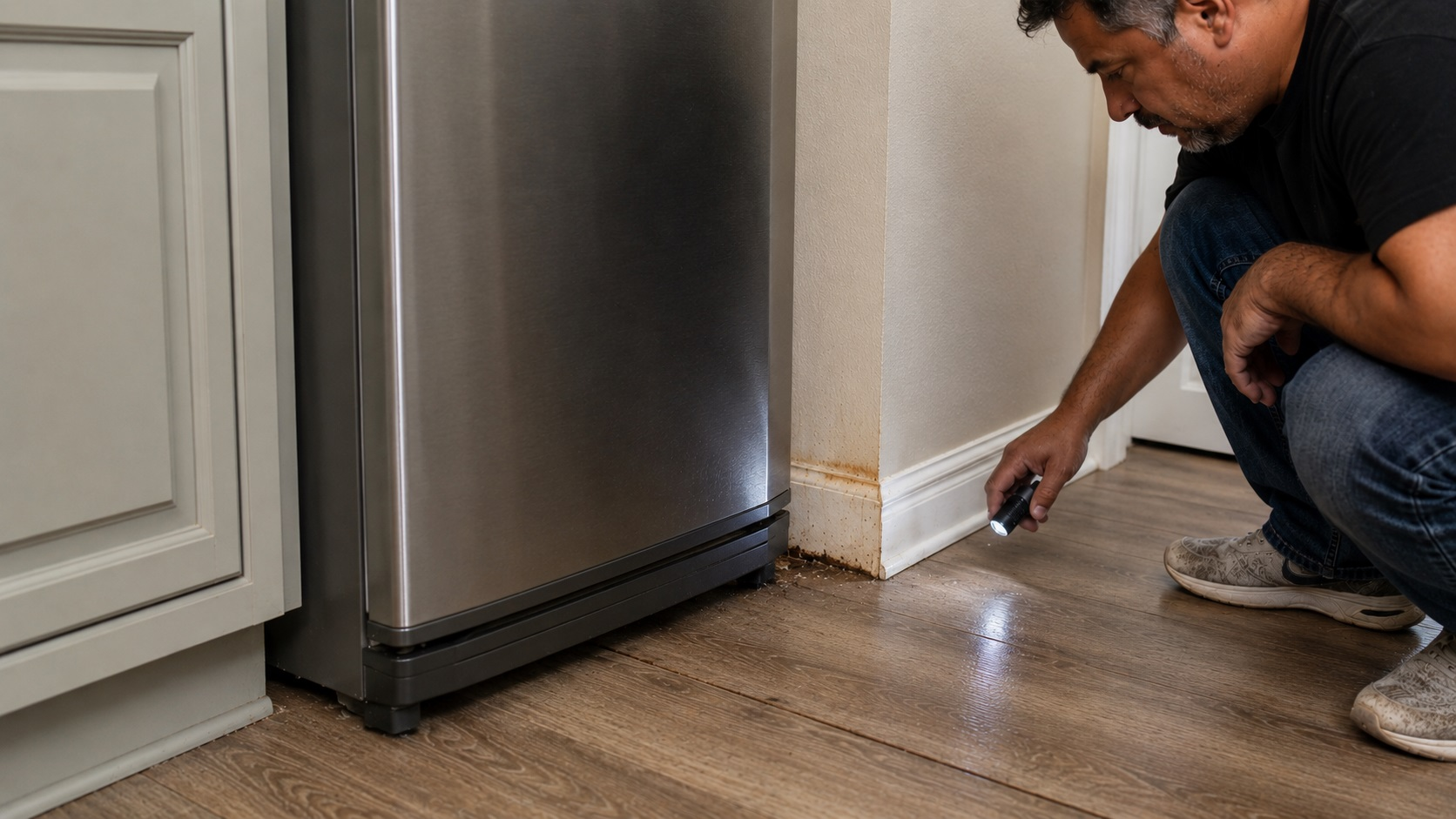
Signs of Water Leaks Behind Refrigerators
Signs of water leaks behind refrigerators include musty odors, damp flooring, swollen baseboards, wall stains, recurring puddles, soft flooring, and moisture that returns after cleaning. Because refrigerators sit tightly against walls and cabinets, these symptoms often appear before the actual leak source is visible.
Most refrigerator leaks begin as small drips rather than large spills. Water supply connections, ice maker lines, defrost drain problems, and condensation-related moisture can release enough water to damage flooring, baseboards, cabinets, or nearby drywall before a homeowner notices standing water.
This guide focuses on recognizing hidden refrigerator leak signs before serious structural damage develops. For the broader appliance-plumbing damage pattern, see how plumbing leaks cause structural damage. If the signs point to an active water line problem, you may also want to review how to detect hidden refrigerator water line leaks for targeted inspection methods.
Quick Refrigerator Leak Sign Checklist
- Musty smell near the rear or floor area of the refrigerator
- Damp, cool, darkened, or swollen flooring near the appliance
- Baseboard paint bubbling, peeling, staining, or softening
- Recurring puddles that return after cleanup
- Wall stains, soft drywall, or discoloration behind the refrigerator
- Soft, spongy, or unstable flooring near the rear of the unit
A basic water leak detector placed behind or beside the refrigerator can also help catch recurring moisture before it reaches flooring or baseboards.
Why Refrigerator Leaks Are Often Hidden
Refrigerators create several conditions that make leaks difficult to detect. The appliance typically remains stationary for long periods, and the space behind it is rarely inspected during routine cleaning or maintenance.
Most refrigerator leaks are slow and intermittent. Instead of producing noticeable puddles immediately, small drips allow moisture to accumulate gradually. Over time, this hidden moisture spreads into nearby materials, creating damage that becomes visible only after prolonged exposure.
Refrigerator leaks can also come from multiple internal and external water sources. Ice maker lines, defrost systems, and condensation drains may release water at different times, making moisture patterns harder to recognize.
Understanding how refrigerator leaks develop helps homeowners recognize early warning signs before the damage becomes widespread. If the moisture is producing mold-specific symptoms near or under the appliance, compare what you see with signs of mold under refrigerators instead of treating the leak as a general mold cleanup problem.
Early Signs of Water Leaks Behind Refrigerators
Early warning signs are usually subtle. Homeowners often notice small changes before seeing visible water.
Before moving the refrigerator, check the visible floor edges, baseboard corners, cabinet sides, and wall area beside the appliance. Use a flashlight along the floor line and look for dampness, staining, swelling, or a musty odor concentrated near the rear of the unit.
The most useful areas to check first are the rear floor edge, the wall-floor joint, the baseboard directly behind the unit, the cabinet side closest to the refrigerator, and any visible water connection point. These areas usually show symptoms before the full leak path is obvious.
Musty Odors Near the Refrigerator
A musty or damp smell near the refrigerator is often the first noticeable sign of hidden moisture. Odors develop when water stays trapped in enclosed spaces and dampens materials such as dust, wood fibers, cabinet backing, or paper-faced drywall.
This odor may be faint at first but gradually becomes stronger as moisture persists. Even without visible water, recurring musty smells should never be ignored.
Typical odor-related warning signs include:
- A persistent damp or earthy smell near the appliance
- Odors that intensify after the refrigerator runs
- Smells that return after cleaning the surrounding area
- Musty air concentrated near the floor behind the unit
Odors often appear before visible damage develops, making them one of the most valuable early warning indicators.
Damp or Discolored Flooring Near the Refrigerator
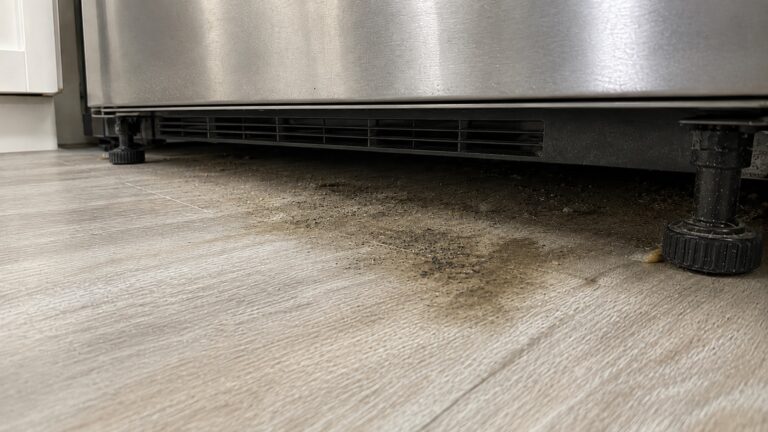
Flooring materials are often the first visible surfaces affected by hidden leaks. Even small amounts of moisture can create subtle discoloration or surface changes.
Early flooring symptoms may include:
- Slight darkening of flooring near the rear of the refrigerator
- Cool or damp surfaces when touched
- Minor swelling at seams or edges
- Recurring damp spots that appear after cleaning
These changes often occur gradually. If moisture exposure continues, flooring materials may begin to warp, separate, buckle, or feel soft underfoot.
Baseboard Changes Behind or Near the Refrigerator
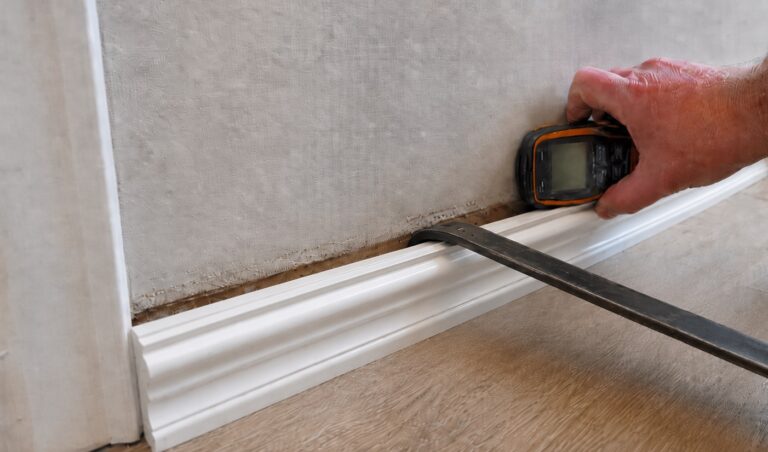
Baseboards positioned behind refrigerators are particularly vulnerable to hidden moisture. Because they are made of absorbent materials such as wood or composite fiberboard, baseboards often show visible damage before walls or flooring do.
Common baseboard warning signs include:
- Paint bubbling or peeling
- Minor swelling along edges
- Discoloration or staining
- Soft spots when touched
Baseboard damage indicates that moisture has remained in the area long enough to affect surrounding materials.
Visible Signs of Water Leaks Behind Refrigerators
As refrigerator leaks progress, symptoms become easier to recognize. Visible damage usually means water has spread beyond the original leak point and started affecting nearby flooring, cabinets, baseboards, or wall materials.
Water Pooling Behind the Refrigerator
Standing water behind the refrigerator is one of the most obvious signs of an active leak. However, pooling water may not always be visible until the appliance is moved slightly or removed from its position.
Pooling usually occurs when small leaks continue over time, allowing water to accumulate faster than it can evaporate.
Common characteristics of pooling water include:
- Water appearing along the rear wall behind the refrigerator
- Recurring puddles that return after cleaning
- Moisture that increases after heavy refrigerator use
- Water collecting near supply lines or drain areas
If water pooling occurs repeatedly, it usually indicates an active leak that should be addressed promptly.
Do not keep pushing the refrigerator back into place if water returns after cleanup. Dry the visible water, avoid using the ice maker or water dispenser if the leak appears connected to the supply line, and inspect the area before more water reaches the flooring.
Cabinet and Wall Surface Moisture
Refrigerators installed next to cabinets can spread moisture into surrounding structures. Water that escapes behind the appliance may travel sideways into adjacent cabinetry or wall materials.
Cabinet and wall-related warning signs include:
- Cabinet sides that feel damp or cool
- Discoloration along cabinet edges
- Warping of cabinet panels
- Soft areas along wall surfaces
These symptoms suggest the leak has spread beyond the appliance area and into nearby building materials.
If cabinet materials begin to swell or discolor, moisture may also be affecting hidden wall areas. In those situations, comparing symptoms with signs of mold behind walls can help identify whether mold conditions may be developing.
Advanced Flooring Damage Signs
As moisture exposure continues, flooring materials begin showing more severe damage patterns. These advanced signs usually indicate prolonged water exposure and possible subfloor involvement.
Advanced flooring damage symptoms include:
- Warped or buckled flooring sections
- Separation between flooring seams
- Soft or spongy areas when stepped on
- Visible lifting along flooring edges
- Cracking or peeling in surface coatings
Once flooring damage becomes structural, repairs may require replacing affected materials rather than simply drying them. For recovery steps after the source is stopped, see how to dry flooring after refrigerator leaks.
Hidden Refrigerator Leak Signs That Often Go Unnoticed
Some of the most serious refrigerator leak symptoms occur out of sight. Because refrigerators block visibility behind them, moisture may spread unnoticed into structural components before visible symptoms appear.
Recurring Dampness That Returns After Cleaning
Recurring dampness is a strong indication that moisture is still entering the area. Even if surfaces appear dry after cleaning, repeated dampness usually means an active leak continues behind the appliance.
Recurring moisture symptoms include:
- Damp spots that reappear after drying
- Moisture returning after refrigerator operation
- Water appearing without obvious cause
- Persistent dampness in the same location
This pattern often signals that a hidden leak is still active.
Wall Discoloration Behind the Appliance
Wall discoloration is often overlooked because it develops slowly and may be partially hidden by the refrigerator itself. However, staining behind or near the appliance is a strong indicator of long-term moisture exposure.
Common discoloration patterns include:
- Yellow or brown stains along lower wall sections
- Dark patches appearing near baseboards
- Paint changes or bubbling
- Gradual spreading of discoloration over time
Wall staining suggests that moisture has migrated beyond the original leak location.
Soft or Spongy Flooring Beneath the Refrigerator
Soft flooring beneath or near the refrigerator indicates that moisture has reached the subfloor. This condition often develops after prolonged leaks and may not be noticeable until structural weakening begins.
Signs of subfloor involvement include:
- Floor sections that feel unstable when stepped on
- Movement or shifting under weight
- Persistent dampness despite drying attempts
- Structural noise such as creaking
Subfloor damage often signals advanced moisture exposure and should be addressed promptly to prevent structural deterioration.
Stop walking heavily on the affected area if the floor feels soft, unstable, or spongy. Soft flooring can indicate subfloor damage, and continuing to load the area may worsen the problem before the leak source and damage extent are confirmed.
Signs the Refrigerator Water Line May Be Leaking
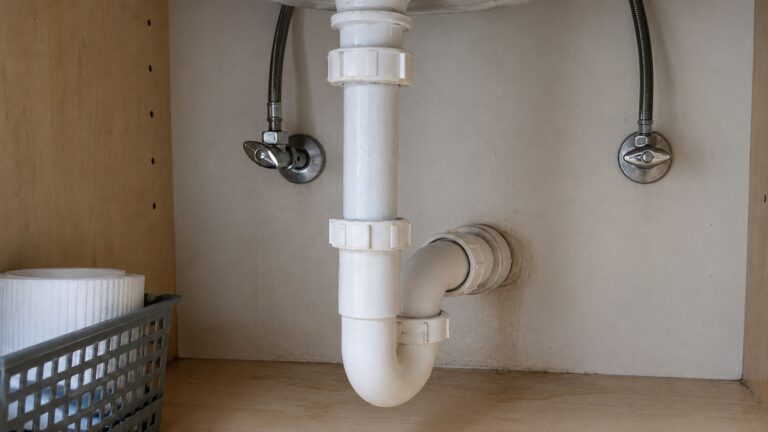
Water line symptoms often appear near the rear wall, floor edge, shutoff valve, or connection point. This article focuses on the warning signs; for step-by-step source tracing, use how to detect hidden refrigerator water line leaks.
Early Signs of Ice Maker Line Problems
Early-stage ice maker line leaks usually produce subtle symptoms before visible water becomes obvious.
- Small damp spots appearing behind the refrigerator
- Moisture forming near water supply connections
- Slight staining along nearby flooring
- Minor recurring dampness near the wall
- Occasional water streaks that appear without explanation
These symptoms often develop slowly and may remain unnoticed unless the refrigerator is moved or inspected closely.
Advanced Signs of Ice Maker Line Leaks
As ice maker line leaks worsen, symptoms become more visible and widespread. These signs usually indicate that water has been leaking for an extended period.
- Repeated pooling of water behind the refrigerator
- Soft or warped flooring near supply lines
- Mold-like staining or musty odor developing behind the appliance
- Water stains spreading across nearby surfaces
- Increased musty odors near the refrigerator
Signs the Leak May Involve the Defrost Drain
Refrigerators use defrost systems to remove frost buildup inside the unit. When drainage is blocked or slowed, water may appear inside, beneath, or behind the appliance.
Defrost drain issues often create recurring moisture that appears without obvious external leaks.
Early Signs of Defrost Drain Blockages
Early symptoms may occur intermittently, making them easy to dismiss as minor spills or condensation.
- Small puddles forming beneath the refrigerator
- Water appearing after defrost cycles
- Damp flooring near the center rear of the appliance
- Moisture that appears without obvious external damage
- Occasional dripping sounds inside the refrigerator
Because defrost cycles occur automatically, moisture patterns may seem unpredictable.
Advanced Signs of Defrost Drain Moisture Problems
As blockage severity increases, water overflow becomes more frequent and noticeable.
- Larger recurring puddles beneath the refrigerator
- Repeated moisture buildup in the same location
- Water appearing after each defrost cycle
- Musty odors developing near the appliance
- Visible mold-like staining behind the refrigerator
Persistent moisture from defrost-related drainage problems can cause significant damage if the source is not corrected.
Structural Warning Signs of Long-Term Refrigerator Leaks
Structural warning signs usually appear after a refrigerator leak has remained active long enough to affect flooring, cabinetry, baseboards, or nearby wall materials.
Recognizing structural damage early helps prevent costly repairs and long-term deterioration.
Cabinet Base Swelling or Warping
Cabinet bases located near refrigerators absorb moisture quickly. Once water penetrates cabinet materials, swelling and distortion often follow.
Signs of cabinet base damage include:
- Cabinet edges expanding or separating
- Warped panels that no longer sit flush
- Soft areas at cabinet bases
- Visible water stains along cabinet seams
Cabinet damage often indicates prolonged moisture exposure.
Wall Damage and Paint Failure
The wall behind a refrigerator can absorb moisture slowly over time. Paint failure, staining, and soft drywall are common signs of ongoing water exposure.
Typical wall damage signs include:
- Paint bubbling or peeling
- Dark discoloration near the floor line
- Soft drywall areas
- Spreading stains along wall surfaces
Wall damage often indicates that moisture has migrated into structural materials.
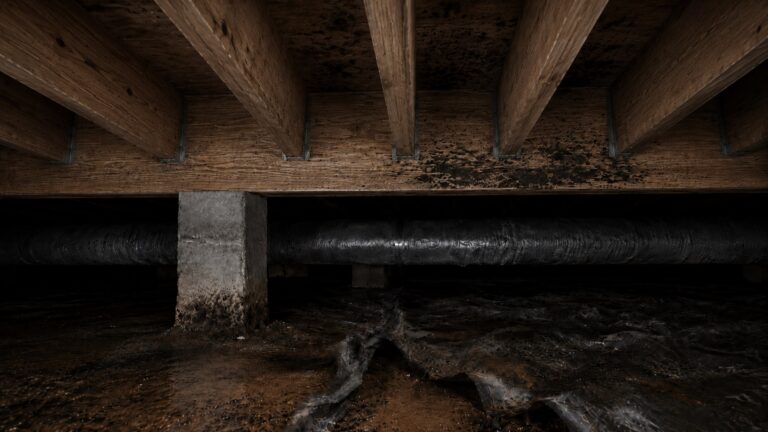
Persistent Mold Odors or Visible Growth
Mold development is one of the most serious consequences of long-term refrigerator leaks. Persistent moisture creates ideal conditions for microbial growth behind appliances and inside enclosed spaces.
Signs of mold-related problems include:
- Strong musty odors that do not fade
- Visible dark or green patches behind the appliance
- Recurring odors after cleaning
- Moisture combined with discoloration
Do not cover, paint over, or clean visible growth until the refrigerator leak source is corrected. Mold-like growth behind or under a refrigerator usually means moisture is still present, and cleanup alone will not solve the problem if water continues to enter the area.
Early vs Serious Refrigerator Leak Signs
Not every sign behind a refrigerator means the same level of damage. Early symptoms usually point to moisture starting in the area, while serious symptoms suggest the leak has affected surrounding materials for longer.
| Early signs | Serious signs |
|---|---|
| Faint musty odor near the floor | Strong mold-like odor that keeps returning |
| Slight flooring discoloration | Warped, buckled, or soft flooring |
| Small damp spot near the rear wall | Recurring puddles after cleanup |
| Minor baseboard swelling | Soft baseboards, peeling paint, or spreading stains |
| Occasional moisture after appliance operation | Moisture appearing in the same location repeatedly |
When Refrigerator Leaks Become Serious
Refrigerator leaks can progress from minor dampness to structural damage if ignored.
High-Risk Warning Signs
- Flooring becomes unstable or severely warped
- Cabinet bases collapse or separate
- Water spreads into nearby rooms
- Persistent strong mold odors develop
- Repeated moisture appears despite cleaning
Stop DIY inspection if the floor feels unstable, water appears near electrical components, the refrigerator cannot be moved safely, or visible growth is spreading behind the appliance. At that point, the safest next step is to stop new water entry and have the leak source and surrounding materials evaluated before covering the area again.
If serious leak conditions are suspected, comparing symptoms with how to detect hidden refrigerator water line leaks can help identify whether an active leak source remains.
If more than one serious warning sign appears at the same time, such as soft flooring, spreading stains, recurring puddles, or mold-like odor, the leak may have affected materials beyond the visible surface. In that case, avoid covering the area until the moisture source and damage extent are confirmed.
Frequently Asked Questions About Water Leaks Behind Refrigerators
Why is there water behind my refrigerator?
Water behind a refrigerator is usually caused by a leaking ice maker supply line, clogged defrost drain, or overflowing condensation system. Even small leaks can create recurring moisture that spreads into flooring and nearby materials. If moisture appears repeatedly, it usually indicates an active leak rather than a one-time spill.
How often should I check behind my refrigerator for leaks?
It is a good idea to inspect behind your refrigerator at least once or twice per year. If the refrigerator has an ice maker or water dispenser, check more often because the supply line and connections add extra leak points. Regular inspection helps identify moisture problems before structural damage begins.
Can refrigerator leaks cause mold growth?
Yes, refrigerator leaks can create conditions that support mold growth, especially in enclosed spaces behind appliances. If you suspect mold may already be present, compare your symptoms with signs of mold under refrigerators to understand whether mold-specific warning signs are developing.
Is it safe to move a refrigerator to check for leaks?
Most refrigerators can be moved carefully for inspection, but caution is important. Always unplug the appliance before moving it, and avoid pulling sharply on water lines. If the refrigerator is connected to a water supply, move it slowly to prevent damaging hoses or fittings.
Are refrigerator leaks usually serious?
Many refrigerator leaks begin as small problems but become serious if ignored. Early-stage leaks may cause only minor dampness, while long-term leaks can damage flooring, cabinets, and walls. Recognizing warning signs early helps prevent major repairs and reduces the risk of mold development.
What to Do When Refrigerator Leak Signs Keep Returning
If water leak signs behind a refrigerator keep returning, treat the problem as an active moisture source rather than a one-time spill.
If symptoms continue or worsen over time, the next step is identifying the source of the leak. In those situations, reviewing how to detect hidden refrigerator water line leaks can help pinpoint the exact location of moisture entry.
Keep the area open until the leak source is corrected and nearby materials are dry. After the area is dry and the leak source is corrected, use how to prevent refrigerator water line leaks to reduce the chance of the same problem returning.
Key Takeaways
- Refrigerator leaks are often hidden and may remain unnoticed for weeks or months.
- Musty odors and damp flooring are common early warning signs.
- Ice maker supply lines, water connections, and defrost drain problems are common refrigerator moisture sources.
- Recurring moisture usually indicates an active leak rather than a one-time spill.
- Structural damage can occur if moisture remains unchecked.
- Regular inspections behind refrigerators help prevent major repairs.
- Early detection reduces the risk of mold growth and costly damage.
3 Comments
Comments are closed.