
How to Inspect Kitchen Sink Pipes for Hidden Leaks (Step-by-Step Guide)
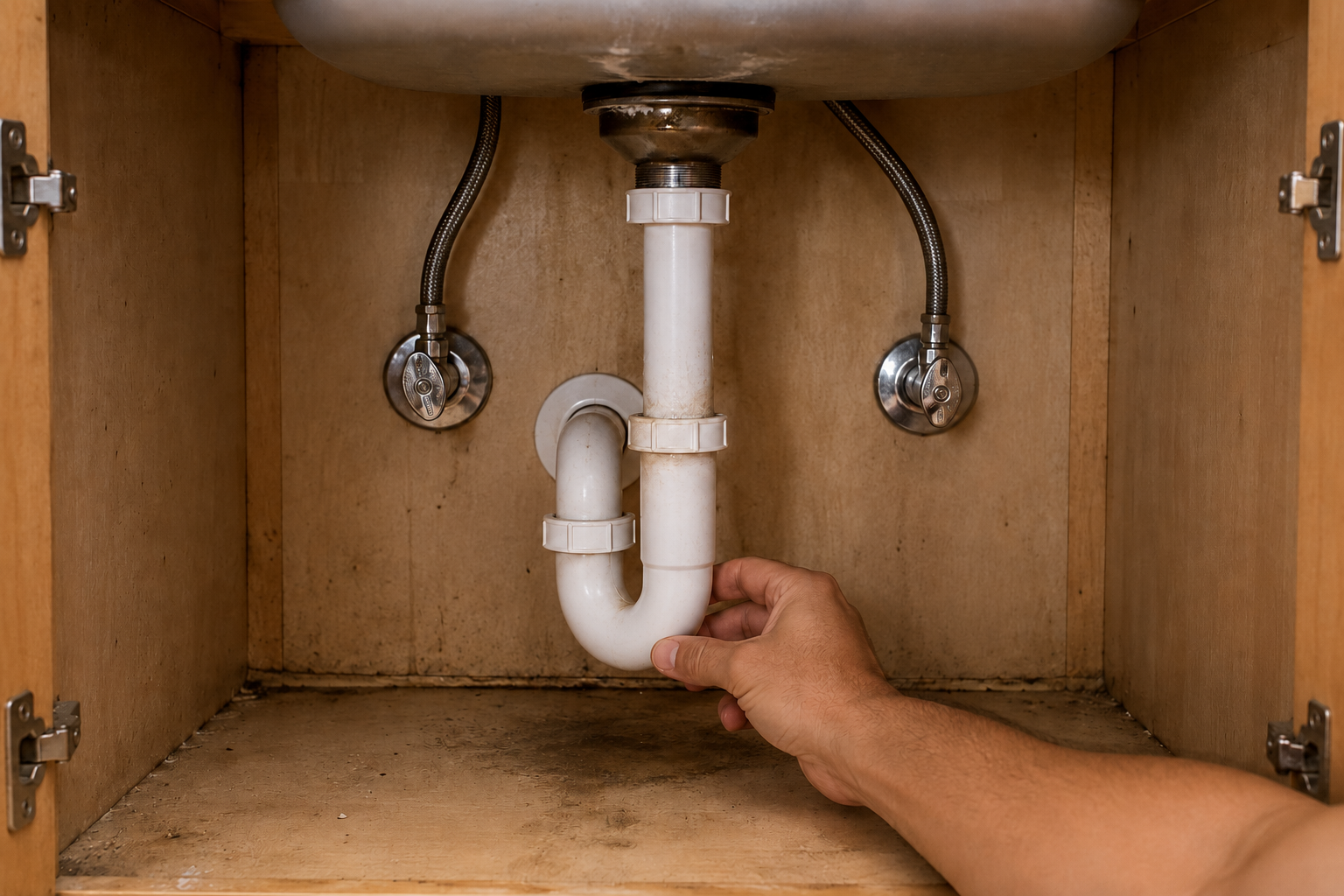
To inspect kitchen sink pipes for hidden leaks, empty the cabinet, dry all pipe surfaces, examine supply lines and shutoff valves, look over the drain trap and disposal connections, then run hot and cold water while watching each joint for new moisture. Use a flashlight and dry paper towels to confirm whether water is actively forming instead of relying only on visible stains.
Kitchen sink plumbing includes multiple connection points that experience pressure, vibration, and repeated use. These conditions make hidden leaks more likely to develop over time, especially around supply lines, shutoff valves, drain traps, faucet sprayer hoses, garbage disposal fittings, and dishwasher hose connections. Because these leaks can damage cabinets and nearby materials, this article supports the broader plumbing damage guidance in how plumbing leaks cause structural damage. If early moisture symptoms are already present, comparing conditions with signs of water damage under kitchen sinks helps determine whether pipe inspection is necessary.
This guide focuses on physical pipe inspection under the sink. If moisture has already been detected but the source remains unclear, combining this inspection process with the detection strategies described in how to detect slow leaks under kitchen sinks can help separate active leaks from old stains or intermittent moisture.
Why Hidden Pipe Leaks Are Common Under Kitchen Sinks
Kitchen sink pipes experience frequent use, pressure changes, vibration, and temperature shifts. Over time, these stresses can loosen fittings, wear seals, and allow small leaks to form inside the enclosed cabinet space where they are easy to miss.
Several factors contribute to the frequency of hidden leaks under kitchen sinks:
- Frequent water flow through supply lines
- Temperature changes between hot and cold water
- Vibration from garbage disposals
- Movement of flexible hoses
- Wear of seals and washers over time
These stress points explain why slow leaks often start at fittings, hoses, valves, and drain connections instead of in the middle of straight pipe runs.
Tools Needed to Inspect Kitchen Sink Pipes Safely
Successful pipe inspection depends on using the right tools. Most inspections require only simple household items, but using them correctly improves accuracy and safety.
Essential inspection tools include:
- Flashlight: Provides bright illumination for viewing hidden areas.
- Paper towels: Used to dry fittings first and confirm new moisture during testing.
- Protective gloves: Prevent contact with sharp edges or contaminants.
- Inspection mirror or phone camera (optional): Helps view rear pipe connections, wall-side fittings, and hidden hose connections.
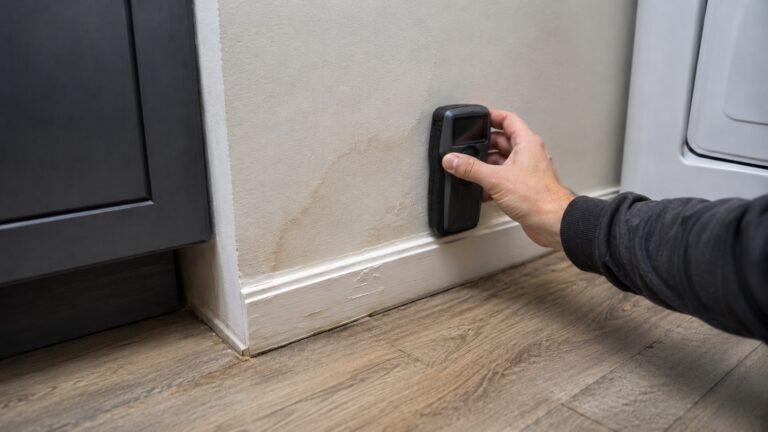
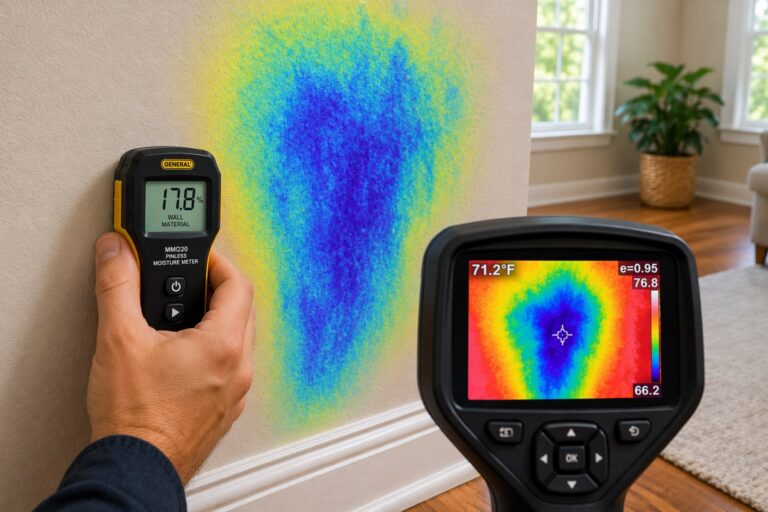
- Moisture meter (optional): Detects hidden moisture inside materials.
Dry surfaces before testing so any new moisture is easier to identify.
How to Prepare for a Safe Pipe Inspection
Proper preparation improves inspection accuracy and reduces the chance of missing hidden leaks. Most inspection failures occur because clutter blocks visibility or lighting is insufficient.
If active dripping is near electrical components or a garbage disposal, avoid touching wet electrical areas. Shut off power to the disposal before inspecting around the unit closely.
Clear the Cabinet Interior Completely
Removing stored items allows full access to plumbing components. Hidden leaks often occur behind stored items where moisture cannot be easily seen.
Before inspection:
- Remove all stored items from the cabinet
- Clear the cabinet floor completely
- Move containers temporarily outside the cabinet
- Ensure all plumbing components remain visible
Clearing the cabinet makes rear fittings, hose connections, and cabinet-floor stains easier to see.
Check for Existing Signs of Moisture
Before running water, examine the cabinet for visible signs of moisture damage. These signs provide valuable clues about possible leak locations.
Look for:
- Water stains on cabinet surfaces
- Discoloration around pipe connections
- Swelling or warping of cabinet materials
- Rust marks on metal components
- Mineral deposits near fittings
If mold odors or visible growth are present during inspection, reviewing signs of mold under kitchen sink cabinets helps determine whether mold remediation may be necessary.
Set Up Proper Lighting Conditions
Lighting plays a critical role in leak detection. Dim lighting makes it difficult to see small moisture patterns that indicate slow leaks.
To improve visibility:
- Use a bright flashlight rather than overhead lighting alone
- Direct light toward pipe connections
- Illuminate rear cabinet areas carefully
- Use mirrors to view hidden locations
Proper lighting improves the ability to identify moisture patterns that would otherwise remain unnoticed.
Step-by-Step Kitchen Sink Pipe Inspection Process
Pipe inspection should follow a structured sequence to avoid missing critical areas. Random inspection often overlooks important leak points.
Quick order: inspect dry pipes first, feel fittings carefully, run water, test hot and cold lines, fill and drain the basin, test the faucet sprayer or pull-down hose, then use paper towels to confirm active leaks.
Step 1: Inspect Pipes With Water Turned Off
The first inspection stage focuses on identifying visible moisture patterns before introducing water pressure. Static inspection reveals existing leaks that may not be actively dripping during observation.
With water turned off:
- Inspect pipe surfaces carefully
- Check joints and connections closely
- Look for moisture beads or stains
- Observe mineral residue buildup
- Examine surrounding cabinet materials
This step helps identify historical leak patterns and areas that require closer attention during later testing.
Step 2: Feel Pipe Connections for Hidden Moisture
Some leaks produce moisture that is difficult to see but easy to feel. Wear gloves and use light pressure when checking pipe connections, especially near sharp cabinet edges, metal clamps, or disposal hardware.
Gently check:
- Pipe joints and fittings
- Drain trap connections
- Supply line connections
- Valve stems and handles
- Pipe transitions between materials
Pay attention to surfaces that feel:
- Damp or sticky
- Slightly cool compared to surrounding areas
- Soft or swollen nearby
These conditions suggest moisture exposure that may indicate a slow leak.
Step 3: Run Water to Perform Active Leak Testing
After completing the static inspection, active testing reveals leaks that occur only under pressure. Many leaks appear only while water is flowing, making this step critical for accurate detection.
Turn on the sink and allow water to run steadily for 30 to 60 seconds. Then fill the basin partway and release the drain to test the drain assembly under a heavier flow. While water is flowing and draining, inspect all pipe connections carefully.
Watch closely for:
- New droplets forming at joints
- Water running along pipe surfaces
- Moisture spreading across cabinet flooring
- Dripping beneath pipe connections
If moisture appears during this step, the leak source is likely active and requires prompt attention.
Step 4: Test Both Hot and Cold Water Lines
Hot and cold water lines expand and contract at different temperatures. This movement stresses pipe connections and may trigger leaks that do not appear under normal conditions.
Run hot water separately for 30 to 60 seconds, then repeat the process with cold water. Observe whether moisture appears during either temperature cycle.
Leaks triggered by temperature changes often indicate:
- Loose fittings
- Worn seals
- Material expansion stress
If a leak appears only during hot or cold water testing, note which temperature caused it before tightening fittings or calling a plumber.
Step 5: Test the Faucet Sprayer and Pull-Down Hose
If the sink has a pull-down faucet, side sprayer, or flexible faucet hose, test it separately. These hoses can leak only when moved, extended, or placed under spray pressure.
Pull the sprayer out, run water through it, move the hose gently, and inspect beneath the faucet body and along the hose path inside the cabinet. Look for dripping, damp hose surfaces, or water running down from the underside of the sink deck.
Step 6: Use Paper Towels to Confirm Active Leaks
The paper towel method provides a simple way to confirm whether moisture is actively forming. This technique works especially well for slow leaks that produce small amounts of water.
Place dry paper towels beneath:
- Drain trap connections
- Supply line fittings
- Shutoff valves
- Dishwasher hose connections
- Faucet sprayer or pull-down hose connections
Leave the paper towels in place while running water, draining the basin, testing the sprayer, and testing hot and cold water separately. If a new moisture spot appears, trace it upward or backward to the highest wet point, because water may travel along a pipe before dripping.
How to Identify Hidden Leak Indicators
Not all leaks produce visible dripping. Many hidden leaks reveal themselves through environmental changes rather than direct water flow.
Look for Mineral Deposits Around Pipe Connections
Mineral deposits form when water evaporates from leaking connections. These deposits often appear as white or chalky residue around fittings.
Mineral buildup commonly occurs near:
- Threaded connections
- Compression fittings
- Valve joints
- Drain trap connections
Even when moisture is not currently visible, mineral residue indicates past water exposure that may still be occurring.
Watch for Rust or Corrosion
Rust forms when metal components remain exposed to moisture over time. Corrosion often indicates long-term leaks rather than sudden water exposure.
Check for rust on:
- Pipe fittings
- Fasteners
- Valve handles
- Metal clamps
Rust signals persistent moisture and requires careful inspection of nearby connections.
Inspect Cabinet Materials for Swelling or Warping
Cabinet materials absorb water gradually, making swelling and warping reliable indicators of hidden leaks.
Look for:
- Raised cabinet flooring
- Warped side panels
- Soft or spongy surfaces
- Discoloration patterns
If cabinet materials are swollen, soft, or damp after the leak source is found, how to dry kitchen sink cabinets after leaks is the better next-step guide.
Where Leaks Most Often Occur Under Kitchen Sinks
Leaks rarely occur in random locations. Most develop at predictable points where plumbing components connect or move.
Faucet Base and Sprayer Hose Connections
Leaks from the faucet base, sprayer hose, or underside of the sink deck can drip into the cabinet and appear to come from pipes below. These leaks often occur only when water splashes around the faucet or when a pull-down sprayer is used.
Check beneath the faucet body, around mounting hardware, and along any flexible sprayer hose. If moisture starts high under the sink deck, the leak may be coming from the faucet area rather than the drain trap or supply lines.
Supply Line Connections
Supply lines connect directly to water sources and remain under constant pressure. Over time, fittings loosen or seals wear out, increasing the likelihood of leakage.
Check these locations carefully:
- Compression fittings
- Flexible hose connectors
- Shutoff valve connections
- Pipe transitions near the wall
Supply line leaks often appear as slow seepage rather than sudden dripping.
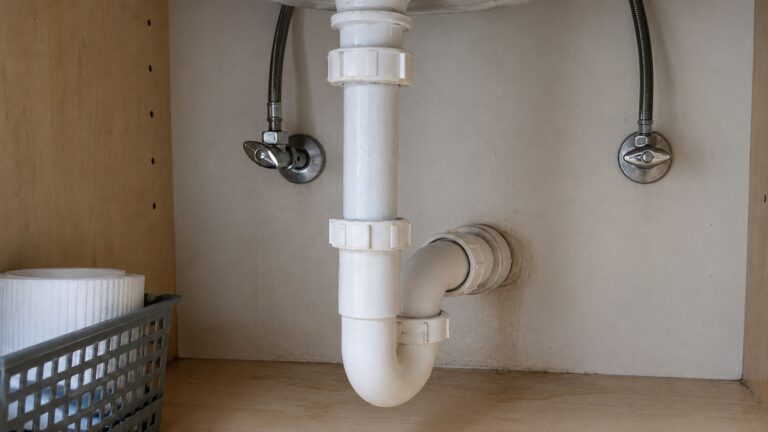
Drain Trap Assemblies
Drain traps experience frequent water movement and mechanical stress. These conditions make them one of the most common leak sources under kitchen sinks.
Inspect drain traps for:
- Loose slip joints
- Cracked pipe segments
- Wet fittings
- Odor presence
Drain trap leaks often produce both moisture and persistent odors.
Shutoff Valves
Shutoff valves regulate water supply but often develop leaks around valve stems or threads. These leaks usually form slowly and remain unnoticed until moisture damage appears.
Examine shutoff valves closely for:
- Damp valve handles
- Rust staining
- Mineral buildup
- Moisture beneath valve bases
Valve leaks frequently occur after extended periods of inactivity or sudden pressure changes.
Dishwasher Hose Connections
Dishwasher hose connections are a common hidden leak source because they are often positioned behind other plumbing components. These connections may loosen over time due to vibration or temperature changes.
Carefully inspect dishwasher connections for:
- Loose hose clamps
- Moisture near hose entry points
- Water marks along cabinet walls
- Dampness behind nearby plumbing
Dishwasher leaks may occur intermittently during wash cycles, making repeated inspection necessary.
Garbage Disposal Connections
Garbage disposals introduce vibration into plumbing systems. Over time, this vibration loosens fittings and weakens seals, increasing the risk of leaks.
Inspect garbage disposal connections for:
- Moisture near the disposal housing
- Damp pipe transitions
- Loose mounting connections
- Signs of residue buildup
Even minor vibration-related leaks can create long-term moisture problems if left unaddressed.
How to Confirm Whether a Pipe Is Leaking
Confirming whether moisture is coming from an active leak is essential before taking further action. Not all moisture indicates ongoing leakage. Some stains or damage may result from past leaks that are no longer active.
Use Repeated Testing to Verify Active Leaks
Active leaks usually produce new moisture consistently. Repeating inspection steps helps confirm whether moisture continues to develop.
Repeat the following process:
- Dry suspected areas completely
- Run water for 30 to 60 seconds
- Inspect the same area again
- Watch for new moisture formation
If moisture reappears, the leak remains active and requires immediate attention.
Differentiate Between Old and New Moisture Damage
Distinguishing between historical damage and active leaks helps determine the next steps. Old damage does not always require immediate repair if moisture is no longer present.
Signs of historical damage include:
- Dry stains without new moisture
- Stable discoloration patterns
- No moisture spread during testing
- No odor development
Signs of active leaks include:
- Growing moisture spots
- New droplets forming
- Expanding damp areas
- Recurring moisture patterns
Understanding these differences helps prevent unnecessary repairs while ensuring active leaks receive prompt attention.
Monitor Suspected Areas Over Time
Some leaks occur only under certain conditions. Monitoring suspected areas over time increases detection accuracy.
Check suspected areas:
- After heavy sink use
- After dishwasher cycles
- After extended hot water use
- After using the faucet sprayer or pull-down hose
- During seasonal humidity changes
Monitoring helps identify intermittent leaks that might otherwise remain hidden.
How Often to Reinspect Kitchen Sink Pipes
Some kitchen sink leaks appear only after heavy sink use, dishwasher cycles, temperature changes, or recent plumbing movement, so one inspection may not catch every problem.
Recommended Inspection Frequency
Routine inspection schedules reduce the likelihood of unnoticed leaks.
Recommended intervals include:
- Monthly: Quick visual inspection
- Quarterly: Detailed inspection process
- After repairs: Immediate follow-up inspection
- After appliance installation: Confirm connection stability
Regular inspection reduces the chance that a slow leak will soak cabinet materials for weeks before being noticed.
Repeat Inspections After Detecting Moisture
If moisture is discovered during inspection, repeating the process ensures the problem has been fully resolved.
After addressing moisture:
- Reinspect within 24 hours
- Check again after several days
- Monitor for recurring moisture patterns
- Confirm all surfaces remain dry
Persistent moisture requires further investigation and corrective action.
When to Call a Professional for Pipe Inspection
Some plumbing problems require professional evaluation. Knowing when to seek expert help prevents further damage and improves repair outcomes.
Call a Professional If Leak Sources Cannot Be Found
If moisture persists despite repeated inspections, hidden plumbing problems may exist behind walls or inside cabinet structures.
Professional evaluation becomes necessary when:
- Moisture appears without visible source
- Cabinet materials continue absorbing water
- Odors persist despite cleaning
- Leak location remains unknown
Persistent unidentified moisture may indicate hidden plumbing failures.
Seek Help for Structural Damage or Recurring Leaks
Structural damage increases safety risks and may require professional repair. Recurring leaks often indicate underlying system failure rather than isolated connection problems.
Professional repair is recommended if:
- Cabinet flooring becomes soft
- Structural components weaken
- Leaks return after temporary fixes
- Moisture spreads to surrounding areas
If leaks return after tightening, cleaning, or temporary correction, the issue has moved beyond basic inspection. At that point, how to fix persistent leaks under kitchen sinks is the better next-step guide.
Frequently Asked Questions About Inspecting Kitchen Sink Pipes
How long should a kitchen sink pipe inspection take?
A typical inspection takes between 5 and 15 minutes for routine checks and up to 30 minutes for a detailed inspection. The time required depends on how many connections are present and whether hidden moisture indicators are discovered.
Quick inspections help identify visible leaks, while detailed inspections improve the likelihood of finding slow or intermittent moisture sources.
Do I need special tools to inspect kitchen sink pipes?
Most inspections can be completed using simple household tools such as a flashlight and paper towels. Optional tools like inspection mirrors or moisture meters improve detection accuracy but are not required for basic inspections.
Reliable inspection depends more on careful observation than specialized equipment.
How often should I inspect kitchen sink pipes for leaks?
Monthly inspections are recommended for most households. Regular checks reduce the amount of time leaks remain unnoticed and lower the risk of long-term cabinet damage.
Additional inspections should occur:
-After plumbing repairs
-After installing new appliances
-When unusual odors appear
-When moisture is suspected
Frequent inspection significantly reduces leak-related damage.
Can small leaks cause serious damage?
Yes, even small leaks can cause significant damage over time. Slow leaks allow moisture to remain inside cabinet materials, which increases the risk of mold growth and structural weakening.
Many severe cabinet failures begin with slow leaks that were initially overlooked.
What should I do if I find moisture but no visible leak?
If moisture is present but no visible leak is found, continue monitoring the area over time. Some leaks occur intermittently and may appear only during heavy usage or pressure changes.
If moisture continues to appear without an obvious source, further detection steps described in how to detect slow leaks under kitchen sinks may help identify hidden leak sources.
How do I know if water under my kitchen sink is from a pipe leak?
Water under a kitchen sink is more likely from a pipe leak if fresh moisture appears while the faucet is running, the basin is draining, the dishwasher is operating, or the sprayer hose is being used. Dry the area first, run each water source separately, and use paper towels under each connection to see where new moisture appears.
Final Inspection Checklist for Kitchen Sink Pipe Leaks
Regular kitchen sink pipe inspection helps catch small leaks before cabinet materials swell, mold develops, or moisture spreads into nearby surfaces. Dry the area first, inspect each connection, test the faucet, drain, hot water, cold water, dishwasher hose, and sprayer hose separately, then confirm suspicious areas with paper towels or repeated checks.
If moisture damage is discovered during inspection, reviewing the drying procedures outlined in how to dry kitchen sink cabinets after leaks helps restore safe cabinet conditions and prevent long-term damage.
Key Takeaways
- Hidden pipe leaks are common under kitchen sinks due to frequent water use and connection stress.
- Drying fittings before testing makes new moisture easier to identify.
- Both static and active testing are necessary to detect hidden moisture sources.
- Faucet bases, sprayer hoses, supply lines, drain traps, shutoff valves, dishwasher hoses, and disposal connections are common leak points.
- Repeated inspections improve detection of intermittent leaks.
- Early leak detection reduces the risk of mold and structural damage.
- Professional inspection may be required when moisture sources cannot be identified.
2 Comments
Comments are closed.