

Signs of Mold Under Kitchen Sink Cabinets
Mold under kitchen sink cabinets is one of the most common hidden moisture problems in homes. The space beneath a sink combines plumbing connections, enclosed cabinet materials, and limited airflow—conditions that allow moisture to linger and mold to develop quietly over time. Many homeowners first notice something unusual when they detect a musty smell, see discoloration on the cabinet floor, or discover swelling in the cabinet base.
If left unnoticed, mold growth under the sink can spread into surrounding materials, including cabinet walls, nearby flooring, and even the wall cavity behind the cabinet. Understanding the early signs allows homeowners to act before damage becomes widespread. Because under-sink mold often begins with plumbing moisture, it also helps to understand how plumbing leaks cause structural damage and why small leaks can affect cabinets, floors, and wall materials over time.
This article focuses specifically on recognizing the warning signs of mold under kitchen sink cabinets, including musty odor, discoloration, fuzzy or speckled growth, swelling cabinet materials, and damp areas around plumbing. It does not cover full mold removal, drying, or leak repair procedures; instead, it helps you decide whether mold may already be present so you can take the correct next step.
Why Mold Under Kitchen Sink Cabinets Is Easy to Miss
The cabinet beneath a kitchen sink is one of the most overlooked moisture-prone areas in a home. Unlike visible wall or ceiling leaks, moisture problems under sinks often develop slowly and remain hidden behind stored items, cleaning supplies, and plumbing fixtures.
Several structural and environmental factors make under-sink cabinets especially vulnerable to mold growth:
- Multiple plumbing connections — supply lines, drain pipes, and appliance connections create several potential leak points.
- Enclosed cabinet design — limited airflow traps moisture inside the cabinet.
- Moisture-sensitive materials — particleboard and MDF cabinet floors absorb water quickly and dry slowly.
- Frequent temperature changes — cold water pipes can create condensation, even when no leak exists.
- Storage habits — stored bottles, towels, and cleaning supplies block airflow and hide early damage.
These conditions allow moisture to remain trapped long enough for mold to grow—even when leaks are small or intermittent. In many cases, homeowners discover mold only after noticing other signs of water damage, such as swelling cabinet flooring or peeling laminate. If you are already seeing physical damage but are unsure whether mold is present, it may help to review the warning indicators described in signs of water damage under kitchen sinks, which often appear before mold becomes visible.
Another reason mold under sinks is often missed is that many leaks occur slowly. Small drips from supply valves, loose drain fittings, or aging seals may not produce visible puddles. Instead, they create repeated damp conditions that support mold growth over time. If you suspect this type of slow moisture problem, learning how to detect slow leaks under kitchen sinks can help identify hidden moisture sources before damage spreads.
Because these problems usually develop slowly, the first warning signs are often subtle: odor, discoloration, swelling, dampness, or surface texture changes.
Common Signs of Mold Under a Kitchen Sink Cabinet
Mold under a kitchen sink cabinet rarely appears suddenly. In most cases, it develops gradually as moisture accumulates in enclosed spaces around plumbing components. Recognizing the earliest warning signs can prevent small problems from turning into widespread cabinet damage or hidden wall contamination.
The signs listed below are among the most reliable indicators that mold may already be growing under your kitchen sink. Many homeowners notice more than one of these symptoms at the same time.
Quick check: Empty the cabinet, look around pipe openings and rear seams, check for musty odor after the doors have been closed, and compare any stains with nearby dampness or swelling.
Persistent Musty Odor Inside the Cabinet
A musty smell is often the first sign of mold growth under a kitchen sink cabinet. Even when mold is not yet visible, fungal growth can release odor-causing compounds that build up inside enclosed cabinet spaces.
You may notice this odor:
- When opening the cabinet doors after they have been closed
- After running water or using the sink
- During warm or humid weather
- When removing stored cleaning supplies or containers
If the odor returns repeatedly after cleaning or airing out the cabinet, moisture is likely still present. Mold thrives in environments where materials remain damp for extended periods, especially around pipe connections or cabinet seams.
Understanding why mold develops in enclosed cabinet spaces can help explain persistent odors. This detailed explanation of why mold forms under kitchen sink cabinets outlines the moisture conditions that commonly lead to hidden growth.
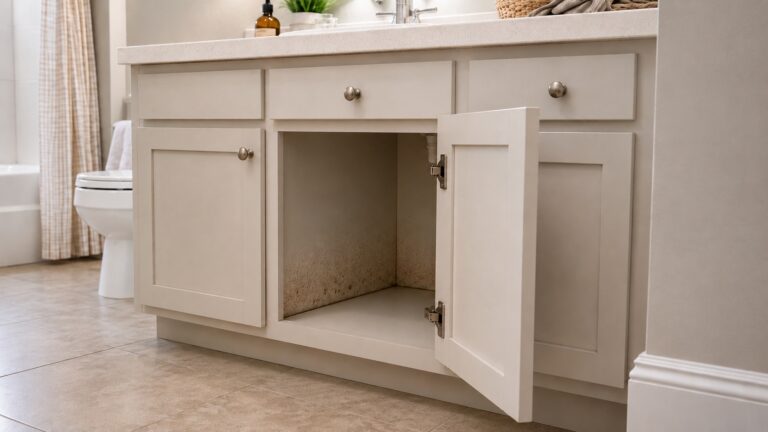
Dark Spots or Patchy Discoloration on Cabinet Surfaces
Visible mold growth often appears as dark spots, irregular patches, or speckled discoloration on cabinet surfaces. These marks may develop slowly and expand outward as moisture conditions persist.
Common locations where discoloration appears include:
- The cabinet floor panel beneath plumbing fixtures
- Around pipe entry holes in the cabinet base
- The rear wall of the cabinet
- The underside of the countertop near the sink basin
- Along cabinet corners or seams
Mold discoloration may appear in several colors, including:
- Black or dark gray speckles
- Greenish patches
- White or powdery surface growth
- Yellowish staining around damp areas
Not all discoloration is mold, but spreading patches combined with moisture damage strongly suggest biological growth rather than simple staining. In cases where discoloration appears alongside soft or swollen materials, moisture exposure has likely persisted long enough to support mold colonization.
Swollen or Warped Cabinet Flooring
Cabinet base panels—especially those made from particleboard or MDF—are highly sensitive to moisture. When exposed to repeated dampness, these materials absorb water and begin to swell.
Signs of swelling or warping include:
- Raised areas on the cabinet floor
- Bulging seams along panel edges
- Uneven or spongy surfaces
- Laminate lifting or peeling away
Swelling often occurs before mold becomes visible, making it one of the earliest mechanical signs of moisture-related problems. Once cabinet materials begin to degrade, mold growth becomes more likely because damp materials remain trapped within the cabinet structure.
If cabinet materials have already absorbed moisture, proper drying becomes critical. This guide to drying kitchen sink cabinets after leaks explains how moisture removal affects mold risk and long-term cabinet stability.
Peeling Cabinet Liner or Interior Coating
Many homeowners install protective liners inside kitchen sink cabinets to protect against spills. While liners can help manage minor moisture, they can also hide early mold development if water becomes trapped beneath them.
Watch for signs such as:
- Liners that curl upward or detach from the cabinet floor
- Adhesive failure around liner edges
- Dark staining visible beneath clear liners
- Dampness trapped under removable mats
Peeling liners often indicate moisture accumulation below the surface. If mold growth is suspected, removing the liner for inspection is often necessary to evaluate the cabinet base properly.
Soft or Crumbling Cabinet Base Material
As moisture exposure continues, cabinet materials begin to weaken. Particleboard and MDF are especially vulnerable to structural breakdown when repeatedly exposed to water.
Signs of material breakdown include:
- Soft spots that compress under pressure
- Flaking or crumbling surfaces
- Edges that chip easily when touched
- Powdery residue forming along seams
Softening materials create an ideal environment for mold because they trap moisture internally. Once structural breakdown begins, mold growth can spread rapidly into deeper cabinet layers and nearby materials.
Condensation or Damp Surfaces Around Pipes
Condensation forming on cold water lines can create ongoing moisture problems even when no visible leak exists. Over time, this moisture may drip onto the cabinet floor or remain trapped in small pockets around pipe connections.
Signs of condensation-related moisture include:
- Water droplets forming on supply lines
- Damp areas directly below pipes
- Wet rings around pipe entry holes
- Repeated moisture after normal sink use
Condensation-related moisture is often misunderstood as a plumbing leak. While both can lead to mold growth, identifying the correct moisture source is essential for long-term prevention.
If you suspect moisture from plumbing components but are unsure where it originates, performing a careful inspection of pipe connections is recommended. Learning how to inspect kitchen sink pipes for hidden leaks can help identify whether condensation or leakage is contributing to mold conditions.
What Mold Looks Like Inside a Sink Base Cabinet
Mold under a kitchen sink cabinet does not always appear in dramatic patches. It often begins as small, scattered spots that expand along seams, edges, pipe openings, and other areas where moisture collects.
Do not rely on color alone to judge severity. Black, green, white, gray, or yellowish growth can all indicate moisture-supported mold, and the size of the affected area and the condition of the cabinet material matter more than color alone.
Small Speckled Spots Along Cabinet Surfaces
Early mold growth often appears as small speckled spots rather than large patches. These spots may be easy to overlook at first, especially when they form near plumbing components or in shadowed corners.
Common areas where speckling begins include:
- Around pipe openings in the cabinet floor
- Along rear cabinet seams
- Inside corners where airflow is limited
- Under stored containers or cleaning supplies
- Beneath removable cabinet liners
Speckled mold may look similar to dust or debris at first glance. However, unlike dust, mold colonies tend to remain fixed in place and gradually increase in number or size over time.
Patchy or Irregular Mold Growth Patterns
As moisture conditions continue, mold colonies expand and begin forming irregular patches. These patches rarely appear as perfectly shaped circles. Instead, they grow unevenly based on moisture availability and surface texture.
Typical patch patterns include:
- Blotchy clusters with uneven edges
- Growth concentrated along damp seams
- Irregular discoloration spreading outward from pipe openings
- Darkened areas surrounding previously wet spots
Patchy growth usually indicates ongoing moisture exposure. In many cases, the moisture source has been active for weeks or months before mold becomes clearly visible.
Fuzzy or Powdery Surface Texture
Mold often develops a noticeable texture as colonies mature. Depending on the species and environmental conditions, mold growth may appear fuzzy, dusty, or powdery.
Texture differences can include:
- Soft, fuzzy growth that lifts slightly from the surface
- Powdery residue that transfers when touched
- Thin film-like layers across damp surfaces
- Velvety patches forming in humid areas
Texture is an important clue because many stains or mineral deposits remain smooth and flat. If discoloration has a raised or textured surface, mold becomes a more likely explanation.
Color Variations That Suggest Mold Growth
Mold under kitchen sink cabinets may appear in several colors. While many homeowners associate mold with black discoloration, mold colonies can develop in multiple shades depending on environmental conditions.
Common color variations include:
- Black or charcoal-gray spotting
- Green or olive-colored patches
- White or pale gray powdery areas
- Yellowish staining near damp materials
Color alone cannot identify mold type or severity. However, color changes that appear alongside damp materials or persistent odors strongly suggest active growth.
When Musty Odor Means the Problem Is Still Active
Musty odor deserves attention when it returns after cleaning, becomes stronger after sink use, or is strongest when the cabinet doors first open. Those patterns suggest moisture may still be trapped inside the cabinet rather than being a one-time smell from trash, cleaners, or stored items.
A Strong Musty Smell When Opening the Cabinet
A sudden release of musty odor when opening cabinet doors is one of the most reliable early indicators of hidden mold. The smell may fade while the cabinet is open but return after the doors stay closed again, especially if moisture is still trapped inside.
Odors That Become Stronger After Sink Use
If odors intensify after running water, washing dishes, or using the dishwasher, moisture is likely interacting with mold colonies already present inside the cabinet.
This behavior may indicate:
- A slow leak activated during water use
- Condensation forming on supply lines
- Moisture movement inside cabinet seams
If odor increases only after the sink runs, the mold sign may be connected to an active plumbing condition rather than old staining alone.
Persistent Odors Despite Cleaning
If musty smells remain even after cleaning the cabinet interior, mold growth may exist in hidden areas. Cleaning surface materials alone rarely eliminates mold if moisture remains trapped beneath cabinet flooring or behind interior panels.
Persistent odor is often associated with deeper moisture problems that extend beyond the visible cabinet surface. These conditions frequently develop when minor leaks continue unnoticed for extended periods.
If you are uncertain whether mold odors indicate an ongoing leak problem, learning about the underlying plumbing causes described in why kitchen sink plumbing develops hidden leaks can help explain why mold conditions often reappear after temporary cleanup.
Cabinet Damage That Strengthens the Mold Warning
Cabinet damage does not prove mold by itself, but it makes mold more likely when it appears with musty odor, visible spotting, or repeated dampness. Swollen edges, peeling laminate, soft particleboard, and darkening water stains all suggest the cabinet has stayed wet long enough for mold to become a concern.
Swollen Edges Around Cabinet Panels
Cabinet panel edges often absorb moisture first because they contain exposed fibers. Swelling at these edges is a strong indicator that moisture has been present repeatedly.
Typical swelling patterns include:
- Raised edges near pipe openings
- Bulging seams along cabinet joints
- Uneven surface transitions between panels
- Warped sections near damp areas
These physical changes usually appear before visible mold colonies develop. If swelling continues without correction, structural failure may follow.
Peeling Laminate or Decorative Surfaces
Many cabinets use laminate surfaces to protect underlying materials. When moisture enters these layers, adhesive bonds weaken, causing visible peeling.
Signs of peeling include:
- Laminate lifting away from cabinet surfaces
- Bubbling beneath surface coatings
- Cracking along decorative finishes
- Delamination near wet areas
Peeling laminate often exposes moisture-sensitive materials beneath, increasing the risk of mold colonization.
Water Stains That Continue to Darken Over Time
Water stains are common in under-sink cabinets, but stains that gradually darken or expand may indicate persistent moisture exposure.
These stains often appear as:
- Dark rings around pipe openings
- Spreading discoloration along cabinet seams
- Uneven shading across cabinet flooring
- Streak-like patterns beneath plumbing fixtures
Water stains alone do not confirm mold growth, but when combined with musty odor or soft materials, mold becomes more likely.
How to Tell Mold Signs From Ordinary Dirt or Staining
Not every dark mark under a kitchen sink cabinet is mold. Many homeowners mistake mineral deposits, dirt buildup, or adhesive residue for mold growth. Learning how to distinguish mold from harmless staining prevents unnecessary panic while still helping identify real moisture problems.
The key difference is that mold grows in response to moisture. If discoloration appears in areas that remain damp or humid, mold becomes more likely. If the area remains dry and stable, the cause may be unrelated to mold.
A practical way to judge the difference is to compare the mark with the moisture pattern. Spots near pipe openings, cabinet seams, swollen edges, or damp liner areas are more suspicious than dry marks on surfaces that never change.
Characteristics That Suggest Mold Rather Than Dirt
Mold tends to behave differently than dust or simple stains. The following signs strongly suggest mold growth:
- Spreading patterns: Mold patches often expand over time rather than remaining fixed.
- Irregular edges: Mold rarely forms perfect shapes and usually spreads unevenly.
- Texture changes: Mold growth may feel fuzzy, powdery, or slightly raised.
- Persistent odor: Musty smells frequently accompany mold growth.
- Association with moisture: Mold typically appears near damp materials.
If discoloration meets several of these conditions, mold becomes a strong possibility rather than a simple surface stain.
Common Materials That Are Often Mistaken for Mold
Several harmless materials found under kitchen sinks can resemble mold. Identifying these look-alike substances helps avoid misdiagnosis.
- Mineral deposits: Hard water can leave chalky white residue around plumbing components.
- Soap or cleaning residue: Dried liquids may create irregular staining patterns.
- Old adhesive: Cabinet liner glue can darken and resemble mold spots.
- Dust buildup: Accumulated dust may appear as dark particles in corners.
- Rust stains: Metal plumbing components sometimes create brown discoloration.
If uncertain, cleaning a small test area may help determine whether the material returns after drying. Mold growth often reappears if moisture remains present.
Why Moisture History Matters More Than Appearance Alone
Visual inspection alone does not always confirm mold growth. The moisture history of the cabinet often provides more reliable clues.
Consider the following moisture history questions:
- Has the cabinet experienced leaks in the past?
- Have supply lines or fittings been repaired recently?
- Has moisture returned repeatedly after cleaning?
- Have water stains appeared more than once?
If the cabinet has a repeated moisture history, even minor discoloration deserves attention. Persistent moisture is the primary driver behind mold development, regardless of visible surface appearance.
When Mold Under the Sink Suggests an Active Leak
Mold growth under a kitchen sink cabinet often signals more than surface moisture—it may indicate an ongoing plumbing problem. Even small leaks can sustain mold growth if moisture remains trapped inside cabinet materials.
In many cases, mold symptoms appear before visible dripping or pooling occurs.
Moisture That Returns After Drying
If cabinet surfaces appear dry after cleaning but become damp again within days, an active leak or condensation issue may still be present.
Common scenarios include:
- Loose supply line fittings that drip slowly
- Drain pipe connections that leak only during use
- Seals that allow small amounts of water to escape
- Condensation forming repeatedly on cold pipes
Repeated moisture is one of the strongest indicators that mold growth will continue unless the source is addressed.
Mold Growth Concentrated Near Plumbing Components
Mold patterns often reveal the location of hidden leaks. Concentrated growth near plumbing connections strongly suggests moisture entering from those components.
Look for mold development:
- Around drain pipe joints
- Near shutoff valves
- Along supply line connections
- At dishwasher drain hose connections
When mold clusters around specific plumbing areas, identifying the leak source becomes a priority. In situations where leaks continue to reappear, long-term repair solutions may be necessary. If repeated leaks persist despite temporary fixes, understanding options for fixing persistent leaks under kitchen sinks can help determine whether professional repair is needed.
Increasing Cabinet Damage Alongside Mold Growth
If cabinet materials continue to deteriorate while mold spreads, the moisture problem is likely ongoing. Active leaks accelerate material breakdown and allow mold to penetrate deeper layers.
Warning signs include:
- Rapidly expanding mold patches
- New swelling appearing after previous repairs
- Continued softening of cabinet materials
- Repeated staining after cleaning attempts
These symptoms suggest that the moisture source has not been fully resolved and that mold conditions may worsen without intervention.
When to Call a Professional for Mold Under Kitchen Sink Cabinets
Not every mold situation requires professional remediation, but certain warning signs indicate that expert inspection or repair may be necessary. Knowing when to seek professional help helps prevent long-term structural damage and recurring mold problems.
Mold Covers a Large Portion of the Cabinet
If mold growth spreads across significant portions of cabinet surfaces, removal may require specialized tools and protective procedures. Large contaminated areas increase the likelihood that mold has spread into hidden materials.
As a general rule, widespread mold, recurring mold after cleanup, or mold combined with soft cabinet materials should be treated more seriously than a few small surface spots on a dry, stable surface.
Professional assistance may be needed when:
- Mold covers large sections of cabinet flooring or walls
- Growth spreads behind cabinet panels
- Strong odors persist despite cleaning
- Visible mold continues returning after removal attempts
Cabinet Materials Show Structural Weakness
Severe moisture damage weakens cabinet materials and increases the risk of collapse or long-term structural failure.
Professional evaluation is recommended if:
- The cabinet floor feels unstable or severely soft
- Panels crumble when touched
- Warping affects cabinet alignment
- Moisture damage spreads to nearby flooring
Structural damage often indicates that mold growth has existed for an extended period and may involve hidden areas beyond visible surfaces.
Hidden Wall or Floor Damage Is Suspected
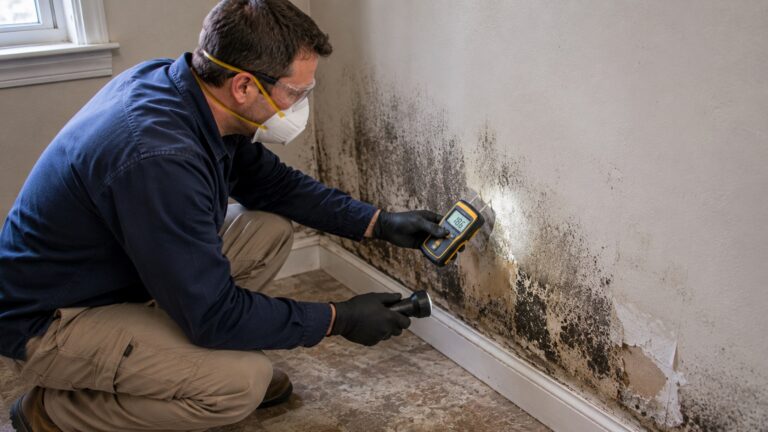
Mold under sink cabinets may extend into surrounding wall cavities or flooring layers. If symptoms suggest deeper moisture involvement, professional inspection tools may be required to locate concealed damage.
Situations that suggest hidden damage include:
- Persistent odors outside the cabinet area
- Mold appearing in adjacent cabinets
- Repeated moisture despite plumbing repairs
- Water damage spreading beyond the cabinet footprint
These warning signs indicate that moisture may have moved beyond visible cabinet materials.
What to Do Next Without Spreading Mold
If you suspect mold under your kitchen sink cabinet, avoid aggressive scrubbing, dry sweeping, or disturbing damaged materials until you understand how much of the cabinet is affected. The immediate goal is to inspect carefully, reduce moisture, and avoid spreading debris into nearby areas.
Remove Stored Items Carefully
Clearing stored items allows for better inspection and reduces the chance of spreading contaminated dust, debris, or residue to other parts of the cabinet.
Recommended steps include:
- Remove items slowly to minimize disturbance
- Inspect containers for moisture or mold residue
- Wipe cleanable items before returning them to storage, and keep them out until the cabinet is dry
- Discard heavily contaminated materials
Improve Airflow Inside the Cabinet
Air movement helps reduce moisture buildup and slows mold growth.
Simple airflow improvements include:
- Leaving cabinet doors open temporarily
- Using a fan to circulate air nearby
- Removing liners that trap moisture
- Avoiding overcrowding inside the cabinet
Airflow improvements alone do not eliminate mold, but they help reduce conditions that support continued growth.
Address Moisture Sources Promptly
Mold growth will continue unless moisture sources are corrected. Even small drips or condensation problems require attention.
For prevention after the mold warning signs are addressed, review how to prevent mold under kitchen sink cabinets. For leak-focused prevention, use preventing recurring leaks under kitchen sinks.
Frequently Asked Questions About Mold Under Kitchen Sink Cabinets
Is mold under a kitchen sink cabinet common?
Yes. Kitchen sink cabinets are among the most common areas for hidden mold growth due to plumbing connections, limited airflow, and moisture-sensitive materials.
Can mold grow under a sink without a visible leak?
Yes. Condensation on cold pipes or intermittent drips can provide enough moisture for mold growth, even when visible leaks are not obvious.
Is black staining always mold?
No. Some black stains result from mineral deposits, adhesive residue, or old water damage. Mold typically spreads unevenly and is often associated with persistent odor and damp conditions.
Should I remove cabinet liners if mold appears?
Yes. Liners can trap moisture beneath them and hide mold growth. Removing liners allows proper inspection and drying of the cabinet base.
Can mold under a sink spread to nearby cabinets?
Yes. Mold-related contamination can spread through enclosed cabinet spaces, especially if moisture remains present. Adjacent cabinets may become affected if the underlying moisture problem continues.
Conclusion: Recognizing Mold Under Kitchen Sink Cabinets Early Prevents Larger Damage
Mold under kitchen sink cabinets rarely develops overnight. In most cases, it begins with small moisture problems that remain unnoticed until visible symptoms appear. Musty odors, discoloration, swelling materials, and persistent dampness are all warning signs that deserve attention.
Early recognition helps homeowners respond before mold spreads into cabinet walls, flooring, or nearby structural materials. If mold growth is confirmed, the moisture source still has to be corrected before the cabinet can stay dry long term.
For related kitchen-sink moisture issues, review how plumbing leaks cause structural damage, which explains how small plumbing leaks can affect cabinets, flooring, and nearby structural materials.
Key Takeaways
- Mold under kitchen sink cabinets often begins with hidden moisture and slow leaks.
- Musty odors, discoloration, and swelling materials are common early warning signs.
- Particleboard cabinet bases are highly vulnerable to moisture damage.
- Repeated dampness usually indicates an ongoing leak or condensation problem.
- Large mold growth or structural damage may require professional inspection.
- Addressing moisture quickly prevents mold from spreading into surrounding materials.
One Comment
Comments are closed.