How to Prevent Recurring Leaks Under Kitchen Sinks
To prevent recurring leaks under kitchen sinks, inspect supply lines, drain joints, shutoff valves, pipe alignment, and cabinet moisture conditions on a routine schedule. Even after an active leak is repaired, worn seals, loose fittings, vibration, trapped moisture, or poor alignment can allow the same problem to return. Preventive maintenance helps protect cabinet materials, reduce mold risk, and stop small plumbing problems before they become repeated water damage.
If you have already repaired a leak, review the signs of water damage under kitchen sinks to make sure hidden moisture is not still active. For broader recurrence patterns beyond this one cabinet, see why moisture problems keep returning.
Why Recurring Sink Leaks Are Common
Recurring leaks often develop because plumbing systems naturally wear over time. Even after repairs, materials continue to age, connections shift slightly, and pressure changes place stress on components.
Most repeat leaks come from a source that was tightened temporarily but not fully stabilized, replaced, dried, or monitored.
Natural Wear of Plumbing Components
Every plumbing component has a limited lifespan. Rubber seals, flexible hoses, and plastic fittings gradually weaken as they age. This natural deterioration increases the likelihood of recurring leaks.
Common components affected by wear include:
- Rubber washers and seals
- Flexible supply lines
- Plastic drain connections
- Shutoff valve components
Replacing aging parts before they fail reduces the risk of unexpected moisture problems.
Minor Problems Often Go Unnoticed
Many recurring leaks begin as slow drips or small moisture buildups that are difficult to detect. Without routine inspections, these early-stage problems may continue unnoticed until visible damage develops.
Small leaks often appear as:
- Light moisture on cabinet floors
- Minor corrosion around fittings
- Faint musty odors inside cabinets
- Water stains forming gradually
Any repeated moisture, odor, or staining should trigger a closer check of the supply valves, drain joints, faucet base, and dishwasher or filter connections.
Repeated Stress on Plumbing Connections
Daily use places repeated stress on sink plumbing systems. Opening and closing faucets, running dishwashers, and using garbage disposals all create pressure changes that gradually weaken seals.
Over time, repeated stress can cause:
- Loose connections
- Seal fatigue
- Alignment shifts
- Small leaks that worsen gradually
When vibration or poor alignment keeps returning, tightening the same joint repeatedly usually will not solve the problem for long.
Inspect Under-Sink Plumbing on a Set Schedule
Routine inspections are one of the most effective ways to prevent recurring leaks. Regular checks allow early detection of small problems before they develop into larger failures.
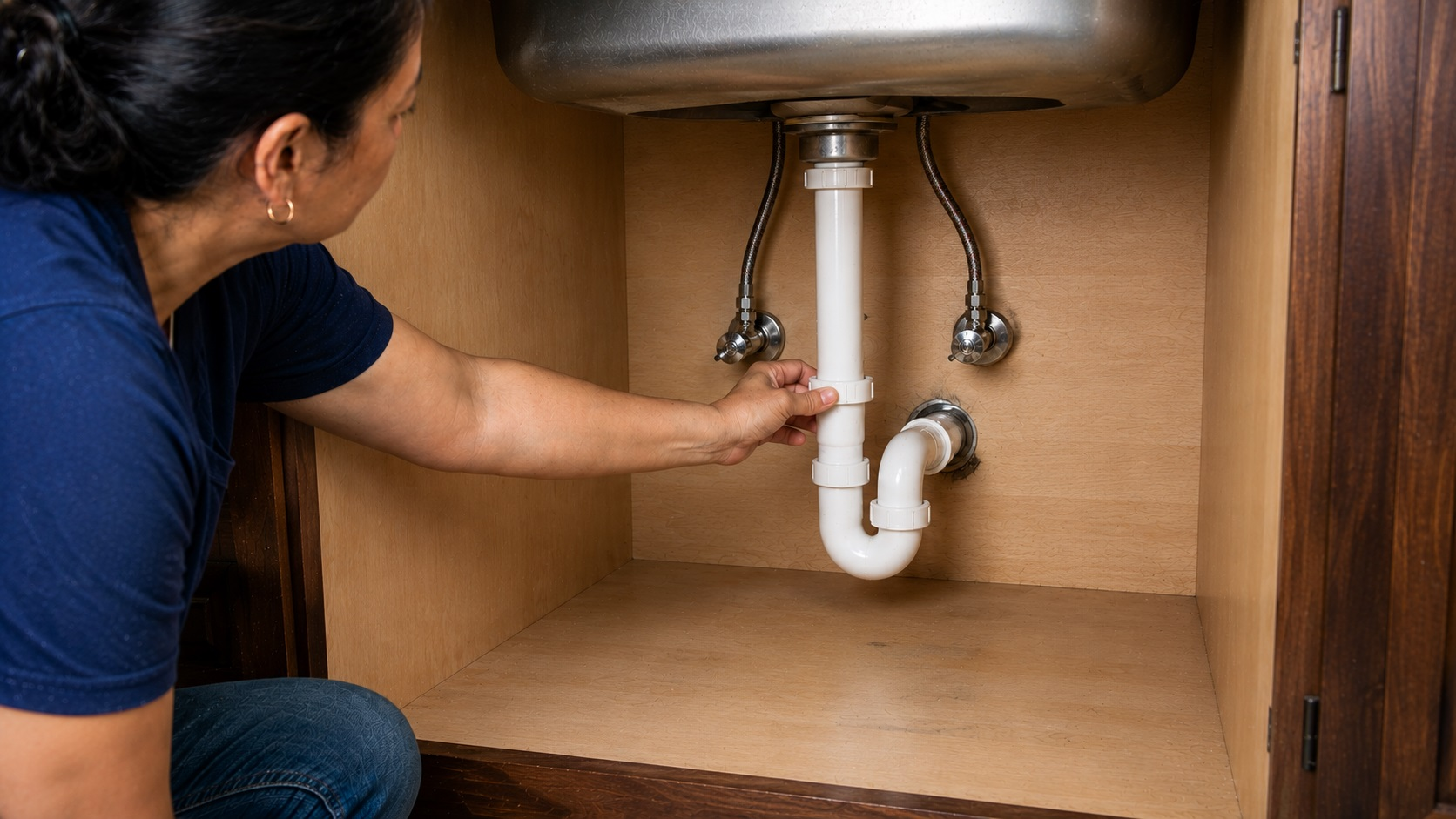
Focus each inspection on the same points: supply-line nuts, shutoff valves, the faucet base, drain slip nuts, the P-trap, disposal connections, and any dishwasher or filter lines entering the cabinet.
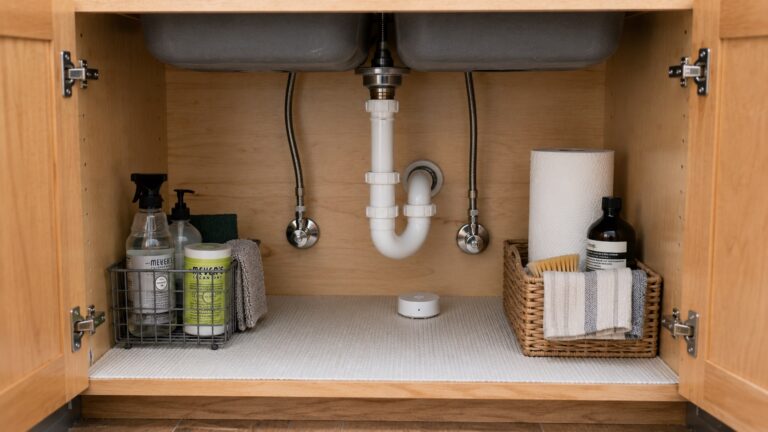
Keep cleaning supplies, trash bags, and stored items from pressing against supply lines, drain pipes, disposal wiring, or leak sensors because crowded cabinets can hide moisture and gradually shift lightweight plumbing parts.
Perform Monthly Visual Checks
Monthly visual inspections require minimal effort but provide significant protection against recurring leaks.
During monthly checks, look for:
- Moisture on cabinet surfaces
- Drips forming at connections
- Rust or mineral buildup
- Water stains or discoloration
These inspections take only a few minutes and can reveal moisture before it spreads across the cabinet floor.
Conduct Quarterly Hands-On Inspections
Every few months, performing a more detailed inspection improves long-term leak prevention. Hands-on inspections help identify problems that may not be visible during routine checks.
Quarterly inspections should include:
- Checking for loose connections without overtightening plastic fittings
- Examining hoses for cracks or bulges
- Inspecting shutoff valves for seepage
- Observing pipe alignment
Wipe each connection with a dry paper towel after running water for one to two minutes; fresh moisture on the towel usually reveals seepage before a visible drip forms.
Schedule Annual Component Reviews
Annual reviews allow homeowners to evaluate the age and condition of plumbing components. Replacing aging parts during scheduled maintenance helps prevent unexpected failures.
Annual component reviews should include:
- Identifying components nearing replacement age
- Checking for corrosion or material fatigue
- Verifying proper pipe alignment
- Inspecting cabinet interiors for moisture damage
These yearly evaluations reduce the chance that old parts will fail between routine inspections.
Replace Aging Components Before Failure
Preventive replacement of worn components is one of the most reliable ways to avoid recurring leaks. Waiting until visible damage appears increases the risk of cabinet deterioration and structural problems.
Replace Rubber Washers and Seals Periodically
Rubber washers and seals typically degrade faster than other plumbing materials. Replacing them before failure helps maintain watertight connections.
Warning signs that seals should be replaced include:
- Cracking or stiffness
- Flattened sealing surfaces
- Recurring moisture near joints
- Repeated tightening requirements
Replacing worn seals reduces the chance of recurring leaks caused by material fatigue.
Upgrade Flexible Supply Lines on Schedule
Flexible supply lines are commonly overlooked during maintenance but often become weak with age. Replacing these lines before failure improves system reliability.
Supply line replacement may be necessary when:
- Hoses show signs of bulging
- Connections display corrosion
- Materials appear brittle or worn
- Components approach expected lifespan limits
Proactive replacement helps prevent sudden failures that lead to water damage.
Monitor the Condition of Shutoff Valves
Shutoff valves are critical components that control water flow to the sink and connected appliances. Over time, internal seals inside valves may weaken, allowing moisture to escape even when fittings appear secure.
Regular monitoring helps catch early valve failure before seepage spreads into the cabinet base.
Watch for these warning signs:
- Moisture forming around the valve stem
- Rust buildup on metal components
- Difficulty turning the valve handle
- Slow seepage near connection points
Replacing aging shutoff valves before failure reduces the risk of unexpected leaks. If a valve is corroded, difficult to turn, or actively seeping from the stem or connection, shut off the water before further inspection and call a plumber if the valve will not close reliably.
Maintain Proper Pipe Alignment
Pipe alignment plays an important role in preventing recurring leaks. When pipes are forced into position or pulled sideways, stress builds at connection points. Over time, this stress weakens seals and allows moisture to escape.
Avoid Forcing Pipes Into Position
Improperly aligned pipes create tension that gradually loosens connections. Pipes should sit naturally without bending or twisting.
Misalignment often occurs when:
- Replacement parts do not match original dimensions
- Cabinet movement shifts plumbing components
- Improper installation forces pipes into place
- Repairs are made without correcting alignment issues
Correct alignment helps maintain consistent sealing pressure at joints.
Secure Plumbing Components Against Movement
Movement from daily use or nearby appliances can gradually loosen connections. Securing plumbing components reduces vibration-related wear.
Movement sources may include:
- Garbage disposal vibration
- Dishwasher operation
- Water pressure changes
- Frequent faucet use
Stabilizing plumbing components reduces long-term connection stress.
Use Protective Measures Inside Cabinets
Even well-maintained plumbing systems can develop unexpected leaks. Protective cabinet measures help limit damage when minor moisture problems occur.
Install Waterproof Cabinet Liners
Water-resistant liners create a barrier between moisture and cabinet materials. These liners reduce water absorption and make cleanup easier when leaks occur.
Benefits of cabinet liners include:
- Reduced water penetration into materials
- Simplified cleanup after minor leaks
- Improved visibility of moisture buildup
- Extended cabinet lifespan
Liners provide an affordable method of reducing moisture damage risk.
Use Drip Trays for Early Leak Detection
Drip trays collect small amounts of water before it spreads across cabinet surfaces. Early collection allows faster response and reduces long-term damage.
Drip trays are especially useful beneath:
- Supply line connections
- Shutoff valves
- Drain assemblies
- Water filtration systems
When small leaks are captured early, corrective action becomes easier and less expensive.
Apply Moisture-Resistant Surface Barriers
Protective coatings help reduce water absorption in vulnerable cabinet materials such as particleboard and plywood.
Surface protection may include:
- Water-resistant coatings
- Sealed cabinet seams
- Protective edge treatments
- Moisture-resistant panel finishes
These protective barriers slow moisture penetration and reduce structural weakening.
Monitor the Sink Base for Moisture Return
Monitoring moisture levels helps identify early problems before visible damage occurs. Moisture monitoring tools provide valuable insight into hidden conditions inside cabinets.
Use Moisture Monitoring Tools
Moisture meters help measure dampness levels within cabinet materials. These tools allow early detection of moisture buildup before structural damage occurs.
Monitoring tools are useful for:
- Detecting hidden moisture
- Evaluating drying effectiveness
- Identifying slow leaks
- Monitoring previously damaged areas
For repeat problem areas, check the cabinet floor, back wall, and lower side panels after heavy sink use and compare readings over time instead of relying on one isolated reading.
Install Leak Detection Sensors
Electronic leak sensors provide alerts when water reaches the cabinet floor. Place sensors near the lowest point of the cabinet, under shutoff valves, below the P-trap, and near dishwasher or water-filter connections if those lines enter the sink base.
Leak sensors help by:
- Providing early warning alerts
- Reducing water damage risk
- Supporting faster response times
- Preventing prolonged moisture exposure
Early notification helps you respond before a small drip soaks cabinet materials or creates hidden mold risk.
Create a Routine Leak Prevention Schedule
A simple monthly, quarterly, and annual routine keeps prevention from depending on memory or visible damage.
Monthly Prevention Tasks
Monthly maintenance requires minimal time but provides significant protection.
Recommended monthly tasks include:
- Checking for visible moisture
- Inspecting cabinet surfaces
- Listening for dripping sounds
- Verifying dry conditions inside cabinets
Simple monthly checks often detect developing problems before major damage occurs.
Quarterly Prevention Tasks
Quarterly inspections provide deeper evaluation of plumbing condition and performance.
Recommended quarterly tasks include:
- Testing shutoff valve operation
- Checking hose flexibility
- Inspecting pipe alignment
- Examining sealing surfaces
These steps help maintain consistent plumbing reliability.
Annual Prevention Tasks
Annual inspections allow homeowners to evaluate long-term plumbing performance and replace aging parts such as brittle washers, corroded supply lines, loose slip-joint washers, failing shutoff valves, or cracked plastic drain components before failure occurs.
Recommended annual tasks include:
- Reviewing the age of plumbing components
- Replacing parts approaching lifespan limits
- Inspecting cabinet materials for hidden damage
- Checking alignment of drain and supply lines
Annual maintenance improves reliability and helps prevent unexpected water damage.
Watch for Early Warning Signs of Recurring Leaks
Preventing recurring leaks depends on recognizing early warning signs before visible water damage develops. Many leaks begin slowly and worsen gradually if ignored.
Subtle Moisture Indicators
Some warning signs are difficult to notice without careful observation. These early indicators often appear before visible dripping begins.
Watch for:
- Faint musty odors inside cabinets
- Light discoloration on cabinet surfaces
- Small areas of dampness
- Condensation forming unexpectedly
Recognizing subtle moisture changes allows faster response and prevents structural damage.
Visible Signs of Developing Problems
Visible changes often indicate that moisture has already affected cabinet materials. Addressing these signs early reduces the risk of long-term deterioration.
Visible warning signs include:
- Rust forming on metal fittings
- Mineral deposits around joints
- Swollen cabinet materials
- Recurring water stains
If these symptoms keep returning after basic prevention steps, review how to fix persistent leaks under kitchen sinks to decide whether the issue has moved beyond routine maintenance.
Protect Cabinets From Long-Term Moisture Damage
Cabinet materials are especially vulnerable to repeated moisture exposure. Taking preventive steps to protect these materials reduces the risk of structural weakening.
Improve Airflow Inside Cabinets
Air circulation helps reduce humidity buildup inside enclosed cabinet spaces. Moisture trapped inside cabinets can keep materials damp after a leak is repaired, increasing the risk of swelling, odor, mold growth, and hidden damage.
Ways to improve airflow include:
- Keeping cabinet interiors uncluttered
- Allowing periodic ventilation
- Avoiding sealed moisture traps
- Monitoring enclosed spaces regularly
Improved airflow supports faster drying and reduces long-term moisture risk.
Monitor Areas With Previous Leaks
Cabinets that have experienced past leaks remain more vulnerable to future damage. Materials weakened by moisture may deteriorate faster during repeated exposure.
Monitoring previously affected areas helps detect recurring moisture problems early.
If moisture damage has already occurred, following proper recovery steps such as those outlined in how to dry kitchen sink cabinets after leaks helps reduce long-term structural risk.
Understand Mold Risk From Repeated Moisture
Recurring leaks increase the likelihood of mold development in enclosed cabinet spaces, especially when the cabinet floor or back panel stays damp after the plumbing leak appears fixed.
Understanding why mold forms under kitchen sink cabinets helps highlight the importance of controlling moisture before mold becomes established.
FAQ: Preventing Recurring Leaks Under Kitchen Sinks
How often should I check under my kitchen sink?
Check under your kitchen sink monthly for moisture, stains, odors, rust, mineral buildup, and damp cabinet materials. Quarterly and annual checks should include hoses, shutoff valves, pipe alignment, and aging seals.
What causes leaks to return after repairs?
Leaks often return when worn components remain in place or when underlying alignment problems are not corrected. Preventive replacement and routine inspection reduce recurrence risk.
Can old plumbing increase the risk of recurring leaks?
Yes. Aging plumbing components become brittle over time, increasing the likelihood of seal failure and repeated leakage. Replacing older parts before failure improves reliability.
How do I protect cabinets from moisture damage?
Protective liners, drip trays, moisture monitoring tools, and regular inspections help reduce the risk of cabinet damage caused by recurring leaks.
What should I do if moisture keeps returning after prevention steps?
If moisture continues to appear despite preventive maintenance, further inspection may be necessary to identify hidden plumbing failures, poor pipe alignment, failing shutoff valves, or cabinet materials that never fully dried after the earlier leak.