
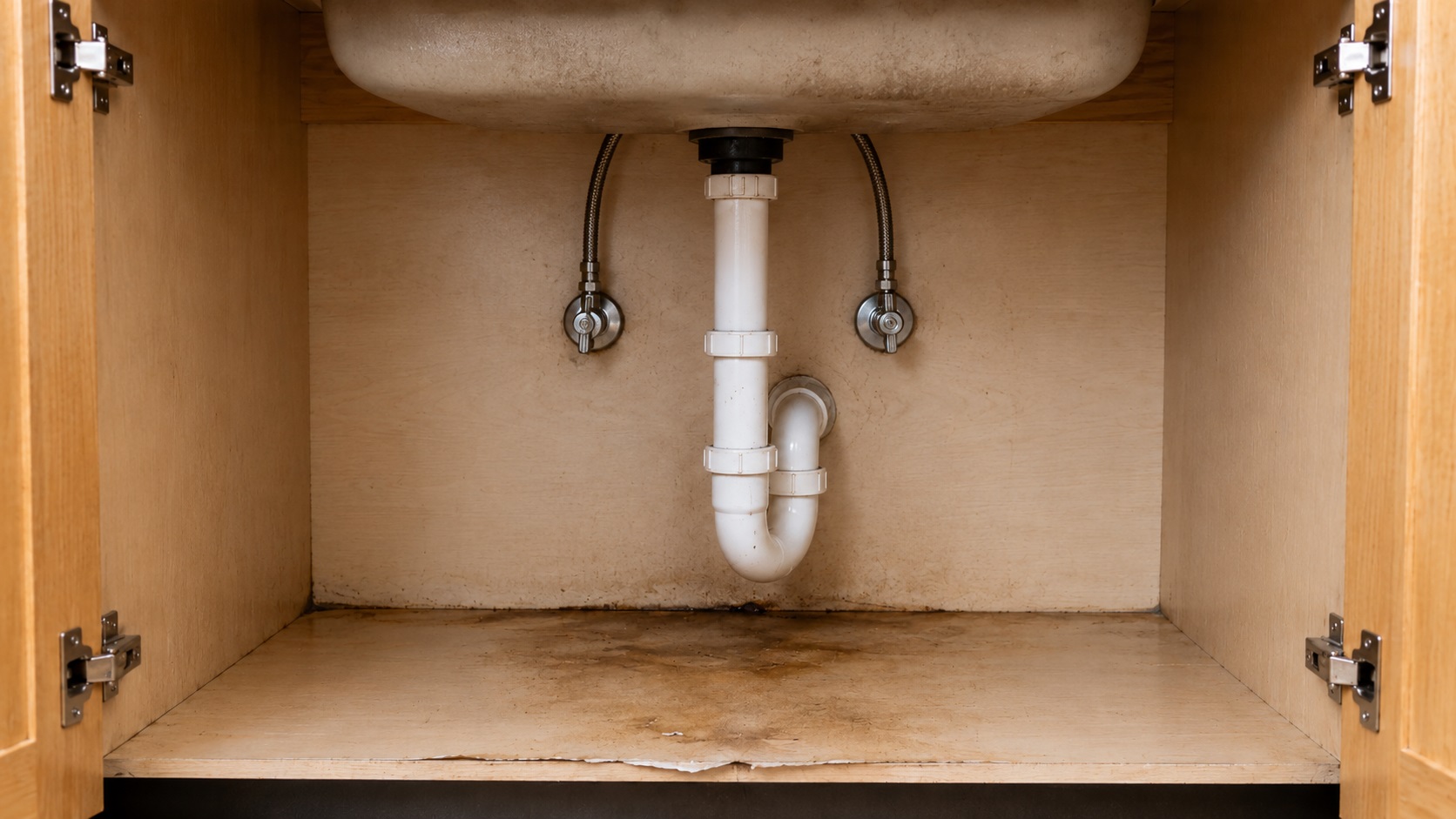
Signs of Water Damage Under Kitchen Sinks (Early Warning Signs Homeowners Should Never Ignore)
Water damage under kitchen sinks is one of the most common household moisture problems, yet it often goes unnoticed until damage becomes serious. Because sink cabinets hide plumbing connections and limit airflow, even small leaks can quietly damage cabinet materials, create mold-friendly conditions, and weaken surrounding structures.
Many homeowners first notice subtle changes — a musty smell, a damp cabinet floor, or swelling wood near the pipes. These early signs are important warnings. Catching water damage early can prevent expensive cabinet replacement, mold growth, and hidden structural problems below the sink.
The most important early warning signs are recurring dampness, small stains, musty odors, swelling cabinet material, peeling finishes, rusted hardware, and soft or spongy cabinet flooring. If any of these signs return after wiping the area dry, the problem is probably more than a one-time spill.
This guide explains the most common and realistic signs of water damage under kitchen sinks, how damage progresses over time, and when warning signs indicate a problem that requires professional attention. If you suspect moisture under cabinets, understanding the symptoms is the first step toward protecting your home.
To understand how small plumbing leaks can affect cabinets, floors, and nearby structures, see this guide to how plumbing leaks cause structural damage.
Why Under-Sink Water Damage Happens So Easily
Kitchen sinks combine water supply lines, drain connections, and enclosed cabinet spaces — a combination that makes this location especially vulnerable to hidden moisture problems. Even well-installed plumbing systems can develop slow leaks or condensation over time, leading to gradual water damage that spreads quietly beneath the sink.
Multiple Plumbing Connections Create Leak Risks
Under kitchen sinks, several plumbing components connect within a tight space. These include supply lines, shutoff valves, drain pipes, and sometimes garbage disposals or water filtration systems. Each connection point creates an opportunity for slow leaks to develop.
Common sources of under-sink moisture include:
- Loose compression fittings
- Worn rubber washers or seals
- Cracked plastic drain pipes
- Damaged flexible supply lines
- Slow drips from poorly tightened fittings
Unlike burst pipes, these small leaks often release water slowly. That slow drip may not produce visible puddles at first, but it can soak cabinet materials over time. If you’re unsure how to evaluate pipe connections directly, learning how to inspect kitchen sink pipes for hidden leaks can help confirm whether plumbing components are contributing to the problem.
Cabinet Design Traps Moisture
Under-sink cabinets are enclosed spaces with minimal airflow. When moisture enters the cabinet, it often stays trapped rather than evaporating. Warm indoor air combined with poor ventilation creates ideal conditions for water to remain in contact with cabinet materials.
This trapped moisture allows damage to spread horizontally across cabinet floors and into surrounding panels. Because the space remains hidden behind cabinet doors, water damage can progress for weeks before becoming obvious.
Cabinet construction also contributes to this risk. Many cabinet bases are made from particleboard, a material that absorbs moisture quickly. Once water enters the surface, swelling begins and often continues even after the visible moisture disappears.
Small Leaks Often Go Unnoticed
One of the biggest reasons under-sink damage becomes severe is simple: small leaks are easy to miss. Unlike major plumbing failures, slow drips do not create dramatic warning signs. Instead, they create subtle changes that build over time.
Typical slow-leak conditions include:
- Intermittent dripping that dries between cycles
- Minor splashes during dishwashing
- Condensation forming on cold pipes
- Moisture pooling beneath stored items
Because these conditions develop gradually, homeowners often assume nothing serious is happening — until cabinet materials begin to deform or odors appear. If moisture reappears after cleaning or drying, this guide to detecting repeated moisture problems before they worsen can help explain the broader warning pattern.
Warm Kitchen Environments Accelerate Damage
Kitchens are naturally warm, humid spaces. Cooking, dishwashing, and cleaning add moisture to the air, and enclosed sink cabinets can hold that moisture against wood, particleboard, and seams long enough for damage or mold-friendly conditions to develop.
Early Signs of Water Damage Under Kitchen Sinks
Early warning signs of water damage are often subtle but important. Catching these signals quickly can prevent major repairs and stop mold from developing. Most early-stage symptoms appear before severe structural damage occurs, making this the most valuable time to take action.
Damp Cabinet Surfaces
The most common early sign of water damage is a damp cabinet floor or wall surface. Moisture may appear as a slightly darkened patch, cool surface texture, or minor water film.
Typical early dampness signs include:
- Cool or slightly wet cabinet base surfaces
- Localized moisture near pipe openings
- Water droplets forming beneath supply lines
- Wet spots appearing after sink use
Even small damp areas should be taken seriously. Wipe the area dry, run the faucet, fill and drain the sink, and check again with a dry paper towel around the shutoff valves, supply lines, drain joints, garbage disposal connection, and pipe openings. Moisture that reappears usually indicates an ongoing leak or condensation problem rather than a one-time spill.
If dampness spreads beyond the immediate pipe area, it may signal hidden moisture traveling beneath cabinets — a condition explained in more detail in this guide to detecting moisture under cabinets.
Small Water Stains
Water stains often appear before structural damage becomes visible. These stains may look like faint discoloration rings, irregular dark patches, or yellowish areas along cabinet surfaces.
Early-stage stains typically:
- Appear around pipe penetrations
- Form along cabinet seams
- Spread slowly outward over time
- Darken when exposed to repeated moisture
Water stains are especially important because they reveal past moisture exposure. Mark the edge of a stain lightly with painter’s tape or take a photo, then compare it after several days of normal sink use. A stain that grows, darkens, or returns after drying usually points to an active moisture source.
Musty or Damp Odors
One of the earliest signs of moisture problems under kitchen sinks is a persistent musty smell. Odors often develop before visible mold appears and usually indicate that moisture remains trapped inside the cabinet.
Typical odor-related warning signs include:
- Earthy or musty smells inside the cabinet
- Stronger odors when cabinet doors are opened
- Lingering smells even after cleaning
- Odors returning repeatedly after drying
Musty odors should never be dismissed as harmless. They often signal hidden microbial growth or moisture trapped in cabinet materials, especially when the smell returns after cleaning or drying.
Slight Swelling of Cabinet Materials
Early swelling is one of the most important warning signs of water damage. Cabinet materials such as particleboard absorb water quickly, causing the surface to expand.
Early swelling symptoms may include:
- Raised cabinet floor edges
- Small bubbles beneath laminate coatings
- Warping along seams or corners
- Cabinet doors becoming slightly misaligned
Swelling often begins at exposed edges or around pipe openings, where moisture enters most easily. Even minor swelling indicates that water has penetrated the material, and drying alone may not reverse the damage.
Moderate Water Damage Warning Signs Under Kitchen Sinks
As moisture exposure continues, early warning signs often progress into more noticeable and permanent damage. At this stage, cabinet materials begin to weaken, and visual changes become more obvious. Moderate water damage usually develops after repeated moisture exposure over several days or weeks.
These warning signs indicate that water is not just present occasionally — it is affecting the structure of the cabinet itself. Ignoring these symptoms often leads to more expensive repairs and increases the risk of mold growth.
Warped or Uneven Cabinet Floors
One of the clearest signs of moderate water damage is warping in the cabinet base. When wood-based materials absorb moisture repeatedly, they expand unevenly, causing the surface to lift or distort.
Common warping symptoms include:
- Cabinet floors that appear uneven or wavy
- Raised seams along panel joints
- Gaps forming between panels
- Cabinet contents tilting slightly due to surface distortion
Warping typically indicates that moisture has penetrated deeply into the material. Once cabinet panels begin to deform, structural strength decreases, making the surface more vulnerable to additional damage.
Soft or Spongy Cabinet Surfaces
Cabinet materials that feel soft or spongy under pressure often signal prolonged moisture exposure. This condition usually affects particleboard first, as it absorbs water quickly and loses structural strength.
Signs of soft cabinet materials include:
- Surfaces that compress slightly when pressed
- Indentations forming under light pressure
- Wood fibers separating at edges
- Areas that feel weak compared to surrounding surfaces
Soft cabinet flooring is a strong indication that water damage has progressed beyond cosmetic effects. If surfaces feel unstable, the cabinet may no longer provide adequate support for stored items.
Rust on Pipes or Hardware
Rust formation on metal plumbing components often indicates persistent moisture exposure. While small amounts of surface rust can occur naturally over time, noticeable rust buildup near cabinet surfaces usually points to ongoing dampness.
Watch for:
- Rust forming around pipe joints
- Corrosion on shutoff valves
- Rust stains dripping onto cabinet surfaces
- Metal components becoming rough or flaky
Rust is particularly important because it confirms repeated moisture exposure rather than a one-time spill. If corrosion appears alongside cabinet swelling, the leak source may still be active.
If visible pipe damage accompanies moisture signs, further inspection may be needed. Homeowners often benefit from learning how to inspect kitchen sink pipes for hidden leaks to determine whether the moisture source is still present.
Peeling or Bubbling Cabinet Coatings
Many kitchen cabinets are coated with laminate or protective finishes designed to resist minor spills. However, persistent moisture eventually breaks down these protective layers.
Typical coating damage includes:
- Bubbling laminate surfaces
- Peeling finish layers
- Flaking paint inside cabinet walls
- Discoloration beneath protective coatings
When finishes begin to fail, moisture can enter deeper layers of the cabinet structure. This accelerates damage and increases the likelihood of mold growth beneath the surface.
Severe Water Damage Indicators Under Kitchen Sinks
Severe water damage develops when moisture remains unchecked for extended periods. At this stage, structural materials begin to fail, mold growth becomes more likely, and surrounding surfaces may be affected.
Cracked or Collapsing Cabinet Floors
One of the most serious signs of water damage is structural failure in the cabinet base. When particleboard or plywood absorbs water for extended periods, it eventually loses strength and begins to break apart.
Severe structural warning signs include:
- Cracks forming across cabinet flooring
- Sections of cabinet floor sagging downward
- Cabinet surfaces breaking under weight
- Visible separation between structural panels
Cabinet collapse risks increase significantly once the internal structure weakens. If heavy items are stored under the sink, the risk of sudden failure becomes even greater.
Visible Mold Growth
Mold growth often appears after moisture remains trapped inside cabinets for extended periods. Mold thrives in dark, enclosed environments where airflow is limited and moisture remains present.
Visible mold warning signs include:
- Black, green, or white fuzzy growth on cabinet surfaces
- Powdery or patchy discoloration spreading outward
- Mold forming along seams or corners
- Persistent odor even after cleaning
Once mold becomes visible, moisture problems have likely existed for some time. Mold growth typically develops after repeated damp conditions lasting several days or longer.
For a sink-specific explanation, see why mold forms under kitchen sink cabinets.
Water Damage Extending Beyond the Cabinet
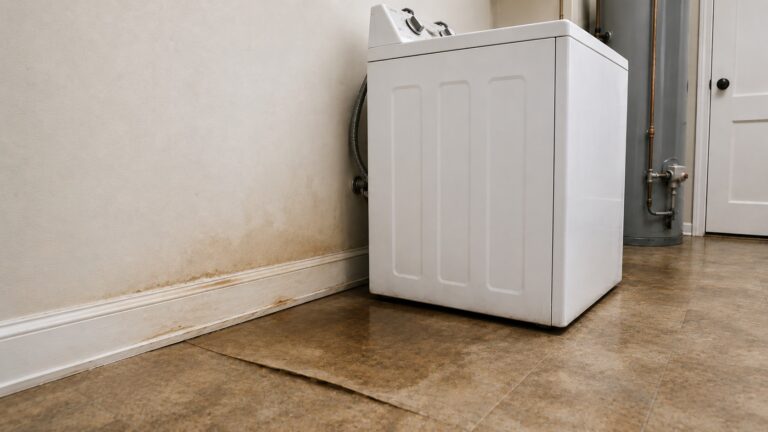
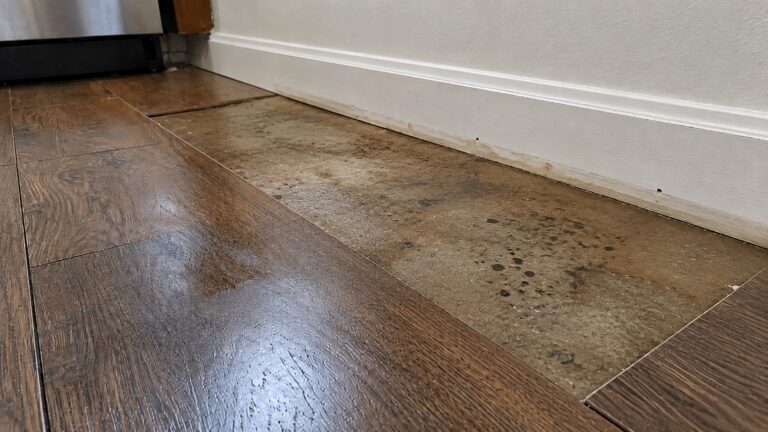
In advanced cases, water damage spreads beyond the cabinet itself. Moisture may seep through seams or openings, reaching flooring materials below the cabinet.
Signs that damage has spread include:
- Warped flooring in front of the sink
- Water stains on baseboards
- Soft flooring near cabinet edges
- Unusual odors spreading beyond the cabinet
When moisture spreads outside the cabinet area, the scope of repair often increases significantly. This type of damage frequently requires more extensive inspection to determine the full extent of the problem.
How Water Damage Spreads Inside Sink Cabinets
Water damage under kitchen sinks rarely stays limited to the first wet spot. Moisture can move through seams, exposed edges, and absorbent cabinet materials.
Horizontal Spread Across Cabinet Floors
Cabinet floors typically provide a flat surface where water can accumulate and spread outward. Even small amounts of moisture can travel across the surface, especially when the cabinet base is slightly uneven.
This horizontal movement often results in:
- Stains forming away from the original leak source
- Damage appearing in unexpected corners
- Moisture reaching cabinet side panels
- Multiple affected areas within the same cabinet
Because water spreads outward, the visible wet spot is not always located directly beneath the leak. This makes careful observation important when evaluating cabinet damage.
Downward Migration Into Subfloors
Once cabinet materials become saturated, water begins moving downward through seams and joints. This downward migration often affects flooring materials beneath the cabinet.
Downward spread may cause:
- Subfloor weakening
- Hidden mold growth beneath cabinets
- Persistent moisture trapped below surfaces
- Damage spreading into adjacent rooms
Downward moisture movement is especially concerning because it often stays hidden until damage becomes more serious. If cabinet materials are already wet, follow a dedicated process for drying kitchen sink cabinets after leaks.
Moisture Trapping in Hidden Corners
Cabinet corners and pipe openings frequently trap moisture due to limited airflow. These areas remain damp longer than exposed surfaces, creating ideal conditions for ongoing damage.
Moisture trapped in hidden zones often leads to:
- Localized mold growth
- Persistent odors
- Repeated dampness despite surface drying
- Damage reappearing after cleaning
These hidden moisture pockets explain why some problems seem to return repeatedly even after visible water has been removed.
When Water Damage Under Kitchen Sinks Becomes Dangerous
Minor moisture exposure can sometimes be corrected early, but prolonged under-sink water damage can create mold risk, cabinet failure, electrical hazards, and higher repair costs.
Mold Growth Risks Increase Quickly
One of the biggest dangers of under-sink water damage is mold growth, especially when moisture remains trapped in a dark, enclosed cabinet.
Conditions that increase mold risk include:
- Moisture remaining longer than 24–48 hours
- Warm cabinet environments
- Limited airflow under the sink
- Organic materials such as wood or particleboard
Structural Weakening Can Lead to Cabinet Failure
Water damage weakens cabinet materials by breaking down internal fibers. Particleboard, which is commonly used in cabinet construction, loses strength rapidly once saturated.
Structural risk indicators include:
- Cabinet flooring that bends or sags
- Loose mounting points or shifting cabinet panels
- Cracks forming across cabinet surfaces
- Difficulty supporting normal storage weight
When cabinet structures weaken, heavy items stored beneath the sink can increase the risk of sudden collapse. This type of failure may damage plumbing connections, creating additional leaks and accelerating water damage.
Electrical Hazards May Develop Nearby
Electrical risk depends on the cabinet layout. Some kitchen sink cabinets contain or sit near outlets, garbage disposal wiring, dishwasher connections, or water filtration equipment. Water near electrical components should be treated as a serious warning sign.
Do not touch wet wiring, plugged-in equipment, or electrical boxes. Shut off power to the affected circuit if it is safe to do so, stop using the sink area, and call a qualified professional when water has reached electrical components.
When to Call a Professional About Water Damage Under Kitchen Sinks
Some under-sink moisture can be handled with basic cleanup and monitoring, but certain warning signs mean the problem has moved beyond a simple surface spill.
Active Leaks Continue After Basic Checks
If water continues appearing under the sink despite cleaning and monitoring, an active leak is likely present. Persistent moisture usually means a plumbing connection requires adjustment or replacement.
Situations that often require professional attention include:
- Repeated wet spots forming daily
- Dripping sounds inside cabinets
- Visible moisture around pipe joints
- Water pooling despite cleaning efforts
Persistent leaks should not be ignored. Over time, even small leaks can damage flooring, wall framing, and adjacent cabinets.
Cabinet Materials Are Soft or Crumbling
Once cabinet materials become soft or begin breaking apart, structural damage has already occurred. At this stage, repair or replacement may be necessary.
Signs that indicate serious material damage include:
- Cabinet flooring breaking apart when touched
- Large sections of swollen wood
- Cabinet supports shifting or loosening
- Visible internal material separation
When structural components fail, professional repair ensures the cabinet and plumbing system remain safe and stable.
Mold Growth Appears or Odors Persist
Visible mold or persistent musty odors indicate ongoing moisture problems. Mold growth inside cabinets often spreads into surrounding structures if left untreated.
Situations requiring professional help include:
- Visible mold growth spreading across surfaces
- Strong odors that return after cleaning
- Mold appearing on multiple surfaces
- Allergic reactions worsening near affected areas
If mold covers a larger area, keeps returning, or appears alongside soft cabinet materials, professional evaluation is the safer option.
What to Do After You Notice Warning Signs
Once signs of water damage appear under a kitchen sink, quick action can limit further damage while you confirm the moisture source.
Remove Stored Items Immediately
Cabinet contents often trap moisture against surfaces, slowing drying and hiding visible damage. Removing stored items exposes affected areas and allows surfaces to dry more effectively.
Removing items also allows homeowners to:
- Inspect all surfaces clearly
- Identify hidden stains
- Prevent stored materials from absorbing moisture
- Reduce mold growth risk
Dry Visible Moisture Quickly
Prompt drying reduces the amount of time moisture remains in contact with cabinet materials. Even simple drying methods can slow damage progression.
Basic drying actions include:
- Wiping visible water with absorbent cloths
- Leaving cabinet doors open for airflow
- Using fans to circulate air near the cabinet
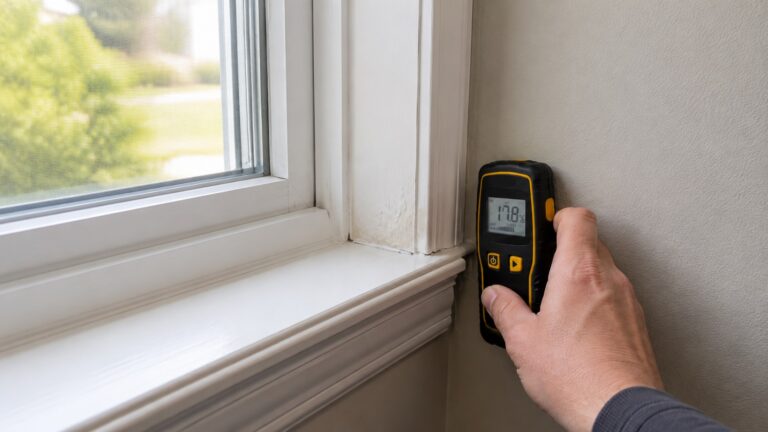
- Monitoring moisture levels over time
For more extensive moisture exposure, avoid turning this symptoms check into guesswork. Follow a dedicated drying process such as drying kitchen sink cabinets after leaks so trapped moisture does not remain inside cabinet materials.
Monitor Changes Over Time
Tracking moisture patterns helps identify whether damage is improving or worsening. Monitoring involves checking surfaces regularly and noting any changes in condition.
Signs that damage is worsening include:
- Expanding stains
- Increasing odor strength
- New areas of swelling
- Repeated moisture reappearance
Monitoring helps determine whether the moisture source remains active or has been resolved.
Frequently Asked Questions About Water Damage Under Kitchen Sinks
How long does it take for water damage to appear under a sink?
Water damage can begin within hours if moisture remains in contact with cabinet materials. Visible swelling and staining often develop within a few days, especially when particleboard surfaces are exposed to repeated moisture.
Can a small leak cause serious cabinet damage?
Yes. Small leaks often cause more long-term damage than large bursts because they remain unnoticed. Continuous dripping gradually weakens materials, allowing damage to spread over time.
Is swollen cabinet wood always permanent damage?
In most cases, swollen particleboard does not return to its original shape after drying. Once internal fibers expand, structural strength decreases permanently.
Does mold always grow after water damage under sinks?
Mold growth depends on moisture duration and environmental conditions. If surfaces remain damp longer than 24–48 hours, mold growth becomes increasingly likely.
Can water damage spread beyond the sink cabinet?
Yes. Moisture often travels downward into flooring and outward into surrounding materials. This spread increases repair costs and makes early detection extremely important.
Conclusion: Recognizing Water Damage Early Prevents Major Repairs
Water damage under kitchen sinks usually starts small. A faint stain, slight swelling, damp cabinet floor, or musty odor may be the first visible clue that moisture is reaching cabinet materials.
Ignoring those early signs allows moisture to spread deeper into cabinet structures, flooring, and nearby materials. Over time, a minor damp area can turn into mold growth, cabinet failure, and costly repairs.
Treat recurring dampness, stains, swelling, and odors as prompts to inspect, dry, monitor, and confirm the source before the damage spreads.
Key Takeaways
- Water damage under kitchen sinks often begins with small leaks or trapped moisture.
- Early warning signs include damp surfaces, stains, odors, and minor swelling.
- Moderate damage causes warping, soft materials, and peeling finishes.
- Severe damage includes mold growth, structural failure, and spreading moisture.
- Prompt action reduces repair costs and prevents long-term structural problems.
- Professional help may be necessary when leaks persist or materials weaken.
5 Comments
Comments are closed.