Signs of Persistent Roof Condensation Problems
Persistent roof condensation is a problem when attic moisture keeps returning in the same areas, spreads across more roof surfaces, or leaves stains, mold, rust, damp insulation, or softened wood after repeated cold-weather cycles. A single short condensation event may dry without damage, but a repeating pattern means the attic still has unresolved humidity, airflow, insulation, or air-leakage problems.
Many homeowners first notice early warning signs such as droplets, frost, or dark patches on roof decking. If you are still confirming whether condensation is present, review Signs of Condensation on Roof Sheathing. This article focuses on the next stage: signs that condensation is no longer occasional but persistent.
For broader roof material failure patterns, this article fits within Most Common Roofing Material Failures, which explains how roofing systems develop long-term moisture and deterioration problems.
Key Takeaways
- Persistent roof condensation is identified by repetition, not by one isolated damp spot.
- The strongest warning signs are stains, frost, mold, damp insulation, rust, or odors that return in the same areas.
- Seasonal return after cold weather usually points to unresolved attic humidity, airflow, insulation, or air-leakage problems.
- Stains below one chimney, vent, valley, or flashing area may indicate a roof leak instead of condensation.
- Soft wood, sagging sheathing, spreading mold, or repeated wet insulation should trigger a professional inspection.
How Persistent Condensation Differs From Occasional Moisture
Not all condensation indicates a serious problem. Short-term moisture events may occur during sudden temperature changes or brief humidity spikes. Persistent condensation, however, follows predictable patterns that repeat over time.
Occasional Moisture Appears Briefly and Disappears
Short-term condensation usually follows an isolated weather event, such as a sudden temperature drop combined with temporarily elevated indoor humidity.
Occasional moisture usually:
- Appears during short cold periods
- Dries within one to three days
- Does not return repeatedly in the same areas
- Leaves little or no lasting staining
These temporary events rarely cause lasting damage when drying conditions return quickly.
Persistent Condensation Returns in the Same Locations
Persistent condensation usually repeats in consistent locations. When the same roof bay, corner, ridge area, or section above a bathroom or kitchen becomes damp during similar weather, the moisture is following a pattern rather than appearing randomly.
Recurring location patterns may include:
- Wet areas forming along the same roof panels
- Repeated frost appearing near ridge lines
- Damp zones developing above specific rooms
- Moisture forming in identical attic corners
A simple way to confirm the pattern is to photograph the same attic areas after each cold spell and compare whether the stains, frost, or damp insulation return in the same locations.
When moisture consistently returns to the same areas, it usually indicates that conditions allowing condensation remain unchanged. Many of these repeating behaviors are connected to underlying causes explained in Why Roof Sheathing Stays Wet.
Quick Check: Is It Persistent Condensation or a One-Time Event?
A roof condensation problem is more likely to be persistent when several signs repeat together. One damp spot after unusual weather may dry without becoming serious, but a pattern that returns after similar cold or humid conditions deserves closer attention.
- Check whether moisture appears in the same roof bays, corners, ridge areas, or spaces above bathrooms and kitchens.
- Compare photos from different cold spells to see whether stains, frost, or damp insulation are expanding.
- Look for more than one sign at the same time, such as rusted nail tips plus dark sheathing or damp insulation plus musty odor.
- Separate possible roof leaks from condensation by checking whether staining is centered below one chimney, vent, valley, skylight, or flashing area.
- Treat the issue as persistent if the same area gets wet again before it fully dries.
Common Signs of Recurring Roof Condensation
The strongest signs are repeat patterns: stains that expand, mold that returns, insulation that gets damp again, and rust that worsens across seasons.
Stains Spread Across Larger Areas Over Time
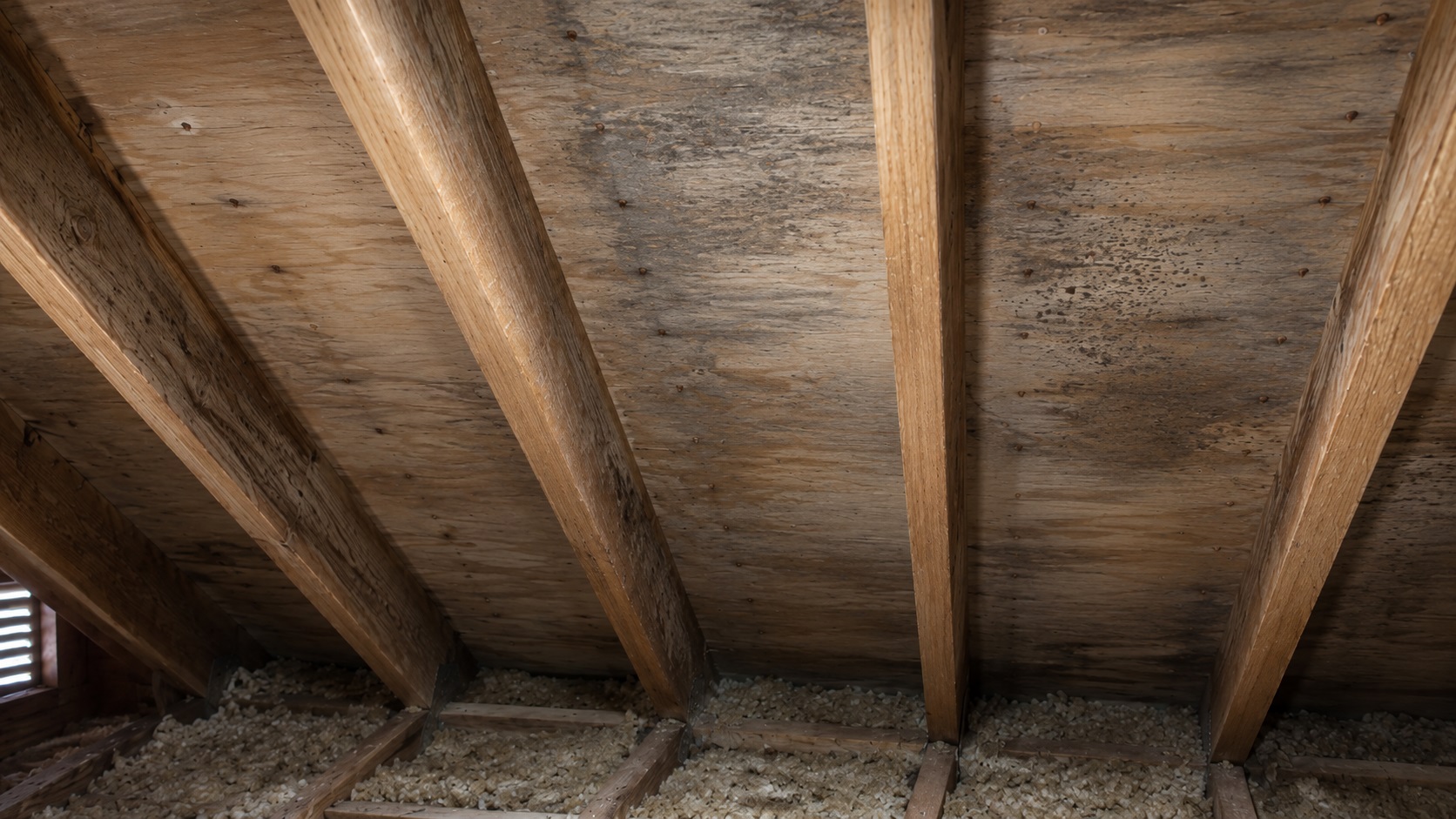
One of the most recognizable signs of persistent condensation is expanding discoloration on roof sheathing. Small dark patches that initially appear isolated may gradually widen into larger stained zones.
Stain expansion often follows this pattern:
- Small dark patches appear on wood surfaces
- Patches gradually increase in size
- New stains appear near existing ones
- Entire panels become darker than surrounding wood
These expanding stains indicate repeated moisture exposure rather than a one-time event.
If staining is concentrated below one roof penetration, chimney, valley, or flashing area, compare the pattern with roof leak signs as well; condensation usually appears across colder surfaces or repeated attic airflow paths rather than one exterior entry point.
Mold Returns After Cleaning or Drying
Mold recurrence is one of the strongest indicators of persistent condensation. When mold returns after cleaning or drying, it usually means moisture conditions remain active.
Recurring mold patterns may include:
- Mold reappearing in previously cleaned areas
- New mold forming near earlier growth spots
- Clusters spreading across multiple panels
- Musty odors returning after temporary improvement
When mold repeatedly returns, cleaning alone is not enough. The attic still needs the moisture condition corrected, and broader cleanup principles are explained in How to Remove Mold Permanently.
Damp Insulation Cycles Repeat Over Time
Insulation moisture patterns provide valuable clues about persistent condensation. Insulation that repeatedly becomes damp indicates ongoing moisture exposure.
Recurring insulation moisture may appear as:
- Damp insulation in identical locations
- Repeated compression or settling of insulation
- Cool or heavy insulation after cold weather
- Insulation drying temporarily but becoming damp again
These repeated cycles often signal long-term humidity or airflow problems.
Rust Spreads Across Fasteners and Metal Components
Metal fasteners inside the attic respond quickly to moisture exposure. Rust formation on nail tips often begins as small spots but expands as condensation persists.
Fastener-related warning signs include:
- Rust forming on multiple nail heads
- Rust spreading across roof panels
- Drips forming from rusted fasteners
- Increasing corrosion over multiple seasons
Because metal reacts quickly to moisture, rust patterns often provide early confirmation of repeated condensation cycles.
Structural Warning Signs That Show Escalation
Structural warning signs often develop after moisture has repeated long enough to affect wood strength and insulation performance. If these signs appear, review How to Dry Roof Areas Affected by Condensation after the moisture source has been identified, because drying alone will not stop condensation from returning.
Wood Surfaces Remain Dark for Long Periods
Wood that stays dark after nearby panels dry is a warning sign. Roof sheathing normally lightens as surface moisture evaporates, so lasting darkening suggests repeated wetting or moisture held deeper in the wood.
Common characteristics include:
- Wood remaining darker than surrounding panels
- Discoloration spreading gradually
- Moisture returning before surfaces fully dry
- Wood remaining damp beyond seasonal changes
Persistent discoloration often signals that moisture exposure is ongoing rather than temporary.
Wood Surface Texture Begins Changing
As moisture exposure continues, wood fibers may expand and distort. These texture changes indicate prolonged moisture retention and early structural impact.
Texture-related warning signs include:
- Raised wood grain
- Rough or uneven surfaces
- Warped panel edges
- Visible separation along seams
These changes usually develop slowly but indicate that moisture exposure has reached deeper layers of the material.
Insulation Performance Declines Over Time
Persistent moisture reduces insulation effectiveness. Wet insulation compresses and loses its ability to maintain stable attic temperatures.
Insulation-related warning signs include:
- Flattened insulation layers
- Repeated dampness in the same locations
- Reduced insulation thickness
- Uneven temperature patterns in the attic
Wet or compressed insulation can make temperature differences worse and may allow more indoor heat to reach cold roof surfaces, which can reinforce the condensation cycle.
Fasteners and Metal Components Show Widespread Corrosion
Rust progression across large numbers of fasteners is a strong indicator of persistent moisture exposure. While minor rust can occur during occasional condensation, widespread corrosion signals ongoing humidity problems.
Corrosion patterns may include:
- Rust covering many nail tips
- Corrosion spreading along metal connectors
- Rust staining surrounding wood surfaces
- Increasing rust severity across seasons
Widespread corrosion often develops alongside long-term moisture cycles.
Seasonal Patterns That Signal Ongoing Problems
Seasonal repetition is one of the clearest signs that roof condensation is persistent. Moisture that returns during the same cold or damp periods each year usually points to unresolved attic humidity, airflow, insulation, or air-leakage conditions rather than one isolated weather event.
Moisture Appears During the Same Season Each Year
Recurring seasonal moisture indicates that environmental conditions repeatedly trigger condensation. Cold-weather condensation cycles are especially common in climates where winter temperatures drop significantly.
Typical seasonal patterns include:
- Frost forming during winter months
- Water dripping during spring thaw
- Dry conditions during warmer seasons
- Moisture returning when temperatures drop again
When the same seasonal moisture pattern returns, the attic conditions that caused it have probably not been corrected.
Condensation Intensifies With Each Season
Another warning sign of persistence is increasing moisture severity from year to year. Instead of remaining stable, condensation may worsen gradually.
Escalation patterns include:
- More areas becoming affected each year
- Greater moisture volume forming
- Faster mold development
- Longer drying times after seasonal changes
When seasonal severity increases, moisture conditions are likely worsening rather than stabilizing.
Repeated Dripping or Frost Melt Cycles
Repeated dripping during thaw cycles is another strong indicator of persistent condensation. Frost forms during cold periods and melts when temperatures rise, releasing water repeatedly into attic materials.
These cycles may produce:
- Water dripping from roof decking
- Damp insulation after thaw periods
- Stain patterns spreading downward
- Moisture collecting near framing members
Repeated frost and thaw cycles can significantly increase moisture loading inside the attic.
Odor Signs That Condensation Is Still Active
Odor is not the clearest proof of roof condensation, but a musty smell that returns during the same cold or damp periods can support the other signs in this article. Odor matters most when it appears along with recurring frost, spreading stains, damp insulation, rust, or visible mold.
Warning patterns may include musty smells after frost melts, odors that improve during warmer months and return in winter, or smells that become stronger as damp areas expand. If the odor reaches nearby living spaces or keeps returning after cleaning, the attic should be inspected for active moisture and mold growth.
When to Seek Professional Help for Persistent Condensation
Professional help becomes more important when condensation keeps returning after basic corrections, when mold spreads beyond isolated spots, or when roof sheathing, rafters, fasteners, or insulation show signs of deterioration. At that point, the issue is no longer just surface moisture; it may involve air leaks, blocked ventilation, insulation defects, hidden moisture, or structural damage.
If persistent moisture patterns are observed, comparing them with the earlier-stage indicators described in Signs of Condensation on Roof Sheathing can help confirm whether the issue has progressed beyond early warning signs. When conditions continue worsening despite corrective efforts, professional inspection becomes increasingly necessary.
Moisture Persists Despite Drying Efforts
If drying methods have been applied but moisture continues returning, the underlying cause likely remains unresolved. Persistent condensation suggests that airflow, insulation, or humidity conditions are still contributing to moisture formation.
Professional help should be considered when:
- Moisture returns shortly after drying
- Damp areas never fully disappear
- New wet areas develop during drying
- Moisture spreads beyond initial locations
These conditions indicate that simple drying may not address the full scope of the problem.
Mold Growth Continues to Expand
Repeated mold growth is a strong signal that moisture remains present. When mold spreads beyond isolated areas, indoor air quality may also be affected.
Professional inspection may be necessary when:
- Mold appears on multiple roof panels
- Growth continues despite cleaning
- Odors spread into living spaces
- Mold becomes visible on framing components
When mold spreads significantly, long-term removal strategies described in How to Remove Mold Permanently may help guide next steps.
Structural Damage Becomes Visible
Structural damage is one of the most serious consequences of persistent condensation. Visible changes in roof materials indicate that moisture has weakened the structure over time.
Serious structural warning signs include:
- Sagging roof panels
- Severely warped sheathing
- Loose fasteners
- Soft or deteriorating wood surfaces
If these signs appear, immediate professional evaluation is recommended to assess safety risks.
Do not step on damaged roof sheathing or attic areas that feel soft, sagging, or unstable. Use safe access only, and stop the inspection if the structure appears weakened.
Frequently Asked Questions About Persistent Roof Condensation Problems
Is recurring roof condensation normal?
Occasional condensation may occur during extreme weather changes, but recurring condensation that appears repeatedly in the same locations is not normal. Persistent patterns indicate unresolved moisture conditions.
Why does condensation return every winter?
Condensation often returns in winter because roof surfaces become cold enough for humid indoor air to condense on sheathing, fasteners, or framing. If the same attic areas become damp each winter, the home likely has an unresolved humidity, air-leakage, insulation, or ventilation problem.
How long can condensation continue before damage occurs?
Damage risk depends on how often the roof materials get wet and how long they stay damp. Condensation that returns through multiple cold seasons, leaves spreading stains, or keeps insulation damp should be treated as a serious warning sign.
Can persistent condensation weaken the roof?
Yes, if the moisture continues long enough. Warning signs include soft or spongy roof sheathing, warped panel edges, loose fasteners, sagging areas, or rafters that show visible deterioration.
When should recurring condensation be treated seriously?
Recurring condensation should be treated seriously when moisture spreads, mold grows repeatedly, or wood shows signs of deterioration. Early intervention reduces the likelihood of expensive repairs.
Conclusion
Persistent roof condensation is recognized by repetition: the same damp areas return, stains expand, mold comes back, insulation gets wet again, rust spreads, or wood begins to change texture. When these signs appear across seasons or keep worsening after basic drying, document the pattern, check whether the moisture is concentrated below a roof leak point, and identify the source before treating the attic as if it only had a one-time condensation event.