How to Dry Roof Areas Affected by Condensation
To dry roof areas affected by condensation, first stop new moisture from entering the attic, then improve airflow so wet sheathing, rafters, and insulation can release moisture gradually. Do not try to dry the attic by blasting heat into it. Heat without ventilation can drive more moisture into the air and keep roof materials damp longer.
Before beginning, confirm that condensation is the source of moisture rather than an active roof leak. If you are still identifying moisture patterns, reviewing Signs of Condensation on Roof Sheathing can help verify the symptoms. Understanding why moisture persists is also essential, as explained in Why Roof Sheathing Stays Wet.
Once the source is understood, drying depends on three things: lower indoor humidity, clear intake and exhaust ventilation, and enough time for wood and insulation to release stored moisture. The goal is not just to make surfaces look dry, but to prevent moisture from staying trapped long enough to cause mold, insulation damage, or sheathing deterioration.
For the broader moisture-control process after any roof or attic moisture problem, see How to Prevent Recurring Moisture Damage.
Immediate Steps to Take When Roof Condensation Is Found
The first goal is to stop new condensation from forming while the existing moisture dries. Start with indoor humidity, attic airflow, and insulation exposure before adding equipment or disturbing materials.
Reduce Indoor Humidity Sources Immediately
Indoor humidity is one of the primary drivers of attic condensation. When condensation is discovered, reducing indoor moisture levels helps prevent additional water from forming on roof surfaces.
Common humidity-reducing steps include:
- Running bathroom exhaust fans during showers and for at least 20 minutes afterward
- Using kitchen exhaust fans while cooking or boiling water
- Avoiding indoor drying of clothes until the attic dries
- Turning off or reducing humidifier use during the drying period
- Checking that bath fans, kitchen fans, and dryer vents do not discharge into the attic
Reducing humidity does not remove existing moisture immediately, but it prevents additional condensation from forming while drying begins.
Improve Airflow Through the Attic
Airflow is the most important factor in drying roof materials. Without adequate airflow, moisture remains trapped and evaporation slows dramatically.
Initial airflow improvements may include:
- Checking soffit vents from inside the attic for insulation blockage
- Confirming that ridge, box, gable, or roof vents are open and not covered by debris
- Clearing storage items away from eaves and roof bays
- Looking for blocked baffles or missing baffles where insulation reaches the roof deck
Even small airflow improvements can accelerate drying by allowing humid air to escape and fresh air to enter.
Protect Insulation From Additional Moisture
Wet insulation slows drying and increases mold risk. If condensation is actively dripping, insulation below affected areas should be protected from continued exposure whenever possible.
Do not pull back insulation near electrical wiring, recessed lights, or junction boxes unless you can do so safely. If the insulation is wet around electrical components, stop and have the area evaluated before disturbing it.
Protective actions may include:
- Identifying areas where dripping is occurring
- Monitoring insulation directly below wet surfaces
- Separating heavily damp insulation from dry areas when safe
- Allowing airflow around damp sections
If insulation becomes saturated, drying becomes more difficult and may require additional intervention.
How to Dry Roof Sheathing Safely
Drying roof sheathing safely means keeping air moving across the underside of the roof deck while moisture has a clear path out of the attic. The roof deck should gradually lighten in color, feel less damp, and stop showing new beads of moisture during cold periods.
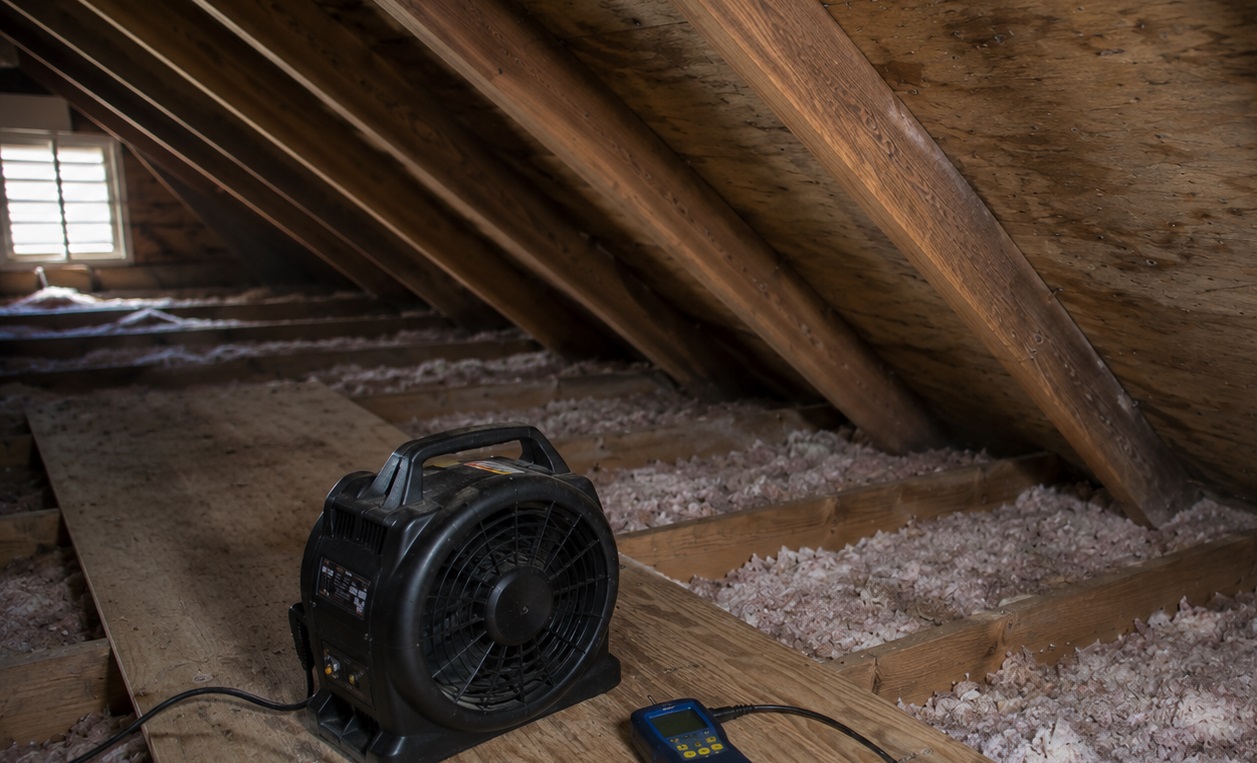
If you use a moisture meter, compare readings from the affected roof sheathing with nearby dry framing rather than relying on one isolated number. The trend should move downward as drying progresses.
Increase Continuous Air Movement
Continuous airflow allows moisture to evaporate from wood surfaces. Moving air carries moisture vapor away and replaces it with drier air.
Effective airflow strategies include:
- Keeping soffit intake paths open at the eaves
- Keeping ridge, roof, or gable exhaust paths open above the wet areas
- Using temporary fans only when humid air can leave the attic
- Pointing fans across damp areas, not directly into insulation or moldy material
In many cases, restoring proper ventilation alone significantly improves drying performance.
A fan can help only when it moves damp air toward an exit path. If the attic has blocked intake or exhaust vents, a fan may simply circulate humid air and spread moisture to other roof areas.
Control Humidity Levels During Drying
During drying, keep indoor humidity as low and steady as practical. High indoor humidity can continue feeding attic condensation even when roof vents are open.
Use a basic hygrometer indoors and, if safe, in the attic area being monitored. If attic humidity stays high while the house below is humid, reduce indoor moisture sources before assuming the roof deck has failed to dry.
Allow Gradual Evaporation From Wood Surfaces
Wood does not dry instantly. Even when surfaces appear dry, internal moisture may remain trapped inside the material. Gradual evaporation is necessary to remove this internal moisture safely.
Drying occurs in stages:
- Surface moisture evaporates first
- Internal moisture moves toward the surface
- Airflow removes moisture vapor
- Wood slowly returns to normal moisture levels
Rushing the drying process rarely produces better results. Consistent airflow and humidity control remain the most effective approach.
How to Dry Damp Insulation After Roof Condensation
Insulation plays a major role in how quickly roof areas recover after condensation. While wood surfaces can release moisture gradually, insulation often holds water longer and slows drying across the entire roof structure. If insulation remains wet, moisture can stay trapped against roof sheathing and framing, increasing the risk of mold growth.
Because insulation affects both temperature control and airflow, evaluate whether it is only lightly damp or actually saturated. If moisture keeps returning after drying begins, reviewing Signs of Persistent Roof Condensation Problems can help identify patterns that point to a deeper ventilation or air-leakage issue.
Identify Lightly Damp Versus Heavily Saturated Insulation
Not all damp insulation requires removal. Lightly damp insulation may dry naturally with improved airflow, while heavily saturated insulation often retains moisture for extended periods and may require replacement.
Lightly damp insulation typically:
- Feels slightly cool but not dripping wet
- Retains its original shape
- Shows minor discoloration
- Dries gradually with improved ventilation
Heavily saturated insulation often:
- Feels heavy and compressed
- Drips when handled
- Shows significant discoloration
- Remains wet for several days
Loose-fill insulation that clumps, compresses, or stays wet in pockets is harder to dry evenly than a lightly damp batt with good air exposure. If wet insulation is holding moisture against the roof deck or ceiling framing, removal may be safer than waiting for it to dry in place.
Recognizing the difference helps determine whether drying alone is likely to succeed.
Allow Air Circulation Around Damp Insulation
Air movement around insulation helps remove trapped moisture. Without airflow, insulation may remain damp even after surface materials appear dry.
Helpful circulation practices include:
- Keeping ventilation pathways open
- Avoiding storage that blocks airflow
- Maintaining consistent airflow across roof bays
- Monitoring areas directly below wet sheathing
Consistent airflow supports gradual moisture release from insulation fibers.
Understand When Insulation May Need Replacement
Some insulation materials lose effectiveness when saturated. Once compressed or damaged by moisture, insulation may no longer provide proper thermal resistance.
Replacement may be necessary when:
- Insulation remains wet after several days
- Strong musty odors develop
- Mold becomes visible within insulation fibers
- Material loses its original shape
If repeated moisture exposure occurs, long-term prevention strategies described in How to Prevent Roof Condensation can help reduce future insulation damage.
How Long Roof Areas Take to Dry After Condensation
Roof sheathing may dry in a few days after light surface condensation, but wet insulation, repeated cold-weather condensation, or poor attic ventilation can extend drying to a week or longer.
Use these timelines as general checkpoints, not guarantees. The more important sign is whether the affected area is steadily improving instead of staying wet or forming new condensation.
Typical Drying Time for Light Condensation
Light condensation usually affects surface moisture without deeply saturating materials. With proper airflow and humidity control, these areas often dry relatively quickly.
Typical drying characteristics include:
- Drying within one to three days
- Minimal visible staining
- No lasting odor development
- Insulation remaining mostly dry
These conditions represent early-stage moisture exposure that responds well to improved ventilation.
Drying Time for Moderate Moisture Conditions
Moderate moisture exposure occurs when condensation persists over several days or weeks. In these cases, materials absorb more moisture and require longer drying periods.
Typical moderate drying characteristics include:
- Drying taking three to ten days
- Visible wood darkening
- Minor insulation dampness
- Slight odor presence
During this stage, consistent airflow is critical to prevent additional moisture accumulation.
Drying Time for Heavy Moisture Saturation
Heavy saturation occurs when condensation continues for extended periods or when moisture accumulates faster than it can evaporate. In these cases, drying may require significantly more time.
Typical heavy drying characteristics include:
- Drying lasting several weeks
- Deep wood discoloration
- Wet insulation requiring evaluation
- Increased mold risk
If moisture remains after extended drying periods, underlying causes discussed in Why Roof Sheathing Stays Wet should be carefully reviewed.
Mistakes That Prevent Roof Areas From Drying Properly
Many drying failures happen because the attic keeps receiving humid air or because airflow is blocked while wet materials are trying to release moisture. Avoid these mistakes before assuming the roof materials cannot dry.
Ignoring Ongoing Moisture Sources
One of the most common mistakes is attempting to dry roof materials without addressing the source of moisture. If humid air continues entering the attic, drying becomes nearly impossible.
Common overlooked moisture sources include:
- Bathroom exhaust fans venting into the attic
- Kitchen vents releasing steam indoors
- High indoor humidity levels
- Unsealed attic penetrations allowing air leakage
- Blocked ventilation pathways
If moisture continues entering the attic, drying efforts will only produce temporary results.
Closing Off Ventilation During Drying
Some homeowners mistakenly close attic vents to keep warm air inside. While this may seem helpful, it often traps humidity and slows evaporation.
Closing ventilation can lead to:
- Higher humidity levels
- Slower evaporation rates
- Extended drying time
- Greater mold risk
Maintaining open airflow pathways allows moisture to escape and supports natural drying processes.
Assuming Insulation Will Dry Automatically
Insulation does not always dry at the same rate as wood. Because insulation fibers hold moisture, they may remain damp even after nearby materials appear dry.
Problems occur when:
- Insulation remains compressed
- Moisture remains trapped within fibers
- Airflow cannot reach affected areas
- Damp insulation blocks ventilation pathways
Check insulation below the wet roof bays because it may stay damp after the sheathing looks dry.
Using Heat Without Proper Airflow
Adding heat alone does not guarantee faster drying. Without adequate airflow, heated air may increase humidity levels and allow moisture to circulate rather than leave the attic.
Heat-related problems often include:
- Condensation forming in new locations
- Moisture spreading across surfaces
- Extended drying time
- Increased humidity levels
Balanced airflow combined with moderate temperature conditions produces more effective drying results than heat alone.
Important: Do not use open-flame heaters, unvented combustion heaters, or unsafe extension-cord setups in an attic. Drying equipment should never create a fire, carbon monoxide, or electrical hazard.
Delaying Drying After Discovering Moisture
Time plays an important role in preventing mold growth. Delaying drying efforts allows moisture to remain in materials long enough for mold spores to begin developing.
Delays often result in:
- Increased mold risk
- Greater insulation damage
- Widespread staining
- More complex repairs later
Early action reduces long-term risks and supports faster recovery.
How to Reduce Mold Risk While Roof Areas Dry
Mold risk drops when damp roof materials dry steadily and new condensation stops forming. During the drying period, check the same roof bays each day for expanding dark spots, musty odor, damp insulation, or new beads of moisture on the underside of the sheathing.
If mold growth expands while you are drying the area, the attic is still too damp or the moisture source is still active. At that point, focus on correcting the moisture source before cleaning or covering affected materials.
When Drying Alone Is Not Enough
Drying alone is not enough when the attic keeps producing new condensation, when wet materials stop improving, or when roof materials show signs of deterioration. In those cases, the problem is no longer just drying; it is an unresolved moisture, ventilation, air-sealing, or structural issue.
Persistent moisture often signals unresolved causes such as ventilation failure or hidden air leakage. If drying efforts do not produce lasting improvement, reviewing the warning patterns outlined in Signs of Persistent Roof Condensation Problems can help identify when deeper intervention is needed.
Moisture Remains After Expected Drying Time
Every drying process requires time, but materials should gradually improve under proper conditions. If roof sheathing remains wet beyond expected timeframes, underlying conditions may still be feeding moisture into the attic.
Warning signs include:
- Wet surfaces lasting longer than one to two weeks
- Repeated dampness in the same areas
- No visible improvement despite airflow corrections
- New damp areas forming during drying
These patterns often indicate ongoing moisture entry rather than incomplete drying alone.
Mold Growth Continues During Drying
Mold growth during drying indicates that moisture levels remain high enough to support fungal development. This is a strong warning that drying conditions are insufficient or moisture sources are still active.
Serious mold warning signs include:
- New mold spots appearing during drying
- Expanding mold coverage
- Persistent musty odors
- Mold spreading to nearby framing or insulation
When mold continues developing, additional moisture control measures become necessary.
Structural Materials Show Signs of Deterioration
Structural changes in roof materials indicate long-term moisture exposure. If roof decking begins to soften or deform, professional evaluation may be required to assess damage severity.
Structural warning signs include:
- Soft or spongy wood surfaces
- Warped roof panels
- Loose or weakened fasteners
- Visible separation between wood layers
These conditions should not be ignored, especially if the sheathing feels soft, fasteners no longer hold firmly, or roof decking appears delaminated.
Frequently Asked Questions About Drying Roof Areas Affected By Condensation
How long does roof sheathing take to dry after condensation?
Drying time depends on moisture severity and airflow conditions. Light condensation may dry within one to three days, while moderate moisture may take several days to over a week. Heavier moisture exposure can require several weeks to fully dry.
Can wet insulation be saved after condensation?
Lightly damp insulation may dry naturally with improved airflow. However, heavily saturated insulation often retains moisture and may require replacement if it does not dry within a reasonable timeframe.
Should I use fans in the attic to help drying?
Fans can improve airflow when moisture has a clear path to exit the attic. However, fans alone do not remove moisture unless ventilation pathways allow humid air to leave the space.
Does heat help dry roof condensation?
Heat can increase evaporation, but without proper airflow it may raise humidity levels and slow drying. Balanced airflow and humidity control are more important than temperature alone.
What signs show that roof condensation is not drying properly?
Poor drying signs include wet sheathing that does not lighten in color, insulation that stays damp or compressed, musty odor, new condensation beads, or dampness returning in the same roof bays after airflow improvements.
Conclusion
Roof condensation dries best when new moisture is stopped first. If humid indoor air is still reaching the attic, fans, heat, and time will not solve the problem for long.
Start by lowering indoor humidity, confirming that vents are open, and checking whether insulation is holding moisture against the roof deck. Then monitor the same roof bays over the next several days to make sure sheathing is lightening, insulation is drying, and new condensation is not forming.
If the area stays wet, smells musty, grows visible mold, or keeps returning after drying, the issue has moved beyond simple drying. At that point, the attic needs a closer look for blocked ventilation, air leaks from the living space, wet insulation, or roof materials that have already begun to deteriorate.
Key Takeaways
- Roof areas affected by condensation dry only when new moisture stops entering the attic.
- Clear soffit intake, ridge or roof exhaust, and open roof-bay airflow are more important than heat alone.
- Temporary fans help only when they move damp air toward a real exit path.
- Wet or compressed insulation can hold moisture against sheathing and may need removal if it does not dry.
- Surface dryness does not always mean wood or insulation is dry internally.
- Persistent wetness, musty odor, expanding mold, or recurring condensation means the moisture source is still active.