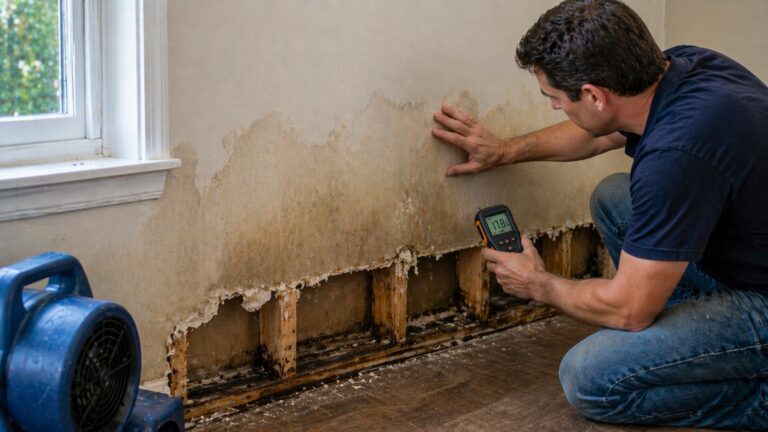
How to Dry HVAC Systems After Moisture Problems
To dry an HVAC system after a moisture problem, remove standing water first, confirm the drain line and drain pan are working, restore airflow, lower indoor humidity, and give hidden areas enough time to dry before assuming the system is safe to use normally. Drying is not just about wiping visible water away; damp coils, drain pans, insulation, duct interiors, and air handler compartments can stay wet long after the surface looks dry.
HVAC moisture problems often follow condensation buildup, clogged condensate drains, high indoor humidity, short cycling, wet duct insulation, or water intrusion near the air handler. If the source is not corrected, drying may only last until the next cooling cycle or humidity spike.
If you are noticing early warning signs like musty odors or damp airflow, review these signs of mold growth in HVAC systems to determine whether drying alone is enough or if additional action may be needed.
For broader recovery steps after leaks, humidity events, or repeated dampness, see this guide to preventing recurring moisture damage, which explains why drying must be combined with source correction.
Why Drying HVAC Systems Correctly Matters
Drying an HVAC system is not just about removing visible water from the drain pan or air handler cabinet. It means removing moisture from the surfaces and nearby materials that can keep feeding damp air, odors, and condensation back into the system during normal operation.
When moisture remains inside HVAC components, several problems can develop:
- Mold may begin growing within 24 to 48 hours when moisture, dust, and organic debris remain present
- Musty odors may spread through the duct system
- Dust buildup can become a breeding ground for contamination
- Air quality may decline as moisture circulates through the home
These issues are often linked to underlying moisture behavior. If drying is incomplete, the system may remain vulnerable to recurring problems. For example, systems that do not dry properly often continue to feel damp over time. This behavior is explained in why HVAC systems stay damp, which helps connect drying challenges to system conditions.
Proper drying is especially important after moisture events such as drain overflows or extended humidity exposure. In these cases, moisture can exist in multiple forms, including standing water, surface dampness, and absorbed moisture inside materials.
Immediate Steps After Discovering Moisture in an HVAC System
The first stage of drying begins as soon as moisture is discovered. Taking the right initial steps can significantly reduce drying time and prevent additional damage.
Safety first: If water is near electrical components, the blower compartment, control board, wiring, or a plugged-in unit, shut the system off and call an HVAC professional before opening panels or running the fan. Do not operate equipment that has been exposed to floodwater, sewage, or contaminated water until it has been inspected.
1. Remove Any Standing Water
If water is visible inside or around the system, it should be removed as soon as possible. Standing water provides a continuous source of moisture that prevents drying and increases the risk of mold growth.
Check for:
- Water in the drain pan
- Pooled water near the air handler
- Moisture collecting around the unit base
Use towels or a wet/dry vacuum only in areas that can be reached safely without touching wiring or energized parts. After visible water is removed, leave panels open only if the system is safely powered down and the area is protected from children, pets, and debris.
2. Confirm Drainage Is Working
Before attempting to dry the system, make sure the drainage system is functioning properly. If water cannot exit the system, moisture will continue to accumulate.
Check whether the condensate pan is holding water, the drain line is clogged, the float switch has tripped, or water is backing up near the air handler. If the system keeps producing water faster than it can drain, drying will not hold.
If you are not sure where moisture is still present, use this guide on how to detect moisture inside HVAC systems before deciding whether drying is complete.
3. Replace or Check Air Filters
Air filters affect airflow, which is essential for drying. A clogged or dirty filter can restrict airflow and slow down the evaporation process.
Replace a wet, dirty, or moldy filter rather than trying to dry and reuse it. A clean filter helps restore airflow, but it will not solve the problem if the blower, coil, duct insulation, or drain system is still wet.
4. Identify the Moisture Source
While this article focuses on drying, it is important to understand where the moisture came from. Without identifying the source, drying efforts may only provide temporary results.
For example, if condensation buildup is the cause, the issue may return after drying unless conditions are corrected. You can explore common causes in why mold forms inside HVAC systems, which explains how moisture develops in these systems.
How HVAC Systems Dry Naturally
HVAC systems are designed to manage moisture, but they do not always dry themselves completely after a moisture problem. Natural drying occurs through airflow and evaporation, but this process depends heavily on system conditions.
When an HVAC system operates normally:
- Air moves across internal surfaces
- Moisture evaporates into the air
- The system removes humidity through cooling cycles
This process works best when airflow is strong and humidity levels are controlled. However, after a moisture problem, natural drying is often not enough on its own, especially if water has accumulated or materials have absorbed moisture.
Drying is slower when:
- Humidity levels are high
- Airflow is restricted
- Moisture is trapped in insulation or hidden areas
- The system cycles off too quickly
This is why visible dryness is not enough. The goal is to dry the air handler, drain pan area, coil surfaces, accessible duct sections, and surrounding materials that may keep feeding moisture back into the system.
Using Airflow to Speed Up Drying
Airflow helps dry accessible HVAC surfaces by moving damp air away from coils, duct surfaces, drain pan areas, and air handler compartments. It works best after standing water is removed and drainage is confirmed.
Run the System in Fan Mode
Using the fan setting keeps air moving through the system without necessarily cooling it. This continuous airflow helps dry internal components such as coils and duct surfaces.
Fan mode is most effective when:
- The drainage system is working properly
- No active leaks are present
- Humidity levels are not excessively high
Do not use fan mode to push air through a system with visible mold, contaminated water, or saturated insulation. In those cases, airflow can move odors, spores, or damp particles through the duct system instead of solving the moisture problem.
Operate the Air Conditioner Carefully
Running the air conditioner can help remove moisture from the air, but it must be used carefully. Cooling cycles produce condensation, which can either help or hinder drying depending on system conditions.
Use the system when:
- Drain lines are clear and functioning
- Airflow is not restricted
- The system can run long enough to remove humidity effectively
If the system short cycles, has a clogged drain, has a dirty coil, or shuts off before completing a normal cooling cycle, running it may keep surfaces wet instead of drying them. Correct those conditions before relying on the air conditioner as part of the drying process.
Using Dehumidifiers to Support HVAC Drying
Lowering indoor humidity significantly improves drying performance. Dehumidifiers remove moisture from the air, allowing surfaces inside the HVAC system to dry more quickly.
Dehumidifiers are especially helpful when:
- Indoor humidity is high
- Outdoor conditions limit ventilation
- The HVAC system is not removing enough moisture on its own
Place the dehumidifier near the affected air handler area when possible, keep interior doors open for circulation, and empty or drain the unit continuously during the drying period. Drying works best when indoor humidity is kept low enough that damp HVAC surfaces can release moisture instead of reabsorbing it.
Improving Ventilation to Remove Moisture
Ventilation only helps HVAC drying when the replacement air is drier than the air inside the home. If outdoor air is humid, open windows may slow drying and make the system work harder.
Effective ventilation methods include:
- Opening windows when outdoor conditions are dry
- Using exhaust fans in kitchens and bathrooms
- Allowing fresh air to circulate through living spaces
In humid climates, prioritize dehumidification over open-window ventilation unless outdoor air is clearly drier than indoor air.
How Long It Takes for an HVAC System to Dry
Drying time varies depending on the severity of the moisture problem and the materials involved. Understanding realistic timelines helps prevent premature assumptions that the system is dry.
Minor Moisture Exposure
When only surface moisture is present and no standing water exists, drying may take between 6 and 24 hours under good airflow and low humidity conditions.
Moderate Moisture Exposure
If components are visibly damp or moisture has spread to multiple areas, drying may take 24 to 72 hours. During this time, consistent airflow and humidity control are important.
Severe Moisture Exposure
In cases involving standing water, prolonged dampness, or moisture inside insulation, drying may take several days or longer. These situations may require professional drying equipment.
Before closing the system back up, confirm that odors, visible dampness, pan water, and duct condensation have stopped rather than relying on surface feel alone.
Signs the HVAC System Is Not Drying Properly
After drying, watch how the system behaves during normal operation. Moisture that returns after the fan or cooling cycle runs usually means the source has not been corrected.
Warning signs that drying is not working include:
- Musty odors that persist or return during system operation
- Damp or heavy air coming from vents
- Visible moisture or condensation inside the unit
- Water returning to the drain pan soon after it was emptied
- Discoloration or buildup appearing near vents
- Moisture returning after initial drying efforts
These symptoms suggest that moisture is still active inside the system or returning during operation. If odor, damp airflow, or discoloration continues after drying, compare the problem with common HVAC mold symptoms to determine whether mold may already be forming.
Common Mistakes That Slow or Prevent HVAC Drying
Drying problems are often caused by incorrect assumptions about how HVAC systems remove moisture. Avoiding these common mistakes can improve drying results and reduce the chance of recurring issues.
Assuming the System Is Dry Too Early
One of the most common mistakes is assuming that drying is complete as soon as surfaces feel dry. Internal components, especially insulation and hidden duct areas, can retain moisture even when visible areas appear dry.
Running the System Without Fixing Drainage Issues
If the drainage system is not working properly, running the HVAC system may continue adding moisture instead of removing it. This can slow or completely prevent drying.
Ignoring Airflow Problems
Restricted airflow reduces evaporation and allows moisture to remain inside the system longer. Even small airflow issues can significantly extend drying time.
Relying on One Drying Method
A fan may dry accessible surfaces, but it will not clear a blocked drain, lower indoor humidity, or dry saturated duct liner. Match the drying method to the problem instead of assuming one step solves every moisture source.
When Drying Alone Is Not Enough
In some situations, drying the HVAC system will not fully resolve the problem. This usually happens when moisture exposure has been severe or when mold has already begun to develop.
Drying alone may not be sufficient when:
- Mold is already visible inside components
- Water reached electrical controls, wiring, or the blower compartment
- Insulated ducts have absorbed moisture
- Drainage issues continue to introduce water
- Moisture has been present for an extended period
In these cases, additional steps such as cleaning, repair, or component replacement may be necessary. Persistent moisture conditions are often explained by underlying system behavior. To understand why moisture remains even after drying attempts, review why HVAC systems stay damp.
How Moisture Problems Return After Drying
Even after successful drying, moisture problems can return if the original cause is not corrected. This is why drying is only one part of the solution.
Moisture may return due to:
- Recurring condensation from normal system operation
- High indoor humidity levels
- Poor airflow that limits drying during operation
- Ongoing drainage problems
When these conditions remain unchanged, the system may become damp again over time. This creates a cycle where drying temporarily improves conditions, but moisture returns and increases the risk of mold growth.
To prevent this cycle, drying must be followed by source correction. If the issue is tied to recurring condensation, airflow restriction, or drain problems, see why mold forms inside HVAC systems for the moisture conditions that allow growth to begin.
When to Call a Professional for HVAC Drying
While homeowners can manage basic drying steps, certain situations require professional help. HVAC systems contain complex components that may be difficult to access or dry completely without specialized equipment.
Consider professional assistance if:
- Moisture has been present for more than 48 to 72 hours
- Mold is visible inside the system
- Insulated ducts feel damp or saturated
- Drying attempts do not eliminate odors or moisture
- Water intrusion was severe or widespread
Professionals can use advanced drying equipment and inspect internal components safely. They can also identify hidden moisture sources that may not be visible during normal inspection.
If drying reveals signs of long-term moisture problems, the next step may involve correcting system issues. You can explore those solutions in how to fix persistent HVAC moisture problems, which explains how to address conditions that prevent HVAC systems from staying dry.
Frequently Asked Questions About Drying HVAC Systems
How long does it take for an HVAC system to dry?
Minor surface moisture around the air handler or drain pan may dry within 6 to 24 hours if airflow and humidity are controlled. Damp components, duct interiors, or insulation may take 24 to 72 hours or longer. If odors, pan water, or condensation return, the system is not fully dry.
Can running the air conditioner help dry the system?
Yes, but only if the system is functioning properly. Air conditioning can remove humidity from the air, which helps drying. However, if drainage is blocked or airflow is restricted, running the system may add more moisture instead of removing it.
Should the fan be left on to dry the HVAC system?
Fan mode can help dry accessible surfaces when the system is clean, the drain is working, and indoor humidity is controlled. Do not use fan mode if there is visible mold, contaminated water, saturated duct insulation, or water near electrical components.
Can moisture remain inside HVAC ducts after drying?
Yes. Moisture can remain inside insulated ducts or low-airflow areas even after visible surfaces appear dry. This is why drying must continue long enough to remove hidden moisture, not just surface dampness.
Does drying the system eliminate the risk of mold?
No. Drying reduces the conditions that allow mold to grow, but it does not remove mold that has already developed. If musty odors, visible growth, or contaminated insulation are present, the system may need cleaning, repair, or component replacement in addition to drying.
Conclusion: Dry the System, Then Fix the Source
Drying an HVAC system after a moisture problem requires more than removing visible water. The system needs working drainage, clear airflow, controlled indoor humidity, and enough drying time for damp components and nearby materials to release moisture.
If musty odors, damp airflow, drain pan water, or condensation return after drying, the system likely has an unresolved moisture source. In that case, review how to fix persistent HVAC moisture problems instead of repeating the same drying steps.
Key Takeaways
- Drying an HVAC system involves removing both visible water and hidden moisture
- Drying works best when airflow is restored, indoor humidity is lowered, and the condensate drain is working
- Standing water must be removed before effective drying can begin
- Dehumidifiers help most when indoor air is humid and ventilation would bring in damp outdoor air
- Hidden moisture inside insulation and ducts can delay drying
- Drying alone may not be enough if mold has already developed
- Persistent moisture problems require addressing the underlying cause