
Why Mold Forms Inside HVAC Systems
Mold forms inside HVAC systems when moisture, dust, and limited drying overlap. Air conditioners naturally create condensation, air handlers collect organic debris, and enclosed components such as coils, drain pans, and duct interiors may stay damp long enough for mold to grow.
Unlike surface mold on walls or ceilings, HVAC mold often starts in hidden system components before it becomes obvious indoors. If you are already noticing musty air, visible growth near vents, or symptoms that seem worse when the system runs, review these signs of mold growth in HVAC systems.
This article explains why mold forms inside HVAC systems. For broader cleanup and prevention guidance, refer to this complete mold removal guide.
Why HVAC Systems Are Naturally Vulnerable to Mold
HVAC systems are vulnerable to mold because the same equipment that cools and circulates air can also collect moisture and debris in hidden areas.
- They regularly produce moisture through condensation
- They collect dust and organic particles from indoor air
- They contain enclosed spaces where airflow is limited
- They operate in cycles that may not allow full drying
These conditions do not guarantee mold growth, but they increase the risk when damp surfaces remain coated with dust or organic debris.
Inside HVAC systems, dust acts as a food source for mold. Even in well-maintained homes, airborne particles settle on internal components such as coils and duct surfaces. When these surfaces become damp, they create ideal conditions for mold to begin developing.
Moisture inside HVAC systems often comes from normal operation rather than leaks. This is why mold can form even when there are no obvious plumbing problems or visible water damage.
The Role of Moisture in HVAC Mold Growth
Moisture is the main trigger for HVAC mold because cooling equipment creates condensation during normal operation.
When air conditioning systems cool indoor air, they remove humidity through condensation. Warm, humid air passes over cold evaporator coils, causing water to form on the surface. This moisture then drains into a collection pan and exits through a drain line.
Under ideal conditions, this process removes moisture efficiently and keeps the system dry. However, several issues can prevent proper drainage or drying, allowing moisture to remain inside the system longer than intended.
When moisture persists on surfaces such as coils, drain pans, or duct interiors, it creates an environment where mold can begin to grow. Even a thin film of moisture is enough if it remains in place long enough.
If moisture problems are ongoing, mold growth is likely to return even after cleaning. This is why understanding moisture behavior is critical. You can explore related moisture patterns in more detail in why HVAC systems stay damp, which explains how systems fail to dry properly over time.
How Condensation Inside HVAC Systems Creates Ideal Conditions
Condensation is one of the primary reasons mold forms inside HVAC systems. It occurs naturally during cooling cycles, but it becomes a problem when it accumulates or does not drain properly.
During normal operation:
- Warm indoor air enters the system
- The air passes over cold evaporator coils
- Moisture condenses into water droplets
- Water collects and drains away
In humid homes, each cooling cycle can pull a large amount of moisture from the air.
Problems arise when:
- Drain lines become clogged
- Drain pans hold standing water
- Airflow is reduced, slowing evaporation
- System cycles are too short to allow drying
When condensation remains on surfaces, it provides a consistent moisture source for mold growth. Over time, even small amounts of leftover moisture can support mold colonies, especially when combined with dust buildup.
Condensation-related mold often develops gradually. For the symptom side of this problem, review signs of mold growth from HVAC condensation.
The Role of Dust and Organic Buildup in Mold Formation
Moisture alone does not create mold. Mold also needs a food source, and inside HVAC systems, that food source is usually dust and organic debris carried through the air.
As air circulates through the system, it brings in particles such as:
- Skin cells
- Fabric fibers
- Pollen
- Dirt and outdoor particles
These particles settle on internal surfaces like evaporator coils, duct walls, and air handler components. Over time, they form a thin layer of organic material that mold can grow on when moisture is present.
This is why mold can develop even in systems that appear clean from the outside. The buildup occurs gradually and often goes unnoticed until moisture activates mold growth.
Air filters help reduce the amount of debris entering the system, but they do not eliminate it entirely. Fine particles still pass through filters and settle inside the system over time.
How Poor Airflow Contributes to Mold Growth
Airflow plays a critical role in keeping HVAC systems dry. When air moves efficiently through the system, it helps evaporate moisture and prevent it from lingering on surfaces.
When airflow is restricted, moisture remains in place longer, increasing the likelihood of mold growth. Poor airflow also allows dust to settle more easily, creating additional food sources for mold.
Common causes of reduced airflow include:
- Clogged or dirty air filters
- Blocked, closed, or undersized vents
- Duct restrictions, crushed flex duct, or poor duct layout
- Weak blower performance or dirty blower components
Restricted airflow not only increases moisture retention but also creates uneven temperature conditions inside the system. This can lead to more condensation forming in certain areas, further increasing mold risk.
If you suspect airflow issues are contributing to moisture buildup, it may help to review how to detect moisture inside HVAC systems to identify areas where moisture is not drying properly.
Drainage Problems and Standing Water Inside HVAC Systems
HVAC systems are designed to remove moisture through a drainage system. When this system fails, water can accumulate inside the unit, creating ideal conditions for mold growth.
Common drainage issues include:
- Clogged condensate drain lines
- Improperly sloped drain pipes
- Overflowing or misaligned drain pans
- Debris blocking water flow
Standing water is one of the most direct causes of mold growth because it provides a continuous moisture source. Even small amounts of trapped water can support mold if they remain in place for extended periods.
Drainage problems are often hidden and may not be noticed until mold or odors develop. In some cases, water may evaporate slowly, leaving behind damp surfaces that continue to support mold growth.
If water is visible near electrical components, shut the system off and have the unit inspected before opening panels or continuing operation.
How Different HVAC Materials Affect Mold Growth
The materials used inside HVAC systems influence how easily mold can form and spread. Some materials allow mold to grow more aggressively or make it harder to remove once established.
Metal Surfaces
Metal components such as coils and duct interiors do not absorb moisture. However, mold can still grow on the layer of dust and organic material that collects on these surfaces. If caught early, mold on metal is often easier to clean.
Insulated Duct Liners
Insulated ducts are more vulnerable to mold because fibrous liner can trap moisture internally. Once insulation becomes wet or moldy, it may not be cleanable in the same way as hard metal duct surfaces and may need replacement.
The EPA notes that wet or moldy insulation inside air ducts generally cannot be effectively cleaned and should be removed and replaced.
This is why duct-related mold problems can be more complex than surface-level contamination. For more detail on how mold behaves inside ducts, refer to why mold forms inside HVAC ductwork.
Plastic Components
Plastic parts such as drain pans and vent covers can develop mold on their surfaces when moisture is present. These areas often show visible growth earlier than hidden components, making them one of the first places homeowners notice a problem.
Environmental Conditions That Increase HVAC Mold Risk
Even a properly functioning HVAC system can develop mold when the surrounding home environment keeps adding moisture to the system.
Key environmental contributors include:
- High indoor humidity levels
- Warm climates with frequent air conditioning use
- Poor ventilation that traps moisture indoors
- Frequent temperature changes that increase condensation
In humid environments, HVAC systems must handle more moisture during each cooling cycle. If the system cannot remove and drain that moisture effectively, it increases the risk of mold formation.
These conditions often explain why HVAC mold is more common in humid climates, cooling seasons, and homes where indoor humidity stays high between cooling cycles.
Why Mold Keeps Coming Back in HVAC Systems
HVAC mold often returns after cleaning because the system environment has not changed. If damp surfaces, restricted airflow, dirty components, or hidden contamination remain, the same growth conditions return.
The most common reasons mold keeps coming back include:
- Moisture problems that were never corrected
- Hidden mold remaining inside ducts or insulation
- Ongoing condensation inside system components
- Airflow issues that prevent proper drying
In many cases, cleaning removes only surface growth while deeper contamination remains inside the system. As soon as moisture conditions return, mold can begin growing again.
This is why long-term solutions require identifying and correcting the source of moisture. If mold keeps returning, it is usually a sign that the system environment still supports growth. For guidance on resolving recurring issues, see how to fix persistent HVAC moisture problems.
Hidden Moisture Sources Inside HVAC Systems
Some of the most important causes of mold are hidden inside HVAC systems and are not visible during routine inspection. These areas can remain damp even when the rest of the system appears dry.
Common hidden moisture zones include:
- The back side of evaporator coils
- Corners and edges of drain pans
- Interior layers of insulated ducts
- Low-airflow sections of ductwork
- Return air pathways where dust accumulates
Because these areas are difficult to access, moisture can persist unnoticed for long periods. This allows mold to develop gradually without obvious warning signs until it becomes more widespread.
These hidden zones explain why surface cleaning may not solve HVAC mold. For broader moisture detection outside the HVAC system, see this guide to finding hidden moisture in different areas of your home.
System Design and Installation Factors That Lead to Mold
Installation problems can make mold more likely even when the equipment is new.
Poor Drainage Design
If drain lines are not properly sloped or installed, water may not flow out of the system efficiently. This can lead to standing water in the drain pan, which becomes a continuous moisture source.
Air Leaks in Ductwork
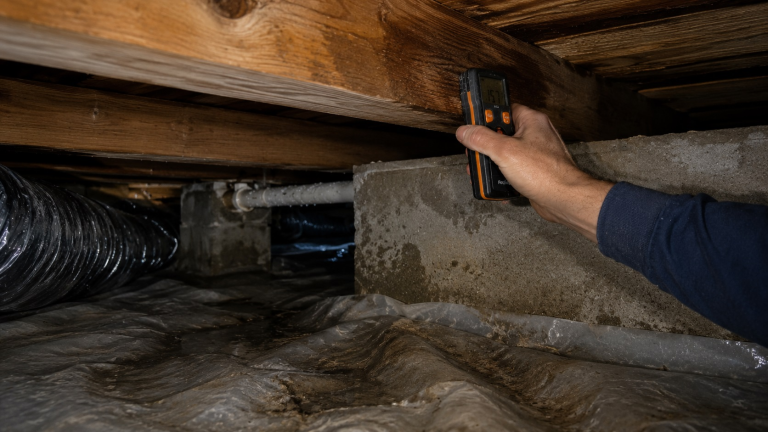
Leaks in ducts can allow humid air to enter the system, increasing moisture levels inside. This is especially common in unconditioned spaces such as attics or crawl spaces.
Duct Layout Problems
Poor duct design can create areas where airflow is weak. These low-flow zones allow moisture to remain in place longer, increasing the risk of mold growth.
Operational Factors That Contribute to Mold Formation
Some HVAC operating patterns leave moisture on coils, drain pans, or duct surfaces longer than normal, which increases mold risk even when the equipment is otherwise working.
Short Cycling
Short cycling occurs when the system turns on and off frequently without running long enough to remove moisture effectively. This can happen when systems are oversized or when thermostats are not properly calibrated.
When cycles are too short:
- Humidity is not fully removed from the air
- Condensation forms but does not fully drain or evaporate
- Moisture remains on system components
Continuous Fan Operation
Running the fan after a cooling cycle can sometimes re-evaporate moisture from wet coils or drain pans and move that moisture through the system instead of letting it drain away.
Lack of Maintenance
Routine maintenance plays a key role in preventing mold growth. When systems are not maintained:
- Filters become clogged, reducing airflow
- Drain lines become blocked
- Dust buildup increases inside components
These conditions combine to create an environment where mold can develop more easily.
Why Mold Can Form Even in New or Clean HVAC Systems
New or recently cleaned HVAC systems can still develop mold if the system stays damp after operation.
Examples include:
- New systems installed in humid environments
- Improper installation leading to drainage issues
- Systems that are oversized and short cycle frequently
- Homes with high indoor humidity levels
Because mold growth depends on environmental conditions rather than system age, even well-maintained equipment can develop problems if moisture is not controlled.
This is why long-term prevention focuses on controlling moisture and airflow rather than relying only on cleaning or replacing components.
Frequently Asked Questions About Why Mold Forms Inside HVAC Systems
Why does mold grow inside air conditioning systems?
Mold grows inside air conditioning systems because they regularly produce condensation. When that moisture combines with dust and does not fully dry, it creates an environment where mold can develop over time.
Can HVAC systems create mold on their own?
HVAC systems do not create mold spores from nothing, but they can collect spores and provide the moisture and dust needed for growth. Condensation, dirty components, and poor drying are usually the real problem.
Does running the air conditioner prevent mold?
Air conditioning can reduce indoor humidity, which helps limit mold growth. However, the cooling process also creates condensation. If that moisture is not drained or dried properly, it can actually contribute to mold formation inside the system.
Why does mold keep coming back in HVAC systems?
Mold returns when the underlying moisture problem is not resolved. Cleaning removes surface mold, but if condensation, drainage issues, or airflow problems remain, mold will regrow under the same conditions.
Is humidity the main cause of mold in HVAC systems?
Humidity is often the starting point, but HVAC mold usually forms when humid air leads to condensation that does not drain or dry properly. Dust buildup, weak airflow, and poor drainage determine whether that moisture becomes a mold problem.
Conclusion: Mold Forms When Moisture Conditions Are Not Controlled
Mold forms inside HVAC systems when condensation, dust, restricted airflow, or drainage problems allow damp surfaces to remain inside the equipment. Cleaning may remove visible growth, but mold can return if coils, drain pans, duct liners, or low-airflow areas stay damp.
If you are currently seeing signs of mold, revisit the warning signs of HVAC mold. If the issue keeps returning, the next step is to identify which moisture condition inside the system is allowing growth to continue.
To compare HVAC moisture with other hidden moisture sources in the home, review this guide to finding hidden moisture in different areas of your home.
Key Takeaways
- Condensation from cooling cycles is the most common moisture source
- Poor airflow and drainage problems allow moisture to remain in the system
- Dust buildup provides the organic material mold needs to grow
- Hidden moisture areas can support mold without visible warning signs
- Mold often returns when the root moisture cause is not corrected
- Correcting moisture, airflow, drainage, and dust buildup is the most effective way to prevent HVAC mold from returning
2 Comments
Comments are closed.