
Signs of Mold Growth from HVAC Condensation
Signs of mold growth from HVAC condensation often start with a musty smell when the system runs, light spotting around vents, recurring dampness near the air handler, or staining around drain pans, duct boots, and condensate lines.
HVAC systems normally remove humidity from indoor air and send that moisture away through a drain pan and condensate line. When drainage, insulation, airflow, or humidity control fails, condensation can keep nearby drywall, wood, insulation, or HVAC closets damp long enough for mold to grow.
This guide explains the most reliable signs of mold growth caused by HVAC condensation, where those signs usually appear, and how to tell whether the moisture pattern points back to the HVAC system. If you’re already seeing moisture without obvious mold, reviewing signs of HVAC condensation problems can help confirm whether condensation is the likely source. For broader mold cleanup and prevention guidance, review how to remove mold permanently.
Why HVAC Condensation Can Lead to Mold Growth
HVAC systems naturally create condensation whenever warm indoor air passes across cold evaporator coils. This process removes moisture from the air, improving comfort and reducing indoor humidity. However, if that moisture does not drain properly or dries too slowly, nearby materials can remain damp long enough for mold to develop.
Condensation-related mold growth rarely comes from a single event. Instead, it develops from repeated moisture cycles that slowly wet nearby surfaces over days or weeks. Even small amounts of water can create mold-friendly conditions if they occur consistently in the same location.
How HVAC Condensation Normally Works
In a properly functioning system, condensation collects on cold evaporator coils and flows into a drain pan. From there, water moves through a condensate drain line and exits the home. The surrounding materials should stay dry, and airflow should help remove any minor residual moisture.
Problems begin when this system becomes partially blocked, damaged, or poorly maintained. In many cases, homeowners first notice early condensation symptoms long before mold appears. Learning why HVAC systems produce excess condensation can help explain how these failures develop.
How Moisture Builds Up Around HVAC Equipment
Condensation-related mold growth typically begins when moisture accumulates faster than it can dry. This buildup may occur due to:
- Clogged or partially blocked drain lines
- Cracked or misaligned drain pans
- Insufficient insulation around duct boots
- High indoor humidity levels
- Poor airflow that slows evaporation
- Continuous condensation from frequent HVAC cycling
Even a slow drip or repeated condensation can soak drywall, wood, or insulation over time. These materials trap moisture and create ideal conditions for mold spores to settle and multiply.
Why HVAC-Related Mold Often Goes Undetected
Mold caused by HVAC condensation frequently remains hidden longer than mold caused by visible plumbing leaks. This happens because condensation problems often occur inside enclosed areas such as:
- HVAC closets
- Ceiling cavities around duct boots
- Wall cavities near drain lines
- Insulated attic duct systems
- Hidden sections of air handler platforms
By the time visible mold appears, moisture may have been accumulating for weeks or months. In many homes, recurring moisture patterns are linked to unresolved drainage problems or persistent condensation leaks. If water accumulation continues, reviewing why HVAC units leak water indoors can help identify underlying causes that allow mold conditions to persist.
Visible mold is usually a later sign. The earlier warnings are often odor, repeated dampness, staining, or a condensation pattern that returns after the system runs.
Early Signs of Mold Growth from HVAC Condensation
Mold caused by HVAC condensation usually develops gradually. In the early stages, the signs are subtle and easy to dismiss as normal dust, minor staining, or temporary humidity. Recognizing these early indicators is critical, because mold becomes much harder to control once moisture continues unchecked.
In many homes, these signs appear near vents, around air handlers, or in areas where condensation repeatedly forms. If you’re unsure whether moisture is still active, reviewing how to detect HVAC condensation leaks can help confirm whether damp conditions are ongoing.
Musty Odors That Appear When the HVAC System Runs
One of the earliest warning signs of mold growth from HVAC condensation is a musty smell that becomes noticeable when the system turns on. This happens because air passing through damp areas or mold colonies carries odor particles into living spaces.
- Odor appears strongest near vents
- Smell increases when cooling cycles begin
- Rooms connected to the same duct system develop similar odors
This type of odor often indicates that moisture has been present long enough for mold to begin developing, even if visible growth is not yet obvious.
Light Spotting or Discoloration Near Vents
Early mold growth may appear as faint spotting around air vents or nearby surfaces. These spots are often mistaken for dust accumulation, especially when they form in circular or uneven patterns.
- Gray, black, or green speckling around vent edges
- Light staining on ceiling drywall near duct boots
- Small clusters that gradually expand over time
Unlike dust, mold tends to spread outward and become darker or more defined as moisture continues to feed it.
A useful quick check is pattern and recurrence: dust usually wipes away evenly, while suspected mold often returns in the same damp area after cleaning or becomes more noticeable after cooling cycles.
Recurring Dampness on Surfaces
Condensation problems often create repeating moisture patterns. Surfaces may feel damp at certain times of day or after the HVAC system runs for extended periods.
- Ceiling areas that feel slightly cool or damp
- Walls near air handlers showing repeated moisture spots
- Insulation or surrounding materials retaining moisture
This recurring dampness is one of the strongest indicators that conditions are suitable for mold growth, even before visible colonies fully develop.
Subtle Changes in Paint or Surface Texture
Moisture from HVAC condensation can slowly affect surface materials. Early-stage damage may appear as small texture changes that are often overlooked.
- Slight bubbling or blistering paint
- Minor peeling near vents or HVAC equipment
- Softened drywall surfaces
These changes occur because moisture weakens the bond between paint and underlying materials. Over time, this can expose organic surfaces that allow mold to grow more easily.
Localized Odor or Staining Near HVAC Equipment
In homes with indoor air handlers or HVAC closets, early mold signs often appear close to the equipment itself. These areas are especially vulnerable if condensation drainage is inconsistent.
- Musty smell inside HVAC closets
- Staining near drain pans or condensate lines
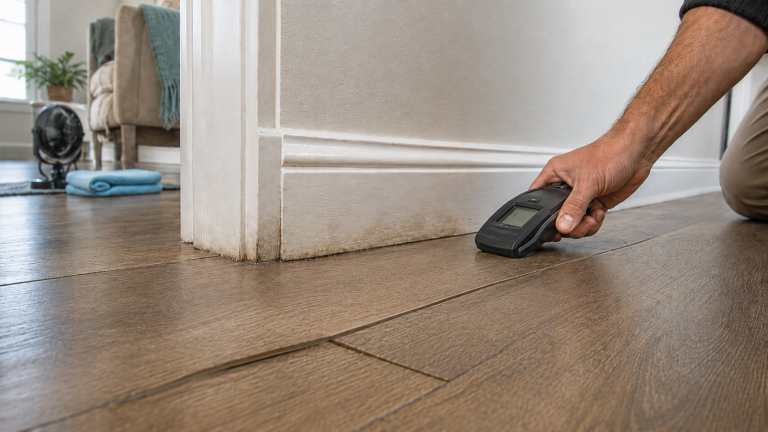
- Damp flooring or baseboards near the unit
These localized symptoms may indicate that condensation is not draining properly. If moisture continues to collect, mold growth becomes more likely in surrounding materials.
In situations where moisture buildup has already caused damage, understanding how to dry areas affected by HVAC condensation can help prevent conditions from worsening.
Why Early Signs Are Often Misinterpreted
Many homeowners overlook early mold signs because they resemble harmless conditions. For example:
- Dust buildup is mistaken for mold spotting
- Temporary humidity is assumed to be normal
- Odors are blamed on dirty filters instead of moisture
When spotting, odor, or dampness appears in the same HVAC-related area repeatedly, treat it as a moisture pattern rather than a one-time cosmetic issue.
Where Mold Commonly Appears Around HVAC Condensation Problems
Mold caused by HVAC condensation rarely appears randomly. It follows predictable moisture pathways based on how water forms, moves, and accumulates around system components. Identifying these patterns helps confirm whether condensation is the source rather than a roof leak, plumbing issue, or general humidity problem.
Most condensation-related mold develops in areas where water either drips, collects, or repeatedly forms on cold surfaces. If you’re seeing symptoms in these locations, it strongly suggests a moisture pattern linked to the HVAC system.
Around Ceiling Vents and Duct Boots
One of the most common locations for mold growth is around ceiling vents. This typically occurs when warm, humid air contacts cold metal duct boots, causing condensation to form at the edges of the vent opening.
- Circular or ring-shaped staining around vents
- Dark spotting along vent edges
- Mold concentrated where the vent meets drywall
This pattern is often mistaken for roof leaks, especially when it appears on ceilings. However, if the staining forms evenly around the vent opening, condensation is the more likely cause.
Below or Around Indoor Air Handlers
Indoor HVAC units and air handlers are another major source of condensation-related mold. When drain pans overflow or condensate lines fail, water can accumulate beneath the unit.
- Mold growth on flooring or platforms under the unit
- Damp drywall inside HVAC closets
- Staining or discoloration along nearby walls
These areas often remain damp longer than expected, especially in enclosed closets with limited airflow. Over time, repeated exposure creates ideal conditions for mold development.
Along Condensate Drain Lines
Condensate drain lines can develop slow leaks or loose connections that release small amounts of water over long periods. This type of moisture is often hidden but highly persistent.
- Mold forming along baseboards near drain line routes
- Staining on lower sections of walls
- Dampness inside wall cavities near plumbing paths
Because these leaks are slow, they may go unnoticed until mold growth becomes visible. This pattern often signals a long-term moisture issue rather than a sudden failure.
Inside HVAC Closets and Enclosed Spaces
HVAC closets concentrate both moisture and heat, making them one of the most vulnerable areas for mold growth. Condensation problems are often amplified in these confined environments.
- Musty odors when the closet door is opened
- Mold in corners or along baseboards
- Damp or discolored drywall near the unit
Limited airflow prevents surfaces from drying quickly, allowing moisture to remain trapped and support ongoing mold growth.
On Insulation and Hidden Structural Materials
In some cases, mold forms on materials that are not immediately visible. Insulation around ducts or inside ceilings can trap moisture and allow mold to grow without obvious surface signs.
- Persistent odor without visible mold
- Wet or compressed insulation near ductwork
- Hidden mold revealed during inspection or repair
These hidden conditions often develop when condensation problems persist over time. If moisture is suspected but not visible, broader inspection methods may be needed. Understanding what a mold smell with no visible mold can mean can help narrow down hidden sources before opening walls, ceilings, or duct areas unnecessarily.
How to Tell Mold from Dust, Dirt, or Water Stains
One of the most common challenges homeowners face is distinguishing mold from harmless surface buildup. HVAC systems naturally move dust through the air, and condensation can create staining that looks similar to mold.
Correct identification matters because mold usually points to repeated or unresolved moisture, while dust may simply follow airflow patterns.
Differences Between Mold and Dust
- Mold: Appears as clustered spots that grow and spread over time
- Dust: Forms evenly and wipes away easily without returning quickly
Dust typically accumulates due to airflow patterns, while mold forms where moisture is consistently present.
Differences Between Mold and Water Stains
- Mold: Has texture, depth, and may appear fuzzy or irregular
- Water stains: Appear as flat discoloration without surface growth
Water stains may indicate past moisture, but mold suggests that moisture is still active or has persisted long enough to support growth.
If the growth appears only as light surface film, it may be mildew or surface contamination. If it returns in the same damp HVAC-related area, grows in clusters, smells musty, or appears around vents, duct boots, insulation, or drain routes, treat it as a possible mold and moisture issue rather than a simple cleaning problem.
Key Indicator: Recurrence After Cleaning
One of the clearest signs that a substance is mold is recurrence. If spots or odors return after cleaning, moisture is still present and supporting growth.
This is especially common with HVAC condensation issues, where the source of moisture may not have been fully addressed. If mold continues to reappear, the underlying condensation problem must be resolved to prevent further spread.
Warning Signs the Condensation Problem Is Still Active
Finding mold is only part of the issue. The more important question is whether the HVAC condensation problem is still ongoing. If moisture continues to form, mold will return even after cleaning.
Active condensation problems often show consistent patterns that repeat over time. Recognizing these patterns helps determine whether the issue has been resolved or is still affecting your home.
Moisture Reappears After Cleaning
If damp spots return after being dried or cleaned, it indicates that condensation is still forming somewhere in the system.
- Surfaces feel damp again within days
- Stains slowly reappear in the same location
- Mold spots return after removal
This pattern strongly suggests an unresolved moisture source, often related to drainage issues or airflow problems.
Odors Return When the HVAC System Runs
Musty smells that come back during cooling cycles are a clear sign that moisture is still present inside the system or nearby materials.
- Odor increases when air starts flowing
- Smell is strongest near vents or the air handler
- Multiple rooms develop similar odors
This often indicates that condensation is affecting ductwork or hidden surfaces. In some cases, it may be linked to broader airflow or humidity issues. Understanding signs of poor airflow in HVAC systems can help explain why moisture is not drying properly.
Visible Condensation or Dripping Water
Any visible moisture around HVAC components suggests that condensation is still active.
- Water dripping from vents or equipment
- Condensation forming on metal surfaces
- Wet drain pans or slow drainage
These conditions create a continuous moisture source that supports mold growth. If water accumulation persists, reviewing why HVAC drain lines overflow can help identify one of the most common causes.
Recurring Stains or Expanding Discoloration
Stains that grow over time indicate ongoing moisture exposure. Unlike old water damage, active condensation continues to affect materials.
- Ceiling stains that expand around vents
- Darkening areas on drywall or wood
- Repeated discoloration in the same locations
These signs often appear when condensation is not draining properly or when humidity levels remain too high for surfaces to dry.
When HVAC-Related Mold Becomes a Serious Problem
Not all mold situations require the same response. However, certain warning signs indicate that the problem has progressed beyond minor surface growth and may require professional evaluation.
Signs of Moderate to Severe Mold Growth
- Mold covering large or expanding areas
- Strong, persistent odors throughout the home
- Multiple affected surfaces near HVAC components
- Visible moisture that does not dry
These conditions suggest that condensation has been present for an extended period and may be affecting structural materials.
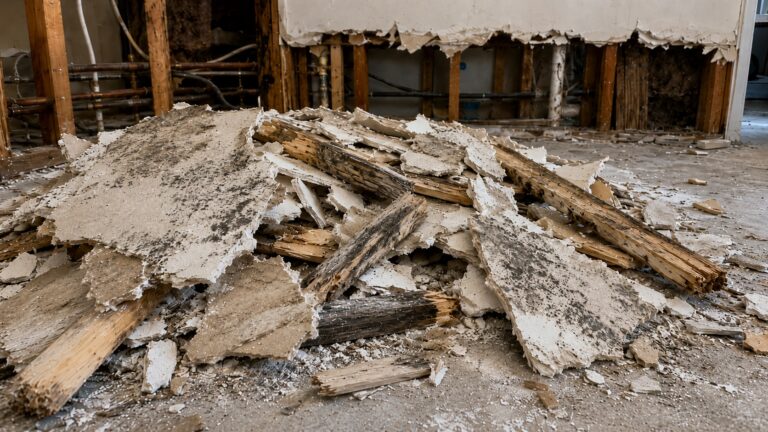
Signs of Structural or Hidden Damage
- Soft or weakened drywall near HVAC areas
- Warped wood or sagging materials
- Wet or deteriorating insulation
These symptoms indicate deeper moisture penetration. In these cases, surface cleaning alone will not resolve the issue.
When to Call a Professional
Professional inspection is recommended when:
- Mold returns repeatedly after cleaning
- The moisture source cannot be clearly identified
- HVAC components may be involved internally
- Damage appears to extend into walls, ceilings, or duct systems
Avoid disturbing suspected mold around vents, duct interiors, wet insulation, or HVAC components if growth appears widespread, the odor is strong, or moisture is near electrical parts.
Addressing both the mold and the underlying moisture source is essential. In many cases, resolving condensation issues requires a combination of drainage repair, airflow correction, and humidity control. For long-term solutions, understanding how to fix persistent HVAC condensation issues can help guide next steps.
What to Check After You Notice HVAC-Related Mold Signs
Once mold signs are identified, the first goal is to stop the condensation pattern without disturbing affected materials more than necessary. Without controlling the moisture source, mold can return even after surface cleaning.
- Ensure condensate drain lines are clear and functioning
- Check that drain pans are intact and properly aligned
- Improve airflow by replacing filters and clearing obstructions
- Reduce indoor humidity levels when possible
- Inspect insulation around ducts and vents
If the same odor, staining, or dampness returns after these checks, the HVAC system likely still has an active condensation, drainage, airflow, or humidity problem that needs closer inspection.
Frequently Asked Questions About Signs of Mold Growth from HVAC Condensation
Can HVAC condensation really cause mold?
Yes. Repeated condensation can keep surfaces damp long enough for mold to grow, especially on materials like drywall, wood, and insulation.
Is mold near an air vent always caused by the HVAC system?
Not always. Mold near vents can also result from roof leaks or high humidity. However, circular staining or recurring moisture around vents often points to condensation.
What does mold from HVAC condensation smell like?
It typically produces a musty odor that becomes stronger when the HVAC system is running and air is moving through affected areas.
Can mold grow inside ductwork from condensation?
Yes. Mold can grow inside or near ductwork when condensation keeps dust, liner material, insulation, or nearby surfaces damp. However, visible mold at a supply vent does not automatically prove that the duct interior is contaminated. If the odor is strongest when air starts moving, several rooms connected to the same system smell musty, or moisture is visible around duct boots, review how to detect moisture inside air ducts before assuming the problem is only surface mold at the vent.
Should I keep using my HVAC system if I suspect mold?
In mild surface cases, limited use may be acceptable, but running the system can spread odors and airborne particles if mold is affecting ducts, insulation, or HVAC components. If the smell is strong, multiple rooms are affected, or mold is suspected inside the system, professional inspection is recommended.
Key Takeaways
- HVAC condensation can lead to mold when nearby materials stay damp through repeated cooling cycles.
- Early signs include musty HVAC odors, light spotting around vents, recurring dampness, and stains near air handlers or drain lines.
- Common locations include duct boots, ceiling vents, condensate drain routes, HVAC closets, and hidden insulation.
- If odor, staining, or mold returns after cleaning, the condensation source is probably still active.
- Widespread growth, wet insulation, duct involvement, or moisture near electrical parts should be inspected professionally.


One Comment
Comments are closed.