Signs of Mold Growth Behind Exterior Siding
Mold behind exterior siding usually shows up through indirect warning signs before it becomes visible. Homeowners may notice musty odors near exterior walls, stains that return after cleaning, warped or loose siding, soft trim, or recurring mold on interior wall surfaces.
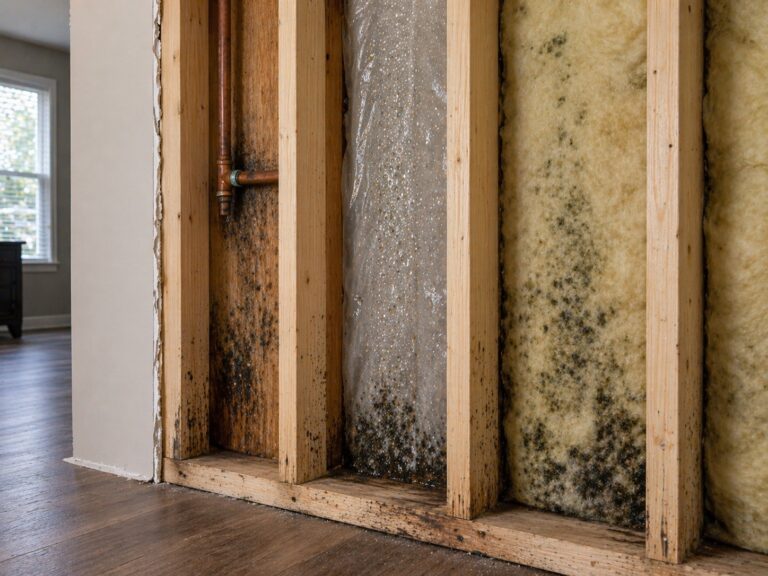
Visible mold on the outside face of siding is not required for a hidden problem to exist. Mold can develop on the back of siding, exterior sheathing, framing, or insulation when water repeatedly enters the wall and stays trapped.
This guide explains the realistic exterior and interior signs that may point to mold growth behind siding. It does not cover full removal methods; if mold is confirmed, the cleanup and prevention process belongs in how to remove mold permanently. For broader siding and wall moisture context, see how exterior walls allow moisture into homes.
What Mold Behind Exterior Siding Usually Means
Mold growth behind exterior siding usually means moisture has entered the wall more than once or stayed trapped long enough for organic materials to remain damp.
Behind most siding systems are multiple layers that can hold moisture:
- Siding panels (vinyl, wood, fiber cement, or engineered wood)
- Housewrap or moisture barrier
- Exterior wall sheathing (OSB or plywood)
- Wall framing and insulation
When water enters through failed flashing, open joints, damaged trim, or poorly detailed penetrations, the sheathing and framing may stay damp even after the siding surface dries. That hidden dampness is what creates the conditions mold needs.
In many homes, moisture entry begins through structural gaps or installation weaknesses. These conditions are explained in detail in why mold forms behind siding, which outlines the common pathways that allow water to enter hidden wall systems.
Why Hidden Mold Behind Siding Is Often Missed
Unlike mold that appears on visible surfaces, mold behind siding remains concealed until symptoms begin affecting surrounding materials. By the time noticeable warning signs appear, mold growth may already be spreading within the wall assembly.
Several factors make this problem difficult to detect early:
- Siding hides early visual damage
- Moisture can move horizontally inside walls
- Odors may appear before visible damage
- Minor exterior staining may seem harmless
- Interior symptoms may be blamed on humidity instead of leaks
Because moisture behind siding often travels unseen, it is important to watch for both exterior and interior warning signs. In some situations, moisture problems may first be noticed as general water damage symptoms before mold develops. These early structural warning patterns are described in signs of water damage behind siding, which focuses on non-mold indicators.
When these changes appear near the same wall area, they are more useful than a single stain or odor by itself.
Early Exterior Signs of Mold Growth Behind Siding
Early exterior clues are usually indirect. The siding may still look mostly normal, but certain stains, distortions, damp areas, or trim changes can show that moisture is collecting behind the surface.
These early signs are often mistaken for normal weathering, especially on older homes. However, when multiple symptoms appear together, they can point to hidden mold activity behind the wall system.
Discoloration or Streaking on Siding Surfaces
Dark streaks, green patches, or irregular staining on siding do not automatically prove mold is growing behind the panels. They become more concerning when they appear with other signs of trapped moisture, especially near:
- Seams or joints in siding panels
- Below windows, doors, or roof edges
- Areas exposed to repeated rain runoff
- Lower portions of exterior walls
If staining returns quickly after cleaning, or appears concentrated around structural gaps, it may be connected to ongoing moisture issues behind the siding rather than surface contamination.
Warping or Bulging Siding Panels
Siding that appears uneven, bowed, or pushed outward can indicate trapped moisture behind the surface, especially on wood, engineered wood, or fiber cement systems. On vinyl siding, distortion may also come from heat or tight installation, so it should be judged together with odor, staining, soft trim, or interior wall symptoms.
This can cause:
- Panels that no longer sit flat against the wall
- Visible rippling or distortion
- Gaps forming between panels
Warping often indicates prolonged moisture exposure, which creates ideal conditions for mold growth behind the siding.
Loose or Shifting Siding Sections
Siding that feels loose or moves more than expected when touched can suggest deterioration of the materials beneath it. Moisture can weaken sheathing, fasteners, and structural supports over time.
This may appear as:
- Panels that rattle or shift in the wind
- Fasteners pulling away from the wall
- Sections that appear misaligned
Loose siding is most concerning when it appears near stains, soft trim, failed caulk, missing flashing, or repeated dampness after rain.
Persistent Damp Areas After Rain
Exterior walls that stay wet long after surrounding areas have dried can signal trapped moisture behind siding. These damp zones are often found:
- Under roof runoff areas or missing kick-out flashing
- Below windows, doors, and exterior trim joints
- Near siding that sits too close to soil, mulch, decks, or concrete
Persistent dampness indicates that water is not draining or evaporating properly, increasing the likelihood of mold growth within the wall assembly.
Deteriorating or Soft Exterior Trim
Trim boards around windows, doors, and corners often show early signs of moisture problems before siding does. If these areas become soft, cracked, or begin to rot, it may indicate moisture is entering behind the siding.
Common warning signs include:
- Wood that feels spongy when pressed
- Peeling or blistering paint
- Cracks forming along trim edges
Trim deterioration is often a signal that moisture is repeatedly entering the wall system, which can lead to mold growth in hidden areas.
Rust Stains or Corroded Fasteners
Rust appearing on nails, screws, or metal components of siding can indicate consistent moisture exposure behind the surface. Corrosion typically develops when metal components remain damp over time.
This may appear as:
- Brown or orange streaks running down siding
- Visible rust on exposed fasteners
- Discoloration near joints or seams
While rust alone does not confirm mold, it is a useful clue that metal components have been exposed to repeated moisture near areas where mold can develop.
If multiple exterior signs appear together, it is often worth investigating further. Identifying moisture early is key, and inspection methods outlined in how to detect moisture behind exterior siding can help confirm whether hidden moisture is present.
Interior Warning Signs Linked to Mold Behind Siding
Mold behind exterior siding does not always stay confined to the outside wall layers. Over time, moisture and mold growth can begin affecting interior surfaces, especially along exterior-facing walls.
In many cases, homeowners first notice something inside the home before realizing the problem originates behind the siding.
Musty Odors Near Exterior Walls
A persistent musty smell along exterior walls is one of the most common early indicators of hidden mold. This odor may be stronger:
- After rain or humid weather
- In corners of rooms near outside walls
- Near baseboards, outlets, or window frames
Because mold releases microbial volatile compounds (MVOCs), the smell can travel through wall cavities and appear indoors even when the mold itself is hidden behind siding.
Do not remove outlet covers, cut drywall, or open wall cavities near suspected moisture unless power has been shut off and the area is safe to inspect. Odor near outlets can be a clue, but electrical areas should be handled carefully.
Recurring Mold on Interior Surfaces
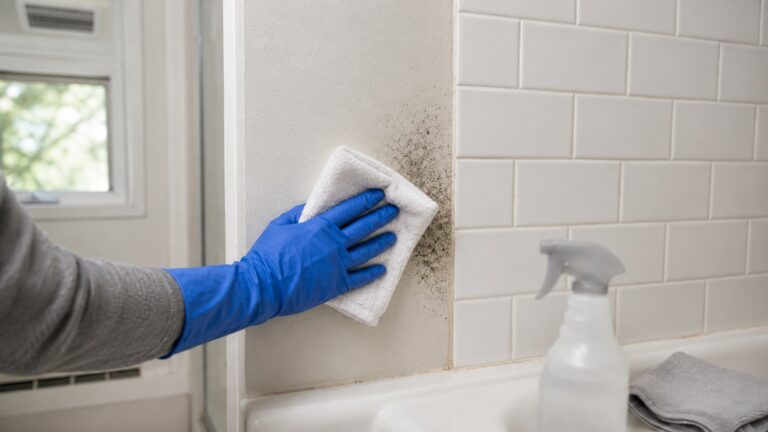
If mold repeatedly appears on interior walls, baseboards, or trim near an exterior wall, the source may be hidden moisture behind the siding. Cleaning the visible mold may temporarily improve the appearance, but the growth often returns if the moisture source remains active.
This is especially concerning when mold returns:
- In the same location after cleaning
- Along exterior-facing walls
- Near windows, doors, or baseboards
Recurring interior mold is often a sign that the problem is not limited to surface humidity or poor cleaning.
Peeling Paint or Bubbling Drywall
Paint or drywall that bubbles, flakes, or peels on exterior walls can indicate moisture moving from outside toward the interior. This may happen when damp sheathing or insulation transfers moisture inward over time.
Warning signs may include:
- Paint bubbling in isolated areas
- Drywall paper lifting or wrinkling
- Soft or swollen wall surfaces
These symptoms do not always prove mold is present, but they indicate moisture conditions that can support mold growth.
Stains or Shadowing on Interior Walls
Yellow, brown, gray, or dark stains on interior wall surfaces can be a sign of moisture migration from the exterior. Staining may appear before visible mold develops.
Pay close attention to stains that:
- Appear after rain
- Grow slowly over time
- Return after repainting
- Appear near exterior wall penetrations
These patterns suggest that moisture may be entering from outside and affecting the wall from behind.
Soft Baseboards or Trim Inside the Home
Baseboards and interior trim often reveal hidden wall moisture before larger wall surfaces do. If these materials feel soft, swollen, or begin pulling away from the wall, moisture may be collecting inside the lower wall cavity.
Common signs include:
- Swollen baseboard edges
- Gaps forming between trim and wall
- Soft spots near floor level
- Dark staining at trim joints
Because water often travels downward inside wall cavities, lower trim damage can be an important warning sign of hidden siding-related moisture.
How to Tell Surface Staining From Hidden Mold Risk
Not every stain on siding means mold is growing behind it. Exterior siding is exposed to rain, pollen, dust, algae, and organic debris. Many stains are surface-level and do not indicate a hidden wall problem.
The difference is usually found in the pattern, persistence, and related symptoms.
Signs of Surface-Level Staining
Surface staining is more likely cosmetic when it has predictable outdoor exposure patterns and no related interior symptoms. It often appears as:
- Uniform green or black staining in shaded areas
- Dirt streaks below roof runoff lines
- Algae growth on north-facing walls
- Surface mildew that cleans off and stays away
If the siding remains flat, dry, and structurally sound, and no interior symptoms are present, the issue may be limited to exterior cleaning and maintenance.
Signs of Hidden Mold Risk
Hidden mold risk increases when staining appears alongside other symptoms, such as:
- Persistent musty odors indoors
- Warped or loose siding
- Soft exterior trim
- Recurring interior wall mold
- Dampness that returns after rain
When exterior and interior warning signs appear together, the issue is more likely to involve trapped moisture behind the siding rather than surface-level exposure. In these cases, further evaluation and corrective action may be needed to stop mold growth and prevent long-term damage.
What to Check Before Removing Siding
Before removing siding or opening wall sections, look for patterns that make hidden moisture likely. Pulling random panels can damage the siding, miss the actual leak path, or expose only a dry area while the wet section remains nearby.
Start with targeted observations from both sides of the wall.
Focus on High-Risk Areas
Begin by inspecting locations where moisture commonly enters behind siding:
- Below windows and doors
- At roof-to-wall intersections
- Around exterior vents and penetrations
- Near the bottom edge of siding close to the ground
These areas are more likely to show early signs of moisture intrusion and mold development.
Monitor Changes After Rain
Pay attention to how both exterior and interior conditions change after rainfall. If symptoms such as odor, staining, or dampness become more noticeable after rain, it often indicates an active moisture entry point.
This pattern can help confirm that moisture is entering behind siding rather than originating from indoor humidity.
Look for Repeating Patterns
Recurring issues in the same location are a strong indicator of hidden moisture problems. These may include:
- Mold returning after cleaning
- Stains reappearing in the same spot
- Consistent dampness in specific wall areas
When patterns repeat, the underlying issue is usually still active behind the wall system.
If you need to confirm moisture presence more directly, controlled inspection techniques described in how to detect moisture behind exterior siding can help identify hidden moisture without immediately removing siding.
When to Call a Professional
Some early signs can be monitored, but certain conditions should move the problem beyond casual observation. Hidden mold behind siding may involve sheathing, framing, insulation, electrical openings, or interior drywall, so the safest next step is often controlled inspection rather than random demolition.
Consider contacting a professional if you notice:
- Strong musty odors that return after rain
- Siding distortion combined with staining, softness, or interior symptoms
- Soft trim, swollen sheathing, deteriorated drywall, or baseboards pulling away
- Mold returning on the same interior wall after cleaning
- Suspected moisture near outlets, wiring, or exterior penetrations
Professionals can use moisture meters, thermal imaging, and controlled siding removal to locate the source of the problem and assess the extent of damage.
If moisture damage is confirmed, proper drying becomes critical. The process of safely drying affected wall systems is explained in how to dry walls after siding water intrusion, which outlines realistic expectations and limitations.
In cases where moisture problems persist or structural damage is present, long-term repair strategies may be required. These decisions are covered in how to fix persistent moisture problems behind siding, which helps determine when repair or replacement becomes necessary.
Frequently Asked Questions About Signs of Mold Growth Behind Exterior Siding
Can mold grow behind vinyl siding?
Yes. Vinyl siding does not absorb water, but it allows moisture to pass behind it. If water becomes trapped between the siding and the wall, mold can grow on sheathing, framing, or insulation.
Does a musty smell always mean mold is behind siding?
Not always, but persistent musty odors near exterior walls often indicate hidden moisture or mold somewhere within the wall system. Further inspection is usually needed to confirm the source.
Can mold behind siding spread indoors?
Yes. Odors, spores, and moisture-related contamination can move through wall cavities, gaps, outlets, and interior surfaces. Mold may also appear indoors if the same moisture source keeps the wall materials damp.
Is black staining on siding always mold?
No. Many types of staining on siding are caused by algae, dirt, or environmental exposure. Mold behind siding typically produces additional symptoms such as odor, interior damage, or structural changes.
Should siding be removed to check for mold?
Siding removal is not always the first step. In many cases, targeted inspection methods can confirm moisture problems before opening the wall. Removal is usually done after there is strong evidence of hidden damage.
Key Takeaways
- Mold behind siding is usually caused by repeated moisture exposure, not a single event
- Exterior signs include staining, warping, loose panels, and persistent damp areas
- Interior signs often include musty odors, recurring mold, and wall damage
- Surface staining alone does not confirm hidden mold behind siding
- Musty odor, recurring staining, soft trim, and interior wall symptoms together increase the likelihood of a hidden wall problem
- Professional inspection is recommended when structural damage or persistent moisture is present