Why Exterior Siding Traps Moisture (And How It Leads to Hidden Wall Damage)
Exterior siding is designed to protect your home from weather—but it does not stop moisture completely. In fact, small amounts of water regularly get behind siding during normal conditions. The real problem begins when that moisture becomes trapped and cannot dry.
When moisture lingers behind siding, it can lead to hidden wall damage, mold growth, softened trim, deteriorated sheathing, and long-term framing concerns. Many homeowners are surprised to learn that siding systems rely heavily on drainage and airflow, not just surface protection.
If you’re already seeing warning signs like odors, staining, or wall damage, those symptoms are explained in signs of mold growth behind exterior siding. This article focuses instead on the underlying behavior—why moisture gets trapped and why it does not dry as expected.
For the broader exterior-wall context, review how exterior walls allow moisture into homes, which explains how siding, wall layers, openings, and exterior details work together to either shed water or let it linger.
How Siding Systems Are Designed to Handle Water
Exterior siding is not a waterproof barrier. Instead, it functions as a water-shedding layer that reduces the amount of water reaching the wall system underneath.
Behind the siding, multiple layers work together to manage moisture:
- The siding itself (vinyl, wood, fiber cement, or metal)
- A small air gap or drainage space (depending on installation)
- A weather-resistant barrier such as housewrap
- Structural sheathing and framing
Under normal conditions, small amounts of water can pass behind the siding and then drain downward or evaporate. This is expected and accounted for in the design of most wall systems.
However, when drainage or drying is disrupted, moisture can begin to accumulate. Over time, this buildup creates conditions where materials stay damp instead of drying between wetting cycles.
Why Water Getting Behind Siding Is Normal
Many homeowners assume that any water behind siding indicates a failure. In reality, water intrusion at a small scale is part of how exterior walls function.
This happens because:
- Wind-driven rain can push water through small gaps
- Siding joints are not airtight
- Materials expand and contract with temperature changes
As a result, moisture can enter behind siding even when everything is installed correctly. What matters is whether that moisture can drain and dry effectively.
When moisture cannot escape, it begins to build up inside the wall system. This is where problems start to develop, eventually leading to conditions that support mold growth. The full process behind that transition is explained in why mold forms behind siding, which connects trapped moisture to mold development.
Why Moisture Gets Trapped Instead of Draining
While small amounts of water behind siding are normal, problems begin when that moisture cannot drain out of the wall system. Siding relies on gravity and proper installation details to move water downward and away from the structure.
When those pathways are blocked or disrupted, water becomes trapped between layers, creating long-term damp conditions.
Blocked or Limited Drainage Paths
Water behind siding is supposed to flow downward and exit near the base of the wall. This process can fail when:
- Bottom edges, weep gaps, or starter areas are sealed, clogged, or buried too close to grade
- Debris, paint buildup, caulk, or packed dirt blocks drainage at trim and lower wall details
- Housewrap, flashing, or trim layers are installed in a way that sends water behind the drainage plane
When drainage is restricted, water collects instead of exiting. Even small amounts of trapped moisture can build up over time with repeated exposure.
One common mistake is sealing every visible gap with caulk. Some lower siding and trim details are meant to let incidental water escape, so sealing the wrong area can trap moisture instead of stopping it.
Improper Layering of Moisture Barriers
Wall systems depend on proper layering to direct water outward. If housewrap or moisture barriers are installed incorrectly, water may be guided behind protective layers instead of away from them.
Common issues include:
- Reverse-lapped seams that direct water inward
- Tears or gaps in the barrier
- Missing overlap at critical joints
These conditions disrupt the natural drainage path, increasing the likelihood that moisture becomes trapped.
Airflow Limitations Behind Siding
Even when water drains partially, moisture still needs to evaporate. This requires airflow, which is often very limited behind siding.
Behind most siding systems, the drying space is narrow. Tight installation, blocked weep areas, thick trim details, insulation, and framing interruptions can prevent fresh air from entering and moist air from leaving.
When airflow is limited, moisture does not evaporate evenly. A wall may look dry from the outside while sheathing, framing, or insulation behind the siding remains damp.
Capillary Action and Moisture Retention
Water does not only move downward—it can also travel through materials by capillary action. This means moisture can spread sideways or even upward through porous materials like wood and sheathing.
Capillary action can cause:
- Moisture to spread beyond the original entry point
- Lower wall sections to stay damp longer
- Water to remain in materials even after surfaces appear dry
This behavior makes moisture problems harder to detect and increases the chance that water will remain trapped inside the wall system.
Material Behavior That Holds Moisture
Moisture behind siding does not just sit in open air—it interacts with the materials inside the wall system. Many of these materials absorb and retain water, which slows drying and increases the likelihood of long-term dampness.
Absorbent Sheathing Materials
Exterior wall sheathing, especially oriented strand board (OSB), can hold moisture once water reaches it. When exposed repeatedly, it can:
- Absorb water at exposed faces, edges, seams, or fastener penetrations
- Hold moisture internally
- Release moisture slowly over time
This means that even after the surface appears dry, moisture can remain inside the material for extended periods.
Wood Framing and Structural Components
Wood framing absorbs water along its grain and can remain damp without visible signs. When airflow is limited, this moisture may not evaporate effectively.
Persistent dampness in framing materials creates conditions that support long-term moisture problems and increases the risk of mold development.
Insulation That Traps Moisture
Insulation does not always absorb water directly, but it can trap moisture within the wall system. This is especially true for:
- Fiberglass insulation, which holds moisture between fibers
- Cellulose insulation, which absorbs and retains water
When insulation becomes damp, it slows drying for surrounding materials and keeps the wall system humid.
Environmental Conditions That Make Moisture Trapping Worse
Environmental conditions do not usually trap moisture by themselves, but they can make a marginal wall dry much more slowly.
High Humidity Levels
In humid environments, the air already contains a high amount of moisture. This reduces the rate at which water can evaporate from building materials.
As a result:
- Drying slows significantly
- Moisture remains trapped longer
- Damp conditions persist between rain events
Shaded Exterior Walls
Walls that receive little sunlight tend to stay cooler and damp longer after exposure to rain or moisture.
Without direct sunlight to assist evaporation:
- Drying is delayed
- Moisture accumulates over time
Poor Drainage Around the Home
Improper grading, splashback, short downspout discharge, or soil piled too close to the siding can keep the lower wall wet. This increases the chance of moisture entering behind siding, trim, or lower sheathing and remaining there.
Ground moisture can also move upward into materials through capillary action, further increasing moisture retention.
Frequent Rainfall and Wetting Cycles
Homes exposed to frequent rain may not have enough time to fully dry between storms. Repeated wetting cycles can cause moisture to build up gradually.
Over time, this accumulation creates consistently damp conditions inside the wall system.
When Trapped Moisture Becomes a Problem
Moisture behind siding becomes a problem when the wall cannot dry between wetting cycles. A single damp period may not cause damage, but repeated dampness can gradually affect sheathing, framing, insulation, trim, and interior finishes.
The usual progression looks like this: temporary dampness first, then incomplete drying, then swelling, staining, soft trim, musty odors, loose siding, or interior paint and drywall symptoms. Once the wall reaches that stage, the issue is no longer just moisture behind siding—it may already be hidden wall damage.
When moisture reaches this stage, it can also contribute to mold problems behind siding. The relationship between trapped moisture and mold is explained in why mold forms behind siding, which covers the biological side of moisture-related damage.
Warning Signs That Moisture Is Not Drying Properly
Trapped moisture often produces subtle warning signs before major damage occurs. These may include:
- Siding that stays damp long after rain
- Recurring staining or discoloration
- Warping or slight distortion of siding panels
- Musty odors near exterior walls
These signs often indicate that moisture is not draining or evaporating as intended.
Signs That Moisture Is Causing Damage
As trapped moisture persists, it can begin affecting structural and interior materials. More serious warning signs include:
- Soft or deteriorating trim boards
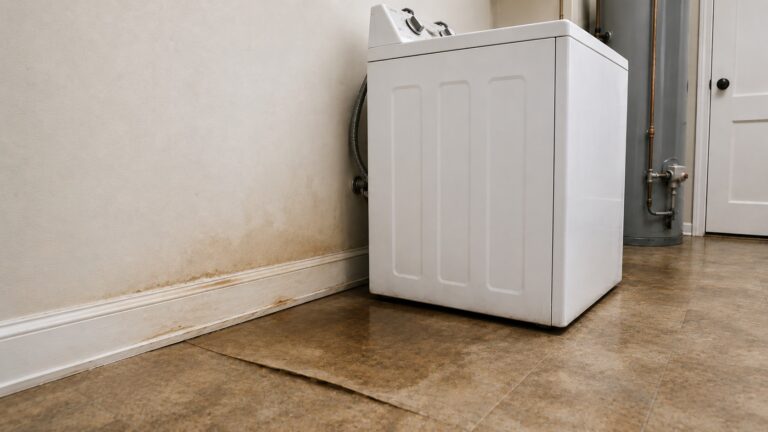
- Interior wall staining or bubbling paint
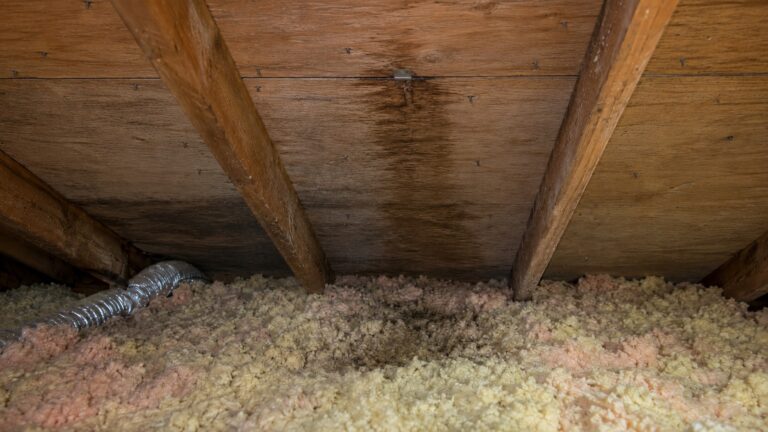
- Recurring mold growth on exterior-facing walls
- Siding that becomes loose or unstable
These symptoms suggest that moisture has been present long enough to impact the wall system. If you are seeing these conditions, it is helpful to review signs of mold growth behind exterior siding to better understand whether mold may already be present.
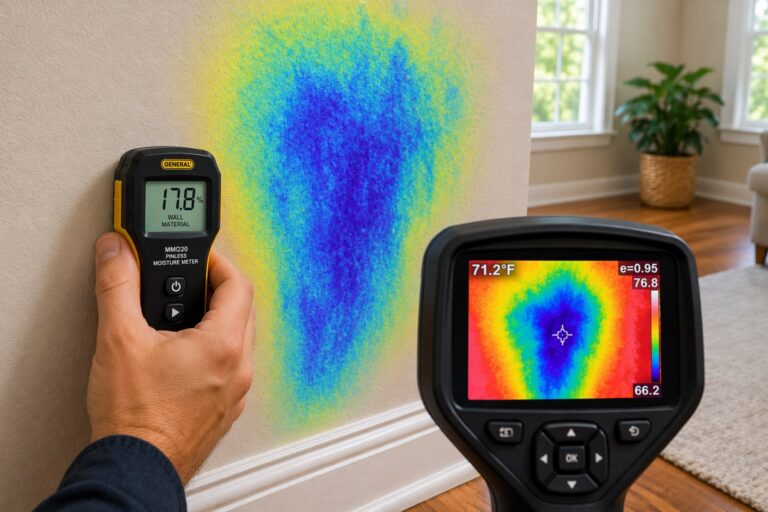
For a more inspection-focused approach, how to detect moisture behind exterior siding explains what to check before assuming the wall is dry or opening the wall unnecessarily.
When You Should Take Action
Not all moisture behind siding requires immediate intervention, but certain situations should not be ignored.
Action is recommended when:
- Moisture-related symptoms persist over time
- Conditions worsen after rain or humidity changes
- Multiple warning signs appear together
- Interior damage begins to develop
In these cases, further evaluation and corrective steps may be needed. If the same wall keeps staying damp after normal drying time, how to fix persistent moisture problems behind siding explains when the issue has moved beyond simple observation.
If moisture is already trapped inside the wall system, proper drying methods described in how to dry walls after siding water intrusion can help remove it effectively.
Frequently Asked Questions About Why Exterior Siding Traps Moisture
Does siding trap water?
Siding does not intentionally trap water, but water can become trapped behind it when lower drainage paths, weep gaps, flashing layers, or drying spaces are blocked. The issue is usually not that water got behind the siding once, but that it cannot escape afterward.
Why does siding stay wet after rain?
Siding may stay wet after rain because the wall is shaded, humidity is high, lower edges are not draining, or the wall is being rewetted before it can dry. If the same area stays damp much longer than nearby walls, inspect that section more closely.
Is moisture behind siding normal?
Yes. Small amounts of moisture behind siding are normal because siding is a water-shedding layer, not a sealed waterproof shell. Problems begin when that moisture is blocked from draining downward or drying outward.
Can trapped moisture behind siding cause mold?
Yes. Persistent moisture creates conditions that support mold growth. The full explanation of how this happens is covered in why mold forms behind siding.
How can you tell if moisture is trapped behind siding?
Common signs include persistent dampness, staining, odors, and interior wall symptoms. More precise detection methods are explained in how to detect moisture behind exterior siding.
Key Takeaways
- Siding is a water-shedding layer, not a completely waterproof wall covering.
- Small amounts of moisture behind siding are expected; the danger is moisture that cannot drain or dry.
- Blocked lower edges, reverse-lapped layers, tight siding, missing drainage space, and sealed weep paths can trap water.
- OSB, wood framing, trim, and insulation can stay damp after the outside surface looks dry.
- Persistent dampness after rain, musty odors, soft trim, staining, loose siding, or interior wall symptoms mean the problem needs closer inspection.