
How to Detect Hidden Moisture in Basement Walls
To detect hidden moisture in basement walls, start by checking the lower wall sections, wall-to-floor joints, corners, window areas, and finished wall cavities. Look for stains, efflorescence, peeling paint, soft drywall, musty odors, and cooler wall sections, then confirm suspicious areas with repeated moisture meter readings.
Visible water is not required for basement wall moisture to be present. Concrete, drywall, insulation, trim, and framing can hold moisture internally while the surface still looks mostly dry. That is why basement moisture detection works best when visual inspection, odor checks, humidity readings, and moisture meter testing are used together.
If you are still deciding whether the basement has a moisture problem at all, start with the broader signs of moisture problems in basements. This guide focuses specifically on how to test basement walls once hidden moisture is suspected.
Why Hidden Moisture in Basement Walls Is Hard to Detect
Basement wall moisture often develops inside materials rather than on visible surfaces. Concrete, drywall, insulation, and wood framing can absorb moisture slowly over time. Because these materials trap moisture internally, surface conditions may appear dry even when significant moisture is present inside.
Basement walls are harder to judge than above-grade walls because moisture can come from several directions at once. Soil moisture can press against the foundation from outside, humid indoor air can condense on cool wall materials, and minor seepage can move into finished wall cavities without creating obvious puddles.
Finished basements make detection even harder because drywall, paneling, insulation, and trim can hide damp materials behind a dry-looking surface. For a deeper explanation of the conditions that create these problems, see why basements develop moisture problems.
Because surface appearance can be misleading, hidden basement wall moisture should be checked by pattern: where symptoms appear, whether they return after drying, and whether moisture readings stay elevated in the same areas.
Common Areas Where Basement Wall Moisture Hides
Start with the areas most likely to stay damp: lower wall sections, cold corners, seams, window openings, and places where stored items block airflow. These locations usually reveal moisture clues before open wall surfaces do.
Wall-to-Floor Joints
The joint where basement walls meet the floor is one of the most common locations for hidden moisture accumulation. This area experiences high pressure from surrounding soil and groundwater, making it vulnerable to moisture entry.
Signs that moisture may be hiding along wall-to-floor joints include:
- Damp or discolored floor edges
- White powder forming along seams
- Soft materials near the base of walls
- Musty smells concentrated near floor level
Because moisture often enters at this level first, careful inspection along floor edges is an essential early detection step.
Basement Corners and Seams
Basement corners frequently collect moisture due to reduced airflow and concentrated structural stress points. Corners often remain cooler than open wall surfaces, increasing the likelihood of condensation formation.
Moisture hiding in corners may produce:
- Darkened wall sections
- Localized mold spots
- Condensation buildup
- Damp odors strongest near corners
Corner inspection is especially important in areas where stored items block airflow or restrict visibility.
Behind Finished Basement Walls
Finished basement walls create enclosed spaces where moisture can accumulate unnoticed. Drywall, paneling, and insulation materials trap moisture within wall cavities, preventing evaporation and increasing long-term damage risk.
Hidden moisture behind finished walls may produce indirect symptoms such as:
- Peeling paint
- Wall discoloration
- Soft drywall surfaces
- Musty odors with no visible water
Finished walls should be monitored carefully because damage behind surfaces may remain hidden for extended periods.
Near Basement Windows
Basement windows introduce structural openings that often allow moisture infiltration. Seal failures, condensation, and exterior water exposure make these areas especially vulnerable.
Moisture may hide near windows in:
- Window frame edges
- Wall sections beneath windows
- Surrounding insulation materials
- Interior trim components
Window areas should always be inspected when moisture symptoms appear elsewhere in the basement.
Behind Stored Items and Shelving
Stored items placed directly against basement walls often trap moisture behind them. Boxes, furniture, and shelving reduce airflow and create isolated pockets where moisture accumulates.
Common warning signs in storage areas include:
- Damp cardboard boxes
- Mold forming behind stored objects
- Wall discoloration only visible after moving items
- Localized musty odors
Moving stored items periodically during inspections helps reveal hidden moisture that would otherwise remain undetected.
Step-by-Step Process to Detect Hidden Moisture in Basement Walls
Detecting hidden moisture in basement walls requires a structured inspection process rather than random testing. Many homeowners make the mistake of relying on a single method, but effective detection combines visual observation, physical testing, and tool-based measurements. Following a consistent sequence increases the chances of finding hidden moisture before damage spreads.
This step-by-step process is designed for realistic homeowner inspections. It focuses on identifying hidden moisture conditions without requiring specialized contractor equipment.
Step 1: Start With a Careful Visual Inspection
A visual inspection is always the first step in detecting hidden moisture. Even when moisture exists inside walls, subtle surface changes often provide early clues. Careful observation can reveal patterns that point to hidden moisture movement.
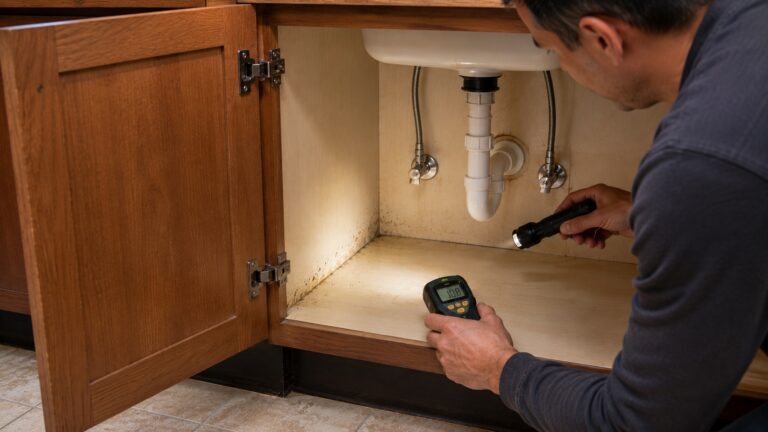
Begin by inspecting all visible basement wall surfaces under bright lighting. A strong flashlight helps reveal surface irregularities that may otherwise be difficult to notice.
Look for these visual warning signs:
- Discoloration or dark patches on wall surfaces
- White powder residue (efflorescence)
- Paint peeling or bubbling
- Hairline cracks that appear damp
- Mold spotting or uneven staining
Pay special attention to lower wall sections, corners, and seams where moisture tends to concentrate. If multiple warning signs appear in the same area, deeper testing should follow.
Visual inspection should never be rushed. Slow, methodical observation helps identify patterns that may otherwise be overlooked.
Step 2: Perform Touch Testing Along Key Wall Areas
Touch testing helps confirm whether surfaces feel damp, cool, or slightly sticky — all signs that moisture may be present. While this method cannot detect internal moisture alone, it provides useful confirmation when combined with other inspection steps.
Focus touch testing on high-risk areas such as:
- Wall-to-floor joints
- Lower wall sections
- Basement corners
- Areas behind stored objects
- Walls near basement windows
During touch testing, notice whether surfaces feel:
- Cooler than surrounding areas
- Slightly damp or tacky
- Unusually smooth or slick
- Soft or weakened
Moisture inside walls may not produce obvious wetness, but temperature differences often reveal areas where moisture is accumulating internally.
A cool wall is not always a wet wall. Basement walls can feel cool because they are below grade or in contact with cooler soil. Treat cool spots as areas to test with a moisture meter, not as proof of hidden moisture by themselves.
Although touch testing provides valuable clues, it should never be used as the only detection method. Surface dryness does not guarantee that moisture is absent beneath the surface.
Safety note: Do not press hard on softened drywall, stained electrical areas, outlets, or walls with visible mold growth. If wall materials feel weak, contaminated, or electrically unsafe, stop testing that area and use tool-based inspection or professional evaluation instead.
Step 3: Use Odor Detection to Identify Hidden Moisture Zones
Odor detection is one of the most reliable early indicators of hidden moisture. Musty or earthy smells often develop before visible damage appears, especially in enclosed spaces where airflow is limited.
To use odor detection effectively, inspect the basement slowly and note where smells are strongest. Odors concentrated near walls, corners, or stored items often indicate moisture hidden in nearby materials.
Areas where odors often reveal hidden moisture include:
- Behind finished basement walls
- Near floor edges
- Behind shelves or boxes
- Inside utility rooms
- Near basement windows or exterior wall penetrations
Musty odors should not be dismissed simply because visible moisture is absent. Odor often indicates moisture trapped behind surfaces or inside porous materials.
If the smell becomes stronger after rain, during humid weather, or when stored items are moved, hidden wall moisture may be present.
Step 4: Use a Moisture Meter to Test Wall Materials
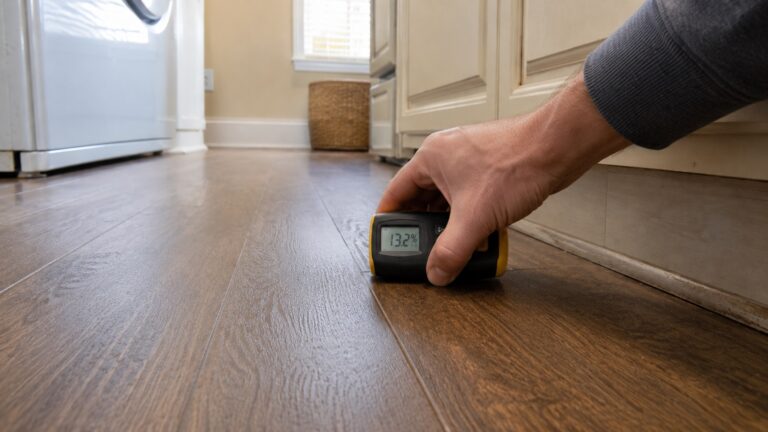
A moisture meter is one of the most useful tools for detecting hidden moisture in basement walls. It helps identify moisture levels inside materials before visible damage becomes obvious.
Moisture meters are especially helpful when inspecting finished basement walls, concrete surfaces, drywall, trim, and wood framing. They allow homeowners to compare readings across different areas and identify moisture patterns.
Two common types of moisture meters are useful for basement inspections:
Pin-Type Moisture Meters
Pin-type meters use small probes inserted into the material. They are useful for testing drywall, wood trim, baseboards, and framing materials.
When using a pin-type meter, first test an area that appears dry, then compare that baseline against suspect areas near the floor, corners, seams, and window openings. A single high reading is useful, but repeated high readings in the same zone are much stronger evidence of hidden moisture.
Pinless Moisture Meters
Pinless meters scan beneath the surface without making holes. They are useful for broad scanning across concrete, drywall, paneling, and finished surfaces.
Pinless meters help locate general moisture patterns, but readings should be compared across multiple areas to avoid false conclusions.
Most homeowner moisture meters are best used for comparison, not as proof of the exact amount of water inside the wall. Compare several readings across dry-looking areas, suspect areas, and nearby control areas before deciding whether moisture is likely hidden inside the wall.
Step 5: Measure Basement Humidity Levels
Basement humidity readings help identify environmental conditions that contribute to hidden wall moisture. Even if walls do not feel wet, high humidity can cause materials to absorb moisture gradually.
Use a hygrometer to measure relative humidity in different parts of the basement. Pay attention to areas near exterior walls, corners, and finished wall sections.
Humidity readings are especially useful when:
- The basement smells musty
- Condensation appears on cool surfaces
- Moisture symptoms worsen during humid weather
- Drywall or trim feels slightly damp
- Stored items absorb moisture
If humidity remains high for long periods, hidden moisture risk increases significantly. Humidity control is also a major part of how to prevent moisture build-up in basements.
A useful clue is timing. Moisture that worsens after rain often points toward seepage, drainage, or exterior wall pressure. Moisture that worsens during humid weather, even without rain, often points toward condensation or basement air-control problems.
Best Tools for Detecting Basement Wall Moisture
The most useful homeowner tools for basement wall moisture detection are simple: a moisture meter, a hygrometer, a bright flashlight, and sometimes an infrared thermometer. Each tool answers a different question.
- Moisture meter: Confirms whether suspect wall areas read higher than nearby dry areas.
- Hygrometer: Shows whether basement air is staying humid enough to support condensation or slow drying.
- Flashlight: Reveals cracks, efflorescence, paint bubbling, stains, and texture changes under angled light.
- Infrared thermometer: Helps identify unusually cool wall sections that should be checked with a moisture meter.
No single tool proves the full moisture source by itself. The strongest evidence comes from matching tool readings with visible patterns, odors, humidity changes, and repeated readings in the same wall area.
How to Tell If Moisture Is Inside the Wall
One symptom alone is rarely enough. The strongest evidence is a repeated pattern: the same area smells musty, feels cooler, shows staining, or gives higher meter readings during more than one inspection.
Repeated Moisture Meter Readings in the Same Areas
Repeated high readings in the same wall area matter more than one isolated result. If the same lower corner, floor joint, window area, or finished wall section keeps reading higher than nearby control areas, hidden moisture is more likely.
For example, if readings remain elevated near a wall-to-floor joint, basement corner, or window area, hidden moisture may be entering through that location.
Persistent Odors With No Visible Surface Moisture
Persistent musty odors often indicate moisture trapped inside wall cavities or porous materials. When odors remain even after cleaning and ventilation, hidden moisture should be suspected.
Odors that return after rain, worsen during humid weather, or appear strongest near specific walls often point to concealed moisture sources.
Because odor can travel through wall cavities, it should be combined with moisture testing rather than used alone.
Surface Materials That Feel Cool or Slightly Soft
Cool or softened wall materials may indicate moisture inside the wall assembly. Drywall, trim, and paneling can become slightly soft before obvious damage appears.
These signs are especially concerning when they appear near floor edges, basement corners, or finished wall sections. If soft materials continue worsening, internal moisture may already be affecting structural components.
Soft surfaces should be tested carefully and monitored for changes over time.
Signs That Moisture Is Spreading Behind Walls
Hidden moisture becomes more serious when it begins spreading through wall materials. Early detection should focus not only on finding moisture but also on identifying whether the problem is expanding.
Expanding Discoloration Patterns
Discoloration that grows wider or darker over time often indicates moisture movement behind the surface. Stains may expand upward, outward, or along seams depending on how moisture travels.
Track discoloration by taking photos during inspections. Comparing images over time helps determine whether the moisture problem is active or stable.
If staining continues to expand, hidden moisture should be investigated further.
Increasing Mold Growth
Mold growth that spreads across basement walls often indicates ongoing moisture. Small mold patches may begin near corners or floor edges, but spreading growth suggests moisture pathways behind surfaces.
If mold growth appears in multiple areas, deeper moisture inspection becomes necessary. Understanding mold development patterns outlined in signs of mold growth in basements helps identify early spreading conditions.
Moisture Appearing in New Areas
When moisture symptoms appear in previously unaffected areas, it often indicates that moisture is migrating through structural materials.
Examples include:
- Dampness spreading to adjacent walls
- New odors developing in different areas
- Multiple corners showing signs of moisture
- Humidity affecting wider sections of the basement
Spreading moisture rarely resolves without investigation and corrective action.
When Detection Requires Professional Equipment
Homeowner-level detection methods are effective for identifying early moisture conditions. However, some situations require advanced tools and professional evaluation.
Professional moisture detection becomes necessary when moisture problems exceed basic inspection capabilities.
Situations That Require Professional Detection
Professional inspection is recommended when:
- Moisture readings remain high across multiple wall areas
- Readings stay elevated after drying or dehumidification
- Mold spreads rapidly or returns after cleaning
- Drywall, trim, framing, or wall panels feel soft or weakened
- Moisture symptoms appear near outlets, wiring, or electrical panels
- Multiple walls show the same moisture pattern after rain
Professionals use specialized tools such as thermal imaging cameras and wall cavity inspection devices. These tools allow inspection of internal wall structures without removing large sections of finished surfaces.
Professional detection can help determine whether moisture is limited to surface materials, trapped behind finished walls, entering through the foundation, or affecting framing and insulation.
Before calling, write down where the readings were highest, whether the problem changes after rain, which walls are affected, and whether odors or stains are spreading. Those details help the inspector narrow the likely moisture path faster.
Frequently Asked Questions About Detecting Hidden Moisture in Basement Walls
Can moisture hide behind basement walls without visible damage?
Yes, moisture can remain hidden behind basement walls for long periods without obvious surface damage. Concrete, drywall, insulation, and wood framing can absorb moisture internally while the surface appears dry. In many homes, moisture problems develop inside wall cavities first and only become visible after damage progresses.
This is why early symptoms such as odors, humidity changes, or minor staining should never be ignored. These warning signs often appear before visible structural damage occurs.
What tool works best for detecting basement wall moisture?
Moisture meters are generally the most effective tools for detecting hidden moisture in basement walls. They allow homeowners to measure moisture levels beneath the surface and compare readings across different areas.
Pin-type meters work well for drywall and wood materials, while pinless meters are better suited for scanning concrete and masonry surfaces. In many cases, combining moisture meter readings with humidity monitoring provides the most reliable results.
How accurate are moisture meters for basement walls?
Moisture meters are most accurate when used to compare one wall area against another. In basement walls, the goal is usually to find patterns: higher readings near the floor, corners, seams, windows, or finished wall sections compared with nearby areas that appear dry.
A single reading can be misleading, especially on concrete or mixed materials. Repeated high readings in the same zone are much stronger evidence that moisture may be hidden inside the wall assembly.
Can high humidity alone cause hidden moisture in walls?
Yes, high humidity can contribute to hidden moisture buildup inside basement walls. When humidity levels remain elevated, moisture can condense inside cooler wall materials. Over time, this trapped moisture may support mold growth or material deterioration.
Monitoring humidity levels regularly helps identify environmental conditions that may lead to hidden moisture problems. Preventive measures described in how to prevent moisture build-up in basements can help reduce long-term risk.
How often should basement walls be inspected for moisture?
Basement walls should be inspected at least twice per year, especially after seasonal weather changes such as heavy rain or snowmelt. Additional inspections are recommended if moisture symptoms appear or worsen.
Regular inspection allows homeowners to detect problems early and prevent widespread damage. Learning structured inspection methods from how to inspect basements for moisture damage helps establish consistent inspection routines.
What to Do After Detecting Hidden Basement Wall Moisture
Hidden basement wall moisture should be treated as a pattern, not a one-time observation. If stains, odors, cool wall sections, high humidity, or moisture meter readings keep returning in the same areas, the wall may be holding moisture internally.
The next step is to identify why the moisture is there. Repeated wall moisture may come from exterior seepage, condensation, poor drainage, window leakage, or trapped humidity behind finished materials. If the cause is unclear, why basements develop moisture problems can help narrow the likely source.
Do not paint, seal, finish, or cover basement wall materials until the moisture source has been corrected and the wall has been confirmed dry. Covering damp materials can trap moisture and allow damage to continue behind the surface.
Key Takeaways
- Hidden moisture often develops inside basement walls before visible damage appears.
- Structured inspections improve the chances of detecting moisture early.
- Moisture meters are the most reliable tools for identifying hidden moisture zones.
- Humidity monitoring supports moisture detection by revealing environmental risk levels.
- Repeated high readings in the same wall zone are stronger evidence than one isolated meter reading.
- Spreading stains, odors, or mold suggest moisture migration inside walls.
- Professional detection may be necessary when moisture problems affect multiple areas.

One Comment
Comments are closed.