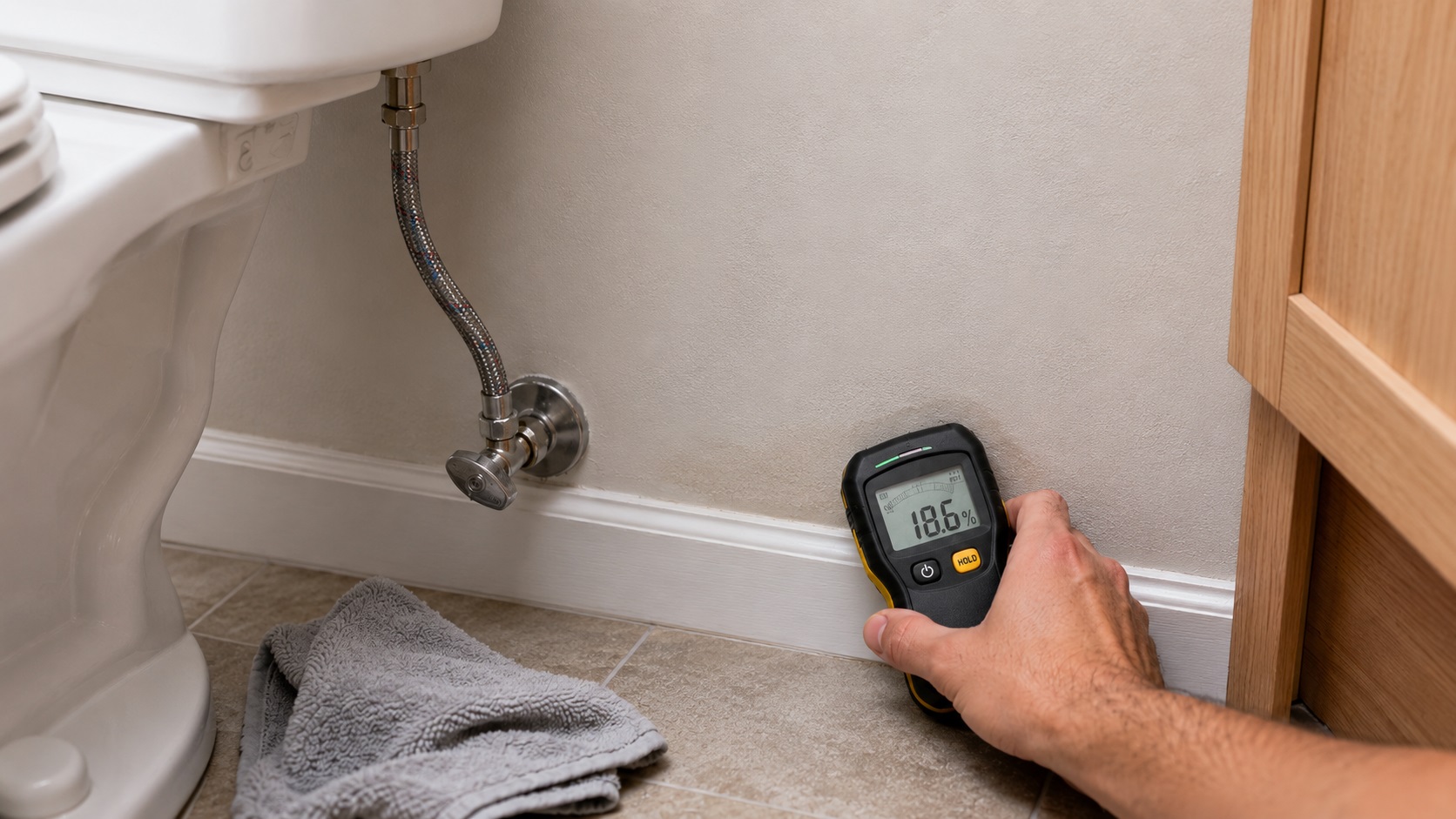
How to Detect Moisture After Small Leaks
To detect moisture after a small leak, inspect the leak area and nearby materials for staining, swelling, soft spots, musty odors, cool surfaces, lifted flooring, damp cabinet bases, and symptoms that return after cleanup. A dripping pipe under a sink, minor appliance leak, or short overflow can leave moisture inside drywall, flooring, cabinets, or insulation even after visible water is gone.
The goal is to confirm whether the affected materials actually dried, not just whether the surface looks dry. Small leaks are most likely to cause hidden moisture when water reached seams, wall edges, cabinet bases, flooring gaps, or enclosed cavities with limited airflow.
If the leak occurred recently, it is also helpful to understand the early warning signs that may develop later. Reviewing signs of slow hidden water leaks can help you recognize patterns that indicate moisture remains trapped inside your home.
Use the steps below to check the leak area, nearby surfaces, enclosed spaces, flooring edges, walls, and ceilings for lingering moisture before stains, odors, swelling, or mold-related conditions develop.
This article supports why moisture problems keep returning by focusing on the post-leak checks that help confirm whether moisture is still trapped after cleanup.
Why Moisture Often Remains After Small Leaks
Small leaks often appear resolved once visible water is removed, but water can move into seams, porous materials, cabinet bases, flooring edges, and wall cavities before the surface dries.
Why Surface Drying Is Not Enough
Surface drying removes visible water but does not eliminate moisture that has already soaked into materials. Porous materials such as drywall, wood, and insulation absorb water quickly. Once moisture enters these materials, it can remain trapped inside even after the outer surface feels dry.
A countertop, floor, or wall may feel dry while moisture remains beneath the surface. As that trapped moisture migrates outward, stains, odors, bubbling paint, or visible damage may appear days or weeks later.
Because hidden moisture dries slowly, even small leaks can create long-term problems if detection steps are skipped.
How Moisture Spreads Into Materials
Water rarely remains in one place after a leak. Instead, it moves through materials using gravity and capillary action. This movement allows moisture to spread beyond the original leak location, making detection more difficult.
For example, water from a minor sink leak may travel downward into cabinet flooring and then spread into the subfloor beneath it. In wall systems, moisture may move sideways through drywall or insulation before visible damage appears.
Because moisture travels along seams, joints, and porous materials, visible damage may occur several inches—or even several feet—away from the original leak source.
If moisture spreads into enclosed structural areas, it may create conditions that lead to mold growth. Understanding why hidden leaks cause mold growth can help explain why hidden moisture must be identified early.
Why Hidden Moisture Causes Long-Term Problems
Moisture trapped inside building materials can weaken finishes, distort wood, loosen flooring, and create conditions that support microbial growth.
Long-term moisture retention can lead to:
- Softening of drywall and wall finishes
- Swelling or warping of wood materials
- Weakening of adhesives used in flooring systems
- Persistent musty odors caused by microbial activity
- Recurring moisture patterns that return after cleanup
If moisture appears to disappear and then return later, why moisture returns after cleanup explains how trapped moisture can persist after surface drying.
How to Check for Moisture After a Small Leak
Start at the leak source, then inspect outward and downward because water usually follows gravity, seams, joints, and absorbent materials. Check the same areas again over the next several days because some symptoms appear only after trapped moisture moves back toward the surface.
Safety note: Do not inspect wet areas near outlets, wiring, appliances, or electrical panels until the area is safe. If the leak involved sewage, floodwater, contaminated water, sagging materials, crumbling drywall, or unstable flooring, stop and contact a qualified professional.
Inspect Nearby Surfaces Carefully
Begin where water was visible, then check the materials beside it and below it. Use a bright light and compare the affected area with a dry area nearby so small changes in color, texture, or swelling are easier to see.
Pay attention to:
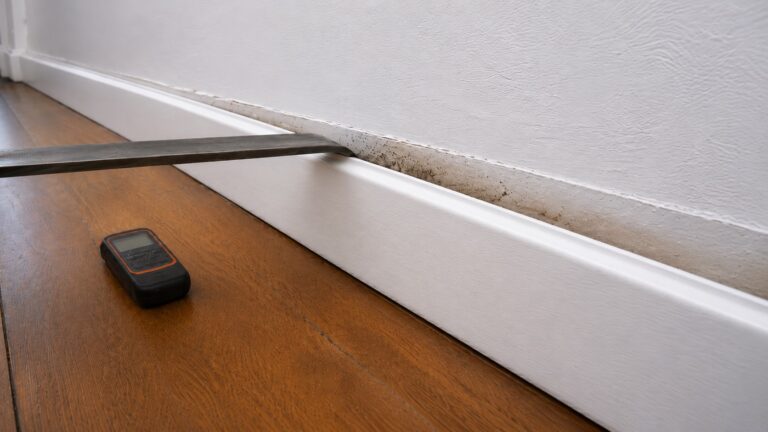
- Discoloration or darkening on walls or flooring
- Paint or finish that appears slightly bubbled
- Soft or spongy areas when gently pressed
- Minor swelling along edges or seams
- Surface textures that feel uneven
These signs may appear small at first but often indicate moisture trapped within materials. Even slight changes in texture or color should be monitored carefully over time.
If visible surface changes begin to reappear after cleanup, this may indicate ongoing moisture movement. Recognizing signs of moisture returning after repairs can help confirm whether moisture has remained inside the structure.
Check Inside Cabinets and Enclosures
Cabinets and enclosed spaces are common locations where moisture remains hidden after a small leak. These areas often receive limited airflow, which slows evaporation and allows damp materials to remain wet longer.
Open cabinet doors and inspect interior surfaces using a flashlight. Look beneath stored items and examine corners where water may collect.
Focus on:
- Cabinet floors near plumbing connections
- Back panels where pipes enter the cabinet
- Corners where water may settle
- Underside surfaces beneath sinks
- Cabinet bases touching the floor
If cabinet materials appear swollen or feel slightly soft, moisture may still be present beneath the surface.
Examine Flooring and Subfloors
Flooring materials frequently trap moisture after small leaks. Water that enters seams or edges may spread into subfloor materials where drying occurs slowly.
Walk slowly across the affected area and observe how the floor feels beneath your feet. Pay attention to areas that feel slightly soft, uneven, or cooler than surrounding surfaces.
Look for:
- Warping or lifting along seams
- Edges that appear raised or uneven
- Soft spots that feel flexible under pressure
- Flooring that produces unusual sounds when stepped on
- Persistent cool or damp sensations
Even minor flooring changes may indicate moisture trapped beneath the visible surface.
Look for Ceiling or Wall Changes
Walls and ceilings may develop visible symptoms after moisture spreads into surrounding materials. These symptoms may appear days after the initial leak event, especially if moisture remains hidden inside cavities.
Inspect nearby walls and ceilings for:
- Faint staining or discoloration
- Paint bubbling or peeling
- Subtle bulging or surface distortion
- Changes in wall texture
- Small cracks forming near joints
These signs may develop slowly as moisture spreads through structural materials.
If wall-related symptoms appear, reviewing signs of hidden moisture in walls can help identify patterns that indicate moisture movement behind finished surfaces.
Monitor Odors and Air Conditions
Persistent odors often provide early clues that moisture remains hidden, especially inside cabinets, wall cavities, flooring layers, or enclosed areas with poor airflow.
Check the affected area for:
- Musty or damp odors
- Air that feels heavier or humid
- Smells that intensify when cabinets are opened
- Odors that return after ventilation
Odors that persist after cleanup should never be ignored. They often indicate moisture remaining inside materials.
Watch for Reappearing Moisture
Some moisture symptoms disappear temporarily and then return later. This pattern often occurs when hidden materials release trapped moisture gradually.
Reappearing symptoms may include:
- Stains that return after drying
- Damp areas that reappear overnight
- Paint bubbling that worsens over time
- Recurring musty smells
- Areas that remain consistently cool
These repeating symptoms may signal that moisture remains trapped beneath surfaces. Continued monitoring helps identify whether the moisture problem has been fully resolved.
Where Moisture Most Often Hides After Small Leaks
After a small leak, moisture rarely stays in open, visible areas. Instead, it moves into hidden spaces where evaporation occurs slowly. Understanding where moisture typically collects helps homeowners inspect the most likely problem areas and avoid missing hidden dampness.
Behind Walls
Walls are one of the most common locations where hidden moisture remains after a leak. Water entering through plumbing connections, appliance lines, or wall penetrations may travel inside cavities before visible symptoms appear.
Because wall cavities contain insulation and framing materials, moisture trapped inside may take days or weeks to become visible on the surface.
Check for:
- Subtle discoloration along wall surfaces
- Changes in paint texture
- Soft spots when pressing lightly on drywall
- Musty odors near wall sections
- Localized temperature differences on surfaces
If these symptoms appear, they may indicate moisture trapped inside concealed structural areas.
Under Cabinets
Cabinets often conceal moisture after small plumbing leaks. Even minor leaks under sinks can allow water to spread beneath cabinet flooring and into subfloor materials.
Because cabinet bases restrict airflow, moisture beneath them may remain hidden longer than in open spaces.
Look for:
- Swelling along cabinet base edges
- Soft or warped cabinet floors
- Discoloration along cabinet corners
- Moisture marks beneath stored items
- Persistent odors when cabinet doors are opened
Moisture hidden beneath cabinets can spread into surrounding flooring systems if not detected early.
Under Flooring
Flooring materials often trap moisture after small leaks because water easily enters seams and edges. Once moisture reaches subfloor materials, it may remain trapped beneath the visible surface.
Floor coverings such as laminate, hardwood, and vinyl are particularly vulnerable because water can travel beneath them without leaving visible signs immediately.
Inspect flooring for:
- Edges lifting or separating
- Warping along seams
- Soft or flexible areas
- Unusual noises when walking
- Changes in surface appearance
These symptoms may indicate moisture accumulation below the finished floor.
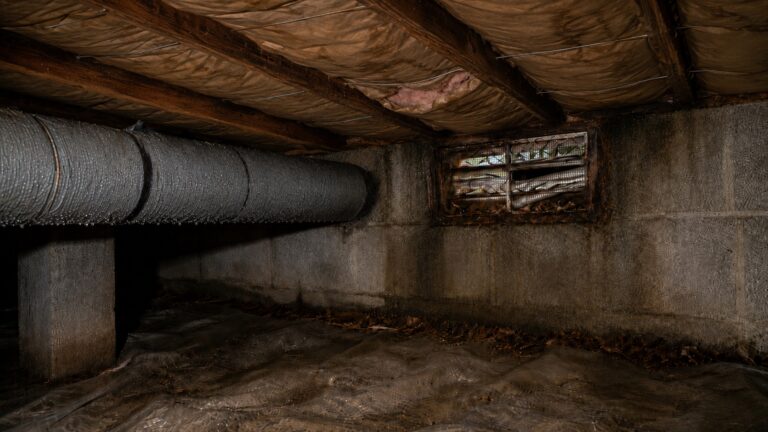
Inside Insulation
Insulation materials absorb moisture quickly and dry slowly. Even small leaks that introduce limited water may saturate insulation enough to retain moisture for extended periods.
Because insulation is usually hidden behind finished surfaces, moisture inside insulation often goes unnoticed until secondary symptoms appear.
Possible warning signs include:
- Persistent odors near affected areas
- Surface discoloration appearing over time
- Gradual wall texture changes
- Recurring moisture symptoms
- Areas that feel unusually cool
Moisture inside insulation may also create conditions that support mold development, especially when enclosed areas stay damp and poorly ventilated.
Around Fixtures and Plumbing Connections
Plumbing fixtures are frequent sources of small leaks. Even minor drips from fittings or seals can allow water to accumulate slowly in surrounding materials.
Check areas around:
- Sink supply lines
- Toilet bases
- Dishwasher connections
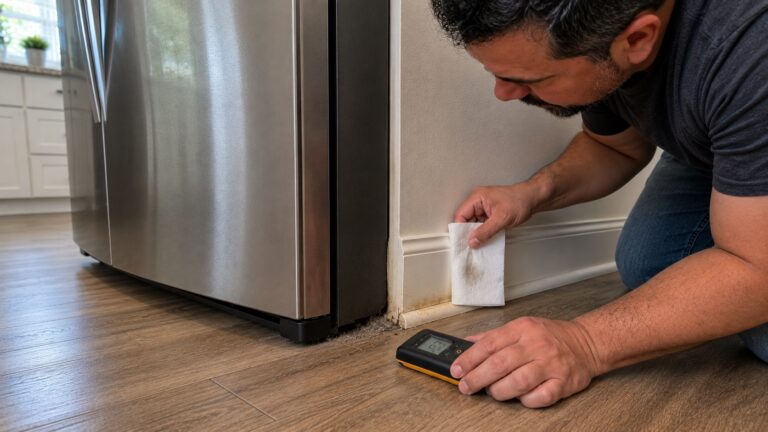
- Refrigerator water lines
- Washing machine hoses
Moisture around these components may spread gradually and remain hidden beneath fixtures or appliances.
Tools That Help Detect Hidden Moisture
While visual inspection remains the first step, certain tools can help confirm whether moisture remains hidden after a small leak. These tools provide additional confidence during inspection and help identify moisture before visible damage becomes severe.
Moisture Meters
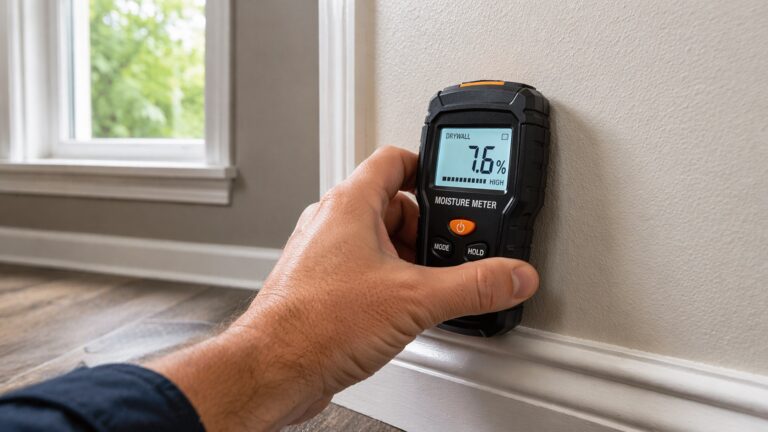
Moisture meters can help check whether moisture remains inside building materials. They measure moisture content beneath the surface, allowing homeowners to identify damp areas that may not yet show visible damage.
These tools are commonly used to check:
- Drywall surfaces
- Wood framing
- Subfloor materials
- Cabinet bases
- Wall sections near plumbing
Moisture meters provide valuable information during post-leak inspections and can help verify whether materials have fully dried.
Infrared Thermometers
Infrared thermometers detect temperature differences across surfaces. Moist areas often appear slightly cooler than surrounding materials because moisture affects how surfaces retain heat.
This tool helps identify suspicious zones that may require closer inspection.
Look for:
- Localized cool areas
- Temperature differences across surfaces
- Cool spots near leak locations
- Temperature inconsistencies along walls or floors
- Unexpected cooling patterns
Temperature changes alone do not confirm moisture, but they help identify areas that may require further evaluation.
Humidity Monitors
Humidity monitors measure moisture levels in the surrounding air. Elevated humidity near a previously affected area may indicate that moisture remains trapped within nearby materials.
These tools are especially helpful when monitoring drying progress over time.
Humidity monitors help detect:
- Localized humidity increases
- Slow drying conditions
- Persistent moisture release
- Changes in air conditions
- Environmental moisture buildup
Monitoring humidity helps confirm whether moisture levels are gradually returning to normal after a leak event.
How Long to Monitor After a Small Leak
Moisture detection does not end immediately after cleaning up visible water. Many materials release trapped moisture slowly, which means symptoms may not appear until hours or days after the initial leak. Monitoring affected areas over time helps confirm whether moisture has fully dissipated or remains hidden inside structural materials.
Short-Term Monitoring During the First 24 to 48 Hours
The first phase of monitoring should begin immediately after the leak has been cleaned up. During this period, visible surfaces may appear dry while internal moisture continues to move through materials.
During the first 24 to 48 hours, check the affected area several times per day. Focus on identifying early changes that may indicate moisture movement.
Watch for:
- New discoloration appearing on walls or flooring
- Changes in surface texture
- Areas that remain cool to the touch
- Lingering damp odors
- Small signs of swelling or distortion
Frequent early inspections help identify moisture that may not have been visible during initial cleanup.
Mid-Term Monitoring During the First Week
After the first two days, continue monitoring affected areas throughout the first week. This period is critical because many moisture-related symptoms develop gradually as water moves through materials.
Check the area once or twice daily and pay attention to subtle changes that may indicate persistent moisture.
Look for:
- Stains that slowly expand
- Paint bubbling or peeling
- Flooring changes such as warping or lifting
- Musty odors that continue or intensify
- Areas that feel soft or unstable
If symptoms continue to develop during this stage, hidden moisture may still be present. Continued observation helps prevent unnoticed damage progression.
Extended Monitoring Over Several Weeks
Some materials release moisture very slowly, particularly in enclosed areas with limited airflow. Because of this, monitoring should continue for several weeks after the initial leak event.
During extended monitoring, check the affected area every few days and remain alert for recurring symptoms.
Watch for:
- Reappearing stains
- Recurring damp odors
- Surface distortion that worsens over time
- New signs appearing in adjacent areas
- Persistent cool spots on surfaces
If moisture symptoms continue beyond this period, additional investigation may be necessary to determine whether moisture remains trapped inside structural materials.
When Moisture Detection Requires Professional Help
While many small leaks can be evaluated through careful inspection, some situations require professional moisture detection. Professional equipment can identify moisture hidden deep inside walls, flooring, or structural components where visual inspections may not reveal the full extent of the problem.
Consider seeking professional help if:
- Moisture symptoms persist for several days after cleanup
- Odors become stronger over time
- Visible damage continues to spread
- Structural materials feel soft, crumbling, sagging, or unstable
- Moisture appears in unexpected locations
Professional evaluation may include advanced tools that detect moisture patterns beneath finished surfaces. These inspections help identify hidden moisture before significant structural damage develops.
If moisture continues to reappear after repeated inspections, understanding how to detect repeated moisture problems can help identify patterns that indicate deeper issues within the structure.
Common Mistakes When Checking for Moisture After Small Leaks
Moisture detection can be difficult because many warning signs develop gradually. Avoid these common mistakes when checking the area after a small leak.
Assuming Dry Surfaces Mean Dry Materials
One of the most common mistakes is assuming that dry surfaces indicate fully dried materials. While surfaces may dry quickly, moisture trapped beneath them may remain for extended periods.
Internal moisture may continue migrating outward, causing symptoms to appear later. Checking only visible surfaces may allow hidden moisture to remain undetected.
Ignoring Minor Odors
Musty odors can be early warning signs of hidden moisture. Persistent smells after cleanup often point to damp materials inside cabinets, flooring, walls, or enclosed spaces.
Overlooking Nearby Areas
Moisture spreads beyond the original leak location. Focusing only on the visible leak area may cause homeowners to miss adjacent zones where moisture has traveled.
Always inspect nearby surfaces, surrounding materials, and areas below the original leak location to ensure hidden moisture is not overlooked.
Stopping Inspections Too Soon
Many homeowners stop checking once visible surfaces look normal. Continue monitoring long enough to catch stains, odors, swelling, or dampness that returns later.
What Early Moisture Detection Helps Prevent
Early detection helps confirm whether water stayed near the leak or spread into nearby materials. Finding lingering moisture early can reduce the risk of warped flooring, softened drywall, recurring dampness, musty odors, and mold-friendly conditions inside hidden spaces.
If dampness keeps returning after cleanup, reviewing why moisture returns after cleanup can help explain why trapped moisture sometimes reappears after surfaces seem dry.
Frequently Asked Questions About Detecting Moisture After Small Leaks
How do I know if moisture is still present after a small leak?
Moisture may still be present if you notice persistent odors, surface changes, or recurring damp areas. Even when surfaces feel dry, moisture trapped inside materials can remain hidden. Watch for stains that slowly expand, paint that bubbles, or areas that feel cool compared to surrounding surfaces. These signs often indicate moisture remains inside walls, flooring, or cabinets.
How long should I check for moisture after a leak?
Most areas should be monitored for at least one to two weeks after a small leak. Some materials release moisture slowly, especially in enclosed spaces. Continue checking periodically during this time to ensure symptoms do not return. If new signs appear after several days, moisture may still be trapped inside structural materials.
Can moisture remain even if surfaces feel completely dry?
Yes, moisture can remain inside materials even when surfaces feel dry. Porous materials such as drywall, wood, and insulation absorb water internally. While the surface may dry quickly, internal moisture may remain for days or weeks. This is why repeated inspections are important after small leaks.
What areas should I check first after a small leak?
Begin by checking the immediate leak location, then inspect nearby materials and areas below the leak site. Focus on cabinets, flooring, walls, and ceilings near the affected zone. These areas commonly trap moisture and may show early warning signs such as discoloration, swelling, or odor development.
Do small leaks always cause hidden moisture problems?
Not every small leak causes hidden moisture problems, but many do. Even brief leaks can introduce water into porous materials. The likelihood of hidden moisture depends on how long the leak lasted, how much water was released, and how quickly the area was cleaned and ventilated. Monitoring affected areas helps confirm whether moisture remains.
When should I call a professional to check for hidden moisture?
Professional help may be necessary if moisture symptoms continue for several days, odors intensify, or damage spreads beyond the original leak location. Specialized equipment can detect moisture hidden deep within materials that may not be visible during routine inspections.
Final Moisture Check After a Small Leak
After a small leak, keep checking the affected area until stains, odors, swelling, soft spots, cool surfaces, and recurring dampness no longer appear. Surface dryness is a good sign, but it should be confirmed by monitoring nearby materials, enclosed spaces, and areas below the leak source.
If moisture continues to return after cleanup, it may indicate deeper underlying issues. Learning why moisture returns after cleanup can help explain recurring symptoms and guide further investigation.