
How to Inspect Flooring for Hidden Moisture
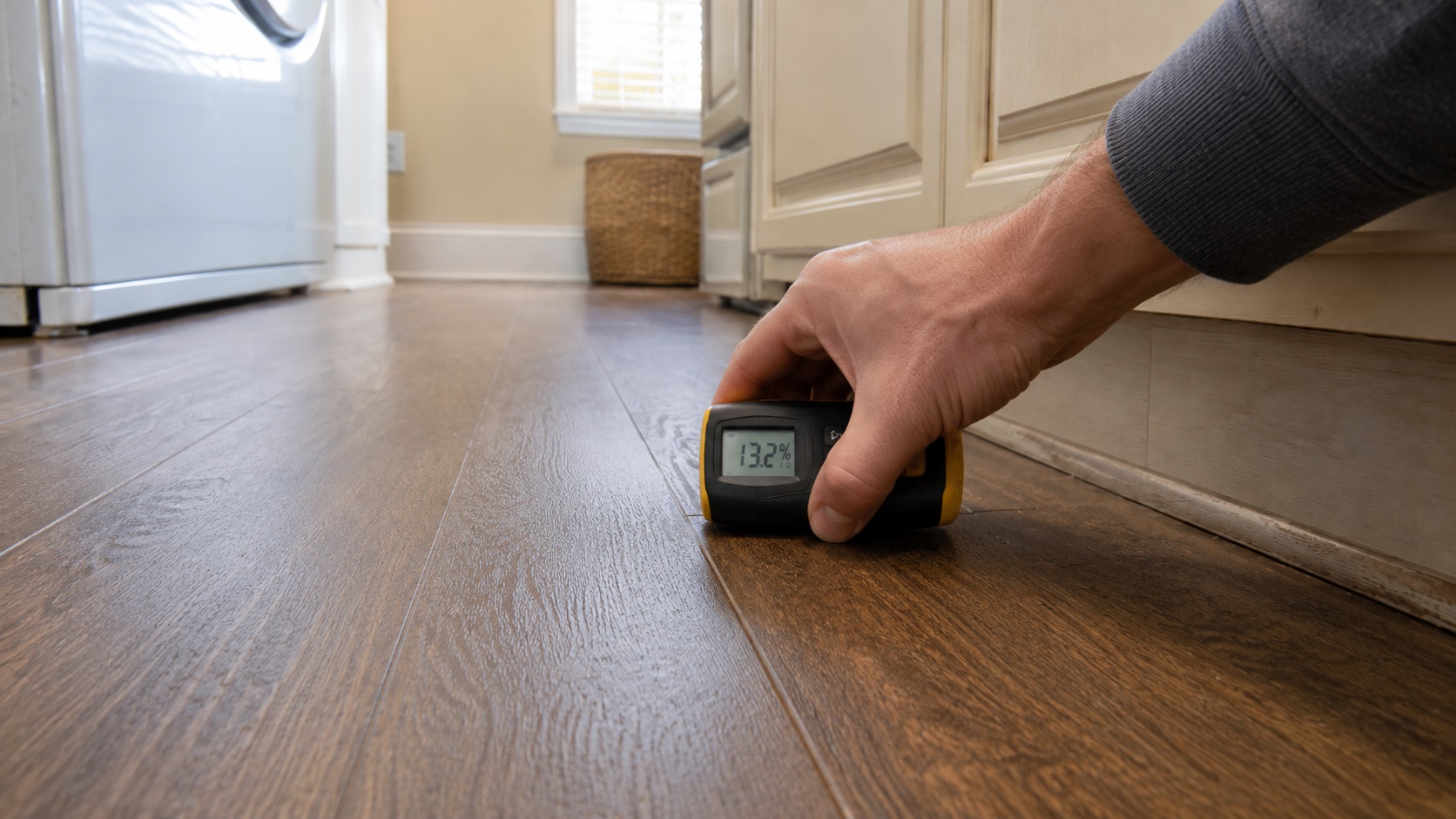
To inspect flooring for hidden moisture, start with visible changes such as bubbling, staining, seam separation, lifted edges, or warped planks. Then check how the floor feels and sounds underfoot, inspect edges and high-risk areas, and use a moisture meter when surface clues suggest dampness beneath the flooring.
Flooring can look dry on top while moisture remains trapped below vinyl, laminate, hardwood, tile, carpet, padding, or subfloor materials. Early inspection helps identify damp areas before adhesive failure, subfloor swelling, soft spots, or mold-friendly conditions develop.
If hidden moisture remains trapped long enough, mold growth, adhesive failure, subfloor swelling, and flooring separation may develop beneath the surface. For a broader room-by-room inspection framework, see how to find hidden moisture in different areas of your home.
Why Hidden Moisture Under Flooring Is Common
Hidden moisture under flooring is common because finished flooring limits airflow, subfloors absorb water, and surface drying can hide moisture that remains below. These conditions make inspection important after leaks, flooding, repeated spills, or unexplained floor changes.
Flooring Materials Limit Evaporation
Many flooring materials restrict airflow and slow evaporation. Vinyl, laminate, hardwood, tile, and carpet systems create barriers that reduce the movement of air across damp surfaces.
When water reaches the subfloor, evaporation slows dramatically because:
- Air circulation beneath flooring is limited
- Surface materials block moisture release
- Adhesives and sealants restrict airflow
- Protective finishes slow drying
Subfloors Absorb and Hold Moisture
Subfloor materials such as wood and concrete naturally absorb moisture. Once moisture enters these materials, drying becomes slower and more complex.
Wood subfloors can swell when moisture is present, while concrete subfloors may allow moisture to migrate upward from below. Both scenarios create hidden moisture conditions that remain undetected until visible flooring damage appears.
Surface Dryness Does Not Mean Internal Dryness
One of the most common misunderstandings about flooring moisture is assuming that a dry surface indicates a dry subfloor. In reality, moisture beneath flooring often remains trapped even after the visible surface feels dry.
Surface dryness may hide:
- Moisture trapped beneath flooring layers
- Damp subfloor materials
- Adhesive breakdown beneath flooring
- Slow structural weakening
Small Moisture Events Often Go Unnoticed
Large floods are easy to detect, but small moisture events often create hidden problems without drawing attention. Minor leaks, spills, or humidity buildup can introduce enough moisture to damage flooring over time.
Common small moisture sources include:
- Slow plumbing leaks
- Appliance drips
- Minor spills that soak beneath flooring
- High humidity exposure
- Moisture migration from below the floor
These events may seem harmless at first but can gradually weaken flooring materials if moisture remains trapped.
Flooring Adhesives Can Trap Moisture
Many flooring systems rely on adhesives to hold materials in place. While adhesives improve stability, they can also trap moisture beneath the flooring surface.
When moisture becomes trapped beneath adhesive layers, evaporation slows even further. Over time, this can weaken bonding strength and allow flooring to loosen or separate.
When Flooring Should Be Inspected for Hidden Moisture
Inspect flooring whenever water exposure, musty odor, soft spots, seam changes, or unexplained floor movement appears. Waiting for obvious damage can allow moisture to spread beneath the surface.
Flooring inspections should be performed whenever moisture exposure or unusual floor behavior occurs.
After Any Water Leak or Spill
Water leaks are one of the most common triggers for hidden moisture beneath flooring. Even small leaks can introduce enough moisture to damage subfloor materials.
Inspection should occur after:
- Plumbing leaks
- Appliance malfunctions
- Overflow events
- Roof leaks affecting interior spaces
- Water entering from exterior sources
Quick inspection after water exposure increases the chance of identifying moisture before damage spreads beneath flooring systems.
When Flooring Feels Different Underfoot
Changes in floor texture or firmness often signal underlying moisture problems. A floor that feels slightly soft, uneven, or unstable may indicate moisture affecting the subfloor.
These physical changes sometimes develop before visible damage occurs. If flooring begins to feel unusual, further inspection should be performed promptly.
When flooring begins to feel soft after moisture exposure, why flooring feels soft after water damage explains how moisture can weaken subfloors, adhesives, and support layers.
When Musty Odors Develop
Musty odors often indicate hidden moisture beneath flooring materials. Odors may develop before visible damage occurs, making them an early warning sign that moisture may be present.
Persistent odors that return after cleaning should not be ignored. These smells often originate from trapped moisture or microbial growth beneath flooring layers.
After Flooding or Heavy Water Exposure
Flooding introduces large amounts of moisture into flooring systems. Even after visible water is removed, moisture often remains trapped beneath flooring materials.
Inspection after flooding should occur immediately and continue over time to confirm that moisture has been fully removed.
If floodwater, sewage, or contaminated water reached the flooring, do not rely on surface inspection alone. Contaminated water can affect padding, seams, subfloors, and hidden layers that may need professional removal or sanitation.
For clean-water events where the subfloor itself may be damp, how to dry subfloors after water damage explains when deeper drying steps may be needed after inspection confirms moisture below the finished floor.
Visual Signs to Look For First
Visual inspection is always the first step when checking flooring for hidden moisture. Many moisture problems leave subtle surface clues before structural damage becomes severe. Carefully observing these early indicators helps identify areas that require deeper testing.
Use a flashlight at a low angle across the floor, compare the suspect area with a dry area nearby, and pay close attention to seams, corners, appliance edges, thresholds, and baseboards. Mark suspicious spots with painter’s tape so you can recheck the same areas after drying or testing.
Bubbling or Blistering on the Surface
Bubbling or blistering often indicates trapped moisture beneath flooring materials. These raised areas develop when moisture weakens adhesives or causes materials to expand unevenly.
This issue commonly appears in:
- Vinyl flooring
- Laminate flooring
- Engineered wood flooring
- Flooring installed over concrete
Small bubbles may seem minor at first, but they often indicate moisture trapped beneath the surface. If bubbling appears, the affected area should be inspected further.
Warping or Uneven Flooring Surfaces
Warping occurs when moisture causes flooring materials to expand or shift. Even slight unevenness can signal hidden moisture beneath the flooring.
Common signs of warping include:
- Raised edges or corners
- Slight ridges forming across planks
- Uneven transitions between flooring sections
- Noticeable changes in floor level
Warping often begins gradually, making early inspection especially important.
Discoloration or Staining
Color changes on flooring surfaces may indicate moisture trapped below. Discoloration often appears darker than surrounding materials and may develop near seams or edges.
Areas where staining commonly appears include:
- Near plumbing fixtures
- Along baseboards
- Around exterior doors
- Near windows
Discoloration does not always confirm moisture, but it should always trigger additional inspection steps.
Seam Separation or Gaps
Flooring seams and joints are among the first areas to react to moisture. As materials expand or shift, seams may separate or become uneven.
Look for:
- Gaps forming between planks
- Raised seams along edges
- Loose transition strips
- Visible spacing changes between materials
These changes often indicate moisture movement beneath the flooring system.
Peeling or Loose Adhesive Areas
Adhesive failure is another early indicator of hidden moisture. When moisture weakens adhesives, flooring materials may loosen or peel away from the subfloor.
This is especially common in glue-down flooring installations.
If adhesive failure occurs in vinyl installations, reviewing detailed symptoms in signs of moisture under vinyl flooring can help identify material-specific warning signs.
Physical Inspection Methods
After visual inspection, physical testing provides additional clues about hidden moisture beneath flooring. Physical changes often appear before visible damage develops, making these tests highly valuable.
Physical inspection relies on observing how flooring responds to pressure, movement, and sound.
Safety note: Do not press hard, bounce on the floor, pull up flooring, or continue walking across areas that feel soft, sagging, crumbling, or unstable. If the floor moves noticeably, smells strongly musty, or follows a sewage, floodwater, or contaminated-water event, stop and get professional evaluation before disturbing materials.
Check for Soft or Spongy Areas
Soft spots are one of the most reliable indicators of hidden moisture beneath flooring. Moisture weakens subfloor materials, causing them to lose rigidity.
Soft flooring may feel:
- Spongy when stepped on
- Less stable than surrounding areas
- Slightly compressed under pressure
- Uneven when walking across the surface
Soft areas should always be investigated further because they often signal deeper structural issues.
Listen for Hollow or Unusual Sounds
Sound differences can reveal hidden moisture problems beneath flooring materials. Moisture damage sometimes creates small gaps or weak spots beneath the surface.
When walking across flooring, listen for:
- Hollow sounds
- Unusual creaking
- Clicking noises beneath planks
- Changes in sound between areas
These sound variations often indicate structural changes caused by moisture exposure.
Test for Movement Under Pressure
Pressing gently on flooring surfaces can reveal hidden instability. Flooring affected by moisture may shift slightly when pressure is applied.
Movement under pressure may include:
- Slight flexing beneath feet
- Movement near seams
- Unstable areas near edges
- Noticeable give when stepped on
Even minor movement suggests moisture-related weakening beneath the flooring.
Check Temperature Differences Across Flooring
Moist areas often feel cooler than surrounding dry surfaces. This occurs because moisture retains heat differently than dry materials.
Temperature checks may reveal:
- Cool patches compared to surrounding flooring
- Persistent damp-feeling areas
- Uneven temperature patterns
Temperature differences alone do not confirm moisture, but they help identify areas requiring closer inspection.
How to Check Flooring Edges and Seams Carefully
Flooring edges and seams are among the most important areas to inspect for hidden moisture. These sections are typically the weakest points in flooring systems and often show early signs of moisture intrusion before damage appears elsewhere.
Moisture tends to migrate toward edges and seams because these areas provide small pathways where water can collect or escape. Inspecting these locations carefully improves the chances of detecting hidden moisture early.
Inspect Along Baseboards and Wall Edges
The perimeter of a room is one of the most common places for moisture problems to begin. Water entering through walls, plumbing systems, or exterior openings often travels downward and collects near baseboards.
When inspecting along baseboards, look for:
- Raised flooring edges
- Discoloration near walls
- Swelling along perimeter seams
- Gaps forming between flooring and walls
- Loose trim or baseboards
Even small changes in these areas may indicate moisture entering from hidden sources.
Check Seams Between Flooring Sections
Seams are natural stress points where flooring materials meet. These joints react quickly to moisture because materials expand when damp.
Carefully inspect seams for:
- Separation between planks
- Raised edges along seams
- Uneven transitions between sections
- Visible gaps or shifting materials
Seam changes often indicate moisture affecting the subfloor beneath the surface.
Inspect Around Transitions and Thresholds
Transition strips connect different flooring materials and create small openings where moisture can enter. These areas are commonly found near doorways and room boundaries.
During inspection, check:
- Doorway thresholds
- Transitions between rooms
- Areas where flooring types change
- Spaces near exterior doors
Water exposure in these areas may go unnoticed until flooring begins to shift or separate.
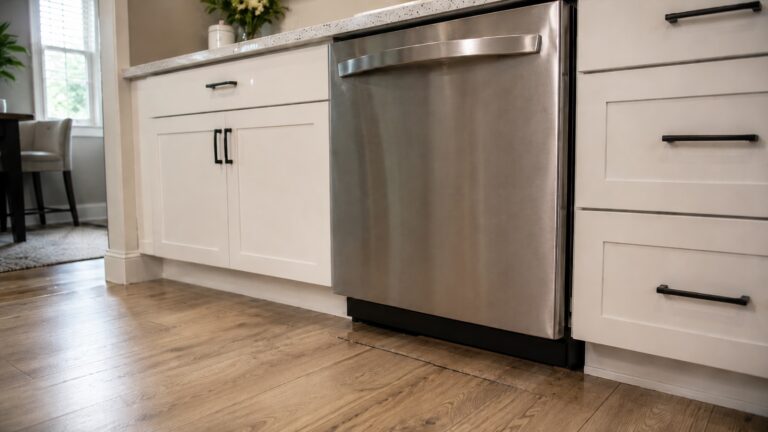
Look Beneath Appliances and Fixtures
Hidden moisture frequently develops beneath appliances and fixtures. These areas are rarely inspected during routine cleaning, making them ideal locations for moisture buildup.
Common high-risk locations include:
- Under refrigerators
- Behind washing machines
- Beneath dishwashers
- Near toilets and sinks
These locations should be inspected periodically, especially after plumbing-related events.
Using Moisture Meters Safely and Effectively
Moisture meters provide confirmation when visual and physical inspection suggests hidden moisture, but they work best when readings are compared across several areas. Test the suspicious spot, a nearby dry-looking area, and the same flooring material in another room if possible.
While moisture meters are helpful, they should be used as part of a broader inspection process rather than as the only method of detection. Do not compare readings from different materials as if they mean the same thing; compare wood to wood, vinyl area to vinyl area, or the same flooring type whenever possible.
Understand the Purpose of Moisture Meters
Moisture meters are designed to measure moisture levels inside materials such as wood or subfloor components. They help confirm whether suspected areas contain elevated moisture.
These tools are most useful when:
- Visual signs suggest hidden moisture
- Soft areas are detected during physical testing
- Previous water exposure occurred
- Repeated moisture problems exist
Using a moisture meter helps reduce uncertainty and supports more informed decisions.
Test Multiple Areas for Comparison
Moisture readings are most accurate when compared across multiple areas. Testing both suspected areas and known dry sections helps establish reliable reference points.
When using a moisture meter:
- Test areas that appear dry
- Test areas showing visible changes
- Compare readings between locations
- Record results to identify patterns
This comparison process helps identify abnormal moisture levels more effectively.
Avoid Relying on a Single Reading
Single readings can be misleading because flooring materials vary in composition. Multiple readings provide a clearer understanding of moisture distribution.
Reliable testing practices include:
- Taking readings across several locations
- Repeating measurements if results vary
- Monitoring readings over time when needed
- Confirming suspected problem areas
Repeated testing improves accuracy and reduces the chance of incorrect conclusions.
Recognize the Limits of Moisture Meters
Moisture meters are valuable tools, but they cannot detect every type of moisture problem. Some moisture conditions exist beneath materials that meters cannot directly measure.
Limitations include:
- Difficulty measuring moisture beneath thick flooring
- Variations in readings due to material type
- Surface interference affecting results
- Hidden moisture outside testing range
Understanding these limits prevents overreliance on tools and encourages careful observation during inspection.
Where Hidden Moisture Is Most Likely to Develop
Hidden moisture does not develop randomly. Certain locations within a home are consistently more vulnerable due to plumbing systems, exterior exposure, or environmental conditions. Focusing inspections on these high-risk areas improves the chances of detecting moisture early.
Near Plumbing Fixtures and Water Sources
Plumbing fixtures are one of the most common sources of hidden moisture beneath flooring. Small leaks or condensation around pipes can introduce moisture gradually, allowing damage to develop without immediate detection.
High-risk plumbing locations include:
- Under sinks in kitchens and bathrooms
- Around toilets and supply lines
- Beneath dishwashers and refrigerators
- Near washing machines and utility sinks
- Under water heaters
Routine inspection around plumbing areas helps identify small leaks before moisture spreads beneath flooring systems.
Near Exterior Doors and Entryways
Exterior doors allow water to enter during heavy rain, snow, or routine daily activity. Wet shoes, weather exposure, and poor sealing can introduce moisture that gradually accumulates beneath flooring materials.
Common entryway risks include:
- Rainwater tracked indoors
- Damaged door seals
- Poor drainage near entry points
- Repeated exposure to outdoor moisture
Entryways should be inspected frequently because repeated moisture exposure often leads to hidden damage beneath flooring.
Basements and Below-Grade Floors
Basements are among the most moisture-prone environments in residential structures. Moisture can migrate upward through concrete slabs or enter through foundation walls.
Basement flooring should be inspected regularly for:
- Damp patches on flooring surfaces
- Musty odors near floor level
- Visible moisture near foundation walls
- Changes in flooring texture
Moisture migration from below is common in these areas and often remains undetected until visible damage develops.
Rooms With Previous Water Damage
Any area that has experienced past water damage carries increased risk of hidden moisture returning. Even when repairs appear successful, residual moisture problems may remain beneath flooring materials.
Inspection should be prioritized in:
- Rooms affected by past flooding
- Areas previously exposed to leaks
- Spaces with repaired plumbing failures
- Locations with recurring moisture problems
Repeated inspection of these areas helps confirm that moisture has not returned beneath flooring.
Near Windows and Exterior Walls
Windows and exterior walls provide pathways for moisture intrusion during storms or structural deterioration. Water entering through small openings can travel downward and accumulate beneath flooring materials.
These locations should be checked for:
- Staining near wall edges
- Damp flooring close to windows
- Loose trim near exterior walls
- Flooring discoloration along perimeter areas
Moisture movement from above often affects flooring along exterior walls before spreading inward.
When to Call a Professional for Flooring Moisture Inspection
Some flooring moisture problems can be identified through careful homeowner inspection, but professional evaluation may be necessary when the signs point to deeper damage or hidden moisture that cannot be confirmed safely from the surface.
Professional inspection is especially important when moisture may affect subfloors, structural materials, contaminated areas, or large sections of flooring.
When Moisture Affects a Large Area
Large moisture-affected areas are difficult to evaluate accurately without professional tools. Moisture may spread farther beneath flooring than surface clues suggest.
Call a professional if:
- Multiple rooms show moisture signs
- Several flooring sections feel soft or unstable
- Moisture readings remain elevated across a wide area
- Damage appears to be spreading
Large moisture patterns often indicate a source that needs more than surface inspection.
When Flooring Feels Structurally Weak
Soft, sagging, flexing, or unstable flooring can indicate moisture affecting support layers beneath the visible surface. These signs should not be ignored because they may point to subfloor damage.
Professional evaluation is recommended when flooring:
- Feels spongy underfoot
- Moves noticeably when walked on
- Sags near seams or edges
- Feels weaker than surrounding areas
Structural weakness requires caution because disturbing damaged flooring may worsen the problem or expose hidden contamination.
When Moisture Keeps Returning
Recurring moisture beneath flooring usually means the source has not been fully corrected. Surface drying may temporarily improve the area, but moisture can return if the underlying leak, humidity source, exterior entry point, or subfloor condition remains unresolved.
Professional inspection may be needed if:
- The same area becomes damp repeatedly
- Musty odors return after cleaning
- Moisture readings stay elevated
- Flooring damage continues after drying attempts
Recurring moisture should be traced to its source before new flooring, sealers, rugs, or finishes are installed over the affected area.
When Mold or Strong Odors Are Present
A strong musty odor, visible mold-like growth, or recurring odor near floor level may indicate moisture trapped beneath flooring layers. Mold concerns should be handled carefully, especially if the affected area is large, hidden, or connected to past flooding.
Professional help is recommended when:
- Odors are strong or persistent
- Mold-like growth appears near flooring seams or baseboards
- The floor was exposed to floodwater or sewage
- Family members are sensitive to mold exposure
Do not lift flooring or disturb moldy materials unless the area can be handled safely.
Frequently Asked Questions About Inspecting Flooring for Hidden Moisture
How do I know if moisture is hidden under my flooring?
Hidden moisture often reveals itself through subtle warning signs such as soft spots, bubbling surfaces, musty odors, or uneven flooring. Even if visible damage is minimal, physical changes underfoot or recurring odors may indicate moisture beneath the surface.
If visual and physical signs suggest moisture but confirmation is unclear, further inspection or moisture testing may be necessary to verify conditions beneath the flooring.
Can moisture exist without visible damage?
Yes, moisture can remain hidden beneath flooring without causing immediate visible damage. Many flooring systems trap moisture below the surface, allowing damage to develop slowly over time.
This is why regular inspection is recommended after leaks, flooding, or repeated moisture exposure—even if the floor appears normal.
What tools are commonly used to detect moisture under flooring?
Moisture meters are commonly used to measure moisture levels inside flooring materials. These tools help confirm whether moisture is present beneath the surface.
Other professional tools may include thermal imaging equipment or specialized testing devices designed to detect moisture hidden within structural materials.
Should flooring be lifted to inspect for moisture?
Flooring should not be lifted unless inspection results strongly suggest hidden moisture beneath the surface. Lifting flooring prematurely can cause unnecessary damage.
When moisture is strongly suspected or confirmed, professional evaluation may determine whether partial removal is required to inspect subfloor materials safely.
How often should flooring be inspected for hidden moisture?
Flooring should be inspected whenever moisture exposure occurs. Routine inspection is also recommended in high-risk areas such as basements, kitchens, bathrooms, and entryways.
Regular inspection reduces the risk of long-term damage by identifying problems before structural deterioration begins.
What to Do After Inspecting Flooring for Hidden Moisture
After inspecting flooring for hidden moisture, compare your visual clues, physical observations, and moisture meter readings before deciding what to do next. A single stain or sound may not prove hidden moisture, but repeated signs in the same area should be treated as a warning.
If the area stays damp, feels soft, smells musty, or shows spreading damage, do not cover it with rugs, new flooring, sealers, or paint. The moisture source needs to be found and corrected before the floor is closed back up or refinished.
If inspection confirms moisture beneath flooring and the area does not dry or stabilize, how to fix persistent moisture under floors explains when the problem may require repair planning or professional evaluation.
Key Takeaways
- Hidden moisture beneath flooring is common and often difficult to detect without careful inspection.
- Visual clues such as bubbling, staining, or seam separation often appear before major damage occurs.
- Physical inspection methods help identify soft spots and structural changes beneath flooring.
- Edges, seams, and high-risk areas should always receive extra attention during inspection.
- Moisture meters help confirm suspected moisture but should not replace careful observation.
- Professional inspection may be necessary when moisture affects large areas or persists after drying.
- Do not cover, refinish, or reinstall flooring over a suspect area until the moisture source is corrected and the area is confirmed dry.
One Comment
Comments are closed.